Stickers Custom Printed: Why Tiny Specs Cause Big Ordering Problems
Two orders of stickers custom printed can look nearly identical in a proof and behave like completely different products once they reach a real packing line. One sticks cleanly to a bottle, holds through condensation, and still looks sharp after handling. The other lifts at the corners, scuffs in transit, and turns into wasted inventory before the launch is over.
The difference usually lives in the small decisions: size, shape, face stock, adhesive, finish, and final format. A matte paper sticker for a dry mailer insert is not the same build as a clear film label meant for a chilled jar. The artwork may stay constant. The construction should not.
That is where buyers lose money. Not by spending a little more on the right material, but by ordering thousands of the wrong version because the first quote looked attractive. Reprints, relabeling, delayed launches, and packaging that looks worn before it reaches a customer all cost more than getting the spec right from the start.
Proofs can create a false sense of security. Screens do not show edge lift, rub resistance, curl, or how a label behaves on a curved surface. Bottles sweat. Cartons scrape in transit. Mailers rub against other packs. Laptop decals flex. A sticker has to survive those conditions, not just look good in a mockup.
The practical questions matter most: What material fits the job? Which adhesive matches the surface? How does the printing process affect price and timing? How much lead time is realistic? If you are buying for branded packaging, promo handouts, retail packaging, or labels that need to coordinate with custom printed boxes, the spec matters more than the concept art.
How Custom Sticker Printing Works From File to Finished Roll or Sheet
Sticker printing is straightforward, but it is exact. Most jobs move through the same core stages, and problems usually begin when the file or format is treated casually.
- Artwork setup
- Proofing
- Material and adhesive selection
- Printing
- Finishing
- Cutting
- Packing and shipping
Artwork setup is where dielines, bleed, safe area, and file type get checked. A common requirement is 0.125 inch bleed, with important text or logos held at least 0.0625 to 0.125 inch inside the cut line. Ignore that margin and small type can end up clipped or uncomfortably close to the edge. CMYK files are normally expected for print. RGB artwork often shifts once converted, which still surprises buyers more often than it should.
Proofing comes next. That may be a digital PDF, a press proof, or sometimes a physical sample. Clear materials, white ink layers, foil effects, and artwork placed near the edge deserve slow review. A rushed approval usually leads to the same reaction later: how did this happen? Usually the answer is simple. It happened in the proof.
The finished format matters just as much as the printed image. Most orders fall into four common categories:
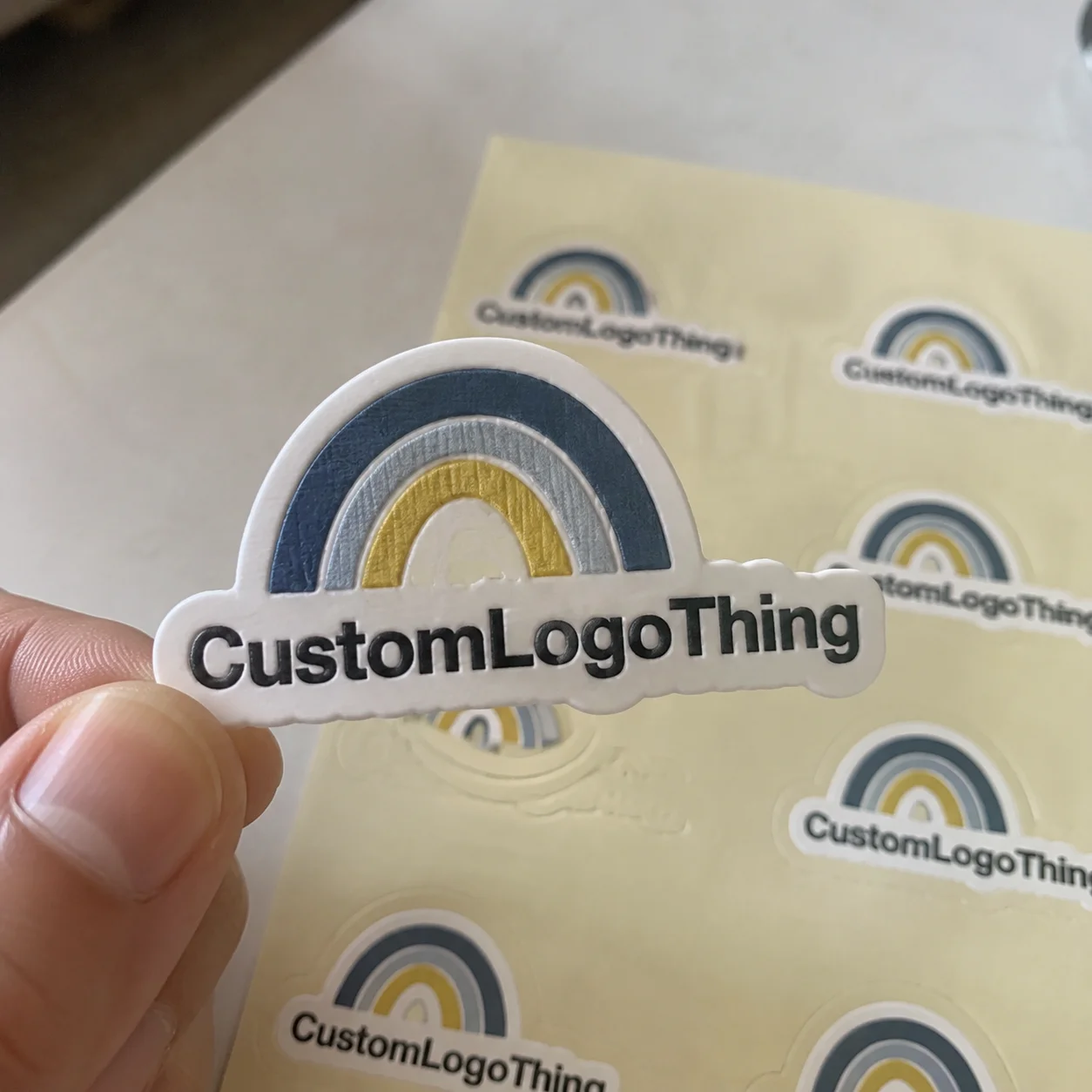
- Individual die-cut stickers for giveaways, inserts, and merch-style presentation
- Kiss-cut sheets for sets, kits, or grouped labels
- Roll labels for faster manual application or machine application
- Transfer-style graphics for decals and more specialized installation
Print method affects price, turnaround, and fit for the run size. Digital printing is often the best choice for short runs, quick turns, and multiple versions. That can mean 100 pieces, 2,000 pieces, and sometimes more depending on the size and material. Flexographic printing and other volume-oriented methods become more cost-effective once quantities rise because setup costs are spread over more units. If you need 25,000 roll labels with one stable design, digital is not always the cheapest route.
Finishing changes both appearance and performance. Gloss makes color look brighter. Matte cuts glare and often reads as more restrained in the hand. Lamination adds a protective layer that improves abrasion and moisture resistance. Writable coatings matter for warehouse use, short-run inventory labels, and any sticker people need to mark up with a pen. If the sticker is part of your packaging design, the surface feel matters. If it is part of fulfillment, durability and speed of application usually matter more.
Practical rule: a small logo sticker still needs careful production planning. Tiny format does not reduce the consequences of a bad file or the wrong material.
Materials, Adhesives, and Finishes That Actually Match the Job
Material choice decides whether a sticker works quietly for months or starts failing in the first week. Samples can make several stocks look equally attractive, but the job usually points to one or two sensible options.
Common sticker materials
Paper is a lower-cost option for dry, indoor use. It works well for mailers, carton seals, event handouts, and short-life promotional applications. It also scuffs sooner and does not tolerate moisture well.
White BOPP is a film stock widely used for product labels. It is water-resistant, tougher than paper, and a strong fit for bottles, jars, cosmetics, and many personal care products.
Clear BOPP creates a no-label look when the artwork is built correctly, often with white ink under selected areas. It suits clean, minimal branding. It is a poor choice if you need opacity and have not planned for white ink coverage.
Vinyl is often chosen for harder use, including outdoor exposure, laptop decals, water bottles, and stickers that will be handled repeatedly. It usually costs more than basic paper or BOPP, but that extra cost is easy to justify when durability matters.
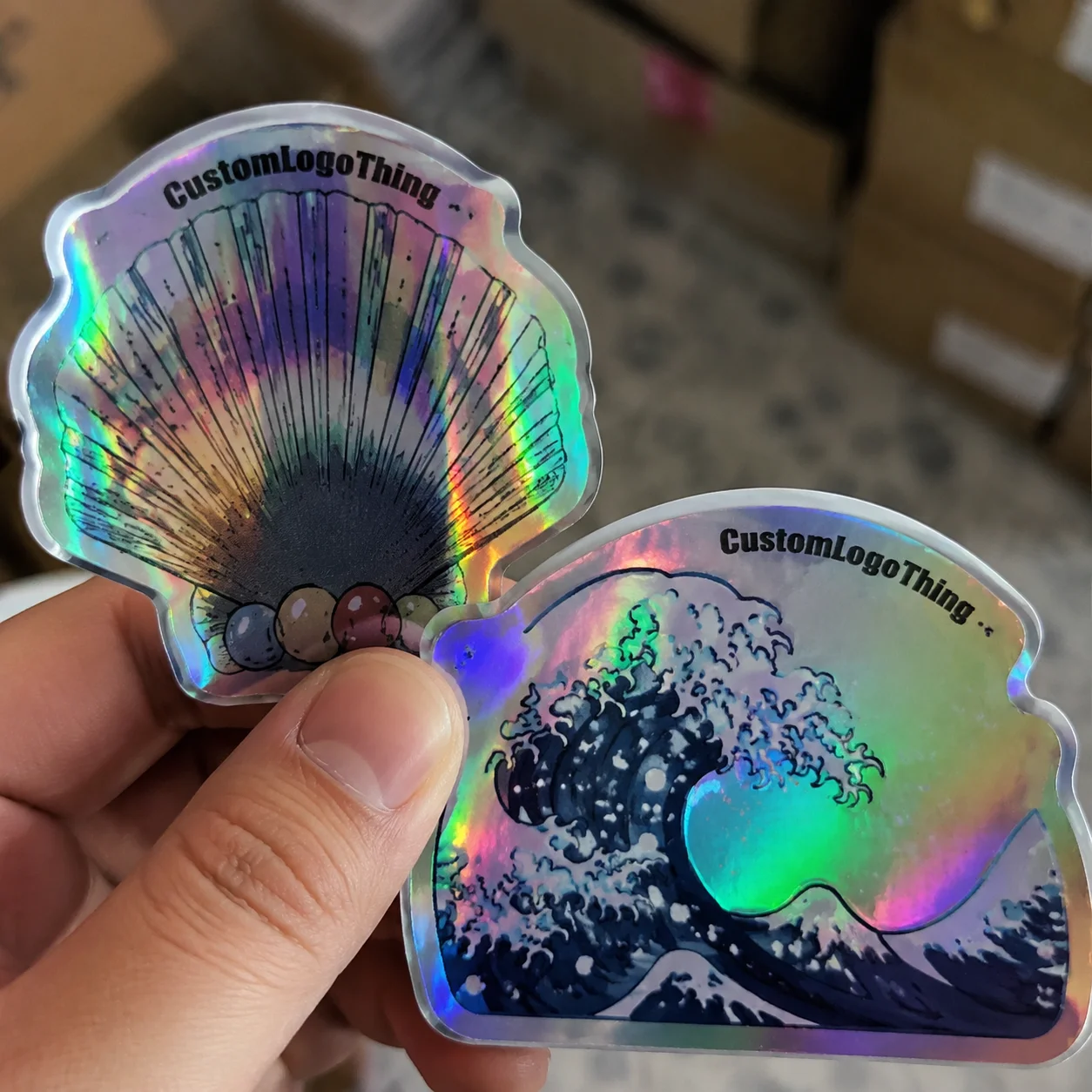
Holographic, foil, and specialty films are mainly visual upgrades. They can look excellent in retail packaging and promotional campaigns, though they also add cost and can hurt readability if pushed too far. A premium result depends on restraint as much as shine.
Kraft and textured papers fit natural, handmade, or rustic brand systems. They can work well in certain product packaging applications, but contrast is lower and moisture resistance is limited.
Adhesive matters more than most buyers expect
The face stock gets most of the attention, yet the adhesive often decides whether the sticker succeeds. Common choices include:
- Permanent adhesive for standard long-term use
- Removable adhesive for temporary branding or clean peel-off applications
- Freezer-grade adhesive for refrigerated or freezer conditions
- High-tack adhesive for textured, low-energy, or difficult surfaces
Glass is usually forgiving. Curved HDPE containers, lightly oily surfaces, cold plastic tubs, and textured cartons are not. Adhesion depends on surface energy, application temperature, storage temperature, and the pressure used when the sticker is applied. That is why testing matters. Buyers who care about sourcing standards for paper-based materials may also want to review the FSC framework.
Finishes and protective layers
Gloss can make color appear richer. Matte cuts glare and often feels more understated. Lamination, whether gloss or matte, adds a protective layer that improves resistance to rubbing and moisture. For bottle and jar labels, that upcharge is often justified, commonly landing around 10% to 25% depending on material and quantity.
If people need to write on the sticker, ask for a writable coating. Standard gloss lamination is not friendly to most pens.
A sample swatch alone will not tell you enough if the sticker needs to deal with condensation, oil, freezer storage, UV exposure, or repeated handling. Test the exact construction on the real package and under the real conditions. That simple step catches a surprising number of expensive mistakes.
Sticker Pricing and Unit Cost: What Changes the Quote Fast
Pricing for stickers custom printed can shift quickly because several variables stack on top of each other. The biggest ones are size, quantity, material, adhesive, finish, number of versions, cut complexity, packing format, and shipping.
Size looks obvious until a small dimension change affects how the design nests on a sheet or web. A 2 inch by 2 inch sticker may fit efficiently. Increase it to 2.5 inches and you can lose layout efficiency, create more waste, and raise the unit cost. Half an inch can be expensive.
Quantity tiers usually improve the per-piece number, but only if the spec stays stable. Split 10,000 pieces into several versions and costs often rise because setup, handling, and waste all increase. Versioning can be useful. It is not free.
Material choice can fool buyers into chasing the wrong savings. A paper sticker may have the lowest line-item price, but if it scuffs in fulfillment or fails on the package, it becomes the expensive option. Cheap and cost-effective are not the same thing.
Here is a rough planning range for common mid-size orders. These are not fixed market rates, just practical estimates for standard North American buying scenarios. Supplier, method, freight, and spec details will move them up or down.
| Format | Typical Spec | Quantity | Estimated Unit Cost | Notes |
|---|---|---|---|---|
| Paper sheet stickers | 2" x 2", gloss | 500 | $0.18-$0.35 | Good for dry indoor use |
| White BOPP roll labels | 2" x 3", matte lamination | 5,000 | $0.05-$0.12 | Common for bottles and jars |
| Vinyl die-cut stickers | 3" x 3", outdoor durable | 1,000 | $0.35-$0.80 | Promo, laptop, bottle use |
| Clear BOPP labels | 2" x 2", white ink + gloss | 2,500 | $0.09-$0.20 | Higher if white ink coverage is heavy |
Minimum order quantities vary by format. Digital die-cut stickers can make sense at 100 or 250 pieces. Roll labels with specialty adhesives, custom cores, or more involved finishing become more economical at higher volumes, often starting around 1,000 pieces. Ask for pricing based on your actual use, not a vague request for the best possible rate. The more specific the brief, the more useful the quote.
Brands comparing labels to broader packaging systems may also want to review related options such as Custom Labels & Tags or full Custom Packaging Products so the sticker spec fits the rest of the package.
Process and Lead Time: What to Expect Before You Place the Order
The first question most buyers ask is how fast the stickers can arrive. A better question is how long the full process takes from quote to delivery. That timeline is what protects your launch date.
A standard order often follows a schedule like this:
- Quote and artwork review: 1-3 business days
- Proof approval: same day to 3 business days, depending on response time
- Production: 5-12 business days for many standard jobs
- Finishing and QC: usually within production, though complex work can add 1-2 days
- Shipping transit: 1-7 business days depending on service and destination
For many orders, a realistic door-to-door window lands around 8 to 15 business days. Specialty materials, unusual adhesives, or heavy finishing can stretch that further. Rush production may shorten the schedule, though it often raises cost and narrows your stock options.
Most delays have ordinary causes. The file is low resolution. The dieline is missing. The buyer changes size after proof approval. Color expectations were never clarified. Approvals sit untouched for two days while the calendar keeps moving. Sticker jobs rarely fall apart for mysterious reasons.
Production time and shipping time should be treated as separate parts of the schedule. A printer can complete the job on time and freight can still create a miss. Build in buffer, especially for trade shows, subscription boxes, launches, or refrigerated applications that need live testing before a full run. If the sticker will travel inside a packed system, transit durability matters too. For general transport testing context, ISTA standards are useful to know.
Good rule: if the delivery date is fixed, start proofing earlier than feels comfortable. Most schedule problems begin before production starts.
How to Order the Right Sticker Spec Step by Step
The cleanest way to order stickers custom printed is to start with the job itself, not the visual mood. A sticker meant for a dry carton and a sticker meant for a cold bottle may share artwork and need completely different construction.
- Define the surface. Glass, cardboard, coated paperboard, plastic, metal, or textured material.
- Define the environment. Dry indoor use, refrigeration, freezer storage, water exposure, oil exposure, outdoor UV, or heavy handling.
- Set quantity. Be realistic about volume and versions.
- Choose size and shape. Measure the actual application area rather than estimating from memory.
- Prepare artwork. Vector PDF, AI, or EPS files are ideal for logos and cut lines.
- Select finish. Gloss, matte, laminate, writable coating, or a specialty effect.
- Confirm budget and delivery date. That helps narrow the right options quickly.
Format should follow the way the sticker will be applied:
- Rolls for speed, higher volume, or machine application
- Sheets for kits, grouped designs, or smaller mixed sets
- Individual die-cut pieces for giveaways, inserts, and merch presentation
A quote request is much easier to answer if all the key details arrive together. Include:
- Exact dimensions
- Target quantity
- Intended use and surface type
- Artwork file type
- Desired material or finish, if known
- Ship-to ZIP code or destination
That gives a supplier something concrete to price. A PNG and a message that says “need stickers ASAP” does not.
New applications deserve testing. A small pilot run or sample set is especially useful for textured packaging, chilled products, cosmetic jars, and premium branded packaging where finish quality matters. Testing 50 to 200 pieces can save you from a very expensive 5,000-piece mistake.
Final proof checklist
- Spelling and required legal copy
- Barcode or QR code clear area
- White ink layers on clear or foil stock
- Cut line placement
- Orientation on rolls for hand or machine application
- Color expectations for brand-critical elements
If the stickers are part of a larger packaging launch, line them up with the rest of your Custom Packaging Products so the final presentation looks intentional rather than patched together at the last minute.
Common Sticker Ordering Mistakes That Waste Money and Time
The most common mistake is choosing by appearance alone. A beautiful sample finish can distract buyers from the surface, temperature, and handling conditions that actually decide performance. Then the sticker fails in the exact way the spec predicted.
Guessing size is another easy way to waste money. A half-inch difference can throw off balance on a jar lid, cover required copy on a carton, or slow down hand application. Print a paper mockup at full size and place it on the actual package. That five-minute check solves a lot.
Format errors show up all the time. People order individual die-cut pieces for jobs that should have been on rolls, then discover application takes far longer than expected. Others order sheets for handouts that would have looked better as singles. The sticker has to match the workflow, not just the artwork.
Weak files create avoidable delays. Raster logos, missing fonts, low-resolution exports, no bleed, no dieline, and unclear white ink instructions all lead to extra rounds of correction. If the artwork package is sloppy, the timeline usually follows.
Another classic problem is accepting the lowest quote without checking what changed. Material thickness, adhesive type, lamination, outdoor life, and packing format all affect performance. A quote that looks 18% cheaper may be built on a thinner stock, no laminate, or a simpler adhesive that does not fit the job.
Too many SKUs can create their own mess. Splitting quantities across many designs increases setup complexity, raises the unit price, and makes inventory harder to manage. Consolidate where it makes sense.
A short prevention list covers most of it:
- Confirm the real use case
- Request the right samples
- Review the proof carefully
- Align the timeline before payment
Most sticker failures are ordinary, preventable ones. That is frustrating, but it also means they are easy to avoid with a little discipline.
What Should You Check Before Ordering Stickers Custom Printed?
Keep the comparison process tight. Gather the application details first. Narrow the shortlist to two sensible material options rather than chasing every finish available. Request comparable quotes using the same size, quantity, finish, and packing format. Then compare them line by line instead of staring only at the total.
Check these items on every quote:
- Final size
- Material and thickness, if available
- Adhesive type
- Lamination or coating
- Cut type
- Roll, sheet, or singles format
- Freight included or excluded
- Quoted production time
Samples should be tested in real conditions. Apply them to the actual package. Rub them. Chill them. Expose them to moisture if that matters. Check readability from normal viewing distance. If they are part of product packaging or package branding, view them in context with the rest of the package, not only under perfect desk lighting.
A practical buying rule works well here: choose the spec that meets the performance requirement with the least unnecessary embellishment. Upgrade where the visual effect clearly supports the brand or the sales environment. Foil, holographic film, and extra coatings can be excellent tools. They can also turn into expensive noise.
Once the right spec is clear, move cleanly. Finalize the artwork, approve the correct proof, confirm lead time in writing, and place the order. That is how buyers get useful, durable stickers custom printed without regret: by matching the sticker to the job and buying with enough detail to protect the result.
FAQ
How do I choose the right stickers custom printed for my product packaging?
Start with the surface and the environment. Cardboard, glass, plastic, freezer use, moisture, and oil exposure all affect the best material and adhesive. From there, match the finish to the job rather than picking only by appearance. A paper stock may look great in a sample pack and fail quickly on a sweating bottle. If the application is new or high-stakes, ask for samples or a small test run before committing to volume.
What affects custom printed sticker pricing the most?
Size, quantity, material, adhesive, finish, cut complexity, and packing format usually drive the quote first. Low quantities are convenient but tend to carry a higher unit cost. Versioning, specialty effects such as foil or holographic film, and rush production can raise pricing quickly as well.
What is the usual lead time for custom printed stickers?
Lead time includes proofing, production, finishing, and shipping transit, not just press time. Many standard jobs land around 8 to 15 business days once artwork is ready, though specialty specs can take longer. Artwork issues and slow approvals are common reasons schedules slip. Rush options may be available, but they often reduce stock choices or increase cost.
Are vinyl stickers better than paper stickers custom printed?
Vinyl and other film-based stocks are usually better for water resistance, durability, and outdoor or heavy-handling use. Paper works well for dry indoor packaging, event promotions, and lower-cost branding applications. The better choice depends on the performance requirement, not on whichever sample happens to look flashier.
Should I order sticker sheets, rolls, or individual die-cut stickers?
Use rolls for higher-volume application, especially if speed or machine application matters. Sheets work well for small labels, kits, or grouped designs. Individual die-cut stickers are a good fit for handouts, branding inserts, and retail-style presentation. The right format depends on how the sticker will be used, packed, and applied.