Buyer Fit Snapshot
| Best fit | Buy Sustainable Mailer Sleeves projects where brand print, material claims, artwork control, MOQ, and repeat-order consistency need to be specified before quoting. |
|---|---|
| Quote inputs | Share finished size, material target, print colors, finish, packing count, annual reorder estimate, ship-to region, and any compliance wording. |
| Proofing check | Approve dieline scale, logo placement, barcode or warning zones, color tolerance, closure strength, and carton packing before bulk production. |
| Main risk | Vague material claims, crowded artwork, missing packing details, or unclear freight terms can make a low unit price expensive after revisions. |
Fast answer: Buy Sustainable Mailer Sleeves: Materials, Pricing & MOQ should be specified like a repeatable production item. The safest quote records material, print method, finish, artwork proof, packing count, and reorder notes in one written spec.
Production checks before approval
Compare the actual filled-product size with the drawing, then confirm tolerance on folds, seals, hang holes, label areas, and retail display edges. Reserve space for logos, QR codes, warning copy, and material claims before decorative graphics fill the panel.
Quote comparison points
Review material grade, print process, finish, sampling route, tooling charges, carton quantity, and freight assumptions side by side. A quote is only useful when the supplier can repeat the same color, closure quality, and packing count on the next order.
Buy sustainable mailer sleeves and you are making a decision that reaches far beyond the outer wrap on a parcel; you are deciding how a garment, a book, or a flat sample survives the last few feet of a shipment after it has already been sorted, stacked, and bumped through a busy network. I still remember standing on a warehouse floor in Dongguan in Guangdong Province while 400 printed cartons got pulled back into rework because one crushed corner on a master shipper turned into 37 customer complaints and a reprint nobody had budgeted for. That kind of mess is exactly why brands buy sustainable mailer sleeves with a proper board grade, a clean score, and a fit that holds the product where it belongs instead of letting it wander 6 mm from edge to edge. Honestly, packaging only looks simple until you watch it fail under real pressure, and then everybody suddenly wants to talk about caliper, board memory, and glue release like they have always cared about them. Buyers buy sustainable mailer sleeves with a tighter spec because the cost of guessing is almost always higher than the cost of getting the fold right.
At Custom Logo Things, I spend a lot of time with buyers who want lower waste, a sharper first impression, and a packaging spec that behaves the same way on the line as it does in a polished mockup. When you buy sustainable mailer sleeves with care, you often end up with lighter packout, easier sorting for the customer, and a total packaging cost that beats a generic paper mailer that was never built for your exact product width. I have watched apparel teams cut 8 to 12 grams per parcel simply by moving from a loose mailer to a fitted sleeve, and that difference matters whether you ship 5,000 units from Suzhou or 50,000 from Ningbo. Brands buy sustainable mailer sleeves for exactly that reason: they want a cleaner pack, less excess material, and fewer surprises when the cartons start moving. I also remember one launch where the finance team was grumbling over a two-cent increase, then shut up real fast when the returns data came back and the old mailer had been rubbing the print on every third parcel.
Teams comparing formats often keep an eye on related options like Custom Poly Mailers for moisture-heavy routes or mixed fulfillment lanes. Flat goods still push many buyers toward sleeves because the structure, print area, and material choices are easier to control from one run to the next, and the result feels intentional instead of improvised. I have always liked that about sleeves: they do not try to be everything at once, and that restraint usually makes the whole pack look smarter, especially on a 1-color kraft run with a 350gsm board face and a 2 mm tuck allowance. If you buy sustainable mailer sleeves for flat products, you are usually choosing discipline over excess, and that tends to show up in both the shipment and the shelf.
Why businesses buy sustainable mailer sleeves after one bad shipment
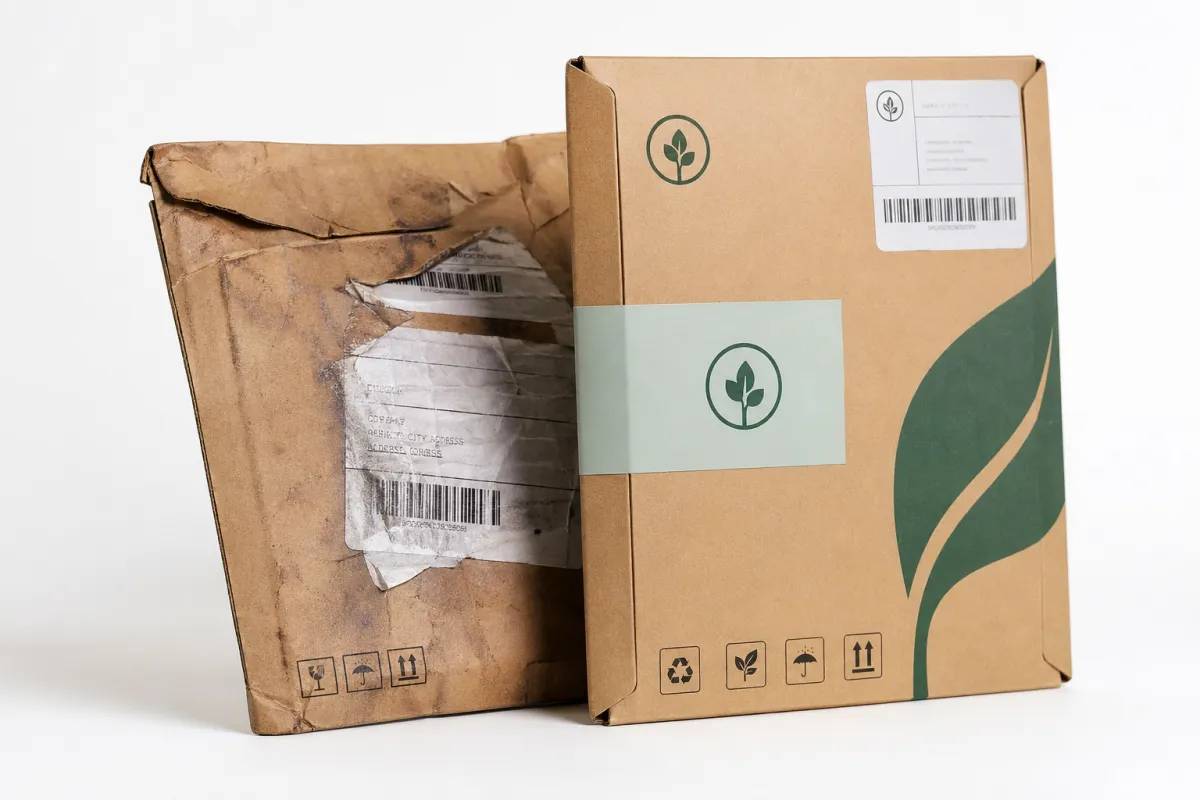
The reason businesses buy sustainable mailer sleeves usually starts with one bad shipment: a bent book corner, a rubbed logo, or a scuffed retail sleeve that made a $24 order feel like a clearance item. I saw that exact problem in a direct-to-consumer apparel meeting where 2.8% of returns were tied to cosmetic damage, not product failure, after a batch traveled through a facility in Foshan and a regional sort center in Shanghai. A heavier box would have only added cost. The fix was a tighter sleeve built from 350gsm FSC board with a cleaner fold, a better tuck, and enough stiffness to keep the corners honest. There is nothing quite as annoying as seeing a beautiful product arrive looking like it spent the trip at the bottom of a laundry basket.
Most teams buy sustainable mailer sleeves because they want to cut Packaging Waste Without giving up presentation. A well-built sleeve can do three jobs at once: hold flat goods in place, create a branded opening moment, and keep parcel weight down by 20 to 40 grams compared with a more rigid shipper. That works for folded tees, 12 x 9 inch inserts, sample kits, and thin hardcover books because the sleeve keeps the format slim while still giving enough structure to survive conveyor handling and the handoff at the door. I have seen a brand owner grin like they had just found money in a coat pocket when they realized they could protect the product and reduce material at the same time, especially on a 3,000-piece seasonal launch with freight booked out of Xiamen. If you buy sustainable mailer sleeves with the right board and the right dimensions, you can usually get both the presentation and the protection you want.
Many buyers still make the same mistake: they compare only unit price and ignore total landed packaging cost. If one sleeve costs $0.04 less but raises damage by 1%, that cheap sleeve becomes expensive the moment returns, reprints, and customer service time hit the books. That is why I push people to buy sustainable mailer sleeves based on the actual lane, the actual packout, and the actual freight class instead of a pretty quote sheet. On a 10,000-unit order, a 2 cent difference sounds small until you multiply it by 10,000 and then add the 14 cartons of waste you did not plan for. Numbers have a funny way of looking harmless right up until they are multiplied by a real order, a real warehouse, and a real deadline in the final week before launch. Buyers buy sustainable mailer sleeves for the long run, and the long run always exposes the weak spec.
"We thought the problem was our product, but it was the sleeve fit," one apparel buyer told me after a 6-week trial in a warehouse outside Shenzhen. "Once we moved to a tighter FSC sleeve, our visible damage claims dropped from 2.1% to 0.6% on the next 8,000 parcels."
I like to compare sleeves the way a plant manager compares line efficiency: by outcome, not by brochure language. If you buy sustainable mailer sleeves for a seasonal launch, the win is not just lower material waste. The win is fewer touchpoints, fewer relabels, fewer dents, and a parcel that still looks deliberate after a sorter drop, a van transfer, and a porch handoff. I am biased here, sure, but I would rather spend ten minutes getting the sleeve right than spend three months hearing about the same damage issue from three different departments, each with its own spreadsheet and its own opinion.
There is a brand side to this, too. A clean sleeve with a well-registered logo tells the customer that the company cared about the 2 seconds they spend opening the pack. I watched a fashion buyer on a factory floor in Dongguan hold two samples side by side, one in gray recycled board and one in low-contrast white kraft, then choose the gray because it made the 1-color black logo read sharper under warehouse lighting at 500 lux. That is the kind of small choice that helps buy sustainable mailer sleeves feel like a business decision instead of a moral slogan. And yes, I have seen a logo that looked lovely on a screen become a muddy little ghost in real life; the press operator was not amused, and honestly neither was I.
Packaging teams weighing several outer-pack options usually find that sustainable sleeves outperform generic paper mailers in operations because they are easier to spec, easier to print, and easier to standardize at 3 or 4 sizes instead of 12 custom SKUs. A line packing 600 units per hour cares about consistency more than a clever description. I would rather buy sustainable mailer sleeves in a dependable 18pt recycled board than chase a fragile premium finish that cracks on the first corner bend after a 90-minute vibration test. Fancy is nice, but only if it survives the actual journey.
Product details: what sustainable mailer sleeves are made to do
At a basic level, buy sustainable mailer sleeves means choosing a flat packaging format built to protect and present, not to overbuild. The constructions I specify most often are kraft paperboard, recycled board, FSC-certified stock, and, in some cases, specialty coatings that improve scuff resistance or moisture control without turning the pack into something that can no longer fit normal local recycling rules. A good sleeve usually starts around 300gsm for lighter goods and moves into the 350gsm to 500gsm range for apparel, catalog packs, and thicker sample sets. I have seen factories in Shenzhen get overly romantic about thicker board, as if more paper automatically equals better packaging, and that is not how the physics works when the product thickness is 14 mm and the finished sleeve only has 3 mm of compression margin. Buyers who buy sustainable mailer sleeves should be looking at the whole construction, not just the board number on a quote.
For apparel, sustainable sleeves shine when the product is folded to a repeatable thickness, often 12 to 25 mm after compression. For books and printed collateral, the sleeve protects edges and keeps covers from rubbing in transit. For subscription items, it gives a premium first touch without the weight and cubic volume of a rigid mailer. I have seen brands buy sustainable mailer sleeves for flat retail goods like notebooks, scarves, and cosmetics inserts because the sleeve gives them a clean outer face and a controlled opening action on the receiving end. The customer gets a tidy reveal, and the warehouse gets a format that stacks without drama, which feels like a small miracle on a busy day in a 300,000-piece fulfillment month.
Construction choices that matter on a packing line
The right construction changes how the line runs, and that is one reason buyers buy sustainable mailer sleeves after a trial pack. Thumb notches help with opening speed. Tuck flaps improve retention. Self-seal adhesive strips save 2 to 4 seconds per pack compared with manual taping. Tear strips can improve customer experience, but they only help if the board grade holds the tear cleanly and does not split past the intended line. On a 1,000-piece pilot run in a plant near Dongguan, those small choices can decide whether a sleeve feels premium or merely adequate. I have watched a packing team literally cheer when a closure shaved a few seconds off each unit; that is the kind of excitement only supply chain people understand.
I still remember a negotiation in a Shenzhen factory where the client wanted a heavier board, yet the packing team was already fighting a jam rate of 3 per 500 units on a semi-automatic fill line. We tested 16pt and 18pt samples, then checked the score depth, friction, and glue release. The 16pt sleeve packed faster, while the 18pt sleeve held the corners better during a 90-minute vibration check. That is the kind of tradeoff you should expect when you buy sustainable mailer sleeves for real production. Packaging is usually a compromise, and the smart move is to choose the compromise that hurts the least in the actual lane, not the one that sounds best in a presentation.
Printing options for brand control
Branding matters, even on a flat sleeve that looks understated. Direct print fits 1-color logos, care lines, and simple messaging very well. Flexo works well for larger quantities and straightforward art. Litho-lam offers sharper detail for premium graphics, especially if the project needs photographic print or tight color control across a 10,000-unit run. Digital print can make sense for smaller launch batches, test markets, or 2- or 3-color graphics where speed matters more than plate economy. I have a soft spot for a crisp 1-color mark on good kraft stock because it can look more expensive than a crowded design that is trying far too hard, especially when the ink sits on 350gsm FSC board with a matte aqueous seal.
When buyers buy sustainable mailer sleeves, I usually ask them to think through three things before they finalize art: how many ink colors are truly needed, whether the logo must sit within a 2 mm tolerance, and whether the message should read from the top panel or the tuck flap. A clean one-color layout on recycled kraft can look more expensive than a crowded 4-color design if the contrast is right and the typography is disciplined. That is where control beats decoration. I know that sounds a little severe, but I have seen enough overdesigned packaging from brands shipping through Ningbo and Qingdao to know that restraint usually photographs better and packs better.
For sustainability claims, buyers should ask for proof, not just language. If your sourcing team needs documented fiber traceability, the FSC certification standards are a sensible checkpoint. If your shipping team wants to understand drop, vibration, and compression testing, the ISTA testing framework gives a useful baseline for parcel performance. Brands buy sustainable mailer sleeves with more confidence once those standards are part of the conversation, because the discussion moves from opinion to evidence. And that is a relief, because packaging debates based only on vibes can go on forever and still leave the warehouse with a bad fit.
Finish matters as much as construction. A matte aqueous coating, a natural kraft surface, or a light scuff-resistant varnish all change the way the sleeve feels in hand. I generally suggest requesting two sample finishes, because a coating that looks subtle in a PDF can alter the folding behavior by 5% or 6% at the crease. That matters if your team buy sustainable mailer sleeves for a retail program where the first 10 seconds of opening shape the customer's impression. I have had a sample that looked perfect on a monitor act like a stubborn little mule on the folding table in Suzhou, and nobody enjoys discovering that late.
How do you compare specifications before you buy sustainable mailer sleeves?
If you want the order to work, compare the specs before you buy sustainable mailer sleeves, not after the first pallet lands. Start with internal dimensions, because a 2 mm mismatch in width or a 4 mm mismatch in thickness can create movement that shows up as edge wear and corner scuffs. Then look at board caliper, burst strength, and the finished score lines. In my experience, the most expensive packaging mistake is not the wrong material; it is the wrong fit. I have seen more good products get dinged by bad space planning than by bad freight conditions, which is not exactly comforting, but it is very real when the goods are moving through a hub in Guangzhou or a last-mile center in Hangzhou.
Dimensional fit matters because the sleeve needs to restrain the product without crushing it. A folded shirt packed at 18 mm thick behaves differently from a 24 mm sample kit, even if both fit inside the same nominal width. On regional hub networks and parcel sortation systems, that extra slack becomes abrasion. That is why I tell buyers to buy sustainable mailer sleeves only after they have measured the packed product with a caliper or a rigid ruler, not just by garment size or book title. If you trust only the product catalog description, you are basically asking the warehouse to do the math for you, and they already have a full-time job. A good sourcing team buys sustainable mailer sleeves on measured reality, not on assumptions.
Performance details worth checking
Ask for moisture resistance if the lane includes humid warehouses, last-mile exposure, or coastal freight from Xiamen, Shenzhen, or Ningbo. Ask about scuff resistance if the sleeve uses dark ink or a full flood of color, because recycled fibers can show whitening on creases. Ask how the edge crush behaves after 3 or 4 bends, because a sleeve that looks fine in a hand sample may fail once a worker opens, closes, and stacks 50 units in a carton. These are the specifics that separate a decent sample from a dependable production run when you buy sustainable mailer sleeves. If a supplier gets nervous when you ask these questions, that is useful information all by itself.
I once watched a buyer approve a gorgeous black sleeve that looked excellent on the table, then reject it 2 days later after the first real pack test showed visible whitening at the thumb notch. The fix was simple: a slightly lighter board with a better coating and a reduced score depth. The lesson was not about aesthetics; it was about behavior under stress. If you buy sustainable mailer sleeves for apparel or media packs, you want the panel to stay crisp after handling, not just look crisp in a studio photo. Studio light forgives a lot; conveyor belts do not, especially after 1,500 units run through an afternoon shift.
What to request before approval
Never skip the dieline. A good dieline tells your designer where the safe zone sits, where the tuck lands, and how the fold panel aligns with the logo. Request a hard proof, not only a PDF, if the art depends on edge alignment or a specific opening direction. I also recommend a test pack with the exact product, the actual tissue or insert, and the shipping method you will use. A carton test with 20 sleeves is worth more than 20 minutes of guessing if your goal is to buy sustainable mailer sleeves that work on day one. I have learned the hard way that "it should fit" is not a strategy; it is a future headache wearing a nice shirt.
- Internal size: confirm packed product dimensions, plus 2 to 4 mm for natural tolerance.
- Board caliper: check whether 300gsm, 350gsm, or 400gsm fits the weight and lane.
- Print method: match flexo, digital, or litho-lam to the quantity and color count.
- Closure style: review tuck flap, adhesive strip, or tear-open behavior with the pack team.
- Transit test: run a sample through a drop, vibration, or compression check before final signoff.
If you buy sustainable mailer sleeves for a recurring replenishment program, standardize the spec sheet. Put the board grade, ink count, flat size, finished size, and tolerance on one page, then keep the same version number across every reorder. That simple discipline can save 1 or 2 revision cycles per quarter, which is money and time you do not need to spend twice. I know paperwork is not glamorous, but neither is explaining why version 4.2 and version 4.3 somehow produced two different sleeve widths coming out of the same plant in Dongguan.
Pricing and MOQ for sustainable mailer sleeves
Price is where a lot of teams hesitate to buy sustainable mailer sleeves, but the number only makes sense if you know what is driving it. Stock type, size, print coverage, finishing, adhesive system, and quantity all move the quote. A small run with custom die-cutting and 4-color print costs more per unit because the make-ready, plates, and setup labor are spread over fewer pieces. A larger run lowers the per-piece price, though it also increases inventory commitment. I have sat through enough quoting calls to know that people like low numbers more than accurate numbers, even when accurate numbers are the ones that save them later. The safest quote is the one that names the factory city, the material, and the exact spec without any fog around it.
For planning purposes, I often see pilot quantities of 1,000 to 3,000 units priced around $0.18 to $0.32 per sleeve depending on board and print. At 5,000 units, many projects land between $0.12 and $0.24 per unit. At 10,000 to 25,000 units, a simple FSC or recycled board sleeve with 1- or 2-color print may drop into the $0.08 to $0.18 range. These are not fixed numbers; they move with caliper, finish, and freight, but they give buyers a practical frame before they buy sustainable mailer sleeves. The exact quote always depends on the spec, and anyone who tells you otherwise is probably selling hope with a spreadsheet attached. Buyers who buy sustainable mailer sleeves with those ranges in mind can usually tell a real quote from a padded one very quickly.
MOQ usually follows the same logic. A plain unprinted sleeve can often start lower, while a printed sleeve with a custom shape may require 3,000, 5,000, or even 10,000 pieces to keep the unit economics sensible. I have seen brands get trapped by a low MOQ that looked friendly on paper and then discover the real cost after plates, tooling, and shipping were added. That is why I tell people to buy sustainable mailer sleeves by reading the whole quote, not the bolded unit price alone. A quote can smile at you while hiding the annoying bits in small print, which is a classic packaging move, if I am being blunt.
| Option | Typical MOQ | Common unit price | Best fit | Notes |
|---|---|---|---|---|
| 300gsm recycled kraft, unprinted | 1,000 to 3,000 | $0.18 to $0.26 | Samples, pilots, small launches | Fastest to approve, simplest to handle |
| 350gsm FSC board, 1-color print | 3,000 to 5,000 | $0.12 to $0.20 | Apparel, books, repeat replenishment | Strong balance of cost and print quality |
| 400gsm premium recycled board, 2-4 color print | 5,000 to 10,000 | $0.16 to $0.32 | Retail programs, premium subscription packs | Better stiffness, higher setup cost |
| Litho-lam specialty finish, custom closure | 10,000+ | $0.22 to $0.40 | High-visibility brand launch | Sharper print, longer make-ready |
When you compare quotes, ask for six line items: unit price, tooling, print setup, freight, sample cost, and any revision fee. That one request can save a buyer from a surprise $180 plate charge or a $95 sample courier bill that never appeared in the first email. It also makes it easier to compare apples to apples if you are trying to buy sustainable mailer sleeves from 2 or 3 suppliers at once. I have seen teams discover a "good deal" was only good because half the costs were being held off to the side like a bad magic trick.
There is a practical rule I give launch teams: if your first production order is under 3,000 units, prioritize speed and fit over decorative complexity. If your program is 10,000 units plus, invest in stronger art control and a more disciplined board spec because the savings on damage and labor start to show up quickly. That is the moment where it makes sense to buy sustainable mailer sleeves with a tighter manufacturing plan instead of a cheaper but unstable setup. I know the temptation to save a little on paper, but paper is only cheap if it does not cost you twice later.
Freight matters, too. A sleeve that packs flat and nests well in cartons can lower shipping weight by 10% to 15% versus an awkward fold pattern. I have seen that advantage erase a 3 cent unit premium once sea freight, carton utilization, and warehouse receiving costs were counted. If your team needs a real business case to buy sustainable mailer sleeves, total landed cost is the number that tells the truth. The warehouse does not care about your presentation deck; it cares about how many cartons fit and how fast they move, especially when the receiving dock is working a 7:00 a.m. inbound from Ningbo.
Process and timeline when you buy sustainable mailer sleeves
The process is straightforward if everyone gives clean inputs. First comes the brief: dimensions, quantity, print goals, sustainability requirements, and the shipping lane. Then the factory confirms size, creates or reviews the dieline, and sends a proof for artwork placement. After that, the team approves a sample or pre-production mockup, production begins, finishing is checked, and freight is booked. That sequence is why people buy sustainable mailer sleeves from a supplier who can manage both packaging detail and factory discipline. A good process is boring in the best possible way, usually because the schedule is clear and the measurements are locked before any paper hits the press.
For a typical program, I would expect 2 to 4 business days for initial sizing feedback, 3 to 7 business days for sample or proof turnaround, and 12 to 18 business days for full production after final approval. Complex print jobs, specialty coatings, or a new die can add 3 to 5 business days. If artwork arrives with low-resolution logos or an unclosed bleed area, the schedule can slip by a full week. So yes, you can buy sustainable mailer sleeves quickly, but only if the file prep is clean and the dimensions are confirmed early. I have watched a launch get delayed because somebody exported the logo in the wrong format, which is the sort of thing that makes a factory manager in Suzhou rub their forehead for a full minute. To buy sustainable mailer sleeves on a tight deadline, the artwork and the spec have to move together.
Where delays usually happen
The biggest delay is not the press; it is the missing detail. I have seen a 5,000-piece order stall because the folded garment thickness was measured at 14 mm in one email and 19 mm in the next. That 5 mm difference changed the score location, the tuck depth, and the closure tension. Another common slip happens when artwork is sent without a 3 mm bleed, which means the press team has to stop and request a corrected file. If you buy sustainable mailer sleeves often, the way to save days is to lock the spec before the sample stage. Otherwise everyone gets to rehash the same measurement debate while the clock keeps moving, which is as fun as it sounds.
"The sample looked fine until we packed 24 units in a row," a subscription client told me after a pilot from a factory in Foshan. "The closure was 2 mm too tight, and the line slowed down by 18 minutes per shift."
That quote is exactly why factory process matters. A disciplined plant checks score depth, glue coverage, fold alignment, and carton count before the run leaves the line. On folder-gluer equipment, a 1 mm shift in registration can create a visible print drift across the whole batch. On die-cutting equipment, a worn blade can turn a clean thumb notch into a rough edge that scratches the product. When buyers buy sustainable mailer sleeves from a supplier who watches those details, they usually get fewer surprises in receiving and fewer complaints from the warehouse floor. Good production is not glamorous, but it is a lot less expensive than cleanup.
For larger programs, I like to ask for a staged rollout: 500 samples, then 3,000 pilot units, then the full quantity after field feedback. That approach adds one extra approval step, but it often saves a brand from locking into the wrong board grade for 12 months. It is a practical way to buy sustainable mailer sleeves without betting the whole quarter on a single proof. If the sample stage reveals a problem, that is a gift, not a setback, because fixing a 500-piece sample is much easier than fixing a 15,000-piece run.
Timeline discipline also helps with freight. If the project ships by air, the difference between a 6-day and 10-day booking can matter. If it ships by ocean, a missed sail can push delivery by 2 to 3 weeks. I tell buyers to line up production, carton count, and booking windows at the same time they buy sustainable mailer sleeves, because Packaging Lead Time and logistics lead time are tied together more often than people expect. A beautiful sleeve is still a problem if it arrives after the launch party, or after the 8:00 a.m. store reset that needs it on the floor.
Why choose us for sustainable mailer sleeves
At Custom Logo Things, we approach this work like people who have stood beside the line and watched how cartons behave at 6:30 a.m. on a Monday shift. We do not just quote paper and hope for the best. We help buyers buy sustainable mailer sleeves with the right board, the right closure, and the right print method for the actual product and shipping lane. That matters because a sleeve that looks great in procurement can still fail in the packing room if the fit is off by 3 mm or the adhesive grabs too early. I have a lot of respect for packaging that behaves itself under pressure, because that is rarer than people think, whether the job runs in Dongguan, Suzhou, or Xiamen.
Our value is practical. We help with material selection, sample review, dieline checks, and the kind of tolerance discussion that keeps the factory moving. If your team is choosing between 350gsm recycled board and 400gsm FSC stock, we will tell you what changes in stiffness, weight, and cost you can expect. If you are comparing flexo versus digital for a 2,500-piece launch, we will show you where plate cost, setup time, and print consistency shift the numbers. That is the sort of guidance buyers want when they buy sustainable mailer sleeves and do not have time for guesswork. Nobody needs a packaging mystery at the same time they are trying to launch a product in a 21-day window.
I have also seen too many suppliers overpromise on sustainability and underdeliver on QC. A recycled claim is not enough if the print rubs off in transit or the score cracks on the first fold. We pay attention to die registration, adhesive application, carton packout, and final count because those are the details that decide whether the order arrives usable. When a client buys sustainable mailer sleeves from us, they should get clear communication, realistic timing, and a product that matches the sample within a narrow, sensible tolerance. I would rather be known for being honest about limits than for telling a pretty story that falls apart at receiving.
What a good partnership looks like
A strong packaging partner answers the questions That Save Money before production starts: What is the exact packed thickness? Does the sleeve need a thumb notch or a tear strip? Is a self-seal adhesive worth the extra 2 cents? Should the print be 1-color on kraft, or is a litho-lam face panel justified by the brand standard? Those answers are where a supplier earns trust. We want buyers to buy sustainable mailer sleeves because the math works and the line works, not because the quote sounded friendly. Friendly is nice, but a sleeve that fits is nicer.
One of my better factory-floor memories happened during a run check where the client wanted a very specific natural board tone. The first batch was 6 points too warm, which would have bothered their brand team. Instead of pushing it through, we held the lot, compared it under D65 light, and adjusted the paper source on the next run. That kind of discipline is why repeat buyers come back. They know that if they buy sustainable mailer sleeves with us, the details will be managed before the cartons reach their dock in Los Angeles, Chicago, or Amsterdam. I still smile when I think about that day, mostly because the client realized we were just as fussy about the shade of board as they were.
We also understand that not every program is large. A 2,000-piece launch for a new apparel drop deserves the same care as a 25,000-piece replenishment run. Sometimes the right answer is a pilot quantity and a simple 1-color layout. Sometimes it is a more premium sleeve with a stronger closure and a scuff-resistant coating. We are comfortable recommending the lower-cost option when it is the better fit, and that honesty matters when you buy sustainable mailer sleeves for the long term. I have never trusted the supplier who always upsells the fancy option; that usually means they are not paying attention to the real use case.
And yes, we support related packaging lines too. If a brand needs broader parcel protection, we can help them look at Custom Poly Mailers alongside the sleeve spec so the team can Choose the Best outer pack for each shipping lane. That side-by-side comparison keeps procurement grounded in the actual use case instead of a single material preference. Sometimes the right answer is paper, sometimes poly, and sometimes the honest answer is "it depends on the route and the product," which is not glamorous but is usually correct for a route moving through humid freight from Guangdong to Singapore.
For buyers who want a clean path from quote to delivery, our process stays simple: clear spec, fast proof, sample approval, production, and tracked freight. If you buy sustainable mailer sleeves from a supplier who respects both sustainability goals and production reality, the order feels calm rather than chaotic. That is the standard we aim for every time. Calm packaging operations may not make for flashy marketing copy, but they make for much better sleep, fewer overtime calls, and fewer "where is the missing carton?" emails at 9:45 p.m.
Next steps to buy sustainable mailer sleeves with confidence
If you are ready to buy sustainable mailer sleeves, start with five numbers: product dimensions, packed thickness, target quantity, print colors, and delivery window. Add two more details if you can: the shipping method and the sustainability requirement, such as recycled content, FSC sourcing, or local recycling compatibility. The better the brief, the faster the quote. I have seen a clean 7-line spec save 2 full rounds of revisions and cut a 10-day delay down to 48 hours. That kind of simple preparation pays for itself very quickly, especially if the program is tied to a store reset or a launch date that cannot move.
Then compare at least 2 sample options against the real product. Put the folded shirt, book, or sample kit inside the sleeve, close it 10 times, and look for movement, whitening, scuffing, and weak closure tension. If the logo sits 4 mm too low or the edge flexes too much after packing, fix that before approval. This is the moment where smart teams buy sustainable mailer sleeves with confidence instead of crossing their fingers and hoping the line absorbs the risk. Hope is a lovely emotion, but it is a lousy quality control plan.
Ask for the full landed quote, not just the unit price. That means freight, tooling, sampling, and revision fees if they apply. Confirm MOQ, lead time, and production window together so the order fits your launch or replenishment schedule. If the timeline says 15 business days after proof approval and you need the goods in 3 weeks, that can work only if artwork is ready today. I would rather tell a buyer that early than watch them miss a launch by 6 days. It is much easier to have a slightly awkward conversation now than a very expensive one later, especially when the shipment is meant to arrive in a single receiving window.
Finally, use the sample as the gate. Do not buy sustainable mailer sleeves until the sample proves the fit, the closure works, the print is readable, and the quote still fits the margin. That is the cleanest way to protect both the brand and the warehouse. It is also the exact process I would use if I were placing the order myself for a 5,000-piece apparel drop or a 12,000-piece seasonal program. I have done enough packaging decisions to know that the sample never lies for long, particularly after it has been opened and closed 10 times on the packing table.
So send the dimensions, send the artwork, ask for the sample, and compare the numbers with a clear eye. If you buy sustainable mailer sleeves after those checks, you are much more likely to get the combination Buyers Actually Want: lower waste, solid print, sensible MOQ, and a package that shows up looking like it belonged there from the start. That is the whole point, really. Good packaging should feel inevitable once you hold it, not accidental, and it should do that whether the carton leaves a plant in Dongguan or a dock in Ningbo.
What should I know before I buy sustainable mailer sleeves for apparel?
Confirm the folded garment dimensions, not just the garment size, because sleeve fit depends on the packed thickness, and a difference of 3 mm can change how the corners ride inside the pack. Ask for a sample with the real shirt, hoodie, or knit item so you can check scuffing, movement, and closure strength after 10 open-and-close cycles. Choose a board grade that protects the item without adding unnecessary weight to parcel shipping, especially if your average parcel is already near a 500 g or 750 g rate break. I have seen teams guess on thickness and then spend the next week wondering why the closure feels too tight; a ruler would have been a much cheaper tool. If you buy sustainable mailer sleeves for apparel, the packed thickness matters just as much as the printed face.
How do I compare prices when I buy sustainable mailer sleeves?
Compare the full landed cost, including print setup, tooling, freight, and any sampling fees, because a $0.14 quote can become a $0.19 landed cost once the extras are added. Check whether the quote changes with board grade, finish, and quantity breakpoints, since a 350gsm FSC board sleeve may price very differently from a 400gsm premium recycled board sleeve. Use the same dieline and artwork assumptions for each quote so the numbers are truly comparable, and ask every supplier to confirm the exact MOQ in writing. The cheapest quote on paper is not always the cheapest order once it actually lands on your dock, especially if the run ships from South China to a West Coast warehouse. Buyers who buy sustainable mailer sleeves with the landed total in mind usually make cleaner decisions.
What MOQ should I expect for sustainable mailer sleeves?
MOQ depends on size, print method, and material, but smaller runs usually carry a higher unit cost because setup labor and plates are spread over fewer pieces. Ask whether the supplier offers prototype quantities, pilot runs, or staged reorders for new launches, since a 1,000-piece test can reveal fit problems before you commit to 10,000 units. Confirm that MOQ aligns with your storage space and forecast, not just the initial campaign size, especially if your warehouse can hold only 2 to 4 pallets at a time. I have watched a team order beautifully and then realize they had no room to put the cartons; that was not a fun afternoon. It is a lot easier to buy sustainable mailer sleeves in the right quantity than to find storage space after the fact.
How long does it take to produce custom sustainable mailer sleeves?
Timeline usually includes proofing, sample approval, production, finishing, and freight booking, so the total lead time is more than just the press schedule. Simple unprinted or lightly printed runs move faster than complex multi-color jobs with custom finishing, and a straight 1-color kraft sleeve can often be faster by several business days. Approvals and dimensional changes are the most common causes of schedule slips, so lock the specs before the sample stage if the launch date is fixed. If the launch date is real and not aspirational, time is always tighter than it first appears, and the difference between 12 and 15 business days can decide whether the goods make the first sell-through window. If you need to buy sustainable mailer sleeves fast, clean artwork and a locked dieline are the best shortcuts.
Can I print branding when I buy sustainable mailer sleeves?
Yes, most sleeves can carry logos, brand patterns, care instructions, or sustainability messaging, and the print area is often large enough for a concise 1- or 2-color layout. Choose the print method based on quantity and design complexity so colors stay consistent across the run, especially if you need the same brand red across 5,000 or 20,000 units. Request a press-ready proof or sample print to verify readability and logo placement before production, because a 2 mm shift can change how premium the pack feels. A little print drift can turn a polished sleeve into something that feels oddly off, and customers notice that faster than people expect, even under warehouse lighting at 400 to 600 lux.
Are sustainable mailer sleeves a good fit for books and printed collateral?
Yes, they are a strong fit for flat books, catalogs, and printed kits because the sleeve protects edges while keeping the profile slim and easy to stack. I have seen bookstores and direct-mail teams use sleeves to reduce scuffed corners by 30% or more in small pilot tests, especially when the board grade is 350gsm or higher. If your printed piece is heavier than 1 lb, ask for a transit sample and check whether the corners stay clean after a 1-meter drop test and a 20-minute vibration pass. For books, a good sleeve often feels like the difference between "arrived fine" and "arrived ready for display," which is a lovely margin to have. Many publishers buy sustainable mailer sleeves because they want that margin without adding bulk.


