For vitamin brands, Care Labels Unit Cost for vitamin brands is not a minor line item tucked at the edge of a budget. It can change how a pack is perceived, how confidently it clears review, and how much margin survives once the order actually ships. A label that costs a few cents more may still be the cheaper choice if it prevents relabeling, returns, or a launch delay.
Supplement packaging tends to ask more from a label than a simple decorative sticker. Dosage instructions, storage notes, warnings, ingredient identifiers, lot codes, and barcode space often compete for the same small surface. If you only compare the price per label, you miss setup charges, minimums, proofing time, and the cost of correcting errors. Buyers who understand those variables usually make better decisions than buyers chasing the lowest quote.
The practical goal is straightforward: reduce packaging friction without adding compliance risk or waste. That means selecting labels that fit the bottle, jar, carton, pouch, or bundle, while keeping the artwork readable and the production method manageable. The cheapest label on paper is not always the cheapest label in the supply chain.
Why vitamin brands should treat care labels as a margin decision
Small packaging costs compound quickly. A difference of $0.03 per unit feels insignificant until it is multiplied by 50,000 pieces. Then it becomes $1,500. At 100,000 units, that spread turns into a meaningful margin swing before freight, warehousing, or retailer deductions are even considered.
That is why Care Labels Unit Cost for vitamin brands should be measured against total pack economics, not a single quote line. Buyers often spend time negotiating a face label or carton, then treat the care label as an afterthought. That is the wrong order. A care label can hold critical instructions and legal text, so when it fails, the cost is not limited to replacement stock. It can mean production downtime, extra labor, and in some cases a delayed launch.
Vitamin and supplement brands also work in a category that gets more scrutiny than many consumer products. Copy may need to support storage conditions, serving guidance, caution statements, and traceability details. Regulations vary by market, but the business risk stays similar: if the label is unclear or incomplete, the brand looks careless. Buyers are paying for control and clarity, not just ink on a substrate.
There is also a perception effect that is easy to underestimate. A label that resists scuffing, stays legible, and survives packing and shipping suggests a disciplined operation. That does not mean overbuilding the pack. It means matching the substrate and adhesive to the real distribution path. For a DTC supplement brand shipping in heat or humidity, a paper label may be the wrong economy.
“The lowest unit price is not the lowest total cost if it triggers relabeling, returns, or a compliance review delay.”
For brands comparing packaging choices more broadly, our Case Studies page shows how print decisions affect order outcomes, and our Custom Labels & Tags page outlines common constructions for label-driven packs.
Care label formats and materials that fit vitamin packaging
Vitamin packaging does not need a one-size-fits-all label format. It needs the right one for the surface, the environment, and the amount of information the pack must carry. The most common options are paper labels, synthetic labels, satin-like finishes, premium textured looks, and pressure-sensitive formats for bottles, jars, cartons, and multipacks.
Paper labels are usually the lowest-cost option up front. They work well for dry storage, short distribution chains, and packaging that does not face much abrasion. Synthetic labels, such as polypropylene or polyester face stocks, cost more but hold up better against moisture, scuffing, and minor chemical exposure. In a warehouse where cartons are handled repeatedly, that extra durability can be the difference between a clean pack and a worn one.
Finish changes more than appearance. A gloss finish can improve shelf presence and make colors pop, but it may glare under retail lighting. A matte or soft-touch finish can improve readability and make the pack feel more premium, though it often adds cost. If the label carries technical copy, the finish should support legibility first.
For bottles and jars, pressure-sensitive adhesive labels are the standard because they are efficient, easy to apply, and compatible with most high-speed packing lines. For outer cartons or bundle wraps, the same label stock can be adapted with different adhesives or liner choices. Heat-applied or sewn-in label structures usually do not belong in supplement packaging unless the brand is extending into apparel or textile accessories. Most vitamin buyers need clear performance, not ornamental complexity.
Here is a practical comparison that helps buyers think in terms of use case rather than just price:
| Label format | Typical use | Durability | Relative unit cost | Best fit |
|---|---|---|---|---|
| Paper adhesive label | Bottles, jars, cartons | Moderate | Low | Dry environments, short handling cycles |
| Synthetic adhesive label | Bottles, pouches, shipping-ready packs | High | Medium | Moisture exposure, abrasion, warehouse distribution |
| Matte or satin finish label | Premium supplement presentation | Moderate to high | Medium | Readability plus elevated shelf appeal |
| Textured premium label | Specialty kits or gift sets | High | Higher | Brand-forward presentation where feel matters |
The hidden variable is where the pack travels after it leaves the press. A label that looks fine in an office sample can fail once it moves through a fulfillment center, gets touched by gloved hands, or sits near temperature swings. If a vitamin brand ships through Amazon, a 3PL, or retail distribution centers, the substrate choice needs to reflect that reality.
Specifications that change performance and compliance
The details matter. Size, fold style, print method, ink durability, adhesive strength, liner choice, and copy density all affect the final result. A label that is too small forces the design to crowd text. A label that is too large may interfere with the container’s structure or make automated application harder.
Print method affects both cost and performance. Digital printing is often the better fit for lower MOQs and frequent design changes because it avoids some of the setup burden of analog methods. Flexographic printing can work well for larger volumes, especially when the design is stable. If you are comparing bulk pricing, ask for the quote to be broken out by method so you can see where the cost curve changes.
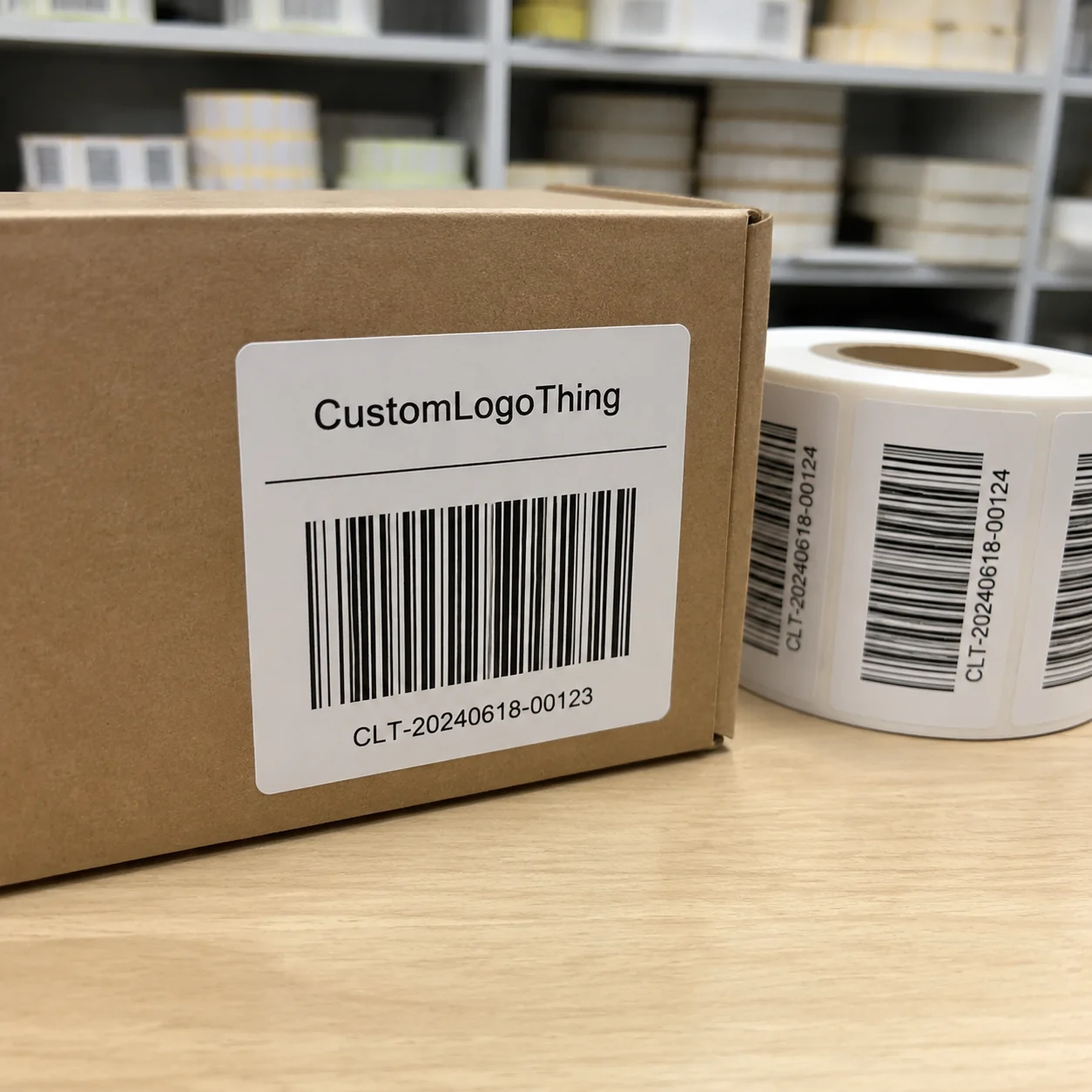
Barcode and batch-code integration is another place where buyers can control complexity. If the label must include variable lot numbers, expiry dates, or serial codes, the workflow becomes more specialized. That can add setup charges, but it may also save time because the coding is handled in-line instead of as a separate process. The real question is not whether coding costs more. It is whether it reduces labor and error downstream.
Legibility is non-negotiable. Dosage guidance, storage instructions, caution statements, and ingredient references need to remain readable after packing, shipping, and storage. Small type can be acceptable if the substrate and finish support it, but buyers should not squeeze copy into a layout that becomes hard to read just to save a fraction of a cent. If the text is dense, the smarter move is often to revise the layout rather than trim the label price again.
Proofing is where many orders go wrong. Before production begins, buyers should verify spelling, copy order, barcode accuracy, units of measure, and line breaks. A screen proof is not enough by itself; a printed hard copy often reveals spacing issues that digital mockups hide. That matters more when artwork contains regulatory text in multiple languages or long caution statements.
Packaging standards can help frame quality expectations. Transit-handling tests from organizations such as ISTA are useful when labels need to survive distribution abuse, and paper-source documentation through groups such as FSC may matter when paper-based components are part of the order. Not every label needs every certification, but serious buyers should know which documents matter for their channel and market.
Quality control should include more than a final visual check. Good buyers ask how the supplier checks adhesive tack, registration accuracy, color consistency, and barcode scan performance. If the order includes lots or expiry data, a sample scan before the full run can catch problems that are expensive to fix after labeling starts. Those checks are not extra ceremony; they are the cheapest way to avoid rework.
Care labels unit cost for vitamin brands: what drives pricing
Care Labels Unit Cost for vitamin brands is driven by a handful of variables that buyers can actually control. Material selection is usually the biggest one. Paper is lower cost than synthetic stock. Heavy-duty moisture-resistant films cost more, but they also reduce damage and rework. Then comes print coverage: more ink, more colors, and more coverage generally mean higher cost per piece.
Quantity changes the math. Lower MOQs usually carry a higher unit cost because setup charges are spread across fewer pieces. That is not a trick. It is basic production economics. If you order 500 labels, press setup, proofing, and handling matter much more than if you order 10,000. The drop in price at larger volume can be substantial, especially on digital or short-run jobs where fixed costs dominate the first batch.
Design efficiency matters as well. A cleaner layout with fewer colors, fewer special finishes, and fewer version splits often lowers production complexity. That does not mean the label has to look plain. It means the layout should be deliberate. If a brand can reduce one PMS color, consolidate SKUs, or standardize the label size across flavors, the savings can be real without weakening the presentation.
Below is a practical pricing model buyers can use when comparing Care Labels Unit Cost for vitamin brands across volume tiers. These figures are directional only because material, finish, and print coverage can move them up or down.
| Quantity | Simple paper label | Mid-tier synthetic label | Premium finish label | Common cost drivers |
|---|---|---|---|---|
| 500 pcs | $0.18-$0.35 | $0.24-$0.45 | $0.35-$0.65 | Setup charges, proofing, small-run handling |
| 1,000 pcs | $0.11-$0.24 | $0.16-$0.32 | $0.24-$0.48 | Still setup-heavy, but better material spread |
| 5,000 pcs | $0.04-$0.10 | $0.07-$0.16 | $0.12-$0.24 | Better bulk pricing, more efficient press time |
| 10,000 pcs | $0.03-$0.08 | $0.05-$0.12 | $0.08-$0.18 | Higher throughput, lower cost per piece |
Those ranges can shift once you add lamination, custom die cuts, or variable data. That is why buyers should request pricing at 500, 1,000, 5,000, and 10,000 pieces. If a supplier only gives one number, you do not have enough information to make a real purchasing decision.
Tooling fees are less common for simple pressure-sensitive labels than they are for complex packaging components, but they can appear when a special die, custom shape, or unique finish is required. Ask directly whether the quote includes tooling fees, setup charges, plate charges, or repeat-order savings. Transparent quoting is more useful than a cheap headline price that expands after approval.
One more point: care labels unit cost for vitamin brands should be judged against avoidable cost. If a slightly better substrate prevents scuffing, and scuffing is forcing one in every fifty cartons to be relabeled, the more expensive label may be the cheaper one overall. That kind of calculation is easy to skip and expensive to ignore.
Process and timeline: from artwork approval to delivery
The production path is predictable, but only if the inputs stay stable. The normal sequence is quote request, spec confirmation, artwork submission, proofing, sampling if needed, production, quality check, and shipment. Every step depends on the previous one being clean. If the artwork changes after proof approval, the schedule moves.
Turnaround depends on order size, material type, and proof revisions. A straightforward digital label run may move faster than a specialty synthetic order with multiple versions. In practical terms, many jobs are completed in roughly 7 to 15 business days after final proof approval, though complicated orders can take longer. That is why launch planning should begin before the final brand deck is locked.
Delays usually come from three places: incomplete artwork, regulatory copy changes, and barcode data that is still being finalized. Supplement launches are especially prone to this problem. The product formulation is locked, but the label text keeps moving. Every change creates a new proof, and every proof adds time. It is avoidable if one person owns final sign-off.
Buyers should also plan around retailer deadlines and replenishment cycles. If a vitamin brand is supplying retail and DTC at the same time, the label order cannot drift because the shelf launch is fixed. Build in a cushion for shipping, inspection, and any reprint buffer. That cushion is cheaper than paying for expedited freight because the labels arrived late.
Packaging and waste considerations matter too. The United States Environmental Protection Agency’s packaging and sustainable materials resources can provide useful context on material selection and waste reduction priorities: EPA. A label order does not need a sustainability narrative to justify better planning, but preventable reprints are still waste worth tracking.
What to look for in a packaging supplier for supplement brands
A good label supplier for supplement brands understands both presentation and precision. That combination is harder to find than most buyers expect. Plenty of vendors can print a nice-looking label. Fewer can manage copy-heavy layouts, stay responsive to proof changes, and keep repeat orders consistent across color, adhesive, and finish.
Sample quality is the first thing to review. Then response time. Then repeat-order consistency. Those three signals tell you more than a polished sales page ever will. If a supplier cannot reproduce the same label across reorder cycles, the brand starts drifting in small but visible ways, and that is a problem for regulated or detail-sensitive packs.
Another sign of competence is how the supplier handles proof accuracy. Do they ask the right questions about dimensions, substrate, application method, and delivery deadline? Do they flag copy-density problems before press time? Do they confirm whether the label is meant for a curved bottle, a flat carton, or a pouch seal area? Those questions save money. They also show whether the vendor understands nutraceutical packaging or is simply quoting from a template.
Experience with health, wellness, and supplement packaging matters because these jobs often carry more text and more caution than a typical consumer label. A supplier who has handled those orders before is less likely to miss a regulatory note or overlook how a barcode sits beside small copy. That reduces rework and protects launch timing.
From a buyer’s perspective, the best supplier is not the one with the loudest pitch. It is the one that gives clear answers on unit cost, MOQ, repeat pricing, production timing, and proof workflow. If a quote is vague, ask for a line-by-line breakdown. That is normal procurement behavior, not micromanagement.
To compare suppliers properly, ask for sample images, a specification sheet, and a repeat-order process description. If they can show how they handle version control and proof sign-off, that is a positive sign. If they cannot explain the differences between paper, synthetic, and premium finish labels in plain language, keep looking.
A practical supplier check also includes the basics most buyers forget to ask. How are damaged rolls or misprints handled? What is the remake policy if the approved proof is wrong in production? Can they hold a repeat spec on file so the next order matches the first? Those answers reveal how the vendor behaves after the first invoice is paid.
Next steps to request an accurate quote and place an order
Accurate pricing starts with accurate inputs. Before requesting a quote, prepare the label dimensions, material preference, quantity, artwork file, application method, and delivery deadline. If the label has variable data, batch codes, or multiple versions, include that too. The more complete the spec sheet, the more reliable the quote.
Ask for a tiered quote so you can compare care labels unit cost for vitamin brands at different volumes. A good supplier should be able to show what happens at 500, 1,000, 5,000, and 10,000 pieces, and explain where the price drops come from. That gives you a real basis for MOQ decisions and demand planning.
Before submission, confirm every line of copy. Check compliance statements, measurement units, barcode content, and finish requirements. Then request proof turnaround timing and sample options if needed. If the launch date is fixed, say so clearly. Production slots move quickly, and delays often come from silence rather than complexity.
Once the proof is approved, lock the order and protect the production window. That is the point where the packaging budget becomes real. Compare unit prices, verify the proof, then move forward. If that process is handled well, care labels unit cost for vitamin brands becomes a controlled input instead of an unpleasant surprise.
Frequently asked questions
What affects care labels unit cost for vitamin brands the most?
Material type, print coverage, quantity, finishing, and setup complexity are the biggest drivers. Lower MOQs usually increase unit cost because fixed production steps are spread across fewer pieces. If you add variable data or special finishes, the price can move again. Adhesive strength and liner type may also matter on certain runs.
Can I lower unit cost without reducing label quality?
Yes. Simplify the layout, reduce unnecessary colors, and choose a material that matches the packaging environment. Ordering in larger quantities often lowers the per-label price more effectively than changing the artwork alone. The key is cutting complexity without cutting readability or durability.
What minimum order quantity should vitamin brands expect for care labels?
MOQ varies by material and print method, but digital runs can often start lower than traditional methods. Ask for tiered pricing so you can see how the unit cost changes as volume increases. That makes it easier to plan for launch runs and replenishment orders. Very short runs may carry noticeably higher setup cost per piece.
How long does production usually take after artwork approval?
Turnaround depends on order size, proof revisions, and material availability. Most delays come from artwork changes or incomplete copy, so final approval timing matters. Simple runs may move in about 7 to 15 business days after approval, while more complex jobs can take longer. Rush orders often cost more and leave less room for quality checks.
What should I send to get an accurate quote for vitamin care labels?
Provide dimensions, quantity, material preference, artwork file, application type, and deadline. The more complete the spec sheet, the more accurate the unit pricing and timeline will be. If you have version splits or batch-code requirements, include those as well. A supplier can quote faster and more reliably when the spec is complete.