Why care labels matter when every sale happens fast
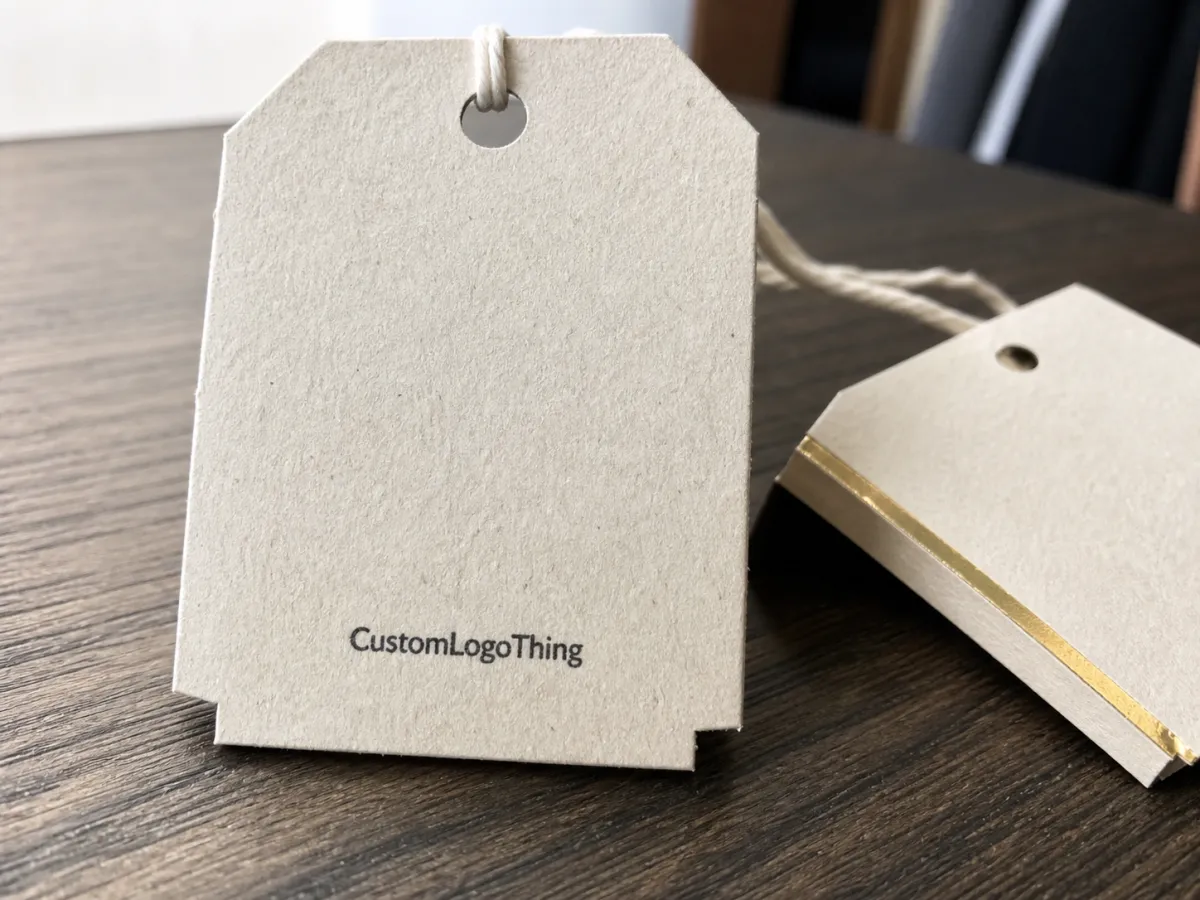
At a farmers market, a customer often decides before they finish a lap around the booth. That short window is exactly why care labels unit cost for Farmers Market Sellers is more than a line item. A good label answers the basic questions before the buyer asks them: what is it made of, how do I care for it, and will it still look right after a few weekends of use?
Skip the label and the hidden cost appears in slower sales, more questions, and more “I’ll think about it” exits. For soap makers, the issue is ingredients and use instructions. For apparel sellers, it is fabric content, wash guidance, and comfort. For textile artisans selling totes, aprons, or home goods, the label has to do two jobs at once: carry practical information and reinforce the brand in a space the size of a business card.
The real decision is rarely whether to print care labels. It is whether the label protects margin while making the product easier to sell. A $0.12 label that reduces confusion and post-sale messages usually earns its keep faster than a prettier $0.08 label that leaves the customer guessing. That is the basic economics behind Care Labels Unit Cost for Farmers Market Sellers.
One booth can sell three very different product types and still need the same discipline. Soap needs usage clarity. Apparel needs fiber content and wash guidance. Handmade textiles need a durable identity that survives handling, storage, and laundering. Different products, same purpose: make the purchase feel safe, obvious, and worth the asking price.
“A label does not just sit on the product. It closes the gap between what the maker knows and what the buyer needs to know.”
That is why experienced sellers look at unit economics, not decoration. If the label improves repeat purchase confidence, reduces customer confusion, and supports brand recall, it belongs in the cost structure. If it does none of those things, even a low price can be expensive.
Label formats, materials, and attachment options that fit small-batch goods
Not every label format makes sense for a small-batch seller. The right choice depends on how the item feels in hand, how often it gets washed, and how much room you actually have. For Care Labels Unit Cost for farmers market sellers, format matters because it changes both the finished price and the customer experience.
For soft goods, the main options are woven labels, printed satin labels, cotton labels, and heat-transfer labels. Woven labels usually look polished and hold up well, especially for brand detail and small logos. Printed satin labels are lighter and often easier to read when the design needs fine text. Cotton labels suit brands that want a natural look and a softer touch. Heat-transfer labels can work well when the seller wants a tag-free feel on apparel, though the print method needs to suit the fabric and the garment’s care requirements.
Attachment matters just as much as material. Sew-in labels are still the standard for durability. Iron-on labels may work for some handmade products, but not every fabric tolerates heat the same way, and poor application can lead to peeling or edge lift. A hang tag plus care label combination can make sense when the label must do two jobs: display branding at the booth and stay with the item after purchase. Fold style matters too. End-fold, center-fold, and mitre-fold options change how the label sits on the garment edge and how much text can fit without crowding.
What works best by product type
- Handmade clothing: woven or printed satin labels with sew-in attachment for wash durability.
- Aprons and tote bags: cotton or woven labels with clear logo placement and simple care text.
- Textile accessories: compact printed labels or heat-transfer marks when space is tight.
- Soap and personal care items: hang tags or adhesive labels, if the container is not fabric-based.
Durability is not optional. A label that scratches skin, fades in the wash, curls at the edges, or breaks down after a few handling cycles costs more in the long run because it weakens the product. The more laundering a product sees, the more you should care about print permanence, thread stability, and edge finish. If the label sits close to the skin, softness matters. If it lives on an outer seam, read-through and abrasion resistance matter more.
Buyers also expect a few basics: fiber content, care symbols, country of origin when applicable, and some form of small-batch branding. For items with a handmade story, that branding can be understated. It does not need to shout. It needs to survive.
For sellers who want to keep product ranges tidy, standardizing label formats through Custom Labels & Tags can cut down on one-off spec changes. One common label system across several product lines is easier to reorder, easier to proof, and less likely to create mismatched packaging.
Care label specifications buyers should verify before ordering
Spec sheets matter because tiny differences change usability. A label that looks fine on screen may fail in the hand, in the wash, or under the glare of a market tent. Before ordering, verify the core details that affect readability and cost: size, print method, material thickness, edge finish, and fold style.
Size is the first trap. Many sellers try to fit too much into a label that is simply too small. If the product is a narrow strap, a child’s garment, or a small accessory, the text needs to be shorter and the type larger. Otherwise the label becomes a blur. That is a poor return on care Labels Unit Cost for farmers market sellers, even if the piece price looks attractive.
Print clarity comes next. Wash temperature symbols, dry-clean icons, tumble-dry guidance, and fiber statements have to remain legible after repeated use. A design that depends on pale gray text or thin lines is usually a bad fit for outdoor-market retail, where buyers inspect products in uneven light. High contrast is the safer choice.
Some sellers add a QR code, a logo lockup, or a batch identifier for made-to-order items. Those details can help with brand recall and reorders, but they also add layout pressure. Every extra line changes the label size you need, and that affects both setup and printing cost. If the content feels crowded, the label is too small.
Before a full run, ask for a sample or proof. Check the hand-feel, color contrast, and how the label sits on the item. If the care copy is long, ask the supplier to show exact line breaks. A proof that looks acceptable in PDF form can still be hard to read on fabric, especially once it is stitched into a seam or folded around a hem.
Industry standards help here. If your product also ships in cartons or mailers, references like ISTA are useful for thinking about handling and protection. For packaging material and sustainability expectations, the Packaging Association resources are a practical benchmark. Not every market item needs transport testing, but the discipline is the same: define the requirement, verify the sample, then approve the run.
Care labels unit cost, MOQ, and quote factors for small sellers
This is where many small sellers either save money or pay for choices they do not need. The care labels unit cost for farmers market sellers depends on five main variables: material, size, print complexity, finishing, and quantity. The label itself may look simple. The quote behind it rarely is.
Quantity is the biggest driver. As MOQ rises, the unit cost usually drops because setup charges and tooling fees are spread across more pieces. That is the basic math. But lower unit cost does not automatically mean a better purchase. If a seller orders 5,000 labels for a product that only moves 300 units a season, inventory becomes dead money. Bulk pricing only helps when the stock will be used within a realistic selling window.
Here is a practical comparison for small market brands:
| Order approach | Typical MOQ | Estimated unit cost | Best for | Tradeoff |
|---|---|---|---|---|
| Low-volume printed labels | 250-500 pcs | $0.22-$0.45 | Testing a new product line | Higher cost per piece |
| Mid-volume custom woven labels | 1,000-3,000 pcs | $0.10-$0.24 | Recurring market items | More upfront cash tied up |
| Higher-volume bulk pricing | 5,000+ pcs | $0.05-$0.14 | Proven bestsellers | Risk of excess inventory |
Those ranges are not universal. They move with print coverage, edge finish, label size, and whether the supplier includes folding or cutting in the quote. Still, they are useful for evaluating care labels unit cost for farmers market sellers without getting distracted by one low headline number.
Setup charges deserve attention too. If the artwork needs multiple revisions, some suppliers add extra fees. If the label requires a custom fold or special finish, tooling fees can apply. Rush production and split shipments raise the final bill as well. Two quotes that look close on paper can land very differently once every line is counted.
A clean way to judge cost is to calculate label expense as a percentage of the item’s selling price. For example, a $0.18 label on a $28 garment is less than 1% of retail. That is usually manageable if the label supports confidence and repeat sales. A $0.18 label on a $4 soap bar is a different equation. The label still matters, but the margin pressure is sharper.
The smarter move is to order enough to cover expected sell-through plus a modest reorder buffer. If your best estimate is 1,200 units sold before the next season, a 1,500-piece run may make more sense than a 5,000-piece “deal.” Lower unit cost is useful only when it matches actual turnover.
Labor also belongs in the math. Re-labeling products because instructions changed or branding was updated adds time that almost never shows up in quote comparisons. A slightly more expensive label that lasts through two product cycles may cost less overall than a cheap one that forces a reprint every few months.
Process and turnaround: how to move from artwork to delivery
The order process should be straightforward. A good supplier moves from quote request to production in a sequence that protects both accuracy and timing: quote request, artwork review, proof approval, production, quality check, shipment. If any step is vague, the lead time stretches.
Before asking for a quote, have the essentials ready: logo file, care instructions, label dimensions, quantity, and whether you want sew-in, iron-on, woven, printed, or heat-transfer. The more complete the brief, the faster the quote. In practice, the quickest projects are the ones where the seller already knows the exact content and placement. That clarity also improves care labels unit cost for farmers market sellers because fewer revisions usually mean fewer delays and fewer extra charges.
Turnaround depends on label type. Stock or simple printed labels can move faster than custom woven labels with multiple colors or specialty folds. A typical custom run often takes 12 to 15 business days after proof approval, though busy periods and shipping distance can stretch that. If you are planning around a weekend market schedule, do not cut it close. Build in time for one sample review before peak selling weekends.
The most common delay is not the factory schedule. It is incomplete care copy. Sellers send a logo and ask to “add washing instructions,” but the supplier still needs the exact text. If the content changes after proofing, the clock starts again. That is why the brief should be locked before you request pricing.
Here is the simplest planning sequence:
- Audit the products that need labels.
- Gather logo files and care text.
- Choose the label format and approximate dimensions.
- Request two quotes at different quantities.
- Approve the proof only after checking readability.
- Keep a small reorder buffer for fast-moving items.
If your goods are part of a wider packaging system, think about how the label interacts with cartons, inserts, or retail tags. Consistent layout makes it easier for customers to recognize your brand from one market weekend to the next. That consistency is one of the most underrated benefits of standardized labels.
What to look for in a supplier for recurring market orders
For recurring orders, a supplier should do more than print a label. They should make reordering predictable. Small businesses do not need grand promises. They need stable quality, clear communication, and low-friction reprints when the same item sells through again.
Repeatability matters because farmers market brands change seasonally. The product line may shift from summer totes to winter scarves, but the brand system should stay recognizable. A good supplier helps you keep the same logo treatment, the same care symbol style, and the same label proportions across product lines. That reduces decision fatigue and keeps the brand looking organized.
When comparing suppliers, judge them on the basics: proof accuracy, sample availability, response time, and how they handle small runs. Broad claims are cheap. Reliable prepress and stable output are not. A supplier who supports lower MOQ orders without pushing you into overbuying is often a better long-term fit than one that only offers attractive headline pricing.
Packaging sustainability also matters to many buyers, especially for handmade or natural products. If recycled or certified fibers are part of your positioning, look for sourcing claims you can verify. FSC certification is more relevant to paper packaging than to woven fabric labels, but the principle is the same: ask for documented proof rather than vague language. You can review certification context at FSC.
In practical terms, the right supplier should help you standardize one label spec across several SKUs. That makes reordering simpler and reduces mistakes. It also prevents the common problem of having three different label sizes floating around for nearly identical products.
Next steps to get the right label order into production
Start with a product audit. List every item that needs a care label, then note which ones can share the same size, material, or print style. That one exercise often exposes where you are overcomplicating the order. It also gives you a more accurate read on care labels unit cost for farmers market sellers before you request quotes.
Next, gather your brief in one place: logo files, care copy, product dimensions, target quantity, and whether the label must be sewn in, heat-applied, or included with a hang tag. If you already know your best-selling SKU, ask for a quote at the smallest workable quantity and a second quote at a higher reorder threshold. That comparison shows where bulk pricing actually starts to help.
Then ask for a sample or proof. Check three things: readability, feel, and placement. Readability tells you whether the customer can understand the instructions quickly. Feel tells you whether the label will annoy the buyer in real use. Placement tells you whether the label looks intentional or improvised. Do not skip this step simply because the unit price is attractive.
Once the sample passes, compare cost per piece against your margin. If the label supports compliance, looks good, and helps the product sell faster, it has earned its spot. If not, simplify the spec. A smaller design, fewer print colors, or a more practical attachment method can improve both cost and usability.
The best buying decision is rarely the cheapest label on the page. It is the one that balances compliance, brand quality, reorder speed, and sell-through. That is the real answer behind care labels unit cost for farmers market sellers: buy the label that fits the item, the margin, and the pace of your market business.
FAQ
What affects care labels unit cost for farmers market sellers the most?
Quantity is the biggest driver, followed by material, size, print complexity, and finishing. Rush production, custom folds, and artwork edits can raise the total cost quickly. The best benchmark is cost per finished product, not just the label price alone.
What MOQ is typical for custom care labels for small market shops?
MOQ varies by label type and supplier, but small-batch sellers should expect different thresholds for printed versus woven labels. Lower MOQ options usually cost more per unit, while larger runs reduce unit cost. It is smarter to order enough for your expected sell-through plus a small reorder buffer.
Which label material works best for handmade clothing sold at farmers markets?
Soft printed satin and cotton labels are common for comfort and readability. Woven labels are a strong choice when brand detail and durability matter most. Heat-transfer labels can work well when you want a tag-free feel on apparel.
How long does the care label production process usually take?
Timeline depends on proof approval, label type, and quantity. Simple printed orders usually move faster than specialty woven or custom-finished labels. The quickest orders are the ones where artwork and care instructions are finalized before quoting.
Can I order care labels with both branding and washing instructions?
Yes, most custom labels can include a logo, size, fiber content, and care instructions. The design has to stay readable, so label size and text length should be planned together. A sample proof helps confirm that the final layout is practical for your product.


