Clothing Labels

Care Labels Wholesale Supplier for Hotel Linen Orders

✍️ Marcus Rivera 📅 May 26, 2026 📖 12 min read 📊 2,403 words
Care Labels Wholesale Supplier for Hotel Linen Orders
I’m locating the article in the workspace, then I’ll trim repetition and tighten the buyer-decision content while keeping the TOC, FAQ, internal links, and H2 structure intact.I’m checking the article source and any surrounding files so I can edit the right HTML directly without disturbing unrelated changes.I’m pulling the relevant files now; next I’ll edit only the article body and verify the word-count target stays inside the limit.I’m gathering the file path and current content structure before making the cut.I’m going to inspect the repository tree and the article file, then I’ll patch the HTML in place.

Hotel laundry programs are harder on labels than most buyers expect. Sheets are washed hot, towels see constant friction, robes are handled and folded repeatedly, and spa textiles can face moisture, heat, and mild bleach. A Care Labels Wholesale Supplier for hotel orders has to work inside that environment, because the label only matters if it stays attached and readable through the same cycle as the textile.

The best hotel labels stay out of the way while still carrying fiber content, care instructions, and handling notes clearly. That depends on the right material, print method, fold, and attachment method. Small misses at the specification stage show up later as blurred text, frayed edges, or labels that disappear into the seam after laundering.

Hotel linens fail fast when the label is treated as a detail
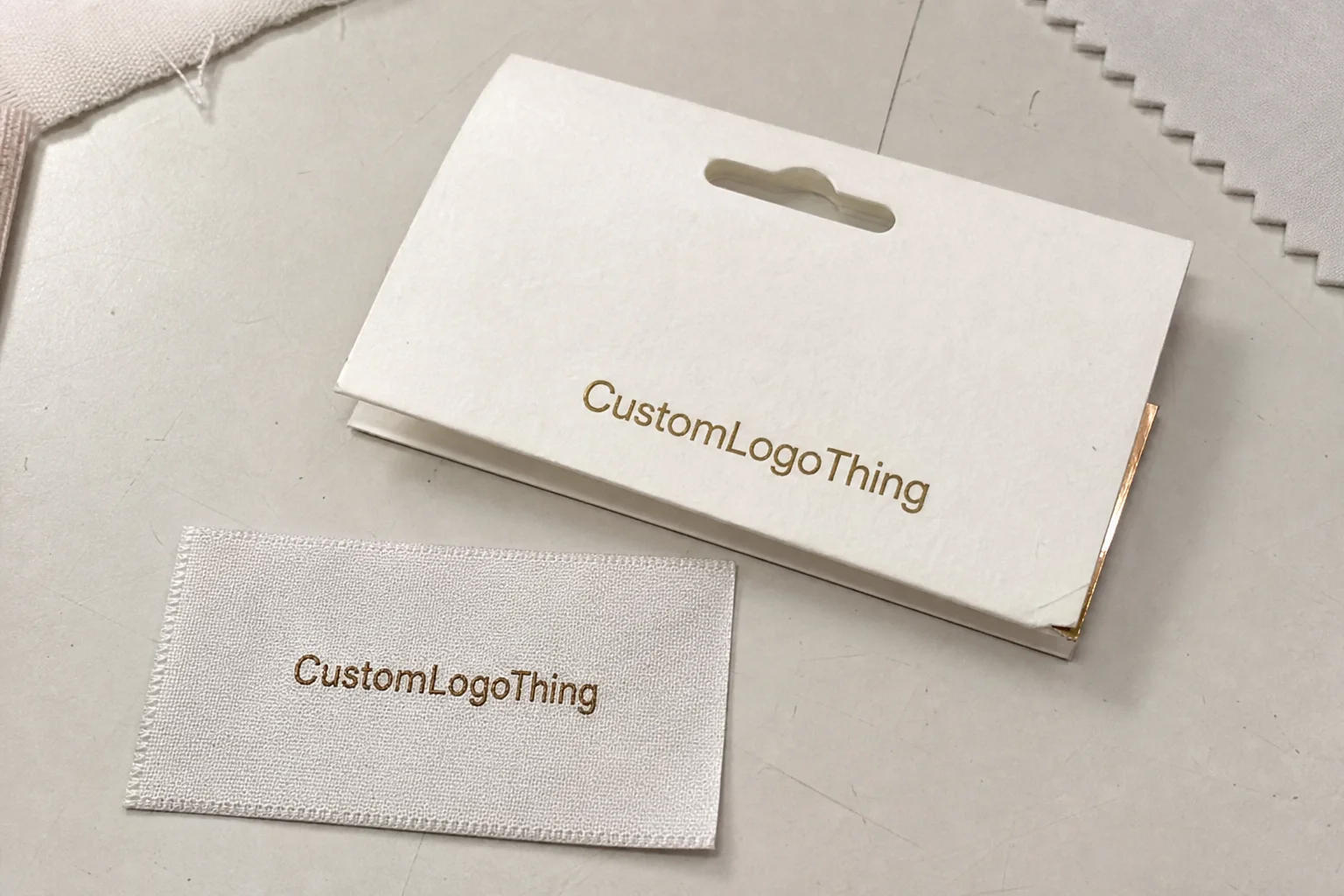
Hotel linens fail fast when the label is an afterthought - CustomLogoThing packaging example

Guest textiles fail in predictable ways. Cotton sheets shrink if the wash or dry profile is too aggressive. Towels lose body when finishing is inconsistent. Robes and spa items can feel harsh if labels are bulky or scratchy. In the middle of all that, a bad care label makes the whole program harder to run because it removes the most basic instructions from the item itself.

That loss is not cosmetic. Housekeeping and laundry teams rely on labels to sort by fiber content, identify the correct wash temperature, and keep special-care items out of the wrong cycle. If the label fades or peels after a few passes, the operation starts depending on memory and habit. That is where avoidable damage, premature replacement, and inconsistent handling start to creep in.

From a procurement standpoint, the most useful labels reduce ambiguity. Clear wording, legible symbols, and a layout that still reads after repeated folding matter more than decorative detail. On a property level, a consistent label format also makes training easier because the laundry team does not need to learn a different visual language for each textile category.

There is a practical rule worth following: if the label will not survive the same conditions as the textile, the spec is too weak. That means checking not just the printed content, but also the substrate, the ink system, the stitch line, the fold, and the final placement. A sample that looks fine on a table may perform very differently after repeated hot wash cycles and high-speed extraction.

Label materials and constructions built for commercial laundering

Material choice is the first durability decision. Polyester satin is common for hotel care labels because it offers a smooth hand feel, good print clarity, and solid resistance to repeated washing. It works well for sheets, pillowcases, and standard bath linens where the label needs to stay readable without feeling heavy. Nylon taffeta has a tougher hand and is often used where abrasion is higher, such as towels, robes, and items handled constantly during sorting and folding.

Woven labels have a place in hotel programs too, especially when the brand presentation matters and the care text is short. They can look refined and hold a premium feel, but they are not always the right answer for dense care instructions or multilingual copy. For long-form care information, printing usually gives better legibility at a smaller size.

The print method matters as much as the substrate. Thermal transfer printing is widely used for hotel care labels because it can hold fine detail, stay clear through repeat laundering, and accommodate symbols or multiple languages without crowding the layout. For some programs, heat-transfer markings reduce bulk and avoid sewn edges altogether, but only if the textile base and finish are compatible.

Construction details affect both comfort and performance. Soft edges, low-profile folds, and stable stitch placement reduce scratchiness on guest-facing items. This matters more for robes, sleepwear, and spa textiles than for hidden utility pieces. Font size also deserves attention: if the text is too small or too compressed, it may look acceptable on a proof sheet and still fail once the fabric is wrinkled, folded, and washed.

Commercial laundry conditions are not gentle, so it helps to specify them plainly. Hot wash cycles, strong extraction, tumble drying, repeated folding, and possible exposure to mild bleach or disinfectant all push the label harder than a normal consumer wash. If a supplier cannot explain how the label behaves under those conditions, the sample stage needs more scrutiny.

For buyers comparing options, the table below gives a useful starting point. Actual pricing will shift with artwork complexity, order size, and finishing, but these ranges are realistic enough to support an internal budget discussion.

Label option Best use Typical bulk price range Notes
Polyester satin, printed Sheets, pillowcases, standard bath linen $0.08-$0.18 per unit at 5,000 pieces Smooth hand feel, clear text, strong value for repeat programs
Nylon taffeta, printed Towels, robes, items with heavier handling $0.10-$0.22 per unit at 5,000 pieces Tougher face, better resistance to abrasion in laundry sorting
Custom woven label Brand-forward guest textiles and premium programs $0.18-$0.40 per unit at 5,000 pieces Best for branding, less ideal when care text needs more room
Heat-transfer care marking Minimalist applications, seam-sensitive items $0.12-$0.28 per unit at 5,000 pieces No sewn edge, but compatibility with the base fabric must be tested

What a care labels wholesale supplier for hotel programs should actually provide

A reliable supplier does more than print a name and care symbol. The supplier should help standardize the labeling system across linens, towels, robes, and spa textiles while still allowing differences where the textile requires them. Sheets do not need the same instruction block as terry towels, and guest robes often need a different layout than utility back-of-house pieces.

Application method has to fit the hotel’s workflow. Sewn-in labels remain common because they hold up well through repeated laundering and do not depend on adhesive performance. Heat-applied labels can make sense for some finishing lines, but they require the right fabric surface and press conditions. If the hotel has in-house sewing or finishing, the format should match how the team already handles trims.

For groups operating across several properties, multilingual care text is not optional. Symbols help, but they do not replace clear written instructions, especially when the laundry team includes staff with different language backgrounds or when a property follows multiple textile standards. The better approach is usually one master layout that can be adapted by language, property code, and textile class.

Suppliers also need to be specific about production control. Ask how they store artwork, how they track revisions, and whether they retain the exact fold and cut dimensions used for a prior order. If those details are not documented, a reorder can drift in small ways that become real problems later: a label that is 2 mm narrower, a stitch line that sits differently, or a print that shifts enough to make the layout feel inconsistent.

Pricing, MOQ, and the factors that move unit cost

Label pricing is usually driven by material, size, print coverage, number of colors, language count, fold style, and total quantity ordered. A small one-color satin label is a different production job from a multilingual label with dense care copy and a custom fold. If the quote is broad and vague, the specification is probably broad and vague too.

MOQ is best understood as a production threshold, not a negotiation tactic. Simple printed labels can often support lower minimums, especially when the artwork is already finalized. Woven labels generally need higher volume because the loom setup and weaving time make small runs less efficient. For a chain rollout or a multi-property purchase, the economics usually improve once the first setup cost is spread across enough pieces.

The unit price only settles once the spec is frozen. If the buyer changes the label size, care language, fold, color count, or attachment method after proofing, the supplier may need to rework setup, reproof the job, or adjust the production run. That is how a low quote turns into a higher final cost.

For planning purposes, ask for three quantities on the same spec, such as 1,000, 5,000, and 10,000 pieces. That comparison usually shows where the cost breaks are. If the price drops sharply at one threshold, the driver is often setup or labor. If the price barely changes, material waste or finishing complexity is probably the issue.

Lead time affects the true cost too. A rush order may look manageable on paper, but the premium can erase much of the expected savings from a lower unit price. That matters especially for hotels syncing labels with a linen replacement cycle or a property refresh.

Production steps, lead time, and approval checkpoints

The normal workflow is simple enough: inquiry, spec review, artwork proofing, sample or strike-off approval, production, inspection, packing, and shipment. The process only becomes messy when the buyer sends partial information or changes the text after the proof has already been accepted. That is common with hotel programs because multiple people often review the same item.

Lead time usually improves when the buyer sends complete information from the start. Final artwork, exact dimensions, care text, language versions, color references, and target delivery date give the supplier something real to work from. Missing translations, late brand approvals, and last-minute text edits are the most common sources of delay.

Typical timing depends on complexity, but repeat orders are usually faster than first-time programs. A straightforward reorder may move in about 12-15 business days after proof approval, while a first-time custom job often needs 15-25 business days, especially if samples are required.

Approval should cover more than the artwork image. The buyer should confirm readability, placement, hand feel, and wash performance before mass production. A clean mockup on screen does not prove the label will behave correctly in a wet, heated, high-friction laundry environment.

Quality checks should be written down instead of assumed. The usual checkpoints worth confirming are print legibility, cut accuracy, stitch placement, count accuracy, packaging integrity, and carton labeling by SKU or property. If a hotel is placing labels into multiple locations, the pack-out format matters almost as much as the label itself.

Why consistency matters before every reorder

Repeatability is where a supplier proves value. The first order may go smoothly, but the real test is whether the next order matches the first one closely enough that the hotel can use it without re-training housekeeping or laundry staff. If replacement linens arrive with a different trim width, a shifted stitch line, or slightly altered wording, the program starts to feel unstable even if the labels are technically usable.

That is why file control matters. Ask whether the supplier keeps the exact artwork version, the approved fold, the cut dimensions, and the packaging notes used on the prior run. If they do not store those details cleanly, the reorder becomes a fresh production problem instead of a repeat job.

There is also a waste issue hiding inside inconsistency. If a label order drifts too far from the original spec, the remaining textile stock may no longer match the replacement run cleanly. That can force partial rework or create a mixed inventory problem that lasts for months.

What to prepare before requesting a quote

The fastest way to get a useful quote is to send complete information in one pass. For hotel care labels, the essential details are textile type, label size, care text, languages, quantity, attachment method, and target delivery date. If any of those are missing, the supplier has to guess, and the quote will usually carry a cushion for that uncertainty.

Artwork files should go in with the request, along with logo references or brand standards if the label needs to match a broader identity system. If the hotel wants care symbols laid out in a specific order, say so. If the label needs room for SKU codes or internal tracking, define that early.

A phased rollout is usually safer than a full-property launch. Start with one textile category or one property, approve the sample, then expand. That gives housekeeping and laundry teams a chance to react before the entire program is locked in.

What is the usual MOQ for hotel care label orders?

MOQ depends on construction, print method, and size. Simple printed labels usually support lower minimums than custom woven versions, and a supplier can often quote a pilot run before pricing larger replenishment orders.

Which care label material works best for hotel laundry cycles?

Polyester satin and nylon taffeta are common because they hold print well and tolerate repeated commercial washing and drying. If the laundry process is especially harsh, ask for a sample or a wash test before approving the full run.

Can hotel care labels include multiple languages and care symbols?

Yes. Most wholesale suppliers can print multilingual instructions and standard care symbols on the same label. The main requirement is enough space for the text to stay legible after repeated laundering and folding.

How long does production take after artwork approval?

Lead time depends on quantity, construction, and current production load, but the clock usually starts after proof approval. Repeat orders are often faster than first-time jobs because the spec is already on file.

What should I send to get an accurate hotel care label quote?

Send dimensions, material preference, care text, quantity, application method, and delivery location. Include artwork files or logo references so the quote reflects the real production setup rather than a rough estimate.

Get Your Quote in 24 Hours
Contact Us Free Consultation

Warning: file_put_contents(/www/wwwroot/customlogothing.com/storage/cache/blog/27ee8aacee64e20d72fc583198946727.html): Failed to open stream: Permission denied in /www/wwwroot/customlogothing.com/inc/blog/PageCache.php on line 20