One sticker can solve several expensive packaging and labeling problems at once. It can cover a packaging revision, identify a short-run variant, add a compliance note, or upgrade plain stock packaging without forcing a full print rerun. That practical value is why buyers keep looking for cheap Vinyl Stickers Custom options.
Vinyl is often chosen because it handles moisture, rubbing, and repeated handling better than paper. That matters on bottles, jars, bins, poly mailers, cartons, tools, and promo items. A low-cost sticker does not need a premium build, but it does need the right material, adhesive, and format for the real job.
If you are comparing suppliers for packaging support or a broader Custom Packaging Products program, define the application first. The sections below cover the details that affect performance, price, lead time, and inspection.
Cheap Vinyl Stickers Custom Orders Work Harder Than Most Buyers Expect
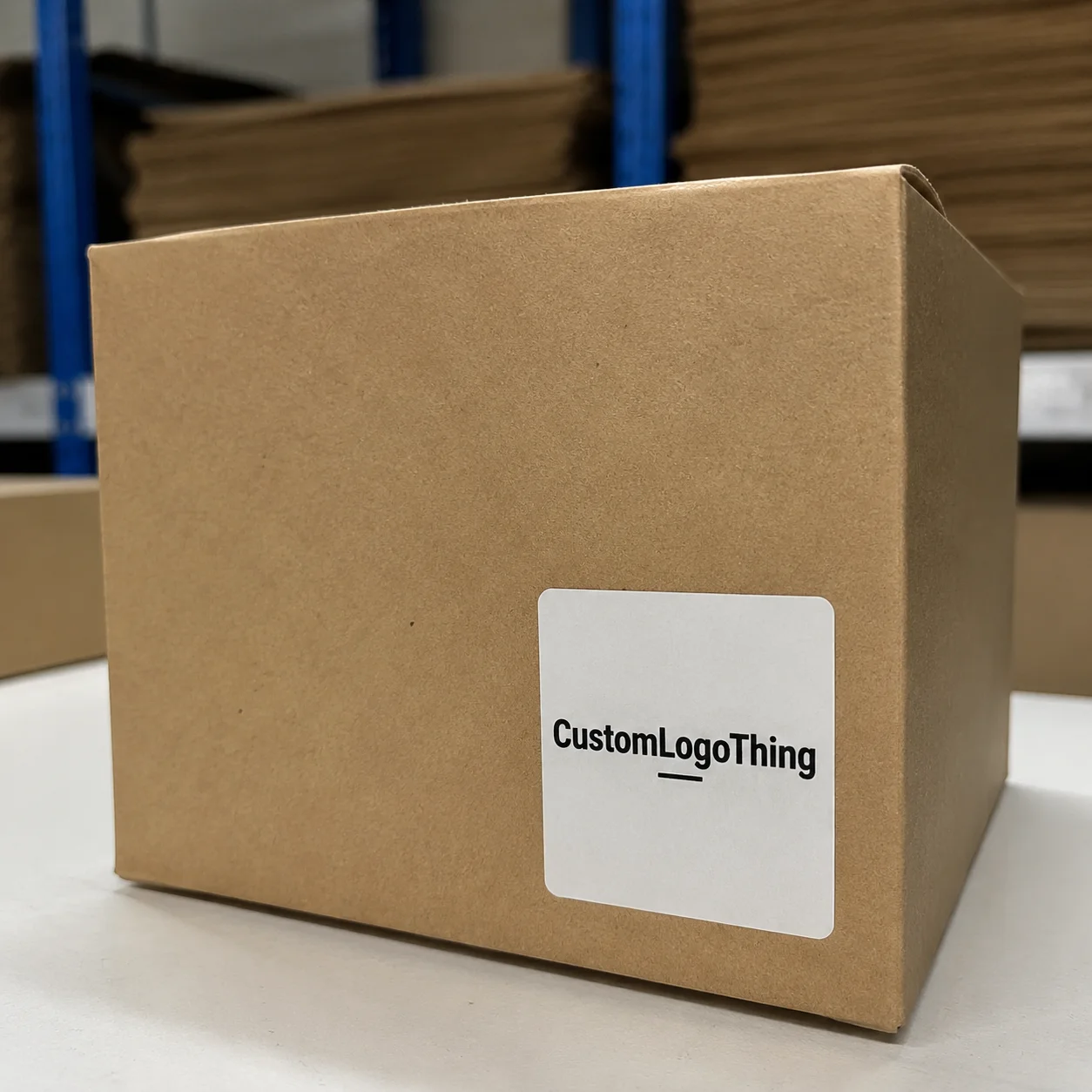
Most buyers start with price, but the real advantage is flexibility. A low-cost vinyl sticker can add branding to a plain box, label warehouse inventory, support a retail test, or update cartons already in stock. For small and mid-size runs, that can protect inventory and avoid a full packaging reprint.
Vinyl also gives a wider performance margin than paper. It usually handles splash exposure, light scuffing, refrigeration condensation, and hand oils more reliably. That does not mean every use needs an outdoor-grade decal, only that film face stock is often the safer choice for everyday handling.
What decides whether these orders work is specification discipline. The wrong adhesive can lift from corrugated or slick plastic. The wrong finish can create glare or scratch too easily. The wrong format can slow application and add labor after delivery.
Practical rule: if a sticker is standing in for a packaging change, build it for the actual surface, handling level, and service life rather than the lowest quote alone.
Material and Adhesive Details That Actually Affect Sticker Performance
For most budget-focused jobs, the standard starting point is white calendered vinyl, often around 3 mil to 4 mil before liner and finish. It prints cleanly, cuts consistently, and has enough body for hand application without feeling flimsy. For indoor packaging, product labeling, and promotional use, it is the baseline material for many cheap Vinyl Stickers Custom orders.
Gloss usually gives stronger color pop and a wipe-clean face. Matte reduces glare and is often easier to read under retail or warehouse lighting. If staff need to write lot codes or dates by hand, a writable matte face is usually the better option.
Adhesive is where low-cost jobs often succeed or fail. A permanent acrylic adhesive is the standard choice for corrugated, glass, many plastics, and metal. A removable adhesive suits temporary promotions or event use, but it is not automatically residue-free on every surface, especially after heat exposure or long dwell time.
Surface matters more than many first-time buyers expect. Smooth glass is forgiving. Coated paperboard is usually straightforward. Corrugated performance depends on coating, dust, and fiber pull. Some plastics, especially low-surface-energy films, are harder to bond to than they appear. Poly mailers often work well, but slick films should still be tested if adhesion matters.
Common surface needs:
- Corrugated boxes: permanent adhesive, applied to smooth, clean panels when possible
- Glass jars and bottles: strong bond and a finish that fits shelf presentation
- Plastic containers: confirm substrate type if label failure would be costly
- Metal bottles and tools: better scuff resistance is often worth it
- Poly mailers: usually compatible, but test on slick films
- Bins and equipment: choose based on cleaning routine, rubbing, and lifespan
Format affects labor as much as material does. Die-cut singles fit handouts and resale packs. Kiss-cut sheets are efficient for hand application at a table or packing station. Roll format usually makes more sense once quantities rise or the stickers are used repeatedly in production.
Even a good vinyl construction has limits. Dusty, oily, rough, sharply curved, or low-energy surfaces can defeat a standard adhesive quickly. That is why a default spec does not fit every order.
Core Specifications Buyers Should Confirm Before Requesting a Quote
Most quote delays come from missing production details. Before requesting pricing, confirm size, shape, quantity, artwork versions, finish, adhesive, and delivery format. Those points determine most of the cost and much of the lead time.
Size is one of the biggest cost levers. A small dimension change can reduce sheet yield enough to raise unit price. If the budget is tight, standard sizes often lay out more efficiently than unusual dimensions.
Shape matters too. Circles, squares, rectangles with rounded corners, and ovals are usually the most economical. Intricate contour cuts with sharp points or tiny internal angles slow finishing and increase waste.
Most vinyl stickers print in CMYK process. That covers general branding, logos, and illustrations. If color matching is sensitive, ask early whether a digital match is acceptable. Standard white vinyl also avoids the added complexity of white ink used on clear or metallic materials.
Artwork quality is another frequent issue. Vector files such as AI, EPS, or press-ready PDF are usually best because they keep edges crisp and simplify cut paths. Raster art can work if it is built at 300 dpi at final size, but low-resolution files often delay proofing.
Before approval, buyers should understand three basic prepress terms:
- Bleed: commonly 0.125 inch beyond the cut line
- Safe area: keep text and critical details at least 0.0625 to 0.125 inch inside the cut
- Cut tolerance: slight movement can occur, often around ±1 mm depending on size and process
Delivery format deserves more attention than it usually gets. Individual pieces are useful for giveaways. Sheets are often the most efficient option for hand application. Rolls make sense for larger runs, cleaner storage, and repeat use. If you already order Custom Labels & Tags, matching the sticker format to your current workflow can save time.
Extra finishing only helps if it solves a real problem. UV laminate helps with sunlight exposure. A writable matte face supports variable notes. Back-slit liners can speed peeling on larger pieces. A restrained spec is usually the better value.
Pricing, MOQ, and Unit Cost: What Makes Vinyl Stickers Affordable
The main cost drivers are direct: material grade, sticker size, shape complexity, quantity, finish, format, and shipping distance. Add multiple artwork versions, specialty laminate, or a difficult custom cut, and pricing moves up.
MOQ varies by supplier and process. Some digital jobs can start around 50 to 100 pieces, but low quantities carry a higher unit cost because setup, inspection, and packing are spread across fewer stickers. Once orders move into the hundreds or low thousands, pricing usually becomes more efficient.
Sheet yield is one of the most overlooked cost factors. Compact shapes that nest well on a sheet usually cost less than irregular outlines with wasted space between them. Even a small size revision can improve yield enough to matter.
| Buying Scenario | Typical Specs | Common Quantity Range | Indicative Cost Pattern | Best Format |
|---|---|---|---|---|
| Short-run promo handouts | White vinyl, gloss, simple die-cut | 100-500 pieces | Often about $0.20-$0.80 each depending on size and cut style | Individual die-cut or small sheets |
| Product labeling for small batches | White vinyl, matte or gloss, permanent adhesive | 500-5,000 pieces | Often around $0.04-$0.18 each | Sheets or rolls |
| Repeat operational or packaging use | Standard vinyl, simple shape, repeat art | 5,000+ pieces | Can fall below $0.03 each on efficient layouts | Rolls or bulk sheets |
These ranges are directional, not universal. A 1-inch circle and a 5-inch laminated contour-cut decal do not belong in the same cost discussion. Freight also matters. A low unit price can stop looking cheap once rush production or expedited shipping is added.
For a meaningful comparison, ask suppliers to quote using the same size, quantity breaks, finish, adhesive needs, and application surface. Otherwise the lowest number may reflect a weaker construction, not a better value.
Simple cost-control habits usually help:
- Use standard sizes when they fit the design
- Keep shapes easy to cut and easy to nest
- Reduce the number of SKUs in one run when possible
- Choose sheets for hand application if rolls are unnecessary
- Combine repeat demand into larger quantities when timing allows
Production Steps, Turnaround, and Lead Time From Proof to Delivery
The workflow is usually straightforward: inquiry, artwork review, quote, proof approval, printing, finishing, packing, and shipment. Problems usually begin when front-end details are incomplete or the proof is approved too quickly.
To start cleanly, send final size, quantity, finish, adhesive preference if known, format, and shipping destination. If there are multiple versions, list them clearly at the beginning.
The proof stage deserves a careful review. Check dimensions, cut-line placement, orientation, border width, version count, and any small text. If the design includes QR codes or fine rules, review them at actual size.
For straightforward repeat jobs, production often lands around 5 to 8 business days after proof approval. New cut shapes, multiple SKUs, specialty finishes, or larger quantities can push that into the 8 to 15 business day range. Transit is separate and often adds another 2 to 7 business days.
Keep manufacturing lead time and courier time separate, especially if the stickers are tied to an event, launch, or packaging change. That is a common planning error.
Common causes of delay include:
- Low-resolution artwork
- Missing bleed or unclear cut lines
- Unclear finish or adhesive requirements
- Repeated proof revisions
- Quantity changes after approval
Buyers working within larger packaging systems may also find testing guidance from ISTA useful, while teams reviewing chain-of-custody standards often refer to FSC for paper-based packaging components used alongside labels and cartons.
Common Buying Mistakes That Raise Cost or Cause Sticker Failures
The most common mistake is buying on price alone without defining the surface, environment, and expected lifespan. A sticker for a dry carton shipper is not built the same way as one for a refrigerated bottle, a handled tool case, or an outdoor handout.
Adhesive mismatch causes many avoidable failures. Cold, damp, powder-coated, curved, or low-surface-energy materials can all reduce bond strength. If the substrate is unusual, say so before quoting.
Artwork problems also drive rework. Tiny stickers cannot carry long text, a full QR code, decorative lines, and complex legal copy while staying readable. Either simplify the design or increase the size.
Overcomplicated shapes create waste without adding much practical value. The same is true of finish upgrades chosen for appearance alone. Laminate is worth paying for when the sticker will be handled heavily, exposed to moisture, or used outdoors. It is less useful on a dry indoor carton that will be discarded quickly.
Format mistakes quietly raise labor cost. Ordering individual die-cut pieces for a job that would be faster in sheets is a common example. That mismatch may not show in the quote, but it appears later in application time.
For unusual surfaces, outdoor use, or color-critical branding, a small test run is usually cheaper than discovering failure after a full order arrives.
How to Choose the Right Supplier and Place Your Next Sticker Order Smoothly
A good supplier is usually easier to identify than the marketing suggests. Start with a few practical checks: material clarity, quote accuracy, prepress support, proof discipline, and reorder consistency.
Prepress review is one of the best signals. A careful supplier should flag missing bleed, weak cut paths, border alignment problems, or text that is too small before production. That saves money because mistakes are still cheap to fix.
The strengths that matter most are usually simple:
- Practical MOQ options for test runs and repeat orders
- Useful material and adhesive recommendations based on end use
- Lead times that sound realistic, not optimistic
- Advice on format, shape simplification, or quantity breaks
- Stable repeat output for packaging consistency
A thoughtful supplier can also reduce hidden cost by suggesting sheets instead of singles, trimming size slightly to improve yield, or consolidating demand into a better quantity tier.
What Should You Look for When Ordering Cheap Vinyl Stickers Custom?
Start with the end use, not the headline price. The best cheap Vinyl Stickers Custom order usually comes from a short list of questions: what surface is it going onto, how long does it need to stay there, will it face moisture or abrasion, and should it arrive as singles, sheets, or rolls?
For most orders, buyers should confirm:
- Exact finished size and shape
- White vinyl or another face stock only if needed
- Permanent or removable adhesive
- Gloss, matte, laminate, or writable finish
- Indoor, refrigerated, or outdoor use conditions
- Application surface such as corrugated, glass, metal, or plastic
- Preferred format for application and storage
- Quantity tiers for unit-cost comparison
Before requesting pricing, gather these details in one message:
- Artwork file, ideally vector PDF, AI, or EPS
- Final dimensions in inches or millimeters
- Quantity tiers such as 250, 500, 1,000, and 5,000
- Surface and application details
- Permanent or removable adhesive preference
- Indoor or outdoor use
- Gloss, matte, or other finish request
- Individual, sheeted, or roll format
- Delivery address and in-hands deadline
That checklist makes supplier quotes easier to compare and helps keep a low-cost order from turning into a replacement order.
FAQ
How cheap can custom vinyl stickers be at small quantities?
Small runs usually cost more per piece because setup, printing, cutting, inspection, and packing are spread across fewer units. Standard white vinyl, simple shapes, and sheet format are often the most economical combination for low quantities. Asking for several quantity breaks is useful because moving from 100 pieces to 250 or 500 can improve unit cost significantly.
What is the MOQ for cheap custom vinyl stickers?
MOQ depends on the supplier, sticker size, and production method. Digital printing often allows short runs starting around 50 to 100 pieces, but better pricing usually appears once quantities are high enough to improve sheet or roll efficiency.
Are cheap vinyl stickers custom orders still waterproof and durable?
Many are water-resistant or waterproof in normal use, but durability depends on the full construction, not the word vinyl alone. Face stock, adhesive, finish, laminate, and the application surface all matter. A basic indoor sticker may handle light moisture well, while one exposed to abrasion, sunlight, or repeated washing usually needs a stronger build.
How fast is turnaround for custom vinyl sticker orders?
Simple repeat jobs often produce in about 5 to 8 business days after proof approval. New die-cut shapes, multiple versions, specialty finishes, or larger quantities can take 8 to 15 business days. Shipping time is separate, so always confirm both production lead time and transit.
What artwork files are best for cheap custom vinyl stickers?
Vector files are usually best because they scale cleanly, keep edges sharp, and support accurate cut paths. High-resolution raster files can still work for photo-based art if they are built at final size and 300 dpi. Include bleed, safe margins, and a clear cut line to avoid proof delays.

