Most sticker failures are not printing failures. They are use-case failures: paper labels on wet coolers, low-tack adhesive on curved bottles, QR codes shrunk until they become decorative confetti. If you plan to order Vinyl Stickers Custom online, the useful question is not “Which option looks best in the calculator?” It is “What does this sticker have to survive?”
Vinyl stickers are made-to-order adhesive graphics built from your artwork, size, shape, quantity, material, finish, and packaging requirements. Online ordering usually means you upload art, configure specs, review a proof, approve production, and receive the finished stickers by shipment. Simple on the surface. Less simple when the sticker needs to hold on a freezer carton, shampoo bottle, laptop, powder-coated tool case, or subscription box that will be handled by five different people before it reaches the customer.
What “Vinyl Stickers Custom Online” Really Means
Ordering vinyl stickers custom online means buying adhesive graphics built for a specific job, not pulling a generic pack from a shelf. Most suppliers let you choose size, shape, finish, adhesive, quantity, print format, and sometimes retail packaging. Those choices matter. A 2-inch logo sticker for a bakery box does not need the same construction as a 5-inch outdoor decal on a contractor’s truck box.
Vinyl differs from basic paper stock in several practical ways. It has a stronger film structure, better water resistance, cleaner die-cut edges, and more tolerance for handling, shipping friction, and retail display. Paper stickers still have a place: envelope seals, short-term thank-you labels, dry indoor packaging. Vinyl is usually the better bet for bottles, mailers, laptops, event giveaways, outdoor decals, and Product Packaging That gets handled more than once.
“Custom” can mean a custom size, shape, artwork file, gloss or matte finish, removable adhesive, roll format, backing card, or branded sticker pack. For merch sellers, the difference between a loose sticker and a retail-ready sticker pack is not cosmetic. It changes labor, unit cost, presentation, barcode handling, and perceived value.
Practical rule: choose the sticker spec around the surface, environment, and lifespan first. Then worry about the finish. Guessing is a lovely way to buy twice.
Good sticker orders start with boring details: where it sticks, how long it must last, what touches it, whether it gets wet, and who applies it. Boring details save money. Fancy assumptions do not.
How Custom Vinyl Sticker Ordering Works Online
The standard online ordering model is fairly direct. Choose a sticker type, enter size and quantity, upload artwork, select a finish, review a digital proof, approve production, and wait for shipment. For standard die-cut or kiss-cut stickers, many suppliers offer instant pricing. That works well for simple shapes, common vinyl stock, and normal quantities such as 100, 500, 1,000, or 5,000 pieces.
Custom quotes are better for specialty adhesives, unusual shapes, roll labels, large orders, multiple designs, retail sticker packs, or anything with custom backing cards. If you need stickers for Custom Labels & Tags, product packaging, subscription boxes, or operational application on jars and bottles, a quote keeps the calculator from treating every job like a laptop sticker. Calculators are useful. They are not mind readers. Shocking, I know.
A digital proof shows the cut line, bleed, safe zone, color layout, dimensions, and obvious file issues before production. Proofing is not just a polite ritual. Once you approve it, the factory prints what was approved. That is not cruelty. That is manufacturing. Check spelling, quantity, size, finish, material, and shipping address before approval.
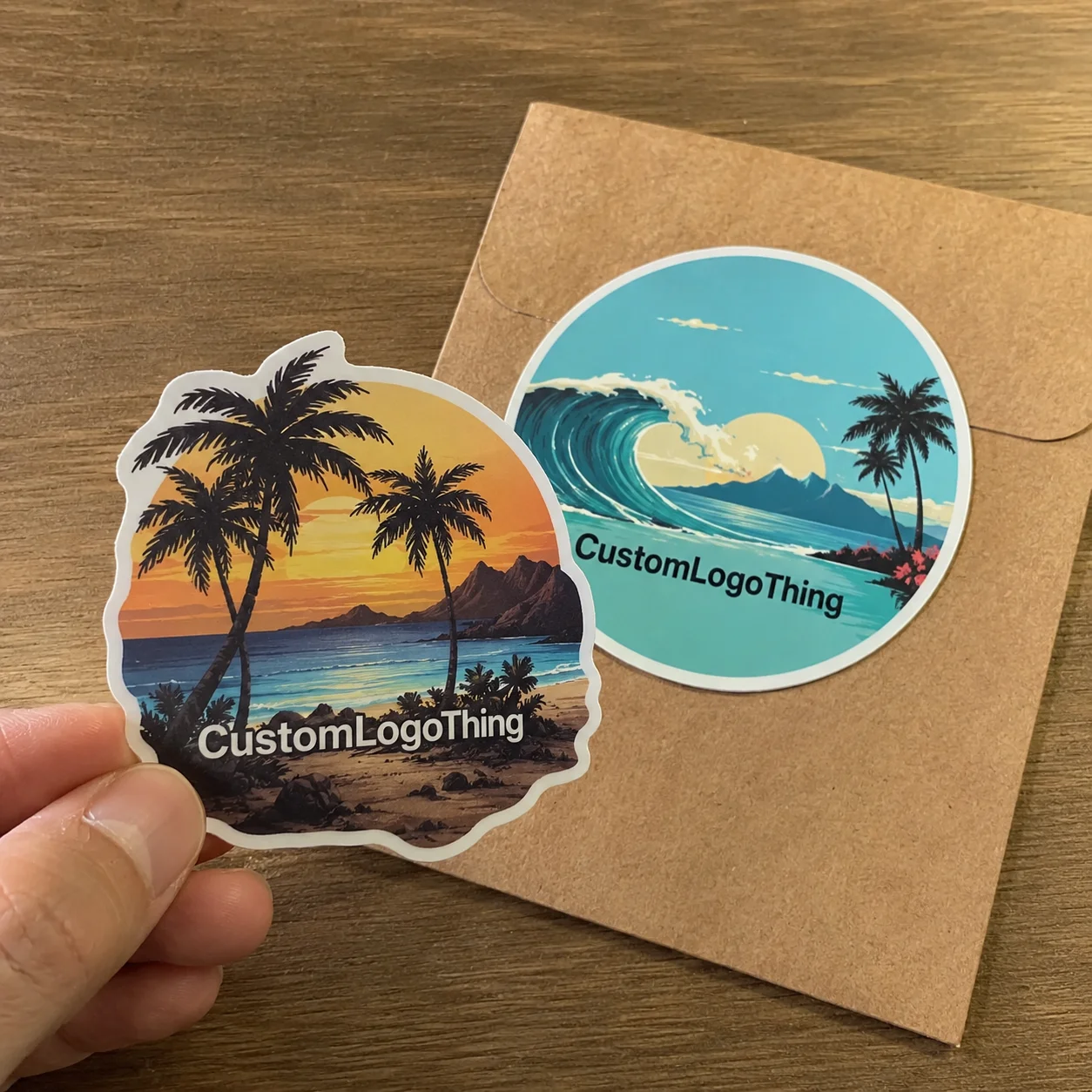
Common production formats include individual die-cut stickers, kiss-cut sheets, roll labels, sticker packs, and larger decals for windows, equipment, mailers, bottles, laptops, or event giveaways. Die-cut stickers follow the outside shape of the artwork. Kiss-cut stickers stay on a larger backing sheet, which can make peeling easier and protect delicate edges. Roll labels support faster hand application or machine labeling, especially for packaging lines.
Ordering goes faster when the buyer knows the intended surface, exposure conditions, expected lifespan, and purpose. Is the sticker for package branding, resale, promotion, inventory marking, outdoor use, or a limited campaign? A sticker meant to last 30 days on a clean mailer does not need the same build as a waterproof vinyl decal on an ice bucket.
Key Specs That Decide Sticker Quality
Material choice drives performance. White vinyl is the standard workhorse for bold logos, product labels, and promotional stickers because color prints cleanly on an opaque base. Clear vinyl creates transparent effects on glass, windows, jars, and bottles, though white ink may be needed behind artwork if the design must stay visible. Removable vinyl works for laptops, seasonal campaigns, and temporary promotions. Permanent vinyl is better for long-term product packaging, equipment, or outdoor decals.
Adhesive matters more than most people think. Permanent adhesive works for boxes, jars, rigid packaging, and general product use. Removable adhesive helps when residue would annoy the customer. Freezer-grade adhesive is used for cold storage and frozen products because ordinary adhesive can stiffen and fail. High-tack adhesive helps on textured cardboard, low-energy plastics, and difficult surfaces. Test if the surface is polypropylene, powder-coated metal, rubberized coating, or anything oily. Those materials love making buyers regret assumptions.
Finishes change both appearance and durability. Gloss gives color pop and a slick retail feel. Matte looks softer, especially for minimalist packaging. Satin sits between the two and works well for retail cartons, jars, and mailers. Laminate adds scuff, moisture, and UV protection, often extending usable life outdoors or on handled products. For outdoor stickers, ask whether both the ink and laminate are rated for the intended exposure; vinyl film alone does not guarantee long-term color retention.
| Spec Choice | Best Use | Watch-Out |
|---|---|---|
| White vinyl | Bold logos, mailers, product packaging, giveaways | Not transparent; may look heavy on glass |
| Clear vinyl | Windows, bottles, transparent effects | Needs white ink for strong opacity on dark surfaces |
| Removable adhesive | Laptops, short campaigns, promo use | Not ideal for rough, wet, or long-term surfaces |
| Permanent adhesive | Packaging, jars, boxes, long-term branding | Can leave residue if removed |
| Laminated finish | Outdoor, wet, high-handling, retail display | Adds cost but usually earns its keep |
Cut type affects usability. Die-cut stickers look polished because the outside edge follows the design. Kiss-cut sheets are easier to peel and useful for multiple designs. Rolls are faster for application teams working through hundreds or thousands of units. Sheets are practical for small batches, internal use, and multi-design sets.
Size is not a vanity contest. Small text needs room. QR codes need scannable space. Thin tails, tiny points, and delicate shapes can lift or tear during peeling. A 1-inch sticker can work for a simple icon, but not for a logo, tagline, URL, and QR code all fighting for oxygen. Cute is nice. Usable is better.
Artwork should be clean before pricing. Vector files such as AI, EPS, or PDF are best for logos and cut paths. Raster artwork should be 300 DPI at final print size. Use CMYK color setup when possible, add bleed beyond the cut line, and keep important text inside the safe zone. For general guidance on distribution testing and packaging performance, the International Safe Transit Association is a useful reference point, especially if stickers are part of shipped branded packaging.
Cost, Pricing, and MOQ for Custom Vinyl Stickers
The biggest cost drivers are sticker size, quantity, material, finish, laminate, number of designs, cut complexity, adhesive type, proofing time, and packaging format. Individual loose stickers are usually cheaper than sorted sticker packs with backing cards and bags. Roll labels can be economical at volume, but setup, winding direction, roll count, and core size requirements may create minimums.
Small runs have higher unit costs because setup, file handling, proofing, and cutting time are spread across fewer pieces. A 100-piece run may feel expensive per sticker. A 5,000-piece run often drops sharply because production time is distributed across volume. Bigger is not automatically smarter. Ordering 10,000 untested stickers for a tricky bottle surface is how boxes of regret are born.
| Order Type | Typical Planning Range | Best Fit |
|---|---|---|
| Small simple die-cut stickers | Often higher per unit at 50–250 pieces | Testing, events, small merch drops |
| Standard bulk vinyl stickers | Unit cost improves around 1,000–5,000 pieces | Brand giveaways, inserts, package branding |
| Laminated waterproof stickers | Costs more due to film and finishing | Bottles, coolers, outdoor decals, bath products |
| Retail sticker packs | Adds labor for sorting, cards, bags, or sets | Merch, retail packaging, subscription boxes |
| Roll vinyl labels | Best economics at operational volumes | Jars, bottles, boxes, fulfillment lines |
For rough planning, simple small vinyl stickers may land in a low per-piece range at bulk quantities, while specialty waterproof, laminated, clear, metallic, or high-tack builds cost more. Retail sticker packs add labor because someone has to sort designs, place backing cards, pack sets, and keep counts accurate. Labor is not magic. It shows up in the quote.
MOQ depends on the supplier and production process. Digital printing can allow very low quantities, sometimes 25, 50, or 100 pieces for standard stickers. Custom roll labels, specialty films, spot white ink, foil effects, and complex finishing may require higher minimums. If you are ordering stickers for resale, ask whether different designs can be combined under one order or whether each design carries its own setup cost.
To get an accurate quote, send size, quantity, shape, material preference, finish, artwork file, intended surface, indoor or outdoor use, packaging needs, delivery location, and target deadline. If budget is tight, ask for two or three options: matte versus gloss, laminated versus unlaminated, individual stickers versus roll format. Do not choose only the lowest unit price. A cheap sticker that peels off in three days is not a bargain. It is a tiny branded apology waiting to happen.
Process, Timeline, and Turnaround From Proof to Delivery
A typical production flow starts with quote request or online configuration, then artwork upload, file check, digital proof, customer approval, printing, cutting, finishing, quality control, packing, and shipping. The timeline usually starts after proof approval, not after someone sends a blurry screenshot from a phone. Production needs usable art and a confirmed spec. That detail irritates people until they have been on the manufacturing side for five minutes.
Standard digital sticker jobs may move quickly after proof approval, often within a few business days for simple specs, depending on workload and quantity. Larger orders, specialty films, complex die-cut paths, lamination, multiple SKUs, retail-ready packing, and freight distance add time. Custom packaging products with several printed components can take longer than a loose sticker run, especially if boxes, labels, inserts, and stickers are being coordinated together.
Rush production may be possible for standard specs. Specialty materials and complicated finishing cannot always be bullied by a calendar. If the job requires freezer adhesive, unusual clear film, outdoor laminate, or packed retail sets, build in time for sourcing and handling. Also build in internal review time for brand approvals, barcode checks, QR testing, color expectations, and shipping buffers before events, product launches, subscription box packing, or retail ship dates.
Quality control should include more than counting pieces. Sensible checks include color consistency against the approved proof, clean cut lines, correct dimensions, adhesive compatibility, laminate alignment, roll direction if applicable, pack counts, and barcode or QR scans. For roll labels, confirm the unwind direction before production if the stickers will feed into an applicator. A beautiful roll wound the wrong way is still a production problem.
Order samples or a small pilot batch before major launches, especially for outdoor use, curved containers, freezer products, bath products, or retail sticker packs. One tested sticker on the real surface teaches more than twenty confident emails. For sustainability claims or material questions tied to paper backing, forestry, or packaging sourcing, the Forest Stewardship Council offers useful context around certified fiber materials. Vinyl itself is a plastic film, so be precise about what part of the packaging your claim refers to.
Step-by-Step Guide to Ordering the Right Stickers
- Start with the use case. Decide whether the sticker is for product packaging, resale, giveaways, outdoor decals, shipping boxes, jars, bottles, laptops, windows, or equipment. A giveaway sticker and a compliance label do not need the same spec.
- Define the surface and environment. Smooth glass, cardboard, plastic, metal, textured stock, refrigerated packaging, wet areas, sun exposure, and frequent handling all affect material and adhesive choice. If the surface is low-energy plastic, say so early.
- Select the format. Choose individual die-cut stickers for handouts, kiss-cut sheets for easy peeling, rolls for application speed, sticker packs for retail, or decals for larger branded placements. Rolls often make sense when teams are labeling hundreds of units at a time.
- Set size based on legibility. Logos need breathing room, ingredient callouts need readable type, and QR codes need testing at the actual printed size. Print a paper mockup at 100% scale before ordering. Old-school, yes. Effective, also yes.
- Prepare artwork correctly. Include bleed, keep text inside the safe zone, convert fonts to outlines or package them, use high-resolution files, and label versions clearly. “Final_final_REALfinal.pdf” is not a filing system. It is a cry for help.
- Review the proof carefully. Check spelling, cut line, color expectations, dimensions, quantity, material, finish, and shipping address before approval. If five people need to approve it, send one consolidated revision, not five separate opinions in five separate threads.
- Test the real application. Apply one sticker to the actual jar, box, mailer, bottle, or display surface when possible. Give it time to cure, then rub it, chill it, wet it, ship it, or handle it the way customers will.
If your stickers are part of a larger packaging design, keep them consistent with cartons, labels, inserts, tissue, and mailers. Buyers notice a messy system. A matte black sticker on a gloss-heavy box can look intentional, but only if the rest of the brand language supports it. For coordinated launches, review your stickers alongside Custom Packaging Products so the color, finish, and scale work as a set.
For vinyl stickers custom online, the best artwork files are usually vector PDFs with a clear cut path, outlined fonts, CMYK colors, and at least 0.0625 inch bleed where needed. Some suppliers request 0.125 inch bleed, especially for larger pieces. Follow the printer’s template instead of recycling a random export and hoping physics takes the afternoon off.
Common Mistakes That Make Custom Stickers Peel, Fade, or Look Cheap
The most expensive mistake is ordering the wrong adhesive for the surface. Low-energy plastics, textured cardboard, powder-coated metal, cold containers, and oily surfaces can behave differently. A sticker that bonds beautifully to glass may fail on a squeezable plastic bottle. That does not mean the printer “used bad glue.” It may mean the adhesive was never matched to the job.
Skipping laminate is another common problem. If a sticker faces abrasion, moisture, sunlight, shipping friction, or repeated handling, laminate can be the difference between crisp branding and a scuffed mess. Gloss laminate gives shine and punch. Matte laminate gives a softer look and hides fingerprints better. Outdoor decals often need UV protection if color retention matters beyond a short campaign.
Artwork causes plenty of avoidable headaches: low-resolution logos, no bleed, thin lines, tiny text, untested QR codes, RGB colors that shift in print, and overly complicated cut paths. A QR code should be tested from the expected scan distance after sizing. For many printed stickers, codes under about 0.8 inch can become unreliable depending on contrast, quiet zone, and phone camera conditions. Do not make the code tiny just because the layout feels cleaner.
Shape can sabotage performance. Narrow points, fragile tails, and intricate edges can lift, tear, or make the sticker harder to peel. Delicate is not always premium. Sometimes it is just fussy. If the sticker will be applied by staff during fulfillment, a clean rounded shape can save minutes per hundred pieces. Minutes become money fast.
Quantity mistakes cut both ways. Ordering too few makes reorders expensive and can create batch variation. Ordering too many before testing can leave you with wrong inventory. Storage and application matter too. Stickers should be applied to clean, dry surfaces at a reasonable temperature, often around room temperature unless a specialty adhesive says otherwise. Dust, oil, condensation, and cold surfaces can ruin adhesion even when the sticker itself is perfectly made.
Next Steps Before You Request a Sticker Quote
Before requesting pricing for vinyl stickers custom online, gather the essentials: final artwork, target size, quantity, sticker format, finish, adhesive needs, indoor or outdoor use, application surface, expected lifespan, packaging requirements, ship-to location, and required arrival date. That list may feel like homework. Good. Homework is cheaper than reprinting.
If budget is uncertain, ask for two or three spec options. Compare matte versus gloss, laminated versus unlaminated, clear versus white vinyl, or individual stickers versus roll format. If the sticker must work on unusual surfaces, wet conditions, outdoor exposure, freezers, or retail products where returns are not hilarious, order samples or a small test run first.
Photograph the real application surface and share it with the supplier. A picture of the jar, box, bottle, mailer, cooler, or display can prevent a surprising number of bad assumptions. Include dimensions and explain how the sticker will be applied. Hand application by a small team is different from machine application on rolls. A flat mailer is different from a curved lip balm tube.
Strong sticker buying is not about chasing the cheapest default. It is about matching material, adhesive, finish, size, and format to the job. Define the job first, then choose the spec and pricing around that job instead of around a random calculator setting.
FAQ
Are vinyl stickers custom online waterproof?
Most vinyl stickers are water-resistant, and many can be made effectively waterproof with the right vinyl, adhesive, ink system, and laminate. For bottles, coolers, bath products, or outdoor use, ask for waterproof vinyl plus a protective laminate rather than assuming every vinyl sticker is built for soaking. Application matters too: stickers need a clean, dry surface and enough cure time before heavy moisture exposure.
What file type should I upload for custom vinyl sticker printing?
Vector files such as AI, EPS, or PDF are usually best for logos, text, and die-cut shapes because they scale cleanly. High-resolution PNG, TIFF, or PSD files can work for photo-style designs if they are at least 300 DPI at final print size. Include bleed, keep important details inside the safe zone, and outline fonts or package font files when possible.
How much do custom vinyl stickers cost online?
Pricing depends on size, quantity, material, finish, laminate, cut complexity, number of designs, adhesive type, and packaging format. Unit cost usually drops as quantity increases because setup, proofing, and production time are spread across more stickers. For an accurate quote, provide artwork, dimensions, quantity, finish, intended surface, indoor or outdoor use, and delivery location.
How long does it take to make custom vinyl stickers?
The timeline usually includes quoting, artwork review, proof approval, printing, cutting, finishing, quality control, packing, and shipping. Production timing typically starts after the proof is approved and usable artwork is confirmed. Rush options may be available for standard stickers, but specialty materials, complex cuts, large quantities, or custom packaging can add time.
Should I order die-cut, kiss-cut, sheets, or roll vinyl stickers?
Choose die-cut stickers for giveaways, branding, resale, and premium presentation where each sticker follows the artwork shape. Choose kiss-cut sheets when you want easier peeling, multiple designs on one sheet, or a backing area around delicate shapes. Choose rolls for faster application to products, boxes, jars, bottles, or operational packaging lines.