Two stickers can look nearly identical in a proof and perform very differently on a shipping carton, glass jar, water bottle, pouch, or retail display. That gap is why choosing the right Custom Stickers Company matters. You are not just buying print; you are buying a construction made up of face stock, adhesive, finish, cut method, and delivery format.
Most failures start with the wrong build, not the wrong artwork. A label that lifts on a cold bottle, a decal that will not stay on corrugate, or a matte surface that scratches in fulfillment usually points to material choice, adhesive strength, or missing surface protection.
The first buyer question is simple: do you need a low-cost sticker for short-term indoor use, or something built for moisture, abrasion, UV, refrigeration, or frequent handling? Once stickers become part of product packaging, retail packaging, or a broader package branding system, technical guidance matters more. If your business also uses boxes, mailers, or inserts, sticker specs should align with Custom Packaging Products and related Custom Labels & Tags so the final presentation feels consistent.
Why the right custom stickers company matters more than most buyers expect
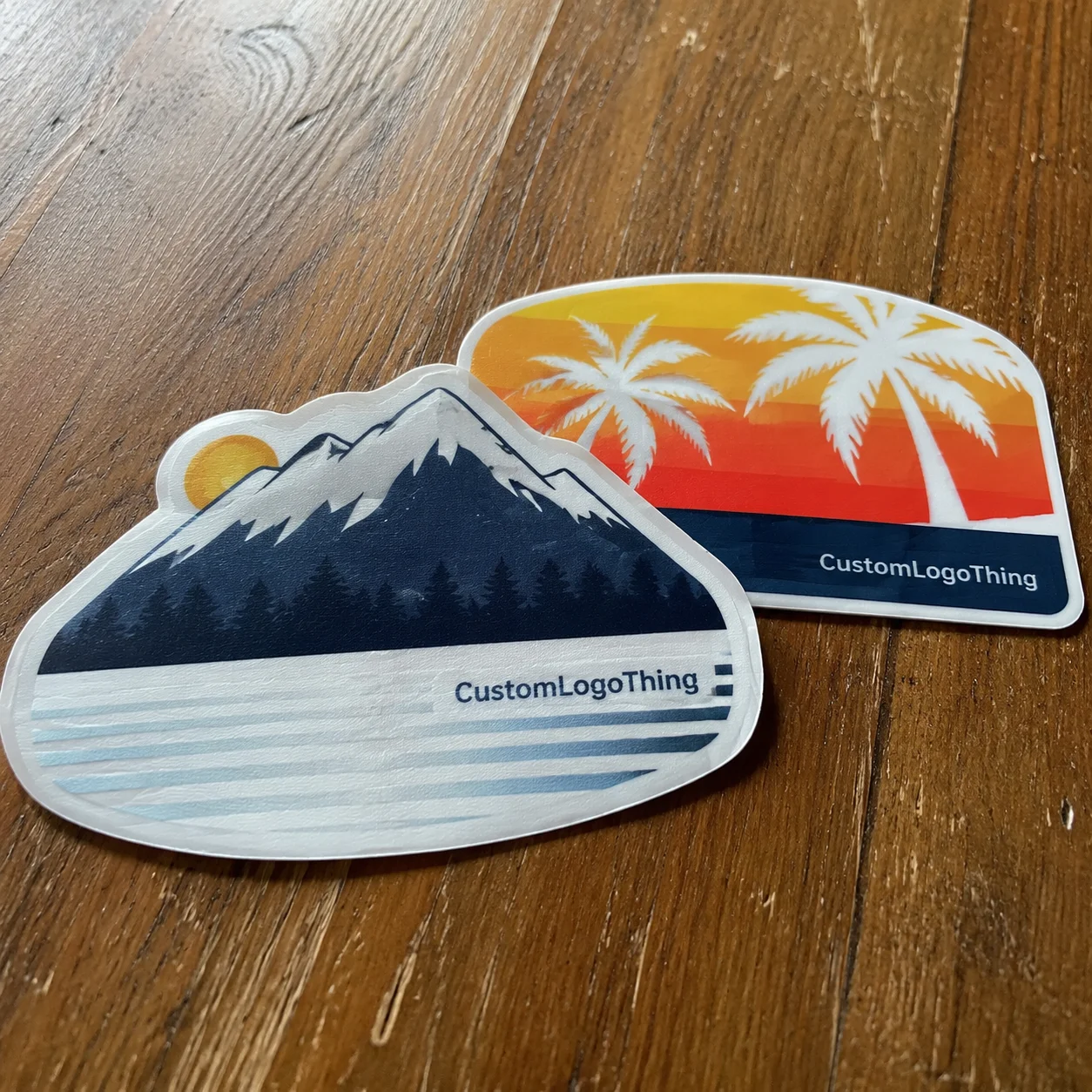
Many buyers treat stickers as a simple print purchase. In practice, they are closer to a converting job. A capable supplier starts with end use: what surface the sticker will bond to, how it will be applied, how long it needs to last, and what conditions it will face after application.
Those details change the recommendation. Smooth glass, coated paperboard, HDPE, textured kraft, and recycled corrugate do not behave the same. Hand application, dispenser use, and machine application also call for different formats and tolerances. If the finished package will sit in a freezer, humid bathroom, warehouse, or direct sunlight, the construction needs to match.
Buyers often lose money by comparing quotes that are not truly equivalent. One supplier may quote paper with standard permanent adhesive, while another quotes white BOPP with laminate and a stronger adhesive. The sizes may match, but the durability, shelf life, and application performance do not.
The sticker also has to fit the rest of the packaging system. If your brand already uses custom cartons or printed mailers, sheen, color consistency, opacity, and edge quality should not feel like an afterthought.
How sticker production works from artwork to finished rolls or sheets
Most orders follow a standard path: quote request, artwork review, material recommendation, proofing, approval, prepress, printing, finishing, cutting, packing, and shipment.
Format affects both cost and usability. The most common options are:
- Individual die-cut stickers for merch, giveaways, and promotional use.
- Kiss-cut sheets for small-batch manual application.
- Roll stickers for faster hand labeling or machine application.
- Transfer decals for lettering and graphics without a visible background.
Digital printing is common for short and medium runs because setup is fast and version changes are easier. It fits pilot runs, multiple SKUs, and quantities from the hundreds into the low thousands. Larger repeat runs or specialty effects may fit other print methods better.
Finishing has a big effect on both look and durability. Gloss boosts color and reflectivity. Matte reduces glare and can feel more premium, though some matte surfaces scuff more easily without lamination. Soft-touch lamination adds a refined feel but costs more and is not ideal for rough handling. UV-resistant overlaminates help outdoor graphics. White ink is often necessary on clear or metallic materials to preserve readability and color accuracy.
File setup matters too. A dieline defines the cut path. Bleed extends artwork past trim to prevent white edges. A safe zone keeps text and fine details away from the cut. Thin borders are risky because normal cutting tolerance can make them look uneven.
A laptop decal, tamper seal, and bottle label may share the same logo, but they should not be built the same way.
What should you look for in a custom stickers company?
Start with the questions they ask. A reliable Custom Stickers Company should ask about the surface, environment, application method, quantity range, and expected lifespan before recommending paper, BOPP, vinyl, polyester, or specialty film.
Look for clear proofs, realistic lead times, and recommendations tied to the job rather than a generic pitch. If the stickers will go on jars, pouches, shipping boxes, or consumer products, the supplier should be able to discuss adhesive strength, scuff resistance, roll orientation, and how the finish will work with the rest of your packaging.
Samples matter, especially for custom labels, branded decals, and roll stickers. A small live test often tells you more than a proof. Also review how the quote is written. If face stock, adhesive, finish, format, and timing are vague, price comparisons become unreliable.
Materials, adhesives, and finishes that decide whether a sticker actually works
The most important match is between material, adhesive, surface, and environment. That combination determines whether the sticker performs in real use.
Common face stocks and where they fit
Paper is usually the most economical choice for dry indoor uses such as box seals, information labels, and short-term promotions. It is a poor fit for moisture, oil, refrigeration, or heavy abrasion.
BOPP film is a common packaging material for jars, bottles, pouches, and personal care products. White, clear, and metallic BOPP offer better moisture resistance than paper and usually better durability in routine handling.
Vinyl is often used for decals that need flexibility, stronger outdoor life, or better conformity on curved surfaces. It usually costs more than BOPP, so it is not always necessary for standard packaging labels.
Polyester is a tougher, more dimensionally stable film for harsher or higher-heat environments. Some industrial or long-life applications need it, but many consumer-facing projects do not.
Clear films can create a no-label look on smooth plastic or glass, but they require careful planning. Without proper white ink, contrast, and varnish masking, readability can drop quickly, especially over dark contents.
Adhesives are not interchangeable
Permanent adhesive is common, but it is not automatically right for every job. Removable adhesive can be better for temporary promotions or window graphics. Repositionable options help when alignment matters. Freezer-grade constructions are designed for cold application and storage. High-tack adhesives are often needed on rough corrugate, textured papers, or low-surface-energy plastics.
Surface type changes the outcome. Glass is usually forgiving. Smooth PET and coated paper stocks are relatively manageable. Corrugate is harder because texture, dust, and recycled fibers reduce contact area. Curved containers also increase edge stress, raising the chance of lifting if the film is too stiff or the adhesive too weak.
Environmental exposure matters just as much as the substrate. Condensation, sunlight, abrasion, oil splash, and temperature swings can all shorten label life. A material that looks fine in a sample book may fail quickly in a cooler or during fulfillment.
Practical rule: define where the sticker will be stored, where it will be applied, and what happens after application. Those three answers usually narrow the correct construction fast.
Finish selection affects performance as well as appearance. Gloss improves pop. Matte softens glare. Lamination improves scratch and scuff resistance, which matters for tightly packed goods or frequent handling. If sustainability is part of the brief, ask about FSC-certified paper options through FSC and discuss recyclability honestly, since mixed-material constructions can improve performance while complicating recovery.
Sticker pricing, MOQ, and unit cost: what actually drives the quote
Sticker pricing depends on more than size. The main cost drivers are dimensions, shape complexity, material, adhesive, finish, print coverage, quantity, format, and freight. A 3-inch round paper sticker is not comparable to a 3-inch contour-cut clear BOPP sticker with white ink and matte lamination.
MOQ depends on the setup. Digitally printed sheet stickers may support minimums in the dozens or low hundreds. Roll formats, specialty films, and custom finishing often require higher minimums. Quantity breaks such as 250, 500, 1,000, 2,500, and 5,000 are common because unit cost usually improves as setup spreads across more pieces.
Compare both total order cost and unit cost. A larger run can be the better value if the design is stable and storage conditions are suitable.
| Specification | Typical Cost Effect | Notes |
|---|---|---|
| Paper vs. film stock | Film usually higher | BOPP or vinyl often costs more but improves moisture resistance |
| Standard shape vs. custom contour | Custom shape higher | Complex cuts can slow finishing and increase waste |
| No lamination vs. laminated | Lamination higher | Often worth it for scuff resistance and longer shelf life |
| Standard ink vs. white ink/specialty effects | Specialty higher | Clear and metallic stocks often require extra ink layers |
| 500 pcs vs. 5,000 pcs | Lower unit cost at higher qty | Total cost rises, but per-piece cost often drops sharply |
As a rough reference, simple indoor paper stickers in modest quantities may fall below $0.10 to $0.20 per piece, while more durable film constructions with lamination and custom shapes often land around $0.18 to $0.45 per piece in the low thousands. Specialty adhesives, clear materials with white ink, small runs, and rush service can push pricing higher.
To get usable quotes from a Custom Stickers Company, send dimensions, quantity tiers, surface type, use conditions, preferred format, and target turnaround from the start.
Production steps, lead time, and turnaround: what to expect before you order
The schedule usually follows a familiar sequence: inquiry, quote, proof, approval, prepress, printing, finishing, cutting, packing, and shipment. Straightforward digital jobs may be produced within a few business days after proof approval. Specialty materials, laminated roll labels, or multi-SKU orders often need closer to 7 to 15 business days, plus transit.
Approval speed affects the calendar directly. A simple order can lose several days to internal revisions even when production itself is short.
Lead times usually stretch for predictable reasons:
- Special-order materials or adhesives
- Multiple proof revisions
- Complex embellishments or lamination
- High piece counts or many SKUs
- Peak-season demand
- Roll orientation requirements for machine application
Rush service may be possible, but not every step compresses equally. Printing can sometimes move faster than laminating, and freight can be upgraded more easily than material sourcing. For launches, trade shows, or replenishment cycles, build in margin. If your team uses transit testing standards, references such as ISTA can help when evaluating how labels may hold up during distribution.
Common sticker ordering mistakes that create waste, delays, or bad adhesion
The most common mistake is choosing on price first and construction second. A cheaper sticker that fails on the shelf or in transit rarely stays cheaper once relabeling labor, waste, and reorders are counted.
Artwork issues are also common. Low-resolution files create fuzzy edges. Missing bleed can leave white slivers at trim. Thin borders often look off-center because of normal cutting tolerance. Clear film and metallic materials can also shift color if the white ink plan is weak.
Size and fit are another frequent problem. A sticker that looks right in a PDF may cross a seam, wrinkle on a taper, interfere with a flap, or look undersized on the real package. A full-size paper dummy tested on the actual package is a simple safeguard.
Skipping live-surface testing is risky. Adhesion should be checked on the real substrate, under real conditions, for at least 24 to 72 hours when the application is sensitive. That is especially important for refrigerated goods, flexible pouches, textured corrugate, and low-energy plastics.
Communication gaps create waste quickly. Vague quantities, unclear in-hands dates, and missing notes about machine application can push a job toward the wrong setup. Roll direction alone can be critical for an applicator.
Most sticker ordering problems are preventable. Clear specifications at the start save more time and money than fixes after production begins.
Next steps: how to request samples, compare quotes, and place a smarter sticker order
For better quotes, start with a clear brief. List the exact use case, artwork files, quantity breaks such as 250, 500, 1,000, and 5,000, and any non-negotiable requirements such as waterproof performance, freezer use, removable adhesive, or machine application.
If the surface is unfamiliar or the job is demanding, request sample packs or a small pilot order before committing to volume. A live test on the actual package is usually more useful than a polished mockup.
Compare quotes line by line:
- Face stock material
- Adhesive type
- Finish or lamination
- Format: rolls, sheets, or die-cut singles
- Lead time after proof approval
- Freight assumptions and ship method
- Proofing support and revision policy
The best order is the one that matches the surface, environment, visual standard, durability target, and pace of your supply needs. If the sticker carries your brand on shelves, jars, shipping boxes, or promotional kits, it deserves the same scrutiny as the rest of your packaging.
Frequently Asked Questions
What should I ask a custom sticker company before placing an order?
Ask which material and adhesive fit your surface and environment, whether the stickers should be supplied as rolls, sheets, or individual die-cut pieces, and what proofing support is included. You should also confirm color expectations, production time, transit time, and whether samples or a small test run are available.
How do custom sticker companies calculate pricing?
Pricing usually depends on size, quantity, shape complexity, material, adhesive, finish, print coverage, and packaging format. Features such as white ink, metallic effects, lamination, or weather-resistant construction can raise cost. Rush service and freight can also change the final number, so compare both total cost and unit cost across several quantity tiers.
How long does a custom stickers company usually take to produce an order?
That depends on proof approval speed, material availability, quantity, and finishing complexity. Simple digital jobs can move quickly, while laminated roll orders, specialty films, or multi-SKU projects often take longer. Confirm both production time and transit time, and leave extra room for launches and events.
What is the best material to order from a custom sticker supplier?
Paper works for many dry indoor uses where budget matters. BOPP and vinyl are common when you need stronger moisture resistance and better durability. Clear films, polyester, and other higher-performance constructions may suit premium presentation or harsher environments. The right choice depends on the surface, handling conditions, and expected lifespan.
Can a custom stickers company help with low minimums and test orders?
Many can, especially for digitally printed stickers and shorter runs. Low minimums are useful for artwork testing, seasonal launches, pilot packaging programs, and new product concepts. The exact MOQ depends on the material, format, and finishing requirements, but a small test order is often the safest way to confirm performance before scaling up.