Most sticker orders do not fail because the sticker is ugly. They fail because the buyer picked the wrong material, finish, adhesive, size, or quantity for the job.
That is why custom stickers com reviews are only useful when they talk about buying factors that actually affect the finished order: proof accuracy, color consistency, adhesive strength, shipping reliability, and whether the second order matches the first.
Quick verdict: CustomStickers.com can be a decent fit for simple personal stickers, short runs, laptop stickers, giveaways, and basic promotional use. If you need retail-ready product packaging stickers, strict brand colors, waterproof labels, or repeatable wholesale orders, compare more carefully. Cheap sticker deals are not automatically bad. They usually hide tradeoffs in material choice, color control, turnaround flexibility, or support. Shocking, I know. Printing still involves math.
Custom stickers com reviews: quick answer before you buy
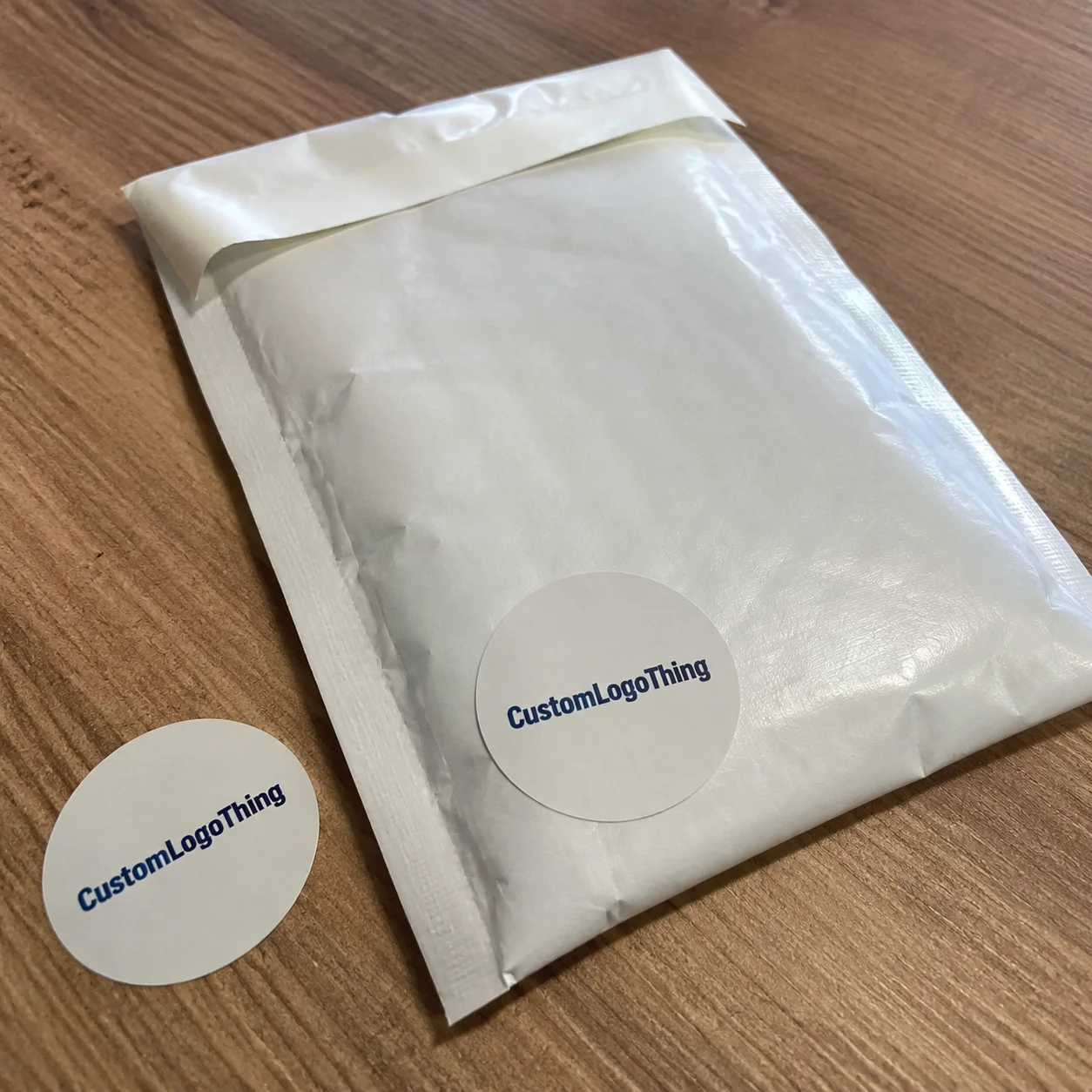
If you are reading reviews because you need 50 fun logo stickers for a launch party, your risk is low. Upload clean artwork, choose a normal shape, approve the proof, and you will probably be fine. A 3-inch white vinyl sticker with gloss laminate is not complicated if the art file is sharp and the use case is basic.
If the sticker is going on a candle jar, coffee bag, skincare box, supplement bottle, mailer, or retail display, the decision gets more serious. A packaging sticker has to survive handling, shelf lighting, moisture, rubbing, and customer inspection from six inches away. It also has to match your other branded packaging.
One slightly muddy logo on a giveaway sticker is annoying. One slightly muddy logo across 5,000 units of product packaging is a return-to-sender headache with a cute backing sheet.
The useful criteria are simple: print clarity, die-cut accuracy, laminate feel, backing paper, adhesive behavior, proofing process, customer service responsiveness, shipping speed, and reorder reliability. I care less about whether a website looks friendly and more about whether the sticker lands with clean edges, correct scale, readable text, and a finish that fits the product.
There are several ways to buy custom logo stickers: CustomStickers.com, Sticker Mule, StickerApp, VistaPrint, local print shops, and packaging-focused suppliers such as Custom Logo Things. None of them are “best” for every order. A waterproof bottle sticker and a retail jar label are not the same job. Treating them like one is how buyers waste money.
Buyer rule: pick the sticker vendor after you define the application, not before. Size, surface, moisture, temperature, adhesive, finish, and reorder plans matter more than a coupon code.
Top sticker ordering options compared for quality, service, and fit
Commercial buyers need a fast way to sort sticker vendors. Not every order needs a packaging engineer. Not every order should be left to a bare-bones upload form either.
The right choice depends on whether you are buying a simple promotional sticker or a component of a larger packaging system. Those are different purchases, even if both arrive on backing paper.
| Vendor type | Best use | Typical strengths | Common weaknesses | Buyer risk level |
|---|---|---|---|---|
| CustomStickers.com | Basic logo stickers, short runs, giveaways, laptop stickers | Simple ordering, approachable pricing, standard die-cut options | Less strategic help for packaging-specific specs | Low to medium |
| Sticker Mule | Standard promotional stickers and easy repeat orders | Recognized brand, frequent deals, beginner-friendly process | Not always the lowest unit cost at larger quantities | Low |
| StickerApp | Creative finishes, clear stickers, holographic, glitter, mirror effects | Wide specialty material range and strong visual variety | Special effects can become busy fast if the design is weak | Medium |
| VistaPrint | Small business marketing add-ons | Convenient if ordering cards, flyers, and basic print items together | Less ideal for custom dielines or packaging strategy | Medium |
| Local print shops | Face-to-face help, local pickup, urgent small jobs | Direct communication and possible local turnaround | Sticker equipment and adhesive knowledge vary widely | Low to high |
| Custom Logo Things | Stickers tied to boxes, mailers, bags, inserts, labels, and kits | Better fit for coordinated packaging design and branded packaging systems | May recommend higher quantities for better unit economics | Low to medium |
CustomStickers.com fits straightforward jobs. Think clean vector logo, standard white vinyl, simple shape, no obsession over Pantone-perfect output. Sticker Mule is strong for buyers who want a familiar ordering path and consistent standard output. StickerApp is more interesting if the material is part of the selling point: holographic, clear, glitter, mirror, or specialty film.
VistaPrint is convenient for small businesses already ordering basic marketing materials. It is less compelling if the sticker needs to behave like a retail packaging label. Local print shops can be great if they understand adhesives, laminates, and kiss-cut versus die-cut work. Some do. Some mainly print flyers and treat labels like sticky postcards. That difference matters.
Custom Logo Things makes more sense when stickers are part of a broader packaging system. If you are matching stickers to Custom Packaging Products, custom printed boxes, mailers, inserts, tissue, retail labels, and bags, you need more than a sticker upload button. You need the whole package to look intentional.
Detailed reviews: what matters after the stickers arrive
The real review starts after the envelope or box lands. Online previews are cute. Finished stickers tell the truth.
I look first at edge quality, print sharpness, color density, laminate alignment, backing paper, and whether the cut line respects the artwork. A sticker can look fine from three feet away and still feel cheap in the hand.
For CustomStickers.com, the likely strengths are simple ordering, reasonable pricing for small batches, and acceptable quality for standard custom logo stickers. If your order is 100 die-cut stickers for a pop-up event, giveaway, or basic brand insert, it can be a practical option. Many buyers searching custom stickers com reviews are not asking for lab-grade label performance. They want a sticker that looks good, ships without drama, and does not cost as much as the product it promotes.
The limitations show up when the buyer needs guidance. Packaging applications require better questions. Will this go on glass, paperboard, kraft, plastic, metal, or a curved bottle? Will it be refrigerated? Will customers handle it with wet hands? Does the sticker need a removable adhesive, permanent adhesive, freezer-grade adhesive, or low-tack promotional adhesive?
If a vendor does not help you think through those details, you need to know them yourself.
Sticker Mule deserves its reputation for being easy. For many standard jobs, the results are reliable enough and the ordering process is clean. Still, compare price breaks before assuming it is the best commercial value. At 50 or 100 pieces, convenience may matter more than pennies. At 2,500 pieces, pennies become real money. Funny how multiplication works.
StickerApp is stronger for visual experimentation. Holographic, glitter, mirror, clear film, and other specialty materials can make a sticker feel more premium or collectible. The warning: specialty finishes need restraint. A holographic logo sticker can look sharp. A holographic sticker with five fonts, tiny text, gradients, and a busy cut shape starts looking like a gas station counter display. Nobody asked for that.
VistaPrint is useful for quick business needs: return address labels, basic logo seals, and simple marketing stickers. It is not my first pick for buyers who need packaging-grade consistency, custom dielines, material advice, or exact repeat production across multiple SKUs.
Local shops are relationship-driven. A good local print shop can save a deadline because you can talk to an actual person, see samples, and pick up the order yourself. A weak one may not know the difference between a durable vinyl sticker and a paper label with a coating. Ask what press they use, what laminate options they offer, and whether they have produced Stickers for Product Packaging before.
Serious buyers should order samples or a paid pilot batch before scaling. A test order of 25 to 100 pieces can reveal color shifts, adhesive issues, scuffing, or cut-line problems before you commit to thousands. That small test cost is cheaper than explaining why every jar label is peeling at the corner.
Sticker pricing, unit cost, and MOQ ranges to expect
Sticker pricing depends on size, shape, material, quantity, finish, artwork complexity, and shipping speed. A 2-inch round paper label is not the same as a 4-inch waterproof die-cut vinyl sticker with matte laminate. Comparing those two and acting surprised by the price gap is apples and bowling balls.
For small runs, basic Custom Vinyl Stickers often cost roughly $0.50 to $2.50 each for quantities around 25 to 100 pieces. The higher end usually involves larger sizes, specialty shapes, waterproof materials, premium finishes, or rush timelines. Low minimums are convenient, but the setup, proofing, and handling cost gets spread across fewer pieces.
Mid-volume orders around 250 to 1,000 pieces often land closer to $0.15 to $0.80 per sticker for common sizes and standard white vinyl or paper label materials. Larger commercial orders can drop under $0.10 to $0.35 each, but only when the size, material, and production setup make sense. Tiny labels in a roll format can price very differently from individually cut promotional stickers.
Many online sticker printers offer low or no minimums, which is useful for testing designs. Packaging manufacturers may recommend higher MOQs because the goal is better unit economics and repeatable production. If you are coordinating stickers with Custom Labels & Tags, boxes, bags, or inserts, the cheapest 50-piece test is not always the smartest long-term path.
| Order size | Typical unit range | Best fit | Watch-outs |
|---|---|---|---|
| 25-100 stickers | $0.50-$2.50 each | Samples, events, personal stickers, first tests | High unit cost, fewer price breaks |
| 250-1,000 stickers | $0.15-$0.80 each | Small business promos, product inserts, launch batches | Material and finish choices affect pricing sharply |
| 1,000-5,000+ stickers | $0.10-$0.35 each for many standard specs | Commercial packaging, repeat promotions, wholesale needs | Bad specs become expensive at scale |
Hidden costs can bite. Rush shipping, artwork cleanup, custom dielines, specialty laminates, metallic film, holographic materials, split designs, multiple SKUs, international freight, and proof revisions all affect the final bill.
Ask vendors for price breaks at 100, 250, 500, 1,000, and 2,500 units. The best quantity is often one price tier higher than your first guess.
Proofing process, timeline, and turnaround expectations
A normal sticker order follows a predictable path: upload artwork, choose size and material, receive or approve a digital proof, print, laminate if needed, cut, quality check, pack, and ship. Most standard online sticker orders take about 3 to 7 business days in production after proof approval. Shipping often adds another 2 to 7 business days, depending on service level and location.
Rush jobs can move faster, but speed reduces the margin for catching artwork mistakes. Speed is useful. Panic is not a production strategy.
If you need stickers for a trade show, subscription box drop, seasonal campaign, or retail launch, build in at least one extra week. Two is better if the sticker affects product sellability.
A good proof should show the final size, cut line, bleed, safety margin, shape, and any special instructions for white ink, clear film, metallic stock, or spot effects. If the sticker is 3 inches wide, the proof should make that obvious. If there is a 0.125-inch bleed requirement, the file should meet it. Guessing around cut lines is how thin borders become uneven and tiny text gets shaved.
Do not approve proofs on a phone screen if color, spacing, small text, or QR code readability matters. Use a larger calibrated screen if possible, or at least zoom in and check the actual dimensions. QR codes should be tested at printed size, not just on a glowing monitor where everything looks more forgiving.
Artwork problems are the quiet timeline killer. Low-resolution logos, missing vector files, thin borders, tiny type, raster screenshots, unclear cut paths, and weak contrast can add days before production even starts. Vector artwork in AI, EPS, SVG, or print-ready PDF usually gives the printer cleaner edges and fewer excuses. If your only logo file is a 400-pixel PNG from an old email footer, fix that before ordering. Please.
Reorders should be faster once the first order is dialed in, assuming the vendor keeps artwork and specs on file. Ask whether they store size, material, adhesive, finish, laminate, and cut path. Repeatability matters for retail packaging. One cute first batch is not enough if the second batch arrives a shade warmer and your shelf line suddenly looks like it was assembled by committee.
How to choose the right sticker vendor for your use case
Start with the application. Product packaging, shipping boxes, retail labels, event giveaways, laptop stickers, food jars, bottles, candles, mailers, and subscription boxes all ask different things from a sticker.
A paper thank-you seal on tissue wrap may be perfect at $0.08 each. That same material on a refrigerated drink bottle would be a sad little science experiment.
Match the material to the environment. Paper works for low-cost indoor labels, dry cartons, and short-term packaging. White vinyl is better for durable promotional stickers and general outdoor use. Clear film works well on glass or minimalist packaging, but it needs smart white ink planning so the design does not disappear on dark contents. Waterproof vinyl is better for bottles, coolers, and heavily handled items. Specialty films can create premium effects, but they should support the brand rather than shout over it.
Adhesive choice deserves more attention than most buyers give it. Removable stickers, permanent product labels, freezer-grade adhesives, and curved-surface applications are different requirements. A candle jar label may need to handle heat and curved glass. A frozen food label needs cold resistance. A promotional sticker for a laptop should remove cleanly enough that people do not curse your brand while scraping residue with a debit card.
Finish changes perception. Matte looks premium and photographs well, especially for skincare, coffee, candles, and boutique retail packaging. Gloss boosts color punch and feels familiar for promotional stickers. Soft-touch feels expensive but can scuff, especially on dark solids. Holographic can be excellent for collectibles, limited drops, beauty, cannabis, streetwear, and event branding, but it should be used intentionally.
Design specs matter as much as vendor choice. Use vector artwork when possible. Keep small text readable at actual size. Add bleed. Avoid critical details near the cut line. Use adequate contrast. Test QR codes after scaling. A 6-point ingredient note on a tiny curved jar label is not “minimal.” It is unreadable. Minimal and microscopic are not the same design strategy.
Ask about repeatability if you plan to reorder. Serious packaging buyers should ask whether the supplier can maintain material, finish, color targets, and dielines across multiple runs. Standards can help frame expectations. For shipping durability and transit testing, organizations such as ISTA are useful references. For paper sourcing claims, FSC certification may matter if your brand has sustainability requirements. For adhesive labels, ASTM test methods are often used by material suppliers to evaluate adhesion, tack, and durability. No, you do not need to become a lab technician. You do need to ask better questions.
An online sticker site is enough when the order is simple, the risk is low, and you already know the specs. A packaging-focused partner makes more sense when the sticker must match custom printed boxes, product sleeves, mailers, tissue, inserts, retail labels, or a larger package branding system. At that point, sticker buying becomes packaging design, not decoration.
Recommendation before placing an order
Use CustomStickers.com or similar online printers for simple short-run stickers, personal projects, low-risk small business orders, basic promotional needs, and clean logo stickers. If the artwork is ready and the application is ordinary, there is no need to overcomplicate it. A standard white vinyl die-cut sticker for a giveaway should not require a board meeting.
Use StickerApp when the visual finish is the main selling point. Specialty materials can add real value if the design is built for them. Use Sticker Mule when ease of ordering and predictable standard output matter more than deep packaging consultation. Use VistaPrint if you are bundling basic marketing materials and need something convenient, not highly specialized.
Use Custom Logo Things when the sticker is part of a broader branded packaging system. That includes boxes, mailers, retail labels, hang tags, tissue, bags, inserts, subscription kits, and display packaging. If the sticker needs to coordinate with package colors, finishes, product categories, or multiple SKUs, buying it in isolation can create mismatches. Pretty small mismatches. Expensive ones.
Before ordering, follow a practical sequence:
- Choose the application first: product label, box seal, insert sticker, event giveaway, bottle label, jar label, or mailer sticker.
- Measure the exact surface: flat, curved, textured, coated, kraft, glass, plastic, metal, or paperboard.
- Pick material based on environment: dry indoor use, moisture exposure, refrigeration, outdoor handling, abrasion, or premium retail display.
- Prepare clean artwork: vector logo, correct bleed, readable text, tested QR codes, and clear cut path.
- Request a proof: check size, cut line, safety margin, material notes, white ink, and finish.
- Compare price breaks: ask for 100, 250, 500, 1,000, and 2,500 pieces before choosing quantity.
- Test before scaling: order a small paid batch if the sticker touches a customer-facing product.
Use this pre-order checklist before paying: size, shape, quantity, material, adhesive, finish, indoor or outdoor use, hand-applied or machine-applied, shipping deadline, and reorder plan. If you sell products in retail, also check shelf lighting, color consistency, scuff resistance, and how the sticker looks next to the rest of your packaging.
The smartest way to use custom stickers com reviews is not to copy someone else’s verdict. Match the vendor to your specs, budget, timeline, and packaging goals. If the sticker is going on a product you sell, treat it like packaging, not decoration.
FAQ
Are custom stickers com reviews reliable for business buyers?
Custom stickers com reviews are useful for spotting patterns in print quality, shipping speed, proof accuracy, and customer service. The catch is that many reviews come from casual buyers ordering simple laptop stickers or event giveaways. Business buyers should look for comments about repeat orders, color consistency, material durability, adhesive performance, and packaging applications. A great review for a laptop sticker does not prove a vendor is right for a retail product label.
Is CustomStickers.com good for product packaging stickers?
It can work for basic packaging stickers if you already know your size, material, finish, adhesive, and artwork requirements. For retail packaging, bottles, jars, food products, cosmetics, or premium unboxing kits, compare packaging-focused suppliers that can advise on materials, adhesives, finish matching, and repeat production. Order a small test batch before a full launch, especially if the sticker will be handled, chilled, shipped, or displayed under retail lighting.
How much should I expect to pay for custom logo stickers?
Small batches often range from about $0.50 to $2.50 per sticker depending on size, shape, and finish. Mid-size orders around 250 to 1,000 pieces often fall around $0.15 to $0.80 each for standard materials. Bulk orders can drop lower, but specialty films, matte or soft-touch laminates, rush shipping, custom shapes, split designs, and artwork cleanup can raise the final cost.
What is the normal turnaround time for custom sticker orders?
Most standard online sticker orders take about 3 to 7 business days in production after proof approval. Shipping can add 2 to 7 business days depending on location and service level. Artwork problems, proof revisions, specialty materials, rush season demand, and unclear dielines can extend the schedule. For launches or trade shows, build in at least one extra week.
What should I check before ordering from a sticker company?
Confirm size, shape, material, adhesive type, finish, quantity, and whether the sticker will be used indoors, outdoors, on product packaging, on curved surfaces, or in cold or wet conditions. Review the proof carefully for cut lines, bleed, small text, QR code readability, and logo placement. Ask for price breaks, sample materials, and reorder details if you plan to buy regularly. Reviews can guide you, but your own specs decide whether the order succeeds.