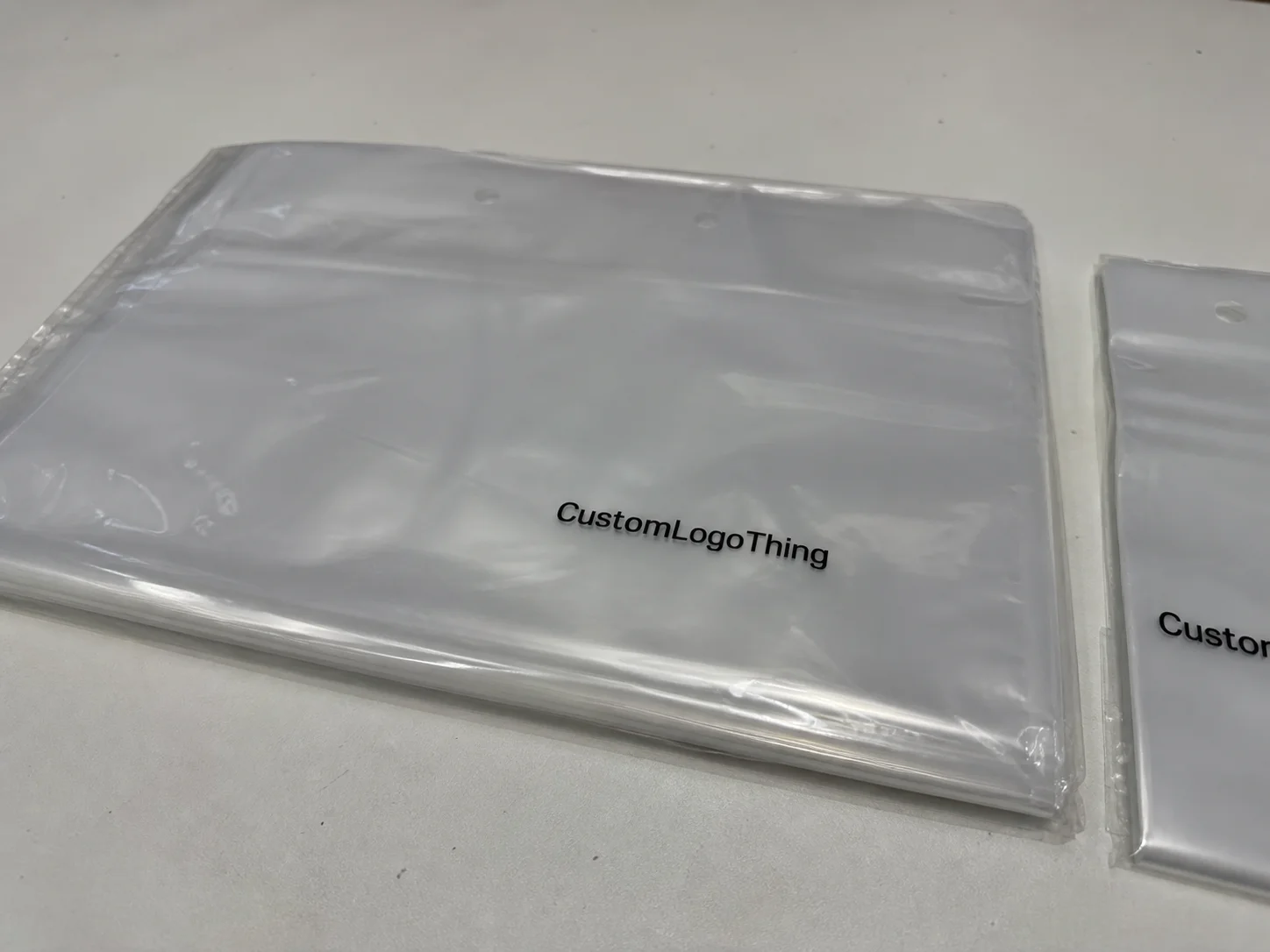
Why an OPP header bag can outsell a box on a crowded peg wall
On a crowded peg wall, visibility often beats bulk. That is why many buyers look for an OPP Header Bags private label supplier when boxed packaging hides the product and slows comparison. Clear packaging lets shoppers judge color, finish, quantity, and completeness in seconds.
This matters in categories such as jewelry findings, craft kits, socks, lashes, charging cables, phone accessories, replacement screws, and small beauty tools. A clear OPP bag presents the actual item, while a box asks the shopper to trust the print.
OPP, or oriented polypropylene, is widely used because it offers high clarity, low weight, and a crisp feel. Compared with LDPE, it usually looks cleaner and stiffer on display. A header bag adds a printed top strip or card with a euro hole or round hang hole for peg display. Closure may be a self-adhesive flap, heat seal, staple, or welded header.
That simple structure still needs control. Bag width, flap length, header placement, barcode position, and hole strength all affect whether the unit hangs straight, scans cleanly, and survives restocking. If your line also uses Custom Labels & Tags, the pack design needs to stay consistent across SKUs.
Buyers often treat the bag as a minor component, then lose time on ordinary failures: torn hang holes, wrinkled film, or barcodes placed too close to folds. A capable supplier is not just converting film. They are building a retail unit that has to sell, protect, and reorder consistently.
What a private label supplier actually does from film conversion to retail-ready packing
A Private Label Supplier does more than make clear bags. Depending on the project, the scope can include film sourcing, gauge selection, bag conversion, header production, print coordination, sealing method, carton planning, and export packing.
Construction should match both the product and the packing method. A self-adhesive flap works well for hand-packed items that may need reopening during assembly. Bottom-seal bags are common for light accessories. Side-seal bags can present a flatter front panel. Resealable styles are useful for spare parts, consumables, or items customers may store back in the package.
Header design also changes with weight and retail use. Options include stapled cards, folded headers, heat-sealed headers, printed film headers, euro holes, round holes, and reinforced hang formats. A 20 g bead pack and a 300 g hardware assortment should not use the same header construction.
Most private label programs combine several steps:
- Artwork setup and dieline approval
- Color matching for logos, warnings, and barcode zones
- Physical sample review with the actual product inside
- Seal, fit, and hang testing
- Case-pack and master carton planning
That is why quote comparisons need context. One supplier may price a bare bag, while another includes assembled headers, compliance copy placement, and packing details. Weak control usually shows up in the same places: wrong gauge, poor seals, misaligned headers, inconsistent adhesive behavior, or print opacity that fails on dark brand colors.
Specs that decide performance: film thickness, header style, print method, and hang strength
Most packaging failures begin with incomplete specifications. Start with bag width, bag height, usable fill area, flap length, hole position, and seal style. Then allow working clearance for inserts, backing cards, bundled parts, and hand filling. A product that measures 100 mm across does not belong in a 100 mm bag.
Film thickness affects both protection and presentation. Many light retail items use OPP around 25 to 40 microns, with heavier or sharper products moving higher. Thin film may reduce material cost, but it wrinkles more easily, feels lighter in hand, and can reduce hang confidence.
Header material matters too. Paperboard headers generally print better, feel more premium, and support heavier items more reliably. Film headers can simplify some constructions, but they are less forgiving when the layout includes fine text, opaque color blocks, barcodes, or warning copy.
Print method changes appearance and cost:
- Flexographic printing: common for longer runs and simpler color builds
- Offset printing: usually sharper for header cards, fine text, and image-heavy designs
- Digital printing: useful for short runs or SKU testing, but often higher in unit cost
Always review a physical sample. Barcode readability, warning text, small legal copy, and solid color coverage can pass on screen and fail in print. For heavier contents, ask the supplier about reinforced header construction and run filled-sample hang tests over several days. Many teams use the logic of ISTA distribution standards even if they do not run a full protocol.
Compliance requirements can also reshape the design. Suffocation warnings, country-of-origin marking, lot coding, recycled-content claims, and tamper-evident needs all take space on a small header. If variable data or promotions will be added later using Custom Labels & Tags, build that into the original layout.
Approve a written specification sheet and a pre-production sample. Verbal descriptions are not packaging controls.
Cost, pricing, MOQ, and unit cost: what really changes your quote
Header bag pricing is driven by material, dimensions, gauge, print complexity, header construction, order volume, and packing method. Freight, duties, proofs, carton efficiency, and overrun tolerance then change the landed cost.
MOQ increases with customization. Stock clear bags with plain flaps can start lower. Custom printed headers, non-standard sizes, dedicated plates, or reinforced hang formats usually push minimums higher. For many projects, a first custom run falls around 3,000 to 10,000 units.
Useful quote comparisons should be line by line. Ask each supplier to break out:
- Film specification and gauge
- Header material and print method
- Plate, tooling, or setup charges
- Sample and proofing cost
- Case pack and master carton dimensions
- Freight terms such as EXW, FOB, or delivered
- Expected overrun or underrun tolerance, often around 3% to 5%
Hidden cost drivers are common. Oversized cartons waste cube. Poor nesting raises freight cost. Difficult bag opening slows hand packing. Weak print opacity can trigger rework if brand colors look washed out at retail. Compliance failures can cause relabeling, repacking, or retailer chargebacks.
| Quote Factor | Supplier A | Supplier B |
|---|---|---|
| Unit price at 5,000 pcs | $0.14-$0.18 | $0.17-$0.22 |
| Lead time after proof approval | 20-28 business days | 12-18 business days |
| Header print method | Flexo | Offset card print |
| Carton efficiency | Average | Better case density |
| Defect risk for fine text | Moderate | Lower |
| Freight impact | Higher due to longer routing | Lower due to better logistics fit |
The lowest quote is not automatically the best buy. A higher-priced supplier may reduce schedule risk, print defects, or freight cost enough to protect margin better than the lower opening number. Review at least one realistic landed-cost scenario before awarding the order.
Production process and timeline: from artwork approval to final shipment
The usual sequence is inquiry, specification review, quotation, artwork or dieline setup, sampling, approval, production, inspection, packing, and shipment. In practice, delays usually come from revisions, approvals, and scheduling rather than bag conversion.
Keep sample lead time separate from production lead time. A custom sample may take about 5 to 8 business days. Full production often takes 12 to 25 business days after approval, especially for printed headers, new plates, or larger volumes. Freight adds more time, whether by air or ocean.
Timeline variables include header-card sourcing, color complexity, quantity, factory load, inspection method, and shipping mode. Small packaging components often become launch bottlenecks because they combine artwork, compliance copy, sampling, and production in a sequence that cannot be compressed indefinitely.
Ask for milestone dates rather than one ship date:
- Proof or dieline delivery
- Sample dispatch
- Sample approval deadline
- Production start
- Inspection window
- Goods-ready date
Buffer time still matters for customs clearance, retailer routing, warehouse appointments, and document checks. If the project includes certified paper headers or sustainability claims, confirm paperwork early through sources such as FSC.
How do you evaluate an OPP header bags private label supplier for first orders and reorders?
Supplier selection works best with a repeatable method. Good communication helps, but it is not proof of production control.
- Define the use case. Document product dimensions, packed weight, edge sharpness, fill method, display method, expected shelf life, and required compliance copy.
- Standardize the RFQ. Send every supplier the same specification template so price differences are meaningful.
- Request stock and custom samples. Test clarity, seal integrity, fit, flap function, and hang strength with the actual product inside.
- Review print under retail lighting. Check warning blocks, logos, fine text, and barcodes where the product will actually be displayed.
- Check operational fit. Confirm carton counts, case dimensions, pallet pattern, and whether the bags arrive ready for hand fill or automated packing.
- Verify reorder control. Ask about retained plates, archived specs, lot traceability, dimensional tolerances, and approved sample retention.
First orders test whether the supplier can interpret the specification. Reorders test whether they can hold header alignment, film clarity, print density, and seal quality across batches. If the product family also uses Custom Labels & Tags, align visual controls early so the packaging system stays consistent.
Many buyers choose the fastest replier. The better choice is usually the supplier with the clearest specification discipline.
Common mistakes buyers make when sourcing clear header bags for retail programs
Mistake one: choosing film thickness by feel alone. Gauge should match product weight, edges, and display duration.
Mistake two: approving artwork only on screen. Printed samples expose registration shifts, weak opacity, unreadable warning text, and barcode issues.
Mistake three: underestimating hang-hole stress. Tear-outs usually happen in transit, during stocking, or after repeated shopper handling.
Mistake four: comparing non-equivalent quotes. One supplier may include suffocation warnings, export cartons, and assembled headers, while another prices only the bag.
Mistake five: leaving packaging too late. Small-format components often delay launches because they still require artwork, compliance review, sampling, and production slots.
Mistake six: ignoring reorder planning. Weak version control can lead to obsolete stock, mixed batches, or the wrong artwork on the wrong SKU.
Next steps before you request quotes from an OPP header bags private label supplier
Before requesting prices, prepare six essentials: product dimensions, target bag size, packed weight, artwork files, expected order volume, and required delivery window. If those inputs are vague, the quote will be vague too.
Photos or a simple peg-display mockup help reveal issues that flat dimensions miss, including poor visual balance, weak hole placement, and underbuilt headers for heavier products.
Ask each supplier the same five questions:
- What MOQ applies to this exact configuration?
- How long for stock samples and how long for custom samples?
- What repeat-order lead time can you support during normal production periods?
- What print method will you use for the header or card?
- What quality checkpoints cover seal strength, print registration, and final packing?
Request one stock sample and one custom mockup. The stock sample shows baseline material quality. The custom mockup shows whether the supplier can translate your brand and specification accurately.
Make the decision on specification clarity, sampling discipline, repeat-order reliability, and landed cost. That is the practical standard for choosing an OPP Header Bags private label supplier.
FAQ
How do I compare an OPP header bags private label supplier with a general plastic bag manufacturer?
Compare retail readiness, not just bag-making capacity. A specialist should understand header construction, hang-hole formats, barcode placement, warning-copy requirements, and peg-wall presentation. Ask for samples from similar product categories and review repeat-order consistency, not only first-run quality.
What MOQ should I expect from a custom OPP header bag supplier?
MOQ depends on bag size, print complexity, header format, and whether the job uses stock film or custom conversion. Printed headers and dedicated plates usually raise minimums. A common starting range is around 3,000 to 10,000 units, though simple jobs can be lower and highly customized programs can be higher.
How long does production take for private label OPP header bags?
Separate sampling time from mass-production time. A sample may take about 5 to 8 business days, while full production often takes 12 to 25 business days after approval, depending on quantity, construction, and factory load. Add freight time and warehouse intake.
What affects the unit cost of custom header bags the most?
The main drivers are dimensions, film thickness, print method, color count, header construction, and order quantity. Secondary charges include tooling, proofs, carton packing, freight terms, and compliance labeling. Review landed cost, because a low quoted piece price can hide higher logistics or rework expense.
What should I send when requesting a quote for private label OPP header bags?
Send product dimensions, packed weight, desired bag style, header artwork, hole style, and expected annual volume. Include photos or a physical sample to show how the item will hang and how much load the header must carry. Add the delivery location, target timeline, and any retailer-specific labeling or testing requirements so the quote reflects real production needs.