A two-inch round sticker on a jar lid, mailer flap, candle box, or coffee bag often gets noticed before anyone reads the product description. That is the quiet strength of circle custom stickers: they turn a small patch of packaging into a brand mark, seal, instruction point, batch note, QR code, or seasonal message.
Round stickers can be die-cut with physical tooling or digitally cut from printed rolls and sheets. The method depends on quantity, size, material, and the producer’s equipment. They may look simple, but the specification controls how they stick, scan, resist moisture, align on the package, and support the rest of your branded packaging.
A giveaway sticker can be playful and low-risk. A product label cannot be treated the same way. It may need stronger adhesive, oil resistance, barcode readability, ingredient copy, batch coding space, or a finish that will not smear after repeated handling.
Circle Custom Stickers Make Small Surfaces Work Harder
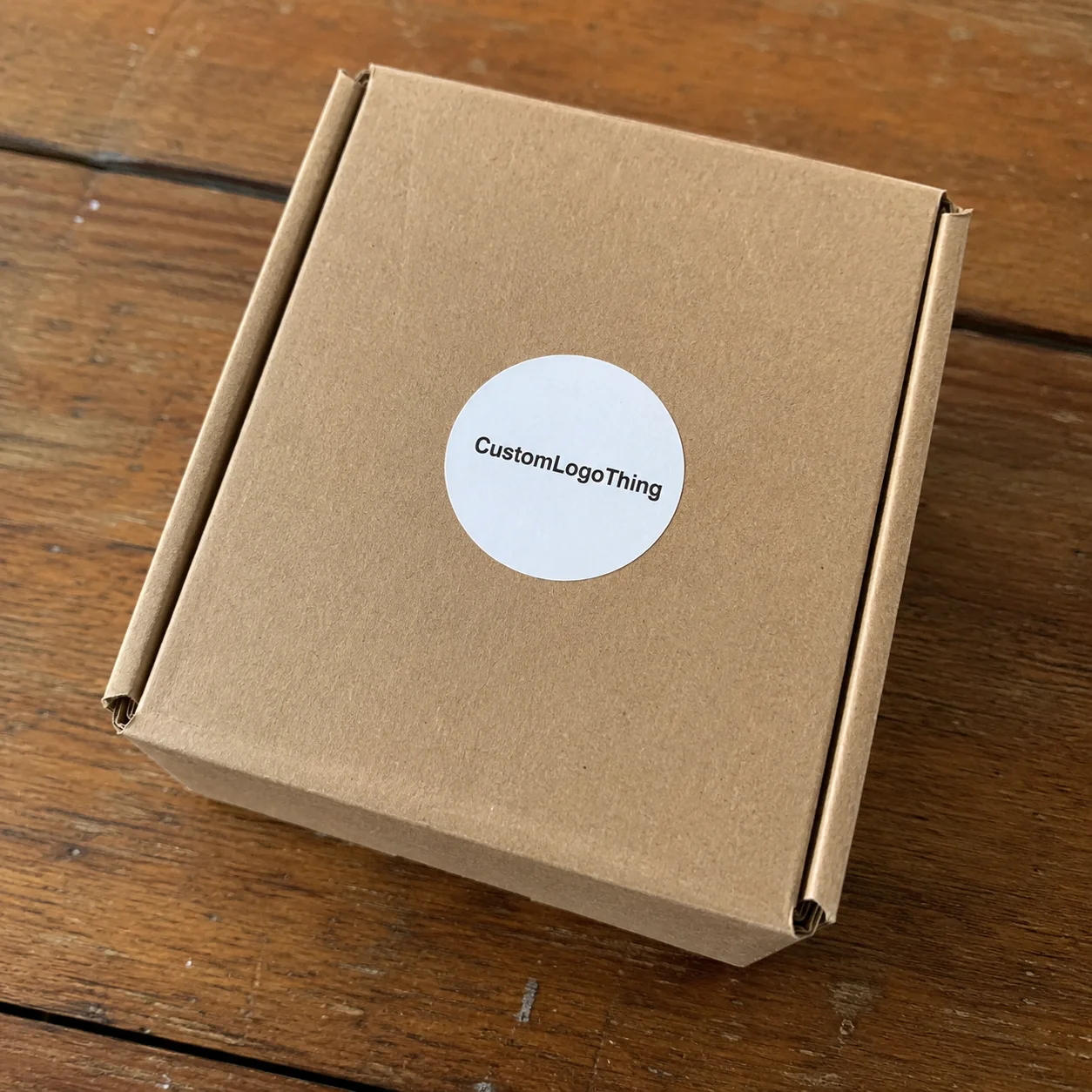
The circle shape earns its keep because it naturally frames logos, icons, and short messages. A centered emblem inside a round edge feels balanced on lids, closures, envelopes, tissue paper, bakery boxes, bottle neck tags, subscription inserts, and event packaging. On Custom Packaging Products, a round seal can also bridge two surfaces, such as the front flap and body of a folding carton, creating a small opening moment without pretending to be a full tamper-evident system.
That distinction matters. A decorative sticker and a functional label may look similar in a photo, yet behave differently after packing. Promotional stickers can use bolder color, humor, seasonal graphics, or removable adhesive. Product labels usually have less room for compromise. They need to survive the product’s environment and still look intentional when the buyer handles the pack.
Many buyers under-spec round labels because the shape feels familiar. But a circle placed on a textured mailer, chilled glass bottle, flexible pouch, or slightly oily jar is still a pressure-sensitive label system. Surface energy, temperature, dwell time, finish, and hand application all influence the result. The sticker is not finished when it looks good on a screen. It is finished when it applies cleanly, stays down, reads correctly, and still looks deliberate after shipping, shelving, and use.
Packaging floor reality: the smallest label can become the loudest defect if it peels, wrinkles, scans poorly, or lands off-center.
Materials, Adhesives, and Finishes That Change Performance
A sticker has several layers doing separate jobs. The printable face stock carries the graphics. The pressure-sensitive adhesive bonds to the package. The release liner protects the adhesive until application. Ink, toner, or digital print builds the design, while varnish, lamination, foil, or spot gloss changes durability and appearance.
Paper stickers are cost-effective, easy to print, and pleasant to touch. Uncoated or semi-gloss paper works well for dry indoor packaging, bakery boxes, gift wrap seals, inserts, short-life promotions, and craft-style branding. Paper can feel warmer than film, especially for natural food, candle, apothecary, and handmade products.
The tradeoff is durability. Paper absorbs moisture more readily, scuffs faster, and can wrinkle if applied to curved, damp, or chilled surfaces. It can also tear during removal, which may be acceptable for a closure seal but less desirable for a reusable container.
Film stickers such as BOPP, vinyl, and polyester handle tougher conditions. White BOPP is common for product packaging because it resists water, oils, and abrasion better than paper while still printing cleanly. Clear BOPP creates a no-label look on glass or plastic, although white ink may be needed behind logos or text so colors stay opaque. Polyester is stiffer and often used where dimensional stability or higher durability matters. Vinyl is flexible and useful for outdoor or curved applications, though it is not always the first choice for food-adjacent retail labels.
Adhesive selection should be matched to the job, not guessed from appearance. Permanent adhesive suits long-term product labeling. Removable adhesive works for temporary promotions or surfaces that should not be damaged. Freezer-grade adhesive is formulated to bond in cold storage, where a standard adhesive may turn brittle or lose tack. High-tack adhesive helps on textured board, recycled corrugate, kraft paper, and low-energy plastics such as some polyethylene pouches.
Finishes change both appearance and field performance. Matte reduces glare and gives a calmer premium look. Gloss increases contrast and makes colors appear sharper. Soft-touch lamination adds a velvety feel, often used in higher-end retail packaging. Lamination usually improves scuff resistance and moisture protection compared with ink alone, but it can also change color perception and add stiffness.
White ink deserves special attention. On clear or metallic stocks, process color inks can become translucent or reflective. If a logo needs a solid red, cream, black, or navy, a white ink layer behind the artwork can keep the design readable. Without it, even strong artwork can look weak against amber glass, silver foil, or dark product contents.
For paper sourcing and certification questions, the Forest Stewardship Council is a useful reference. Certification does not automatically determine sticker performance, but it can be part of a packaging brief when brands need documented material claims.
Specs That Affect Size, Shape Accuracy, and Print Quality
Common round sticker diameters range from tiny 0.5-inch seals to 3-inch product labels. Sizes such as 1 inch, 1.5 inches, 2 inches, and 2.5 inches appear often in packaging because they fit lids, pouches, mailers, and cartons without overwhelming the surface. Larger sizes can work, but the application area starts to control the decision. A 3-inch circle may sit beautifully on a flat pouch and wrinkle badly on a small jar shoulder.
Design space is smaller than the final cut size. Bleed means artwork extends beyond the cut line, often by 0.0625 to 0.125 inch, so a slight cutting shift does not create a white sliver at the edge. The safe area is the protected zone where logos, text, QR codes, barcodes, and legal copy should stay. On a 2-inch circle, keeping critical content at least 0.08 to 0.125 inch inside the trim is a sensible starting point, though your supplier may request a different margin.
Circle stickers are less forgiving than rectangles. A rectangle can hide tiny alignment variation along straight edges. A circle makes uneven borders obvious, especially with thin rings, centered medallions, or artwork that depends on perfect symmetry. If you want a border, make it thick enough to tolerate normal production movement. A hairline circular border can turn an acceptable cut into a visible defect.
Vector artwork is preferred for logos, type, icons, and crisp shapes. AI, EPS, and print-ready PDF files usually give prepress teams the cleanest path. Raster images are fine for photography, watercolor textures, and detailed illustrations, but they should be high resolution at final print size, commonly 300 dpi for standard label work. Low-resolution logos copied from a website are one of the fastest routes to fuzzy print.
Color needs a realistic conversation before approval. Printed color changes with stock, finish, ink system, curing method, and the surface beneath clear material. A matte laminate will not reflect light like gloss varnish. Brown kraft paper will mute color. Clear film over amber glass will shift everything unless white ink is used. If brand color is strict, provide Pantone references, a previous printed sample, or a clear tolerance range. A PDF proof confirms layout; it does not fully predict ink on material.
QR codes and barcodes need breathing room. Maintain quiet space around the code, use strong contrast, avoid placing codes across curves or seams, and think about scan distance. A 0.75-inch QR code may scan in a clean desk test but fail on textured stock, glossy glare, or a curved bottle. For product-facing labels, test scans with the phone distance and lighting your customer Will Actually Use.
Delivery format matters too. Rolls are efficient for applicators and fast hand labeling, but roll orientation must match the machine or workstation. Sheets are useful for smaller teams and mixed designs. Individual kiss-cut stickers work well for giveaways, inserts, and events. For related label formats beyond circles, Custom Labels & Tags can sit within the same broader packaging design plan.
Production Steps and Timeline From Artwork to Finished Rolls
A typical order starts with specification confirmation: size, quantity, material, adhesive, finish, colors, roll or sheet format, and deadline. After artwork upload, prepress reviews the file, sends a digital proof, and waits for approval. Production then moves through printing, finishing, die-cutting or digital cutting, rewinding or sheeting, quality check, packing, and shipping.
The calendar often depends less on printing time than buyers expect. Artwork readiness, proof approval speed, material availability, finishing complexity, custom die needs, and shipping method can add more time than the press run itself. For standard stocks and clean files, many simple roll label jobs move through production in roughly 5 to 10 business days after proof approval. Specialty films, foil, custom tooling, unusual adhesives, physical samples, or large quantities may push the schedule to 10 to 20 business days or more. The actual range depends on the supplier’s queue and exact build.
Prepress checks usually cover resolution, bleed, cut line setup, font handling, color mode, small text legibility, barcode placement, and whether the artwork matches the requested diameter. If a file says 2 inches but the artboard is built at 2.125 inches without a clear trim line, someone has to stop and ask. That pause protects the order, but it also costs time.
Proof types are different tools. A digital PDF proof confirms layout, spelling, size, cut position, and major artwork elements. A physical proof or press sample is better for checking color, texture, adhesive feel, opacity, and finish. If the job is color-critical, moving to a new material, or using an unfamiliar adhesive, a sample is usually money well spent.
Custom dies can add time for unusual sizes or shapes, while standard diameters and digital cutting can shorten setup on many orders. Roll labels may also require rewind direction, core size, outside roll diameter, and quantity per roll. These production details sound small until a label roll fails to feed through a dispenser or applicator.
Build extra lead time for launches, seasonal packaging, trade shows, and products that need internal compliance or retailer approval. A useful planning habit is almost low-tech: approve artwork only after checking the actual surface where the sticker will be applied. Print a full-size mockup, place it on the real package, and view it under normal lighting. That ten-minute check prevents a surprising number of reorders.
Cost, Pricing, MOQ, and Unit Cost Drivers
Pricing for circle custom stickers is driven by diameter, material, adhesive, print coverage, number of versions, finish, die requirements, order quantity, delivery format, and shipping. A small paper sticker on sheets will not price like a laminated waterproof film label on rolls. Neither build is automatically right or wrong; the better choice is the one that survives the job it has to do.
Unit cost usually drops at higher quantities because setup, proofing, press calibration, die-cutting setup, waste allowance, and administrative handling are spread across more pieces. The minimum order quantity, or MOQ, helps cover the labor and material needed to prepare the job, run it cleanly, finish it, inspect it, and pack it.
| Sticker Build | Typical Use | Common Cost Position | Practical Watchout |
|---|---|---|---|
| Paper with standard permanent adhesive | Dry boxes, tissue seals, bakery labels, inserts | Lowest cost for many indoor jobs | Can scuff, absorb moisture, or tear during removal |
| White BOPP with gloss or matte finish | Food jars, bottles, pouches, bathroom products | Moderate cost with stronger durability | Adhesive still needs to match surface and temperature |
| Clear film with white ink | Glass, clear plastic, premium product packaging | Moderate to premium depending on ink coverage | Colors may look weak without a white ink plate or layer |
| Film with laminate, foil, or specialty adhesive | Premium launches, chilled products, textured packs | Higher cost but better field performance | Proofing is smart because finish and adhesion affect the final look |
As a planning range, simple paper round stickers in higher quantities may land in the low cents per piece. Short-run specialty labels can climb sharply, especially with film, white ink, lamination, foil, or low quantities. For example, 5,000 small paper seals and 500 laminated film labels with white ink and specialty adhesive sit in very different cost structures. Exact pricing depends on equipment, material yield, artwork coverage, finishing, freight, and current material costs.
Hidden cost risks are easy to miss. Ordering too small can make the label look cheap or unreadable. Choosing the wrong adhesive can create peeling, which costs more than the saved material. Skipping a proof can lead to color mismatch across Custom Printed Boxes, pouches, and labels. Rush production after artwork problems appear is rarely economical.
Ask for tiered pricing at two or three quantities. A test run, launch run, and replenishment quantity will show where the price breaks occur. Sometimes moving from 500 to 1,000 pieces changes the math enough to matter; sometimes it barely moves. The cheapest sticker is not always the lowest-cost option if it peels, smears, scans poorly, or makes your package branding inconsistent.
How to Order Round Stickers Without Guesswork
Start by defining the job. Where will the sticker go? What surface will it touch? Is it decorative, functional, or both? How long does it need to stay in place: one day, three months, a year on a retail shelf, or through refrigerated distribution? Those answers narrow the material and adhesive choices before design preferences take over.
- Measure the real package. Use the actual jar, box, pouch, mailer, or bottle, not only a dieline or product rendering. Check curves, seams, folds, lids, and nearby required copy.
- Mock up the diameter. Cut paper circles or print the design at full size. A 1.5-inch circle can feel generous on screen and cramped on a small lid.
- Select material by environment. Dry shelf use can often accept paper. Refrigerated, freezer, bathroom, beverage, oily, outdoor, or flexible pouch applications usually call for film and a more specific adhesive.
- Prepare artwork correctly. Include bleed, safe margins, outlined fonts, embedded images, color references, and a clearly labeled cut line if requested.
- Choose delivery format. Rolls suit applicators and fast hand work. Sheets suit small teams and variety packs. Kiss-cut singles suit giveaways and subscription inserts.
- Review the proof like a production document. Check spelling, diameter, cut position, barcode scans, color expectations, ingredient copy, legal marks, and quantity.
Before approval, confirm turnaround, shipping address, reorder expectations, and whether the supplier will retain the die, digital cut file, or setup notes for future runs. Reorders move faster when the original spec is clear. If you expect to place the same label every month, say so early; roll quantity, roll diameter, and packaging of the finished labels can be planned for repeat use.
For buyers coordinating stickers with boxes, inserts, sleeves, and mailers, it helps to keep all specs in one place. Diameter, material, adhesive, finish, artwork version, approval date, and reorder quantity should be recorded the same way you would track carton board grade or pouch film structure. Small labels create big variation when no one owns the spec.
Mistakes That Cause Peeling, Smudging, or Reprints
The most common failure is choosing a material for appearance without checking surface, temperature, moisture, oil exposure, or handling path. A matte paper sticker may look perfect on a proof, then lift from a cold glass jar with condensation. A glossy film label may resist moisture but glare enough to make a QR code harder to scan. Every choice has a tradeoff.
Sizing mistakes are nearly as common. A circle that looks right on screen can crowd the package, cover required information, or wrinkle over a curved shoulder. On small containers, even 0.125 inch can change the result. If the sticker crosses a fold or edge, test it before approving a full run.
Thin borders and perfectly centered rings create avoidable stress. Normal cutting tolerances vary by equipment, material, and setup, but even a small shift is easy to see on a circular border. If the design needs a ring, make it forgiving. Better yet, use artwork that allows slight movement without looking wrong.
Artwork issues that trigger reprints include low-resolution logos, missing bleed, text placed too close to the cut line, flattened QR codes, unoutlined fonts, and unapproved color conversions. CMYK, Pantone, RGB, and digital ink systems do not behave identically. If a brand red must match a box, label, and card insert, proof it across those materials before scaling.
Application errors also cause trouble. Dusty surfaces, condensation, cold containers, oily glass, rushed hand placement, and the wrong roll unwind direction can make a good sticker perform badly. Pressure-sensitive adhesives need contact pressure. A quick tap with a fingertip may not be enough on textured board or curved plastic.
For packaged products moving through distribution, sticker performance is part of the handling picture. The International Safe Transit Association offers standards and resources around packaged-product testing and transit performance. A label does not need its own shipping test in every case, but it should be assessed on the package if abrasion, cold chain, moisture, or repeated handling are likely.
Skipping a proof is risky for branded packaging, especially if the sticker must match other printed components. A digital proof catches layout errors. A physical sample catches touch, opacity, finish, and adhesion concerns. The best correction mindset is plain: test the sticker on the real package before scaling the order.
Build a Sticker Spec Before Requesting a Quote
A clear quote request saves time and prevents assumptions. Before contacting a manufacturer, prepare the core details: diameter, quantity, material preference, adhesive need, finish, roll or sheet format, application surface, use environment, deadline, and shipping destination. If you do not know the best material, describe the conditions instead of guessing.
- Diameter: include final cut size, such as 1.5 inches or 2.25 inches.
- Quantity: ask for two or three tiers, such as 500, 1,000, and 2,500 pieces.
- Surface: note glass, kraft board, coated paperboard, plastic pouch, metal tin, or corrugated mailer.
- Environment: list dry shelf, refrigerator, freezer, bathroom, outdoor, oily product, or frequent handling.
- Finish: request matte, gloss, soft-touch, laminate, foil, spot gloss, or no preference.
- Format: specify rolls, sheets, or individual kiss-cut stickers, plus unwind direction if labels run through equipment.
Photos help more than many buyers realize. Take clear pictures of the package area where the sticker will sit, ideally with a ruler or measurement reference in the frame. A supplier can often spot sizing risks, curved surfaces, seam interference, or application issues from a simple photo. Add a short use note such as “jar lid seal,” “mailer closure,” “refrigerated bottle label,” “bakery box sticker,” or “promotional handout.”
Ask about tiered pricing, proof timing, production lead time, shipping options, and reorder setup details in the same message. If the surface, adhesive, color, or finish is new to your brand, order a small sample or proof before the full run. That step can feel slow. It is still faster than discovering a peeling or color problem after the product is packed.
Circle custom stickers work best when design, material, adhesive, and production planning are treated as one packaging decision. The payoff is not dramatic in a mockup. It shows up later: cleaner application, fewer rejects, better scanning, steadier color, and less scrambling after the order has already shipped.
FAQ
What size circle stickers should I order for product packaging?
Measure the actual placement area first, then leave room around curves, seams, lids, folds, and required product information. A 1- to 2-inch diameter often works for seals and small logos, while 2.5- to 3-inch stickers are better for main product labels or larger promotional designs. Print a paper mockup at full size before ordering so you can check readability and visual balance on the real package.
Are circle custom stickers waterproof?
They can be waterproof or water-resistant if produced with film materials such as BOPP, vinyl, or polyester and protected with a suitable laminate or varnish. Paper stickers are usually better for dry indoor packaging unless they receive extra coating and avoid heavy moisture. For refrigerated, freezer, bath, beverage, or outdoor use, specify the moisture conditions before choosing material and adhesive.
How much do custom round stickers cost?
Cost depends on diameter, quantity, material, adhesive, finish, print coverage, roll or sheet format, and whether a custom die or specialty effect is needed. Higher quantities usually lower the unit cost because setup and finishing time are spread across more pieces. Ask for pricing at multiple quantities so you can compare a test run, launch run, and reorder quantity.
How long does it take to produce round custom stickers?
Production timing depends on artwork readiness, proof approval speed, material availability, finishing requirements, quantity, and shipping method. Standard materials and approved print-ready files usually move faster than specialty stocks, foil, custom dies, or complex proofing requests. Build extra time into the schedule for new product launches, retailer approvals, seasonal packaging, or color-critical work.
What artwork file is best for circle custom labels and stickers?
Vector files such as AI, EPS, or print-ready PDF are best for logos, type, and clean graphic shapes. Include bleed, keep text inside the safe area, outline fonts, embed images, and label the cut line clearly if your printer requests it. Use high-resolution raster images only when the design includes photography, texture, or complex illustration.


