Clothing swing tag printing does more than put a logo on card stock. The tag is often the first physical brand cue a shopper handles, and that first touch can shift how the garment is judged before anyone checks the seam quality, fabric hand, or price.
The tag has to do two jobs at once: sell the product and carry the operational details. Price, size, SKU, barcode, QR code, care instructions, origin data, and legal copy all compete for space. That is why the best swing tags use hierarchy instead of trying to say everything at once.
“A tag that looks expensive is not the same thing as an expensive tag. The better result comes from making the right choices look deliberate.”
Clothing swing tag printing: why the tag changes the sale
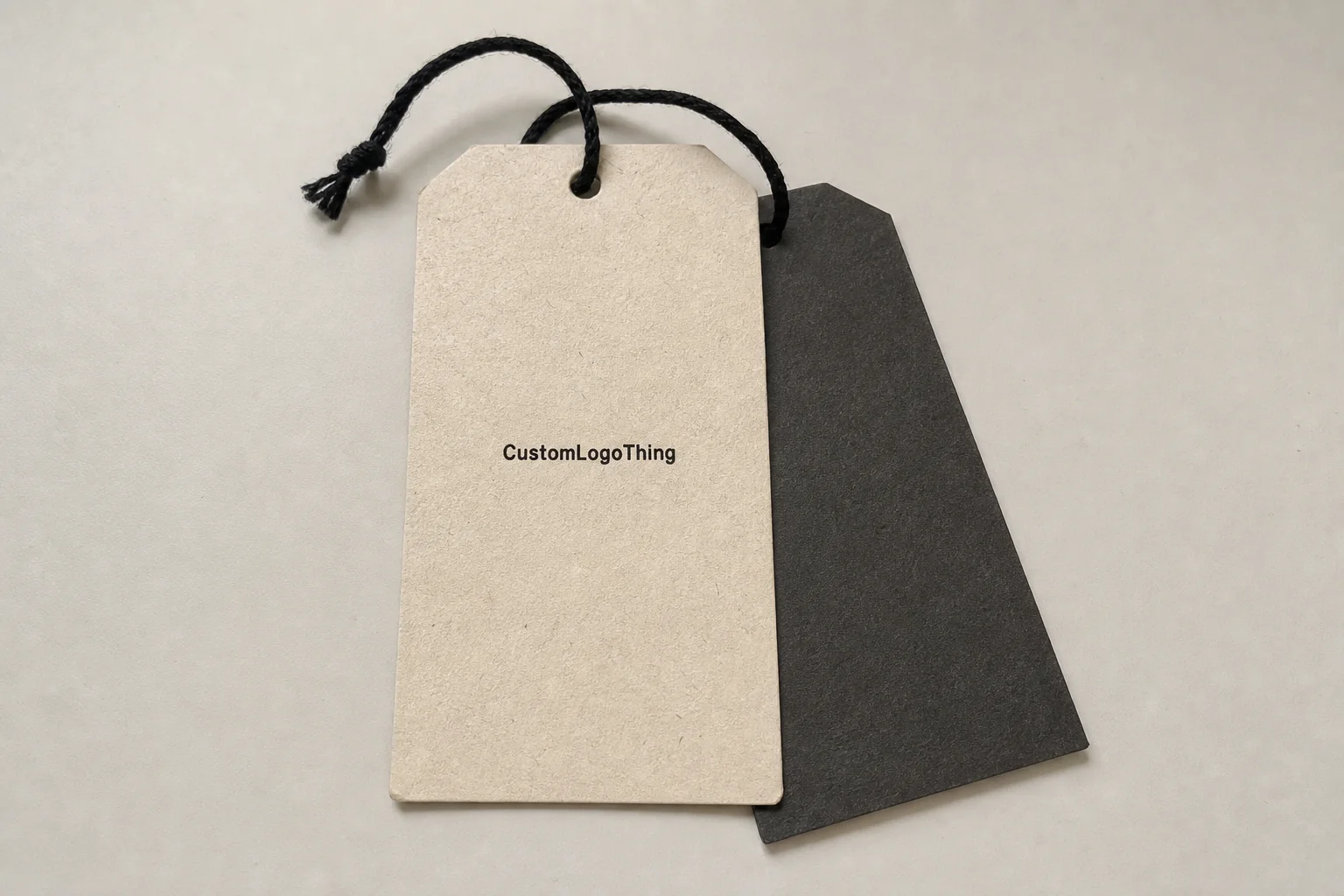
Clothing swing tag printing sits at the point where branding meets operations. A good tag helps the item look merchandised, priced, and ready for sale. Shoppers do not study it for long; they register weight, texture, typography, contrast, and spacing in a few seconds.
That short read affects perception. A crowded tag can make a well-made item feel cheaper than it is. A restrained design often does the opposite. It can make a plain tee feel considered or a jacket feel like part of a premium range. The garment is the product, but the tag frames the value.
For buyers comparing suppliers, the brief should start with one question: is this a price tag, a branding device, a compliance carrier, or all three? The answer changes the stock, finish, format, and approval process. It also changes how you compare Custom Labels & Tags with a standalone swing tag program.
The tag should also support the retail workflow. Store staff need to find the barcode, size, and pricing information fast. That means the design needs to balance brand expression with scanning, sorting, and shelf use. If it looks good but slows handling, it is not doing its job.
How swing tags are built from artwork to finished cards
The production path for swing tags starts with the brief. That brief should define garment type, target retail tier, legal copy, number of SKUs, attachment method, and delivery date. If those points are vague, the quote and proofing stages become slower and less reliable.
From there, the job usually moves through layout, proofing, print, die-cutting, punching, finishing, stringing, and packing. Each step can surface a different problem. A barcode may look fine on screen and fail after print because the contrast is too low. A hole may appear centered in the artwork but shift enough during punching to upset the layout. Foil that sits too close to the trim line can clip during finishing.
Buyers often ask whether digital or offset printing is better. The practical answer depends on volume, finish, and how stable the artwork is. Digital printing usually suits shorter runs, faster turnarounds, and multiple SKU versions. Offset printing tends to become more attractive at higher quantities, especially when consistent CMYK reproduction and lower per-unit costs matter more than speed. If the artwork relies on one brand color, spot color matching can also tighten consistency.
Finishing changes the read of the tag as much as the print itself. Soft-touch lamination, matte varnish, gloss coating, foil stamping, embossing, and spot UV all influence perceived quality. These are not decorative extras in the casual sense. They shape how heavy, premium, or restrained the tag feels in the hand. A textured finish can make a card feel warmer and more intentional, while gloss can sharpen color but also make the piece feel louder.
Prepress checks are where expensive mistakes should be caught. Bleed, safe zones, hole position, backside copy, and barcode placement all need review before the press starts. A proof should be judged like a retail tool, not like a design comp. The real test is whether the tag still works when held at arm’s length and whether the key message is clear in a few seconds.
What good artwork files should include
Use a press-ready PDF, AI, or EPS file. Outline or embed fonts, set bleed correctly, and keep die lines on a separate layer. If the tag includes a barcode or QR code, test it before release. A code that scans in a mockup but fails after print can slow receiving, inventory checks, and point-of-sale setup.
Stock, finish, and size choices that change the result
Paper stock changes how a tag feels before the shopper reads a line of copy. A 350gsm artboard does not read the same way as 450gsm stock, and recycled paper behaves differently again. Heavier stock usually signals more substance, but that is not always the correct choice. A fast-moving basic tee may not justify the same board weight as a premium knit or outerwear piece.
Surface finish matters just as much. Coated stock tends to hold color more crisply, especially for bold graphics and full-bleed artwork. Uncoated stock feels softer and more natural, which can suit organic cotton ranges, heritage brands, or sustainability-led collections. Textured paper adds character, but it can make small type less legible and can complicate barcode printing if the texture is too pronounced.
Size and shape also change the outcome. Oversized tags can create a luxury cue, but they can look awkward on small garments or childrenswear. Compact tags are more practical for basics, hosiery, and product lines with limited messaging. Die-cut shapes can be distinctive, yet they add tooling complexity and can slow the schedule if the outline is unusually custom.
Finish should match the retail position. Matte and soft-touch lamination often read as quieter and more premium. Gloss can make color pop, but it can feel too loud for understated apparel. Foil and embossing can lift perceived value quickly, although they work best when used sparingly. Too many effects can make the tag look like a sample board instead of a selling tool.
Attachment hardware deserves the same scrutiny. String type, knot style, loop length, safety pins, and plastic fasteners all change the final presentation. Waxed cord usually supports a heritage or craft-led look. Clear plastic loops are efficient and clean, but they can feel generic if the rest of the tag is trying to communicate something more distinctive.
Material choice also has to fit the broader packaging conversation. If a brand is making claims around recycled content or responsible sourcing, the swing tag should not undermine those claims with mismatched finishes or vague language. FSC certification is one reference point for paper sourcing, while broader packaging and distribution decisions can be checked against standards or guidance from groups such as FSC and ISTA.
Printing process, turnaround, and proofing milestones
A reliable order starts with a clean specification sheet. Include quantity, dimensions, stock, finish, print method, attachment style, SKU count, packaging format, and delivery date. If the supplier has to infer those details, the risk rises immediately, and the quote becomes less dependable.
Turnaround depends on complexity, not just on how busy the press is. A simple digital reprint can move quickly after approval. A larger offset job with foil, embossing, or a new die takes longer because more setup steps have to happen in sequence. The hidden variable is usually the approval chain. Revisions to copy, barcode data, or finish choices are what stretch a schedule.
Proofing should be treated as a gate, not as a courtesy. Check the front and back copy, barcode size, hole position, trim lines, and any legal text. If the tag includes care instructions or origin claims, confirm the wording is still accurate after the last brand edit. It also helps to review the proof under the same light conditions used in the warehouse or store, because color and contrast can behave differently than they do on a monitor.
For multi-SKU programs, group the variants early. If a range has five colors and three sizes, the printer can often build the sheet more efficiently once the variations are locked. That lowers waste and reduces the chance that one version gets packed against the wrong style. It also makes split packing by retailer or store location easier to manage.
Some buyers still assume flexographic printing is the default answer for apparel tags. For swing tags, it usually is not. Flexo is more common in adjacent packaging formats and labels, though it can appear in specific accessory applications depending on the setup. For hang tags, digital and offset methods are more common because they handle detail, registration, and finishing with fewer compromises.
Pricing, MOQ, and quote variables buyers should compare
Pricing for clothing swing tag printing is shaped by quantity, paper weight, size, print sides, ink coverage, finish, tooling, packing method, and delivery location. Buyers often compare quotes that look similar at first glance but are built on different assumptions. One quote may include stringing and packing by SKU; another may leave that out. One may use 350gsm board; another may use 500gsm.
MOQ matters because the economics shift quickly at the edges. A supplier that is competitive at 10,000 pieces may not be the right fit for a 500-piece test run. A low minimum order can sound attractive until setup, finishing, and manual handling are added back in. Unit price only tells the truth when the spec is aligned.
| Option | Best for | Typical unit cost range | What changes the price |
|---|---|---|---|
| Digital printed swing tags | Short runs, multiple SKUs, fast approvals | $0.18-$0.35 | Coverage, variable data, simple finishes |
| Offset printed swing tags | Higher volumes, repeat orders, tighter color control | $0.10-$0.24 | Setup, quantity, CMYK coverage, spot color matching |
| Premium finished tags | Luxury, outerwear, higher ticket items | $0.28-$0.70+ | Foil, embossing, soft-touch, custom dies, special stock |
Those ranges are directional, not universal. A 5,000-piece order with standard print and basic stringing will price differently from a custom die-cut job with foil, embossing, and individual packing. Quantity and finishing drive the curve more than the logo itself does.
Separate the printed piece from the operational extras. Ask whether the quote includes sampling, plate or die fees, stringing, bundling by style, shrink wrapping, and freight. A quote that excludes those items can look cheaper until the final invoice arrives. For that reason, compare total landed cost, not only the printed unit price.
Premium tags make sense when they support the product price. On jackets, hoodies, knitwear, and other items with higher perceived value, a better-finished tag can reinforce the retail story. On low-margin basics, the same spec may not earn its keep. If packaging, assembly, or multi-part presentation is part of the order, a supplier’s broader Manufacturing Capabilities may matter as much as the print quote.
Common mistakes that weaken apparel tag performance
The first mistake is overdesign. A swing tag is not a brochure. If the layout is packed with copy, icons, claims, and decorative effects, the shopper ends up doing too much work. The message gets diluted, and the product can feel cheaper because nothing is given room to breathe.
Readability is the next failure point. Small type, weak contrast, and busy backgrounds can make price, barcode, and care information harder to use at shelf level or in the stock room. A design that looks polished on screen can still fail once it is scanned under retail lighting or read at arm’s length.
Approval errors are costly. If the die line is wrong, the hole is too close to the edge, or the barcode sits inside a fold, the run may need correction. That is why prepress matters. A clean proof prevents waste and protects the launch schedule.
Material mismatch is another quiet problem. A premium coating on a low-cost impulse item can feel inconsistent with the garment. A basic card on a luxury item can drag the whole presentation down. The tag should not outdress the product, but it should not understate it either.
There is also a system-level error that shows up often: the tag is approved in isolation. The swing tag says one thing, the woven label says another, the poly bag says a third, and the carton does not match any of them. That inconsistency weakens trust. Packaging works best when the parts speak the same language.
For brands making sustainability claims, clarity matters even more. If recycled content, FSC certification, or low-waste packaging is part of the message, the tag should communicate it accurately and modestly. Overclaiming is worse than saying less, especially when the rest of the package tells a different story.
Next steps for a clean clothing tag order
Start with a one-page spec. Keep it practical. Garment type, quantity, dimensions, stock, finish, attachment, barcode needs, delivery window, and required copy should all sit on the same page. A clear spec shortens the quote cycle and reduces misunderstandings later.
Ask for a proof that shows both sides, trim marks, hole position, and the exact attachment style. If the order needs multiple versions, make sure the supplier knows how the variants should be grouped and packed. That is where small jobs often get messy.
If the tags will be used in stores, ask one blunt question: does the tag read clearly at arm’s length? If the answer is no, the design still needs work. A beautiful tag that cannot be scanned or read quickly is a design problem, not a print success.
Budget with the retail outcome in mind. Clothing swing tag printing is part of how the garment is priced in the shopper’s mind. The right mix of stock, print method, and finishing can make the product feel more complete before anyone tries it on. When the order is specified properly, the tag becomes part of the selling system rather than a last-minute add-on.
What file format works best for clothing swing tag printing?
A press-ready PDF is usually the safest choice, with AI or EPS files also common when the artwork is set up correctly. Use embedded or outlined fonts, keep the barcode tested, and include bleed plus safe zones so trimming does not remove critical content.
How long does swing tag printing usually take?
Simple digital runs can move quickly after artwork approval, while specialty finishes, custom dies, or large quantities take longer. In practice, the biggest schedule risk is usually the revision cycle and proof sign-off, not the press time itself.
What affects the cost of custom clothing swing tags the most?
Quantity, stock weight, finish complexity, and setup work usually have the largest impact on unit cost. Foil, embossing, spot UV, custom shapes, stringing, and split packing can push the price up quickly.
Should apparel tags be offset or digital printed?
Digital printing is usually better for shorter runs, quick changes, and multiple versions. Offset printing often becomes more efficient at higher volumes and can give very consistent CMYK results when the artwork is stable.
What should be included in a proof before approval?
Check front and back copy, logo placement, barcode size, hole position, trim lines, and any care or legal text. Confirm the stock, finish, and attachment style too, because a proof that reflects the actual production spec catches more problems than a generic mockup.