Buyer Fit Snapshot
| Best fit | Coffee Packaging Bags Custom Wholesale projects where brand print, material claims, artwork control, MOQ, and repeat-order consistency need to be specified before quoting. |
|---|---|
| Quote inputs | Share finished size, material target, print colors, finish, packing count, annual reorder estimate, ship-to region, and any compliance wording. |
| Proofing check | Approve dieline scale, logo placement, barcode or warning zones, color tolerance, closure strength, and carton packing before bulk production. |
| Main risk | Vague material claims, crowded artwork, missing packing details, or unclear freight terms can make a low unit price expensive after revisions. |
Fast answer: Coffee Packaging Bags Custom Wholesale: Retail Fit, Compliance Space, Print, and Cost should be specified like a repeatable production item. The safest quote records material, print method, finish, artwork proof, packing count, and reorder notes in one written spec.
Production checks before approval
Compare the actual filled-product size with the drawing, then confirm tolerance on folds, seals, hang holes, label areas, and retail display edges. Reserve space for logos, QR codes, warning copy, and material claims before decorative graphics fill the panel.
Quote comparison points
Review material grade, print process, finish, sampling route, tooling charges, carton quantity, and freight assumptions side by side. A quote is only useful when the supplier can repeat the same color, closure quality, and packing count on the next order.
Coffee Packaging Bags Custom Wholesale: Buyer Guide
If the bag fails, the coffee fails with it. Simple as that. Buyers learn the expensive version of that lesson when a pouch leaks aroma, the zipper quits after one use, or the print looks fine online and tired on shelf. A few cents more per unit in coffee Packaging Bags Custom wholesale can still lower total cost if the package protects freshness longer, reduces damage in transit, and keeps the product looking sharp. That is not a cosmetic decision. It is a margin decision, a shelf-life decision, and a brand decision all at once.
There is a reason serious roasters get picky here. Coffee is one of the few grocery products where the package has to do two jobs at once: protect the product and sell it. The bag is not just a wrapper. It is part of the product experience. And yes, the wrong bag can make even a great roast look kinda forgettable.
What should buyers look for in coffee packaging bags custom wholesale?
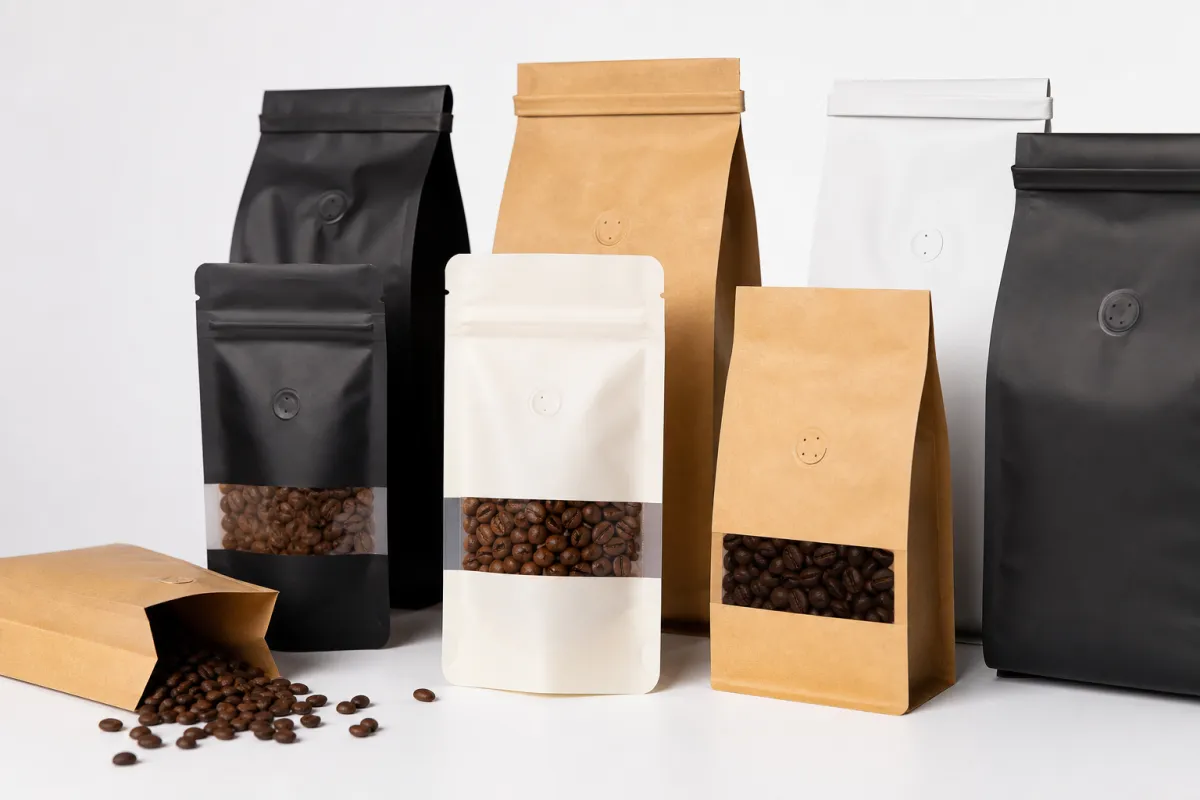
Buyers should look for barrier protection, seal integrity, a one-way valve if the coffee needs to degas, a zipper That Actually Works, and print specs that hold up across repeat runs. In Coffee Packaging Bags custom wholesale, the best choice is usually the one that protects freshness, supports shelf appeal, and keeps reorder planning simple. Cheap bags are only cheap until they start causing returns, stale stock, and packaging headaches.
Why Coffee Packaging Bags Custom Wholesale Matters
Coffee Packaging Bags Custom wholesale matters because coffee is one of the few grocery products where the package has to protect the product and sell it at the same time. Weak barrier? Aroma walks out the door. Generic print? The bean looks generic too. Oversized bag? Freight climbs and shelf presentation gets awkward. Those trade-offs stay hidden if you only look at unit price.
A packaging buyer should not ask, "What is the cheapest pouch?" The real question is, "What is the lowest total cost per sellable unit?" That number includes spoilage, complaints, rework, and the quiet drag of packaging that stacks badly or photographs badly for retail and e-commerce. A bag that costs more on paper can still save money if it holds seal integrity, blocks oxygen, and gives the brand a stronger retail packaging presence.
Wholesale coffee bags affect three things at once: shelf life, logistics, and brand perception. Roasters moving from farmers market packs to regional distribution need a format that ships flat, stacks cleanly, and works across multiple SKUs. That is the point where coffee Packaging Bags Custom Wholesale stops being a commodity purchase and starts being a packaging decision. Good programs handle private label, subscription shipping, and in-store displays without forcing three separate packaging systems.
There is a practical reason the wholesale route usually wins. Stock pouches can feel easier, then turn annoying fast when roast date visibility, degassing, or barcode placement matters. Custom wholesale leaves room for a one-way valve, a better zipper, a label area, and package branding that looks intentional instead of patched together. Buyers moving from generic stock bags to coffee packaging bags custom wholesale usually want fewer compromises, not more decoration.
The cheap bag often turns into the expensive bag after shelf failures, customer complaints, and slow sell-through. Weak packaging lets the product age faster. Unclear design slows buyers down at shelf. Crushed corners in transit get noticed by the retail team right away. I have seen roasters blame the bean when the real problem was the pouch. Not glamorous, but true. Experienced wholesale buyers treat packaging as a system, not as a single line item.
"The quote that looked higher on paper ended up costing less in practice because we stopped losing units to damage and stale inventory."
For buyers comparing suppliers, the real test is whether the manufacturer can balance speed, minimums, and brand standards without bluffing. A supplier who understands coffee packaging bags custom wholesale should explain barrier layers, closure options, and lead times in plain language, then back that advice with usable samples. That beats vague talk about premium quality every time.
For broader packaging planning, the same logic applies across other formats too. A coffee roaster often uses a mix of pouches, Custom Packaging Products, and sometimes custom printed boxes for gift sets or seasonal bundles. Strong programs keep all of it aligned so the brand feels consistent whether the customer buys a 12 oz bag, a sampler, or a boxed set.
Coffee Packaging Bags Custom Wholesale: Product Details
The main advantage of coffee packaging bags custom wholesale is flexibility. Buyers are not locked into one shape or one finish. They can choose a structure that fits retail, e-commerce, or bulk resale, then adjust the features around roast profile and sales channel. That matters because the best bag for whole bean coffee is not always the best bag for ground coffee, and the best bag for a cafe counter is not the same as the best bag for subscription fulfillment.
Stand-up pouches are the most familiar option. They display well, fit retail shelving, and give enough face area for branding, nutrition details, and origin storytelling. Flat-bottom bags add more stability and usually feel more premium on shelf. Side-gusset bags are practical for larger fill weights and bulk presentation. Box-style formats create a more structured, high-end impression, especially for gifting or seasonal launches. Each style shifts cost, shipping volume, and shelf presence in a different direction.
Function matters just as much as form. Freshly roasted coffee usually needs a one-way degassing valve so carbon dioxide can escape without letting oxygen in. A resealable zipper helps preserve freshness after opening. Tear notches improve opening consistency. Hang holes work for display fixtures. Clear windows can show the product, though many coffee buyers prefer barrier films that reduce light exposure. The right mix depends on the roast and the channel, not on aesthetics alone.
Finish choices are another major decision. Matte films often feel more modern and reduce glare in retail lighting. Gloss can make colors pop harder. Soft-touch finishes create a more tactile premium feel, though they show handling marks differently. Paper-like textures can support a natural, artisanal look, especially for organic or single-origin positioning. For coffee packaging bags custom wholesale, finish is not just a style preference. It changes how the package performs in hand, under light, and in photos.
Barrier is the performance driver that matters most. Buyers should ask about oxygen protection, moisture resistance, light blocking, and odor resistance. A coffee bag that looks excellent but allows too much oxygen transfer will quietly shorten shelf life. The technical terms often appear as OTR, or oxygen transmission rate, and WVTR, or water vapor transmission rate. Those numbers say more than marketing copy because they show how the film behaves in storage.
Not every order needs the same structure. Some buyers use one base layout across several roast profiles and vary only the artwork, flavor notes, or fill weight. That keeps coffee packaging bags custom wholesale simpler to manage and reduces inventory confusion. The trick is planning early enough that the print area, valve placement, and zipper style support every SKU without forcing a redesign later.
Channel fit matters too. A cafe retail program may need a compact stand-up pouch with a strong shelf profile. A subscription business may care more about shipping durability and label space. A private label program may prioritize flexible artwork, fast reorders, and consistent package branding across multiple product lines. Promotional sampler packs may use smaller formats to reduce waste and let customers test more roast families before moving up to larger bags.
For buyers building a broader packaging system, it helps to compare all of the options side by side. That includes coffee pouches, boxes, labels, and any secondary packaging that supports the customer journey. A good supplier should be able to pair coffee packaging bags custom wholesale with coordinated Wholesale Programs so the brand does not feel fragmented across channels.
| Bag Style | Best Use | Strengths | Trade-Offs | Wholesale Fit |
|---|---|---|---|---|
| Stand-up pouch | Retail, subscription, sample packs | Strong shelf visibility, flexible sizes, efficient storage | Less premium structure than box-bottom formats | Good for many coffee packaging bags custom wholesale programs |
| Flat-bottom bag | Premium retail, specialty coffee | Stable, upscale appearance, strong brand face area | Usually higher unit cost than simpler pouches | Best for brand-led launches and retail packaging |
| Side-gusset bag | Higher fill weights, bulk resale | Efficient packing, familiar coffee look, good for volume | Less front-panel display space | Works well for value-driven coffee packaging bags custom wholesale |
| Box-style bag | Gift sets, premium shelves | Rigid appearance, strong package branding, high-end feel | More material, more cost, more planning | Ideal when shelf impact matters more than the lowest unit price |
Material choice also affects the customer experience. Paper-based structures can support a natural story, but they still need the right barrier layer underneath. Fully plastic laminate structures can offer strong protection and print flexibility. FSC-certified paper components may be available for certain builds, and buyers who care about sourcing should confirm chain-of-custody details. If sustainability claims matter, verify them against the standards instead of trusting a sales line. The same applies to compliance and recycling claims; check current guidance from sources such as FSC and packaging industry references like packaging.org.
Coffee Bag Specifications That Affect Performance
Good quotes start with good specs. Before requesting pricing for coffee packaging bags custom wholesale, buyers should confirm dimensions, fill weight, film thickness, barrier level, valve type, zipper style, and print method. If those details stay fuzzy, the quote may look attractive while the final bag misses the product, the machine, or the shelf plan. Exact specifications save time later because they cut down on proofing and dieline back-and-forth.
Dimensions should be based on fill volume, not just bean weight. Two 12 oz coffees can occupy different amounts of space depending on roast degree, bean density, and whether the product is whole bean or ground. A darker roast can take up more volume than a lighter roast at the same weight. That is why a sample pack matters. A bag can look right on paper and still feel cramped once filled and sealed.
Film thickness is another trade-off point. Lighter films reduce material use and can lower shipping weight, while heavier structures often perform better in transit and offer stronger barrier performance. The right answer depends on how the bag is handled. If the product ships Direct to Consumer, puncture resistance matters. If it sits on a warm retail shelf, light protection and seal strength matter more. Coffee packaging bags custom wholesale needs a structure that fits the actual supply chain, not an imaginary one.
Print specs affect consistency and reorders. CMYK process printing is common for full-color designs. Spot colors help hold brand shades more reliably. White ink coverage matters when a design sits on a dark substrate or a metallic film. If the buyer needs exact brand colors, the supplier should explain how they will control color on repeat runs. That matters a lot for branded packaging programs where every SKU needs to look like part of the same family.
Food-safe materials are table stakes. Seal strength matters too, because a weak seal can fail long before the coffee is sold. Heat resistance should be confirmed for the filling line, especially if the beans are packed soon after roasting and cooling. Standard ambient packing is common for coffee, but every operation is different. If the process involves a hot product, unusual dwell times, or a faster line, the bag structure should be tested before full production.
Buyers sometimes assume a spec sheet is enough. It is not. A spec sheet should be validated with filled samples because empty bags can behave very differently once product weight, air volume, and zipper tension show up. A zipper that feels perfect in hand may sit too high on a filled bag. A valve that looks clean may interfere with the artwork. A good supplier asks for tests, not just artwork approval, because coffee packaging bags custom wholesale is a physical product with real handling risks.
Where packaging standards matter, testing should not be a side note. Shipping and distribution claims can be checked against methods referenced by organizations like ISTA. For coffee sold through retail, buyers often care about shelf performance, drop resistance in transit, and whether the outer shipping system protects the retail package. That is where packaging design meets logistics in a measurable way.
Below is a practical checklist most buyers should confirm before sending artwork:
- Bag style, fill weight, and finished dimensions
- One-way valve, zipper, tear notch, and hang-hole requirements
- Film type, barrier level, and desired finish
- Print count, brand colors, and barcode placement
- Shipping destination, pallet needs, and target launch date
- Any compliance or sustainability requirements tied to the brand
Coffee Packaging Bags Custom Wholesale Pricing & MOQ
Coffee packaging bags custom wholesale pricing comes from structure, material complexity, print colors, finishing, insert options, and order volume. That is why two bags that look similar on shelf can produce very different quotes. A simple printed pouch with limited colors and standard barrier layers will price differently from a flat-bottom bag with soft-touch lamination, a matte finish, a valve, a zipper, and heavy artwork coverage. Packaging buyers who understand that pattern negotiate better because they know where the cost is coming from.
MOQ, or minimum order quantity, usually follows the level of customization. Simpler builds or stock-like structures may allow lower entry quantities. Highly customized bags usually need larger runs to stay economical. The supplier is spreading setup, plate, or cylinder costs across more units, which is why volume changes unit price so fast. Buyers launching a new roast often want lower risk, but the math still favors volume once a design is stable and repeat orders are likely.
Here is the price question that matters most: what is the landed cost? Unit price alone can mislead. Freight, duties, palletization, and warehouse handling can swing the real number enough to wipe out a small quote advantage. A lower bag price may be offset by higher shipping cost if the structure is bulky or the order fills less efficiently on a pallet. Smart buyers compare the full landed cost, then decide whether the premium structure earns its place.
For many coffee brands, the best savings come from standardization. One bag size across several SKUs is easier to manage than six slightly different structures. Fewer print colors can also lower cost. Standard finishes can reduce complexity. Consolidating orders by roast family can improve planning and inventory control. These are not dramatic moves, but they often produce better margins than chasing the lowest per-unit quote.
The other side of pricing is value. If a slightly higher price buys stronger shelf life, better color consistency, or fewer shipping damages, it can still be the better decision. That is especially true in retail packaging where a failed pouch affects more than the item inside it. It can hurt the display, the customer perception, and the reorder rate. For coffee packaging bags custom wholesale, a few cents can be cheap insurance against a much larger loss.
Ask for tiered pricing before approving artwork. That gives the buyer visibility into how the cost changes at 1,000, 3,000, 5,000, or higher quantities. Also ask whether sample fees, plate fees, or cylinder fees apply. Some programs can absorb those costs into the run; others cannot. Clear pricing prevents surprises later, which is why strong packaging design conversations always include commercial terms as well as graphics.
The table below shows the kinds of pricing levers buyers usually compare.
| Cost Driver | Lower-Cost Choice | Higher-Cost Choice | Why It Changes Price |
|---|---|---|---|
| Structure | Stand-up pouch | Flat-bottom or box-style | More material and more complex forming |
| Barrier | Standard film | Higher barrier laminate | Additional layers improve freshness protection |
| Fewer colors | Full-coverage, multiple spot colors | More ink usage and tighter press control | |
| Finish | Standard gloss or matte | Soft-touch or specialty texture | Extra converting steps and material cost |
| MOQ | Higher volume runs | Low-volume custom runs | Setup costs are spread across fewer units |
Smart buyers also ask about reorder terms. A first run may include artwork setup or testing costs that do not repeat later. If the product line is likely to stay stable, that becomes a long-term advantage. If the brand plans seasonal variants, the supplier should explain how that affects plate reuse, print changes, and pricing. The best coffee packaging bags custom wholesale partners make those trade-offs visible early, not after the order is locked.
Process & Timeline for Custom Wholesale Orders
The workflow for coffee packaging bags custom wholesale is usually straightforward, but delays cluster in predictable places. A typical path runs from brief to spec confirmation, then artwork review, proofing, sampling if needed, production, inspection, and shipment. Each step can move quickly if the buyer provides clean information. It stalls when dimensions are vague or artwork arrives without a dieline match.
The fastest projects start with a precise brief. The supplier needs target fill weight, bag style, valve or zipper requirements, print area, barcode placement, shipping destination, and the launch date. If the buyer also shares reference bags, previous packaging files, or competitor examples, the design conversation gets easier. That does not mean copying another brand. It means reducing ambiguity so the quoting team can recommend the right structure.
Artwork revisions are often where time disappears. If the buyer is adapting a design from another format or trying to place multiple SKUs under one visual system, proofing may take longer than expected. That is normal. A packaging design built for one bag size does not always scale cleanly to another, and the text hierarchy that works on a premium roast may not work on a sampler pack. Coffee packaging bags custom wholesale needs careful layout work if the brand wants the same look across the line.
Delays usually come from simple issues: missing barcodes, incomplete colors, late proof approval, or last-minute structure changes. Once production starts, changes get expensive. Buyers who want a smoother order should treat the proof as a decision point, not a conversation starter. If the design needs a second look, that is fine. If the fill weight changes after artwork approval, the team may need to rework the whole layout.
Sample lead time and mass production lead time are not the same. A sample can arrive faster because it may use a different production path or a smaller run. Mass production takes longer because it involves line scheduling, QC, and packing. A practical planning window for many wholesale coffee pouch programs is often 12 to 15 business days after proof approval for production, plus transit time. That said, lead times vary by factory, print method, order size, and shipping lane. Rush work is sometimes possible, but only when specs are already locked and the artwork is ready.
That timeline matters because coffee launches are often tied to retail resets, seasonal menus, or subscription drops. Packaging ordered too late becomes a bottleneck. Packaging ordered too early can sit in storage while the blend changes. The right answer is to align the bag schedule with the roast schedule and the sales calendar. That sounds obvious, yet it is one of the most common planning mistakes in product packaging.
Packaging buyers should also think about inspection. A good supplier will check seal quality, print alignment, and consistency before shipment. That is not a luxury. It reduces the risk of receiving a pallet that looks fine on top but reveals issues in the middle rows. If the order is tied to a launch, ask whether the production team can share inspection photos, lot references, or packing details. Traceability is a quiet but important part of package branding and supply confidence.
For brands that run multiple formats, the timeline can be simplified by using one master process across several SKUs. The same approval cadence can support coffee bags, labels, and even custom printed boxes for gift bundles or promotional packs. That helps keep the entire launch synchronized, which is often the difference between a clean rollout and a rushed one.
Why Choose Us for Coffee Packaging Bags Custom Wholesale
A strong supplier should be judged on reliability more than hype. With coffee packaging bags custom wholesale, consistency matters more than flashy language. Buyers need stable specs, repeatable quality, clear communication, and a team that catches issues before they become expensive. A pretty mockup is useful. A repeatable production system is what keeps the brand on schedule.
What does operational strength look like? It usually shows up in low-variation manufacturing, proof control, sample support, and the ability to handle both small and large wholesale runs without changing the rules every time. That matters for roasters who start with one core blend and then add decaf, single-origin lots, or seasonal editions. The packaging partner should scale with that mix instead of forcing a new process every time the catalog expands.
Support also reduces hidden cost. A good partner will confirm dimensions, flag artwork problems, and identify structure issues before production starts. That may sound basic, but many packaging problems begin with a bad assumption about bag size or a mismatch between the zipper location and the printed layout. Catching those errors early protects margin. It also protects launch dates, which are often harder to recover than money.
Another reason buyers stay with a packaging partner is the commercial side. A clear quote, a realistic MOQ, and practical recommendations save time. If a buyer needs one packaging system for several roast lines, the supplier should explain how to use size, finish, and print changes without fragmenting inventory. That is especially useful for brands balancing retail packaging, e-commerce, and wholesale distribution at the same time.
There is also a coffee-specific knowledge gap in the market. Some pouch sellers can print almost anything, but they do not always understand degassing, oxygen barrier, or the way coffee behaves on shelf. That leads to generic advice that ignores the realities of a roasted product. A partner who understands coffee will talk about freshness windows, valve placement, and fill behavior with more precision. That difference matters in coffee packaging bags custom wholesale.
Buyers should look for trust signals that are measurable, not vague. Repeatable specs. Documented revisions. Responsive communication. Delivery consistency. Real sample support. Clear discussion of standards and practical testing. If a supplier cannot explain how they manage those basics, the risk shifts to the buyer. If they can, the packaging program becomes much easier to scale.
For brands building a larger packaging system, the right vendor relationship often extends beyond coffee pouches. The same partner may help coordinate package branding across labels, inserts, and Custom Packaging Products so the entire line feels coherent. That continuity is especially useful for private label programs and retail expansion, where shelf consistency carries weight.
Next Steps for Coffee Packaging Bags Custom Wholesale
If you are preparing a quote request for coffee packaging bags custom wholesale, start with a clean checklist. Include bag style, fill weight, closure type, finish, print count, target quantity, shipping destination, and any compliance or sustainability needs. That single step can shave days off the quoting process because it gives the supplier enough information to recommend a structure instead of guessing.
Gather artwork files, brand colors, barcode details, and a few reference bags before you ask for pricing. Reference samples are useful because they show what you like, what you do not like, and where the market sits on shelf right now. A good supplier can use those examples to advise on packaging design, finish choice, and material structure without overcomplicating the project.
Ask for a sample pack or material swatch set if possible. Texture, zipper feel, and barrier behavior are hard to judge from a screen. In person, the differences are obvious. That is especially true if the brand is deciding between matte and gloss, or between a lightweight structure and a more protective laminate. The right sample can settle an argument faster than a long email thread.
Plan the reorder strategy now, not later. If the first production run will be repeated, the supplier needs to know that. If seasonal variants are likely, the design system should leave room for them. That affects pricing, stock planning, and future artwork management. It also affects how much inventory you should carry, which matters for cash flow as much as it matters for storage.
Before approving the final version, compare two or three build options and judge them on shelf life, print quality, and landed cost. That comparison usually reveals the real winner. The cheapest option is not always the best, and the most premium-looking option is not always the smartest. The strongest coffee packaging bags custom wholesale choice is the one that supports launch timing, margin, and retail performance together.
For buyers who want the simplest path forward, the next move is straightforward: request a spec review, compare a few practical structures, and approve the version that protects the coffee while supporting the brand. Coffee packaging bags custom wholesale should be chosen with the same discipline as the roast itself: by taste, consistency, and total value, not by unit price alone. If you skip the boring parts now, the bag will remind you later. It always does.
What is the typical MOQ for coffee packaging bags custom wholesale?
MOQ depends on bag structure, print complexity, and material choice, with simpler builds often starting lower than highly customized formats. Ask for tiered pricing so you can see how the unit cost changes at different volumes before committing. If you are testing a new roast or sales channel, consolidating SKUs can help you reach a more efficient order quantity.
Which coffee bag features are most important for freshness?
Prioritize oxygen and moisture barrier first, then add a one-way valve if you package freshly roasted beans that need to degas. A reliable zipper and strong seals matter because freshness drops quickly once the bag is opened and closed repeatedly. Light protection also matters, especially for premium beans displayed under bright retail lighting.
How do custom wholesale coffee bag prices usually break down?
Price is driven by structure, material layers, print coverage, finish, and order volume. Freight, duties, and warehouse handling can change the real landed cost enough to outweigh a small difference in unit price. Request quotes that separate product cost from shipping and setup fees so comparisons stay accurate.
How long does a custom wholesale coffee bag order take?
Timeline depends on artwork approval, sampling needs, production queue, and shipping method. The fastest orders usually have final specs and print-ready files submitted early. If you are launching on a deadline, build in time for proof review and at least one revision cycle.
Can I order multiple coffee SKUs under one wholesale program?
Yes, many buyers use one bag structure across several SKUs and vary the artwork, label, or fill weight. That approach can simplify inventory and reduce per-unit cost while keeping the line visually consistent. Confirm barcode placement, color management, and reorder rules before final approval.

