Buyer Fit Snapshot
| Best fit | Compare Corrugated vs Rigid Boxes for Business Buyers projects where brand print, material claims, artwork control, MOQ, and repeat-order consistency need to be specified before quoting. |
|---|---|
| Quote inputs | Share finished size, material target, print colors, finish, packing count, annual reorder estimate, ship-to region, and any compliance wording. |
| Proofing check | Approve dieline scale, logo placement, barcode or warning zones, color tolerance, closure strength, and carton packing before bulk production. |
| Main risk | Vague material claims, crowded artwork, missing packing details, or unclear freight terms can make a low unit price expensive after revisions. |
Fast answer: Compare Corrugated vs Rigid Boxes for Business Buyers should be specified like a repeatable production item. The safest quote records material, print method, finish, artwork proof, packing count, and reorder notes in one written spec.
Production checks before approval
Compare the actual filled-product size with the drawing, then confirm tolerance on folds, seals, hang holes, label areas, and retail display edges. Reserve space for logos, QR codes, warning copy, and material claims before decorative graphics fill the panel.
Quote comparison points
Review material grade, print process, finish, sampling route, tooling charges, carton quantity, and freight assumptions side by side. A quote is only useful when the supplier can repeat the same color, closure quality, and packing count on the next order.
Quick Answer: Compare Corrugated vs Rigid Boxes Before You Overspend
I watched a skincare founder burn $18,700 in three months after switching to magnetic rigid boxes for a “premium unboxing” concept, skipping ISTA drop testing, and getting crushed by dented corners and collapsed lids after UPS zone 6 deliveries. I remember when she called me after the second return spike—long pause, then: “I thought expensive meant safer.” It doesn’t. Anyone trying to Compare Corrugated vs Rigid boxes through a buyer’s lens should start with transit conditions, not social media aesthetics.
Here’s the short verdict. Corrugated usually wins on parcel performance, scale, and margin protection. Rigid usually wins on gifting moments, shelf drama, and perceived value. I’ve quoted both side by side for brands at 1,000 units and brands at 200,000 units; the pattern repeats with almost boring consistency (and I say that lovingly, because boring is profitable).
My blunt rule is simple: if packaging moves through USPS, UPS, FedEx, or a 3PL pick-pack line, start with corrugated. If the box itself is part of the promise—a luxury jewelry reveal, high-end PR drop, premium corporate gift—then compare Corrugated vs Rigid boxes with perception metrics included, not just freight math.
This isn’t a morality play with a winner and a loser. It’s fit. Fragility, shipping method, tolerated return rate, storage cube, and gross margin determine which format works. I’ve seen a $120 serum set perform beautifully in a $0.92 E-flute litho-lam mailer with an EVA insert. I’ve also seen a $280 watch accessory line fail in corrugated because customers expected a keepsake box and read the brand as cheap. Honestly, I think this is where teams get emotionally attached to packaging and forget that customers judge the whole experience, not one texture.
What follows: side-by-side option comparisons, real pricing bands from Shenzhen and Dongguan suppliers, timeline differences from sampling through mass production, test observations from ASTM/ISTA workflows, and practical recommendation paths by business model. Straight operations talk, no fantasy math (and no “trust me, it’ll be fine” procurement strategy—I’ve tried that once, never again).
Top Options Compared: Corrugated, Rigid, and Hybrid Setups
Most teams compare two options and stop. That shortcut creates expensive blind spots. A better approach is to Compare Corrugated vs Rigid boxes and include a hybrid lane that delivers much of the rigid look with fewer operational penalties.
| Criteria | Corrugated | Rigid | Hybrid (Rigid-look Corrugated) |
|---|---|---|---|
| Protection in parcel network | High with proper ECT + insert | Medium unless paired with shipper | High |
| Branding impact | Medium to high | Very high | High |
| Shipping weight | Low | High | Low-medium |
| Storage footprint | Ships flat | Ships setup (bulky) | Usually flat |
| MOQ | 500–1,000 common | 1,000–3,000 common | 1,000+ typical |
| Lead time after proof | 12–18 business days | 20–35 business days | 15–25 business days |
| Assembly labor | Low-medium | Low (arrives assembled) but high inbound handling | Medium |
| Sustainability profile | Strong, easier curbside recycle | Mixed (laminations/magnets complicate) | Strong if material choices are clean |
Corrugated formats I spec most often are E-flute mailers, B-flute RSC shippers, die-cut inserts, and folded partitions. E-flute gives cleaner print; B-flute improves stacking strength. RSC is unglamorous and cheap. Mailers suit branded DTC better. Brands running high monthly velocity through Custom Shipping Boxes programs usually see corrugated outperform rigid on total cost.
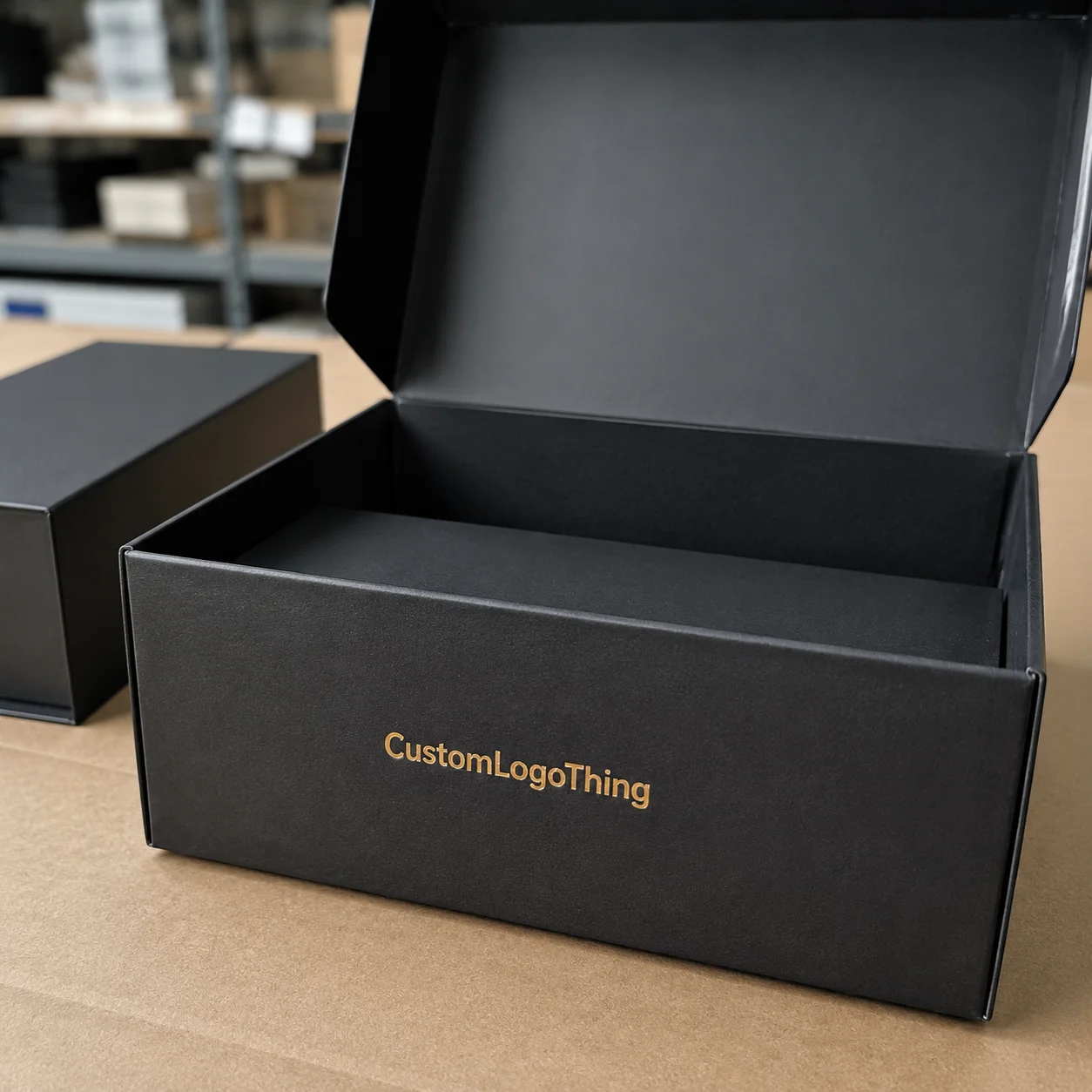
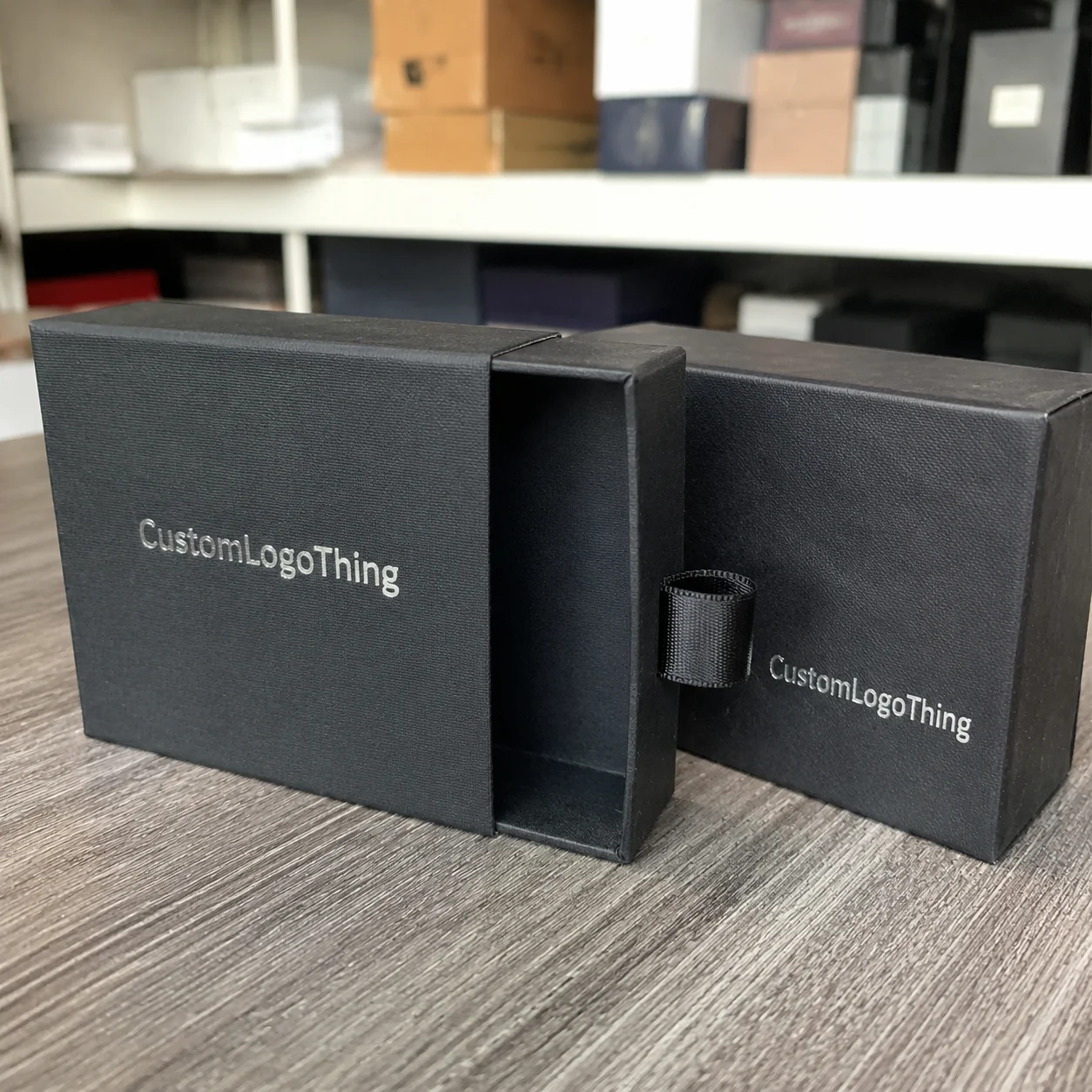
Rigid options include setup boxes, Magnetic Closure Boxes, shoulder-neck boxes, and drawer boxes. They look expensive for a reason: they are. Hidden costs show up in wrap yield loss, corner defects, magnet alignment rejects, and shipping cube inefficiency. I’ve had days where one misaligned magnet made me question all of modern civilization (or at least my sample approval process).
Hybrid stays underused: corrugated structure plus wrapped printed sheet, matte lamination, spot UV, and a custom insert. I used that recipe for a supplement brand at 15,000 units per month, cutting packaging COGS from $2.84 to $1.31 while keeping a premium shelf presence.
- Common mistake #1: buying for unboxing clips instead of damage rates.
- Common mistake #2: ignoring DIM weight at 3PL billing.
- Common mistake #3: forgetting warehouse cube cost at $14–$22 per pallet/month.
Quick use-case snapshot: DTC subscription leans corrugated; beauty PR kit can justify rigid or hybrid; electronics accessories work well in corrugated with engineered inserts; high-AOV luxury often needs rigid plus an outer shipper; wholesale master cartons are corrugated, full stop.
Detailed Review: Corrugated Boxes in Real Operations
Any serious effort to compare corrugated vs rigid boxes has to start with structure. Corrugated is liner + medium + liner, and flute profile changes performance dramatically. E-flute is thinner with better print quality. B-flute is thicker with stronger cushioning. C-flute handles heavier loads. Board grade matters more than decorative effects.
Two specs are routinely ignored: ECT (edge crush test) and burst strength. For many parcel projects, I start at 32 ECT minimum. Heavier kits above 8 lb often justify 44 ECT because reduced damage claims pay back the higher board cost. If a vendor cannot explain ECT tradeoffs in plain language, that’s a vendor problem. Honestly, I think jargon is sometimes used to hide weak engineering.
I ran a plant trial in Shenzhen comparing a 1-2-1 E-flute mailer against a 1-3-1 B-flute mailer for a 6.4 lb kitchen gadget kit. Dimensions were identical. E-flute printed better but failed 30-inch corner drops in 4 out of 10 attempts. B-flute with molded pulp insert passed 9 out of 10. I still remember the look on the product manager’s face after drop number four (the face said, “Well, there goes my mood for the week”).
Transit and stacking performance
Corrugated performs well in ISTA 3A-style parcel abuse if engineered correctly. Validation should include drop sequence, vibration, and top-load compression. Humid routes—Florida, Gulf Coast, Southeast Asia—can soften kraft liners. Typical fixes are board upgrades, moisture-resistant coatings, or stronger polybag isolation.
Branding capabilities
Strong aesthetics don’t require rigid-level spend. Flexo works for budget runs. Digital is useful under 3,000 units. Litho-lam gives premium graphics. Inside print adds surprise but adds plates and setup time. A finish stack like soft-touch lam + foil + emboss + inside print can push unit cost up 22–40%, so margin has to justify the decision.
Operational strengths
Flat shipping changes the math. One client importing 50,000 units reduced inbound volume from the equivalent of 4 x 40HQ to 2.5 after switching from setup rigid to flat corrugated mailers. Their packing line improved from 19 seconds per unit to 11 after we simplified the tuck structure. That’s the kind of boring KPI improvement I genuinely love.
Tradeoffs you should accept upfront
There is a luxury ceiling with corrugated. You can approximate premium; you cannot fully recreate the handfeel of a 2.0 mm greyboard shoulder-neck rigid box. Print variance at volume is also real, especially with flexo solids. Build color tolerance into QC and request press-side drawdown approvals.
Best-fit categories include ecommerce shipping, replenishment SKUs, consumables, mid-price electronics accessories, and growth-stage brands managing cash conversion cycle aggressively. For a wider structure menu, browse Custom Packaging Products and shortlist by use case before RFQ.
Detailed Review: Compare Corrugated vs Rigid Boxes for Premium Brands
Rigid boxes are typically built from chipboard (about 1.2 mm to 2.5 mm), wrapped in printed or dyed paper, then finished through manual or semi-automated steps. Anyone trying to compare corrugated vs rigid boxes for premium programs must include labor intensity in the model. Handwork drives both cost and lead time.
I’ve stood on a Dongguan line watching 26 workers wrap, glue, align magnets, wipe scuffs, and rework corners. Output looked excellent. Yield loss still hit 8.7% that day because foil registration drifted and magnet placement missed by 2 mm in one cavity. That kind of miss burns cash fast. I remember checking the reject pile and thinking, “So this is what margin erosion looks like in physical form.”
Where rigid dominates
Giftability is the headline advantage. Rigid raises perceived value. In one A/B sequence, identical product in rigid packaging lifted repeat-purchase intent by 11% in post-purchase survey data from roughly 1,200 buyers. Shelf impact is stronger, and influencer kits tend to hold visual quality after repeated handling.
Constraints buyers underestimate
Rigid arrives assembled, which helps station speed but punishes warehouse cube. One brand absorbed an extra $6,400 per month in overflow storage because rigid cartons consumed 2.8x pallet space versus flat corrugated blanks. Lead time is longer too—20 to 35 business days after approval is common, with longer windows during peak congestion.
Durability nuance
Rigid can resist certain crush loads better, yet cosmetic damage is unforgiving. Scuffs, corner dents, and wrap bubbles can downgrade inventory to second quality. Parcel transit often still requires an outer corrugated shipper. Skipping that step is a classic margin leak (and yes, I have watched teams learn this lesson the expensive way).
Finishes and what they really cost
- Soft-touch lamination: premium feel, +$0.12 to $0.28/unit depending size and run.
- Foil stamping: visual pop, +$0.08 to $0.35/unit with setup dies.
- Emboss/deboss: tactile lift, +$0.05 to $0.18/unit plus tooling.
- Spot UV: contrast effect, +$0.04 to $0.12/unit.
- Magnets and ribbon pulls: premium opening, +$0.20 to $0.70/unit.
Best-fit use cases: luxury beauty, jewelry, executive gifting, launch kits, and high-margin products where packaging is central to the promise. Thin margins plus high return risk call for landed-cost discipline first and emotion second.
Price Comparison: Unit Cost, Tooling, Freight, and Hidden Fees
You asked for commercial reality. Here are typical ranges I’ve negotiated with suppliers in Guangdong and Vietnam for mid-size boxes (roughly 9x6x3 inches), 4-color print, and standard insert complexity.
| Quantity | Corrugated (Unit) | Rigid (Unit) | Hybrid (Unit) | Typical Tooling/Setup |
|---|---|---|---|---|
| 1,000 | $0.78–$1.45 | $2.90–$5.80 | $1.35–$2.40 | $120–$650 |
| 5,000 | $0.42–$0.98 | $1.85–$3.90 | $0.95–$1.95 | $180–$1,200 |
| 10,000 | $0.31–$0.72 | $1.45–$3.10 | $0.78–$1.60 | $250–$1,800 |
| 50,000 | $0.18–$0.46 | $1.02–$2.20 | $0.55–$1.10 | Often amortized |
Quote spread comes from board grade, print process, finish stack, insert construction, reject allowance, packing method, and QC threshold. To compare corrugated vs rigid boxes accurately, require line-by-line quotes built on the same spec sheet.
Cost components worth demanding in writing:
- Material (board + wrap + insert)
- Print process and number of colors
- Finishing operations
- Tooling / die / plate charges
- Labor and assembly assumptions
- QA protocol and defect threshold
- Pack-out ratio (units/carton, carton dimensions, gross weight)
Landed cost is where packaging decisions either hold up or collapse. Ocean freight, air top-up, duty, drayage, palletization, storage, pick-pack labor, and damage/return costs all count. I’ve seen teams celebrate a $0.20 factory saving and then lose $0.34 in warehouse and DIM penalties. That is the packaging version of fixing a leaky faucet while your roof caves in.
“The cheapest unit quote is often the most expensive packaging decision.” — a line I repeat in nearly every kickoff call.
Example: DTC brand shipping 20,000 orders per month at 2.3 lb average product weight with a national parcel mix.
- Corrugated program: $0.62 unit + $0.11 inbound freight + $0.07 storage/handling + $0.04 damage reserve = $0.84 delivered packaging cost/order.
- Rigid program: $1.98 unit + $0.29 inbound freight + $0.19 storage/handling + $0.06 additional shipper + $0.05 damage reserve = $2.57 delivered packaging cost/order.
Monthly delta lands near $34,600. Annualized, that’s $415,200. Same product, same market, completely different packaging economics. That’s why operators compare corrugated vs rigid boxes beyond the sticker quote.
Negotiation levers that regularly produce savings:
- Request MOQ flexibility tied to a price ladder commitment (for example, 3k now with a 10k rolling forecast).
- Substitute board intentionally (1.5 mm to 1.2 mm rigid where product allows, or B-flute to E-flute with a stronger insert).
- Trim finish complexity (dropping one effect often saves 8–18%).
- Split logistics mix (air 10%, ocean 90%).
- Push terms from 50/50 toward 30/70 or Net-30 post-shipment if supplier relationship supports it.
Recurring surprise charges include color correction fees ($60–$250), extra sample rounds ($80–$400 each), rush premiums (10–30%), reinforcement carton upgrades, and relabeling after barcode errors. Put those terms in contract language before issuing the PO. I say this with affection and mild trauma: if it isn’t written down, it doesn’t exist.
For sustainability and compliance claims, stick to standards-backed wording. The FSC chain-of-custody model is common for paper sourcing, and transit validation should align with ISTA methods where relevant.
How to Choose: Process, Timeline, and Risk Control Checklist
If you compare corrugated vs rigid boxes without a defined process, you’ll collect attractive samples and expensive failures. This is the procurement workflow I use.
Step-by-step buying workflow
- Brief: product dimensions, weight, fragility, channel, monthly volume, target cost.
- Dieline development: structural engineer confirms tolerances (usually ±1 to 2 mm).
- Plain structural sample: no print, verify fit and pack speed.
- Printed preproduction sample: check color, finish, assembly behavior.
- Transit testing: drop, compression, vibration, rub test.
- Pre-production signoff: golden sample + approved QC checklist.
- Mass production: in-line QC + final random inspection (AQL standard).
- Booking and shipment: confirm carton/pallet specs before freight booking.
Timeline expectations
Corrugated programs usually move faster: 3–7 business days for structural samples, 5–8 for printed samples, 12–18 for production. Rigid programs generally need 7–12 days for sampling and 20–35 days for production, depending on finish complexity.
Peak-season disruption is real. I had a November launch slip 17 days after a foil queue bottleneck and late magnet components. Build buffer into the timeline from day one. I know buffers feel “pessimistic,” but missed launches are worse (and louder).
Sample strategy that saves money
Start with plain white structural samples before commissioning full-color hero units. It catches the majority of fit problems before print setup money is gone. Move to printed samples only after structure is proven. Fragile SKUs above $60 retail should run a 200–500 unit pilot before full-scale PO release.
Go/no-go quality gates
- Drop performance (define height, orientation, fail criteria)
- Compression threshold for stacked cartons
- Rub resistance for printed surfaces
- Color tolerance (Delta E target with approved lighting condition)
- AQL inspection level (ex: 2.5 major, 4.0 minor depending category)
Apply identical gates while you compare corrugated vs rigid boxes. Standards can’t move just because one sample looks more premium. I’ve had stakeholders try that argument in meetings; I smiled, then pointed to the damage report.
Contingency planning
Strong teams dual-source at least one backup plant by final sampling stage. Keep alternate board grades pre-approved and define a backup print path. Example: if spot UV capacity gets squeezed, can matte + foil still ship on time? That one contingency saved a client from a 12-day holiday delay.
Our Recommendation: Compare Corrugated vs Rigid Boxes by Business Model
Here’s the direct recommendation by business model, based on repeat outcomes across launches and replenishment cycles.
- Startup DTC: Start corrugated. Keep unit cost under $1.00 where possible and protect margin.
- Scaling ecommerce: Corrugated or hybrid. Prioritize pack speed and damage control.
- Retail-first CPG: Hybrid often wins with shelf appeal and manageable COGS.
- Luxury boutique: Rigid can fit, but pair it with an outer transit shipper and tighter QC.
- B2B gifting: Rigid or premium hybrid, depending on kit budget.
- Seasonal campaign launch: Corrugated for timeline control unless the campaign depends on a keepsake experience.
Simple scoring model you can drop into a spreadsheet: weight each factor from 1 to 5.
| Factor | Weight (1-5) | Corrugated Score | Rigid Score | Weighted Winner |
|---|---|---|---|---|
| Cost efficiency | 5 | 5 | 2 | Corrugated |
| Brand impact | 4 | 3 | 5 | Rigid |
| Protection in transit | 5 | 5 | 3 | Corrugated |
| Speed to market | 4 | 4 | 2 | Corrugated |
| Operational simplicity | 3 | 4 | 2 | Corrugated |
30-day action plan:
- Week 1: finalize product specs, target costs, and channel assumptions.
- Week 2: request three quotes using identical requirements and carton pack-outs.
- Week 3: run side-by-side sampling and transit tests.
- Week 4: calculate landed cost per delivered order, approve golden sample, release PO.
Send suppliers this package for faster, cleaner quoting: product dimensions and weight, monthly and annual forecast, destination country, print and finish requirements, insert preference, master carton limits, compliance requirements, and required QC level.
Final take: compare corrugated vs rigid boxes using margin math and customer experience data, not packaging hype. I appreciate a beautiful rigid box as much as anyone. I appreciate profitable brands more. Run clean specs, run real tests, and make the call from landed-cost reality.
Is it cheaper to compare corrugated vs rigid boxes at low MOQs?
Usually, yes. Corrugated tends to cost less at low quantities because production is more automated and labor content is lower. Rigid relies on more manual assembly, so small runs get expensive quickly. Compare landed cost, not unit price alone.
Which is better for shipping damage: corrugated or rigid packaging?
Corrugated generally performs better in parcel networks when specified with the right board grade and insert design. Rigid can look stronger but often still needs an outer shipper. Validate both options with drop and compression testing. I’ve seen “premium-looking” boxes fail ugly in transit and humble corrugated boxes pass with room to spare.
How long does production take when you compare corrugated vs rigid boxes?
Corrugated projects are usually faster in both sampling and production. Rigid projects need more time due to wrapping, hand assembly, and tighter cosmetic QC. Add timeline buffer during peak factory and freight periods.
Can corrugated boxes still look premium compared with rigid boxes?
Yes. Strong graphics, smart structure, quality inserts, and selective finishes can create a premium corrugated presentation while preserving margin. The tactile feel won’t be identical to rigid, but ROI is often stronger for ecommerce-heavy brands (especially once finance looks at the annualized delta).
What should I ask suppliers when I compare corrugated vs rigid boxes?
Request complete specs: board type and thickness, print process, finishing details, tolerances, packing ratio, and QC standard. Ask for sample plan, transit test method, lead time, overrun policy, tooling terms, and defect reprint terms in writing.