Buyer Fit Snapshot
| Best fit | Custom Magnetic Closure Boxes Wholesale projects where brand print, material claims, artwork control, MOQ, and repeat-order consistency need to be specified before quoting. |
|---|---|
| Quote inputs | Share finished size, material target, print colors, finish, packing count, annual reorder estimate, ship-to region, and any compliance wording. |
| Proofing check | Approve dieline scale, logo placement, barcode or warning zones, color tolerance, closure strength, and carton packing before bulk production. |
| Main risk | Vague material claims, crowded artwork, missing packing details, or unclear freight terms can make a low unit price expensive after revisions. |
Fast answer: Custom Magnetic Closure Boxes Wholesale: Pricing & MOQ should be specified like a repeatable production item. The safest quote records material, print method, finish, artwork proof, packing count, and reorder notes in one written spec.
Production checks before approval
Compare the actual filled-product size with the drawing, then confirm tolerance on folds, seals, hang holes, label areas, and retail display edges. Reserve space for logos, QR codes, warning copy, and material claims before decorative graphics fill the panel.
Quote comparison points
Review material grade, print process, finish, sampling route, tooling charges, carton quantity, and freight assumptions side by side. A quote is only useful when the supplier can repeat the same color, closure quality, and packing count on the next order.
Custom Magnetic Closure Boxes Wholesale: Why Most Buyers Overpay First
I watched a buyer in Dongguan pay $1.82 per unit for a rigid Magnetic Gift Box that my team quoted at $1.14 per unit two days later. Same outer dimensions. Same visual look from five feet away. Completely different spec sheet. That gap explains why buyers sourcing custom magnetic closure boxes wholesale often overpay on the first run, and honestly, I still get a little irritated every time I see it happen.
Most pricing mistakes start with photo comparisons instead of structure comparisons. Two boxes at 260 x 190 x 90 mm can vary by 40%+ in cost depending on board grade, magnet count, insert build, and hand assembly steps. I still see quotes that hide critical details in one vague line: “rigid board.” That could mean 1000gsm or 1400gsm. The feel in hand changes. Carton compression performance changes too. (And yes, that single vague line has started more than one painful meeting.)
Real numbers help. At a 3,000-piece run for a standard book-style magnetic box, unit cost typically breaks down this way: board and wrap paper 34–42%, magnets 4–9%, printing and finishing 18–25%, labor/assembly 20–30%, overhead/QC 6–10%. Freight and duties sit outside factory pricing, and volumetric mistakes can wreck your landed cost.
My job is not fantasy pricing. My job is aligning spec decisions with target cost so your custom magnetic closure boxes wholesale order arrives on schedule, on budget, and without rework fees that show up at the worst time. Procurement teams need line-item clarity, not polished slogans. I remember when I first started walking clients through side-by-side BOMs—people would go quiet, then laugh, then ask, “Wait…we were paying for what?”
These boxes perform best in premium retail packaging, cosmetics sets, earbuds and accessory kits, PR influencer mailers, jewelry presentation, corporate gifting, and elevated DTC unboxing. Products retailing at $60+ usually gain enough perceived value and transit protection to justify the spend.
A skincare brand in California once insisted on EVA foam across six SKUs for “premium feel.” Freight climbed 22% from added dimensional volume. We switched to a precision cardboard fitment with a satin pull tab, kept the upscale look, and reduced landed cost by $0.19/unit at 5,000 units. Same shelf impact. Better margin. Honestly, I think that single change funded half their seasonal ad tests.
What follows is practical and usable: material specs, realistic price ranges, MOQ logic, timelines, and a checklist your procurement team can use immediately. If you want to compare beyond magnetic formats, review our Custom Packaging Products lineup and evaluate structures side by side.
Custom Magnetic Closure Boxes Wholesale Product Details That Impact Results
Anyone buying custom magnetic closure boxes wholesale learns quickly that details determine whether a box feels premium or disposable. After long days on factory floors in Shenzhen and Huizhou, I can say this plainly: a polished render never fixes weak structural engineering. I’ve stood next to gluing lines at 11:40 p.m. watching perfect graphics get wrapped around bad assumptions.
Box Styles and What They Actually Do
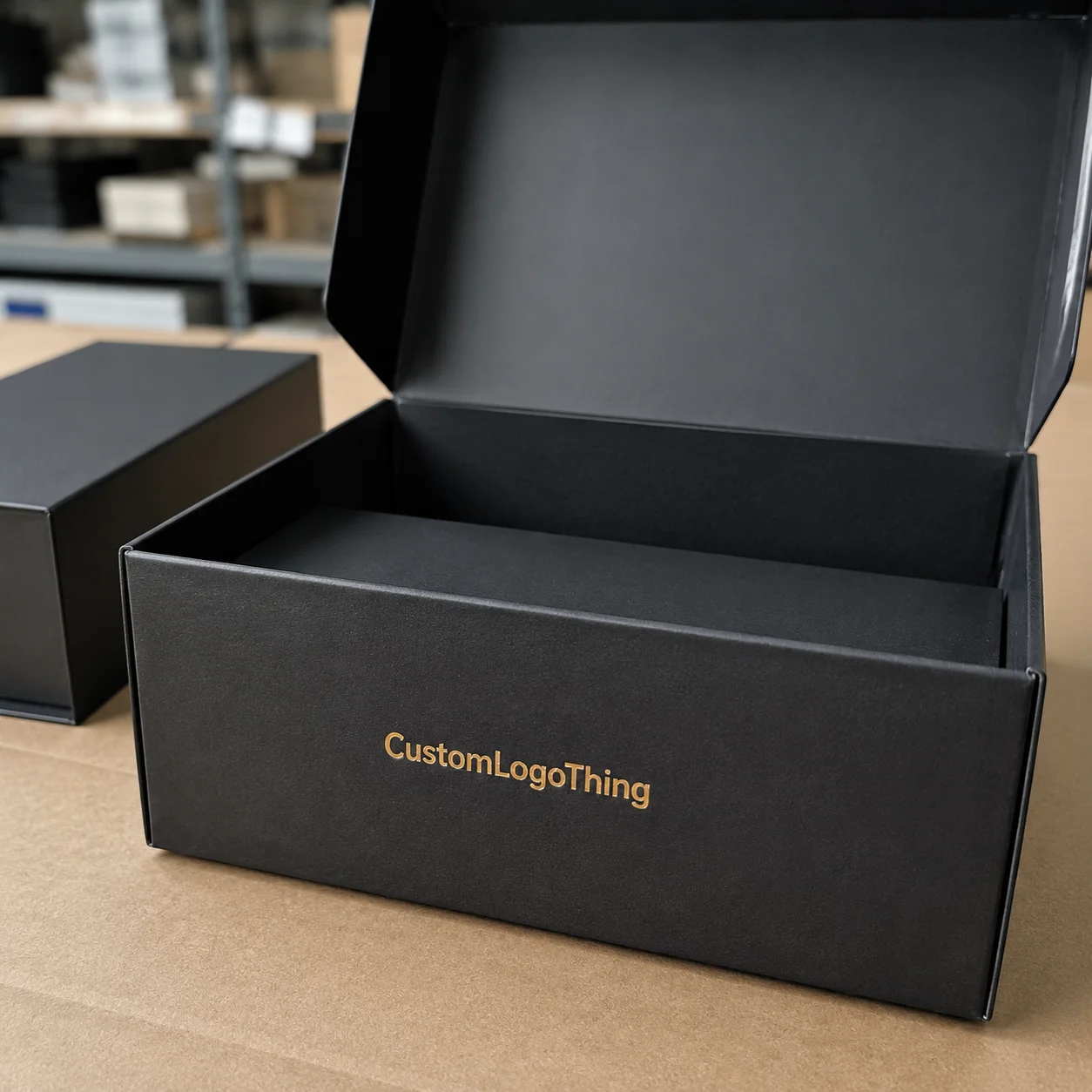
Book-style magnetic flap box: the most widely used structure. You get a clean front panel, side flap, and hidden magnets. It delivers strong shelf presence for branded packaging and PR kits. Assembly is handwork-heavy, so pricing gets sensitive below 1,000 units.
Shoulder-neck rigid box with magnetic lid: built for a “jewelry grade” reveal. Stacking is stronger and lid presentation is cleaner. Cost typically runs 12–20% above basic book-style due to multi-part construction and tighter lid-gap control.
Collapsible magnetic rigid box: premium look after setup, flat shipping before setup. In export programs, flat-pack structures often reduce container footprint by 55–70%. That can transform freight math for large-volume product packaging.
Material Stack That Controls Feel and Durability
Core board usually falls between 1000gsm and 1800gsm greyboard. For most gift applications, 1200gsm–1400gsm is the practical sweet spot. Dip below 1000gsm and corner denting rises. Push above 1600gsm and costs rise fast unless your product weight is above 1.5 kg.
Wrap stock is commonly 120gsm or 157gsm C2S art paper. Specialty papers from Neenah, Fedrigoni, and similar mills add tactile value, though material cost may increase by $0.08–$0.24/unit depending on coverage area and order volume. I’m a big Fedrigoni fan for tactile programs, but only if the margin structure can support it.
Finish selection carries real consequences. Matte lamination reads elegant but can scuff. Soft-touch feels high-end but can show finger marks on dark solids. Anti-scratch film adds roughly $0.03–$0.07/unit and often prevents visible rub damage during transit. If your sales team loves navy and black boxes (they always do), anti-scratch is usually money well spent.
Magnet Specs Most Quotes Hide
Magnet configuration is never a simple yes/no box to tick. Size, count, grade, and placement tolerance all matter. A common build uses 1 pair of neodymium magnets at 8–12 mm diameter and 1.5–2.0 mm thickness. Heavier lids may require 2 pairs to prevent weak closure or flap rebound.
I rejected 8,000 units once because magnet placement drifted past ±1.5 mm. It sounds minor on a drawing. In hand, it looked crooked and cheap. Reliable factories use tighter alignment controls and go/no-go jigs during assembly to catch this early. That week was not fun, and yes, there was coffee-fueled frustration in three languages.
Insert Options and Cost Impact
- EVA foam: strong shock absorption and premium presentation; typically adds $0.12–$0.38/unit.
- Flocked insert: jewelry-style texture with moderate cost increase.
- Satin vac tray: polished look for cosmetics and multi-piece sets; tooling required.
- Molded pulp insert: eco-forward option suited to FSC-focused programs.
- Cardboard fitment: lowest-cost structured support with strong print flexibility.
For sustainability programs, request FSC-certified paper options and chain-of-custody records from mills. Certification details are available at fsc.org.
Print and Branding Methods
CMYK offset is the standard print base. Add Pantone spots where brand color accuracy is critical. Premium upgrades include foil stamping (gold, rose gold, silver), embossing/debossing, spot UV, interior print, and ribbon pulls. Most brands get the best return by limiting decoration to 2 special effects unless retail price supports a heavier finish budget.
Color consistency in package branding starts with early Pantone lock-in and a retained golden sample. No retained sample means no objective baseline later. I’m opinionated about this one because I’ve seen “almost the same blue” derail launches.
Compliance comes up constantly on custom magnetic closure boxes wholesale programs. Request REACH/RoHS declarations for magnets, adhesive performance data for bond integrity, and transit validation basics. For rough distribution channels such as Amazon FBA or multi-stop networks, ask for carton drop checks aligned with ISTA guidance at ista.org.
Specifications Checklist for Wholesale Magnetic Gift Box Orders
A complete specification sheet is still the fastest way to cut errors in custom magnetic closure boxes wholesale production. I’ve watched a single missing cavity dimension trigger a 10-day delay. One missing line can do that. I remember when a team forgot to specify bottle neck clearance and we all discovered it the expensive way.
Core Structural Specs You Must Provide
- External box size in mm (L x W x H), such as 280 x 210 x 95 mm
- Internal cavity size and product orientation
- Net product weight and full set weight
- Stacking requirement (layers per master carton)
- Shipping mode assumption (air, sea, express, or mixed)
Tolerances need to be written, not implied. Typical cutting tolerance is ±0.5 mm; assembly tolerance is often ±1.0 mm depending on structure. Premium programs should call magnet placement at ±1.0 mm. Lid-gap expectation belongs in drawings, not in vague language like “tight fit.”
Artwork and Print Production Specs
Submit dielines with 3 mm bleed, vector logos (AI/PDF), Pantone references, minimum line weight of 0.25 pt for fine strokes, and minimum text size of 6 pt for readable interior copy. Foil near folds should include a safe area of at least 2.5 mm from fold lines.
For custom printed boxes, send a finish map on a separate layer: matte lamination zones, spot UV zones, foil zones, emboss/deboss depth notes. That single file habit saves rounds of clarification and protects launch timing. (Also saves everyone from midnight screenshot markups, which I do not miss.)
Finish Selection Matrix
Matte lamination supports understated luxury. Gloss raises color punch. Anti-scuff film is practical for dark graphics and high-touch channels. Multi-warehouse handling usually justifies anti-scratch film unless budget pressure is severe.
Carton Pack-Out and Freight Efficiency
Master carton strategy has a larger cost effect than most teams expect. Keep gross carton weight under 15 kg where possible for safer handling and lower damage frequency. Typical pack-out lands around 12–24 units/carton based on box size. Carton dimensions should match pallet efficiency, not just what is easiest on the line.
A client once fixed pack-out at 10 units/carton for easier counting. Freight rose by $3,600 on one shipment due to wasted cube. We moved to 18 units/carton with corner protection and recovered the loss. Counting got slightly less “easy,” but finance stopped glaring at everyone.
Sampling Stages That Prevent Claims
- Plain white mockup: structure and fit check in 2–4 days.
- Pre-production sample: print, finish, and magnet action check in 5–8 days.
- Golden sample: signed production baseline for current and repeat runs.
Frequent misses include barcode placement, insert tolerance clarity, magnet pull expectation, and approved carton marks. Resolve these before PO approval and most post-production disputes disappear.
Custom Magnetic Closure Boxes Wholesale Pricing, MOQ, and Cost Levers
If you need real pricing for custom magnetic closure boxes wholesale, here are practical ranges. These numbers are based on a standard book-style box at 260 x 190 x 90 mm, 1200gsm greyboard, 157gsm art paper, CMYK print, matte lamination, 1-pair magnets, and no insert.
| Quantity | Estimated Unit Price (FOB) | Typical Setup Charges | Notes |
|---|---|---|---|
| 500 units | $1.58–$2.05 | $120–$260 | Higher labor and setup absorption |
| 1,000 units | $1.24–$1.72 | $120–$260 | Most common starter MOQ |
| 3,000 units | $0.98–$1.36 | $120–$220 | Best balance for price and flexibility |
| 5,000+ units | $0.84–$1.18 | $80–$180 | Material purchasing power improves |
Add-ons shift totals quickly. EVA insert: +$0.14–$0.35. Dual foil areas: +$0.07–$0.22. Spot UV with tight registration: +$0.03–$0.09. Soft-touch plus anti-scratch combination: +$0.05–$0.12.
Why MOQ Starts at 500–1000 for Most Programs
Rigid magnetic boxes involve manual operations: board mounting, wrap turning, magnet embedding, and final assembly checks. Setup time exists whether you run 200 pieces or 2,000. That is why custom magnetic closure boxes wholesale typically begins at 500 or 1,000 units per design.
Split runs are possible in some cases. If dieline and plates stay consistent, a 500/500 color split at 1,000 total may work. If each SKU has unique foil artwork and unique inserts, MOQ usually climbs or unit pricing weakens. I usually tell teams to standardize first, personalize second.
Cost Levers You Control
- Standardize dimensions across SKUs to reuse tooling and master cartons.
- Trim foil coverage area instead of deleting foil entirely.
- Use cardboard fitments for products that do not need high-impact cushioning.
- Select collapsible magnetic structures for export-heavy volume.
- Concentrate special finishes on the highest-visibility panels.
I worked on a repeat-SKU program with a Midwest electronics brand that locked three common box sizes and rolling 90-day forecasts. Pricing dropped from $1.31 to $1.07 on steady 4,000-piece releases. Forecast visibility improved board purchasing and removed rush fees. Honestly, I think forecast discipline is one of the least glamorous and most profitable habits in packaging.
Freight Math in Plain English
Air freight bills by actual weight or volumetric weight, whichever is higher. Rigid boxes are usually volume-heavy, so you pay for cube more often than kilograms. Collapsible designs can sharply reduce volumetric cost. Sea freight runs slower but often wins once shipment volume moves past roughly 2–3 CBM.
Pallet optimization adds measurable savings. Changing carton dimensions from 62 x 43 x 37 cm to 58 x 40 x 35 cm in one project reduced dead space by 11%, improved container utilization, and lowered logistics Cost Per Unit.
Incoterms and Hidden Charges
EXW: lower unit quote, but you manage pickup, export paperwork, and post-gate logistics. FOB: supplier handles export clearance to port; good operating balance for many importers. DDP: delivered with duties included; convenient, but review line items because bundled quotes can hide margin padding.
Hidden costs often appear in destination terminal fees, customs brokerage, and peak-season surcharges. Request written freight assumptions on every quote. If freight basis is unclear, landed cost is unreliable.
Sample Cost Scenario for Apples-to-Apples Comparison
Scenario: 3,000 units, book-style magnetic box, 1200gsm board, CMYK + 1 foil, cardboard insert, FOB Shenzhen.
- Unit price: $1.12 x 3,000 = $3,360
- Foil plate/tooling: $85
- Sampling (credited on PO): $60
- Master cartons and pallet wrap: $148
- Total FOB: $3,653
If air freight adds $1,280 and duties/brokerage add $410, landed total becomes $5,343, or about $1.78/unit. That is the right benchmarking method for custom magnetic closure boxes wholesale: landed cost, not ex-factory fantasy.
Process & Timeline: From Dieline to Delivered Pallets
Buying custom magnetic closure boxes wholesale is a production workflow, not a single quote event. Teams that treat it like a quick print reorder usually hit avoidable delays. I learned this the hard way years ago, back when I thought “we’ll sort it out during production” was a reasonable sentence.
Step-by-Step Workflow
- Requirement intake and specification review (1–2 business days)
- Engineering check and quote confirmation (1–3 days)
- Dieline and artwork proofing (2–4 days)
- Sample build and courier dispatch (5–10 days)
- Sample approval and PO release (client-dependent)
- Mass production (15–25 business days)
- Final QC, packing, and freight booking (3–6 days)
- Transit time (depends on shipping mode)
Standard runs usually need 4–7 weeks before transit begins. Complex inserts or multi-layer finishes can add 5–8 business days.
What Delays Projects
Incomplete artwork, late Pantone approval, insert redesign after sample sign-off, and magnet stock shortages during peak season are common delay triggers. I have seen all four hit in one month. That month aged everyone on the team by at least two years.
Real example: a client changed interior bottle height by 4 mm after pre-production approval. Insert tooling had to be remade, proofs rerun, and drop checks repeated. Delay was 9 days. Added cost was $420. Entirely avoidable with earlier fit freeze.
QC Checkpoints That Matter
Strong factories run in-line checks during print, lamination, and assembly, then conduct pre-shipment inspection using AQL plans. Cosmetic retail launches often use AQL 2.5 for major defects and AQL 4.0 for minor defects, though stricter thresholds are possible.
Carton drop checks, rub tests for abrasion resistance, and magnet closure consistency checks should be documented with photos and counts. Third-party inspection before balance payment is a smart add-on when risk tolerance is low.
Approval Discipline
Before mass production starts, sign off on final dieline, color references, finish map, insert fit, carton marks, pack-out counts, and shipping terms. Missing one item invites scope change charges.
“No signed golden sample, no production start.” That rule has saved my clients from more rework invoices than any price negotiation ever did.
Rush orders for custom magnetic closure boxes wholesale are possible, but premium charges are standard. Expedited labor, priority machine windows, and accelerated finishing typically add 8–20%. If your launch date is fixed, confirm slot allocation in writing at project kickoff.
Why Choose Us for Custom Magnetic Closure Boxes Wholesale
Short answer: we manufacture, we do not broker. Brands that need dependable custom magnetic closure boxes wholesale execution usually benefit from direct factory engineering rather than layered middleman markups.
Every project is assigned a dedicated PM, structural engineer, and print coordinator. Your packaging design decisions are checked against manufacturing reality before spend escalates. We flag high-risk details early, including over-tight insert cavities and foil paths crossing fold-stress zones. I’d rather have one awkward early call than one expensive late surprise.
Quotes are itemized line by line: board grade, paper weight, magnet count, insert construction, finishing method, carton spec, and tolerance notes. No mystery fees. No vague “premium package” line items. If price changes, we show the exact line and reason.
Color control is managed with retained approved samples and run-to-run checkpoints. Repeat orders follow reference standards, not memory. Export projects include carton optimization for cube use and handling weight to lower claim rates.
Upstream reliability matters just as much. We operate with assigned magnet suppliers, qualified paper mills, and finishing partners under one QC protocol. If one upstream source slips, we reroute without compromising spec intent. Quiet system work like this is what keeps peak-season projects moving. It’s not flashy, but it keeps your launch calendar intact (which is a lot more useful than flashy).
Commercial risk stays controlled through staged sampling: white mockup first, branded pre-production sample second, mass production only after written approval. If schedule pressure builds, escalation contacts are clearly defined and active.
Best fit includes brand teams, distributors, and B2B procurement groups that need repeatable volume programs for custom magnetic closure boxes wholesale. Teams scaling quarterly launches can review our Wholesale Programs and lock predictable replenishment windows.
Next Steps to Order Custom Magnetic Closure Boxes Wholesale Without Delays
Use this straightforward action list to source custom magnetic closure boxes wholesale efficiently and avoid preventable delays.
- Build a complete spec sheet. Include external dimensions, internal cavity, product weight, insert type, finish requirements, and quantity tiers by SKU. Add destination city and country so freight assumptions are accurate.
- Send complete artwork files. Provide AI/PDF vectors, Pantone codes, logo placement notes, and a finish map with foil, UV, and emboss zones clearly marked.
- Request two quote versions. Ask for one target-cost build and one premium build. Side-by-side comparison shortens internal decision cycles.
- Approve a white mockup first. Approve a branded pre-production sample after structure is confirmed. This sequence avoids expensive print-stage corrections.
- Lock production with PO and deposit. Confirm production window, carton pack-out, and Incoterm in writing. Verbal assurances fail quickly during shipping season.
- Run a pre-shipment checklist. Verify barcode scans, carton marks, pallet method, and destination compliance documents before releasing final payment.
If you make only one change in your buying process, make it this one: compare landed cost, not just unit cost. Plenty of teams chase a $0.07 unit saving and lose $0.18 in freight inefficiency. Serious procurement treats custom magnetic closure boxes wholesale as a full supply-chain decision, not a single print line item. I know that sounds less exciting than chasing the lowest quote, but your P&L will thank you later.
What should you ask before placing a custom magnetic closure boxes wholesale order?
What is the MOQ for custom magnetic closure boxes wholesale orders?
Typical MOQ sits at 500–1000 units per size/design because setup, tooling, and hand assembly time must be absorbed across volume. More complex builds, such as multi-foil layouts or engineered inserts, can push MOQ higher. Colorway splits are often possible if structural tooling and major print elements remain consistent.
How much do wholesale magnetic closure gift boxes cost per unit?
Unit cost is driven by size, board thickness, magnet spec, insert type, and finishing effects. A common working range is roughly $0.84 to $2.05 depending on quantity and construction. Ask suppliers to separate setup charges from per-unit pricing for clean comparisons. Review EXW, FOB, and DDP side by side to evaluate true landed cost.
How long does production take for custom magnetic closure boxes wholesale?
Sampling usually takes 1–2 weeks depending on complexity and revision rounds. Mass production commonly runs 3–5 weeks after sample approval. Shipping time depends on route and mode, so confirm full door-to-door timing before fixing launch calendars.
Can I get low-cost custom magnetic closure boxes wholesale without sacrificing quality?
Yes. Simplify structure, limit decorative effects, and standardize dimensions where possible. Collapsible formats can also reduce freight significantly. Keep non-negotiable quality controls in place: magnet alignment, wrap finish quality, corner integrity, and color consistency across batches.
What files and specs do you need to quote custom magnetic closure boxes wholesale accurately?
Provide dimensions, quantity tiers, board and paper preferences, finish requirements, insert details, and shipping destination. Send vector artwork (AI/PDF), Pantone references, and placement notes. Include your preferred Incoterm early so freight assumptions are aligned from the first quotation.