Buyer Fit Snapshot
| Best fit | Corrugated Boxes Practices Packaging projects where brand print, material claims, artwork control, MOQ, and repeat-order consistency need to be specified before quoting. |
|---|---|
| Quote inputs | Share finished size, material target, print colors, finish, packing count, annual reorder estimate, ship-to region, and any compliance wording. |
| Proofing check | Approve dieline scale, logo placement, barcode or warning zones, color tolerance, closure strength, and carton packing before bulk production. |
| Main risk | Vague material claims, crowded artwork, missing packing details, or unclear freight terms can make a low unit price expensive after revisions. |
Fast answer: Corrugated Boxes Practices Packaging: Board, Finish, Dieline, and Unit Cost should be specified like a repeatable production item. The safest quote records material, print method, finish, artwork proof, packing count, and reorder notes in one written spec.
Production checks before approval
Compare the actual filled-product size with the drawing, then confirm tolerance on folds, seals, hang holes, label areas, and retail display edges. Reserve space for logos, QR codes, warning copy, and material claims before decorative graphics fill the panel.
Quote comparison points
Review material grade, print process, finish, sampling route, tooling charges, carton quantity, and freight assumptions side by side. A quote is only useful when the supplier can repeat the same color, closure quality, and packing count on the next order.
The cheapest corrugated box is often the most expensive one by the time your order reaches a customer. One torn edge, one bad stack collapse, one rushed re-pack, and the margin starts leaking. If you are buying packaging to protect a product, that is exactly why corrugated Boxes Best Practices matter: they shape outcomes before damage shows up. In sourcing reviews, I have seen teams lose 10% to 20% more than expected on freight and replacements because packaging was treated like a checkbox instead of a decision tool.
Corrugated boxes best practices are the missing infrastructure in many packaging programs. They are a set of disciplined choices about structure, fit, and failure prediction. That matters more than the brand color on the front panel, plain and simple. A lot of teams assume strong-looking corrugated board equals strong real-world performance, then find out in a fulfillment lane that a weak seam or poor corner reinforcement can undo the whole strategy. The point is not to overbuild everything. The point is to match the carton to the way it will actually live: stack height, warehouse dwell, transfer points, and truck vibration.
This guide is written as a buyer-focused test plan, not a glossy style note. Expect hard comparisons, price ranges, failure scenarios, and timeline pitfalls grounded in production reality. When teams follow corrugated boxes best practices early, they stop paying for prevention after the fact. And yes, that tends to be a lot cheaper than learning the lesson the hard way.
Corrugated Boxes Best Practices: Quick Answer
What to buy, instantly
Corrugated boxes best practices for most buyers start with four questions and one rule. The questions are straightforward: What does the product weigh, how fragile is it, how high will it stack, and how far will it travel? The rule is even simpler: do not overbuy cushioning; buy structure first. For a new program, I usually begin with a baseline single-wall C-flute regular slotted container if the item is under about 8 kg and the wall clearance stays under 1 to 1.5 inches total. If the order is stack-sensitive, move toward a higher ECT target and tighten the void strategy. If the product is fragile, shift to stronger internal support before adding loose fill.
Here is the fast line that usually saves teams time: choose corrugated boxes best practices by failure mode, not by appearance. If the biggest risk is handling in transit, prioritize edge crush resistance and corner integrity. If the biggest risk is vibration and movement, tighten the internal fit and reduce the void ratio. If the biggest risk is warehouse compression, prioritize box compression resistance and weight distribution. The right box is rarely the thickest board you can afford. It is the one that survives a measured stress path without creating labor pain.
That rule often cuts weeks of back-and-forth. Buyers usually ask for “the strongest box possible”; the better question is the lightest box that survives the right test. Measured performance beats guesswork every time. Start there, then move up only when data says the design is falling short.
How the quick answer maps to purchase specs
- Product under 1 kg and rigid: consider E-flute or light B-flute with controlled clearance.
- Product 1 to 8 kg with moderate handling: C-flute RSC is often more dependable than flashier alternatives.
- Product over 8 kg, mixed freight, or long line-haul exposure: evaluate double-wall or hybrid structures early.
- Irregular shape, high point loads, or a history of returns: start with inserts or stronger board before print decisions.
Corrugated boxes best practices often begin at sampling, not printing. A good sample reveals whether assembly speed, die fit, or panel tolerance is the real bottleneck. If your team spends 45 extra seconds per carton closing and reinforcing flaps, unit margin is already being drained from day one. I have sat through enough packaging reviews to know that the sticker shock usually comes later, after labor and damage are counted together.
Corrugated Boxes Best Practices in Top Corrugated Box Options Compared
Format comparison: where each works best
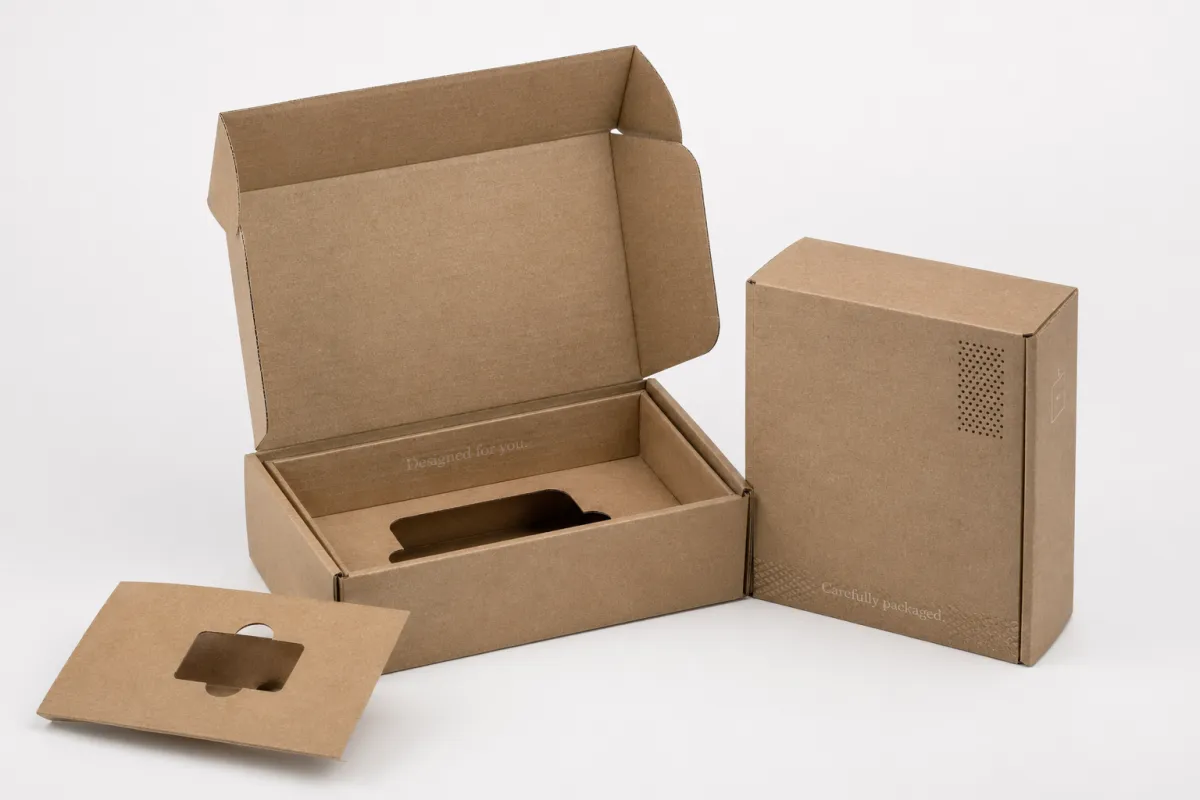
The first decision is style. If your shipment is heavy on volume and low on drama, regular slotted containers (RSC) remain the default workhorse. If the use case is visual merchandising or shelf-ready retail, die-cut formats can reduce assembly time and deliver cleaner stacking profiles. For parcel routes that see rough handling, mailers and reinforced mailer hybrids help, but they can disguise weak corner behavior unless they are tested. Scored inserts are underrated: they can protect complex goods at a lower cost than a fully custom shell. Custom corrugated shippers usually arrive later in the process, yet they can remove internal filler and speed fulfillment.
For corrugated boxes best practices, one practical framework is:
- RSC for speed and broad compatibility with fulfillment lines.
- Die-cut for fit-specific products and fewer manual fold adjustments.
- Mailers for lightweight, high-turnover e-commerce where carton footprint is tight.
- Scored inserts to isolate fragile subcomponents in one package design.
- Custom shippers where every centimeter of void space has already turned into a cost problem.
LSI terms often used in procurement conversations include carton performance specs and shelf-ready packaging. They are useful, but only if measured against stack load and lane stress, not against aesthetics.
At the same time, format choice affects palletization, line handling, and return velocity. Stock RSC may seem plain. In high-volume shipping it is often the most predictable baseline because fulfillment operators can run it without introducing new handling friction. That predictability matters more than people like to admit.
Material and flute choices that change outcomes
Flute profile is not decoration. E-flute, at roughly 1.5 mm, gives a clean print surface and a cushioning feel that suits lighter goods. B-flute is often stronger where edge rigidity matters and vertical crush is the main concern. C-flute sits in the middle with dependable all-around performance for general freight and shipping. BC or E/B combinations appear when one profile needs more column strength without losing too much flexibility. A plain single-wall B flute can outperform a double-wall E if compression loads are moderate and shape precision matters. The same single-wall B will fail faster than a true double-wall in prolonged stacking.
Board grade matters just as much as flute choice. A higher grammage paper does not guarantee better protection if flute spacing is wrong. Think in layers and failure modes: do you need corrugated boxes best practices for impact, compression, or puncture? For puncture-heavy categories like electronics accessories with sharp corners, denser outer liners and tighter flute control usually beat simple thickness increases. That is one of those boring details that saves a surprising amount of money.
What teams often forget is the difference between burst resistance, edge crush strength, and vertical compression. They sound related, and they are, but each governs a different weak link. You can pass a burst test and still shred corners at a 45-degree corner impact if the locking tab sequence is weak. I have seen polished samples fail that way and, honestly, it is kind of embarrassing when the print is better than the structure.
Quick verdict example:
| Option | Protection focus | Print quality | Assembly speed | Typical per-unit (low run) |
|---|---|---|---|---|
| Stock RSC (single-wall C-flute) | High stacking consistency | Standard | Very fast | $0.28–$0.65 |
| Die-cut RSC | Better fit control | Very good | Fast, lower manual adjustment | $0.45–$1.10 |
| Corrugated mailer shell | Moderate impact resilience | Good for branding | Fast on parcel lines | $0.50–$1.35 |
| Scored insert systems | Excellent void control | Variable | Medium (extra step) | $0.18–$0.55 add-on |
| Custom die-corrugated shipper | Excellent fit and stability | Excellent | Very fast once tuned | $1.00–$2.40 |
Yes, stock RSC looks plain in that table, but at scale it often wins on commercial economics. For mixed carts and unpredictable volumes, corrugated boxes best practices usually start there, then move into more specific designs as returns and labor data come back.
What corrugated boxes best practices keep shipments solid?
How structure decisions change with real freight behavior
Most teams ask this late, if at all: what will the package face once it is in the lane and not in the office? Freight routes rewrite theory fast. A box that survives a controlled drop test in-house can still lose stability in rail or container transitions, especially where handoff points increase. This is why corrugated boxes best practices are a process, not a style decision.
Use this check: where does failure occur first? If your data points to repeated shoulder drops, focus on corner stiffness and edge-drop resistance. If your returns spike on long storage legs, prioritize compression load and void ratio. If water ingress creates swelling and tears, move toward improved moisture barrier and tighter board consistency. These are practical, not theoretical, interventions.
Packaging professionals call this mapping “mode-led design.” In practice it means you start with the most likely failure mode, then design toward margin recovery: one change at a time, one test at a time, one batch at a time. That slower, deliberate rhythm is usually the difference between a tidy spec sheet and a box That Actually Survives the route.
Detailed Reviews: What Actually Holds Up
Compression, edge crush, and impact behavior
When buyers say “strong enough,” they usually mean different tests. In corrugated packaging, compression and edge crush are the first filters. A box that looks rigid on the table can still fail at the first corner if edge crush resistance is weak. The common mistake is trusting visual stiffness. I have seen glossy C-flute samples look premium and still fold at the bottom corners under moderate stacking. Print quality improved, but wall bond and corner reinforcement were underbuilt.
For practical comparison, B-flute often handles puncture better than a very light E-flute in some orientations, while C-flute often performs better in multi-load stacking. E-flute has better cushioning, which helps cosmetics and electronics when drop impact dominates. Double-wall constructions can absorb repeated handling, though they can hurt assembly ergonomics if the blank is too large for manual lines. The hard truth is simple: the best box is measured by your product profile, not by the swatch card.
Corrugated boxes best practices are most visible when teams run side-by-side pack trials instead of relying on vendor photos. If you have not compared two options against the same test package, you are not choosing structure—you are choosing a brand narrative.
Tradeoffs teams miss
Corrugated boxes best practices are full of second-order tradeoffs. Better print surfaces do not automatically mean better protection. Heavy lamination improves visual appeal and can hide minor board scuffs, yet a single mishandled transfer can still crack the panel if glue lines, flap overlap, and corner stacking are weak. Puncture resistance can improve with a denser liner or an outer burst layer, but if internal fit is ignored, the item moves and creates dynamic impact loads anyway.
Another missed point: lighter boards are not always cheaper in the long run. On a cosmetics line with vials and tube breakage risk, a light 1 mm board with large void fill can generate a higher damage cost than a medium board with tighter internal geometry. Once internal movement starts, every mile compounds the damage probability.
There is also a counterintuitive packaging pattern: teams sometimes lower raw material quality but save on labor, only to spend more in rework. If your carton cannot tolerate one less skilled operator on the floor, then your design has no margin. Corrugated boxes best practices should include operator tolerance, not just board specs.
Use-case snapshots from real packaging runs
Subscription kits: typically light but variable in shape, so they fail through shifting. Die-cut sleeves or scored inserts prevent void collapse. For this category, corrugated boxes best practices center on consistent depth and stable corners, not the heaviest board.
Cosmetics: fragile, break-sensitive, often with a glossy and slippery inner finish. These fail at impact points. Better outcomes usually come from moderate-flute inserts and anti-shock corner cushioning rather than oversize cartons.
Spare parts: mixed density and odd geometry. They reward custom internal void pockets and strict dimension control. Return rates often drop when shape-specific support is used instead of generic fill.
Apparel: deceptively soft and light. Bulk compression and humidity are bigger risks than drop impact. For apparel boxes, C-flute with low to medium wall thickness and controlled internal fold patterns usually beats overbuilt micro-fluting.
Heavier industrial items: they tend to fail from stacking and puncture. Double-wall or reinforced B-flute, paired with tighter seam control, becomes the practical choice.
“A package that is one notch too loose at the fit stage can lose more margin than a $0.25 upgrade in board grade,” a logistics lead told me after a quarter-end review where returns doubled for one SKU.
Failure points to audit now
The top repeat failures in audits are boring and expensive: oversized void space, weak seams, poor fit, and filler overreliance. Oversized void space is the silent killer of compression because moving mass does not need much force to begin abrasion and corner damage. Weak seams usually come from the wrong tape selection or rushed scoring depth. Poor fit is the opposite of sustainable packaging: too big means too much motion; too tight means stress points and tears. Overreliance on filler masks structural weakness, increases labor, and still leaves movement unless the fill is engineered.
In short, corrugated boxes best practices are less about choosing the premium option and more about removing predictable damage modes at the right layer of design.
Price Comparison: Corrugated Boxes and Hidden Costs
Stock versus custom pricing in realistic bands
Buyers obsess over unit price and miss total landed cost. That is where commercial decisions go wrong. For low-to-medium production, stock RSC units may sit around $0.30–$0.60 for simple blanking at around 1,000 pcs. At 10,000 pcs, that can drop to $0.22–$0.45, depending on ply, flute, and finishing. Custom designs often begin around $0.85–$1.35 at 1,000 pcs because of die and setup complexity, but they can fall into $0.60–$1.10 at 5,000+ units. In larger runs, labor savings and filler reduction start to matter more than the quoted blank price.
Print complexity changes cost too. Full-color CMYK plus spot varnish is not just an upcharge; it is a process commitment that affects lead time and waste. If a SKU turns quickly and sits in a family of multiple SKUs, those effects compound.
One of the best ways to protect margins is to measure corrugated boxes best practices against three cost buckets before approving any quote: the base box cost, conversion cost, and failure cost. You will usually discover that one of the three is eating your headline savings.
How hidden costs ruin “cheap” quotes
Here is the cost truth in numbers: if your damage rate rises from 0.6% to 2.2%, and your average replacement cost is $18 after labor and freight, the “savings” disappear quickly. On a 50,000-unit seasonal run, that shift adds tens of thousands in margin loss. Hidden cost buckets I see repeatedly:
- Dunnage and void fill: $0.08–$0.25 per unit depending on density.
- Labor time: 15 to 45 extra seconds per carton adds meaningful burden at scale.
- Storage and handling: larger cartons reduce pallet density and increase handling passes.
- Damage claims: can outrun base box cost in weeks.
- Freight class penalties: oversized cartons can reclassify shipments unexpectedly.
- Rework: extra opening, resealing, and repack time per failed parcel.
That list is why I insist on corrugated boxes best practices tied to a landed-cost model, not only carton quotes.
Think in terms of total logistics cost per case, not just unit paper cost per case. That mindset connects corrugated boxes best practices directly to margin protection and route-level reliability.
When custom becomes cheaper than stock
It looks counterintuitive, but custom boxes often become cheaper in practice when they reduce conversion steps. A well-engineered die-cut that removes weak inner voiding can cut fill by 20% to 35%, raise packing speed by roughly 12% to 20%, and lower damage. On heavier or mixed-size catalogs, two-stage custom inserts may cost more upfront but pay back in reduced labor and returns. That is why procurement teams should ask, “What is the post-fillout cost per packed unit?”
For example, a 2,000-unit pilot with a stock box plus filler might be $0.45 per unit on paper, then still consume $0.28 in manual packing adjustment. A custom option at $0.85 may still land near $0.60 effective when labor and rework are included, depending on the workflow. That is where corrugated boxes best practices stop being theory and start protecting profit. I have watched a “cheaper” box eat the savings in one busy week because the pack line had to keep babysitting it.
Packaging industry guidance on sustainable and operational standards is useful for benchmarking, but local claims only matter if you run your own failure data through your order profile.
Corrugated Boxes Best Practices for Design, Testing, and Timeline
From brief to approved sample: the practical sequence
The process that usually saves teams is boringly methodical. Step one is a one-page brief with product dimensions, tare and pan weights, fragility flags, target carriers, and stacking assumptions. Step two is structural choice by failure mode, not aesthetics. Step three is blank and dieline selection. Step four is sample build and sample test package, including a few near-failure scenarios. Step five is adjustment and proof approval. Step six is production lot release.
Corrugated boxes best practices are often lost in design reviews because teams discuss colors before test outcomes. That order is backward. A clear sequence keeps everyone honest: if structure is not stable, no amount of branding will stop damage.
To make this sequence reliable, include at least three measurable acceptance gates: no measurable corner collapse in the box compression sequence, no more than controlled void movement in the fit test, and no extra labor burden that breaks your target cartons-per-hour. Those are not optional; they are where buyer confidence gets earned.
Timeline reality check
A realistic timeline for a commercial program often looks like this:
- Day 1–3: brief, target definition, and rough sizing lock.
- Day 4–7: dieline prep, first sample build, initial structural check.
- Day 8–11: drop and compression tests, internal fit review, revision cycle one.
- Day 12–15: proof pass, production setup, pre-run confirmation.
- Day 16+: production release and scheduled quality checks.
The timeline stretches quickly if size changes happen after the first sample, if print color approval loops are multiple, or if structural revisions are tied to artwork. Production build speed is rarely the delay; revision management is.
Testing methods that matter
Do not skip the core tests: drop, stack compression, fit, and transit simulation. For testing references, the ISTA test ecosystem offers practical protocols used across fulfillment and parcel networks. In-house, many teams already combine:
- Static and dynamic compression checks for warehouse stacking and transit dwell.
- Edge-drop and corner impact tests because most failures start at corners, not center panels.
- Fit tests with actual products, not dummy blocks.
- Transit simulation for vibration and repeated shocks, especially on uneven routes.
- Moisture sensitivity checks if the lane includes coastal or tropical transit.
If the sample survives all of that, it earns the right to quote at scale. If it fails, change the structure before changing the graphics. That one rule avoids late surprises and keeps projects within budget.
For teams tracking corrugated boxes best practices, consider drop test protocols as your red/yellow/green threshold. If a design hovers in yellow repeatedly, tighten fit and seam reinforcement first, then revisit printing details.
Design-to-manufacturing alignment
There is no shortcut around line-speed constraints. A box that looks excellent but slows line closure by 20 seconds adds a hidden tax. Check glue tab position, tab lock consistency, and worker ergonomics. In many plants, top-seam geometry matters more than raw material cost. Here corrugated boxes best practices means a loop: testing, operator feedback, revision. A carton that looks ideal in CAD can still fail on the belt if the fold sequence is wrong.
Also check corrugated board consistency across lots. A lot-to-lot board variation of only a small degree can amplify seam creep and edge split over repeated cycles. If your vendor’s incoming material quality control is not measurable, you will fight the same issue shipment after shipment.
How to Choose Corrugated Boxes for Your Product
Decision checklist that actually shortens procurement
Most teams delay procurement until after stock checks, but a practical checklist before requesting quotes avoids wasted revisions. Start with five inputs:
- Weight band: under 1 kg, 1 to 8 kg, 8 kg+, plus handling tolerances.
- Fragility score: what happens at a 15 to 20 inch drop or corner knock?
- Dimensional stability: exact outer dimensions and tolerance needed.
- Shipping lane risk: local courier, parcel network, mixed freight, or containerized lane.
- Retail and shelf constraints: shelf-ready appearance versus transit hardiness.
If the product is a lightweight gift set with multiple micro-components, you may not need heavy board; you need better internal geometry. If the same volume sits in a mixed shipping lane with multiple handoffs, you may need stronger protection at points of repeated transfer. That is corrugated boxes best practices applied, not theory.
Match style to use case
Lightweight e-commerce: RSC or mailer with controlled insertion and moderate E-flute, especially for fulfillment speed. Premium unboxing: die-cut branding and cleaner opening lines, but confirm corner stiffness and flap wear before approval. Bulk shipping: single-wall or double-wall C-flute depending on stack height and lane vibration. Heavy-duty: evaluate double-wall plus reinforced seams, and do not pretend decorative lamination can substitute for structure.
For mixed product families, use two or three archetypes, not one box for everything. A single SKU family can include low-risk and high-risk SKUs that need different structures even when dimensions look close.
In procurement conversations, two related terms often sharpen decisions: “handling profile” and “transport profile.” They are less about marketing and more about knowing whether your package endures transfer, pause, vibration, and dwell without hidden failure.
Sustainability without green theater
Sustainability is easy to get wrong because teams jump to recycled content claims and stop there. Real sustainability in packaging operations comes from right-sizing, lower void fill, fewer returns, and consistent material quality control. FSC-certified board makes sense where traceability matters, and it can support procurement compliance, but only if performance is stable. If a lighter board drives a higher fail rate, the environmental gain disappears in re-ship cycles. Keep practical targets: reduce void ratio, improve pack density, and set a minimum carton reuse or replacement threshold tied to damage metrics.
Custom Shipping Boxes should be reviewed against these criteria before graphics are added. Then compare broader SKU needs through Custom Packaging Products so every channel uses the same decision logic.
If you are choosing between FSC-marked stock and custom coated stock, ask how each option changes recycle stream complexity and return rates. I would rather see a 12% drop in returns than a perfect eco narrative that cannot survive the loading bay.
Questions to ask before quote
Before you call procurement done, confirm at least eight concrete points: expected stack height, maximum drop stack count, exact shipping lane, maximum allowed outer dimensions, desired open speed, filling method, desired visual finish, expected hold time in warehouse, and the failure points your team tracked last season. If those answers are fuzzy, do not overpay for untested structure. That is where teams stumble on corrugated boxes best practices.
Our Recommendation and Next Steps
For most buyers, the best path is consistent: start with the lightest structure that passes your in-house testing, then upgrade only when evidence says the failure mode has changed. I see too many teams jump straight to premium structure because it feels safer. It often raises labor and cost without reducing returns. Start with a disciplined baseline and build upward.
Recommended shortlists by product type
Subscription kits: die-cut with smart inserts if unit shape is variable, else simple RSC with controlled voids.
Cosmetics: snug-fit die-cut inserts and moderate C or B flute with a strong corner profile.
Spare parts: custom-shaped corrugated shell if return risk is linked to movement; otherwise scored insert strategy for flexibility.
Apparel: stack-efficient C-flute with controlled ventilation when needed, and avoid unnecessary filler depth.
Industrial heavy items: double-wall or reinforced structures validated by compression and drop data.
In each case, corrugated boxes best practices are measurable and repeatable. Keep the pilot batch small, run it through real lane tests, and expand only when the data supports it.
Next steps that prevent buyer regret
- Measure every SKU, including mass, fragility, and actual fill volume.
- Request at least two sample builds: one baseline stock shell, one custom-fit proposal.
- Run real packing-speed and line-fit tests, not only visual sign-off.
- Compare landed cost with one dashboard: box cost, labor, fill, freight class shifts, damage claims, and rework.
- Approve only after test criteria are met on the exact shipment profile.
If your goal is fewer surprises, the last checkpoint is not whether the carton looks premium. It is whether returns, labor, and damage claims move in the right direction.
The practical promise is clear: if you apply corrugated boxes best practices, you lower damage, reduce waste, and shrink unpredictable cost. That is how shipping reliability improves without turning packaging into an endless optimization loop.
The part buyers should remember is simple: corrugated boxes best practices are a control system. They let you buy less, test faster, and spend with confidence. For the teams that still overpack and overfill, the lesson is plain but uncomfortable: the right box is not the strongest on paper; it is the one that passes real handling, real stacking, and real cost scrutiny in your lane.
FAQs
What are corrugated boxes best practices for fragile products?
Use a snug fit, the right flute profile, and enough internal support to prevent movement without overpacking the carton. Test drop corners and edges, because fragile items usually fail at impact points rather than steady compression.
How do I choose the right corrugated board strength?
Start with product weight, stack height, and shipping distance, then choose board strength based on the most likely failure mode. If the box will stack in a warehouse or ship in mixed freight, prioritize compression resistance over print appearance.
Are custom corrugated boxes worth the extra cost?
They are worth it when the custom fit removes filler, lowers damage rates, speeds packing, or improves shelf impact. If the product is simple and low-risk, a well-sized stock box can be the better commercial choice.
How long does the corrugated box sampling process usually take?
Expect time for dieline review, sample production, internal testing, and one or more revisions before final approval. Delays usually come from changes in size, print, or structure after the first sample, not from the actual box build itself.
What is the biggest mistake in corrugated box selection?
Choosing a box based on unit price alone and ignoring damage, labor, and freight costs downstream. The second biggest mistake is oversizing the carton, which increases void fill, shipping inefficiency, and the chance of product movement.