Buyer Fit Snapshot
| Best fit | Corrugated Boxes Design for Packaging projects where brand print, material claims, artwork control, MOQ, and repeat-order consistency need to be specified before quoting. |
|---|---|
| Quote inputs | Share finished size, material target, print colors, finish, packing count, annual reorder estimate, ship-to region, and any compliance wording. |
| Proofing check | Approve dieline scale, logo placement, barcode or warning zones, color tolerance, closure strength, and carton packing before bulk production. |
| Main risk | Vague material claims, crowded artwork, missing packing details, or unclear freight terms can make a low unit price expensive after revisions. |
Fast answer: Corrugated Boxes Design for Packaging: Structure, Print Proof, Packing, and Reorder Risk should be specified like a repeatable production item. The safest quote records material, print method, finish, artwork proof, packing count, and reorder notes in one written spec.
Production checks before approval
Compare the actual filled-product size with the drawing, then confirm tolerance on folds, seals, hang holes, label areas, and retail display edges. Reserve space for logos, QR codes, warning copy, and material claims before decorative graphics fill the panel.
Quote comparison points
Review material grade, print process, finish, sampling route, tooling charges, carton quantity, and freight assumptions side by side. A quote is only useful when the supplier can repeat the same color, closure quality, and packing count on the next order.
I’ve seen a $0.62 box fail in a warehouse while a $0.41 one survived a cross-country shipment from Chicago to Phoenix. That’s the strange part about corrugated Boxes Design Tips: the board itself is often not the real problem. Flute direction, internal sizing, load path, and closure style can decide whether a package reaches the customer in one piece or arrives crushed, bowed, and embarrassing. I still remember standing next to a loading dock in Illinois, watching a perfectly ordinary carton get squashed because someone “eyeballed” the fit. Honestly, I wanted to hand out rulers to everybody on the floor.
If you’ve ever watched a pallet lean by just 8 degrees and start a chain reaction of damage, you already understand the stakes. Good corrugated boxes design tips are not about making a box look nice. They’re about reducing failures, protecting margins, and making packaging work harder than it costs. In my experience, the best designs are the ones that disappear into the operation: fast to pack, easy to stack, and strong enough to survive the route from Guangzhou to Atlanta or from a fulfillment center in Ohio to a doorstep in New Jersey. Which is a polite way of saying nobody should be cursing at the box at 6:45 a.m. before the first truck leaves.
Corrugated Boxes Design Tips: What They Are and Why Small Details Matter
Corrugated boxes are layered paper-based structures built from linerboard and a fluted medium, and the most common board grades are made with recycled kraft liner, test liner, or white-top face stocks for premium print applications. Simple idea. Big impact. They protect products during storage and transit, carry branding, support stacking, and help companies control shipping costs. The best corrugated boxes design tips start with that basic truth: a box is both a structure and a communication tool, whether it is produced in Dongguan, Valencia, or a converting plant in Dallas.
Here’s what many people get wrong. They assume a stronger-looking carton will automatically perform better. Not always. I once sat in a supplier meeting in Shenzhen where a client insisted on upgrading board grade after seeing two crushed samples. The issue turned out to be a weak center seam and a box that was 6 mm too tall for the product, which allowed the contents to shift and concentrate force on one corner. The board wasn’t the villain. The geometry was. And yes, the room went very quiet after that, which is always a fun moment when everyone realizes the expensive fix was not the right fix.
That’s why corrugated boxes design tips matter at the drawing stage. A box can be printed beautifully and still fail under compression if the load path is wrong. It can pass a hand squeeze test and still collapse on a humid trailer in Louisiana if the flute profile is mismatched to the use case. Good design balances performance, printability, and cost, and those three usually move together once you Choose the Right plant, die-cut method, and board spec.
In practical packaging work, I think of corrugated boxes as the middle ground between protection and economics. You want enough board strength for the trip, but not so much that you’re paying to ship air and cardboard. That balance is why corrugated boxes design tips are useful for e-commerce brands, food suppliers, industrial shippers, and retail programs alike, especially when freight lanes run through hubs like Memphis, Louisville, or Los Angeles where carton density affects every shipment.
Factory-floor reality: the best box design is rarely the thickest one. It’s the one that matches the product’s weight, route, and handling pattern with the least waste, whether the run is 5,000 pieces or 250,000 pieces.
For context, packaging standards matter here. Organizations such as the ISTA and the ASTM ecosystem are where many transport tests and material references come from. If you’re selling into retail or export channels, those references are worth more than a sales brochure. Good corrugated boxes design tips don’t replace testing; they help you test the right thing in the right sequence, whether the cartons are being qualified in a lab in Chicago or sampled on a line in Ho Chi Minh City.
How Corrugated Box Design Works in Real Packaging
Corrugated board is made of three core elements: two flat linerboards and a fluted medium in between. That wave-like center layer gives the board rigidity, cushioning, and a surprising amount of compression strength for its weight. The liners provide the print surface and outer toughness. The medium is the skeleton. When I’m reviewing corrugated boxes design tips with a client, this is where I start, because the board construction determines more than most people realize, including whether you should use single-wall B-flute, C-flute, or a double-wall BC build for export cartons.
Flute profile matters. A-flute is thicker and offers good cushioning; B-flute has a flatter surface and often prints well; C-flute balances cushioning and stacking; E-flute is thinner and popular for retail-ready and smaller mailer formats. There are even combinations such as double-wall constructions for heavier loads. I’ve seen brands spend an extra $0.09 per unit on a board upgrade when a better flute choice alone would have solved the issue. That is not a small mistake at 10,000 units, especially when the finance team is already staring at the quote like it insulted their family.
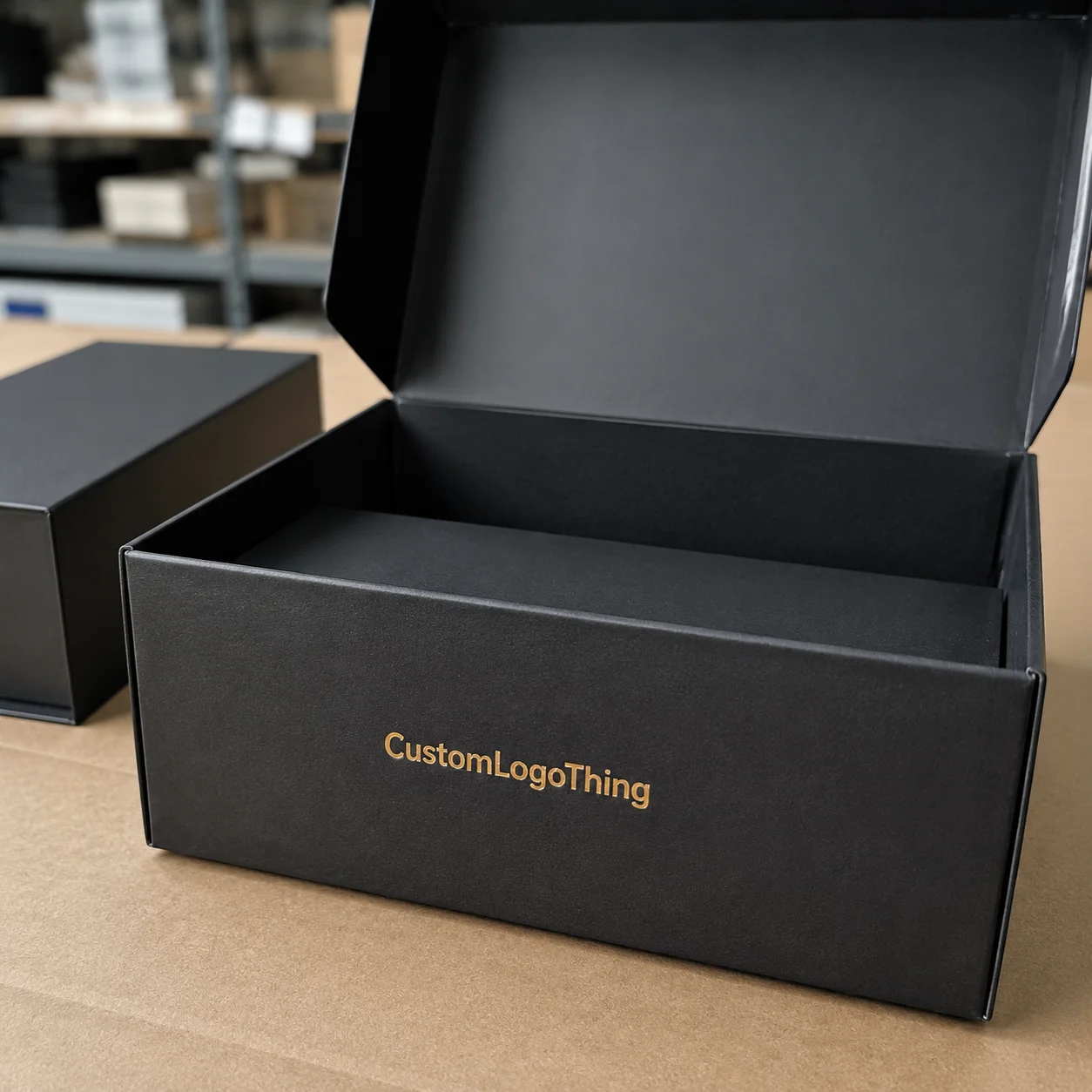
The box style also changes everything. A regular slotted container, or RSC, is simple and efficient for bulk shipping. Die-cut retail boxes bring a cleaner presentation but often require tighter tooling and more careful packing. Mailer boxes are excellent for e-commerce unboxing because the closure is built into the structure. Insert packs can keep bottles, jars, electronics, or cosmetics stable inside the shell. Strong corrugated boxes design tips take the box style, product behavior, and shipping channel as one system, which is why a cosmetics box specified in Los Angeles may look very different from a pallet shipper produced in Guangzhou.
Internal dimensions are where a lot of packaging gets lost. Outer measurements can look fine on a spec sheet, but the inside fit may be too loose, too tight, or awkward for assembly. Product weight, stacking environment, humidity, and courier handling all influence the board grade you actually need. If the package is going on a pallet in a distribution center, compression strength matters. If it’s going by parcel with one item per carton, drop resistance and fit may matter more. That’s why corrugated boxes design tips have to be tailored, not copied.
Sustainability plays into the structural decision too. Right-sized boxes reduce filler, void space, and freight inefficiency. In one client review in Dallas, we cut the box depth by 18 mm and eliminated a paper void-fill insert entirely. That one change reduced material use and shaved packing time by 11 seconds per unit. Multiply that across 40,000 shipments and the economics get obvious. This is one of the most practical corrugated boxes design tips I can give: remove unnecessary space before adding more material.
For companies serious about sourcing and sustainability, the EPA’s paper and paper products guidance is a useful reference point. It won’t design your carton for you, but it helps frame recycled content, recovery, and material management. That context makes corrugated boxes design tips more than a packaging exercise; they become part of a broader materials strategy, especially when mills in Wisconsin, Ontario, or Jiangsu are supplying different liner and medium combinations.
Key Corrugated Boxes Design Tips That Affect Cost and Performance
Size accuracy is the first pressure point. Measure the product, then measure the product inside its intended inner pack, then add the clearance your assembly team actually needs. Too many packaging briefs skip that middle step. If a bottle needs 3 mm clearance on each side for insertion, and the insert adds another 5 mm, that has to be built into the dieline from day one. One of the most valuable corrugated boxes design tips is also the most ignored: never design from a product catalog photo alone.
Cost moves quickly when tooling changes. A custom dieline might be straightforward, but adding a window, a tear strip, embossing, special glue areas, or a complex locking structure can push the unit price up by pennies that become thousands later. In a recent supplier negotiation, a client wanted soft-touch lamination on a box that was going to be poly-bagged anyway. We ran the numbers and found the coating added $0.14 per unit plus a two-day schedule delay. The better answer was a cleaner print layout with a matte varnish. That’s the kind of tradeoff corrugated boxes design tips should surface early, before artwork is locked and the factory in Xiamen has already queued the job.
Order volume matters too. At 5,000 units, a box might cost $0.26 each. At 25,000 units, the same structure may drop to $0.18, depending on print colors, board grade, and setup efficiency. In some runs, a plain RSC in kraft liner can fall as low as $0.15 per unit for 5,000 pieces, while a higher-end mailer in white-top board can hold closer to $0.32 at the same volume. But volume doesn’t automatically erase complexity. A 4-color process print, specialty coating, and two custom inserts can overwhelm the savings from scale. So if you’re comparing quotes, make sure you compare like with like. A cheap box can hide costs in assembly labor, damage claims, or freight waste. That’s one of the more overlooked corrugated boxes design tips.
| Option | Example unit cost at 5,000 | Setup complexity | Typical best use |
|---|---|---|---|
| Standard RSC, single-color print | $0.18 | Low | Bulk shipping, warehouse packs |
| Mailer box, 2-color print | $0.34 | Moderate | E-commerce, subscription products |
| Die-cut retail box with insert | $0.58 | High | Premium retail, cosmetics, gift sets |
| Double-wall heavy-duty shipper | $0.71 | Moderate to high | Heavy industrial goods, export cartons |
Stackability is another money point. A box that nests neatly on a pallet can reduce void space and improve freight density. That matters because dimensional weight charges punish empty volume. I’ve seen brands save more by reducing carton footprint by 12% than by negotiating a 3% print discount. The market tends to obsess over per-unit price, but real corrugated boxes design tips often save money in transport and handling instead, especially on lanes moving through Long Beach, Newark, or Rotterdam where cubic efficiency can swing the landed cost.
There’s also a useful comparison that surprises people: a slightly better-designed box can cost more on paper and still save more overall. If a stronger, right-sized carton reduces breakage from 2.8% to 0.6%, the reduced replacement cost can beat the packaging premium quickly. That’s especially true for glass, ceramics, supplements, and electronics. In my experience, damage reduction is one of the cleanest ROI arguments in packaging, and it sits right at the center of smart corrugated boxes design tips, particularly for brands shipping fragile goods from Suzhou or Tijuana into tight retail timelines.
Step-by-Step Corrugated Boxes Design Tips Process
Step one is choosing the right box style and board grade. For a 2 lb skincare kit, a single-wall E-flute mailer may be enough. For a 28 lb multipack, an RSC in B/C double-wall could be the safer route. The right answer depends on how the product is handled, not just how much it weighs. Honestly, I think this is where many teams under-spec because they compare the box to the product instead of the journey. Strong corrugated boxes design tips always account for the journey, whether the carton is moving through a warehouse in Indianapolis or being hand-packed in a facility outside Taipei.
Step two is dieline development. The internal fit should protect the product without making assembly miserable. Include closure style, insert depth, finger access, and any allowance needed for board thickness. If a corrugated box is supposed to hold a bottle upright, for example, the headspace should be specific, not guessed. One factory visit in Shenzhen taught me that lesson in a very practical way: a line was rejecting 1 in 12 cartons because the closure tab was interfering with a neck insert by just 4 mm. The CAD file looked fine. The live pack-out did not. That’s why corrugated boxes design tips must be tested in motion.
Step three is print and branding layout. Think about logo placement, barcode clear zones, handling marks, and the sequence a customer sees when they open the box. E-commerce packaging is part of the product experience now. A clean top panel with one strong mark often feels more premium than four crowded sides full of messaging. If you need broader packaging support, Custom Logo Things also offers a range of Custom Packaging Products that can support coordinated programs across inserts, mailers, and retail cartons, including options printed with soy-based inks and shipped from converting facilities in Asia or the U.S. Midwest.
Step four is prototyping and testing. A CAD file is not a shipping test. Run drop tests, compression checks, and pack-out trials. ASTM and ISTA methods are useful references because they force packaging teams to stop guessing. If a product fails a 30-inch drop in the real world, the design needs revision, not optimism. One client I worked with saved a quarter-million dollars in replacement stock after a single round of prototype testing revealed a weak corner crease. That’s not theory. That’s practical value from disciplined corrugated boxes design tips, and it’s exactly why samples should be approved from a live run, not only from a digital render.
Step five is approval timing. Structural changes, sample revisions, and print proofs can add days or weeks depending on complexity. A simple RSC might move from proof to production faster than a die-cut mailer with custom inserts and spot color matching. A typical timeline for a straightforward custom project might be 12-15 business days from proof approval, while more complex jobs with new tooling, insert die-lines, or multiple proof rounds often land closer to 18-24 business days. The best corrugated boxes design tips include a realistic schedule, not a wish list.
Step six is final review. Before you approve, confirm fit, print proof, stack test, and timeline. Ask three blunt questions: Will it protect the product? Will it pack efficiently? Will it still look right after 2,000 units of warehouse handling? If the answer to any of those is no, revise now. It costs far less to change a dieline than to process returns. That’s the recurring lesson behind smart corrugated boxes design tips, and it holds whether the carton is being run in Monterrey, Nashville, or Ningbo.
Quick design checklist
- Product weight: exact grams or pounds, not a range guessed from memory.
- Internal clearance: enough space for pack-out, but not so much that the item shifts.
- Board grade: matched to compression and transit stress, such as 32 ECT or double-wall BC.
- Print zones: clear placement for logos, barcodes, and handling icons.
- Test plan: sample, drop, compression, and assembly review before production.
Common Corrugated Boxes Design Mistakes to Avoid
The most common mistake is choosing board strength by habit. Someone remembers a previous project and copies the spec, even though the product weight, route, and stacking load are different. That’s risky. A box for a 1.2 lb skincare set should not be designed like a box for a 14 lb bottle pack. Corrugated boxes design tips only work when they’re tied to the actual shipping stress, whether that stress comes from parcel carriers in the U.S. Northeast or ocean freight leaving Busan.
Another frequent error is designing to outer dimensions and forgetting the inside. Corrugated board thickness changes the usable volume, and inserts take up more space than people expect. I’ve seen cases where a brand approved a beautiful carton, only to discover the product scraped the sidewalls during insertion because the internal fit was 3 mm too tight. That kind of miss slows packing and increases damage. One of the simplest corrugated boxes design tips is to approve internal dimensions, not just external ones.
Overcomplicating the design is a quieter problem. Extra colors, coatings, window patches, or decorative features can make the box look more premium on a render, but in real production they often increase cost and lead time without improving the function. I’m not against premium packaging. I’ve helped clients build very elegant cartons in Richmond and Suzhou. But the smartest premium boxes usually use fewer elements, chosen well. That’s a subtle but important part of effective corrugated boxes design tips.
Another mistake is ignoring user experience. If the box is hard to open, difficult to reseal, or awkward to orient, the customer notices. So does the warehouse team. Reclosable features, tear strips, and opening direction are not extras. They are operational details that affect satisfaction and labor. The most frustrating packaging complaints I’ve heard in client meetings were not about print quality; they were about boxes that needed scissors to open. Good corrugated boxes design tips pay attention to those small friction points, especially when fulfillment teams are packing 1,500 units per shift.
Finally, too many teams skip sample testing. CAD accuracy matters, but real corrugated behaves differently under glue, humidity, and speed on a packing line. A prototype might reveal that a tab folds too tightly or a panel bows under pressure. I always advise clients to treat samples as evidence, not ceremony. Testing saves money. Guessing spends it. That is one of the most honest corrugated boxes design tips I can offer, particularly for runs produced during humid summer months in coastal plants.
Expert Corrugated Boxes Design Tips for Better Branding and Sustainability
Branding and sustainability are often treated like rivals, but they don’t have to be. In practice, the strongest packaging programs use structure, print, and materials to support the same story. If your brand sits in the mid-market, a clean one- or two-color box on well-formed board can feel more credible than an overloaded carton trying too hard. I’ve seen this play out in client reviews again and again: the box that looks more confident usually performs better operationally too. That’s one reason corrugated boxes design tips should include brand fit, not just mechanics.
Minimal branding can be strategic. A small, well-placed logo, a consistent color band, and one inside-print message can do more than a crowded outside panel. The goal is to make the packaging feel intentional, not expensive for the sake of it. Honestly, I think the industry sometimes confuses decoration with premium value. The customer often reads restraint as quality. That’s a useful lens for corrugated boxes design tips when margins are tight and the box is only visible for a few seconds during unboxing.
On the sustainability side, right-sizing still wins. Less void space means less filler. Fewer materials mean simpler recovery. Recyclable coatings and FSC-certified paper sourcing can also support environmental goals when they align with the design brief. If you’re comparing sourcing claims, FSC certification information is worth reviewing because it clarifies chain-of-custody expectations. That’s especially relevant when buyers ask for traceable paper sources from mills in British Columbia, Oregon, or Guangxi and you need documentation, not vague promises.
One thing people underestimate is how collaboration affects sustainability. Structural designers, printers, and fulfillment teams need to talk early. The most elegant box on paper can become a nightmare if it packs slowly or requires too much manual intervention. I’ve negotiated enough production changes in factories from Dongguan to Reynosa to know that manufacturability is sustainability’s cousin. A design that runs smoothly with fewer rejects is usually the greener one, even before you count recycled content. This is where practical corrugated boxes design tips beat abstract eco claims.
If you’re building a packaging system across multiple SKUs, consistency matters too. Keep panel placement, barcode zones, and closure logic as similar as possible where product families allow it. That reduces training time and lowers the odds of packing errors. For brands needing broader support beyond one carton, Custom Shipping Boxes can be specified to match different shipping needs while maintaining a consistent look. This is one of those corrugated boxes design tips that pays off quietly: the operation gets easier, and the brand gets sharper.
There’s also a sustainability tradeoff that deserves honesty. Heavier board is sometimes the right answer. Right-sized is not automatically lightest. If a slightly stronger corrugated construction prevents a 3% damage rate on fragile goods, the material increase can be justified. The trick is to measure the whole system, not just the carton weight. That mindset separates real packaging strategy from packaging theater, and it sits at the heart of mature corrugated boxes design tips, especially for products moving through hot inland corridors or high-humidity port cities.
What to Do Next After Choosing Corrugated Boxes Design Tips
Start with a packaging brief that includes the product weight, dimensions, fragility level, shipping method, target budget, print needs, and launch date. Keep it simple but specific. If you don’t know whether the product will ship in one carton or six, say so. Uncertainty is fine. Hidden uncertainty is not. The more honest the brief, the more useful the corrugated boxes design tips will be when your supplier starts drawing options in Minneapolis, Taipei, or Ho Chi Minh City.
Collect samples of boxes you like and annotate them. What works? The closure style? The print area? The fold quality? The way the carton stacks? I’ve had clients bring in a plain brown mailer with no branding and say, “This feels right,” only to discover they really liked the opening experience, not the graphics. That distinction matters. When you evaluate samples through the lens of corrugated boxes design tips, you’ll make better decisions than if you just chase a look, and you’ll avoid wasting a $120 prototype run on the wrong detail.
Ask for a dieline or prototype and expect at least one revision round. Sometimes two. The first sample is usually a learning tool, not the final answer. Compare quoted options using more than unit price. Include packing time, freight efficiency, damage risk, and the cost of returns. A carton that saves 4 seconds in assembly can matter more than a carton that saves $0.03 on paper. Good corrugated boxes design tips always force the comparison beyond the invoice line, especially if the production timeline runs 12-15 business days from proof approval and your launch date is fixed.
Before approval, run a final checklist:
- Fit test with the real product and insert.
- Print proof for color, logo placement, and barcode scanability.
- Stack test for pallet or warehouse conditions.
- Drop or transit test if the item is fragile or high-value.
- Timeline confirmation from proof sign-off to production release.
That checklist sounds basic, but it prevents expensive surprises. I’ve seen brands approve packaging because the render looked good, then discover the finished carton couldn’t survive a 48-hour parcel lane from Kentucky to New York. The fix was never more confidence. It was better corrugated boxes design tips applied earlier.
And if you’re still building out the broader packaging system, don’t stop at the box. Think about inserts, labels, tape, and protective materials as part of the same conversation. Custom Logo Things can support that bigger picture with Custom Packaging Products designed to coordinate with the cartons themselves, from printed tissue to branded inner trays. That’s often where packaging programs start feeling organized rather than improvised.
FAQs
What are the best corrugated boxes design tips for heavy products?
For heavy products, use a stronger board grade and match flute type to compression needs. Prioritize internal support, inserts, and a tighter product fit so the load doesn’t shift during transit. Then test stackability and drop performance before ordering full production. If the carton will sit on a pallet for 10 to 14 days in a humid warehouse, compression strength matters as much as the product weight itself.
How do corrugated boxes design tips help reduce packaging cost?
They reduce cost by right-sizing the carton, which lowers material use, void fill, and dimensional shipping charges. Simpler print and finishing choices also reduce setup and production costs. Just as important, better design can reduce damage-related replacements and returns, which often cost more than the packaging itself. In one run, a $0.04 increase in carton cost saved $1,800 in monthly breakage claims.
How long does the corrugated box design process usually take?
Simple structures can move quickly once specs are final. Custom dielines, samples, and approval rounds add time, especially if artwork or insert design changes. A straightforward project may move from proof approval to production in 12-15 business days, while a more complex die-cut program with new tooling may take 18-24 business days depending on the factory schedule and shipping lane.
Which corrugated box style is best for retail packaging?
Die-cut and mailer-style boxes often work well when presentation matters. The best style depends on product weight, opening experience, and how much print area you need. Retail packaging should balance shelf appeal with shipping durability, because a box that looks good but fails in transit is bad retail packaging. A 2-color mailer on 32 ECT board is often enough for lighter retail sets under 3 lb.
Do corrugated boxes design tips change for e-commerce shipping?
Yes, e-commerce boxes need stronger transit protection and efficient pack-out. The design should account for carrier handling, cushioning, and returns. Unboxing also matters more because the box becomes part of the customer journey, so structural clarity and opening experience are part of the job. A good e-commerce carton should survive a 30-inch drop test and still open cleanly with one tear strip.
If you remember only one thing, make it this: corrugated boxes design tips are not about overengineering a carton. They’re about matching structure, print, and cost to the actual route your product takes. I’ve watched brands save money by changing a 4 mm dimension, and I’ve watched others lose money by chasing a fancy coating that did nothing for protection. The smartest packaging is usually the most disciplined one. Start with the product, the route, and the real-world handling conditions, then build the box around those facts. That approach keeps the carton honest, and it keeps your shipment out of the repair pile.