Buyer Fit Snapshot
| Best fit | packaging buyers who need clearer specs, stronger internal paths, and repeatable quote decisions where brand print, material, artwork control, and repeat-order consistency matter. |
|---|---|
| Quote inputs | Share finished size, material target, print colors, finish, packing count, annual reorder estimate, and delivery region. |
| Proofing check | Approve dieline scale, logo placement, barcode or warning zones, color tolerance, and any recyclable or compostable wording before bulk production. |
| Main risk | Vague material claims, crowded artwork, or missing packing details can create delays even when the unit price looks attractive. |
Fast answer: Cost of Branded Paper Inserts: Pricing, MOQ & Specs should be specified like a repeatable production item. The safest quote includes material, print method, finish, artwork proof, carton packing, and reorder notes in one written spec.
What to confirm before approving the packaging proof
Check the product dimensions against the actual filled item, not only the sales mockup. Ask for tolerance on folds, seals, hang holes, label areas, and retail display edges. If the package carries a logo, QR code, warning copy, or legal claim, reserve that space before decorative graphics fill the panel.
How to compare quotes without losing quality
Compare board or film grade, print process, finish, sampling route, tooling charges, carton quantity, and freight assumptions side by side. A lower quote is only useful if the supplier can repeat the same color, closure quality, and packing count on the next order.
Cost of Branded Paper Inserts: Pricing, MOQ & Specs
The cost of branded paper inserts can look modest on a spreadsheet and then creep upward once the real production details show up. A 5.5 x 8.5 in insert with a 2-panel fold, 4/4 CMYK print, 350gsm C1S artboard, and a 1 mm trim tolerance sits in a different price band than a single-sided 80 lb uncoated sheet with one black ink pass. I remember a buyer in Austin, Texas who expected a simple insert to land near $0.05 per unit for 10,000 pieces, only to see the final number rise after a $165 setup fee, a $42 proof charge, and a late barcode correction that forced a second press pass in Dongguan, Guangdong. That is the part many teams kinda miss. The paper price stays calm until the spec sheet starts adding folds, coatings, freight, and reproofs.
The brands that manage the cost of branded paper inserts well do not ask whether inserts are cheap. They ask which paper grade, fold style, and run quantity delivers the best unit economics for the job. That shift matters because custom paper inserts do practical work. They reduce support emails by answering care, sizing, or warranty questions in the box. They make a subscription kit feel organized without changing the carton die line. They can also cut returns when a QR code sends a buyer to the right setup video in 12 seconds instead of a 9-minute support call, which is a far better use of labor in a warehouse in Sacramento or a call center in Phoenix.
Why does the cost of branded paper inserts surprise buyers?
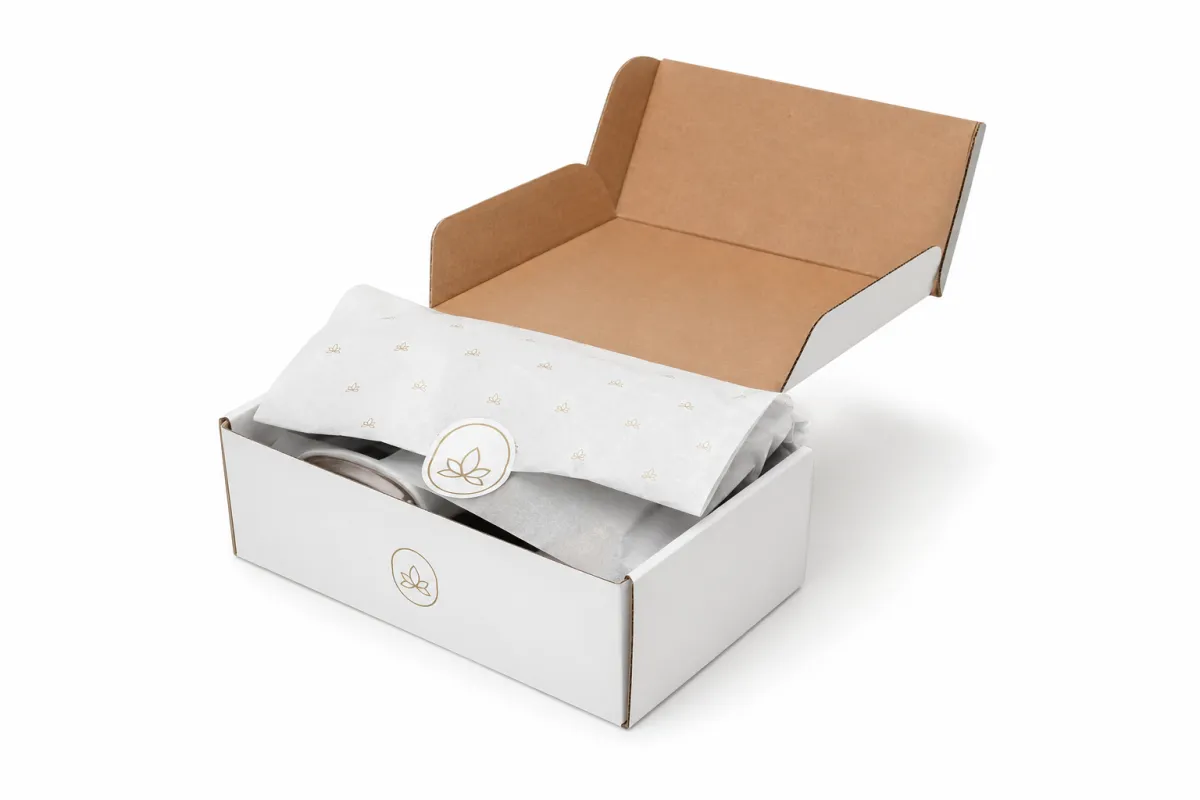
The first surprise is usually basic arithmetic. A buyer sees 10,000 inserts at $0.08 each and assumes the cost of branded paper inserts will land around $800. Then setup charges of $180, a proof round of $45, a folding fee of $0.03 per piece, and freight from Shenzhen to Long Beach add several hundred dollars more. The all-in spend can move closer to $1,450, and the cost of branded paper inserts is no longer a quiet line item. It becomes a real packaging decision with a measurable effect on margin, especially when the inserts are used in a retail launch with a 6-week sell-through target.
I saw that happen with a wellness brand in Irvine, California that was shipping 6,000 units a month across three SKUs. Their team expected a simple insert to stay under 2% of packaging spend. After one reprint caused by a QR code that had been scaled down to 9 mm square instead of the recommended 14 mm square, the insert program absorbed nearly 11% of the quarter's packaging budget. The issue was not the paper itself. It was the rework, the lost packing day, and the fact that the cost of branded paper inserts had been treated as background noise instead of a production decision.
"We budgeted for the sheet price, not the mistakes," a buyer in Chicago told me after a 2,500-piece reprint wiped out the savings from choosing a lower-cost stock. That sentence captures how the cost of branded paper inserts behaves on a press floor in Suzhou or a finishing line in North Carolina. The hidden cost is usually in the second pass, not the first quote.
Commercially, inserts do more than carry a logo. A 3-panel insert can hold care instructions, assembly steps, ingredient lists, or warranty notes in one place. A single sheet can reduce customer service tickets by 8% to 15% if it answers the top three questions before the buyer opens a support chat. I have seen that pattern in apparel, cosmetics, and small electronics, including a headphone brand in Seattle that cut return-related emails by 11% after adding a foldout setup guide. That is why the cost of branded paper inserts should be measured against support savings, fewer returns, and cleaner presentation rather than paper alone.
Many teams underprice inserts because they compare them with a postcard or a flyer instead of a controlled packaging component. A brochure can be a little off and still feel acceptable. An insert inside a retail kit or e-commerce mailer has to line up with the carton, label, and product copy within 1 or 2 mm, especially when the pack-out team in Memphis or Melbourne is folding it by hand. That tighter expectation is why the cost of branded paper inserts deserves the same attention as the box, the label, or the tamper seal.
What branded paper inserts do beyond decoration
Branded paper inserts are functional print pieces, not just decoration. They can hold setup steps, ingredient lists, warranty terms, thank-you notes, referral codes, seasonal offers, or a 24-hour support QR code that points to a landing page in English and Spanish. Buyers who focus only on artwork often overspec the piece. Buyers who focus on function usually control the cost of branded paper inserts more effectively, because the format is chosen for the job rather than the mood board.
I have sat in supplier meetings where a team wanted a full-color, soft-touch, die-cut card for a product that needed only a one-page care guide. That choice added tooling fees, a specialty coating, and a second proof. We moved them to a 2-panel folded insert on 80 lb uncoated text, printed in Ningbo, and the cost of branded paper inserts dropped by 29% without losing clarity. The buyer received the same information, the press ran faster, and the ink dried cleaner on the sheet. The operations lead in the room looked relieved, like a 4 p.m. reprint had just been cancelled.
Several common formats carry different economic profiles. A flat card delivers a premium feel but uses more paper if the content is short. A folded insert handles 400 to 700 words without taking much shelf space. A wrap or belly band adds structure to a bundled set. A tissue-style insert softens the unboxing if the goal is presentation, especially for gift boxes assembled in Los Angeles or Toronto. The right choice changes the cost of branded paper inserts far more than many teams expect, because every fold and finishing choice adds either setup time or handling time. These product inserts also influence how polished a kit feels on arrival.
- Folded insert - best for care steps, compliance text, or multilingual copy across 2 or 3 languages.
- Flat card - best for simple promotions, thank-you notes, or QR-led traffic to a landing page.
- Wrap sheet - best for kits, bundles, or layered presentation in a carton or mailer.
- Perforated piece - best for coupons, returns slips, or detachable instructions that need a tear line.
Placement matters too. In a folding carton, the insert may need to survive repeated handling on a packing bench in Dallas or Monterrey. In a pouch, it must stay flat and resist curl after being cut from a 350gsm C1S sheet or a 100 lb text stock. In a subscription box, it often has to land on top of tissue without slipping during a 2-second pack-out cycle. That is why the cost of branded paper inserts connects to packaging architecture, not just print specs. A well-matched insert can reduce assembly time by 5 to 10 seconds per unit, which adds up fast at 20,000 units a month.
For buyers comparing formats, I usually point them to the rest of the packaging system first. Our Case Studies page is useful here because it shows how a small print change can shift packing time, customer response, and reprint risk in real jobs from Portland to Atlanta. That is where the cost of branded paper inserts becomes visible in practice rather than theory.
Good sourcing also means checking whether the insert is doing a regulated job. If the piece includes material claims, recycling language, or chain-of-custody marks, I look at standards before I look at artwork. The FSC chain-of-custody standards matter if the stock claim needs support, and transit assumptions can matter just as much if the insert ships inside packed goods from a plant in Dongguan to a fulfillment center in Ohio. That is one reason the cost of branded paper inserts can vary between a marketing piece and a compliance piece.
Specifications that change the cost of branded paper inserts
Stock choice is usually the biggest lever. A 100 lb coated text stock, a 70 lb uncoated stock, and a recycled 80 lb sheet can look similar in a PDF, but the press behavior is not the same on a Komori press in Osaka or a Heidelberg line in Poland. Coated paper holds color better, uncoated paper feels softer, and recycled content can introduce a slightly rougher surface that changes ink density by 3% to 7%. Those differences directly affect the cost of branded paper inserts, especially if the design uses a solid background color, fine type below 6 pt, or a dense black block that needs tighter ink control.
Size and fold count come next. A 4.25 x 5.5 in flat insert is fast to print and easy to pack. An 8.5 x 11 in sheet with a tri-fold or gate fold needs more setup, more scoring, and usually more waste during make-ready. A custom die-cut shape adds another layer of labor and a steel rule die that can cost $90 to $250 depending on complexity. Every extra operation raises the cost of branded paper inserts because it increases setup time, machine handling, and spoilage on the first few hundred sheets.
Print coverage matters more than most buyers expect. One-color black on one side is inexpensive. Full-bleed CMYK on both sides can push ink consumption up by 20% to 40%, and dense reds or rich blacks tend to require tighter press control. If there are multiple SKUs with slightly different text or language versions, the cost of branded paper inserts can climb again because each version needs its own proof and, in some cases, its own digital file routing or plate handling in a plant in Guangzhou.
Finishing is where many surprises hide. Spot UV, varnish, perforation, soft-touch lamination, collating, folding, or kitting can all be invisible in the mockup and obvious on the invoice. I have seen buyers approve a design in 30 minutes and then spend two days debating a $0.012 perforation charge on a 50,000-piece order. That charge mattered, because the total cost of branded paper inserts moved by more than $600. The smallest line item often causes the biggest sigh when the spreadsheet reaches procurement.
Artwork quality changes the economics too. Clean files with outlined fonts, embedded images, correct bleed, and fold marks placed at 0.125 in from the trim reduce prepress labor. Files with missing links, low-resolution images, or incorrect panel order can trigger two extra proof rounds and a 24-hour delay. A good prepress team in Milwaukee or Taipei can save real money here, and that is why the cost of branded paper inserts should never be discussed without reviewing the artwork package first.
Here is the short version I give buyers on factory floors: simplify the structure before you chase a lower unit price. A 2-panel insert on a standard sheet, with limited coverage and one proof round, will almost always beat a custom die-cut with three fold lines and two alternate languages. The cost of branded paper inserts follows complexity, not just print size, and a cleaner spec sheet usually wins the budget review.
- Standard size lowers trim waste and setup time on press.
- One stock reduces approval loops and inventory split across SKUs.
- One version keeps proofing simple and cheaper to manage.
- Cleaner files cut prepress labor and lower reprint risk.
One negotiation I remember clearly involved a cosmetics client in New Jersey and a paper mill rep in the Midwest. The client wanted a premium feel, but the mill quoted a 120 lb cover that would have forced a heavier fold and a slower run. We tested a 100 lb gloss text with the same artwork, and the result was a 15% lower cost of branded paper inserts with the same color pop. The buyer cared less about the word premium after they saw the press sheet and the unit cost in black and white.
For brands that need sourcing confidence, transit testing and packaging performance standards are worth checking before the first run ships. The ISTA transit testing guidance is a useful reference if the insert will travel inside packed goods that face vibration, compression, or drop exposure from a warehouse in Reno to a retail store in Miami. That matters because a bent or scuffed insert still counts as a defect, and defects raise the cost of branded paper inserts in ways that never appear in the initial quote.
Pricing breakdown: cost of branded paper inserts and MOQ
A real quote is built from several moving parts: prepress, setup charges, printing, finishing, inspection, packaging, and freight. Buyers often focus on unit cost, but the cost of branded paper inserts is better understood as total landed spend divided by usable pieces. If 1,000 pieces are ordered and 40 are lost to spoilage or damage, the effective cost per piece rises right away. On a 6,000-piece run, even a 2% scrap rate can change the math by more than a lunch meeting in procurement.
Digital and offset pricing behave differently. Digital usually has lower setup and is often better at 250 to 2,000 pieces, especially if the design changes by SKU or language. Offset usually wins at higher volumes, often 5,000 pieces and up, because the setup charges spread across more units. That is why the cost of branded paper inserts can move by 30% or more depending on quantity alone, even before the design changes. A 500-piece digital order in Toronto and a 10,000-piece offset order in Houston rarely belong in the same budget bucket.
| Production path | Typical quantity | Estimated cost per piece | Typical setup charges | Best fit |
|---|---|---|---|---|
| Digital print, standard stock | 250 to 2,000 pcs | $0.22 to $0.58 | $35 to $120 | Short runs, fast approvals, multiple versions |
| Offset print, standard stock | 5,000 to 20,000 pcs | $0.06 to $0.18 | $180 to $450 | Repeat orders, stable artwork, bulk pricing |
| Offset with folding or finishing | 10,000 pcs and up | $0.09 to $0.24 | $300 to $700 | Premium presentation, perforation, special folds |
Those figures are directional, not universal, and the exact cost of branded paper inserts depends on size, stock, and post-press work. A 4.25 x 5.5 in one-color insert on 80 lb uncoated stock can land near the low end, often around $0.07 to $0.11 at 5,000 pieces. An 8.5 x 11 in four-color insert with a fold and aqueous varnish lands much higher, frequently in the $0.15 to $0.29 range at 10,000 pieces. In both cases, MOQ is the quiet force behind the number.
MOQ matters because setup charges need to be spread across enough units to make the order efficient. A lower MOQ gives flexibility, but it usually raises the unit price. A higher MOQ lowers the unit cost, but it also ties up cash and storage space in a warehouse in New Jersey or Ontario. For many buyers, the real question is not "What is the cost of branded paper inserts?" It is "What quantity tier gives me the best trade-off between cash flow and unit economics?"
Here is the pattern I see most often: at 1,000 pieces, the per-piece price looks fine but the total spend feels high once freight is added. At 10,000 pieces, the setup charge becomes almost invisible, but inventory risk rises if the copy changes in 60 days because a product formulation or compliance line changed. That is why the cost of branded paper inserts should be quoted in tiers: one exact spec, one alternate stock, and one alternate quantity. Comparing those three quotes exposes the real economics.
Special versions can shift MOQ too. If you need three language versions, a detachable coupon, or a custom fold, the production path may require more handling and a higher minimum. I have seen a simple 2-panel insert go from a 1,500-piece digital MOQ to a 5,000-piece offset MOQ after a buyer added a tear-off section and a translated legal panel. The change was reasonable, but it altered the cost of branded paper inserts by more than the marketing team expected. The marketing team, for the record, stared at the spreadsheet like it had insulted their launch calendar.
"We saved $0.03 per unit by moving to a larger run, but we spent $420 more on storage and reproofing," said one operations manager during a supplier review in Seattle. That is a good reminder that the cost of branded paper inserts is not only a print quote. It is a supply chain choice with inventory, freight, and revision risk attached.
Process and timeline for branded paper insert orders
The order path is usually straightforward: inquiry, spec confirmation, quote, artwork review, proof approval, production, inspection, packing, and shipping. Even so, the cost of branded paper inserts can rise if one step stalls. A 24-hour delay in proof approval can become a 3-day shipping change if the production slot in Shenzhen is missed and the press moves to the next job. A small pause early in the week can cost more than a rush fee by Friday.
Most delays come from missing dimensions, unclear fold instructions, unapproved colors, or artwork built for screen use instead of print. I once watched a press floor in Shenzhen wait 90 minutes because the buyer had sent a fold mockup but not the final panel order. The run itself was only 4,000 pieces, yet that small mistake added a day to the schedule and made the cost of branded paper inserts look worse than it needed to be. A complete spec sheet would have avoided the delay and the extra freight charge.
Digital work can often move in 5 to 8 business days after proof approval for smaller runs, while offset and specialty finishing can need 10 to 18 business days or more. For a standard 5,000-piece insert printed on 100 lb text with one fold, a typical schedule is closer to 12 to 15 business days from proof approval, especially if the production line is in Dongguan or Ningbo and the cartons are shipping to the U.S. West Coast. If a fold, perforation, or lamination is involved, I tell buyers to plan for the longer end of that range. Rush work almost always increases the cost of branded paper inserts because it compresses production and freight at the same time. The printer may smile politely, but the quote will not.
The fastest way to protect the budget is to send final art in the correct format, confirm the quantity tiers up front, and avoid mid-run changes unless the change saves more than it costs. A clean first proof can remove one revision cycle and keep the cost of branded paper inserts under control. The difference between one proof and three proofs is often larger than the difference between two paper grades, especially when the prepress team has to rebuild fold marks at 2 a.m. in Guangzhou.
Quality checks matter too. A good QC step catches smudges, registration drift, incorrect fold direction, and trim variance before the cartons are closed. On a 15,000-piece order, catching a 2 mm trim issue before shipment can prevent a full reprint that might otherwise add $900 to $1,400 in waste, labor, and freight. That is why the cost of branded paper inserts is tied to process discipline as much as to paper choice.
What a solid timeline looks like
A practical schedule for a standard branded insert might look like this: 1 day for spec confirmation, 1 to 2 days for artwork review, 1 day for proof approval, 3 to 7 days for production, and 2 to 5 days for transit depending on the route. If the insert is part of a broader packaging program, I usually add 2 buffer days for carton assembly or warehouse intake. That extra time is cheaper than a reprint, and it keeps the cost of branded paper inserts from being distorted by rush freight from a port in Long Beach or a rail hub in Chicago.
Why choose us for branded paper inserts
Custom Logo Things is built for buyers who want clear specs, realistic MOQ guidance, and clean execution. We do not pretend every insert should be premium, and we do not push oversized specs just because they look impressive in a mockup. Our job is to help you select the version that makes the cost of branded paper inserts make sense for your product, your timeline, and your channel mix. That is easier to do when the buyer knows whether the run will live in a retail box, a mailer, or a display kit.
That starts with fit. An insert that matches the carton size, mailer format, and packing flow tends to save more money than one chosen only for appearance. I have seen a 6 x 9 in insert fit a subscription box neatly and a 5 x 7 in version waste 18% less paper because the trim was cleaner and the fold landed better on a standard knife. Those are small wins on paper, but they change the cost of branded paper inserts across thousands of units in a warehouse in Dallas or a fulfillment center in Atlanta.
We also keep quoting transparent. If there is a setup charge, we show it. If the MOQ changes because of stock choice or finishing, we explain why. If a buyer wants to compare 2 paper grades or 2 run lengths, we build the quote that way instead of hiding the trade-offs. That kind of clarity is worth money because it prevents the wrong order from being placed in the first place, and the wrong order is usually the most expensive version of the cost of branded paper inserts.
Quality control is another reason buyers stay with us. A care guide with a 6-point font, a barcode, and a multilingual legal block has to match from piece to piece. If one version drifts by even 1 mm, the insert becomes a liability. Our process focuses on consistency in color, trim, and fold alignment so every unit reads the same whether it is running in Suzhou, Puebla, or a contract packer in Ohio. That consistency protects the cost of branded paper inserts by reducing reprints, rejects, and customer complaints.
We also think in packaging systems, not isolated pieces. If your insert needs to work alongside a mailer, carton, sticker, or sleeve, we can help align the specs so the whole kit feels intentional. That kind of coordination is exactly what buyers ask for after they have lived through one bad sourcing cycle with late art, missing samples, and a freight bill from Los Angeles that doubled the budget. The lesson is simple: the cheapest quote is not always the lowest cost of branded paper inserts once everything is counted.
Next steps to quote branded paper inserts
If you want an accurate quote, send these details first: finished size, fold style, stock choice, print sides, quantity tiers, artwork status, shipping destination, and whether the piece needs a perforation or specialty finish. That is the minimum needed to estimate the cost of branded paper inserts without guessing. A 5.5 x 8.5 in, 2-panel insert on 100 lb text is a very different job from an 8.5 x 11 in tri-fold on recycled stock, and the difference shows up in both setup time and freight.
I also recommend requesting at least two alternates. Ask for the same spec on a standard stock and a premium stock, plus one quote at a lower MOQ and one at a higher MOQ. That gives you a clean view of the cost of branded paper inserts across unit price, setup charges, and bulk pricing. Comparing only one scenario hides the real decision, especially if one version includes aqueous coating and the other stays uncoated.
If the insert carries care instructions, legal text, or a QR code that must land exactly, ask for a proof or sample. One tiny typo can trigger a reprint that costs more than the whole proof cycle. I have seen a 1-character website correction add $260 to a 3,000-piece job produced in Milwaukee, and I have seen a 2 mm barcode shift force a second run in Guangzhou. That is why the cost of branded paper inserts should be judged with a proof in hand, not a render on a screen.
- Gather size, fold, stock, and print sides before you request pricing.
- Compare at least 2 quantity tiers so you can see the unit-cost break.
- Ask for setup charges, freight, and inspection terms in writing.
- Approve proofs fast if your schedule is tight by 3 to 5 days.
- Review the quote against inventory turnover so MOQ does not overfill storage.
If you want a clear number, send the specs, artwork, and quantity targets together. That is the fastest way to compare the cost of branded paper inserts across paper grades, finish levels, and production methods without wasting a week on assumptions. The best quote is the one that matches the real job, not the prettiest mockup, and a complete brief usually saves the most money.
FAQ
What affects the cost of branded paper inserts the most?
The biggest drivers are paper stock, size, fold complexity, print coverage, and quantity. On a 5,000-piece run, setup charges and finishing can matter as much as the paper itself, and rush shipping from Asia to the U.S. can add another 8% to 20% to the total. Artwork revisions also raise the cost of branded paper inserts faster than buyers expect, especially when a proof has to be rebuilt in a second round.
What is a typical MOQ for branded paper inserts?
MOQ varies by production method, stock, and finishing requirements. Digital work can support 250 to 2,000 pieces, while offset usually becomes efficient at 5,000 pieces or more. The best way to compare the cost of branded paper inserts is to ask for tiered quotes at 1,000, 5,000, and 10,000 units so you can see where the price break actually lands.
Are digital or offset inserts cheaper?
Digital is often cheaper for smaller quantities because setup is lighter and version changes are easier. Offset usually becomes more economical as run size increases and the design stays stable. The right answer depends on whether you need 500 pieces, 5,000 pieces, or multiple versions of the same insert, which is why the cost of branded paper inserts should be quoted both ways, ideally with the same size and stock.
How long do branded paper inserts take to produce?
Simple digital orders can move in 5 to 8 business days after proof approval, while offset, specialty folds, or custom finishes often need 10 to 18 business days. For a standard 5,000-piece insert printed in Dongguan or Ningbo, a realistic lead time is typically 12 to 15 business days from proof approval, plus 2 to 5 days for transit. If you want to keep the cost of branded paper inserts down, avoid rush freight and approve proofs quickly.
How can I lower the cost of branded paper inserts without hurting quality?
Use standard sizes, simplify the fold, reduce heavy ink coverage, limit version changes, and choose a stock that fits the real use case. Send final artwork early, compare quotes across 2 or 3 quantity tiers, and request a proof before production if the insert carries legal text or a QR code. That is the fastest way to keep the cost of branded paper inserts under control while protecting quality, especially on a 10,000-piece order that has to ship on a fixed launch date.
What should I do first if I am quoting a new insert program?
Start with the finished size, paper stock, fold style, and quantity, then decide whether the insert needs print on one side or both. From there, ask for a standard version and one alternate that simplifies the structure. That two-scenario view usually reveals the true cost of branded paper inserts and keeps you from approving a spec that looks fine in mockup but turns expensive on press.
Practical takeaway: quote branded inserts by total landed cost, not sheet price alone, and compare at least two specs before you approve anything. If the insert has to carry care text, a QR code, or legal copy, lock the artwork first, because reprints and reproofs are what quietly push the cost of branded paper inserts out of line.

