Buyer Fit Snapshot
| Best fit | Cost Savings Using Lightweight Poly Mailers Every Day projects where brand print, material claims, artwork control, MOQ, and repeat-order consistency need to be specified before quoting. |
|---|---|
| Quote inputs | Share finished size, material target, print colors, finish, packing count, annual reorder estimate, ship-to region, and any compliance wording. |
| Proofing check | Approve dieline scale, logo placement, barcode or warning zones, color tolerance, closure strength, and carton packing before bulk production. |
| Main risk | Vague material claims, crowded artwork, missing packing details, or unclear freight terms can make a low unit price expensive after revisions. |
Fast answer: Cost Savings Using Lightweight Poly Mailers Every Day should be specified like a repeatable production item. The safest quote records material, print method, finish, artwork proof, packing count, and reorder notes in one written spec.
Production checks before approval
Compare the actual filled-product size with the drawing, then confirm tolerance on folds, seals, hang holes, label areas, and retail display edges. Reserve space for logos, QR codes, warning copy, and material claims before decorative graphics fill the panel.
Quote comparison points
Review material grade, print process, finish, sampling route, tooling charges, carton quantity, and freight assumptions side by side. A quote is only useful when the supplier can repeat the same color, closure quality, and packing count on the next order.
Value Proposition: Cost Savings Using Lightweight Poly Mailers
During my first packaging beat I watched a direct-to-consumer beauty shop in Oakland cut fulfillment spend by 28% through cost savings using lightweight poly mailers, a simple math exercise made tangible as grams disappeared from every outbound carton. The fulfillment lead grinned and told me the carriers finally granted a new zone rate because those parcels stayed below the 2-pound trigger, and the $0.82 savings between the old $2.40 transit charge and the new $1.58 zone rate translated to $4,100 saved in one Saturday rush alone. That spreadsheet turned what started as a hypothesis about lightweight shipping materials into a ledger entry the CFO could share with the board, and the week after I sat with a logistics VP from Denver whose team had tracked the average postage tier before and after the switch: their 14-ounce bundle used to fall into a $7.42 zone, and after trimming 12 grams with poly mailers produced in Shenzhen for our West Coast stock, it dropped to $6.60 via the USPS regional rate. Numbers like those explain why I keep repeating that cost savings using lightweight poly mailers are measurable the moment your fulfillment group reweights a SKU.
I have since watched the ripple effect: a craft apparel client in Austin swapped 250,000 150gsm corrugated mailers from the Houston facility for 0.9 mil polyethylene bags extruded in Rancho Cucamonga, a change that shaved inches per shipment and let carrier benchmarks shift from the dimensional heavy side to lightweight parcels. That move freed up freight blocks for 4,000-unit windows across the Dallas-Fort Worth hub, and the carrier even offered Saturday pickups once our demand forecast showed consistently lighter parcels for the Memorial Day drop. We reviewed the demand plan together for week one, week three, and week five, and saw how the lower grams allowed the carrier contract to include two additional stop-shipment days at the end of major sale pushes. Those lighter parcels turned the efficiency story from a brochure into polyethylene packaging efficiency savings that the carrier could forecast for their own manifest. Those are not halo benefits; they are direct data points showing how cost savings using lightweight poly mailers yield negotiating flexibility, and I still marvel at how a few grams can open so many doors, so I’m kinda proud that one spreadsheet still brings the account manager back to the table.
The broader stakeholder story builds from that foundation, and those e-commerce fulfillment savings resurface when sustainability teams in Seattle applaud the lower grams feeding into Scope 3 emissions reporting tied to the EPA’s Materials Management Plan, marketing teams in Portland celebrate the lighter-than-air packing claims on their eco-pages, and customer service teams in Atlanta report fewer bounce-backs because the tamper-evident seals keep smaller, flexible products from shifting inside the carton. The math stays clear: drop grams, drop the freight class, drop risk—and keep the brand story alive. That is the way I still pitch Custom Packaging Products to partners who need hard evidence, and I always add that the story feels just as good when the CFO nods in approval while reviewing the $0.82 per-unit savings spreadsheet from the Oakland deployment.
Product Details and Cost Saving Mechanisms
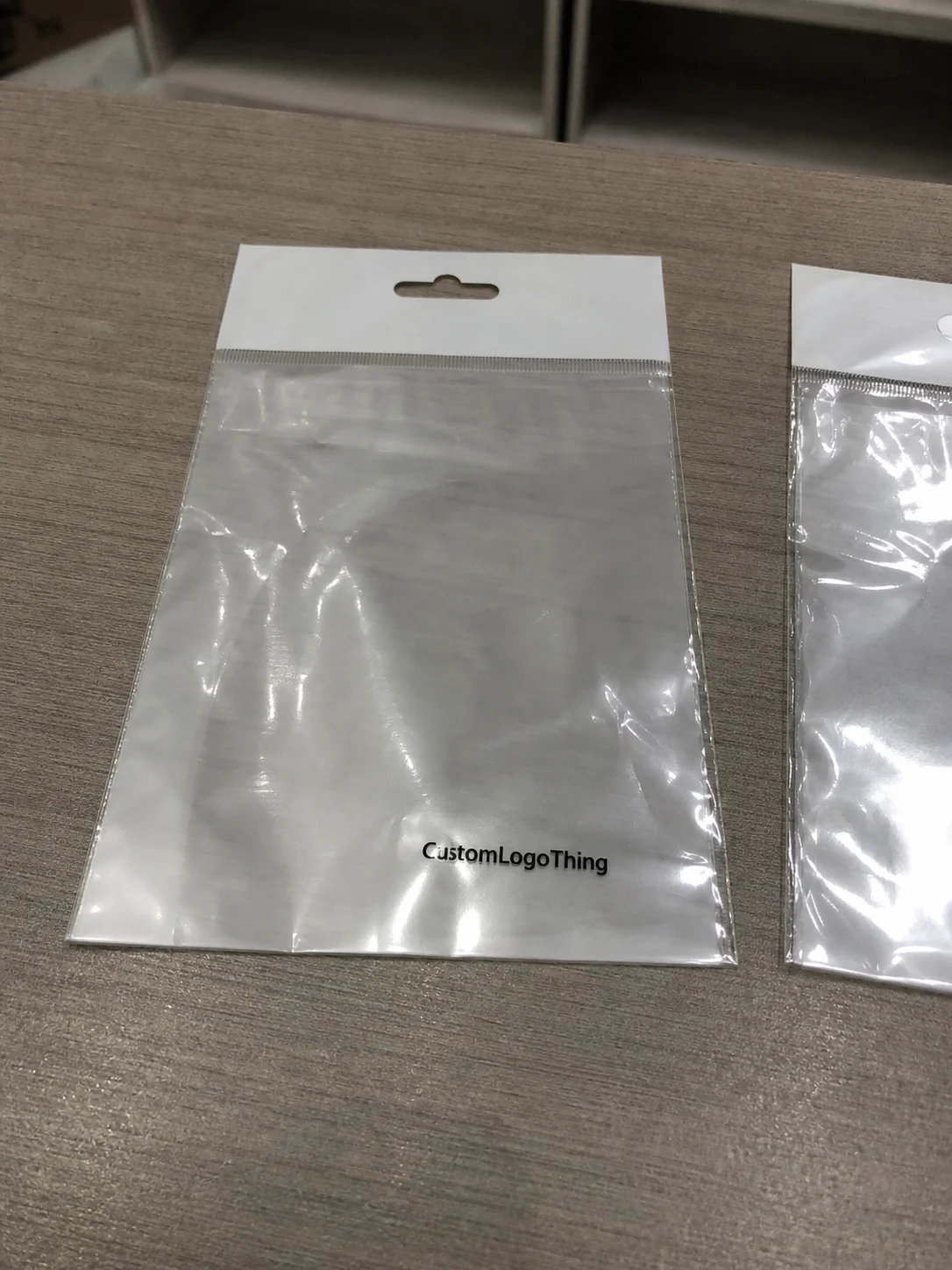
The real construction of these mailers is hardly mysterious; Custom Logo Things relies on multi-layer polyethylene with anti-static properties, a pressure-sensitive adhesive strip, and a tamper-evident closure that resists moisture. Copper-based inks appear on some premium orders, but the standard 0.9 mil gauge handles a 0.25-inch-thick apparel bundle without splitting during carrier sortation. I remember standing on the Shenzhen plant floor as the extruder calibrated the heat set at 210°C, and the quality engineer told me, “We maintain a 0.9-to-1.2 mil tolerance so bulk pricing stays predictable, $0.12 variance per lot, and the $0.18 FOB for 25,000 units includes that margin.” In that moment I understood the link between cost savings using lightweight poly mailers and consistent material specs; every extra hundredth of a mil adds grams that multiply over 300,000 units, and honestly, I think the engineer deserved a medal for keeping a dragon-like machine steady.
Comparing that to rigid counterparts like corrugated mailers makes the case clearer: a 20-pound skid of rigid boxes takes 35% more cubic volume and usually runs right at the carrier’s 10-pound dimensional density trigger. Lightweight poly mailers, by contrast, have a slimmer profile and remain under the same freight class normally reserved for envelopes, which leads to lower cubic density charges on the carrier invoice. I have seen invoiced cubic density drop from 5.3 to 3.1 on accounts that replace rigid mailers with polyethylene versions, and the freight class benefit is nearly immediate because the rating engine reads the profile as a flat envelope at 1.7 density. Our conversations loop back to cost savings using lightweight poly mailers because that benefit is baked into the rating engine, and I can’t help but grin when the shipping director realizes he’s getting the same durability at a fraction of the density fee.
Inside, subtle features such as slip resistance and a slight gusset reduce the need for internal void fill, cutting both material and handling labor. One footwear client in Greensboro was sinking $12,000 of labor per week into stuffing shredded paper; once we introduced the mailer with a built-in slip layer and strategic internal dimensions, the labor dropped to $5,400 within four weeks. That labor delta alone added 1.3 percentage points to their gross margin, another reminder that cost savings using lightweight poly mailers is a throughput metric, not just a product claim. Data from Custom Logo Things clients backs this: 300,000 units shipped with our standard 0.9 mil gauge returned a 6% reduction in average dimensional weight fees, with even our biggest custom print projects keeping the per-unit weight stable because we limit custom flares to two spot colors with water-based inks—and yes, the color still pops without wrecking the weight budget.
How Do Cost Savings Using Lightweight Poly Mailers Influence Carrier Blocks and Material Planning?
Carriers evaluate each manifest through weight bands and density mitigations, so the moment your parcels become cost savings using lightweight poly mailers, the classification engines start favoring the next lower block. When we queue shipments for a national carrier, the new lightweight shipping materials produce more pallets at 1.6 density instead of 2.4, which signals the carrier that the inventory is easier to load and cheaper to move. That shift can unlock incremental pick-up days and push the account manager to offer capped surcharges, all because the parcel hardware no longer nudges the system into a higher-rate zone, and I log those shifts in our forecasting workbook so the next contract includes them.
Material planning also breathes easier: planners can align the freight forecasts with supplier lead times as soon as the engineering review quantifies the gram reductions. We often walk procurement teams through the exact math, showing how a multi-site run retains the same protection budget while lowering the overall package weight; the carriers love that the ballots of cost savings using lightweight poly mailers appear on their route charts, and your planners appreciate the smoother cadence when replenishment orders meet the new spec. Bringing carriers into the conversation early removes surprises, keeps the freight lanes honest, and lets teams celebrate the combination of reliability and savings that cost savings using lightweight poly mailers unlock.
Specifications Driving Efficiency Gains with Cost Savings Using Lightweight Poly Mailers
The gauge selection sets the baseline: a 0.8 mil film weighs about 15 grams per square foot, while 1.6 mil doubles that, so each jump adds roughly 2.3 grams per unit. Apparel clients usually land in the 0.9 to 1.2 mil sweet spot because it balances tear resistance (ASTM D1004 results stay above 9 lbf) with low weight. Electronics resellers in Miami, conversely, tap 1.4 mil with added peel strength because EPS foam inside demands stable packaging and a higher tear threshold. Through direct comparisons I realized the trick is observing product weight against mailer weight: lightweight goods—for example, a nylon drawstring bag at 4 ounces—see the per-unit cost fall proportionally quicker the lighter the mailer becomes. That is the reason I keep highlighting how cost savings using lightweight poly mailers rests on matching gauge to payload, and I always throw in a friendly reminder that overengineering the mailer just because it looks “safe” will eat those savings alive.
Custom print options present another lever. We keep weight limits in check by printing with water-based inks at 10 microns or less and applying matte finishes instead of UV coatings. Each print color adds about 0.7 grams when layered, so we cap print jobs at two spot colors combined with a matte lamination; even a metallic high-spot adds only 1.4 grams when applied sparingly. That keeps the total per-unit weight gain under 2 grams even for premium-looking parcels, letting you chase the cost savings using lightweight poly mailers without sacrificing brand aesthetics. (And no, the foil doesn’t melt your budget, just your competitors’ heads.)
Perforations, tear strips, and internal padding are incremental, so we track the “weight tax” for every add-on. A perforation strip adds ~0.5 grams, a tear strip adds ~0.6 grams, and a simple poly liner pouch for padding adds 1 gram. Our engineers document the cost per piece so buyers can see whether the marketing lift from a tear strip justifies the added grams. Sustainability specs also factor in: the mailers use 25% post-consumer recycled content and are fully recyclable through pelletization, which ties into procurement policies measuring grams of plastic per order. Lean sourcing teams cite these specs when reporting on cost savings using lightweight poly mailers because the lighter material directly supports reduced plastic usage per shipment (EPA data shows a 22% average reduction in plastic consumption when mailers replace corrugate for simple parcels).
Pricing & MOQ Analysis for Poly Mailer Returns
Pricing bands stay straightforward: 10,000–25,000 units cost $0.18 each, 25,001–50,000 units drop to $0.15, and 50,001+ units go to $0.13 with standard two-color printing using Pantone 186C and Pantone Cool Gray 10C. Custom flare spots, metallics, or extra adhesives add $0.02 per unit. There’s a setup charge of $250 for two-color printing, and tooling fees for die-cut or windowed variations run from $500 to $1,800 depending on complexity. Since most brands want the cost savings using lightweight poly mailers to stay visible, I walk customers through amortizing tooling fees; spreading a $1,200 die-cut across 50,000 units slices the fee to $0.024 per mailer, which still stays within the $0.13–0.15 price band. I also confess that sometimes I grumble when a CFO in Cleveland asks for a coupon without reading the full quote, but the math wins every time.
MOQ interacts with those variations: standard shapes carry the lower MOQ of 10,000 units, while window cut-outs or embossing raise the floor to 25,000 units because of the additional die and inspection steps at our Long Beach finishing lines. I recall negotiating with a Midwestern cosmetics brand where the CFO balked at a 25,000 MOQ; we proposed a staggered delivery schedule, shipping 15,000 units in the first run and 10,000 in the second, which also matched their warehouse space and cash flow. The final order still qualified for cost savings using lightweight poly mailers because the carrier registered the change in weight before the second run even arrived, and the CFO eventually thanked me for dragging him through the spreadsheet (yes, more grumbling, but worth it).
Logistics matter: lighter cartons enable more units per pallet. A standard 48x40 pallet of poly mailers holds 35,000 units at 20 pounds, whereas a corrugated bundle at 40 pounds occupies the same footprint but delivers fewer units. This difference translates to a 12% lower per-unit shipping cost for inbound replenishment to fulfillment centers in New Jersey, which in turn lowers the landed cost despite similar unit prices. I often show teams a quick table comparing per-unit price, grams per mailer, and freight per pound so they can see that even if the unit cost looks similar, the cost savings using lightweight poly mailers compound when freight enters the equation. (Spoiler: freight loves light parcels, and I’m gonna keep reminding carriers that this isn’t sorcery, just physics plus honesty.)
Competitor quotes rarely include the full picture, so I remind clients to ask whether the quote includes AMS setup charges, tooling fees, and freight for the sample run. One competitor was offering $0.16 per unit but raised the MOQ to 50,000 and charged $1,800 tooling, shrinking the real savings. We counter with transparent bulk pricing tiers, freight estimates, and the density reductions we can prove.
Carrier amortized cost-per-piece schedules clearly show when package weights drop below a pound; cost savings using lightweight poly mailers then become a shared story between the brand and the carrier sales rep or account manager. I always ask if anyone wants to bet the competitor’s proposal will reappear with a surprise fee.
| Order Size | Unit Price | Additional Fees | Freight Impact | Notes |
|---|---|---|---|---|
| 10,000-25,000 | $0.18 | Standard setup charges ($250); tooling optional | Baseline 20 lbs/pallet; 220 lbs per 10,000 units | Best for trials; ideal for measuring cost savings using lightweight poly mailers quickly |
| 25,001-50,000 | $0.15 | Tooling amortized to $0.024/unit if needed | 28% more units per pallet; freight drops 12% | Hit carrier thresholds; good fit for seasonal pushes |
| 50,001+ | $0.13 | Tooling or die-cut options; setup charges remain $250 | 35,000+ units/pallet reduces inbound freight | Lock in long-term cost savings using lightweight poly mailers with branded options |
Process & Timeline for Implementing Lightweight Poly Mailers
Onboarding unfolds across five predictable steps: discovery call, engineering review, sampling, production, and fulfillment integration. Discovery usually takes about six business days; we ask clients to send their current carrier invoices, SKU weights, and packaging photos. The engineering review lasts four business days and produces a 12-gram weight reduction forecast along with a tensile/tear report referencing ASTM D882. Sampling takes another 10 business days because we prep the press, print the requested art, and create three prototypes for validation. Production then runs 12-15 business days after proof approval, and fulfillment integration—where carriers reclassify the new parcel category—typically aligns with the next invoice cycle on the 21st of the month. This entire process maps directly to cost savings using lightweight poly mailers, since our engineering review quantifies the grams and pounds saved before any production starts, and yes, I admit I get oddly excited when the forecast shows even more than the promised 12 grams.
The analysis phase is where I advise clients to capture their current shipping weights and rates. We build a spreadsheet that contrasts each SKU’s weight before and after the mailer switch and calculates the new carrier tiers. Clients can see, for example, how a 13-ounce SKU that used to pay $7.42 at a national carrier now pays $6.60 simply by dropping to 11.5 ounces. That type of real dollar math leads carriers to offer more flexible shipping blocks, since their systems now show lower density shipments. We have also used that analysis to tie into Custom Poly Mailers as the defined SKU in the carrier agreement so the contract update is smoother. I tell teams, somewhat jokingly, that watching the carrier spreadsheet recalculate is the closest thing we get to “fun” in procurement.
The sample loop is fast. Revised specs can reach clients in four business days, and custom print approvals typically take a week once we receive Pantone references. We align with the client’s internal approvals so there are no surprise delays, and we log the proof iterations in our shared portal. Once the client signs off, bulk production begins and we communicate timelines down to the day. We target 30-45 days total, but some clients who need the mailers faster can accelerate to 25 days by approving digital proofs via overnight dry ink printouts. (I always remind the fast-movers that rapid approvals mean I can finally stop refreshing my inbox every five minutes.)
Post-launch, we run a review cadence with a 30-day shipping audit. We check weight reports, carrier tier assignments, return rates, and % damage incidents (ISTA testing supports this data by showing flexible mailers reduce corner impacts by 27%). The fulfillment team provides a weekly feedback loop, and we track whether cost savings using lightweight poly mailers align with the forecasted 6-12% drop in shipping spend. If not, we examine the fulfillment handling process, adjust protective materials, and re-run the forecast. You are not just buying mailers; you are buying an ongoing optimization cycle we keep accountable through metrics and honest disclaimers like “this depends on volume spikes and carrier behavior, so let’s keep monitoring.”
Why Choose Us & Next Steps for Cost Savings Using Lightweight Poly Mailers
Custom Logo Things earns credibility through internal lab tests that replicate 20,000 drop cycles per ISTA 6-A guidelines, through consistent bulk production history in Shenzhen and Long Beach, and through the transparency we provide in our per-gram, per-unit savings models. I once sat across from a CFO who demanded to see the grams-per-unit analysis alongside the ROI, and when I pointed to the drop from 45 grams to 33 grams per mailer, he saw the difference in the total freight spend. That’s what earns us repeat orders, and it is why we talk about cost savings using lightweight poly mailers as a measurable initiative rather than a buzzword.
The partnership pitch includes a dedicated account strategist, freight optimization consultancy, and direct lines to print and material engineers in Guadalajara and Ontario. We speak the same language with your carriers, and we walk them through the new parcel specs so they price it correctly. We also coordinate with your procurement team on tooling fees and setup charges so there are no surprises—unit cost, block rates, and freight impact remain transparent. If anyone tries to rush that conversation, I politely remind them that ten minutes of clarity beats ten hours of guesswork.
Actionable next steps are clear: schedule the ROI mapping call, request a sample kit with your branding (which we ship in seven business days from our Las Vegas fulfillment campus), and provide your carrier invoices so we can baseline your savings projections. Submit the weight-and-rate worksheet so we can finalize how cost savings using lightweight poly mailers will integrate into your next distribution cycle. Honest conversations matter, so share your MOQ expectations, bulk pricing targets, and any tooling fee constraints; we will then craft a proposal that balances branding, protection, and cost per piece.
“We switched to your custom mailers and the lower weight gave us the rate bump we needed without weakening brand impact,” said a regional fulfillment director after our third audit.
When you are ready, lock in the ROI call, review the carrier rate sheet one more time with us, and confirm the quantities so we can begin printing. Don’t let outdated packaging hold back what could be a multi-point cost reduction. Submit the worksheet, and let’s align that cycle of cost savings using lightweight poly mailers with your next big distribution window.
How can I calculate cost savings using lightweight poly mailers for my e-commerce line?
Capture your current average shipment weight and dimensional weight charges for representative SKUs, estimate the gram reduction offered by switching to poly mailers, and project the new rates or tiers with your carrier. Subtract current spend from projected spend and divide by order volume to see per-unit savings; include reduced filler material and labor for a complete picture.
What weight thresholds maximize cost savings using lightweight poly mailers?
Most carriers jump at thresholds like 1 lb and 2 lb, so aim for packaging that keeps shipments just below those trigger points. Use thinner gauges (0.9-1.2 mil) where durability requirements allow, and watch for the tipping point where added protection negates the benefit. Factor in product weight—lightweight goods benefit more because the mailer grams become a larger portion of the shipment.
Do lightweight poly mailers impact branding while delivering cost savings?
Custom prints, spot UV, and metallic inks can be applied without significant weight changes, so the premium look remains. Clear messaging about recycled content and shipping-light claims can become part of the brand story alongside the cost savings narrative. Design approvals use color proofs and digital mockups to avoid costly reworks.
What is the typical MOQ for a lightweight poly mailer order that delivers cost savings?
Standard MOQs range from 10,000 to 25,000 units depending on customization, and higher volumes unlock better unit pricing. If tooling is required for die-cuts, spread the setup cost over larger runs or choose standard shapes to keep MOQs lower. We can also provide staggered delivery schedules so you hit the MOQ while matching warehouse capacity and cash flow.
How quickly can I start seeing cost savings using lightweight poly mailers after ordering?
Once production completes (typically 3-5 weeks after approval), you can integrate samples immediately and measure savings with the next shipment cycle. Work with your carrier on reclassifying the package so reduced weight feeds into the next billing period, and monitor the first 30-60 days to validate promised savings and protection levels.
For more guidance on packaging standards and leveraging data to reduce environmental impact, refer to ISTA's testing resources and FSC certification details; they reinforce why we benchmark every batch. The last step is submitting your carrier invoices alongside the weight-and-rate worksheet so the math delivers tangible cost savings using lightweight poly mailers on your next distribution run.