Custom Badge Stickers Are Small, but They Do Real Brand Work
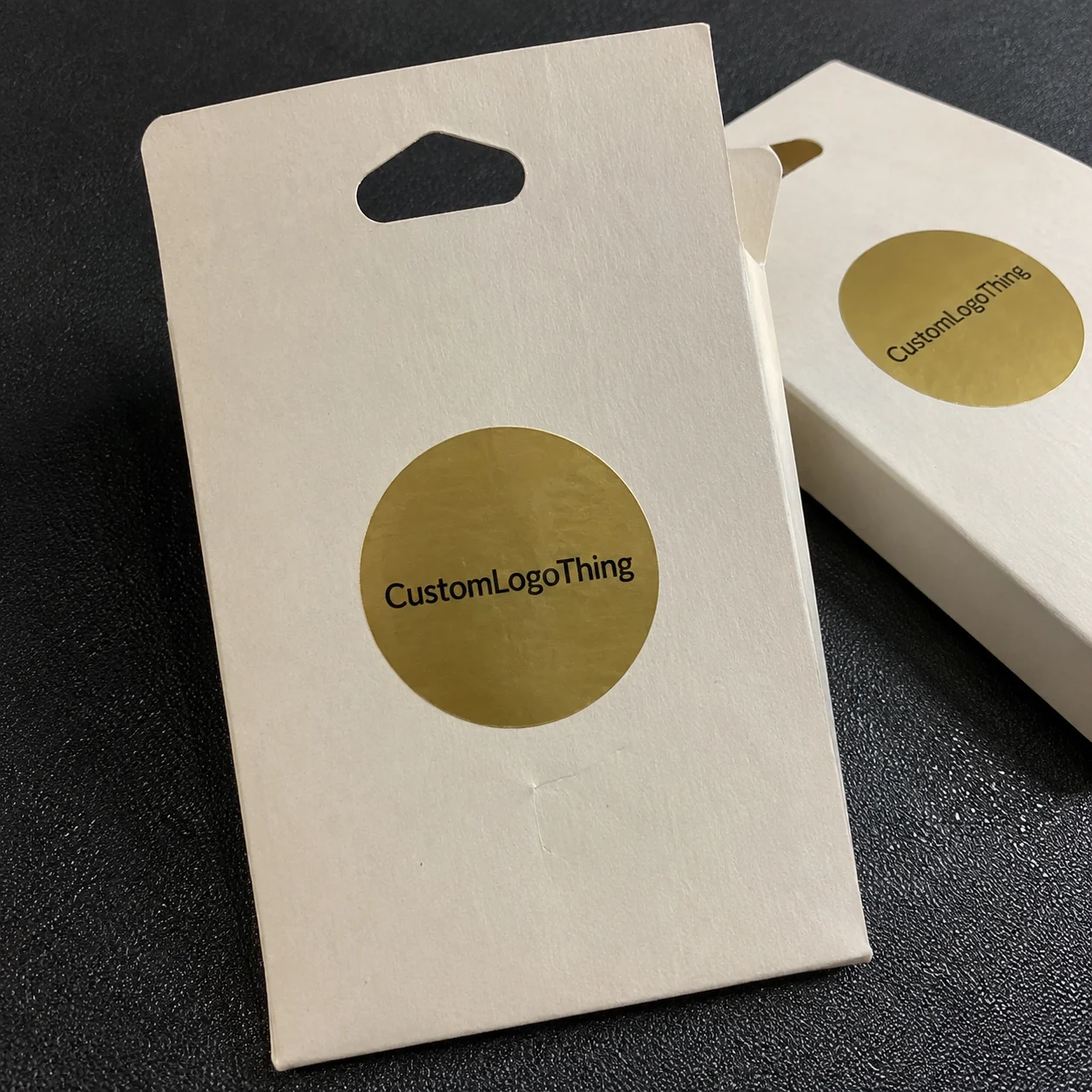
A plain mailer can look painfully unfinished until Custom Badge Stickers give it a clear identity. Tiny surface. Big judgment. People notice whether a seal, emblem, or branded callout looks intentional, or whether it looks like someone panicked five minutes before shipping.
Custom badge stickers are Printed Adhesive Labels designed to look like badges, seals, crests, patches, award markers, membership identifiers, achievement labels, or branded feature callouts. They are not just logo stickers in a cute shape. A useful badge sticker uses border weight, icon hierarchy, short copy, and shape to create a “seal of meaning” on a package, kit, certificate, event table, or giveaway item.
The category stretches across product packaging, limited-edition drops, employee welcome kits, school clubs, sports teams, loyalty programs, certificates, event giveaways, retail packaging, and promotional merch. A 2-inch “Founding Member” badge on a folder does different work than a 3-inch holographic event sticker in a swag bag. Same printing family. Different job.
The difference between a badge sticker and a standard logo sticker is structure. A logo sticker says, “Here is the brand.” A badge sticker says, “This product is special,” “This person belongs,” “This item is certified,” or “This package has a reason to exist.” That is package branding doing work, not decoration wearing a strategy costume.
Popular shapes include circles, shields, crests, stars, scalloped seals, rounded squares, ribbons, and custom die-cut outlines. Circles are usually the safest and cheapest. Shields and crests feel more official. Scalloped seals read as award-like. Custom outlines can look excellent when the design earns the shape. Otherwise, they add cost, trimming risk, and a small tax on indecision.
The practical questions matter early: what material, what adhesive, what finish, what size, what quantity, what timeline, and what artwork standard? Answer those before requesting a quote and the process stays clean. Skip them and the order becomes a 19-email scavenger hunt with better typography.
How Badge Sticker Printing Works From Artwork to Finished Sheet
The production flow is simple on paper. Artwork is reviewed, resolution and color mode are checked, cut lines are set, material is chosen, the design is printed, coating or laminate is added if needed, and the stickers are kiss-cut or die-cut. Finished stickers are then supplied on rolls, sheets, or as individual pieces.
Digital printing is the common choice for short to mid-size runs because setup is faster and full-color artwork is easier to handle. For many badge orders between 250 and 10,000 pieces, digital printing keeps cost and turnaround reasonable. Flexographic printing can make sense for larger roll label runs, especially repeat product packaging jobs, but plates and setup charges usually make small quantities less friendly.
Format matters more than buyers expect. Rolls work well for packaging lines, hand application at scale, and repeated labeling on jars, bottles, boxes, pouches, or bags. Sheets are practical for event tables, schools, office kits, and handouts because people can peel stickers from a flat page. Individually cut pieces cost more, but they feel more premium for retail inserts, influencer mailers, merch packs, and giveaways.
Cut style affects both price and usability. Kiss-cut stickers are cut through the face material while the backing stays intact, which makes peeling easier. Die-cut stickers follow the outside shape and are cut through the sticker and backing. Standard circles, squares, and rectangles are usually cheaper because the tooling or cutting path is simple. Custom badge stickers with sharp points, tiny notches, or elaborate crests need more careful cut planning.
Finishes change appearance and performance. Gloss makes colors pop and increases contrast. Matte reduces glare and photographs cleaner under bright lights. Soft-touch feels premium, though fingerprints can show on dark ink. Holographic and metallic materials create a louder promotional look, especially for awards, limited releases, and event merch. Subtle? Not really. Effective? Often, yes.
Production reality: the cleaner the file, the faster the proof. Bad artwork is not a personality trait; it is just a delay with extra emails.
For print files, vector artwork is usually best for logos, badge borders, type, and icons. Raster images should generally be 300 dpi at final size. Add bleed, keep text inside the safe zone, and supply a clear cut line. If that sounds boring, good. Boring production files are how nice stickers happen.
Material, Adhesive, and Finish Choices That Actually Matter
Material is not a personality test. It is a job requirement. The right stock depends on where the sticker goes, how long it needs to last, what surface it sticks to, and how much abuse it will take.
Paper is the budget option for indoor use, certificates, dry product packaging, event sheets, and short-term handouts. It can look excellent, especially with a matte or uncoated finish, but it does not love moisture. White BOPP and vinyl are better for water resistance, cosmetics, beverage labels, refrigerated products, and durable promos. Clear film creates a transparent effect, but opacity and white ink need planning. Kraft paper fits natural-looking packaging and handmade brands. Metallic films work for premium seals and award-style badges.
Adhesive is where cheap guesses get expensive. Permanent adhesive is typical for shipping cartons, branded packaging, product jars, mailers, and retail packaging. Removable adhesive is useful for temporary event badges, short-term promos, or situations where residue would be a problem. Freezer-grade adhesive is built for cold products and cold-chain handling. High-tack adhesive helps on textured boxes, rough paperboard, flexible pouches, and difficult plastics.
Surfaces behave differently. Glass is usually friendly if clean and dry. Corrugated cardboard can vary by fiber, coating, dust, and recycled content. Plastic containers may have low surface energy, which makes adhesion harder. Metal is usually stable, but temperature swings can affect performance. Coated pouches can be annoying little divas. Testing is cheaper than discovering failure after the stickers are already on 5,000 units.
Ask practical durability questions before ordering. Will the sticker be used indoors or outdoors? Wet or dry? Handled once or handled daily? Applied by hand or machine? Stored at room temperature, refrigerated, or frozen? Used on Custom Printed Boxes, bottles, flexible mailers, certificates, laptops, or fabric packaging? The answers should steer the material choice.
| Material | Best Use | Durability | Typical Tradeoff |
|---|---|---|---|
| Paper | Indoor events, dry packaging, certificates | Low to moderate | Lowest cost, weak moisture resistance |
| White BOPP | Product packaging, jars, bottles, pouches | Moderate to high | Better water resistance, higher cost than paper |
| Vinyl | Outdoor promos, laptops, durable giveaways | High | Strong performance, may be overkill for short-term use |
| Clear Film | Transparent effects, glass, clean packaging design | Moderate to high | Needs white ink planning for readable graphics |
| Metallic or Holographic | Awards, seals, limited drops, promo badges | Moderate to high | Premium look, readability can suffer if artwork is busy |
Finish is the final layer of sense or nonsense. Gloss increases contrast. Matte looks cleaner in photos. Laminate adds scuff and moisture protection. Uncoated paper can feel premium, but it absorbs moisture and scuffs faster. Match the sticker to the job. A waterproof vinyl badge on a one-night indoor name card is overbuilt. A paper badge on a chilled beverage is asking for drama.
Quality checks should not be vague. Confirm that the proof shows size, cut path, bleed, safe area, material, finish, and quantity. For roll orders, check unwind direction if the stickers will be machine-applied or placed in a dispenser. For clear, metallic, or holographic stock, ask how white ink will be used. The small details are where the expensive surprises hide.
Cost and Pricing Factors for Badge Sticker Orders
Badge sticker pricing is driven by quantity, size, material, shape, finish, number of designs, packaging format, proofing needs, and shipping speed. That is why “How much are stickers?” is not a quote request. It is a riddle with adhesive.
Unit cost usually drops as quantity increases because setup, proofing, material handling, and production time are spread across more pieces. A short run might feel expensive per unit even if the total order is small. Some suppliers can print 100 or 250 pieces, but the unit price can feel rude because setup still exists. That is manufacturing, not magic.
For rough buying expectations, simple paper circles are the budget lane. Waterproof film with gloss or matte laminate is mid-range. Metallic stock, holographic material, custom die-cut shapes, variable artwork, or individually packed stickers push costs higher. Exact pricing depends on supplier equipment and specs, but the pattern is consistent.
| Order Type | Example Specs | Typical Cost Behavior | Best Fit |
|---|---|---|---|
| Budget Badge | 2-inch paper circle, sheeted, matte or gloss | Lowest unit cost at 500+ pieces | Events, certificates, dry packaging |
| Packaging Badge | 2-inch white BOPP, roll format, permanent adhesive | Mid-range; efficient at 1,000–10,000 pieces | Jars, boxes, mailers, retail products |
| Premium Promo Badge | 3-inch die-cut vinyl, laminate, individual pieces | Higher cost due to material and finishing | Giveaways, merch packs, laptop stickers |
| Special Finish Badge | Metallic or holographic film with custom shape | Higher setup and material cost | Awards, limited editions, launch kits |
Size changes cost, but not always in a neat linear way. A 1.5-inch badge uses less material than a 4-inch badge. Fair enough. But very tiny stickers need simpler artwork to stay readable, and very large stickers may need stronger material or laminate if they will be handled. The sweet spot for many badge stickers is 1.5 to 3 inches wide.
Real-world quote ranges vary widely, but broad planning numbers help. Basic paper badge stickers in moderate quantities may land in the low cents per piece. Durable film stickers with laminate often move into a higher per-piece range. Individual die-cut vinyl, metallic, holographic, or low-quantity specialty badges can cost several times more than a simple sheeted paper circle. Freight, rush fees, proof revisions, and split shipments can change the final invoice.
Provide quote details upfront: quantity, size, shape, material preference, indoor or outdoor use, roll, sheet, or individual format, number of artwork versions, application surface, and deadline. If the badge supports product packaging, include whether it will go on glass, cardboard, plastic, a coated pouch, or a custom printed box. Different surface. Different adhesive risk.
Order a little extra. For hand application, 2% to 5% overage is a reasonable cushion. For events, add extras for staff, replacements, last-minute attendees, and photography samples. Ordering the exact count needed assumes nobody makes a mistake. Adorable. Not useful.
Process and Timeline: What Happens After You Request a Quote
The order process should be simple if the specs are clear. Submit your quantity, artwork, size, use case, surface, preferred material, format, and deadline. You receive a quote. After pricing is approved, a digital proof is prepared. Then you review size, cut path, material, colors, bleed, and layout before production starts. Once the order is finished, it ships and tracking is sent.
The proof is not decorative paperwork. It is the buyer’s checkpoint. Check spelling, size, cut path, colors, bleed, safe zones, and whether the badge looks balanced at actual size. It is not the moment to redesign the entire brand system unless delaying yourself sounds fun.
Typical timing depends on artwork quality, material availability, order size, finish complexity, proof approval speed, and shipping distance. Simple digital sticker orders can often move in a few business days after proof approval. Specialty materials, multiple SKUs, custom shapes, metallic finishes, or large-volume roll labels can take longer. If a supplier quotes lead time, ask whether it includes proofing and transit or only production.
Rush orders may be available, but they come with tradeoffs. Faster production can limit material choices, reduce time for sampling, or add rush fees. Fast, cheap, and highly customized rarely sit at the same lunch table. Pick two, then be honest with yourself.
Build buffer time for events, launches, retail shipments, and campaign kits. Stickers often support a larger deadline that cannot move. If the badges are going on 3,000 product boxes for a retail delivery, the sticker delay becomes a packaging delay. Suddenly that “tiny little label” is holding up the whole shipment. Fun little lesson in supply chains.
If adhesive performance matters, ask about test samples before the full run. ASTM D3330 is one common peel adhesion test method used in pressure-sensitive adhesive evaluation, and transit testing standards from ISTA can be relevant when labels are part of a shipped package system. You do not need to become a lab technician. You do need to ask better questions than “Will it stick?”
Sampling is especially useful for textured boxes, flexible pouches, cold storage, cosmetics, candles, refrigerated drinks, and anything that will be handled repeatedly. Apply the sample to the real surface, wait at least 24 hours when possible, then check edge lift, wrinkling, scuffing, color contrast, and removal behavior if removability matters. A five-minute desk test is not the same as a real application test, but it is still better than blind optimism.
Common Artwork and Ordering Mistakes That Make Badge Stickers Look Cheap
Tiny text is the classic mistake. A badge can look great on a 27-inch monitor and turn into ant-sized nonsense once printed at 2 inches wide. Print a paper mockup at actual size. Stand back. Squint. If you cannot read it easily, neither can customers.
Hierarchy matters. The logo, icon, main phrase, date, award level, and secondary details should not all fight for attention. If everything is bold, nothing is. Badge design usually works best with one dominant element, one support element, and one small detail if space allows.
Bleed and safe zones are not optional. For most sticker artwork, plan for about 0.0625 to 0.125 inch bleed depending on supplier requirements. Keep important type and borders inside the safe zone. Round badges, shields, and scalloped seals can show trimming variation more clearly than rectangles, especially if the border is thin and too close to the edge.
Low-resolution images create fuzzy print. Screenshots, copied web graphics, and compressed social media images are bad source files. Vector artwork is usually safer for logos, icons, borders, and type. If raster art is unavoidable, use 300 dpi at final print size and avoid stretching small files. No, dragging the corner bigger does not add pixels. If only.
Color expectations also need a reality check. Screens glow. Ink does not. If color accuracy matters, provide CMYK values, Pantone references, or brand color specifications. For premium product packaging, ask about a sample or hard proof. Digital proofs are useful for layout, but they do not always represent exact printed color on paper, BOPP, vinyl, kraft, clear film, or metallic stock.
Material mismatch can ruin otherwise good artwork. Paper on wet bottles. Removable adhesive on shipping cartons. Clear film without white ink planning. Matte finish on a design that needed high contrast. Holographic stock under tiny black type. These are all avoidable choices, which makes them extra irritating.
Too many versions can create proofing errors. If five departments, six flavors, or four award levels need separate badges, build a simple version list with file names, quantities, and copy. “Use the final-final one” is not a production instruction. It is a warning sign wearing a file name.
Also, do not order the exact count. Application mistakes, damaged units, test samples, last-minute additions, and staff hoarding happen. For small runs, add 25 to 50 extras if the budget allows. For larger packaging runs, add a practical percentage. Your future self will be less annoyed.
Next Steps Before You Order Badge Stickers
Start with the use case. Is the sticker for product packaging, event handouts, membership kits, award seals, branded mailers, or retail display? Then measure the application area. A 3-inch badge may look great on a laptop but ridiculous on a 4-ounce jar. Scale is not a vibe. It is math.
Choose the shape next. Circles are efficient and readable. Shields feel official. Scalloped seals feel award-like. Rounded squares work well for modern packaging design. Custom die-cuts can look excellent, but they need cleaner artwork and usually cost more. If the sticker will appear across mailers, cartons, and handouts, create two or three size options before quoting.
Pick material based on the environment, not the fanciest sample in the book. Dry indoor use can often use paper. Water exposure needs film. Outdoor handling needs stronger stock and laminate. Cold storage needs compatible adhesive. Textured boxes and coated retail packaging may need testing. If you already use Custom Labels & Tags, keep the badge material consistent with the rest of the label system unless there is a good reason to change.
Prepare production-ready files. Send a vector logo, outlined fonts, bleed, safe zone, cut line, and CMYK or Pantone references when available. If you have multiple departments, teams, flavors, award levels, or event versions, collect them before quoting. Batching versions often saves time, reduces proofing confusion, and may improve pricing.
Think about the whole packaging system. A badge sticker on a mailer is one piece of branded packaging. It may sit next to tissue, inserts, labels, tape, hang tags, or Custom Packaging Products. If the badge color clashes with the box print or the finish fights the pouch material, the final package looks patched together. That is not charming. That is preventable.
For sustainability claims, be specific and careful. FSC-certified paper can support responsible sourcing when the chain-of-custody claim is valid; you can learn more from FSC. Recyclability depends on the package, adhesive, facestock, ink, and local recovery stream. Do not slap “eco-friendly” on a sticker spec and call it a strategy.
Before ordering custom badge stickers, write down the surface, size, quantity, deadline, durability needs, finish preference, format, and artwork versions. That turns the quote into a real production request instead of a guessing game with adhesive.
FAQ
What size should custom badge stickers be?
Most custom badge stickers work well between 1.5 and 3 inches wide, depending on viewing distance and artwork detail. Use smaller sizes for product seals, medium sizes for packaging or event badges, and larger sizes for giveaways or laptop stickers. If the design includes small text, icons, dates, or award levels, print a paper mockup at actual size before ordering.
Are badge stickers better on rolls, sheets, or individually cut pieces?
Rolls are best for repeated packaging application, especially if a team is labeling many boxes, jars, bottles, or bags. Sheets are convenient for events, office use, schools, and kits where people peel stickers by hand. Individually cut pieces cost more, but they feel better for retail inserts, giveaways, influencer mailers, and merch packs.
What material is best for waterproof badge stickers?
White BOPP, vinyl, or other film-based materials are usually better than paper for moisture resistance. Add a gloss or matte laminate when the sticker will be handled often, exposed to condensation, or used outdoors. For bottles, coolers, or frozen products, confirm the adhesive works in cold and wet conditions before committing to a full run.
How much do custom badge labels and stickers cost?
Cost depends on size, quantity, material, finish, shape, number of designs, and whether the stickers are supplied on rolls, sheets, or as individual pieces. Simple paper badge stickers are the cheapest, while waterproof films, laminates, metallic finishes, holographic stock, and custom die-cuts raise the price. For the cleanest quote, provide quantity, dimensions, artwork, surface type, deadline, and whether the sticker needs indoor, outdoor, or water-resistant performance.
Can custom badge stickers use metallic, holographic, or clear materials?
Yes, badge stickers can be printed on metallic, holographic, clear, kraft, white film, or paper materials depending on the look and use case. Metallic and holographic materials work well for awards, seals, limited editions, and promotional drops, but they can reduce readability if the artwork is too busy. Clear stickers need extra planning because white ink, opacity, and the color of the surface underneath all affect the final result.


