Custom Burlap Bags do something that glossy packaging often cannot: they make a product feel grounded, tactile, and worth opening slowly. That is why they keep showing up in coffee, seeds, produce, wedding favors, gift sets, and specialty retail. The material itself is simple. The decisions behind it are not.
The buyers who get the best results usually separate appearance from production reality. Texture can lift perceived value, but the bag still has to hold weight, close properly, print clearly, and arrive on schedule. If you are comparing packaging formats alongside burlap, the range at Custom Packaging Products is a useful reference point for how material choice changes cost, lead time, and shelf presence.
Why burlap still wins when packaging needs to feel premium
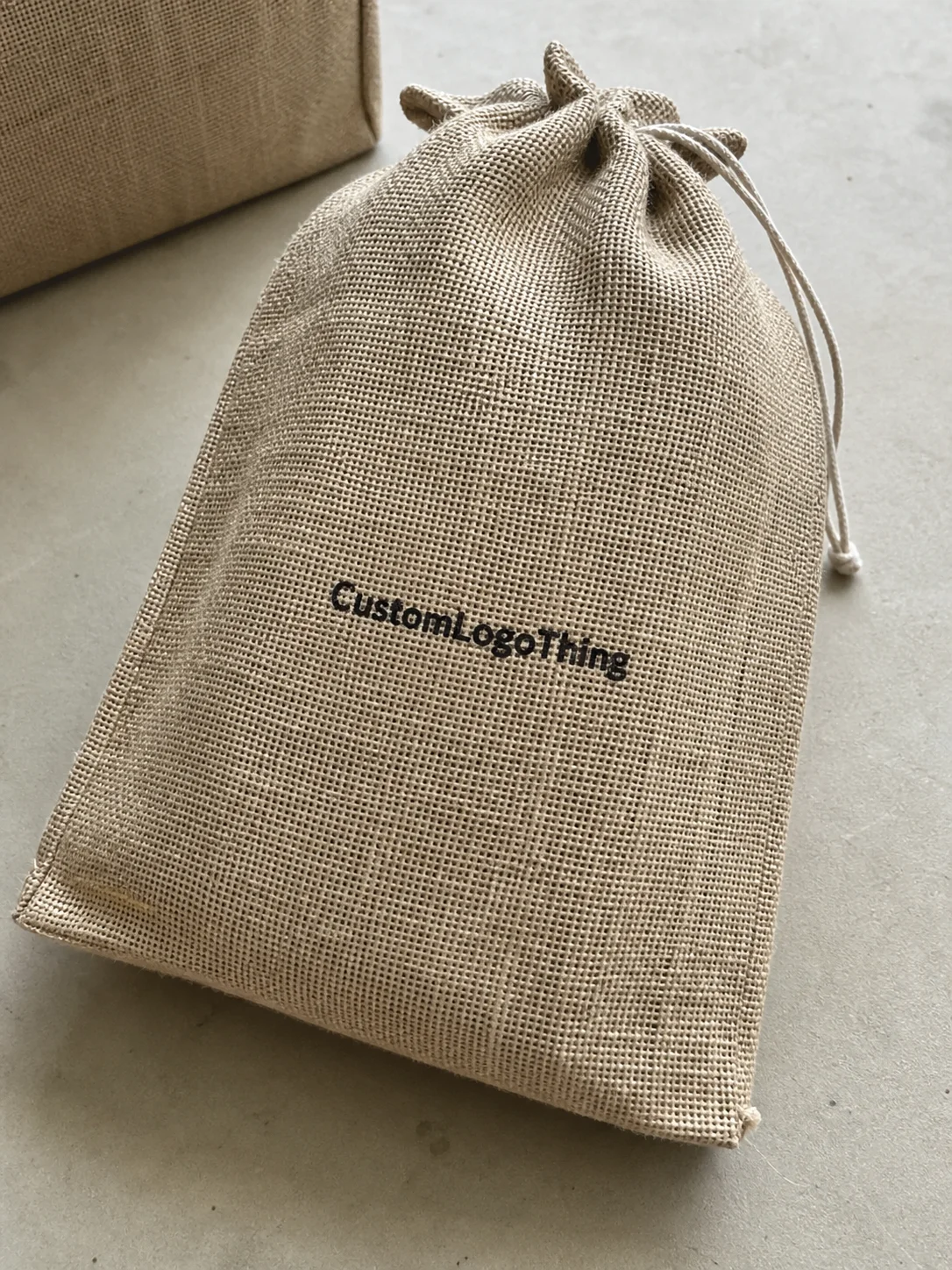
Burlap has a low-tech reputation, and that is part of the appeal. The open weave, matte finish, and rough hand feel communicate authenticity faster than a polished substrate ever will. For brands selling coffee beans, dried goods, seeds, soaps, or gift items, that texture acts like a visual shortcut. It suggests care, not mass production.
That signal matters both on shelf and in gifting. A pouch that feels natural often looks more credible than a plastic sleeve, especially in retail packaging where the job is not just protection but presentation. A wedding favor in burlap reads as personal. A coffee sampler reads as small-batch. A produce bag reads as less processed. None of that requires heavy ink coverage or complicated structure.
There is also a practical side. Burlap can support simple branded packaging without the registration headaches common on smoother substrates. A one-color logo, a woven tag, or a sewn patch often does more for package branding than a full flood print. That is one reason buyers compare burlap against custom printed boxes and rigid cartons, then still choose the softer option for certain launches.
Still, rustic appearance should not be confused with easy sourcing. The material can fray, the weave can vary, and the final bag may need a liner, seam reinforcement, or a tighter closure than the first sample suggests. Brands that do this well treat the bag as real packaging with real performance targets, not as decorative fabric with a logo on it.
If the buyer wants “natural” to mean “reliable,” the spec has to prove it. Texture is only useful if the bag survives filling, handling, and shipping.
What custom burlap bags are and how they perform
At the simplest level, Custom Burlap Bags are woven jute or burlap-style bags built to carry, display, or gift a product. They may use drawstrings, stitched seams, gussets, liners, or laminated inserts depending on the application. The outer layer usually creates the look, while the inner structure handles the work.
That split matters because burlap is not automatically a heavy-duty substrate. It offers texture, breathability, and a strong handmade signal. It does not always offer containment by itself. Small goods, dry foods, seeds, and gift items may be fine in a plain construction. Fine dust, oils, sharp edges, or fragile contents often need an inner layer or a tighter weave.
Decoration choices shape performance too. One-color screen print is usually the most economical and predictable option. A sewn patch or woven label can look more refined, especially if the surface is uneven or highly textured. Heat-applied graphics can work in some cases, but not every weave accepts them cleanly. The more steps involved, the more the quote depends on labor, setup, and consistency.
That is why the question is never just “Does it look good?” It is, “What job should the bag do?” A decorative favor bag is not the same as a reusable retail pouch. A coffee presentation bag is not the same as a shipping sack. A buyer who defines the role early usually gets a better result because the supplier can build to the right standard instead of guessing.
For teams used to rigid packaging, this takes a small mental shift. A carton lets package design carry a lot of the brand story through structure and print. Burlap does more with material character. That makes it a good fit for some launches and a poor fit for others. The material is a tool, not a universal answer.
If the bags will move through a distribution chain, it is worth thinking beyond the shelf. Distribution testing logic used by ISTA is a useful benchmark for any packaged item that will be handled, stacked, or shipped with other goods, even if the bag itself is only one layer of the final presentation.
One practical detail buyers sometimes miss: burlap is a visual material first and a barrier material second. If the contents are oily, odor-sensitive, or likely to shed dust, the inner pack matters as much as the outer bag. In those cases, the burlap layer can be a sleeve or presentation shell, while a food-safe or protective liner does the containment work.
Sizing, weight, and closure specs buyers should lock first
The fastest way to get clean quotes is to define the bag before asking for price. Finished dimensions come first, then seam allowance, gusset depth, fill weight, and whether a liner is needed. If any of those are fuzzy, suppliers will make different assumptions, and the quotes will not be comparable.
Closure style changes both user experience and production method. A drawcord gives a classic, reusable feel. A ribbon tie works well for gifts and events. A flap with stitched reinforcement can make sense for retail packaging where repeat opening matters. A stitched seal is efficient, but it limits reusability. Buyers should choose the closure based on how the end user will interact with the bag, not just on the render.
Fabric weight and weave density deserve attention too. A looser weave may look more authentic, but it can allow product visibility, dust ingress, or seam distortion. A tighter weave usually costs more, yet it improves form stability and can make printing sharper. For heavier fills, the difference shows up immediately in the sample. The bag either sits correctly or it collapses.
Material thickness also affects consistency from lot to lot. Natural fibers are not as uniform as paperboard or film, so the acceptable range for color, texture, and weave should be set early. If the brand expects every bag to match perfectly, burlap is not the easiest substrate to use. If a little variation is acceptable, that becomes part of the visual identity rather than a defect.
A one-page spec sheet saves time and money. It should include:
- Finished width, height, and gusset depth
- Target fill weight or product count
- Closure style and cord length
- Print location, number of colors, and artwork format
- Liner, coating, or reinforcement requirement
- Packaging method for shipment, such as bulk-packed or polybagged
That level of detail matters because suppliers are not reading your brand strategy; they are converting a request into a production plan. The tighter the brief, the less room there is for interpretation. In sourcing terms, that is the difference between buying one spec and buying three versions of the same idea.
If the project touches unpackaged food, add one more line to the brief: ask for the material declaration, any relevant food-contact statement, and the expected shelf environment. That does not make the bag compliant by default, but it does keep the conversation grounded in actual use instead of assumptions.
Burlap bag pricing: what drives unit cost
Price for Custom burlap bags is shaped by a handful of variables, and most of them are predictable. Size, fabric grade, lining, number of print colors, and finishing labor all move the number. A small natural pouch with one-color branding is a very different quote from a lined bag with a sewn patch, a reinforced cord channel, and multiple artwork placements.
Order quantity matters just as much. Setup work does not shrink much when the run is tiny, so smaller orders often look expensive on a per-unit basis. Larger runs spread that setup cost across more pieces, which usually improves the unit rate if the spec stays fixed. The catch is simple: change the dimensions or decoration halfway through, and the economics move again.
Here is a practical comparison buyers can use as a starting point. The numbers are directional, not a promise, but they reflect the kind of spread that usually shows up across supplier quotes.
| Option | Typical use | Relative cost | What drives the price |
|---|---|---|---|
| Plain natural bag with drawstring | Gift sets, wedding favors, light retail use | Lowest | Basic sewing, minimal decoration, simpler packing |
| Printed bag with one-color logo | Branded retail packaging, coffee, specialty goods | Moderate | Artwork setup, print pass, tighter quality control |
| Lined bag with custom closure | Heavier products, food-adjacent items, premium kits | Higher | Extra materials, more labor, added assembly steps |
| Bag with sewn patch or multi-step branding | Premium launches, high-touch gifting, resale programs | Highest | Patch sourcing, stitching time, more detailed inspection |
For smaller programs, a simple bag can land in a range such as $0.45-$1.25 per unit depending on size and finish. More involved builds can move beyond that quickly, especially if there is a liner or custom closure. At 5,000 units, a basic spec may feel manageable; at 500 units, the same design can look expensive because setup is being amortized across far fewer pieces.
Freight and packaging can distort the final landed cost more than buyers expect. A low factory quote is not automatically a low delivered cost. Bulk packing, carton strength, palletization, and destination handling all matter. If an order is for trade show kits or seasonal retail sets, shipping efficiency can be as important as the unit price itself.
One more comparison point: some buyers evaluate burlap against product packaging built from paperboard or against custom printed boxes. That is sensible. Boxes are often better for stacking and protection. Burlap is often better for tactile appeal and reuse. The right answer depends on whether the bag is acting as a carrier, a display piece, or part of a larger kit.
The Packaging School and the trade discussion at the Institute of Packaging Professionals both point to the same reality: substrate choice changes more than appearance. It changes handling, damage risk, and how buyers perceive value. Burlap is no exception.
There is also a quality-control angle that belongs in the pricing conversation. If the supplier needs to check seam strength, color consistency, print placement, and drawstring tension on every lot, that labor is part of the true cost. Lower bids sometimes hide weak inspection, which is only cheaper until the first batch arrives with crooked closures or fraying edges.
Production timeline: from artwork approval to delivery
A realistic timeline starts with inquiry and ends with delivery, but the middle is where most delays live. First comes spec confirmation. Then artwork review. Then sampling. Then approval. After that, bulk production, quality check, packing, and shipment. Each step can be fast or slow depending on how clear the request is and how stable the artwork remains.
Artwork is a common delay point. Low-resolution logos, thin lines, tiny text, and poor contrast can all look acceptable on screen and fail on burlap. A woven surface is not a smooth carton. Details that are crisp on coated board may soften or disappear once they touch the fabric. If the logo depends on hairline strokes, the sample needs to prove the design can survive the substrate.
Lead time also includes things buyers forget to count. If printing is involved, there may be curing or drying time. If a patch is sewn on, there may be a separate assembly step. If the supplier needs to correct a sample, the clock moves again. For many straightforward orders, 12-15 business days from proof approval is a reasonable planning assumption before transit. Complex finishing or a crowded production queue can push that longer.
That is why schedule buffer matters. A launch tied to a trade show, retail refresh, or seasonal gift program should not be built around the fastest possible case. A two-week delay in approval can do more damage than a slightly higher unit price because the order loses its shipping window. In procurement terms, schedule risk often costs more than material choice.
If the bags are part of a wider branded package, coordinate them with labels, inserts, and outer cartons at the same time. Too many teams order the bag first, then realize the package branding on the other components does not match. That creates rework. It also makes the project feel less controlled than it should.
Production quality tends to improve when the buyer asks for a pre-production sample that is close to the final build. A flat mockup can be useful for artwork placement, but it will not reveal how the bag hangs, how the closure behaves, or whether the fill causes seam strain. A production-like sample is slower to obtain, yet it gives more useful information.
For orders with multiple SKUs, build in one extra approval step for variant management. The wrong cord color, wrong print placement, or wrong trim detail is a common source of avoidable rework. It is a small error on paper and a large one in a packed carton.
Common mistakes that create weak samples or late orders
Vague specs are the first problem. Saying “medium size” or “natural burlap” does not help a supplier quote accurately. It invites interpretation. One vendor will imagine a 4 x 6 inch pouch. Another will price a 6 x 8 inch bag with a cord. Both may be reasonable from their own perspective, and both may be wrong for your project.
Artwork issues come next. Tiny text, thin serif fonts, and low-contrast logos are risky on burlap because the substrate itself is visually busy. A design that works on smooth paperboard may vanish into the weave. If the artwork needs to read at a glance from three feet away, it should be simplified before sampling begins.
Buyers also underestimate minimum order quantity and then try to force a highly custom finish onto a short run. That is where costs climb. Sewing a patch, adding a liner, or changing the closure type creates extra labor. On a small order, those steps have a much bigger effect than buyers expect. The result is usually one of two things: a quote that feels too high, or a compromised spec that no one really wanted.
Skipping a pilot sample is another common error. If color, texture, or closure feel matters, a physical sample is not optional. A screen image cannot show cord tension, seam bulk, or how the bag folds after filling. A pilot order, even a small one, helps answer the real question: does this version work in hand?
Speed can be a false economy too. Rushing a supplier before the full timeline is confirmed usually creates more damage than simply planning one order cycle earlier. A better approach is to lock the spec, confirm the artwork, and leave room for one round of revision. That is usually enough to avoid the expensive surprises.
Another mistake is treating all burlap as interchangeable. Some bags are coarse and rustic, others are tighter and cleaner in appearance, and the difference affects print quality, odor, and how sharply the bag holds shape. If the product line is premium, the fabric sample matters as much as the logo proof.
A good sample is not the prettiest one. It is the one that survives the actual fill weight, the actual closure use, and the actual shipping method.
Next steps for comparing samples, quotes, and rollout options
Start with a side-by-side checklist. Put dimensions, fabric weight, closure type, print method, MOQ, sample cost, lead time, and shipping terms on one page. If one supplier quotes a 5 x 7 inch bag and another quotes a 6 x 8 inch bag, the numbers are not comparable. The same is true for a drawstring versus a stitched seal.
Request two things before you place the order: one physical sample and one production-like proof. The sample shows texture, stitch quality, and closure behavior. The proof shows how the branding will sit on the bag. Together, they reveal more than a spec sheet alone. This is especially useful if the bag will be part of retail packaging or a premium kit where the unboxing moment matters.
If the use case is uncertain, start with a pilot order. Put the bags into real packing conditions. Fill them. Stack them. Carry them. Ship them if that is part of the plan. Buyers often discover that the first idea was close, not final. That is normal. What matters is finding the adjustment before the full production run, not after.
Share the same spec sheet with every supplier, then compare the replies for hidden assumptions. Look for places where one quote includes a liner and another does not. Look for differences in bulk packing, carton counts, or freight terms. The cheapest line item is not always the best choice if the landed cost or the production risk is higher.
It also helps to rank the decision criteria before quoting starts. For some buyers, the priority is lowest unit price. For others, the bag has to feel premium in hand. For a third group, the real constraint is launch timing. Those are not the same job, and the right spec changes with the priority. Burlap is flexible enough to serve all three, but only if the brief is honest about what matters most.
Decision rule: choose the version that balances appearance, durability, and delivery risk, then scale only after the bag passes a real use test. That rule is boring. It also saves money. In practice, the best custom burlap bags are the ones that perform the job cleanly, fit the brand story, and arrive without last-minute drama. If they do that, they earn their place in the lineup.
Are custom burlap bags durable enough for regular use?
They are durable enough for light to moderate use when the seam construction and fabric weight are matched to the product. For heavier contents, ask for reinforcement, a liner, or a tighter weave so the bag keeps its shape. Durability should be tested with the actual fill weight, not guessed from appearance alone.
What affects the price of custom burlap bags the most?
Size, order quantity, print complexity, closure style, and whether the bag includes a liner or special stitching have the biggest impact. Smaller orders usually carry higher unit cost because setup time is spread across fewer pieces. Freight and packaging can change the landed cost more than buyers expect.
How long does it take to produce custom burlap bags?
The timeline depends on sampling, artwork approval, production queue, and shipping method. Simple bags move faster than bags with custom closures, multiple print colors, or detailed finishing. Build in extra time if the order is tied to an event, launch, or seasonal sell-through window.
What information should I send for a burlap bag quote?
Send finished dimensions, quantity, closure type, artwork files, target use, and any liner or coating requirement. Include whether you need samples, retail-ready packaging, or a specific delivery date. A tighter spec sheet usually produces a faster and more accurate quote.
Can custom burlap bags be used for food or gift packaging?
Yes, but the construction should match the product and the compliance expectations of the use case. Food-related projects may need a liner, tighter weave, or a different inner package to protect the contents. For gifting, the bag should be tested for appearance, closure feel, and repeat opening.