One unlabeled cord can slow down a room, a rack, or an entire handoff. That is why custom cable labels matter more than they first appear to: they turn a mass of similar-looking cables into something people can read quickly, trust during maintenance, and replace without guessing.
The value is practical. Good identification saves time during installs, reduces mistakes during troubleshooting, and keeps relocation or service work from turning into a scavenger hunt. Teams that rely on handwritten tape or generic stickers usually end up paying for it later through rework, awkward disconnections, and the small but repeated cost of checking the same cable twice.
Why cable mislabeling creates bigger problems than it looks
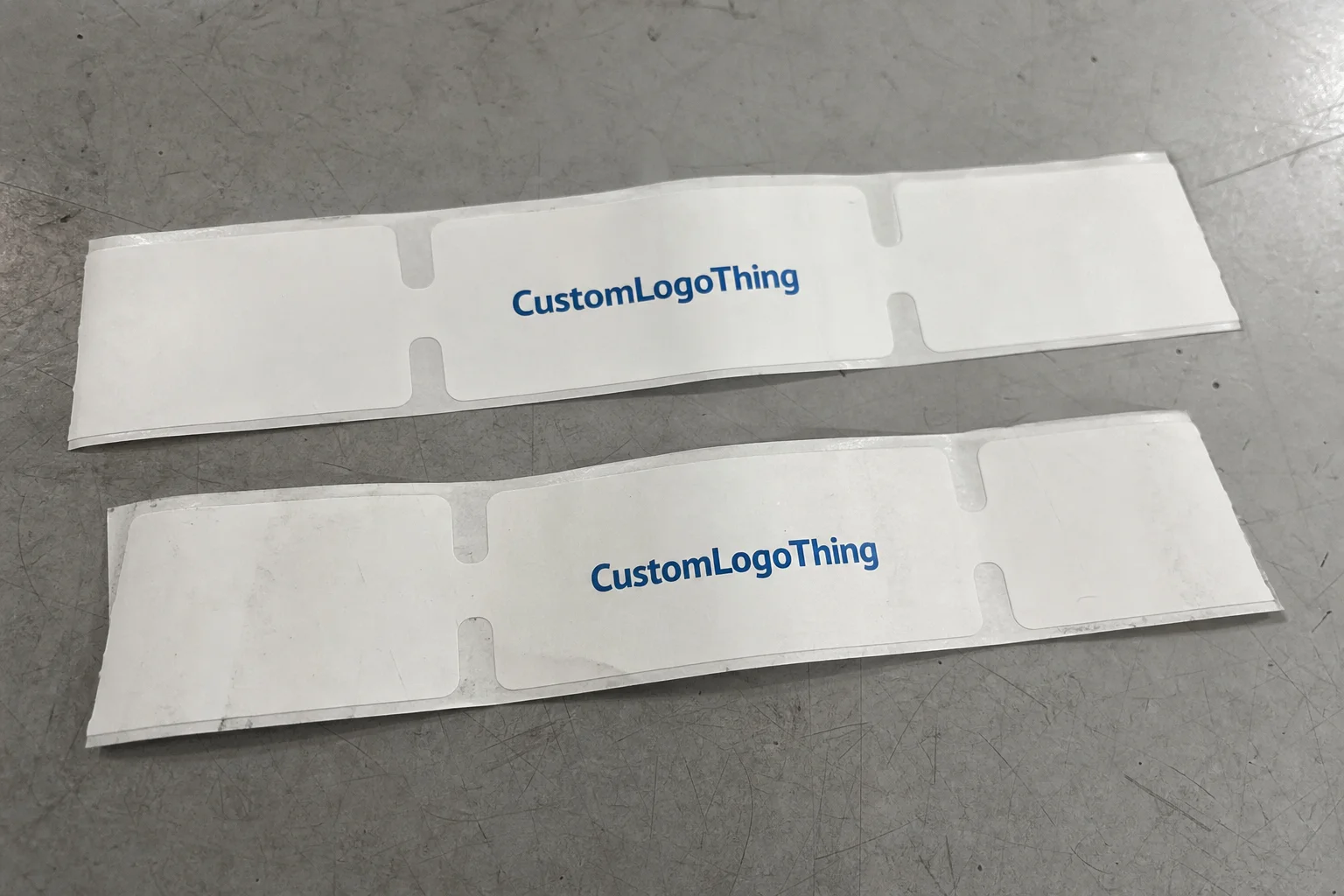
Cable confusion looks minor until several people are trying to solve the same problem at once. A rack full of black cords can appear organized and still be hard to manage if the labels are missing, faded, or inconsistent. One wrong disconnect can interrupt an AV setup, confuse an IT repair, or send a technician down the wrong line of troubleshooting.
The hidden cost is rarely the first mistake. It is the follow-up labor: the second person checking the first person’s work, the minutes spent tracing a cable end to end, and the repeated handling that happens because no one fully trusts a vague marker on tape. For buyers comparing custom cable labels with handwritten flags or office stickers, the real question is how much time one clear label saves over the life of the cable.
Custom cable labels are identification tags, wraps, or flags designed to stay readable on cords, bundles, and connectors. They can show the cable’s function, destination, asset number, owner, or room location. The better versions hold up on curved jackets, inside tight cabinets, under desks, and on equipment that gets touched far more often than anyone expected.
Common use cases are easy to spot once you look for them. AV carts need fast visual identification. IT closets need structured naming. Office workstations need clean relocation support. Warehouse equipment needs durable asset marking. Field service kits and medical devices need traceability that survives handling. A label system can also support broader visual standards, especially where product packaging, retail packaging, or package branding need to feel consistent across multiple touchpoints.
If a cable label cannot survive wiping, flexing, and rearrangement, it is not really a labeling system. It is a temporary note with a longer life than it deserves.
The biggest surprise for many teams is how much time gets lost to cables that are “almost labeled.” A strip of tape with a name written in marker feels fast and inexpensive. Then it fades, lifts, or gets covered in dust, and every move becomes a verification exercise. Good Custom Labels & Tags solve a practical problem first and a presentation problem second.
How the production process and turnaround actually work
Most buyers want two answers up front: what information do you need from me, and how long will this take. The workflow is usually straightforward. It starts with a quote request, moves into artwork and data review, then proofing, production, finishing, and shipment. The cleaner the input, the faster the order moves.
For custom cable labels, the file side matters more than people expect. Suppliers usually need cable names, numbering logic, barcode data if applicable, logos, color rules, and a clear sense of where the label sits around the cable or connector. If every label is identical, the artwork is simple. If there are hundreds of variable entries, the spreadsheet becomes the real production file.
Proofing is where delays usually show up. A digital proof should show size, content, placement, and, when needed, color intent. Buyers should check spelling, sequence, abbreviations, barcode readability, and whether the content still works at the actual label size. A proof is not a courtesy step. It is the last inexpensive place to catch an expensive mistake.
Turnaround depends on several variables. Straightforward repeat orders on standard materials can move quickly. Larger runs with variable data, special finishes, or unusual shapes take longer. For a clean file and prompt approval, a common production window is around 7 to 15 business days after proof approval for simple jobs, though complex variable-data work can run longer if the content needs cleanup.
Rush work usually fails for predictable reasons: incomplete artwork, inconsistent naming, or a spreadsheet change after proofing has already started. The best orders are not only well designed. They are well prepared. Buyers coordinating Custom Packaging Products often use the same discipline for labels, inserts, and outer cartons because one naming system keeps the whole approval process moving.
If you want a useful benchmark, compare suppliers on process rather than speed alone. Ask how they handle proof revisions, whether they accept variable data in CSV or Excel, and how they confirm barcode content. For labels tied to shipping kits or stored equipment, standards thinking helps too. Packaging teams often reference ISTA for transport stress and packaging.org for broader industry practices, even when the item itself is small. That habit usually leads to a better spec.
Materials, adhesive, and durability factors that change performance
Material choice decides whether a label is still readable next month or already failing by then. For cable work, the common options include vinyl, polyester, laminated stocks, writable surfaces, self-laminating formats, flag labels, and wraparound styles. Each solves a different problem. None is best in every setting.
Custom cable labels on smooth indoor cords can often use lighter stock, but flexible jackets, textured surfaces, and moving bundles need better adhesion and stronger abrasion resistance. Adhesive matters as much as print quality. A crisp print on the wrong adhesive still fails if the label curls at the edge or shifts after a few handling cycles.
Environmental stress is what separates a mockup from a working label. Heat, moisture, cleaning chemicals, UV exposure, and repeated flexing all affect performance. A label that works on a desk cable may fail on a cart wiped daily or on field equipment stored in a hot van. The harshest condition should drive the spec, not the average one.
Size and format matter more than buyers expect. A wraparound label gives more readable area than a tiny sticker. A flag label stays visible on rounded surfaces. A self-laminating label protects the print zone from abrasion. Heat-shrink formats are useful when the goal is a more permanent ID on a cable that will not be moved much. The practical rule is simple: choose the format that keeps the text readable after the cable has been handled, not just after the proof is approved.
FSC-certified paper is not the usual choice for rugged cable applications, but it becomes relevant when labels are part of a broader product packaging or retail packaging program. If the label is used on a kit insert, equipment pack, or carton system, sourcing can matter. For fiber-based materials, check FSC if your sustainability policy requires it. For adhesion claims, ask whether the supplier has tested peel performance using a standard such as ASTM D3330. That gives you a more honest comparison than “sticks well” ever will.
Labels are often designed in isolation from the rest of the packaging system, and that is a mistake. The typography on custom cable labels, the numbering on Custom Printed Boxes, and the color logic in package branding should feel related. When the visual system is consistent, people make fewer errors because the signal is familiar.
| Label format | Best for | Typical unit cost at 5,000 pieces | Performance notes |
|---|---|---|---|
| Wraparound vinyl | Indoor IT and AV cables | $0.12-$0.22 | Good readability, moderate durability, efficient for simple ID text |
| Self-laminating polyester | Frequent handling, abrasion, and field service | $0.18-$0.32 | Better protection for printed content, higher material cost |
| Flag label | Curved cables and tight connector areas | $0.20-$0.35 | More visible face area, useful when text needs room |
| Heat-shrink | Permanent identification on critical cables | $0.25-$0.50 | Strong permanence, but installation requires heat and process control |
Cost, pricing, MOQ, and quote variables buyers should compare
Pricing is not only about unit cost. It is about total order cost, including setup, proofing, file prep, and the labor that shows up when a label fails and has to be replaced. For custom cable labels, the biggest cost drivers are material, print method, quantity, color count, variable data, finishing, and how the labels are packed for use.
MOQ changes the math. A smaller run usually costs more per label because setup is spread across fewer pieces. Larger repeat orders usually lower unit cost, but only if the spec stays stable. If the first order includes special numbering, a logo, and a laminated finish, the initial price can look high. That does not automatically mean the supplier is expensive. It may only mean the setup burden is sitting on the first order.
Setup fees, plate charges, and file-prep charges can matter more than many buyers expect. On a first order, those fees can dominate the budget. On a reorder, the same supplier may be more competitive because the tool is already built and the proof has already been approved. That is why it pays to ask whether you are comparing a one-time order or a repeat program.
Buyers should request apples-to-apples quotes. Same dimensions. Same stock. Same adhesive. Same finishing. Same data structure. Otherwise, the quotes are just numbers on paper, not a useful comparison. If one supplier offers a lower unit price but uses a weaker adhesive or a slower proof process, the cheaper quote can become the more expensive choice after the first install failure.
The real tradeoff is low upfront price versus lower labor risk. A label that peels off a bend in the cable costs more than the label itself. Someone has to find the issue, replace it, and explain why it was not caught sooner. In packaging terms, the same logic applies to branded packaging and retail packaging. A spec that reduces rework usually wins even if the line item is a little higher.
For planning, a simple variable-data job on standard stock may land around $0.10-$0.20 per piece at volume, while more durable or specialized formats can move into the $0.25-$0.50 range depending on quantity and print coverage. Those numbers are directional only. Exact pricing depends on dimensions, coverage, and whether the order is a one-off or a repeat. Still, they are useful enough to keep the conversation grounded.
Step-by-step ordering workflow for cleaner approvals
A cleaner order usually begins before any design work. Start with a short inventory audit. Identify every cable type, destination, owner, or equipment group that needs labeling. If the naming is inconsistent now, fix the naming rules before artwork begins. Otherwise, the label system will just reproduce the confusion in a more polished font.
Next, build the data file. Put all variable text in one spreadsheet or structured file. Keep names, numbers, barcodes, and locations in separate columns. That sounds tedious, but it is the fastest path to fewer proof corrections. A clean spreadsheet saves more time than a phone call ever will.
Then choose the material and format based on the environment. If the cable bends often, favor wraparound or flag styles. If the surface is dirty or textured, ask about adhesive strength and surface prep. If the label must stay readable after handling, add a laminate or a self-laminating face. The goal is to match the label to the actual job, not to the prettiest mockup.
At proof review, check the boring details. Spelling. Numbering logic. Barcode content. Color hierarchy. Placement around connectors. If the proof is for a warehouse or service team, confirm that the identifiers match the way the team already speaks about the asset. That is one of the easiest ways to avoid a system that looks tidy but is awkward to use.
Finally, plan the reorder now, not later. Keep the approved artwork, the material spec, and the master spreadsheet in the same folder. When new rooms, new devices, or replacement cables enter the system, the reprint should not require a brand-new spec. Good custom cable labels are part of an operating system. They are not a one-time print job.
That mindset is familiar to anyone managing product packaging or packaging design. The strongest programs do not depend on memory. They depend on a repeatable file structure, consistent approvals, and a controlled visual standard that can scale across custom cable labels, Custom Printed Boxes, and related package branding assets.
Common mistakes that make labels fail in the field
The first mistake is usually size. If the text is too small to read once the label is wrapped around a cable, the label failed before it left production. Visibility on a screen is not the same as visibility under a desk or behind a rack.
The second mistake is inconsistent naming. If one department uses abbreviations and another uses full names, the label system becomes a translation exercise. That reduces the value of the whole program because the same cable can end up with two valid-looking names and one confusing reality.
Adhesive selection is another common failure point. A label can look excellent and still slide off a curved or dirty surface. Buyers often underestimate the effect of surface texture, temperature, and handling frequency. That is where sample testing earns its keep. For special applications, a short trial run is cheaper than a full reprint.
Dense label content causes trouble too. Too many lines. Too many codes. Too much explanation. The eye cannot prioritize the right information if everything is competing for attention. Strong hierarchy works better: one primary identifier, one secondary detail, and only the necessary support data. That principle holds in retail packaging as well, where the strongest design is often the one that communicates faster, not the one that says the most.
And then there is the skipped proof. One digit off can send a technician to the wrong cable or misfile an asset record. That is not dramatic. It is routine. A sloppy proof process creates routine errors, which is exactly why it deserves discipline. On jobs tied to field kits or transport packs, some buyers also ask whether the label system has been considered against EPA material and waste guidance when sustainability reporting is part of procurement. That is not always required, but it is increasingly part of the buying conversation.
Expert tips for better results and faster reorders
Use color as a secondary cue, not the only identifier. Colors help people sort quickly, but they fade in low light, vary by screen calibration, and can be misread under poor office lighting. The text still has to do the real work. A color-coded label without readable copy is only a hint.
Keep the naming convention short enough to scale. Long names look precise until they are squeezed into a 1-inch label. A tighter structure usually works better: location, function, asset number, or department, in a fixed order. Once teams learn the pattern, they can read it faster and make fewer mistakes.
Maintain a master file with approved dimensions, text rules, material choices, and contact notes. This is the difference between a controlled reorder and a fresh start every time. If a supplier changes, that file should still be enough to reproduce the label without rewriting the spec from scratch. Buyers save the most time when the spec sheet is treated like an asset, not an attachment.
Ask for a sample or short test run when the surface is unusual. Silicone-heavy jackets, dusty equipment, and heavily curved cables can defeat a label that would have been fine on standard PVC. A little test work avoids the expensive surprise of a full run that does not hold.
Build a buffer quantity into the order. People lose labels, add equipment, and move things around. That is normal operations. If you order exactly what you need for day one, you will usually pay more later for a second, smaller run. A modest overage is often cheaper than a patchwork reorder cycle.
The last point is simple but practical: treat labels like a system, not a commodity. The cheapest sticker on paper is not the same thing as a durable identification program. Strong custom cable labels help teams move faster, reduce errors, and keep the inventory legible long after the first installation is complete.
Next steps for a stronger label spec and order
If you want a better order, start with one active cable bundle or workstation and document what is actually happening there. What is the environment? How often is it touched? What size can fit? Who needs to read it? That quick audit reveals more than a generic request ever will.
Build a one-page spec sheet with dimensions, material, adhesive, data format, quantity, and application conditions. Keep the language plain. If the label needs to survive frequent handling, say so. If the cable jacket is textured or flexible, say so. If the naming must match a numbering system already used in package branding or broader product packaging, say that too.
Then collect the variables in one clean spreadsheet and send the same spec to every supplier you are comparing. That gives you a true comparison, not just a pricing headline. From there, approve the proof carefully, keep the approved files together, and assign one person to own naming and reorder continuity. That governance step matters more than most buyers realize.
For companies that already care about branded packaging, labels should not be treated as an afterthought. The same discipline that improves custom printed boxes, insert cards, and Custom Labels & Tags will improve cable identification too. When the system is consistent, the team spends less time interpreting and more time working. That is the real value of custom cable labels.
What information should I provide when ordering custom cable labels?
Provide cable names, numbering logic, sizes, material preferences, quantity, and any barcode or logo requirements. Include the surface type and environment so the supplier can recommend the right adhesive and durability level. If every label is not identical, share a spreadsheet for variable data.
Which label format works best for curved or moving cables?
Wraparound and flag styles are common because they stay visible and are easier to read on rounded surfaces. Choose a format with enough surface area for the text, not just the minimum size that fits. Ask for a sample if the cable bends often or gets handled frequently.
How do pricing and MOQ usually affect a first order?
Lower quantities often cost more per label because setup and proofing are spread across fewer pieces. MOQ can change the price break, so compare total order cost as well as unit cost. Variable data and special finishes usually raise the first-order price more than a simple repeat job.
How long does the process usually take from proof to delivery?
Lead time depends on file readiness, approval speed, quantity, and production complexity. Clean artwork and a complete spreadsheet shorten the process more than almost any other factor. Rush orders are possible in some cases, but missing data usually delays them anyway.
What mistakes should buyers avoid when creating cable labels?
Do not use text that is too small, inconsistent naming rules, or materials that cannot handle the environment. Avoid skipping proof review because a single typo can undermine the whole labeling system. Do not assume one label format works for every cable type or application surface.


