A custom canvas makeup bag has to do more than hold cosmetics. It has to look credible next to the product, hold up in transit, and still feel worth keeping after the first use. That sounds simple until you compare it with the usual alternatives: thin vinyl that feels disposable, rigid cases that eat the budget, or soft pouches that collapse into a wrinkle if the spec is sloppy.
Canvas sits in a practical middle lane. It gives you texture, structure, and a better print surface than most glossy synthetics. It also behaves well in retail programs because the bag can work as packaging, an accessory, and a repeat-use item without forcing a luxury price point. For beauty kits, travel sets, subscription boxes, and checkout bundles, that combination is hard to beat.
The catch is that the bag only works if the details are right. Canvas weight, zipper quality, lining, artwork method, and seam construction all change how the finished piece feels in the hand. Buyers often focus on the logo first. That is backwards. The logo matters, but the bag earns its value through construction.
What a custom canvas makeup bag solves on the shelf
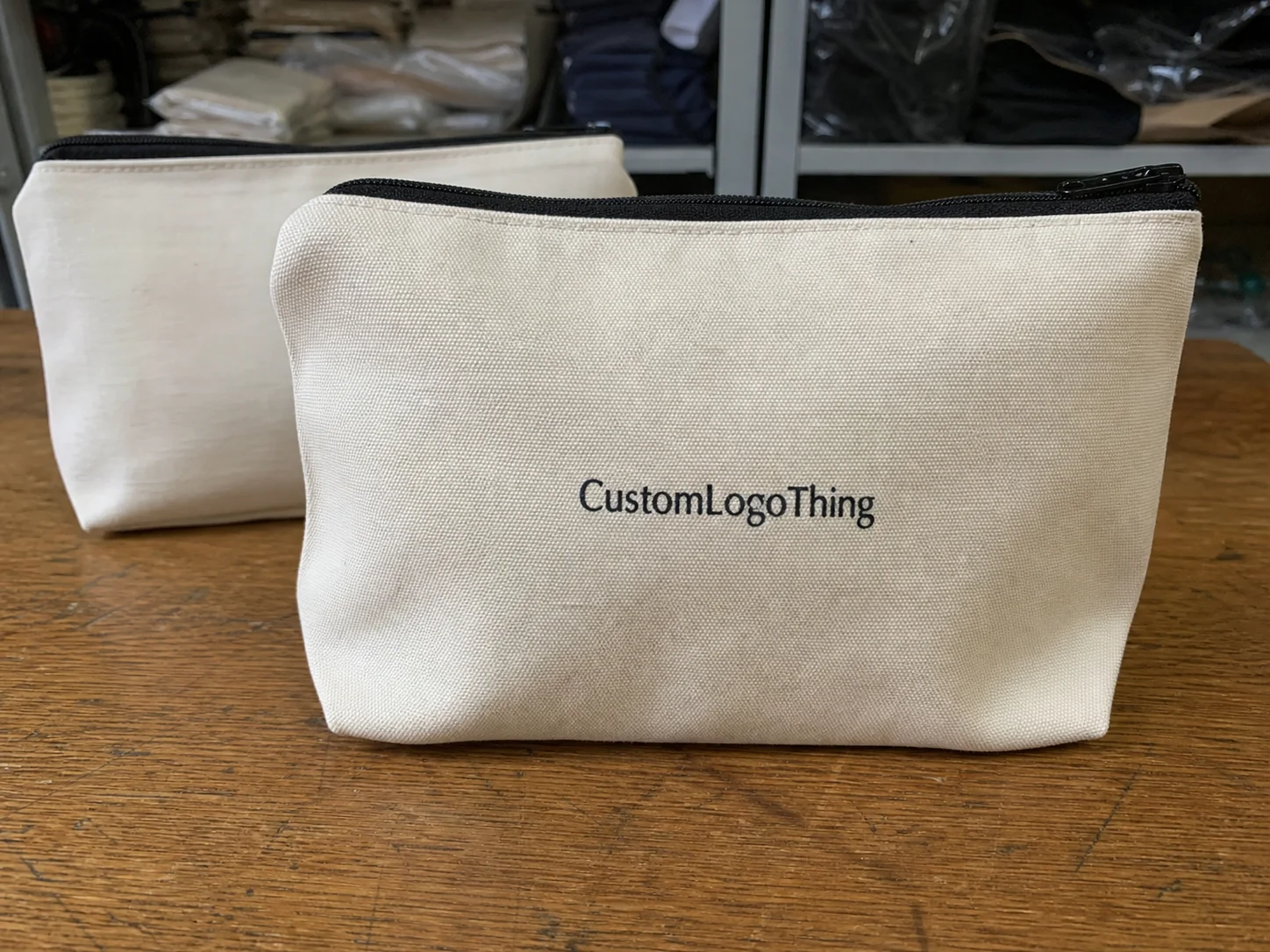
A basic pouch just contains product. A custom canvas makeup bag carries a brand message without needing a separate sales pitch. It looks more deliberate than a flimsy cosmetic sleeve and less expensive than a molded case, which makes it a useful format for beauty brands that need something practical and presentable at the same time.
That matters in several common setups. Gift sets need packaging that feels generous without blowing up the budget. Retail add-ons need something easy to understand at a glance. Influencer mailers need a piece that photographs well but does not feel like throwaway merch. Travel kits need a container that can be reused after the original product is gone. Canvas works across those use cases because the material reads as durable, casual, and familiar.
The hand feel is part of the value. A canvas pouch has a texture buyers can notice immediately, and that texture tends to make a brand feel less synthetic. Natural cotton canvas, brushed canvas, and blended canvas fabrics all soften the look of artwork compared with high-gloss materials. Simple logos and line art usually benefit from that. Loud designs can work too, but the fabric should support the visual direction instead of fighting it.
A good pouch also behaves like packaging without feeling disposable. That is useful for brands trying to build repeat exposure. If someone keeps the bag in a bathroom drawer, carry-on, or gym tote, the branding keeps working after the initial sale. A weak pouch vanishes. A decent one stays in circulation.
“A pouch that feels sturdy in the hand usually does more branding work than a louder design that feels cheap after one use.”
For teams already buying Custom Packaging Products across multiple launches, a makeup bag can fit into the same packaging system without creating a new visual language. That matters more than people think. Consistency across inserts, boxes, pouches, and accessories makes a brand look organized instead of improvised.
How the construction affects print, structure, and feel
Most of the variation between one canvas pouch and another comes down to construction. Fabric weight is the first decision. An 8 oz canvas can work for a light promotional pouch, but a 10 oz to 12 oz build usually gives better body for beauty tools, skincare items, and travel use. Once the bag needs to hold bottles or stand upright, lighter fabric starts looking cheap fast.
Gusset depth changes the profile just as much. A flat pouch is fine for compact items, but it does not organize volume well. Add a base gusset and the pouch starts behaving like a real container instead of an envelope. That is useful for kits with brushes, palettes, or mixed-size items because the contents stop forcing the zipper open at odd angles.
Lining is where many projects get lazy. An unlined bag is cheaper and simpler to sew, but the inside can feel rough and unfinished. Loose fibers, visible seams, and awkward corners are the usual complaints. A lined custom canvas makeup bag feels more retail-ready because it holds shape better and hides the structural mess that buyers notice once they open it. If the pouch is meant to feel premium, lining is usually worth the cost.
Zippers deserve more attention than they usually get. Metal teeth can read as premium, but a nylon coil zipper often runs smoother and costs less. What matters more than the material is whether the zipper tracks cleanly, matches the bag width, and closes without snagging at the corners. A bag with a nice print and a sticky zipper still feels cheap. I would not approve a proof without checking the zipper path and the pull-tab size.
Decoration choice changes both the look and the wear pattern. Screen printing is strong for bold logos, flat color blocks, and text that needs clean edges. Embroidery adds texture and a stronger tactile signal, but it is a poor fit for tiny type or fine gradients. Heat transfer can carry more detailed artwork, although it needs to be checked against fabric texture and expected handling. Woven labels and stitched patches work well if the brand wants a quieter finish.
Canvas texture is not neutral. A rough weave can give a natural look, but it also softens edges and blurs small details. Dark canvas makes light logos pop, yet it also shows weak contrast decisions immediately. The safest approach is to review artwork on the actual fabric or on a close physical sample, not just on a screen where everything looks cleaner than it will in production.
| Build choice | Typical effect | Best fit |
|---|---|---|
| Unlined canvas pouch | Lower cost, lighter weight, simpler sewing | Promo giveaways, short-run bundles |
| Gusseted lined bag | Better structure, cleaner interior, higher perceived value | Retail packaging, travel sets, gift sets |
| Embroidered or patch-branded bag | More tactile, stronger premium signal, slower production | Higher-end branded packaging |
For broader packaging terminology and material context, packaging.org is a useful reference. If the pouch is part of a shipped kit, transit expectations matter too, which is why ISTA testing guidance at ista.org is worth reviewing. The outer shipment still has to protect the set, not just the pouch.
Cost, pricing, MOQ, and what drives the quote
Pricing for a custom canvas makeup bag is usually driven by five variables: size, fabric weight, decoration method, finishing, and quantity. If those are fixed early, the quote becomes readable. If they keep shifting, the number becomes noise.
For a basic unlined pouch, a directional range of about $0.55 to $0.95 per unit is realistic at higher volumes, usually several thousand pieces. At smaller orders, especially around 300 to 500 units, the same spec can land closer to $0.90 to $1.60 because setup costs get spread across fewer bags. A lined gusseted version with cleaner finishing often moves into the $1.20 to $2.10 range, while embroidery, custom pulls, or retail-ready packing can push it higher.
MOQ matters because sewing and decoration have fixed setup work. Screens need preparation. Embroidery needs digitizing. Cutting layouts need approval. Thread colors, zipper tape, and seam allowances need confirmation before bulk starts. None of that disappears just because the order is small. Buyers sometimes expect a tiny run to cost proportionally less. It rarely does.
It helps to separate setup charges from unit cost. Artwork cleanup is not the same as making the pouch. Sample revisions are not the same as bulk sewing. Freight, cartons, inserts, and inspection add another layer. The number that matters is the landed cost, not the factory price on its own. A cheap quote can turn expensive once you add packaging, overage, and shipping.
If sustainability is part of the brief, ask specifically about the pieces that can be verified. FSC certification applies to paper materials, not canvas fabric. That means inserts, hang tags, cartons, and printed sleeves should be checked separately. The pouch itself may still be a smart choice, but the full packaging system has to be reviewed as a set.
| Option | Indicative unit cost | Main cost drivers |
|---|---|---|
| Basic printed pouch | $0.55-$0.95 | One-color print, unlined body, standard zipper |
| Mid-tier retail pouch | $1.20-$1.80 | Lining, gusset, better zipper, cleaner seam finish |
| Premium branded version | $1.80-$3.20 | Embroidery, patch, special trim, retail-ready packaging |
Those numbers are directional, not fixed. A heavier canvas, more complex artwork, or a color-matched zipper can move the price faster than most buyers expect. The quickest way to keep the quote stable is to lock the spec before asking for final pricing.
Production steps and timeline from proof to ship date
The cleanest orders follow a predictable sequence: inquiry, spec review, artwork check, proof or sample, approval, bulk cutting and sewing, decoration, inspection, and final packing. It looks linear on paper. In real projects, the delays usually come from missing measurements, unclear artwork, or a buyer changing the zipper, lining, or logo size halfway through sampling.
Simple stock-material runs move faster. If the canvas is standard, the zipper is standard, and the logo is a one-color print, production can move quickly once the proof is approved. A realistic range for many straightforward orders is about 12 to 15 business days after approval, not counting shipping. More complex builds take longer. Add lining, embroidery, special trim, or custom packing and the lead time usually stretches.
Sampling is the point where poor assumptions get expensive. A sample lets you check scale, hand feel, zipper action, seam symmetry, and inside finish before bulk production starts. A proof alone is not enough if the bag has any structural complexity. I have seen projects lose a full week because someone approved artwork without checking the actual pouch dimensions. That kind of mistake is boring and costly.
Good suppliers will also talk about inspection and handling. For larger programs, it is reasonable to ask how the bags will be checked for print alignment, stitch consistency, stain control, loose threads, and zipper function. Not every order needs lab testing, but the process should still include visible quality control. If the bag is part of a retail or e-commerce set, the finished piece should survive normal warehouse handling without looking tired before it reaches the customer.
Freight also deserves a mention. Flat packed pouches ship efficiently, but if the bag is boxed with inserts or nested inside another product, the packing plan changes. That affects both timing and cost. A project that looks simple in the sample stage can slow down once the full packaging sequence is defined.
Common mistakes that cause weak branding or waste
The easiest mistake is sizing the bag by guesswork. A pouch that is too small feels cramped, which makes the contents look worse. A bag that is too large can look sloppy even if the print is perfect. Start with the actual contents: brushes, compacts, lip products, minis, or a full travel set. Then add enough room for comfortable opening and a zipper path that does not crush the items inside.
Artwork problems usually come next. Oversized logos, low-resolution files, and weak contrast are the fastest ways to make a good bag look cheap. Textured canvas is not kind to tiny type. Fine lines can fill in. Small reverses can disappear. If the art depends on precision, the decoration method has to support that reality. Screen printing likes clean shapes. Embroidery likes simplified forms. Heat transfer can handle detail, but only if the fabric and use case make sense.
Buyers also undervalue the parts people touch. The zipper, seam finish, and lining affect perception more than a lot of branding decks admit. A clean logo does not rescue a bag that snags, puckers, or opens unevenly. Reinforced seams and stable zipper tape matter because the bag will be opened and closed many times, not just photographed once.
Skipping samples is another familiar trap. It feels efficient. It usually is not. A sample gives you a chance to verify the hand feel, logo scale, seam quality, and internal finish before bulk production starts. If the pouch is intended for checkout, gifting, or retail display, the sample is the cheapest insurance policy in the project. It is also the easiest place to catch a weak zipper or a bad contrast choice before the whole run is committed.
One more common waste point: overdesign. Some briefs try to force too many effects into one small pouch. Heavy artwork, layered patches, contrast stitching, custom trim, and a decorative pull can crowd the surface and make the bag feel busy. A clean, well-built pouch usually performs better than a decorated one that has no clear visual hierarchy.
Expert spec choices for better durability and decoration
If the bag needs to hold brushes, skincare bottles, or mixed travel items, a slightly heavier canvas is usually the right call. The extra body helps the pouch keep shape and improves print appearance. For display use, that structure makes a real difference. The bag looks finished instead of limp.
Simple branding is often stronger branding. A high-contrast print on canvas creates a clean retail look. A stitched label or small patch adds texture without taking over the entire surface. Embroidery can feel premium, but it should be used where it can stay legible. Tiny text in thread is a bad idea. It looks fuzzy, and no one needs that problem.
Small hardware details matter more than they should. A matching zipper tape can make the whole piece feel calm and intentional. A contrast zipper can add energy. Pull-tab shape, seam allowance, and bar-tack placement all change the perceived quality. If the pouch will be used daily, ask about stress points near the zipper ends and the base corners. Those are the spots that fail first when the construction is weak.
Interior finish is another useful checkpoint. If the bag needs to be wipeable, ask for a smoother lining or a coated interior. If the pouch will hold cosmetics that can leak, be honest about the limitation. Canvas is not waterproof. It can be built to be more forgiving, but it is still a sewn textile bag, not a leakproof case. That distinction matters and should be stated plainly.
For brands building a broader accessory line, it helps to compare pouch specs against the rest of the packaging set in Custom Packaging Products. The logo treatment, material tone, and finish should feel like they belong together. A custom canvas makeup bag should not look like a side project.
Next steps to request a cleaner quote and faster approval
The fastest quote starts with a complete brief. Send the exact dimensions, target quantity, artwork file, preferred decoration method, and ship date. If you already know the use case, include that too. A pouch meant for brushes is not the same as a pouch meant for bottles, and a pouch meant for a gift set is not the same as one meant for loose retail sale.
A good brief should also include a few practical details: whether the bag needs lining, whether it should stand up, whether the zipper should match or contrast, and whether the final pack-out includes inserts, tissue, or a carton. Those details sound small, but they change both pricing and production time.
- Exact finished size
- Target quantity and any reorder expectations
- Canvas weight or fabric feel preference
- Decoration method and logo file type
- Lining, gusset, and zipper preferences
- Packing format and freight assumptions
Before approving the order, confirm MOQ, sample Cost, Lead Time, and what is included in the quote. Ask whether inspection is built in, whether packaging is included, and whether freight is separate. Those are the items that tend to move the landed cost more than a small change in the unit price. Buyers comparing pouch programs, Custom Printed Boxes, and bundled kits should look at the full cost stack, not just the lowest line item.
A well-specified custom canvas makeup bag is efficient because it does several jobs at once. It packages the product, supports the brand, and gives the buyer something useful enough to keep. That only happens when the construction matches the use case and the artwork respects the material. Approve the proof on that basis, not on the hope that a good logo will carry a weak build.
What size should I choose for a custom canvas makeup bag?
Start with the items the bag needs to hold. Compact cosmetics need less depth than brushes, minis, or travel bottles. Common formats range from small flat pouches to gusseted bags that can sit upright. If the bag needs to hold mixed items, leave enough room for the zipper to close without pinching the contents.
Which print method works best on canvas cosmetic bags?
Screen printing is usually the cleanest choice for bold logos and solid-color art. Embroidery adds texture and a premium feel, but it does not handle tiny text well. Heat transfer can reproduce detailed artwork, although the fabric texture and expected wear should be checked before committing to it.
What affects the unit cost of a canvas makeup pouch order?
Quantity, canvas weight, lining, zipper quality, decoration method, and finishing all affect pricing. Lower volumes usually cost more per unit because the setup work is spread across fewer pieces. Custom packing, rush timing, and special trims can add cost even when the pouch itself looks simple.
How long does production usually take for a custom makeup bag?
Simple runs can move quickly once artwork and proofing are approved. More complex orders with lining, embroidery, or custom hardware take longer. A realistic schedule for a straightforward project is often about 12 to 15 business days after approval, plus shipping time.
Can a custom canvas makeup bag be lined or wiped clean?
Yes. Many bags can include a lining that improves appearance and helps the pouch hold shape. If wipeability matters, ask for a smoother lining or a coated interior. Canvas itself is not waterproof, so the build should match the actual use case instead of pretending to do more than it can.

