When a buyer picks up a carton, the first thing they often touch is not the box itself. It is the tag. That small piece of paper or board can make a plain shipper feel deliberate, branded, and worth keeping. A skilled custom carton hang tags manufacturer understands that the tag is doing more than carrying a logo; it is shaping the first tactile impression of the package.
For brands balancing product packaging, retail packaging, and branded packaging, hang tags sit in a useful middle ground. They can identify a SKU, explain care instructions, carry a promotion, or authenticate a product without redesigning the whole carton. The same plain carton can read as generic or premium depending on stock, finish, and attachment style. That is not marketing fluff. It is how print perception works.
One practical reason these tags matter: they travel with the product through more hands than most teams expect. Warehouse staff touch them. Retail associates notice them. Customers often keep them nearby while opening the box. That repeated contact gives the tag a bigger visual job than its size suggests.
Why carton hang tags matter more than most brands realize
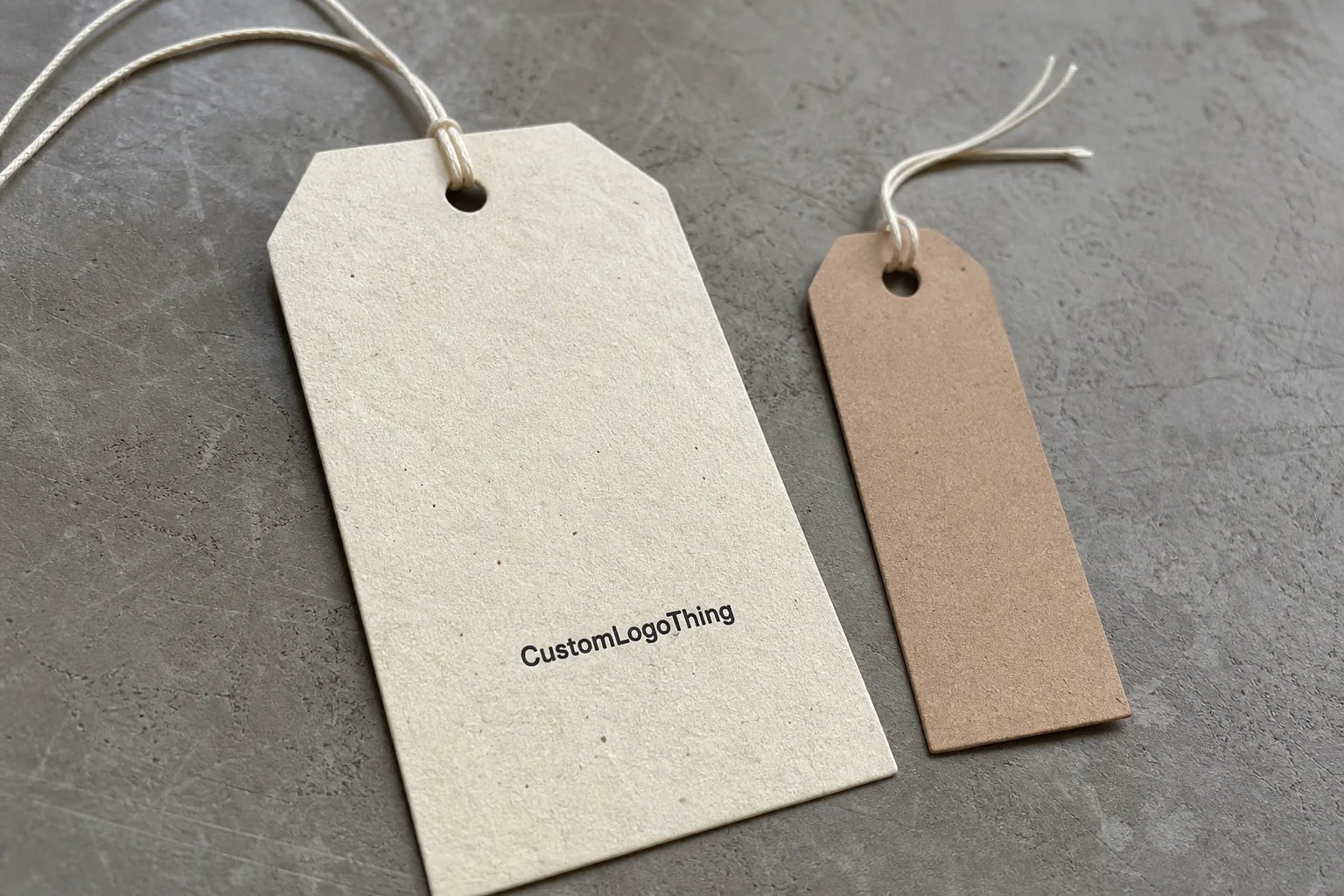
A carton hang tag does several jobs at once. It can carry a barcode, a short story, a seasonal message, a certification mark, or a tamper-evident cue. In practice, brands use them to bridge packaging design and operations. The operations team wants scannable data. Marketing wants a polished surface and clean typography. The best tags satisfy both.
Here is the part people underestimate: the hang tag is often handled more carefully than the carton. That extra contact time creates an outsized impression. A matte, thick tag on a rigid box can make the whole package feel more expensive. A thin, flimsy tag with weak print can drag down an otherwise strong package presentation.
A custom carton hang tags manufacturer typically produces printed tags designed to attach to cartons, mailers, or rigid boxes using punched holes, strings, twine, ribbon, eyelets, adhesive backs, or specialty fasteners. That flexibility matters. It means the tag can be a brand asset, not just an inventory label.
For ecommerce brands, tags also help unify custom packaging products across different formats. The same visual system can stretch from custom printed boxes to labels, inserts, and tags, which makes the whole package line feel more coherent. That kind of consistency is what buyers remember.
There is a second, less glamorous role too: error control. A hang tag can carry SKU data, country-of-origin details, handling marks, or batch information that helps keep fulfillment organized. When a packaging team has multiple SKUs moving at once, a clear tag can reduce pick errors and make carton identification faster on the line.
How a custom carton hang tags manufacturer turns a brief into finished tags
The process usually starts with artwork and a clear brief. Good manufacturers want the basics up front: size, quantity, material preference, attachment method, and where the tag will live in the packaging system. From there, the dieline gets selected or created, the file is checked, and a proof is generated. If the art file is messy, the project slows down immediately. Missing bleed, low-resolution logos, or incorrect barcode placement can add days.
Printing method depends on volume and finish. Offset is often better for larger runs where consistent color and sharp detail matter. Digital printing fits lower quantities, faster turnarounds, and variable data. Specialty finishing, such as foil stamping, embossing, spot UV, or soft-touch lamination, is usually added after print, once the base sheet is correct.
Material choice changes the feel more than many buyers expect. Coated paper gives crisp graphics. Uncoated stock feels more natural and writable. Textured paper adds a tactile signal that can support premium package branding. Recycled board helps if the brand is aligning with environmental messaging. The right choice depends on the product, not just the price sheet.
Attachment is another design decision, not an afterthought. A tag on twine looks different from a tag on a ribbon loop or an eyelet. Adhesive-backed formats can work well for short-term campaigns or internal logistics, but they will not deliver the same premium cue as a hang-style format. A good manufacturer checks that the tag actually sits correctly on the carton and does not obscure key artwork or handling instructions.
From a production-control point of view, the job is also about consistency. The tag should not look disconnected from the rest of the packaging system. A strong supplier will match color, typography, and material choices against the carton, label, and insert so the result feels intentional rather than assembled from separate projects.
Key specs that affect durability, branding, and unit cost
Price starts with the basics: size, stock thickness, print coverage, number of colors, finish, and attachment hardware. A simple 2 x 3 inch single-sided tag on standard coated stock costs far less than a custom die-cut tag with foil, matte lamination, and an eyelet. That sounds obvious, but many quote disagreements come from buyers comparing unlike specs.
Heavier board usually raises cost, yet it often lowers the risk of bending, scuffing, and reprints. That matters for retail packaging and high-touch categories such as apparel, beauty, and premium gifts. A tag that survives shipping and shelf handling can actually be cheaper over the full run than a lighter tag that arrives damaged or looks tired after one pass through fulfillment.
MOQ realities are tied to print method and finishing. Digital work may start at a lower quantity, sometimes in the 100 to 500 piece range depending on size and complexity. Offset and specialty finishing often push minimums higher, because setup costs need to be spread across more units. If a supplier offers a very low MOQ on a complex tag, ask what is being simplified.
There is also a tradeoff between simple and premium construction. A single-layer tag with one-sided print is efficient and clean. A laminated multi-layer tag feels richer, resists fingerprints, and can better protect color, but it adds cost and sometimes lead time. For consumer products with stronger margins, that upgrade can make sense. For commodity items, it may not.
The smart way to spec hang tags is to start with the product category and handling conditions. Will the carton travel through a warehouse, a retail shelf, or direct-to-consumer fulfillment? Will it be touched a lot? Will the tag need to hold barcode data or only brand messaging? Those questions should shape the spec, not the other way around.
Common material choices usually fall into a few buckets:
- Coated paperboard for crisp print and economical runs
- Uncoated stock for a natural look and writable surfaces
- Textured or specialty paper for a more tactile premium feel
- Recycled board for brands that need a more visible sustainability signal
- Laminated stock for added scuff resistance and richer color retention
| Tag style | Typical use | Relative cost | Best advantage |
|---|---|---|---|
| Single-sided coated stock | Basic branding and SKU identification | Low | Fast to produce and economical |
| Double-sided premium stock | Retail-ready product packaging | Medium | More messaging space and better feel |
| Laminated or soft-touch tag | Luxury or high-touch brands | Higher | Better durability and a richer tactile effect |
| Die-cut specialty shape | Campaigns and strong visual differentiation | Higher | Distinct shelf presence |
Cost, pricing, MOQ, and quote basics you should compare
Quotes are usually built from several line items: setup or prepress, printing, material, finishing, packaging, and freight. That means two bids can look similar on paper and still land at very different totals. One supplier may include proofing and carton packing; another may charge separately. One may quote a longer lead time with standard shipping, while another quietly prices in a rush schedule.
For that reason, apples-to-apples comparison is nonnegotiable. Ask each custom carton hang tags manufacturer to quote the same stock, size, color count, finish, attachment method, and delivery terms. If the proposal says “premium paper” without a GSM or point thickness, push for specifics. A quote is only useful when the spec is clear.
Here is a practical range that buyers often see: simple paper tags may fall around $0.08-$0.18 per unit in moderate runs, while thicker or finished tags can land around $0.18-$0.45 per unit depending on quantity and complexity. Smaller orders usually cost more per piece. Larger orders generally lower the unit price because setup costs get spread out.
Hidden drivers matter too. Custom die shapes, metallic inks, foil, perforation, variable data, and specialty folds can all raise the total. Rush orders almost always cost more. If a project needs a hard launch date, it is usually cheaper to confirm artwork early than to pay for late corrections.
One more useful detail: packaging can affect freight. Flat tags pack efficiently, but if the tags are pre-threaded, bagged, or bundled by SKU, labor and packing cost rise. That may be worth it for internal operations, especially if the tags are being kitted with cartons and other custom labels & tags.
If you want a cleaner buying process, compare these points in every quote:
- Stock type and thickness expressed in GSM, point, or caliper
- Print method and whether color matching is included
- Finish such as matte, gloss, soft-touch, foil, or spot UV
- Attachment method including string, twine, eyelet, or adhesive
- MOQ and how it changes the per-piece price
- Shipping terms and whether freight is prepaid, added later, or excluded
Production steps, proofing, and turnaround: what the timeline really looks like
The workflow usually follows a familiar path: RFQ, file review, proof approval, sampling if needed, production, finishing, inspection, and dispatch. Straightforward orders can move fast. Complex ones slow down when artwork needs cleanup or the tag spec changes after the quote. In practice, the schedule is often determined more by the buyer’s approval speed than by the machine time itself.
Artwork readiness matters more than almost anything else. If the dieline is missing, or if the logo is not placed at safe margin, the manufacturer has to pause. Low-resolution files create a second problem: even if the design looks fine on screen, it may print soft or jagged. That is how a “simple” tag turns into a revision cycle.
Standard production for simple tags might take roughly 7 to 12 business days after proof approval. More complex jobs, especially those with specialty finishes or custom shapes, may need 12 to 18 business days or more. Express service can shorten the clock, but it usually requires fast artwork approval and a higher fee. If the tag launch is tied to a seasonal product, that premium may be worth it. If not, it can be an unnecessary cost.
Revisions add time. A good rule is to approve the digital proof or physical sample quickly and limit comments to actual problems, not preferences that could have been decided earlier. I have seen teams lose several days arguing over minor type shifts that were not visible on the finished product.
“The cleanest production schedules are the ones where the buyer sends a complete brief the first time. That one habit saves more money than hunting for the lowest quote.”
Packaging coordination also matters. A hang tag that arrives after cartons are printed can stop a launch, even if the tags themselves were produced on time. For brands running multiple SKUs, the schedule should be aligned with carton production, fulfillment windows, and warehouse intake. If the packaging mix includes custom printed boxes, inserts, and tags, the handoff between suppliers needs to be planned early.
One more constraint usually gets missed: inspection standards vary. Some suppliers only do visual checks for print quality and trim; others also verify barcode readability, hole placement, registration, and packaging count. If the tags are being used in a retail or warehouse environment, a written inspection checklist is worth asking for before production starts.
How to order the right carton hang tag without costly revisions
The cleanest ordering process is simple: define the use case, choose the size and stock, confirm the artwork, request a proof, approve a sample if needed, then lock production. That sequence sounds basic, but it prevents the most common mistakes. A tag for a shipping carton is not the same as a tag for a luxury retail box. The context changes the spec.
When briefing a custom carton hang tags manufacturer, send practical details. Include the product dimensions, carton material, target audience, brand colors, barcode requirements, and attachment preference. If the tags need to coordinate with existing packaging, include photos or dielines of the carton and any inserts. The more the manufacturer knows, the fewer assumptions they need to make.
It helps to create a one-page spec sheet, especially for brands with several SKUs. Standardize the core layout, then vary the fields that truly need to change: SKU, shade name, size, barcode, or promotional message. That approach keeps brand consistency intact while reducing tooling complexity and repeat-order confusion.
Requesting a sample or mockup is smart whenever the packaging is premium, highly visible, or tied to retail launch timing. A tag that seems fine on screen may feel too small, too thin, or too glossy in hand. Physical review catches that early. And if the project is connected to a larger packaging system, it can also help align the tag with About Custom Logo Things and the rest of the brand’s package branding.
Build in buffer time. Shipping delays happen. Files get corrected. Approvals sometimes wait for a manager who is traveling. If the launch date is real, the schedule needs slack. Brands that plan for one extra week usually stress less and pay fewer rush fees.
For teams managing multiple product lines, a useful habit is to keep a master spec archive. Save approved artwork, final dielines, finish notes, and the last quoted pricing in one place. That makes repeat orders faster and reduces the risk of ordering the wrong version after a redesign.
Common mistakes brands make when buying hang tags
The first mistake is choosing the wrong stock weight. Too light, and the tag bends or feels cheap. Too heavy, and you may overpay or make the tag awkward on the carton. The second mistake is overcrowding the layout. A hang tag has a job, and cramming in too much copy usually weakens the design instead of improving it.
Another common issue is ignoring how the tag actually hangs. If the punched hole sits too close to the edge, the tag can tear. If the attachment string is too long, the tag looks loose and random. If the placement blocks a logo or handling note, the package loses clarity.
Color and contrast matter more than buyers expect. Low-resolution logos, pale text on tinted stock, and thin fonts can all fail in print. Barcodes are another risk area. If the tag carries operational data, scan testing should happen before mass production. That small step can prevent a much bigger warehouse problem later.
There is also the lead-time trap. Custom shapes, foil, embossing, and seasonal demand can all stretch timelines. Brands often assume a tag is a small item, so it must be quick. Sometimes that is true. Often, it is not. The production chain still has prepress, setup, finishing, inspection, and packing.
Finally, do not optimize only for price. A cheap tag that wrinkles, scratches, or looks off-brand can weaken the perceived value of the product inside the carton. That is a strange way to save money. You end up paying twice: once for the tag, and again for the damage to the presentation.
Another avoidable problem is changing the brief after proof approval. A one-word edit can trigger a fresh prepress check, new plates, or a revised die line depending on the method. For small orders, that delay may be minor. For a launch-bound project, it can be the difference between making a window and missing it.
Expert tips for better specs, smoother ordering, and stronger results
My first recommendation is to give each tag one clear job. Ask whether it is primarily for branding, compliance, promotion, or authentication. Trying to do all four on one small piece of board often creates clutter. A cleaner tag usually performs better.
Second, standardize sizes across product families where you can. If one rectangular format works across several SKUs, repeat orders become faster and cheaper. Tooling is simpler. Inventory planning is simpler. And the brand looks more organized, which matters in both ecommerce and retail packaging.
Third, compare finishes in the actual environment. Matte can look elegant, but gloss may hold color better under bright lights. Soft-touch feels premium, yet it can show handling marks in some cases. Recycled stock supports eco positioning, though the surface may print differently than coated board. There is no perfect material. There is only the right one for the job.
Fourth, ask early about color matching, tolerances, storage conditions, and finishing limits. A manufacturer that handles these questions well is usually easier to work with later. If the supplier is vague on standard tolerances or does not explain how they handle color variation, that is a signal to keep asking.
One practical observation: a small upgrade in stock or finish can improve perceived value more than adding extra copy or another graphic element. A stronger tag often does more for package branding than a crowded layout ever could.
For brands comparing packaging vendors, the strongest results usually come from the supplier that understands the whole system, not just the tag. That is why pairing tag work with other custom packaging products can improve consistency across the shelf, the carton, and the unboxing moment. If the tag must be re-ordered later, a clean spec sheet, stored dieline, and approved sample can save more time than a discount ever will.
For standards and testing references, many packaging teams also look at ISTA for transit testing and FSC for responsible sourcing considerations. Those frameworks do not replace design judgment, but they help anchor decisions in something more concrete than preference alone.
FAQ
What should I ask a custom carton hang tags manufacturer before ordering?
Ask about MOQ, available materials, finishing options, proofing process, and typical turnaround. Confirm whether the quote includes setup, packaging, and shipping so you can compare suppliers accurately. Request examples of similar tag projects to judge print quality and finishing consistency.
How do I choose the right material for carton hang tags?
Match the material to the product environment: sturdy board for premium retail, coated stock for sharp graphics, recycled stock for eco-focused branding. Consider whether the tag needs to resist bending, moisture, handling, or shipping abrasion. Balance perceived quality against unit cost and print method.
What affects the cost of custom carton hang tags the most?
Size, paper thickness, print coverage, quantity, and finishing usually drive the biggest cost changes. Special shapes, metallic effects, laminations, and attachment hardware increase price. Lower quantities usually raise unit cost because setup costs are spread over fewer pieces.
How long does production usually take for custom hang tags?
Timeline depends on file readiness, proof approval speed, print method, and finishing complexity. Simple orders can move faster, while custom shapes or premium finishes add days. Rush service may be possible, but it often raises cost and requires immediate artwork approval.
Can carton hang tags be customized for different SKUs without redesigning everything?
Yes, many brands use a shared template with variable fields for SKU, size, color, or barcode data. Standardizing the core layout keeps branding consistent while reducing production complexity. Ask the manufacturer about variable printing or modular designs if you manage multiple products.


