custom cinch bags earn attention because they do several jobs at once: they carry items, keep a logo visible, and fold down into a format that is easy to store, ship, and hand out. That combination is more useful than it first appears. A box can protect a product, but a cinch bag can also become part of the presentation, part of the reuse story, and part of the brand impression that follows the recipient out the door.
From a buyer’s perspective, the appeal is practical. These bags are light to freight, compact in cartons, and flexible enough to work for conference packets, school kits, gym items, apparel, or retail purchases. They are not magical, and they are not automatically premium just because they carry a logo, but when the material, size, and decoration method match the purpose, they usually deliver solid value per impression.
That is where many orders either succeed or stumble. If the bag is treated like disposable swag, it usually looks disposable. If it is specified as part of the packaging system, it can support the product, reinforce brand color, and make the whole kit feel planned rather than improvised.
Overview: Why custom cinch bags are a practical handout with staying power
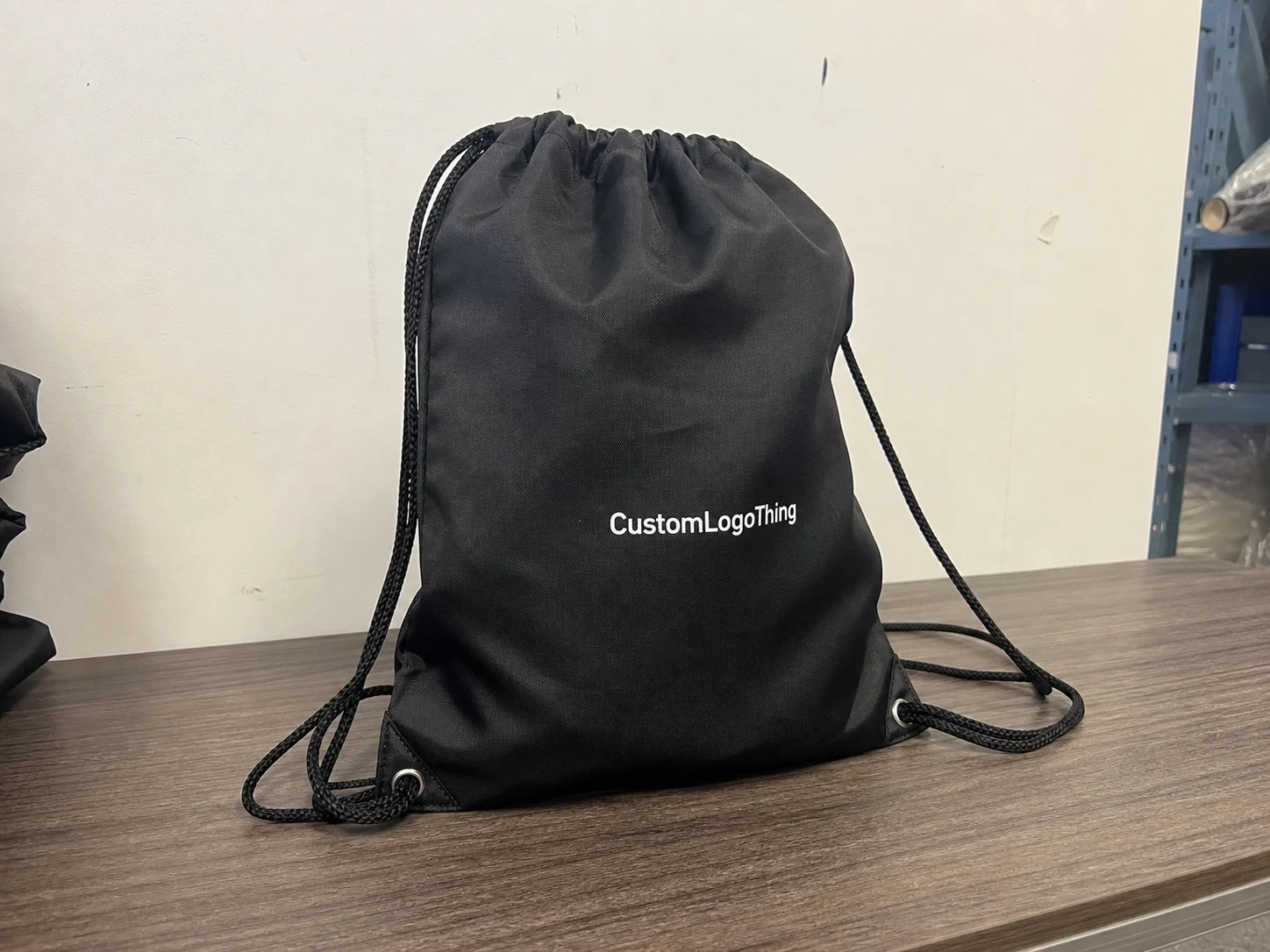
A cinch bag looks uncomplicated, and structurally it is. The usefulness comes from how little it asks of the user. Pull the cords and the opening closes; loosen them and the bag opens wide enough for fast packing. There are no zippers to snag, no hard frames to store, and no bulky parts to raise freight or warehouse costs.
That simplicity gives the format a wide range. A thin promotional bag can hold literature and small giveaways at a trade show. A more substantial version can handle shoes, apparel, or a bundled retail kit. In between, there is a long middle ground where the bag serves as branded packaging for onboarding, school programs, internal events, or seasonal promotions.
The word “custom” matters here because the same basic shape behaves very differently depending on fabric, cord, size, and print method. A lightweight nonwoven bag used for a one-day event is a different purchase from a cotton or rPET bag expected to be reused for months. Buyers who separate those use cases usually make better decisions and avoid paying for features the audience will never notice.
A good bag does more than hold items. It also carries color, texture, and a brand mark in a way that people handle directly, which makes the material choice and print quality part of the message.
If your kit includes other branded pieces such as Custom Packaging Products or product packaging inserts, the bag can help unify the presentation. That consistency matters because the recipient is not judging each item in isolation. They are reacting to the whole package.
How the drawstring closure, fabric, and print construction work
A drawstring bag is a straightforward build, but the details decide whether it feels flimsy or well made. Most styles use one or two body panels sewn along the sides and bottom, with a finished top channel for the cord. When the cord passes through the channel and exits at reinforced points, the opening closes and the straps form the carry system.
The fabric sets the tone first. Nonwoven polypropylene is common in lower-cost promotions because it is lightweight, economical, and easy to print. Polyester is often chosen for clean graphics and a slightly smoother hand. Cotton has a more natural feel and can read as more premium, though the cost and print options can be less forgiving. rPET, made from recycled plastic content, is a useful option when the buyer wants a more sustainability-forward material story without moving all the way into heavier woven constructions.
Print method matters just as much. Screen printing still makes sense for many programs because it handles bold logos, simple text, and spot colors efficiently. Heat transfer can support more detailed artwork, gradients, and multi-color graphics, though the feel and durability depend on the transfer type and substrate. Embroidery adds texture and a more finished look, but it is not the right answer for tiny type or highly detailed marks, and it can add weight to lighter fabrics.
Construction details are not cosmetic. The bottom corners, side seams, and cord exits take the most stress. If those areas are underbuilt, the bag can look acceptable on a table and fail once someone loads it with a water bottle, catalog, or hoodie. Stitch density, seam allowance, cord thickness, and reinforcement at the exits all affect how the bag performs under real use.
For buyers who already think about packaging structure in terms of Custom Printed Boxes or other retail packaging components, the same logic applies here: structure, decoration, and end use have to agree. A bag that is too light for the load or too elaborate for the audience creates unnecessary waste on either side of the budget.
For material and sustainability checks, it helps to rely on recognized references rather than marketing language alone. The EPA recycling guidance is a useful starting point if recycled content or end-of-life assumptions matter to your program, and the FSC site is helpful when your broader packaging mix includes fiber-based components.
Key specs that affect fit, durability, and branding impact
Size is the first spec to get right, and it is also the one buyers most often estimate instead of measure. A 14 x 16 inch bag can work well for literature, slim kits, or light apparel. A 17 x 20 inch style gives more room for bulkier contents or folded garments. If the bag is too small, the closure area strains and the contents bulge. If it is too large, the items slide around and the presentation looks loose, even if the print is fine.
Capacity is not only a matter of width and height. Flat bags are efficient for papers and simple giveaways, while gusseted bags create more usable volume and make packing easier. That extra structure can make the difference between a bag that feels convenient and one that feels awkwardly shallow. The shape should follow the contents, not the other way around.
Fabric weight is another place where the right choice depends on the job. Nonwoven fabrics are often discussed in grams per square meter, while woven materials may be described in ounces or denier depending on the supplier. Lightweight promotional bags keep costs down and work well for short-term use. Heavier reusable bags cost more, but they hold shape better, feel sturdier in the hand, and stand up better to repeated loading.
What to look at before you approve a spec sheet
- Bag size and whether the largest intended item fits with room to close.
- Cord style, including thickness, softness, and whether the bag uses a single- or double-draw setup.
- Reinforcement at the cord exits and seam intersections.
- Print area and how much of the front panel is actually available after seams and channels are considered.
- Color contrast between the logo and the base material.
- Intended use, since a one-day giveaway has different demands from a retail bag or internal kit.
Logo placement deserves more care than it usually gets. The front panel may look large on paper, but seams, curvature, and the cord channel can reduce the clean print zone. Bold marks with open space around them tend to read best. Tiny type, thin rules, and layered gradients often lose clarity on textured fabrics or darker backgrounds.
For brands building a packaging system, the bag should relate to the rest of the set. If your mailer, insert card, or display piece already uses a defined color family, echoing that palette in the bag helps the whole package feel intentional. In package branding, consistency often matters more than adding more elements.
| Bag style | Typical use | Strengths | Tradeoffs |
|---|---|---|---|
| Nonwoven polypropylene | Promotions, events, school handouts | Low cost, lightweight, easy to print | Less premium feel, lower long-term reuse |
| Polyester | General branded giveaways | Crisp print quality, good color options | Can feel basic unless upgraded with details |
| Cotton | Retail resale, higher-end kits | Natural feel, premium hand, strong reuse value | Higher cost, some print methods are limited |
| rPET | Eco-positioned branding programs | Recycled-content story, modern look | Pricing varies, not always the least expensive option |
Custom cinch bags pricing: what drives unit cost and MOQ
Four variables usually drive pricing: material, size, print complexity, and quantity. A simple nonwoven bag with a one-color screen print at a higher volume can be inexpensive. Increase the size, move to cotton or rPET, add extra print colors, or request custom finishing, and the cost rises quickly.
MOQ means minimum order quantity, the smallest production run a supplier will accept. Lower MOQ orders are useful for testing a design, serving a short event calendar, or keeping risk low on a new program. The tradeoff is that setup costs get spread across fewer units, so the per-bag price is usually higher. As the run gets larger, pricing tends to come down because the production work becomes more efficient.
For planning purposes, a basic promotional bag might land around $0.90 to $1.60 per unit at 1,000 pieces, depending on size and decoration. A more reusable cotton or rPET version with more detailed print or upgraded finishing can move into the $1.80 to $4.50+ range. These are practical planning ranges, not fixed quotes, but they are more realistic than assuming all drawstring bags sit in one narrow band.
Cost drivers buyers should ask about
- Number of imprint colors, since more colors usually mean more screens or more complex production.
- Decoration method, because embroidery and full-color transfer often cost more than simple screen printing.
- Material thickness, which affects both durability and unit cost.
- Special packaging, such as individual polybagging, folding, or kitting.
- Freight, which can become significant once the bags are bulky or the order volume is high.
Some costs are easy to overlook. Artwork cleanup may be needed if the logo is not supplied as vector art. Sampling can add time and sometimes extra charges. Special labels, retail folding, or inserted paperwork can be worth it for a store-ready presentation, but they should be priced deliberately rather than added late.
If you are comparing a low-cost giveaway against a higher-end reusable version, spend where the audience will feel it. For a one-day event, a clean one-color logo and decent construction may be enough. For retail or repeated use, the hand feel, cord quality, and seam strength become part of the product experience. That is where custom cinch bags can either support the brand story or quietly weaken it.
Process and turnaround: from artwork to production steps
The ordering process is usually direct, but each step affects schedule and risk. It starts with a quote request that includes size, quantity, material, print colors, and any finishing requirements. After that, artwork is submitted, ideally as vector files such as AI, EPS, or a clean PDF with outlined fonts. The proof follows, and that is where placement, spelling, and color expectations get checked before production begins.
Standard turnaround is often around 10 to 18 business days after proof approval, although the actual timing depends on complexity and plant workload. Simple stock-style builds can move faster. Fully custom sizes, special colors, or extra packaging usually take longer. If a physical sample is required first, the schedule extends further, but that step can be worthwhile when the bag is part of a launch or high-visibility event.
Most delays come from avoidable issues: missing vector files, unclear color targets, proof revisions after the first round, or changes requested after approval. Color matching deserves special attention because textiles do not behave like coated paper. A brand red, blue, or gray can look different on cotton than on polyester, and that difference is normal rather than a sign that the printer missed the mark.
If the bag is part of a broader packaging rollout, coordinating it with other Custom Printed Boxes or presentation pieces helps the whole program move more cleanly. The bag can serve as the outer carrier, a nested component inside a carton, or the visible layer of a product kit. Planning those pieces together usually makes proofing and scheduling easier, especially when multiple suppliers or materials are involved.
For buyers who want a better sense of performance and shipping standards, the ISTA site is useful for package testing concepts, particularly if the bags will be shipped filled or combined with other items. Not every order needs formal testing, but if the contents are valuable or fragile, the packing method should be treated with the same care as any other shipment-ready packaging.
Common mistakes buyers make when ordering drawstring bags
The first mistake is choosing size by guesswork instead of by measurement. Measure the largest item first, then leave room for easy insertion and closure. If that step gets skipped, the result is often a bag that strains at the top, bulges in the wrong places, or feels oversized for the contents.
The second mistake is picking a decoration method that does not suit the artwork. Small type, fine lines, and gradients can lose clarity on a simple one-color print. The problem is not only technical. A weak translation from art file to fabric can make the whole brand look less deliberate than it should.
Third, buyers sometimes ignore seam strength and cord quality. That oversight shows up quickly once people put real weight in the bag. Water bottles, catalogs, apparel, and mixed event items can stress a light build far more than a sample ever will.
Finally, many teams order too tightly. A reasonable overage helps cover samples, damaged units, replacement needs, and event demand that turns out higher than planned. For time-sensitive programs, a small cushion is usually cheaper than rushing a second order or explaining a shortage on the day of the event.
Expert tips for better artwork, better value, and a smoother launch
Keep the design simple enough to read from a few feet away. Bold shapes, strong contrast, and short copy usually work better on soft goods than crowded layouts or delicate details. Artwork that looks polished on a screen can disappear on textured fabric if it depends on fine tonal shifts.
Ask for a proof that shows real placement and scale, not just a floating logo on a blank field. A scaled proof helps catch issues like artwork sitting too low, too close to a seam, or too small to carry visual weight. That review step is one of the easiest ways to avoid surprises later.
Match the bag to the use case rather than chasing the lowest unit price. A giveaway bag should be cost-efficient and easy to distribute. A retail or long-term reusable bag should be built with better material, stronger cord, and more attention to finish. The cheapest option is not always the least expensive once replacements, failures, and brand perception are counted.
- Choose a color that improves logo contrast, not just one that matches brand preference on paper.
- Use vector artwork whenever possible so edges stay clean in production.
- Think through folding and packing so distribution stays quick and tidy.
- Coordinate with other branded packaging pieces if the bag is part of a larger kit.
One useful rule is to spend on clarity if the bag is doing a visibility job, and spend on fabric and construction if it is doing a utility job. That simple distinction usually brings more value than adding more decoration or chasing a more complicated build than the audience needs.
Well-specified custom cinch bags are practical, easy to distribute, and effective at keeping branding visible in daily use. They are not ideal for every purpose, and they should not be specified as if every audience needs the same material or finish. But when the size, structure, and print method are chosen with care, they support the brand instead of just carrying items around.
What materials are best for custom cinch bags?
Polyester is a strong choice for lower cost and crisp printing, while cotton and rPET often feel more premium or more sustainability-focused. Nonwoven polypropylene is common for lightweight promotions because it balances cost and everyday usefulness well.
How much do custom cinch bags usually cost per unit?
Unit cost depends on size, material, decoration method, and quantity. Higher volumes usually lower the per-unit price, while multi-color printing, specialty fabrics, and lower MOQ programs tend to raise it.
What is the typical turnaround for custom cinch bags?
Turnaround varies by design complexity, proof approval speed, and production method. Simpler orders move faster, while custom sizes, special colors, and extra packaging usually add time.
Can custom cinch bags handle heavy items?
They can if the fabric, seams, and cord construction are built for the load. For heavier contents, look for reinforced stitching, thicker material, and stronger cord attachment points.
How do I choose the right size for custom cinch bags?
Measure the largest item first, then allow enough room for easy packing and closure without overstretching the bag. If the contents vary, choose a slightly larger size so packing stays consistent and the presentation remains clean.


