For cosmetics buyers, custom clear garment bag wholesale pricing for cosmetics programs affects launch budgets, freight, storage, and presentation. A clear bag can look simple until the size, film gauge, zipper, and print coverage are confirmed. That is why experienced teams compare specifications before they compare unit price.
The category also varies more than many packaging items. A transparent garment bag for back-of-house storage may cost far less than a branded version for influencer kits, staff uniforms, showroom samples, or retail display. The difference comes from volume, construction, compliance requirements, and use case. A buying decision only makes sense once the job is defined.
Why cosmetics brands compare pricing before ordering
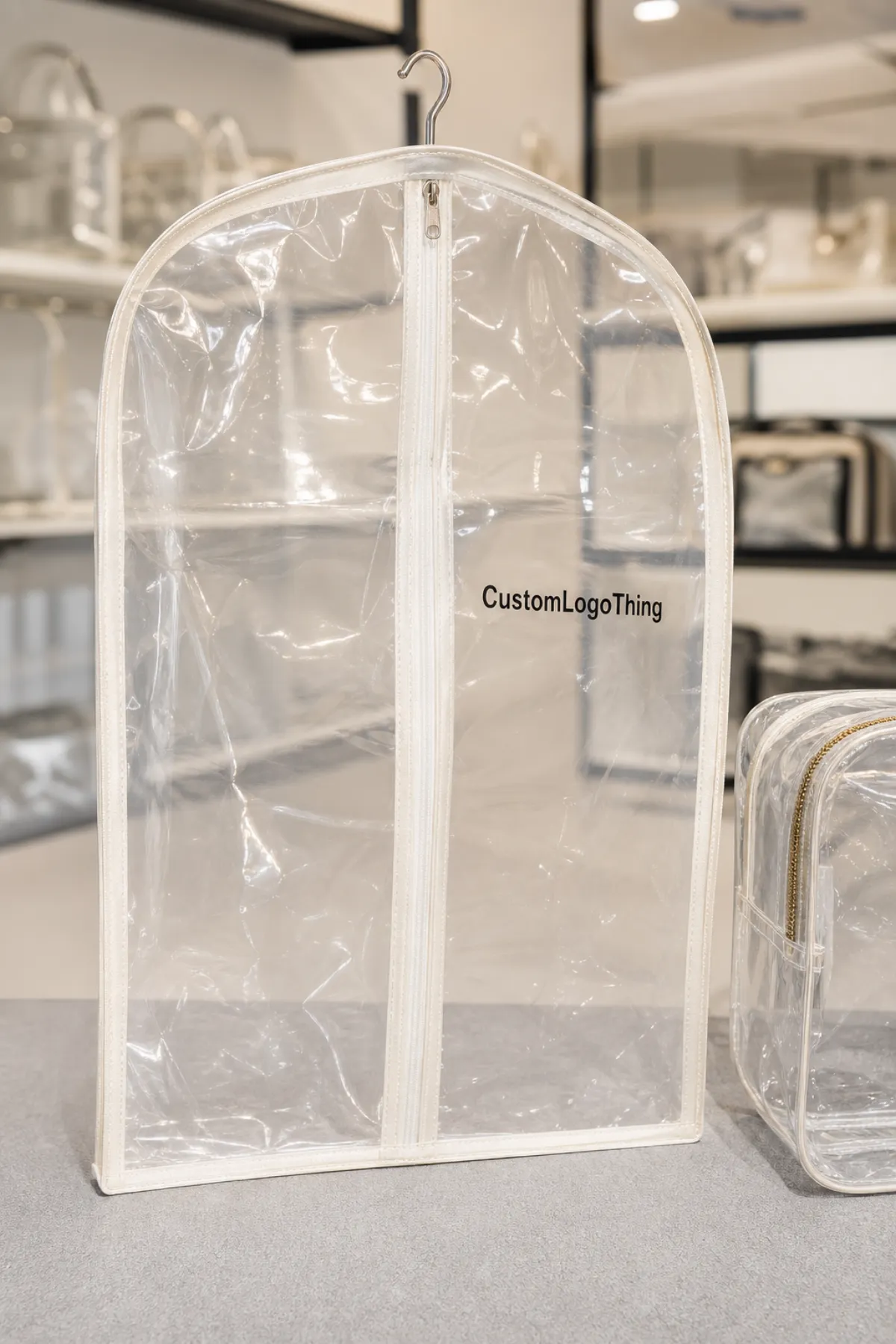
Cosmetics teams use Clear Garment Bags for practical jobs that still shape brand perception. Uniforms for store openings, wardrobe covers for backstage racks, apparel for press sends, and travel storage for campaign pieces all end up in the same buying workflow. The bag has to protect the garment and make contents easy to identify.
Price matters because the same bag can serve different roles. A low-cost build may work for a one-time event shipment. A sturdier version may be the better choice if the bag will be reused, displayed, or handled often. Buyers who already compare carton specs and insert boards usually know the pattern: the lowest factory price rarely equals the lowest landed cost once damage, reorders, and freight are included.
- Low-cost use: internal storage, temporary event kits, or sample runs.
- Mid-range use: influencer drops, staff apparel, and recurring campaign kits.
- Premium use: retail presentation, wardrobe protection, or reusable storage.
The real question is which spec protects the launch plan without creating hidden costs later. That answer changes with quantity, freight method, decoration, handling needs, and the number of locations that will receive the bags.
Product details cosmetic teams should evaluate first
A workable clear garment bag needs a transparent body, a hanger-friendly top, and a closure that keeps dust out while allowing fast access. Zippers are common because they secure contents better. Flap closures can work on lighter builds where the bag is opened less often. For cosmetics brands, that structure matters because wardrobe pieces often move between stockrooms, fitting rooms, showrooms, and shipping cartons in one day.
Custom clear garment bag wholesale pricing for cosmetics buyers also depends on intended use. A bag for one event shipment can be lighter. A bag for repeated storage or showroom display needs a stronger film, cleaner seams, and a zipper that keeps working after multiple uses. Those details look minor on a spec sheet, but they decide whether the bag feels disposable or intentional.
Teams usually evaluate these use cases first:
- Wardrobe kits for sales staff, stylists, and event crews.
- Protective covers for uniforms and display apparel.
- Presentation sleeves for influencer and press shipments.
- Storage protection in stockrooms, sample rooms, and travel trunks.
Clear visibility also saves time. Receiving teams can inspect contents without opening every bag. Merchandisers can spot sizes faster. If the bag carries a logo, the packaging feels specific instead of generic.
Material, fit, and build specs that change performance
Film thickness changes both feel and cost. Lighter gauges reduce unit price, but they crease more easily and may tear at stress points. Heavier gauges improve tear resistance and give the bag a more substantial hand-feel. A common mistake is to focus only on film number and ignore how the bag behaves once filled. A 2.5 mil bag may work for short transit. A 4 mil or thicker build is often safer for longer garments, frequent handling, or presentation kits.
Fit matters just as much. Buyers should confirm shoulder width, garment length, gusset depth, and any extra room needed for embellished pieces, layered sets, or uniforms with hardware. Oversizing increases carton volume and freight. Undersizing creates wrinkles and makes the bag fight the garment instead of protecting it.
Build details worth checking before approval:
- Sealed edges: cleaner structure and better durability.
- Reinforced hanger opening: helps the bag hold shape on racks.
- Zipper quality: important for repeated open-close use.
- Ventilation options: useful for long-term storage and garment care.
- Gusset depth: helpful for bulkier robes, jackets, or layered campaign outfits.
For teams running packaging through internal test protocols, transport checks can be aligned with ISTA methods when the bags travel inside cartons or larger kits. If the order includes inserts, paper tags, or instruction cards, FSC labeling considerations may also matter. Standards do not replace supplier judgment, but they make comparisons more consistent.
Branding and customization choices that justify the order
Cosmetics buyers usually do not pay for decoration just to add noise. They pay because the decoration helps the bag do more work. A logo on a clear bag can turn storage into a branded packaging asset. Frosted panels can create privacy without hiding the garment. Hang tags can carry care instructions or campaign details. Inserts can organize influencer sends or showroom sets. Each choice should map to a real use case.
The price rises with every added step. One-color printing is simpler than multi-color coverage. A small logo is easier than a full-panel design. Branded inserts and labels add handling time, which affects both labor and lead time. If the bag is part of a fast campaign, restrained branding may be the smarter spend. If it is headed for retail presentation, more decoration may be worth it.
Common customization paths include:
- Plain clear film with a size-specific build.
- Logo print on a single panel for subtle branding.
- Frosted or partially tinted sections for selective privacy.
- Branded inserts or hang tags for higher-touch presentation.
- Matte zipper pulls, colored trim, or reinforced hanger openings for a more finished feel.
For teams already comparing Custom Packaging Products, the logic is familiar. The more visible the bag is to customers or partners, the more carefully the decoration and finish should be specified. Buyers planning a broader branded set can also compare related custom packaging for cosmetics brands to keep garment bags, mailers, inserts, and retail packaging aligned.
2026 trends cosmetics buyers are asking about
In 2026, cosmetics packaging teams are asking for clearer cost breakdowns, lower-waste specs, and more flexible runs. Based on recent quote reviews with beauty and personal care buyers, the most useful requests include two or three price tiers rather than a single quote. A buyer might compare a plain 2.5 mil version, a branded 3 mil version, and a heavier 4 mil reusable version before choosing the final build.
Recycled-content and mono-material options are also part of more conversations. Not every clear garment bag can meet every sustainability target, especially if the brief requires high clarity, zipper performance, and low haze. Still, buyers can often reduce waste by right-sizing the bag, avoiding oversized gussets, using one-color artwork, and choosing a reusable construction instead of a single-event sleeve. For brands reviewing material claims, a supplier should be able to explain what is in the film, what is recyclable in the target market, and what documentation can be provided.
Another 2026 shift is the rise of modular campaign packaging. Rather than ordering a different bag for every product drop, brands often approve one core garment bag size and change the hang tag, insert, or label by campaign. That approach can lower repeat setup costs, simplify inventory, and keep brand presentation consistent. It also helps purchasing teams avoid rush production when a launch date moves forward.
Custom clear garment bag wholesale pricing for cosmetics brands
The main price drivers are predictable: size, film thickness, closure type, print coverage, quantity, and packing format. A small change in any one of those fields can move unit cost more than expected. Switching from a stock-size bag to a custom-sized build usually raises both material use and setup complexity. Add printing, and the economics shift again.
Custom clear garment bag wholesale pricing for cosmetics projects usually follows a familiar curve: lower minimums are workable for testing, while larger runs improve unit economics. That is why launch teams often order a short run first, then place a larger replenishment once size and print placement are confirmed. The strategy works best when the first spec is close enough to the final spec to avoid repeat tooling or artwork changes.
| Order profile | Typical build | 2026 indicative unit price | Buyer takeaway |
|---|---|---|---|
| Pilot run, 500-1,000 pcs | Lighter clear film, simple size, no print or one-color logo | $1.05-$1.75 | Useful for sampling and launch tests, but the unit price is highest |
| Mid-volume, 3,000-5,000 pcs | Moderate gauge, custom size, one-color branding | $0.55-$1.05 | Often the best balance of cost, presentation, and MOQ |
| Larger wholesale, 10,000+ pcs | Heavier film, custom build, more consistent print coverage | $0.32-$0.68 | Best for recurring programs where forecast volume is stable |
Those figures are directional, not universal. Resin costs, freight, carton count, destination, labor, and packaging format can move the landed cost enough to matter. A buyer who compares only factory pricing can misread the real expense by a wide margin.
Setup charges deserve a separate line. Artwork proofing, plate making, sample production, and special closures may create one-time costs. A useful quote separates those from recurring production costs so the buyer can see what improves over time and what stays fixed. For recurring programs, ask whether the supplier can hold approved artwork, size specs, and trim details for repeat orders.
Process, timeline, and lead time checkpoints
The cleanest projects follow a familiar sequence: dimensions, quantity, artwork, proof approval, sampling, production, inspection, packing, and dispatch. The difference between a smooth order and a delayed one is usually the quality of the input. Missing artwork, vague sizing, or late sample approval can add days or weeks.
Lead time should be reviewed alongside price. A lower quote that misses a launch date is not a better quote. Straightforward runs usually move faster, especially if the bag is stock-size and unprinted. Custom sizing or heavier print coverage adds proofing and production steps, which is normal. For simple builds in 2026, 12-18 business days after approval is a reasonable planning range. More complex orders need more room, especially when volumes rise or custom trim is required.
A packaging buyer usually wins twice: once on unit cost, and again on timing. The real mistake is treating those as separate decisions.
Good project control means building a buffer for trade shows, influencer mailings, or retail rollouts. If the bags sit inside a broader launch, the team should account for artwork sign-off, sample transit, and the final packing window. Packaging programs often go sideways on the calendar before they fail on the factory floor.
For recurring purchases, consistent ordering logic matters just as much as the first quote. A stable spec reduces re-approval, lowers the risk of substitution, and gives procurement a better way to forecast stock without rush freight. Buyers who need more detail on timing can compare the Clear Garment Bags lead time and MOQ guide before locking a launch schedule.
Why buyers choose our manufacturing and quality controls
Cosmetics brands tend to return to the same three expectations: repeatability, clarity, and support. If a bag is approved once, the next run should look and feel the same. That requires controlled dimensions, steady film sourcing, and inspections that catch variation before cartons leave the line.
Quality control should focus on the details a cosmetics team actually sees: seam integrity, clarity, print alignment, zipper function, and how the bag sits on a hanger. If a logo drifts, the package looks off. If the closure sticks, the user experience suffers. If the film clouds over, the bag stops feeling like product packaging and starts feeling like a commodity.
In hands-on sample reviews, the issues that show up fastest are usually simple: a zipper that catches near the top, a hanger opening that stretches after repeated use, or a bag that looks clear under warehouse lighting but hazy in showroom lighting. Those checks are easy to miss on a spec sheet, so we recommend physical samples before larger production whenever timing allows.
Quality checks usually include:
- Dimension confirmation against the approved spec.
- Seam and zipper inspection under handling stress.
- Print placement and color consistency review.
- Visual clarity check for clouding, scratches, or haze.
- Carton packing verification to keep quantities and sizes organized.
For teams building a larger packaging system, the bag should fit alongside cartons, inserts, and transport materials rather than compete with them. A clear garment bag that matches the rest of the kit looks deliberate. A mismatched one draws attention for the wrong reason.
Next steps to request quotes, samples, and approval
The cleanest quote request starts with the essentials: target size, quantity, closure preference, logo file, and delivery date. That is enough for a meaningful estimate. Adding the intended use case helps more. A garment bag for storage does not need the same build as a bag for retail presentation or event gifting.
Before approval, compare at least two builds. A lighter sample can confirm fit and handling. A heavier, more polished version can show whether a thicker gauge or fuller print coverage is worth the added cost. That side-by-side view is more useful than trying to judge from a PDF.
Custom clear garment bag wholesale pricing for cosmetics orders should be treated as a purchasing decision first and a decoration decision second. The strongest spec is the one that matches the launch plan, the inventory rhythm, and the brand standard without padding the order with features nobody will use.
FAQ
What affects custom clear garment bag wholesale pricing for cosmetics brands most?
Quantity, bag dimensions, film thickness, closure type, and branding coverage usually have the biggest impact on unit price. Freight and packaging format can also change the landed cost more than buyers expect.
What MOQ should a cosmetics brand expect for clear garment bags?
MOQ varies by customization level, but printed or fully custom sizes usually require higher minimums than stock-style bags. Pilot runs are possible when the buyer accepts a higher unit price or a simpler spec.
Can I add my logo to wholesale clear garment bags?
Yes. Common options include one-color print, multi-color print, labels, branded inserts, frosted panels, and custom hang tags. The more coverage or color complexity you add, the more likely setup time and cost will increase.
How long does production usually take after approval?
Simple orders typically move faster than custom-sized or heavily printed bags. In 2026, many straightforward orders can be planned around 12-18 business days after approval, while complex runs need a longer window.
What should I prepare before requesting a quote?
Have the bag size, expected quantity, logo file, target ship date, and any special finishing requirements ready. Including the intended use case helps the supplier recommend the most cost-effective spec.

