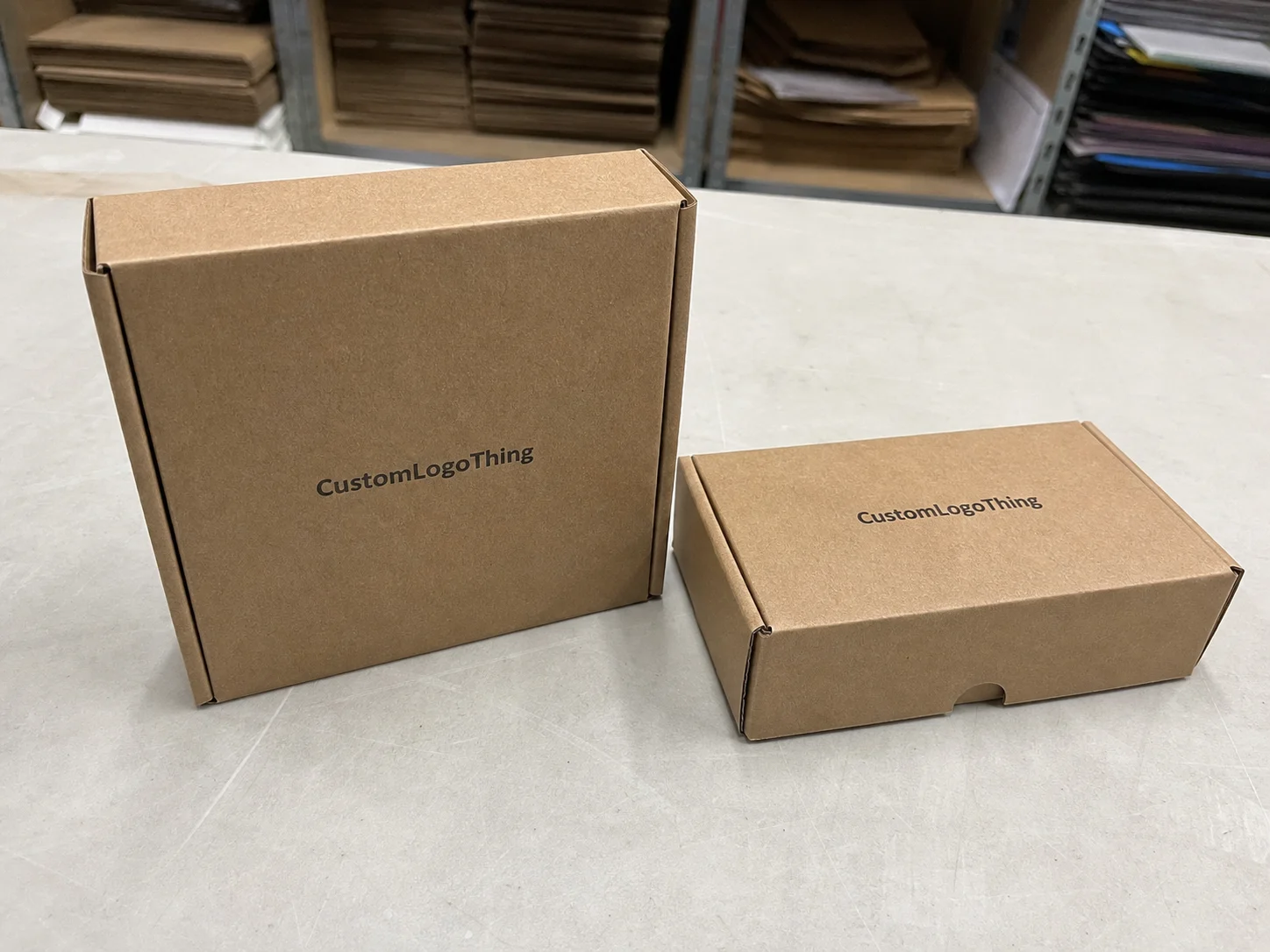
Custom corrugated mailers solve a narrow problem well: they keep a product in place, protect edges, and present the item neatly without turning the packout into a stuffing exercise. That sounds simple. It rarely is. Once a launch hits the warehouse, the real test is not whether the mailer looks strong on a spec sheet, but whether it closes the same way every time, survives carrier handling, and still looks intentional when the customer opens it.
Buyers often start with a request for “better packaging.” That usually means too many things at once. Strength, fit, print quality, dimensional weight, pack speed, damage rate, and unboxing all pull in different directions. Custom corrugated mailers matter because they reduce the amount of guesswork in that equation. The right design uses the board, score, closure, and insert as one system instead of treating the outer carton as a generic shell.
For a brand that ships compact goods, subscription kits, cosmetics, books, accessories, or small electronics, that distinction can be the difference between a tidy parcel and a return. Loose filler can cushion. It does a weaker job of stopping movement. Once a product can slide, bounce, or lean into a corner, the package starts losing the fight before it leaves the building.
Why Custom Corrugated Mailers Beat Loose Filler
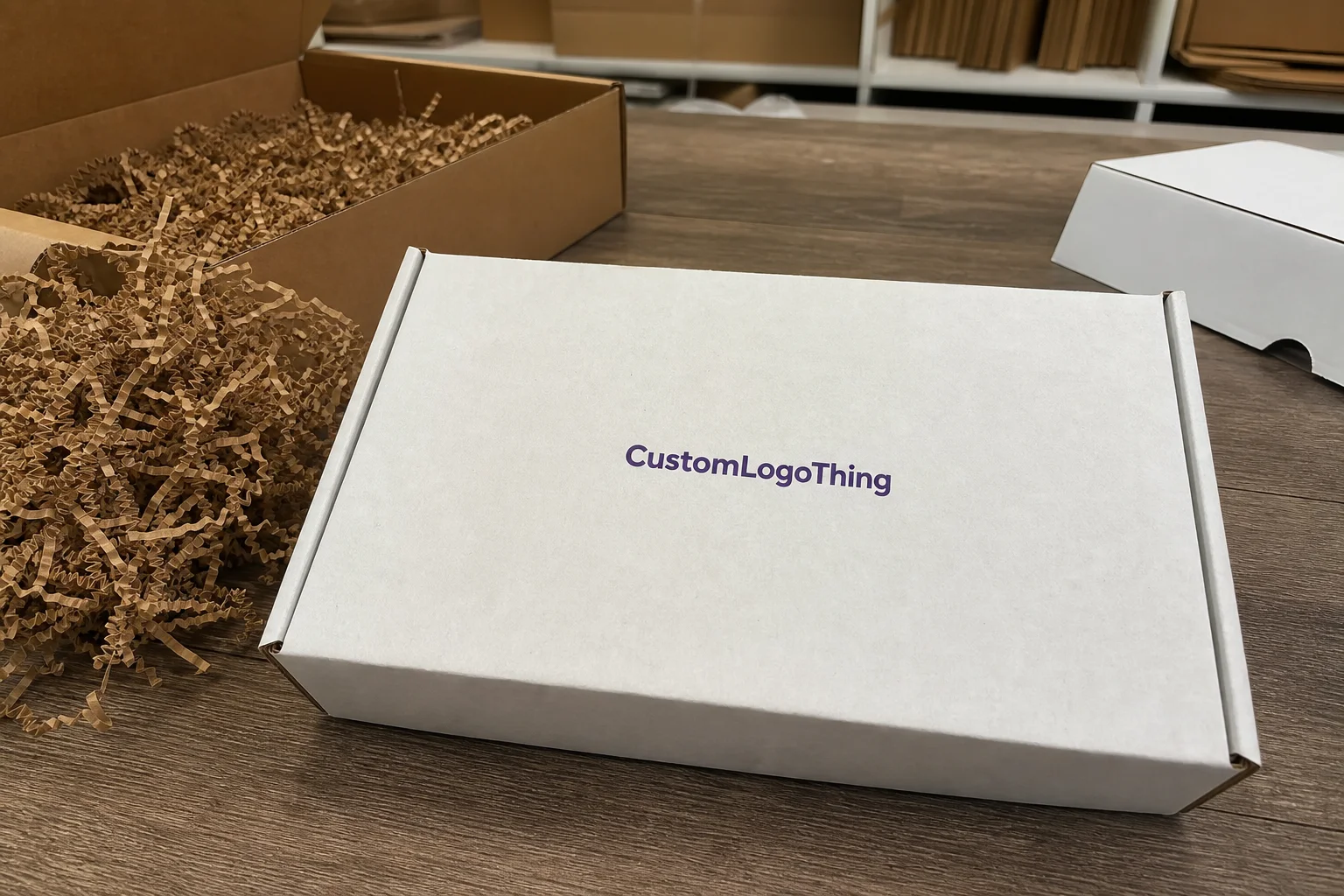
The core issue is void space. A box can feel rigid in hand and still fail in transit if the contents have room to move. Loose fill absorbs some shock, but it does not reliably stop side-to-side drift or repeated corner impacts. That matters because parcel networks are hard on packaging in a way that is easy to underestimate. A shipment may be dropped once, stacked several times, and handled by more than one distribution point before it reaches the customer.
Custom corrugated mailers reduce that risk by controlling fit. The inner dimensions are built around the product, the closure is designed to stay put, and the structure resists crush better than a simple folding carton or a padded mailer. In many programs, the savings show up less in raw material and more in lower damage claims, less rework at the pack line, and fewer complaints about crushed corners or scuffed surfaces.
They are not the answer for every SKU. Soft goods, low-risk apparel, and very light items may still be better served by poly formats. But once the product has any combination of weight, fragility, or presentation requirements, custom corrugated mailers usually earn their place quickly. They also tend to lower dimensional weight compared with oversized cartons, which is one of those quiet cost drivers that shows up later if nobody checks it early.
A mailer does not need to be heavy to work. It needs to fit well, close consistently, and survive the carrier route your parcel actually takes.
Custom Corrugated Mailers: How the Insert, Flute, and Fold Work Together
Board thickness is only one part of the story. A mailer is a structure made up of liners, flute medium, scores, folds, tabs, and sometimes an insert or partition. The flute provides spring and crush resistance. The liners create the printing surface and help the board hold shape. The fold geometry decides whether the package closes cleanly or forces operators to fight the carton on every unit.
That is why a custom mailer can outperform a generic carton even when both are made from corrugated material. A well-designed closure may remove the need for tape. A die-cut restraint can hold a bottle, a stack of folded garments, or a small kit in the center of the pack. If the item does not shift, the structure does not need to compensate with excess board or filler.
Flute choice and board grade
E-flute is common when print quality matters and the package needs a clean retail appearance. The profile is fine enough to reproduce graphics crisply, and it tends to look polished in hand. B-flute brings more cushioning and crush resistance, though it adds bulk. F-flute and microflute formats are used in premium presentation work, but availability and cost can change depending on the run size and supplier setup.
For heavier contents or rougher shipping lanes, a stronger liner combination or double-wall construction can make sense. That is not automatic. A lot of over-specification comes from trying to solve a fit problem with more board. If the product can move inside the mailer, extra caliper alone will not fix the root cause. A tighter dieline or a better insert usually does more.
Where customization actually pays off
Customization shows up in the details that affect both presentation and performance: internal print, tear strips, locking tabs, die-cut windows, protective ribs, and partitions. Internal branding can be a smart use of ink because it adds polish without forcing the exterior to carry all the visual weight. For multi-piece kits, partitions are not decorative. They keep components from arriving mixed together and reduce the chance of abrasion between parts.
If the mailer is one piece of a larger packout, it should be designed with any inserts, labels, or outer shippers at the same time. That keeps the dimensions aligned and avoids the common mistake of building a good-looking shell around a bad internal fit. A broader packaging brief usually produces better results than a generic size request and a logo file.
Spec Choices That Change Protection and Print
The spec sheet does the real work. Finished dimensions, board caliper, flute profile, print coverage, coating, and whether the mailer ships flat or pre-formed all affect protection and cost. A mailer that is even slightly too loose can rattle. One that is too tight can slow pack-out and force workers to crush tabs or over-stuff the closure. Neither one is efficient.
Weight and surface behavior matter too. A rigid cosmetic jar, a soft-touch accessory box, and a fragile electronic component do not behave the same way inside corrugated. Smooth or slippery products often need a tighter internal hold. Exposed corners may need a fold-in edge or a secondary wrap. For items that need retail shelf presence as well as shipping protection, custom printed boxes may still be the better structure. For compact direct-to-consumer shipments, custom corrugated mailers often balance presentation and transit protection better.
Print and coating tradeoffs
Heavy ink coverage, dark solids, metallic effects, and specialty coatings all affect price and lead time. They also change how the board shows wear. A deep black panel can make scuffs more visible than a lighter design. Soft-touch and aqueous finishes improve feel, but they add setup complexity and sometimes require tighter production control. If the finish is part of the brand promise, it should be planned from the start, not added after the structure is already locked.
Recycled content, FSC sourcing, and recyclability are separate claims. FSC speaks to responsible sourcing and chain of custody. Recyclability depends on the substrate and local recovery systems, plus any coatings or attachments on the package. If the exterior copy uses those claims, the supplier should be able to support them with documentation. For sourcing language, the FSC site is a useful reference point: FSC certification and responsible sourcing guidance.
Testing and validation
For shipment validation, ask whether the pack is being checked against ISTA or ASTM methods. ISTA 3A is common for parcel shipping, while ASTM D4169 is used in broader distribution planning. The right test depends on the product, the route, and the failure rate the business can live with. The point is not to collect a certificate for its own sake. It is to find out whether the geometry holds up before a full production run is committed.
General packaging references are useful too. Industry resources from Packaging.org help with terminology and board basics, which is handy when comparing quotes that use different language for nearly the same construction: Packaging industry resources.
Cost, Pricing, and MOQ: What Actually Moves the Quote
Quote variation usually comes from a small set of drivers: size, board grade, print method, color count, finish, inserts, and tooling. Volume changes the math after that. Small runs carry more setup cost per unit. Larger runs pull the price down, but they also increase storage exposure and the chance of buying a spec that later changes.
For a buyer comparing packaging formats, landed cost matters more than the headline unit price. Freight, sample charges, pack-out labor, and the cost of damage all belong in the same calculation. A cheap-looking mailer can become expensive if it slows the line or creates returns. The best quote is the one that reflects the full system, not just the board cost.
| Option | Best for | Typical unit cost at moderate volume | Strength profile | Notes |
|---|---|---|---|---|
| Custom corrugated mailers | Compact, branded parcel shipments with moderate protection needs | $0.35-$1.20 | Good crush resistance, strong fit control | Often the best balance of presentation and transit protection |
| Custom printed boxes | Retail packaging, gift sets, larger SKUs, or products needing more space | $0.55-$1.80 | Varies by board and construction | Can be stronger or more flexible, but may need more filler |
| Custom Poly Mailers | Soft goods, low-risk apparel, and lightweight items | $0.12-$0.45 | Low crush resistance, good moisture resistance | Cheaper and lighter, but not a match for fragile goods |
Minimum order quantities vary, but many programs see useful price breaks around 1,000, 2,500, and 5,000 units. Those breakpoints are not universal. A one-color mailer with a simple closure will behave differently from a printed structure with inserts and coating. Sampling and revisions can also affect the first order more than the reorder, which is why a structural sample is usually cheaper than correcting a bad dieline after production starts.
One practical habit helps a lot: request quotes at three quantities instead of one. That exposes the price curve and shows whether a slightly larger buy produces a meaningful unit drop or only a small one. It also keeps the conversation focused on the real budget, not the most attractive line item in isolation.
Process and Timeline: From Dieline to Delivery
A first-order custom project usually follows a predictable path. The buyer provides finished dimensions, product weight, branding needs, and the target ship date. The supplier builds or adjusts the dieline. A structural sample follows, then proofing, revisions, production approval, finishing, and shipment. Each step is manageable. Delays usually appear when several changes land at once.
For a new structure, design and sampling can take several business days to a couple of weeks, depending on complexity. Production often runs in roughly 10 to 20 business days after approval, with freight adding additional time. Repeat orders are usually faster because the die already exists and the artwork is settled. That is the main advantage of a well-executed first run: the second order removes the slowest steps.
Where schedules slip
Late artwork is the obvious problem, but measurement drift causes just as many issues. A sample that does not match the final SKU can make the dieline wrong from the start. Barcode changes, copy edits, and last-minute color revisions can trigger reproofs. If the mailer needs a coating, foil, or special fold, the timeline should be padded for it. The fastest schedule is the one with the fewest unresolved inputs.
Warehouse conditions matter too. A design that saves five seconds per pack can be worth more than a prettier exterior if the line is moving at volume. A package that stacks well on a pallet may be more valuable than one that looks slightly better on a desk. Sample approval should cover both appearance and handling, because the package has to work in storage, on the line, and in transit.
A realistic timeline model
- Brief and dimensions: 1-2 days
- Dieline and structural sample: 3-7 business days
- Artwork proofing and revisions: 2-5 business days
- Production: 10-20 business days after approval
- Freight and receiving: varies by destination and service level
That schedule is not universal, but it is a reasonable planning frame. If the launch date is fixed, work backward from the in-warehouse date, not the purchase order date. That difference is often the line between a controlled rollout and a scramble.
Common Ordering Mistakes That Inflate Damage and Spend
The most common mistake is an undersized internal dimension. Buyers focus on the outside footprint and forget that the product needs clearance for fingers, inserts, tabs, and the tolerance of real packing operations. Too tight, and corners get damaged during insertion. Too loose, and the product moves. Either way, the cost shows up later as rework or returns.
Another frequent error is using thicker board to solve a fit problem. Stronger board sounds safer, but it does not stop a product from bouncing. A smaller die, a better insert, or a different closure usually works better. This is one reason custom corrugated mailers can outperform generic cartons: the design targets the failure mode instead of hiding it under more material.
Artwork and color issues
Weak files create avoidable delay. Low-resolution logos, unclear Pantone targets, and late copy changes can all trigger reproof charges. If the design relies on strong brand blocks, the supplier should know whether exact color matching is required or whether a close production match is acceptable. That distinction affects both cost and schedule.
Storage and carrier conditions are the other blind spot. A mailer may look excellent on a table and still fail in a stacked pallet or a humid sorting environment. A sample that passes a quick visual check but fails in transit is expensive in a way that is easy to miss until complaints start. Testing against realistic handling is safer than approving on appearance alone.
What to verify before approval
- Finished product dimensions, including wrap or insert
- Weight and fragility level
- Print method, color targets, and finish
- Expected monthly volume and reorder pattern
- Warehouse pack method and carrier mix
- Any claim language tied to recycled content or FSC sourcing
Skipping those checks is how budgets drift. A quote can look attractive and still fail the business case if the mailer is slow to pack, oversized for parcel rates, or too fragile for the route. That applies to custom corrugated mailers, custom printed boxes, and any other protective format that has to work outside the sample room.
Expert Tips and Next Steps for a Cleaner Launch
Start with a short checklist before requesting samples: finished SKU dimensions, weight, fragility, branding needs, expected monthly volume, and target ship date. If that information is incomplete, the first sample is often a guess. Better inputs lead to a better dieline, and a better dieline usually saves a round of revisions.
Testing two or three structural options is smarter than locking onto one early. Small changes in flap length, flute grade, or insert geometry can improve pack speed and protection more than a full redesign. That matters especially when a product family contains closely related SKUs. A standard mailer family is often more efficient than a unique box for every item.
Ask for alternate quantities in the quote. A 2,500-piece price and a 5,000-piece price often reveal the real breakpoint where unit economics improve. Sometimes the savings justify the larger buy. Sometimes they do not. Either way, the curve is more useful than a single number.
If the launch is still moving, the safer sequence is sample, pilot run, then full production. That gives you a chance to validate fit, print, and fulfillment behavior before volume scales. Custom corrugated mailers can be the right structure for a product that needs a cleaner arrival and better control in transit, but only if the spec is built around the item, the warehouse, and the carrier network instead of a generic idea of “stronger packaging.”
What are custom corrugated mailers used for?
They are used for compact products that need more structure than a padded mailer but less material than a full shipping box. Common applications include subscription kits, cosmetics, books, accessories, and other items that benefit from a snug, branded fit.
How do corrugated mailers compare with padded mailers?
Corrugated mailers usually provide better crush resistance and a more polished unboxing experience. Padded mailers are lighter and often cheaper for low-risk items, but they generally offer less structural protection and weaker presentation.
What affects pricing the most?
The biggest drivers are size, board grade, print complexity, coatings, inserts, and order volume. Sampling, setup, and freight can materially change the first-order budget, so review the quote as landed cost rather than unit price alone.
How long does the process usually take?
First orders usually take longer because structural sampling, proofing, and tooling may be required. Reorders move faster when dimensions, print files, and specifications stay unchanged.
What should I send for an accurate quote?
Provide finished product dimensions, weight, quantity, print requirements, and any inserts or coatings needed. Include your target ship date and fulfillment method so the supplier can recommend realistic production and freight timing.