Ordering custom bottles and labels looks simple on paper. A bottle gets selected, artwork is approved, and the finished pack is supposed to arrive ready for filling. In production, the details are less forgiving. A curved shoulder can distort a label. A cold-fill product can trigger condensation before the carton is even closed. A beautiful proof can still fail if the adhesive, material, and application method were never matched to the container.
That is why bottle and label decisions should be treated as one packaging system, not two separate purchases. The container shape affects the label size. The surface finish changes how the ink reads. The filling environment influences whether the label holds or lifts. If the project also needs cartons or inserts, the broader Custom Packaging Products range is worth reviewing at the same time so the full pack stays consistent.
Most buyer mistakes happen early. Teams lock the artwork before they verify the exact bottle panel. They choose a label stock based on appearance alone. Or they underestimate how much line speed, moisture, and shipping stress affect the final result. The cheapest option on the quote sheet can become the most expensive choice once reprints, delays, and operator adjustments enter the picture.
Custom Bottles and Labels: What Buyers Need to Know First
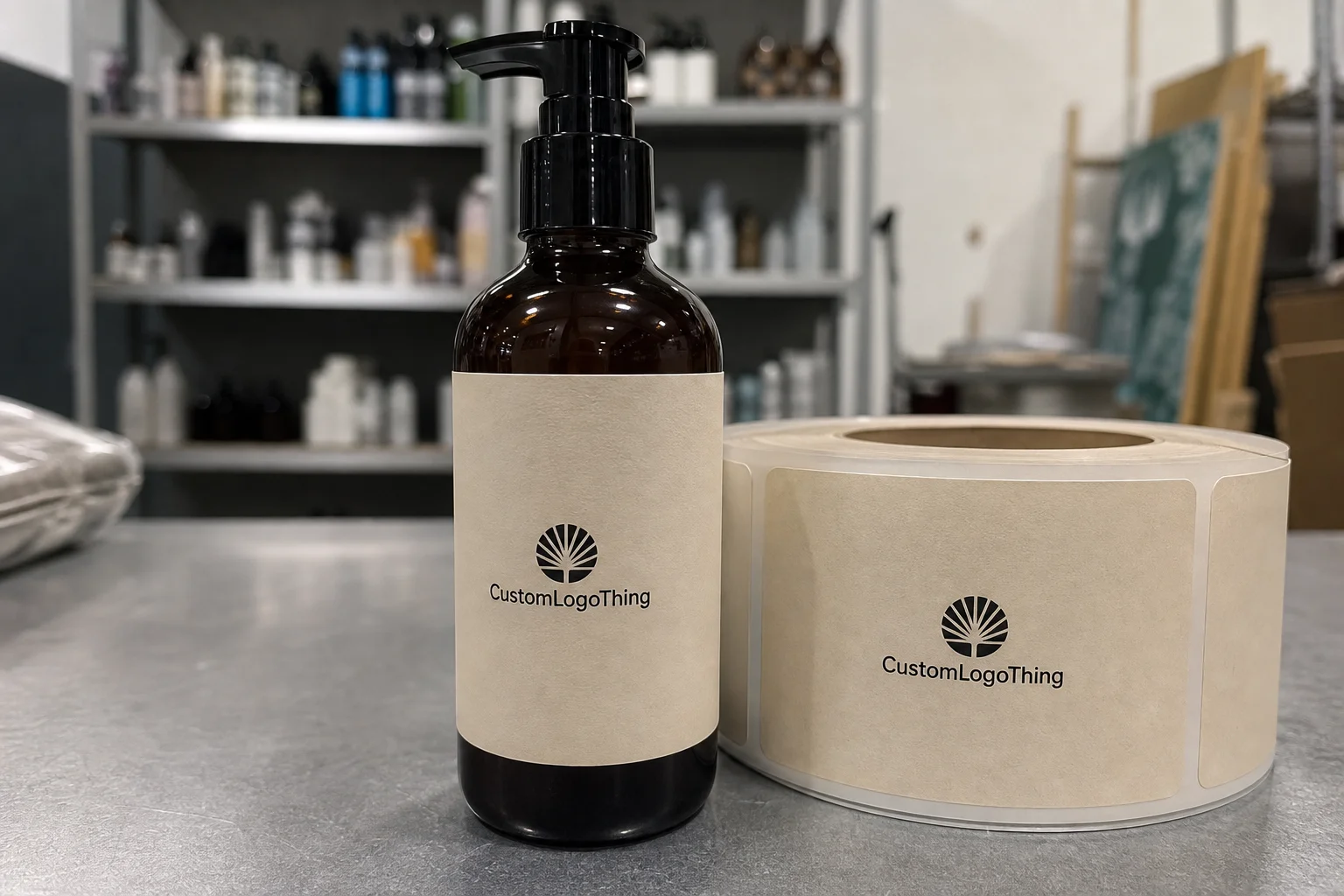
The first thing to get right is the relationship between the bottle and the label. A glass bottle, a PET bottle, and an HDPE bottle behave very differently. Glass gives weight and shelf presence, but it is heavier to ship and less forgiving if the pack is dropped. PET is lighter and common for beverage, beauty, and wellness products, yet clear PET often needs a white underprint if the colors are meant to stay vivid. HDPE is popular for cleaners, detergents, and squeeze bottles because it is durable, but its surface characteristics can make adhesion less predictable.
Shape matters just as much as material. Straight-sided bottles are straightforward because the label panel stays consistent. Tapered bottles are harder because the panel changes as the bottle narrows. Contoured bottles look polished on shelf, but they punish oversized labels and stiff facestocks. If the bottle has a shoulder radius, a neck taper, or a recessed panel, those details need to be measured before the label artwork is finalized.
The right label format depends on the product and the equipment. Pressure-sensitive labels are the most flexible option for many custom bottles and labels programs because they support short to mid runs, strong print quality, and a wide range of finishes. Wrap labels work well when the bottle wall gives enough straight coverage. Front-and-back labels are useful when the front panel must stay clean and the back panel carries ingredients, instructions, or regulatory copy. Shrink sleeves cover complex curves and offer 360-degree branding, but they also introduce tighter requirements for film choice, heat control, and application setup.
Use case matters too. A refill bottle, a launch SKU, and a repeat production item should not be buying the same specification by default. Launches can tolerate more setup if the run is small. Repeat items need stable sourcing, predictable registration, and a label that can be produced consistently without constant adjustments from the plant.
The label rarely fails because the artwork is weak. It usually fails because the container surface, adhesive, or production conditions were not defined early enough.
How Bottle Material, Shape, and Label Format Work Together
Material and shape are not separate decisions. A bottle can look premium in a mockup and still be awkward in production. A glossy bottle may show fingerprints and scuffs faster than expected. A matte finish can reduce glare but may change how the brand color reads under retail lighting. A clear container can make the contents part of the design, but it also forces the label to do more visual work, especially if the product itself is light in color.
Pressure-sensitive labels are often the default because they give reliable results across many substrates. On PET and glass, they can be highly consistent if the bottle surface is clean and the adhesive is selected correctly. On HDPE and other lower-surface-energy plastics, the label may need a more aggressive adhesive or a primer strategy. That is one reason sample testing matters. A label that looks perfect on a desk can perform very differently after refrigeration, condensation, or shipping vibration.
Finish is part of the system as well. Paper stocks, polypropylene films, metallic facestocks, and clear labels all create different visual effects. Paper can work well for dry, controlled environments. Film tends to hold up better when moisture or handling is a concern. Metallic accents can improve shelf impact, but they also raise cost and make artwork changes more expensive if the design is not locked early. If the bottle will be exposed to cold storage or wet hands, the finish needs to be chosen for durability, not just appearance.
Application method should be decided before the artwork is finalized. A hand-applied label can tolerate slightly different margins than a high-speed automated line. A fully automated applicator often needs tighter tolerances and cleaner edges. That difference matters. A label that is easy to place manually may still wrinkle or misregister at speed. In practical terms, the best bottle-and-label pairing is the one that fits the equipment already in use.
There is also a regulatory angle. If the pack includes warnings, ingredients, instructions, or batch coding, the label must leave enough room for that information without crowding the brand hierarchy. This is where bottle design and label design have to work together rather than compete for space.
Cost, Pricing, and MOQ Factors That Change the Quote
Pricing for custom bottles and labels is driven by a few concrete variables: bottle material, bottle size, label size, print coverage, finish, quantity, and how many versions are needed. A quote can move quickly if the project requires custom tooling, specialty closures, additional print passes, or a decoration method that is not part of the standard line. Freight also matters. Glass costs more to move than lightweight plastic, and mixed-SKU orders can increase handling complexity.
Minimum order quantity is often misunderstood. It is not just a supplier preference. It is a way of spreading setup cost across enough units to make the run viable. A 1,000-piece order can be acceptable for a pilot or seasonal launch, but the unit cost usually drops at 5,000 or 10,000 pieces because the fixed production work is distributed more efficiently. If there are multiple artwork versions, each version may carry its own setup or proof cost.
Special finishes add up faster than most buyers expect. Soft-touch lamination, foil, spot varnish, heavy ink coverage, and custom die lines all raise the unit price. Moisture-resistant or freezer-grade adhesives also cost more than standard formulations. That difference is easy to ignore until the product is stored in a cold room or packed while chilled. Then the adhesive decision becomes visible very quickly.
| Option | Typical Use | Approximate MOQ | Directional Unit Cost | Notes |
|---|---|---|---|---|
| Pressure-sensitive label on PET bottle | Personal care, beverage, wellness | 500-2,500 units | $0.38-$0.75 per unit | Good for short runs and strong color control |
| Wrap label on HDPE bottle | Household, cleaners, squeeze products | 1,000-5,000 units | $0.30-$0.62 per unit | Works well when the bottle wall is straight enough for wrap-around coverage |
| Glass bottle with premium label finish | Cosmetics, specialty foods, gifting | 1,000-3,000 units | $0.65-$1.35 per unit | Higher shelf impact, higher freight weight, more careful handling |
| Shrink sleeve on contoured bottle | Full-body branding, complex shapes | 3,000-10,000 units | $0.55-$1.10 per unit | Good visual coverage, but setup and application control matter more |
These numbers are directional. They are useful for budget planning, not for locking a purchase order. A small run with rich ink coverage and premium finishing can cost more per unit than a larger, simpler order. The more accurately the buyer defines the bottle size, fill condition, print method, and expected reorder volume, the more stable the quote becomes.
Freight, inspection, and storage should also be counted as part of the landed cost. A low-priced bottle that arrives damaged or a label that requires hand correction on the line is not truly low-cost. Buyers who plan for those pieces early usually end up with a cleaner budget and fewer surprises.
Production Process and Timeline: From Proof to Shipment
A solid production sequence usually follows the same order: artwork review, file correction, proof approval, material selection, print setup, production, inspection, and packing. The bottle specification should be confirmed before the label file is locked, because a label sized to a nominal bottle dimension may still be wrong once the real panel is measured. That is especially true on tapered bottles and curved containers, where a small error shows up immediately on the shelf.
Proofing is where many schedules slip. If the design file is missing bleed, if the type is too small, or if the label dimensions are based on a sketch instead of a physical bottle, the job stops while corrections are made. That pause is usually cheaper than printing the wrong pack, but it still affects launch timing. A buyer who checks the proof against the actual bottle sample avoids a lot of avoidable rework.
Lead time depends on complexity. Simple repeat orders can often move in about 10-15 business days after proof approval if materials are already in stock. New custom projects tend to run 15-25 business days because they involve more variables: sampling, setup, version control, and material coordination. Shrink sleeves, multi-SKU runs, and custom bottle sourcing can extend the timeline further. If the launch date is fixed, work backward from shipment rather than from artwork delivery.
Quality control should be specific, not vague. Check registration, color consistency, label edge alignment, adhesive performance, barcode readability, and pack-out appearance. If the product will be shipped through rough handling, transit testing is worth considering. Standards such as those published by ISTA help identify whether the bottle, label, and carton can withstand the conditions they are likely to see in real freight.
Common Mistakes That Cause Wrinkles, Peel, or Reprints
The most common problems are usually preventable. Small type gets crowded. Files are exported at the wrong resolution. Bleed is too tight. The safe area is ignored. On a flat screen, those issues may look harmless. On a bottle, especially a small one, they become obvious quickly.
Another frequent issue is the wrong adhesive for the environment. A standard label may hold on a dry sample but start lifting after condensation appears. Refrigerated products, cold-fill products, and items stored in damp environments need more careful adhesive selection. Edge lift, corner curl, and surface contamination are the usual warning signs. Finger oils, dust, and some mold-release residues can all reduce bond strength on plastic surfaces.
Shape mismatch causes its own damage. If the label is too large for the curve, it will wrinkle or bridge. If it is too stiff, it will resist the shoulder and leave a visible seam. If the panel was measured from a theoretical spec instead of the actual bottle sample, the fit can be off by just enough to matter. That is enough to turn a clean run into a slower one.
Here is the blunt version:
- Low-resolution logos make defects easier to see.
- Missing bleed can leave white edges after trimming.
- Standard adhesives can fail in cold or wet conditions.
- Oversized panels wrinkle where the bottle begins to taper.
- Ignoring application speed creates problems on the line.
Sustainability can be part of the brief, but it should not override performance. If the project calls for paper-based materials, ask about FSC certification and check how the stock, liner, and adhesive are specified. A label that looks responsible but fails during use does not help the buyer. The standard itself is available through FSC.
The cheapest label is rarely the cheapest choice once reprints, launch delays, and line slowdowns are counted.
Expert Tips for Better Artwork, Samples, and Application
Start with the container spec, not the artwork. Get the exact bottle dimensions, finish, fill temperature, label panel measurements, and application method before design work goes too far. A layout built on the wrong dieline is still the wrong layout, even if the graphics are strong. That problem shows up often in package branding projects where the bottle, label, carton, and insert are all supposed to feel like one system.
Sample under real conditions whenever possible. If the product is refrigerated, chill the bottle. If it will be handled with damp hands, test for that. If the line runs at speed, simulate the placement pressure and pace. A tabletop sample can hide a lot. Real handling tends to expose the weak points quickly.
Good design choices usually solve more problems than decorative ones. High contrast improves readability. Clear hierarchy helps the eye land on the brand name, variant, and required information in the right order. Enough space around barcodes, legal copy, and batch fields makes inspection easier and reduces clutter. That matters whether the order is for labels, inserts, or custom printed boxes, because the shelf rewards clarity more than ornament.
Application equipment deserves attention too. A label that curls at the edge or has a narrow placement margin may require more careful handling than the line was built for. A small mock run helps identify whether the job should be hand-applied, semi-automatic, or fully automated. A fast line is useful only if the label can keep up without causing rejects.
For teams building a new SKU family, the Custom Labels & Tags page is a useful comparison point before the bottle spec is locked. If the project also needs cartons, inserts, or a display-ready outer pack, keep the rest of the system in view through the broader Custom Packaging Products line. The bottle, label, and secondary packaging should reinforce the same visual and functional brief.
Next Steps for Ordering the Right Bottle-and-Label Package
The fastest way to get an accurate quote is to provide the right inputs up front. For custom bottles and labels, that usually means bottle dimensions, material, finish, fill conditions, label size or panel drawing, quantity, artwork files, number of versions, and the target launch date. If multiple SKUs are involved, include what changes between them. Color, scent, flavor, and regulatory copy all affect production planning.
Before confirming the order, request a proof or sample against the actual bottle whenever possible. That single step catches fit issues, panel errors, and visual problems that are easy to miss on screen. It also makes reorder planning easier later, because the first approved version becomes the reference point for future production.
If the bottle is part of a larger pack, keep the label decision aligned with the full system. Good product packaging works because the pieces match in structure, cost, and visual hierarchy. The most reliable buying process is the one that treats appearance, durability, timeline, and line performance as linked decisions rather than separate ones.
- Confirm bottle material and exact dimensions.
- Define label format, finish, and adhesive needs.
- Share fill temperature, storage conditions, and handling risks.
- Provide final artwork files and the number of versions.
- Ask for proof timing, sample timing, and reorder expectations before release.
Once those pieces are clear, the quote becomes easier to trust, the timeline becomes easier to manage, and the final pack is less likely to need a second run. That is the real advantage of treating custom bottles and labels as one production decision instead of two separate purchases.
What bottle materials work best with custom labels?
Glass gives a premium look and a stable labeling surface, while PET and HDPE are common when light weight, impact resistance, or lower freight cost matter more. The right choice depends on whether the bottle will be chilled, handled often, or exposed to moisture during storage and use.
How long do custom bottle and label orders usually take?
Simple repeat jobs can move quickly after artwork approval, but new custom bottles and labels projects usually take longer because of proofing, sampling, and setup. Lead time depends on material availability, print method, quantity, and whether revisions are needed before production starts.
What affects the price of custom bottles and labels?
The main drivers are bottle material, label size, print coverage, finish, quantity, and whether the order includes multiple versions or specialty options. MOQ and setup charges often affect unit cost more than buyers expect, especially on smaller runs.
Can I order a small MOQ for custom bottles and labels?
Yes, but smaller runs usually cost more per unit because setup is spread across fewer pieces. If the project is time-sensitive or has more than one SKU, it helps to confirm the MOQ early so the quote reflects actual production conditions.
How should artwork be prepared for bottle labels?
Use print-ready files with the correct dimensions, bleed, safe area, and readable type sizes for the actual label panel. A proof against the real bottle shape is better than approving artwork alone, because curves, seams, and shoulders change the final result.