Custom Cotton Drawstring Bags: Pricing, Specs, and Quote
Custom Cotton Drawstring Bags: Why They Punch Above Their Weight
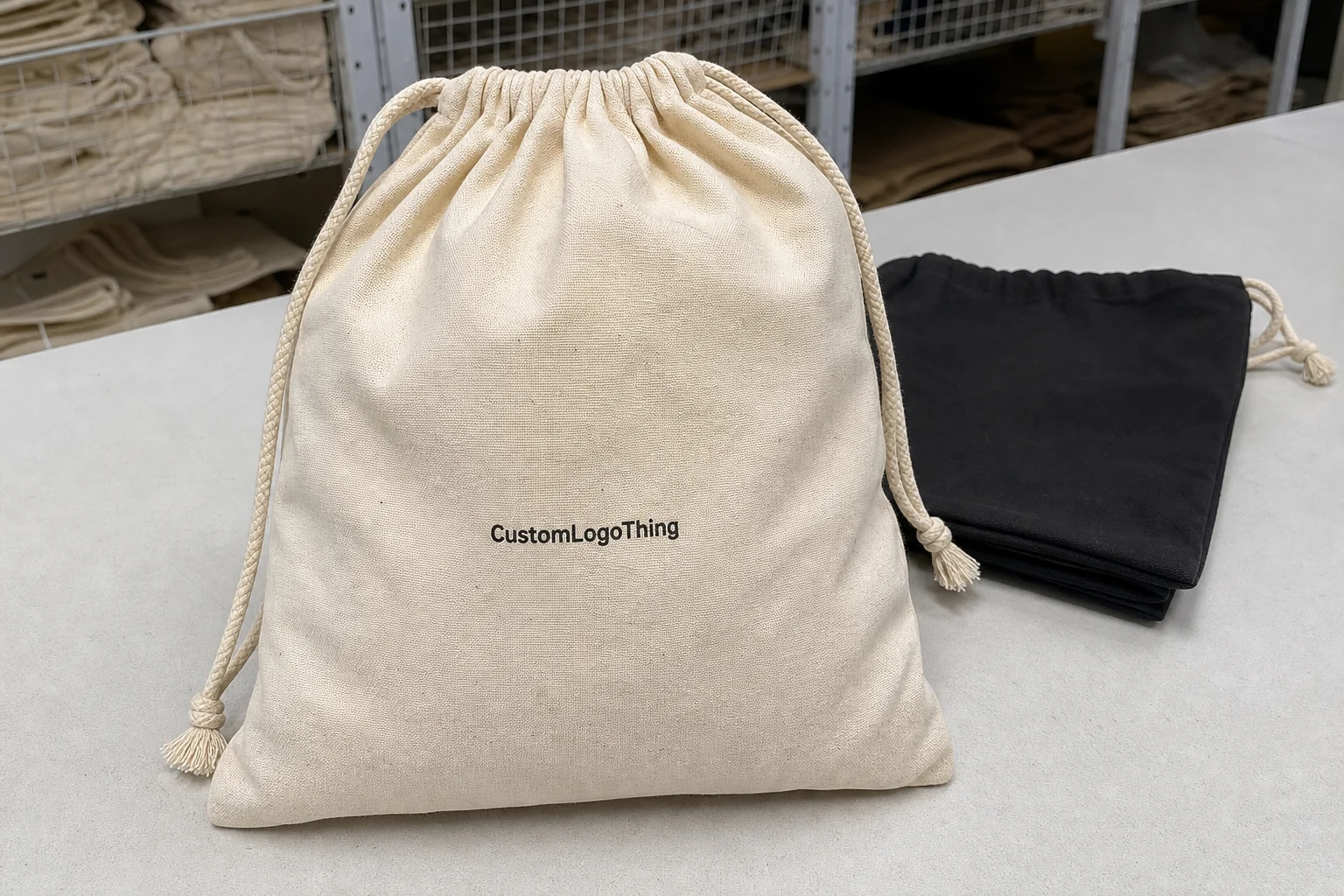
Custom Cotton Drawstring Bags look modest, and that is part of the advantage. They are small enough to stay economical, but visible enough to carry a brand beyond the moment of purchase. A package that gets reused has a second life, then a third. That creates more impressions than a carton that is opened once and tossed aside.
Cotton also changes the feel of the product before anyone reads the logo. The fabric has more texture than paper, more softness than film-based packaging, and a quieter, more intentional look than many low-cost promotional items. A bag that closes with a drawstring signals care without trying too hard. For retailers, event organizers, and brands building presentation around small goods, that matters.
The practical value is not that these bags are fancy. It is that they sit in a useful middle ground. They are more refined than disposable packaging, less rigid than boxes, and easier to store than molded alternatives. For jewelry, cosmetics, candles, wellness kits, apparel accessories, and samples, they solve a specific problem: how to make a small item feel complete without overbuilding the package.
They are not the right answer for every job. If the contents need structural protection, moisture resistance, or the lowest possible unit cost, cotton is usually the wrong material. But for reusable branded packaging, the tradeoff often makes sense. A simple bag can carry more perceived value than its raw material cost suggests, which is why buyers keep coming back to custom Cotton Drawstring Bags for both retail and promotional use.
How the Bags Are Built: Fabric, Stitching, and Print Methods
The construction is straightforward: fabric panels, side seams, a top channel, and a cord that cinches the opening closed. The quality lives in the details. Straight stitching, even tension in the cord, consistent panel alignment, and clean edge finishing all affect how the bag feels in hand. A weak print can be tolerated more easily than sloppy construction, because the user touches the seams before the logo.
Fabric weight is one of the first decisions that changes both the look and the unit price. Lightweight cotton, usually around 4 to 5 oz, works for simple inserts or very low-bulk items, but it can drape loosely and reveal contents more easily. Midweight cotton, roughly 6 to 8 oz, is the most common range for branded packaging because it balances cost, opacity, and structure. Heavyweight cotton, often 10 oz or more, gives a fuller handfeel and better durability, but it adds cost and bulk quickly.
Weave matters as well. A plain weave gives a familiar canvas-style surface and usually prints cleanly. Tighter weaves can improve opacity and make the bag feel more polished. Natural cotton has visible fiber variation, and that is not a defect. It is what the material does. The larger issue is consistency from one production lot to the next, especially if an order will be repeated over time.
Decoration method should match the artwork, quantity, and finish you want. Screen print is still the most practical option for bold logos, spot colors, and higher-volume runs. It is efficient and easy to read on fabric. Heat transfer can reproduce more detail and color variation, but the result may feel more like a film layer than ink embedded in the textile. Embroidery delivers a premium tactile effect and can work well for restrained logos, though it becomes expensive and less suitable for fine type or complex art.
Placement is not cosmetic detail; it affects yield. A centered mark on one panel is simpler to produce, easier to inspect, and less likely to distort. Printing too close to the seam, cord channel, or folded edge can create alignment problems. Full-coverage artwork also raises the risk of registration issues and visible wear. Cord color, while often treated as a minor decision, can alter the whole look. Natural fabric with black cords reads clean and versatile. Matching cords can look more deliberate, but they may add sourcing complexity and slow the order.
| Option | Typical Feel | Best Use | Tradeoff |
|---|---|---|---|
| Lightweight cotton | Soft, flexible, minimal structure | Promotions, inserts, low-bulk items | Less opacity and a thinner handfeel |
| Midweight cotton | Balanced, durable, versatile | Most retail packaging and gifting | Slightly higher unit cost |
| Heavyweight cotton | Structured, premium, substantial | Retail sets, keepsakes, resale use | Higher cost and more material per bag |
| Screen print | Clean and bold | Simple logos and larger runs | Less flexible for complex artwork |
| Embroidery | Tactile and premium | Brand-forward presentation | Slower and usually more expensive |
If the goal is broader packaging planning, it helps to compare cotton bags against other branded formats rather than judging them in isolation. Fabric, paper, and folding cartons create different impressions from the same logo. For a wider view of packaging options, see Custom Packaging Products.
Cost, MOQ, and Unit Price: What Actually Changes the Quote
Pricing for custom cotton drawstring bags is not determined by size alone. The quote usually reflects fabric weight, finished dimensions, print coverage, number of colors, cord choice, packing requirements, and order quantity. Change one of those variables and the quote can move more than expected. That is normal. It is also why vague requests produce vague pricing.
MOQ means minimum order quantity. It is the smallest quantity a supplier can produce at a workable cost. Small runs tend to have higher unit prices because setup costs, screen prep, and labor are spread over fewer pieces. A 500-piece run may look economical until it is compared with 5,000 pieces, where the fixed costs are diluted. The bag is the same. The economics are not.
For rough market context, many buyers will see simple cotton bags in the range of $0.35 to $0.80 per unit at mid-size quantities. That range is only a reference point. Light fabric, one-color printing, and high volume can go lower. Heavy fabric, embroidery, full-coverage graphics, special packing, or a short deadline can move the number well above it. Freight is part of the equation too. A quote that ignores shipping is incomplete, even if the unit cost looks attractive.
Setup fees deserve attention because they are easy to miss on first review. A one-color screen print can be efficient, but each additional color may require another screen, more registration work, and additional handling. Large print areas cost more because they use more ink and usually require more inspection. If the bags need individual polybags, barcode stickers, hang tags, or retail-ready packing, those are separate line items. The landed cost is what matters, not the headline unit price.
There is a better way to compare quotes: request pricing at three quantities, not one. Ask for 500, 1,000, and 5,000 pieces, or whatever bracket fits your project. That makes the breakpoints visible and helps identify whether the supplier is pricing with discipline or padding the low end. It also shows whether the project is a one-time event item or something worth holding in stock as part of a recurring packaging program.
"The lowest quote is often low for a reason. It may hide thinner fabric, a smaller print area, or a freight estimate built on optimism rather than weight."
Production Process and Timeline: From Artwork to Delivery
The production flow is usually predictable. Quote, artwork review, proof approval or sampling, production, inspection, and shipping. Good suppliers can tell you exactly where the order stands at each step. If they cannot describe the sequence clearly, they may not have control of the process.
Artwork is where many delays begin. Low-resolution files, small text, unconverted fonts, and color mismatches all create back-and-forth. Vector files in AI, EPS, or editable PDF format are the safest starting point. Raster art can be used in some cases, but sharp edges and clean typography are less reliable. On cotton, tiny details are less forgiving than they are on rigid packaging, so the design has to fit the medium rather than fight it.
Lead time depends on complexity and quantity. Simple one-color runs may move in roughly 10 to 15 business days after proof approval, not including shipping. More colors, embroidery, larger quantities, and custom sizes can extend that timeline. Rush production is possible in some cases, but it narrows options, raises cost, and reduces room for error correction. That trade is only worth it if the date is fixed and the risk is understood.
Shipping should be treated as part of production planning, not an afterthought. Air freight can rescue a deadline, but it can also erase the savings from a good factory quote. Ocean freight usually offers better economics for larger orders, but it demands real lead time. If the bags are intended for a trade show, product launch, or retail program, work backward from the date they must be in hand, not the date the purchase order is sent.
Material claims deserve discipline as well. Industry groups such as the ISTA publish packaging testing standards that are useful for understanding handling and transit risk. For fiber-based sourcing claims, FSC is a useful reference point if the broader packaging mix includes paper or board. Cotton bags are not paper boxes, but the same rule applies: know what the material is, how it is made, and which claims can be defended.
How to Spec the Right Size, Weight, and Closure
Size should follow the product. Jewelry, sample kits, and small accessories often fit comfortably in the 4 x 6 inch to 6 x 9 inch range. Cosmetics, wellness sets, and folded apparel accessories often need 8 x 10 inch or 10 x 12 inch bags. A bag that is too small looks cramped and risks damaging the contents. A bag that is oversized looks unplanned and wastes material.
Fabric weight should reflect both the contents and the brand position. If the contents are inexpensive and the bag is only temporary, a lighter cotton can be enough. If the bag will be reused, displayed, or associated with a premium product, midweight or heavyweight fabric usually makes more sense. Weight affects more than durability. It changes drape, print appearance, and whether the bag feels presentable when empty.
Closure style is easy to overlook, yet it affects the user experience. Standard drawcords are familiar and work across most bag sizes. Single-cinch designs can be practical for small formats. Reinforced tops and well-finished channels help if the bag will be opened and closed repeatedly. If the contents are fragile, the opening width and closure tension matter more than decorative details.
A spec sheet does not need to be long, but it does need to be specific. These are the items worth having before requesting a quote:
- Finished bag size
- Preferred fabric weight or target feel
- Fabric color and cord color
- Print method and number of colors
- Logo file format
- Quantity target and fallback quantity
- Delivery deadline and shipping destination
That list is unglamorous. It is also the fastest way to get a quote that reflects the actual job rather than a guess.
Common Mistakes That Blow Up Budget and Schedule
The first mistake is assuming the artwork will print well just because it looks good on screen. Thin strokes, tiny text, and delicate gradients are risky on fabric. Cotton does not sharpen weak art; it exposes it. If the design only works at a large digital size, simplify it before production starts.
The second mistake is sending vague specs and expecting a precise quote. "Medium size" and "natural cotton" do not tell a factory enough. Without dimensions, approximate fabric weight, print area, and quantity, the estimate will be padded to account for uncertainty. That is how buyers pay for ambiguity.
Another problem is overdesign. Multi-color art, gradients, and full-coverage layouts often cost more than the branding warrants, especially on textile. More colors mean more setup and more inspection. In many cases, the better solution is not adding detail but removing the parts that will blur or distort on fabric.
Buyers also underestimate lot variation. Cotton can shift slightly in tone from batch to batch, particularly in natural shades. Pre-washing, curing, and handling can change the final look as well. That does not mean the product is inconsistent. It means textiles behave like textiles. If a program depends on tight color control, that expectation should be stated before proofing begins.
Skipping the sample or proof is another costly shortcut. A misplaced logo, wrong cord color, or bad seam position can be more expensive to fix after production than to catch early. If the order supports a launch, retail shipment, or event date, one sample is cheap insurance. The final approval step is where many avoidable problems appear.
Expert Tips Before You Request a Quote
Start with use, not aesthetics. If the bag is for a premium kit, say what is going inside, how it will be presented, and whether the bag is meant to be kept. If it is for a giveaway, say that too. The intended use changes the recommendation more than most buyers expect. A simple giveaway bag should not be priced or built like a retail keepsake.
Ask for multiple quantity breaks. A quote at 1,000 pieces and 5,000 pieces often reveals whether it is worth ordering more now and holding inventory. Sometimes the price drops sharply; sometimes it barely moves. Either result is useful. It tells you whether the job is volume-sensitive or setup-sensitive.
Request proof timing, production schedule, and shipping method in one conversation. Those parts are linked. A fast proof with slow freight is not actually fast. A lower unit price with high shipping cost is not really cheaper. The number that matters is the total landed cost by the date the bags need to be available.
If you are deciding between custom cotton drawstring bags and another packaging format, compare them on reuse, perceived value, and storage behavior. Bags often make sense when the brand wants repeated visibility and a softer presentation. Boxes usually win when stacking, protection, or shelf structure matters. Neither option is inherently better. The right one is the one that matches the product, the budget, and the schedule without pretending to do a job it cannot do.
Before you send the inquiry, make sure these five points are clear:
- Exact size or target dimensions
- Fabric weight or feel target
- Artwork file and print colors
- Quantity range, not only a single number
- Deadline and destination
That is the shortest path to a usable quote. Custom cotton drawstring bags are simple products, but the quote becomes accurate only when the spec is specific. The cleaner the brief, the fewer corrections, delays, and surprises later in production.
What cotton weight is best for custom cotton drawstring bags?
Midweight cotton usually gives the best balance of structure, print clarity, and cost. Lightweight fabric is cheaper but can feel thin, while heavyweight fabric looks more premium and costs more to produce.
How much do custom cotton drawstring bags cost per piece?
Unit cost depends on size, cotton weight, print colors, quantity, setup work, and shipping. Simple bags at higher volume may fall near the lower end of the range, while heavier fabric, embroidery, or tight deadlines will raise the price.
What is the typical lead time for custom cotton drawstring bags?
Simple one-color orders can often be produced in about 10 to 15 business days after proof approval, before shipping. Complex artwork, larger quantities, and custom finishes can add time.
Which print method works best for cotton drawstring bags with logos?
Screen print is usually the most practical choice for bold logos and simple artwork. Embroidery and specialty decoration can work well for premium projects, but they normally cost more and take longer.
What should I have ready before requesting a quote for custom cotton drawstring bags?
Have the bag size, quantity, fabric preference, logo file, print colors, deadline, and shipping destination ready. Clear specs reduce back-and-forth and make the quote more accurate.


