Custom design ziplock bags can look nearly identical in a mockup and perform very differently on a packing line. One sample closes with a crisp snap; another feels soft and unreliable. A bag that looks full in design files may arrive with awkward headspace, seal distortion, or zipper drag once the product is inside. Those differences are not cosmetic. They decide whether the package is efficient to fill, comfortable to reopen, and durable enough for shipping and retail handling.
These bags are flexible, reclosable pouches or flat bags built around a zipper-style closure. They are used for snacks, powders, accessories, sample kits, hardware, and multi-pack items because they combine access, containment, and presentation in a single format. For many buyers, that combination is the point. The package has to protect the contents, support the brand, and make the product easier to use after purchase.
If you are comparing formats before choosing a structure, Custom Packaging Products is a useful starting point. The most effective option is rarely the loudest one. It is usually the bag that fills cleanly, seals consistently, and carries the graphics without fighting the product inside.
What Custom Design Ziplock Bags Are and Where They Fit
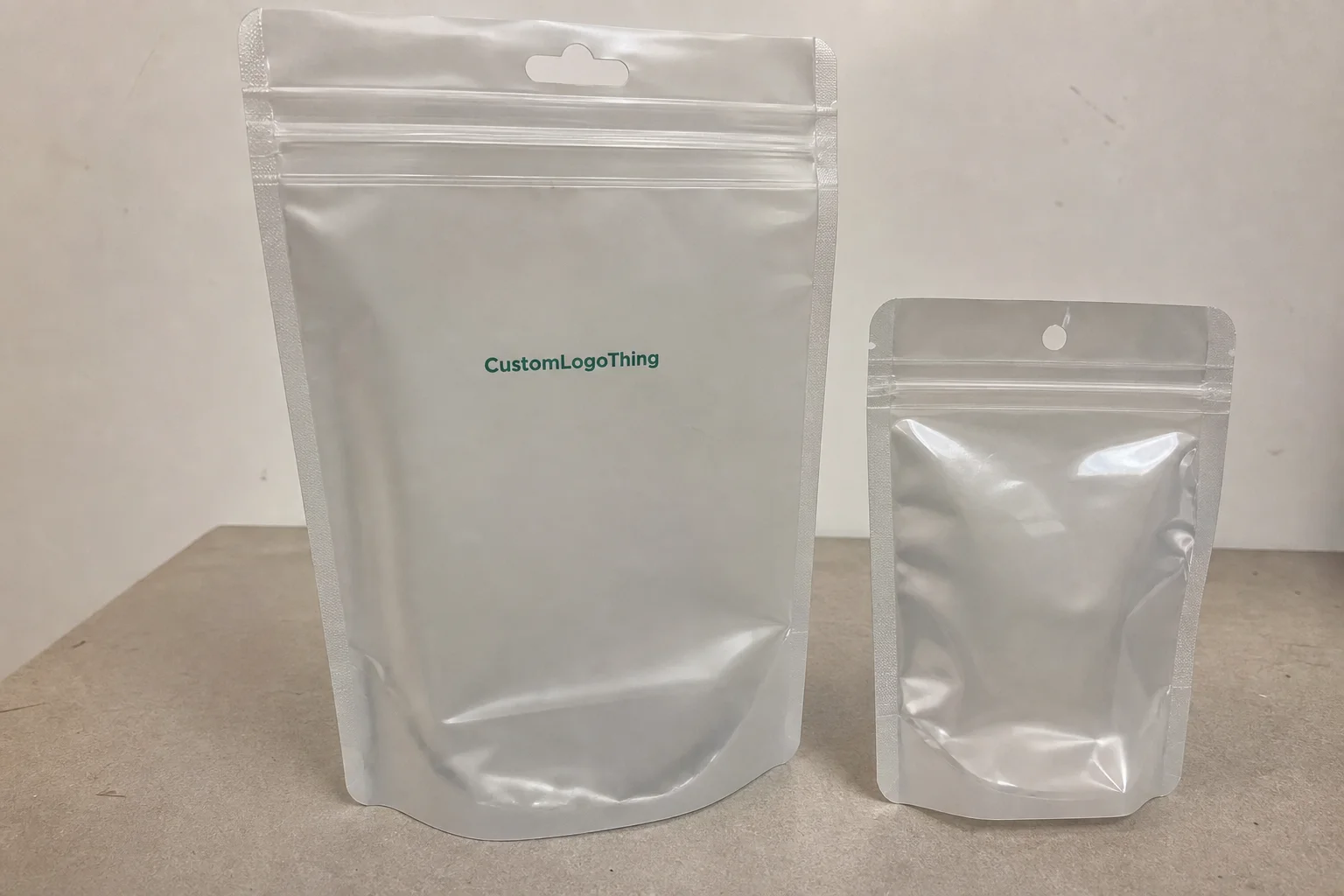
Custom design ziplock bags are made from flexible film with a reclosable zipper track near the opening. The zipper is there for repeated access, while the film and side seals handle the actual load. That sounds straightforward, but small changes in structure can alter the entire user experience. Zipper engagement force, film gauge, seal width, and bag dimensions all affect whether the finished pack feels sturdy or cheap.
The use cases are broad, but the reasons behind the choice are usually practical. Snack brands want freshness and visible shelf appeal. Supplement companies want a clean branded presentation. Hardware sellers need a simple way to keep small pieces together. Sample packs and travel-size products benefit from easy reclosure, especially when the consumer opens them several times. In retail, the bag often has to work as both product protection and display surface.
The right build depends on the product, not on a generic packaging trend. A light powder can often run in a thinner film with a standard press-to-close zipper. A heavier item may need puncture resistance, a wider seal area, or a more rigid structure. For warehouse use, the priority may be speed and clarity. For shelf display, graphic quality and shape retention may matter more. That is the real challenge with custom design ziplock bags: the best version is the one that matches the product, the fill process, and the way the customer will use it.
“A bag that photographs well is not automatically a bag that runs well. The line tells the truth.”
A useful spec sheet should start with the basics: fill weight, target dimensions, closure style, and handling environment. If the bag is for food, powders, or retail kits, those details guide the film choice, zipper selection, and print method before anyone quotes artwork. Skipping that step usually creates more revisions later.
How the Seal, Film, and Printing Actually Work
The bag is really three systems working together. The film gives the pouch body, clarity, and barrier performance. The zipper creates the reclose function. The seals hold everything together during filling, transport, and consumer use. If one part is underspecified, the entire package suffers.
Film choice has a direct impact on cost and performance. LDPE is common because it is economical, flexible, and easy to seal. PE blends can improve stiffness or hand feel. Laminated structures are used when better barrier properties, stronger surface presentation, or a more premium look are needed. Clear film lets the product show through. Matte finishes can reduce glare and make branding feel more deliberate. None of those choices is universally better. They solve different problems.
Printing workflow matters too. Some bags are printed directly, which gives a built-in look with fewer separate components. Others use labels or secondary decoration, which may fit shorter runs or products that change often. Ink coverage, registration, and artwork placement all affect the finished result. Dense coverage can look strong, but it can also increase setup complexity and cost. Artwork close to the seal area may distort once the bag is filled or compressed.
That is where buyer expectations sometimes drift away from manufacturing reality. A thicker film can improve puncture resistance, but it also changes how the zipper feels. A highly decorated surface can look premium on screen, but if the art is too close to the top seal, the finished bag may show scuffing or compression marks. The bag is not just a print surface. It is a small mechanical system.
For projects that need a broader packaging comparison, it can help to review adjacent formats such as custom printed boxes and packaging formats. Bags are usually better when flexibility, reclosure, and low shipping weight matter. Cartons can win when stacking, crush protection, or structural rigidity are more important.
Shipment testing deserves attention early, not after a claim or a reprint. Industry references such as ISTA are useful because they push the conversation toward drop, vibration, and handling stress. Shelf presentation matters, but a package that fails in transit costs more than one that merely looks plain.
Specs That Change Appearance, Protection, and Unit Cost
The specs that move the outcome most are usually the ones buyers can feel. Width, fill depth, film thickness, zipper style, and overall geometry all shape how the bag looks and performs. A few millimeters can decide whether a product stands upright, stacks neatly, or appears underfilled. That matters because visible headspace changes the perceived value of the package even when the contents are correct.
Thickness is one of the clearest cost drivers. A lighter gauge may be enough for samples or low-weight items. Heavier contents usually need thicker film to reduce stretch, puncture risk, or seal failure. More thickness generally means more material cost, but it also gives the bag more structure in hand. That matters in retail because buyers often read sturdiness as quality, even before they open the package.
Zipper style changes usability and pricing. Standard press-to-close zippers are common, efficient, and suitable for many categories. Slider zippers are easier to open and close on larger packs or products that are handled frequently, but they add cost and usually require more complex sourcing. For some products, the zipper is a visible brand signal. For others, it should be functional and unobtrusive.
Barrier requirements also matter. Food, powders, fragrance items, and some hardware products may need protection against moisture, dust, oxygen, or odor transfer. At that point, structure selection becomes part of product performance, not just packaging appearance. A polished bag that does not protect the contents is the wrong bag.
| Option | Typical Use | Relative Cost | Notes |
|---|---|---|---|
| LDPE with standard zipper | Samples, light snacks, accessories | Lower | Flexible, economical, and easy to run |
| Thicker PE blend | Heavier contents, better feel | Mid-range | Improves stiffness and durability |
| Laminated structure | Premium retail packaging, barrier-sensitive items | Higher | Better surface presentation and protection |
| Slider zipper format | Frequent reopening, larger packs | Higher | Better usability, usually more expensive |
That table is where many buyers move too quickly. The lowest quoted price is not always the lowest total cost if the bag tears, slows the line, or looks weak in retail. A spec that fits the product honestly is usually better than one that chases premium appearance without the right structure behind it.
Pricing, MOQ, and What Drives Your Quote
Pricing comes down to a handful of variables, and they stack up fast. Order quantity is usually the biggest driver because setup costs are spread across more units as volume rises. Film structure, print coverage, zipper type, and bag size all affect the quote too. If custom sizing or tooling is required, the number can move noticeably.
MOQ, or minimum order quantity, exists because the front end of production carries fixed work. Printing plates, setup time, proofing, material prep, and changeover labor all cost money before the first finished bag is made. That is why smaller runs usually have a higher unit price. It is not a penalty. It is the math of setup.
For planning purposes, a simple printed bag run may land around $0.18 to $0.28 per unit at 5,000 pieces, depending on size, zipper style, print coverage, and material choice. More complex structures, heavier film, or premium finishes can push the price higher. Treat that range as directional, not universal. The actual quote depends on the exact spec and the supplier’s production model.
Several variables are easy to miss. Artwork revisions can add time. Special finishes can add cost. Sample rounds add both. Freight can also shift the landed cost more than expected, especially when buyers compare factory pricing without including shipping, duties, or secondary handling. Two bags that look similar on a quote sheet can behave very differently in production if one has tighter seal tolerances, better material consistency, or more durable printing.
If you are still comparing package types, a review of available packaging products can help separate the structure that looks right from the structure that actually fits the job. That avoids paying for features you do not need.
Buyers with sustainability requirements should also think beyond the first quote. Resources from EPA can help frame broader packaging and waste considerations, especially if recycled content targets or end-of-life questions are part of the brief.
Process, Timeline, and Production Steps
The cleanest projects follow a simple sequence. Start with the product requirements, confirm the dimensions and material, review the artwork, approve the proof or sample, then move into production. That order matters because each step locks one part of the spec before the next one begins. When buyers skip around, rework follows.
Delays usually come from vague artwork, incorrect dielines, color uncertainty, or late-stage spec changes after proof approval. If the logo is low resolution, someone has to fix it. If the product size changes after the sample is approved, the bag may need resizing, which can affect print placement and zipper location. Small errors at the start become expensive later.
Repeat orders usually move faster than fully custom runs. If the dimensions and artwork are already approved, the process is simpler. New product launches take longer because the bag structure, print layout, and finishing details all need review. That is normal. Production time includes setup and verification, not just machine speed.
Typical lead times often fall into the 12 to 15 business day range after proof approval for straightforward jobs. More complex builds may take longer. If a sample needs to be approved first, add that time into the schedule. The fastest projects are usually the ones that arrive with complete information, not the ones that rely on urgent follow-up emails.
Here is the checklist that usually gets the most accurate quote:
- Product type and fill weight
- Target bag size and shape
- Preferred film finish: clear, matte, or mixed
- Zipper style and reclosure expectations
- Artwork status and file format
- Quantity, shipment destination, and timing needs
If those details are ready up front, the supplier can usually price the job more accurately and give a more realistic production window. That matters for branded packaging programs where bags have to align with labels, cartons, inserts, or custom printed boxes.
Common Mistakes That Lead to Rework or Weak Bags
The first mistake is sizing. A bag that is too small can over-compress the product, distort the seal, and make the zipper difficult to close. A bag that is too large can leave excessive empty space, which hurts presentation and can make the package look underfilled. Both problems are visible to the customer.
The second mistake is choosing a zipper or film that looks good in a sample but does not match the actual load. A delicate accessory and a dense powder do not ask for the same structure. Temperature swings, warehouse storage, and rough handling also matter. If the bag will be reopened many times or shipped through a long distribution chain, those conditions should be part of the spec from the start.
Artwork causes more trouble than many buyers expect. Low-resolution files blur in print. Weak contrast makes small text hard to read. Poor bleed setup can leave trimmed edges looking off-center. That is not just a design issue. It can become a reprint if the copy is unreadable or the layout sits too close to the seal zone. Good packaging depends on file prep as much as on material choice.
The last mistake is skipping a real sample check. A render can hide problems that show up immediately in hand. The questions that matter are practical: does the zipper close with an even feel, does the bag fill without fighting the product, does the finished pack sit properly on shelf, and does the print stay clear around folds and seals. If the answer is no, the spec needs work.
For products that will face harsher transit conditions, references such as ISTA testing standards are useful. They keep the review grounded in performance instead of appearance alone.
Expert Tips and Next Steps Before You Request a Quote
Before asking for pricing, prepare a simple spec sheet. Include product weight, target dimensions, finish preference, artwork status, order quantity, and whether the bag is for retail display, shipping, or internal handling. One page is often enough. It reduces back-and-forth because it gives the supplier the context needed to quote accurately.
Ask for a sample or mockup review if the project has any real risk. That should be a functional sample, not just a polished sales image. Check zipper feel, seal integrity, clarity, and artwork placement. If the bag needs to keep its shape on shelf, verify that in hand. If the customer will open it repeatedly, test the closure repeatedly. A package can look right and still behave poorly.
Compare suppliers using the same checklist. Ask what film is being used, what zipper type is included, how the print is applied, what the MOQ is, and what the lead time includes. The lowest line item is not automatically the best value. The better supplier is the one that can match the product requirements, the timeline, and the finish standard without forcing unnecessary compromise.
Think about the whole package system, not just the bag. If the project includes inserts, cartons, labels, or shipping protection, the bag has to fit into that larger structure. Sometimes the best solution is a simple bag with strong print execution. Sometimes it is a more protective structure paired with outer packaging. The right answer depends on the product and the route it takes from filling to customer use.
That is the real value of custom design ziplock bags: they sit at the intersection of product protection, usability, and shelf communication. Get the structure right, and the packaging works quietly. Get it wrong, and every other part of the system has to compensate.
What affects the price of custom ziplock bags the most?
Order quantity usually has the biggest effect because setup and prep costs spread out as volume rises. Film thickness, print coverage, zipper style, and special finishes also move the unit cost up or down.
How long does it take to produce custom zipper bags?
Timing depends on artwork readiness, proof approval, sample needs, and how complex the structure is. Simple repeat orders usually move faster than fully custom runs with new art, special materials, or extra review rounds.
Do I need a minimum order for custom design ziplock bags?
Most suppliers have an MOQ because printing, setup, and material preparation require fixed startup work. If you need a smaller run, expect a higher per-bag cost or ask whether stock sizes with custom printing are available.
What artwork should I prepare before requesting a quote?
Have your logo, copy, dimensions, color goals, and any regulatory or usage notes ready. A dieline, high-resolution files, and clear placement instructions help reduce revisions and speed up proofing.
How do I know which material is right for my bag?
Match the material to the product: clarity for retail display, stronger barrier for sensitive contents, and puncture resistance for heavier or sharper items. Ask for guidance on film gauge, finish, and zipper type so the bag performs well in filling, shipping, and end use.


