Custom embossed hang tags can change the way a product is read before a customer has time to evaluate price, materials, or even fit. That sounds like a marketing claim, but the effect is practical: a raised mark catches light, creates shadow, and signals more care than a flat printed label usually can. On premium apparel, jewelry, candles, and gift items, that tactile detail becomes part of the packaging system rather than a loose accessory.
The buyer’s reaction is usually immediate. Embossing gives a board tag depth and texture, and those two traits matter in retail because shoppers make snap judgments from a few inches away. If the tag feels intentional, the product often feels intentional too.
What custom embossed hang tags are—and why they stop the eye
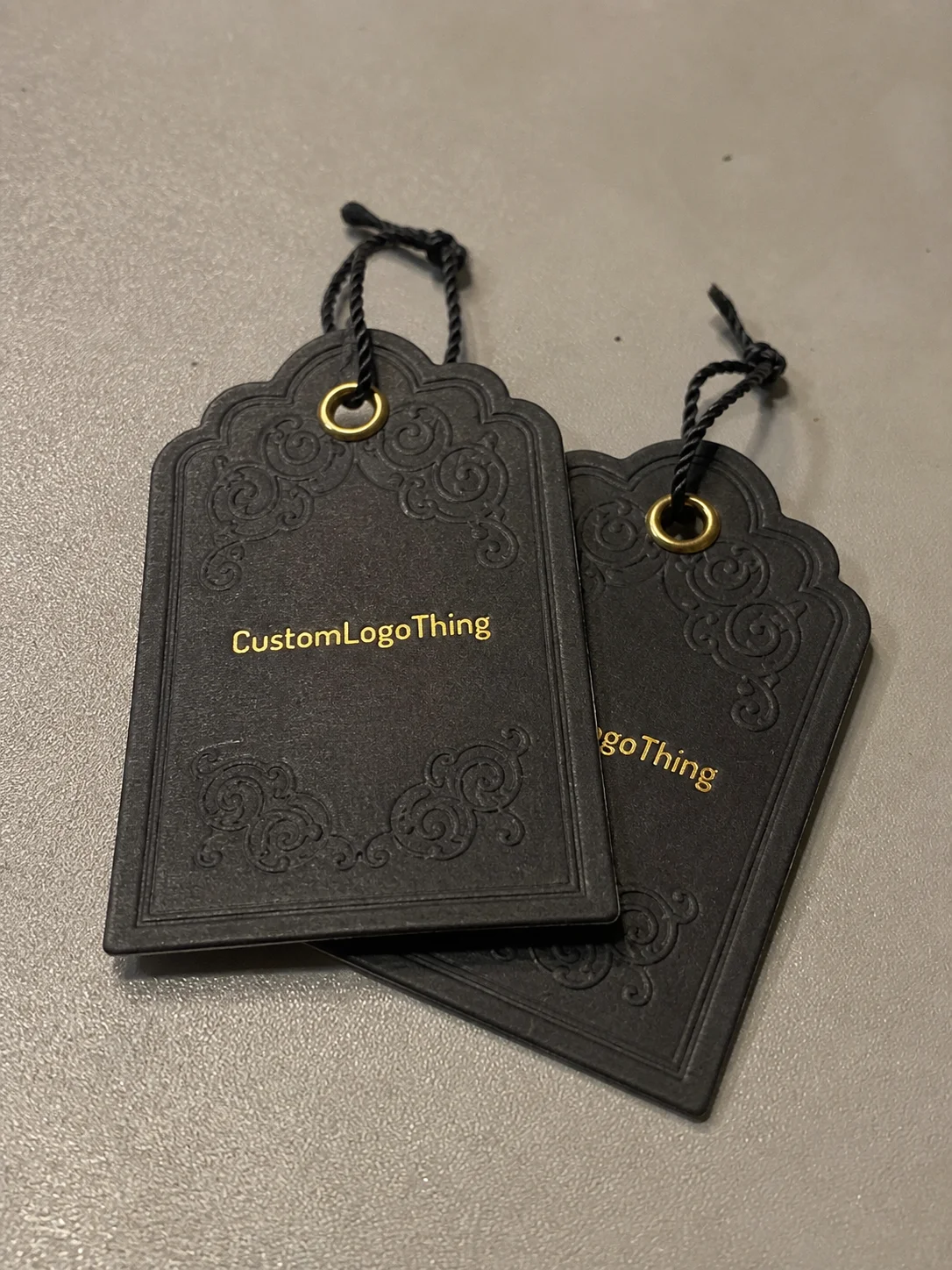
Embossed hang tags are created by pressing paperboard between matched dies so selected areas rise above the surface. The effect comes from pressure, not ink. A logo, monogram, border, or symbol ends up with a dimensional form that picks up light differently across the tag, which is why custom embossed hang tags often feel more premium even when the design uses very little color.
They are not the same as standard printed tags, which depend entirely on ink coverage, and they are different from debossed tags, where the image is pressed inward. Foil stamping adds reflectivity. Embossing adds depth. Put both on one tag and the result can be striking, but the production demands rise quickly as well. A lot of brands overbuild the brief before they have confirmed whether the artwork can actually hold up on press.
These tags fit best where the packaging needs to carry part of the value story: apparel hang tags, jewelry tags, candle tags, limited-edition retail items, gift products, and premium subscription packaging. The strongest results usually come when the tag matches the rest of the packaging language instead of trying to outshine it.
Here is the comparison buyers usually need:
| Tag type | Look and feel | Best use | Typical tradeoff |
|---|---|---|---|
| Flat printed tag | Clean, simple, cost-efficient | High-volume basics, retail SKUs with limited margin | Less tactile presence |
| Foil-stamped tag | Reflective, attention-grabbing | Luxury cues, logos, accent marks | Can look loud if overused |
| Debossed tag | Indented, understated | Minimalist branding, heritage styles | Less visible from a distance |
| Custom embossed hang tags | Raised, tactile, refined | Premium apparel, beauty, gifting, special runs | Needs better stock and tighter artwork control |
A small raised logo often does more for perceived quality than a much larger printed graphic. That is especially true when the rest of the tag is restrained.
How the embossing process works from artwork to press
The process starts with artwork prep, and this is where many first-time buyers underestimate the constraints. Embossing needs vector files, clean outlines, and forms that can survive pressure without collapsing into soft edges. A supplier will usually check line thickness, spacing, and whether the raised area is realistic for the selected stock. Thin serif details, hairline borders, and tiny copy are usually the first problem areas.
Then comes die creation. Embossing relies on a matched die and counter-die: one shapes the raised surface, the other supports the reverse side. Under pressure, the board is compressed rather than cut through. That is why the stock matters so much. A sheet that is too light will not hold the impression cleanly, while a very soft sheet may crush more than it rises.
Strong embossing is usually reserved for logos, icons, monograms, borders, seals, and short type treatments. It is less forgiving with crowded artwork or tiny repeating patterns. A useful rule of thumb is to keep raised details bold and separated, with enough negative space around them so the press can make a crisp impression.
When embossing is paired with printing, foil, or spot UV, registration becomes much more sensitive. If the printed artwork and the embossed area are even slightly misaligned, the tag looks off. Good suppliers build proofs around exact placement so you can inspect where the impression lands before production begins. That is one reason file prep and proof review matter more here than on a basic flat tag.
Packaging teams should also think about handling, transit, and shelf wear. If the tags are traveling inside larger Custom Packaging Products orders, the board has to survive fulfillment without scuffing, curling, or denting. For shipping-related expectations, many teams refer to distribution testing frameworks such as ISTA when tags are part of a broader packaging program.
Cost and pricing factors that shape your quote
Pricing for custom embossed hang tags is shaped by several moving parts, and setup costs matter almost as much as unit price. The main variables are stock thickness, size, number of print colors, emboss area, foil additions, and any extra finish such as soft-touch lamination or spot UV. A simple 2 x 3.5 inch tag on 14pt board is a very different order from a thick 28pt cotton stock with foil and a double-sided emboss.
Low quantities usually cost more per tag because tooling and press setup have to be spread across fewer pieces. That is the part many teams miss when they compare quotes. A 500-piece run can feel expensive next to a 5,000-piece order even if the design is identical. If the SKU count is growing, it often makes sense to compare several quantity tiers before locking the specification.
MOQ also matters. If you are ordering multiple versions—different sizes, product lines, or seasonal variants—those separate setups add up quickly. Custom shapes increase cutting costs, and custom embossed hang tags with more than one foil color or specialty finish can push the quote up faster than expected.
Stock choice is another major lever. Standard paperboard is usually the most economical option. Heavier cotton stocks, textured uncoated papers, and FSC-certified recycled boards typically cost more, but they also improve tactile quality and emboss clarity. For teams balancing sustainability with premium presentation, asking for FSC options early saves back-and-forth later; the Forest Stewardship Council outlines certification details at fsc.org.
Practical tradeoffs help when the budget is tight:
- Prioritize tactile impact if the tag is the main premium cue.
- Prioritize print detail if the design depends on small text, legal copy, or multiple SKUs.
- Prioritize finishing if the brand sells on visible luxury cues like foil, soft-touch, or layered effects.
A realistic price frame is useful. For small to mid-size production, emboss-only tags may land around $0.18-$0.28 per unit at 5,000 pieces, while more complex versions with foil, lamination, or heavier board can move higher. Smaller runs usually cost more per unit because setup is spread across fewer tags. That is common enough to affect budgeting decisions before you request quotes.
Production steps and turnaround: what to expect before approval
The route from quote to finished tag usually follows the same pattern: brief, artwork review, proof, die making, production, finishing, inspection, and shipping. Complexity changes the pace. A clean order can move fairly quickly; a multi-finish job with several revision rounds rarely does.
Two bottlenecks show up again and again. Die making takes longer when the artwork is intricate. Artwork revisions slow things down when the logo is too thin or the clear space is too tight. Matching foil, ink, and emboss depth can also require another approval round. If the tags have to hit a launch date, build time for both proofing and one extra pass.
Buyers should distinguish between digital proofs and physical samples. A digital proof confirms layout, dimensions, and placement. It is useful for catching obvious errors. A physical sample or print-and-press proof is more useful when the embossed effect itself is the decision point. If the team is debating whether the depth feels premium enough, a screen mockup will not answer that.
“The tag looked good on screen, but the actual press sample told us the truth. The emboss depth either held the brand tone or it didn’t.”
For a straightforward embossed tag order, 12-15 business days from proof approval to shipment is a common working estimate. More complex jobs may need longer. That is not a guarantee; material availability, finishing steps, and response time on approvals all affect the schedule. A supplier that gives you a calendar with checkpoints is usually easier to plan around than one that only says the job is in progress.
If the tags are part of a broader Custom Labels & Tags program, the timeline should be coordinated with the rest of the packaging rollout. When multiple pieces need to arrive together, approval discipline matters more than most teams expect.
Design choices that make embossed tags look expensive, not busy
The best embossed tags usually look simple at first glance. That is not a lack of effort. It is restraint. The emboss needs room to breathe, so generous margins and a single focal point often work better than a crowded layout packed with claims, icons, and multiple type styles.
Blind embossing is a strong option when the brand voice is understated. It uses depth without ink contrast, which can feel quiet and refined. Foil plus embossing creates stronger contrast and more shelf impact. If the product needs to stand out in a dense aisle, that combination may be the better fit. If the brand sits in high-end apparel or minimalist retail packaging, blind embossing often feels more controlled.
Typography matters more than many teams expect. Heavier type weights tend to emboss more reliably than ultra-light fonts. Short headlines work better than long statements. Two typefaces are usually enough; three often starts to feel overdesigned. On custom embossed hang tags, legibility has to survive both distance and touch.
Material choice changes the emotional read of the piece. Soft-touch lamination feels smooth and modern. Cotton stocks feel warm and artisanal. Uncoated boards read more natural. Recycled stocks can support a sustainability story if the finish still holds the impression cleanly. For brands that want environmental context, the U.S. EPA’s packaging waste resources at epa.gov are a useful starting point when thinking about broader material choices and end-of-life expectations.
Attachment details matter too. String, ribbon, eyelets, and punched holes all change the final presentation. A cotton string feels softer and more lifestyle-oriented. A black ribbon reads more giftable. A metal eyelet adds structure and helps heavier tags resist hole tearing. Those small choices affect how the tag hangs on a garment, bottle, or box.
If the product line also uses custom printed boxes or inserts, the tag should match that visual tone. Consistency across product packaging makes the whole system feel more deliberate. Customers rarely describe that alignment explicitly, but they notice it quickly.
Common mistakes that weaken the final result
The most common mistake is trying to emboss artwork that is too fine. Ultra-thin lines, tiny type, and cramped logos often lose clarity once they hit the press. The second mistake is choosing stock that is too thin or too smooth to hold a strong impression. A good-looking file does not guarantee a good-looking finished tag.
Skipping proof review is another easy way to waste money. If the depth is too shallow, the foil edge is off, or the logo sits too close to the trim line, you want to catch that before production. Once the run is printed and pressed, fixing it gets expensive quickly.
Another issue is treating every SKU the same. A hero product and a value line should not always share the same tag size or finish. Premium lines can justify thicker boards or more detailed embossing; higher-volume basics may need a simpler treatment to protect margin.
Hidden cost traps usually show up late. Rush jobs, late artwork changes, and overcomplicated finishing requests can all add fees. If the brief keeps expanding after quote approval, the final invoice usually does too. That pattern is common enough to plan around.
- Avoid artwork below roughly 0.5 pt line weight for raised details.
- Leave enough negative space around the embossed element.
- Confirm hole placement before finishing starts.
- Check that any foil or print layers align with the emboss plan.
Expert tips for getting better results on your first order
Start with one hero design. Many brands try to launch five variations at once, then spend more time managing exceptions than learning what works. One strong design gives a cleaner read on emboss depth, paper feel, and customer response.
Pick one tactile feature and let it carry the design. If embossing is the main event, keep the rest quieter. If foil is the star, reduce other visual noise. Packing too many finishes into one tag usually weakens the effect. Restraint often looks more expensive than clutter.
Ask for a print-and-press proof if the raised effect is central to the brand story. One sample can tell you whether the logo is legible, whether the border is crisp, and whether the stock is holding the impression without cracking. For a first run, that sample is often worth the extra step.
Build a reusable spec sheet after the first approved order. Include size, paper stock, hole diameter, hole placement, string style, artwork format, finish notes, and approved color references. The next time you reorder custom embossed hang tags, you will remove a surprising amount of back-and-forth.
Think about the tag as part of the full retail package. If the tag, box, insert card, and internal label all speak the same visual language, the brand feels organized. That matters whether you sell apparel, beauty, or premium gift products.
Next steps: build a production-ready spec for your hang tags
If you are moving toward production, create a one-page brief before asking for quotes. Include dimensions, quantity, artwork files, preferred stock, finish preferences, target launch date, and whether you want digital proofing or a physical sample. A better brief almost always produces a cleaner quote.
It also helps to collect two or three reference images. Not to copy them. To define the level of emboss depth, contrast, and texture you want. One brand may want a deep, dramatic impression. Another may prefer a restrained raised mark that reads more editorial. That distinction changes the spec more than many buyers expect.
Prioritize your goals before comparing suppliers. Do you want the best premium look, the lowest unit cost, the fastest turnaround, or the most detail? You can usually optimize for two of those. All four is rare.
When quotes come back, ask for a clean breakdown: setup, materials, finishing, and shipping. That makes comparison easier than looking at one blended number. It also shows where you can save money without damaging the result.
Before approval, review the checklist one last time: artwork, spelling, hole size, string choice, stock weight, finish order, and delivery window. Then place the order with enough time for sampling and revisions. That is how custom embossed hang tags become a controlled part of branded packaging instead of a last-minute gamble.
For brands that want a premium tactile cue without losing control of cost or timing, custom embossed hang tags are one of the most efficient places to start.
What makes custom embossed hang tags different from standard printed tags?
Embossed tags use raised pressure to create tactile depth, while standard printed tags rely on ink alone. The raised effect adds contrast and a more premium feel without needing extra color. They work especially well when the goal is to make a logo or brand mark stand out quickly.
Are custom embossed hang tags expensive to make?
They usually cost more than flat printed tags because of die setup, specialty pressing, and material requirements. Unit cost often drops as quantity rises, but setup fees can make small runs feel expensive. Final pricing depends on stock choice, size, emboss area, and whether foil or other finishes are added.
What file type should I send for embossed tag artwork?
Vector files are best because they keep edges clean and scalable for die making. Simple artwork with clear lines, strong shapes, and adequate spacing produces the sharpest emboss. Your supplier may also ask for layered files if embossing will be combined with print or foil.
How long does the production process usually take?
Timing depends on proofing, die creation, material availability, and finishing complexity. Simple jobs move faster, while custom shapes or multi-finish tags usually take longer. Ask for a production calendar that separates approval time from manufacturing time so you can plan launches accurately.
How can I choose the right stock for custom embossed hang tags?
Look for thicker, sturdier paper stocks that hold raised detail well. Texture and softness can enhance the premium effect, but very smooth or thin stock may reduce emboss clarity. If sustainability matters, ask about recycled or FSC-certified options that still support a crisp impression.