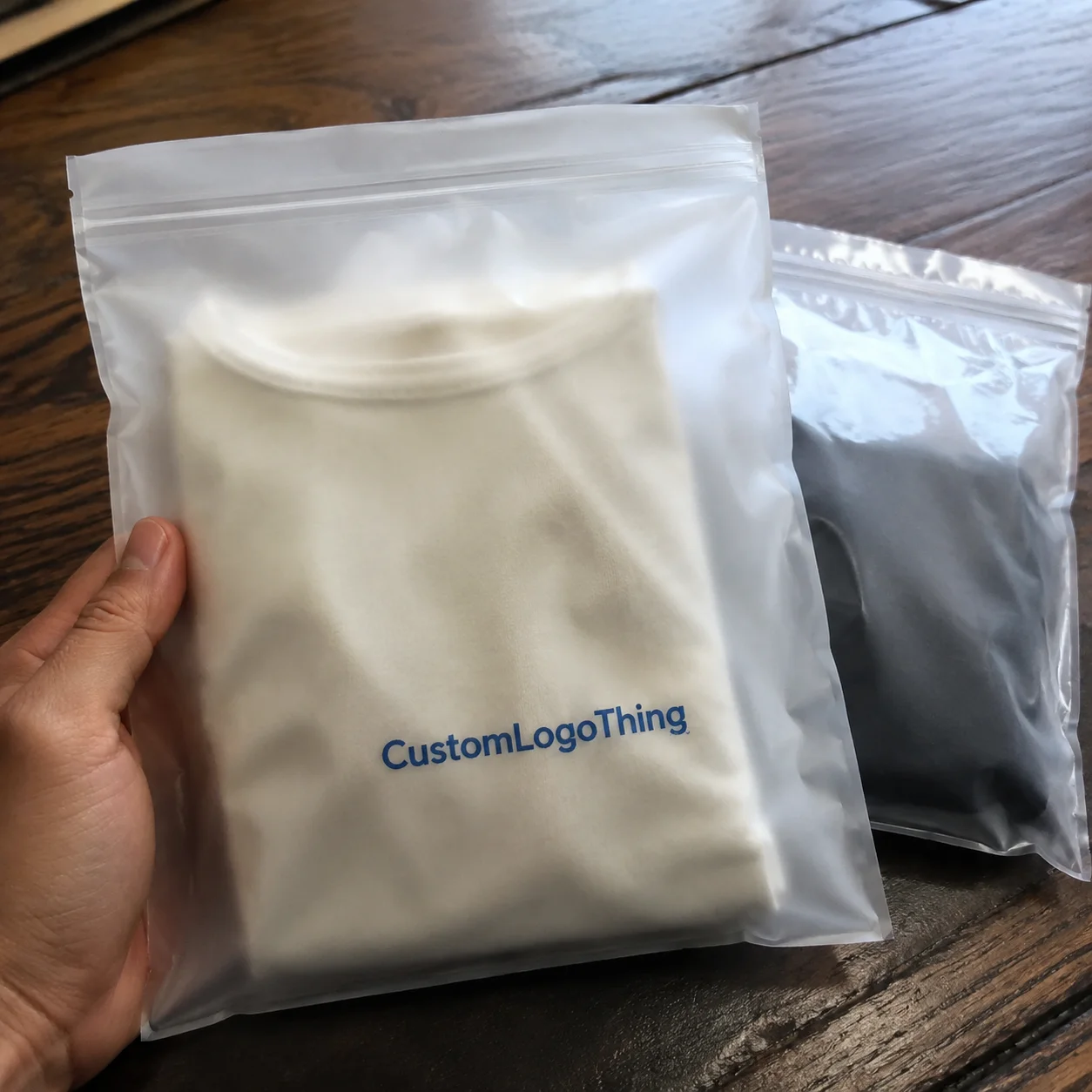
Two Clear Zipper Bags can look nearly identical on a product table. One survives packing, freight, shelf handling, and repeated customer use. The other splits at the side seal, turns hazy after a few handling cycles, or feels too flimsy for retail. The difference usually sits in the material, gauge, zipper profile, and converting quality, not the bag size printed on the quote.
A practical clear Zipper Bags Material guide gives buyers a way to judge those choices before money is locked into tooling, printing, inventory, and packing labor. Clear zipper bags are reclosable plastic bags made for product visibility, repeat opening, dust protection, and light scuff resistance. The right version depends on product weight, storage temperature, surface finish expectations, safety requirements, display method, shipping path, and how the customer will handle the bag after purchase.
Clear Zipper Bags Material Guide: What Buyers Miss First
Most buyers start with size. That is reasonable. A 4 inch by 6 inch bag sounds simple until the product includes a folded insert, a thick edge, a euro slot, a barcode, and a logo that cannot sit too close to the zipper track.
Material often becomes the second question. It belongs in the first round of decisions.
LDPE, or low-density polyethylene, is soft, flexible, and forgiving. It is common for apparel, sample kits, soft accessories, promotional bundles, and general-purpose packaging. HDPE, or high-density polyethylene, is stiffer and often economical, though it tends to have a cloudier appearance and a crinklier hand feel. PP, short for polypropylene, is crisper and glossier, with the clear retail presentation buyers expect for stationery, cosmetics tools, printed inserts, and lightweight accessories. PVC can offer heavy-duty clarity for selected applications, but regulatory, environmental, and end-market expectations need checking before it is specified.
That is the first job of a material guide: separating a visual preference from a working specification. "Clear" is not a fixed material grade. Clarity changes with resin type, film thickness, processing method, additives, recycled content, surface texture, and converting quality. A bag can be transparent and still look dull on a retail peg if the film is hazy, the gauge is too heavy, or the surface picks up scuffs during packing.
Specialty films fill gaps left by standard resin choices. Anti-static materials help protect sensitive electronic components. Freezer-grade films resist brittleness in cold storage. Barrier structures can slow moisture or aroma transfer for certain dry goods, though a zipper bag is not automatically high-barrier packaging unless the film structure is built for that job.
Buyer rule of thumb: choose the bag around the real use path, not only the product photo. Packing pressure, shelf handling, carton compression, and customer reclosure expose weaknesses that flat samples can hide.
A useful clear zipper bags material guide should compare feel, durability, zipper performance, branding, cost, and production timing before a quote request goes out. That keeps the discussion grounded in performance instead of guesswork from a catalog line.
How Zipper Bag Materials Work in Real Use
Most clear zipper bags begin as blown or cast plastic film. The film is folded or formed, the zipper profile is added or sealed into place, side seals are made with heat and pressure, and the bag is cut, punched, printed, counted, and packed. Simple package. Tight process.
The film and zipper have to behave as one system. A soft film with a heavy zipper profile may feel lumpy or hard to close on a small bag. A stiff film with a light zipper may pop open if the product presses against it. Zipper performance depends on profile fit, film stiffness, seal width, alignment, and the number of times the customer will open and close the package.
LDPE feels soft because its molecular structure gives the film flexibility and good elongation. That stretch helps when packers load soft goods, cable kits, fabric patches, cosmetics accessories, or promotional bundles that are not perfectly flat. A 2 mil LDPE zipper bag can feel more durable in real handling than a thinner, crisper film because it bends around the product instead of fighting it.
PP is usually glossier and clearer. It gives a more rigid, window-like look that suits lightweight retail products, instruction cards, stickers, stationery, small beauty tools, and items where presentation carries more weight than flex. The tradeoff is lower tolerance for bulky corners or sharp edges, especially if the bag is undersized.
HDPE can be a practical choice for parts bags, utility packaging, and back-of-house organization. It is often thinner and stiffer at a given feel, which can help cost. It does not usually deliver the same premium clarity as PP or the soft hand of LDPE.
Buyers also compare related formats during sourcing: transparent reclosable bags, clear poly bags, resealable packaging, slider bags, and zipper lock bags. The names overlap in purchasing conversations, but construction may differ. A press-to-close zipper on a retail pouch is not the same experience as a slider closure, a tamper-evident pouch, or a plain open-end poly bag sealed with tape.
| Material | Typical Feel | Best Fit | Watch For |
|---|---|---|---|
| LDPE | Soft, flexible, smooth | Apparel, kits, samples, soft goods | Less crisp clarity than PP |
| PP | Glossy, crisp, rigid | Retail display, stationery, inserts, light accessories | Less forgiving around bulky products |
| HDPE | Stiff, light, economical | Utility bags, hardware sorting, warehouse use | Cloudier appearance in many gauges |
| Specialty Films | Depends on structure | Food, freezer, anti-static, barrier needs | Higher MOQ, longer approval cycle |
Performance needs should be named early: puncture resistance, tear resistance, cold-crack behavior, print adhesion, recyclability considerations, and product compatibility. Dry apparel behaves differently from oily tools, powdery mixes, sharp hardware, candy, snacks, and sensitive electronic parts. Sustainability programs may compare clear zipper bags against corrugated cardboard, kraft paper, recycled materials, FSC certified paper inserts, or packaging with post-consumer recycled content. The right answer depends on protection, shelf life, transport damage, and local recovery options.
What a Buyer-Focused Material Guide Should Cover
A strong material guide should include resin type, film gauge, clarity target, zipper style, seal strength, product fit, safety requirements, print method, order quantity, and distribution conditions. The list sounds long until one failure occurs. Then each item becomes obvious.
For retail packaging, start with what the customer sees: clarity, gloss, scuff visibility, artwork placement, hang hole position, and how flat the bag sits on a peg or shelf. For warehouse and kit packing, start with loading speed, tear resistance, zipper reliability, carton compression, and whether the contents can puncture the side seal.
The best guide does not push every buyer toward the thickest film. It asks what the bag must survive. A 1.5 mil PP bag may be exactly right for a flat sticker pack with a bright insert card. A 3 mil LDPE bag may be the better choice for a cable kit with molded parts. A specialty anti-static film may be non-negotiable for electronics, even if a standard clear bag looks similar in a photo.
The buyer also needs to define the inspection standard. Is a light surface scratch acceptable on a utility parts bag? Probably. On a premium cosmetics accessory pack with a high-gloss insert, the same scratch may make the package look handled before it reaches the shelf. Packaging quality is partly engineering and partly expectation management. Both belong in the spec.
Key Material Factors: Thickness, Clarity, Strength, and Safety
Thickness is usually expressed in mils in the U.S. market or microns in many international specifications. One mil equals 0.001 inch, or about 25.4 microns. Common lightweight clear zipper bags may run around 1.5 to 2 mil. Heavier retail kits, apparel, hardware, or samples with edges may move into the 3 to 4 mil range.
Thicker is not automatically better. A 2 mil LDPE bag may feel better for soft goods than a thinner PP bag because it has more flex and less brittle handling around corners. A thinner PP bag may look cleaner and brighter on a retail display if the contents are flat and lightweight. Film thickness is one variable in a system, not a universal quality score.
Clarity is easier to judge with a sample than a spec sheet. PP often gives the crispest window-like appearance. LDPE has a softer translucent-clear look. HDPE can look cloudier, especially as gauge increases or recycled-content blends change optical properties. If the product uses a printed insert card, view the card through the actual film. A loose sheet on a desk will not tell the full story.
Strength is also a system. Film gauge matters, but side welds, bottom seals, zipper profile, seal temperature, dwell time, cooling, and packed product geometry all matter too. Failures often show up at pressure points: the corner of a metal part, the folded edge of a thick garment, or the spot where an overfilled product pushes below the zipper.
Food and safety requirements need direct language. Clear zipper bags can be made for candy, snacks, dry ingredients, or other food-contact uses, but the buyer must state that requirement before sampling and quoting. Food-contact resin, compliant additives, suitable inks, and documentation may all matter. For general packaging context, the Packaging Association offers useful industry information, and transport testing methods from ISTA can help frame how packaging performs through distribution.
Add-ons can change the material choice. Hang holes and euro slots need enough film strength around the punch area. Vent holes help trapped air escape during packing but reduce dust protection. Suffocation warnings are commonly required for larger poly bags in many retail and distribution programs. Frosted finishes, write-on panels, anti-static film, tamper-evident features, and custom logo printing all need to be specified before the supplier chooses film and process conditions.
Printing adds another layer of risk. Ink adhesion depends on resin type, surface energy, corona treatment, ink system, cure, and how close the artwork sits to seals, folds, and the zipper track. Very glossy PP can print beautifully, but it needs proper surface treatment for durable branding. A sharp logo on a proof means little if it scuffs during packing.
Pricing and Unit Cost Drivers for Clear Reclosable Bags
Unit cost starts with resin usage. Bag width, height, lip, zipper type, film thickness, and yield from the production web all affect how much material is used per piece. A move from 2 mil to 3 mil can raise material weight by roughly 50 percent before printing, packing, or freight are counted.
Small dimension changes can matter more than they appear to. Increasing a bag from 5 inches by 7 inches to 6 inches by 8 inches adds film area, carton volume, and sometimes a different production setup across 10,000 pieces. Plastic bags are priced heavily around material weight and production efficiency, not just the visible size of the finished pouch.
MOQ depends on how custom the job is. Stock-size plain clear zipper bags may be available in low quantities, often by the case. Custom printed bags, nonstandard gauges, colored zipper profiles, specialty additives, unusual sizes, or custom film structures usually need higher minimums because the run has to justify setup, film, print plates, press time, and conversion scheduling.
| Specification Path | Typical Use | Cost Direction | Practical Notes |
|---|---|---|---|
| Stock plain LDPE | Samples, parts, general packing | Lowest setup cost | Good for testing fit before custom printing |
| 2 mil custom printed LDPE | Light retail goods and kits | Moderate | Often a balanced starting point for logo bags |
| 3 mil LDPE | Heavier apparel, bundles, hardware | Higher material cost | Better flex and toughness for pressure points |
| Clear PP with custom print | Premium-looking light retail items | Moderate to higher | Excellent clarity, less forgiving if overfilled |
| Specialty anti-static or food-contact film | Electronics or regulated product categories | Higher | Confirm documentation and testing requirements early |
Printing cost varies by method and coverage. A one-color logo on one side is usually the most economical custom branding route. Multi-color artwork, tight registration, full-coverage designs, or front-and-back printing raise setup and production complexity. For early-stage programs, a printed label or branded insert card may be more realistic than custom film printing, especially if the order quantity is still under a few thousand pieces.
Realistic pricing depends on size and quantity. A small custom printed clear zipper bag might land around $0.08 to $0.22 per unit at several thousand pieces, while larger or heavier printed bags may run $0.20 to $0.55 or more. Specialty films, low quantities, multiple print colors, and air freight can push that higher. Treat these as planning ranges, not fixed promises, because resin markets, labor, freight, and artwork requirements move the final number.
The hidden cost is under-specifying the bag. Split seams create returns. Cloudy film weakens presentation. A rough zipper slows packing and frustrates customers. Repacking labor can cost more than the bag itself, especially if a seasonal launch or subscription program has a narrow shipping window. Ask for quotes with two or three material options side by side, such as 2 mil LDPE, 3 mil LDPE, and clear PP, so unit cost can be compared against feel and performance.
Production Steps and Lead Time From Sample to Delivery
Good production starts before the film is made. Confirm the product dimensions, choose the film type and gauge, decide on zipper style, identify features such as hang holes or warnings, review artwork, approve dielines or print proofs, produce samples if needed, manufacture the run, inspect, pack, and ship.
Sizing should start with the actual product in its packed shape. Flat catalog measurements miss product depth, rounded corners, bulky folds, instruction sheets, insert cards, and the clearance needed above the product so the zipper closes without stress. For many small retail items, adding 1/4 inch to 1/2 inch of practical clearance can make loading smoother, though thick products may need more.
Sampling can be simple or detailed. Stock samples help compare LDPE softness, PP crispness, gauge, clarity, and zipper feel. Printed proofs confirm logo size, placement, color, and warning text. Pre-production samples make sense for higher-volume programs, tight retail launches, or packaging that must pass internal fit, drop, or shelf display checks before the order is released.
Lead time depends on the specification. Standard film, a common size, and simple one-color printing tend to move faster. Custom film blends, specialty additives, multi-color printing, imported components, unusual zipper profiles, or formal pre-production approvals can add days or weeks. A reasonable planning window might be 10 to 20 business days after proof approval for straightforward domestic custom work. More complex programs may need 4 to 8 weeks including sampling and transit.
Inspection matters. On the floor, the checks are practical: zipper alignment, side seal strength, print registration, bag opening ease, film scratches, gauge consistency, hole punching position, carton labeling, and count accuracy. ASTM test methods may be used for film properties such as tensile strength or thickness, while ISTA-style distribution thinking helps buyers consider what happens after the cartons leave production.
Build in time for product fit testing. Retail launches, trade show kits, seasonal packing, and subscription boxes can all stall over one missed dimension or a zipper that is hard to close after the product is loaded. A material guide is most useful before the deadline is tight, because packaging decisions get expensive when sampling is skipped.
Common Mistakes When Choosing Clear Zipper Bag Film
The first mistake is buying by thickness alone. A stiffer material can feel stronger in the hand, but it may split around bulky contents if it cannot flex. A softer film may survive packing and shipping better because it bends instead of concentrating stress at one corner.
The zipper track gets ignored too often. A bag can have excellent film and still feel cheap if the zipper is too tight, hard to start, weak after repeated openings, or misaligned across the mouth of the bag. For products customers reuse, test the zipper through at least 10 to 20 open-close cycles with the actual product inside.
Chasing maximum clarity can create other problems. Glossy film shows scuffs. Static can pull dust or light powder onto the surface. Oily parts can leave marks. A product with loose fibers may make a very clear bag look messy after handling, while a slightly softer film or frosted finish may hide normal retail wear better.
Artwork placement is another frequent miss. Logos placed too close to the zipper, side seal, hang hole, or fold line can distort or rub during converting. On small bags, every millimeter of usable print area matters. A 1/8 inch shift can be the difference between clean branding and a logo pinched into the seal zone.
Overfilling causes many seam failures. A bag should be sized for the real product depth and loading method, not just flat length and width. If packers have to stretch the mouth to load the item, the side seals and zipper corners are already under stress before the carton is closed.
Regulatory oversights can be expensive. Larger poly bags may need suffocation warnings depending on size and distribution requirements. Food-contact suitability should be confirmed before resin, ink, or additives are chosen. Electronic components may need anti-static film rather than a standard clear reclosable bag. Sustainability claims need the same discipline. Terms such as biodegradable packaging, recycled materials, and post-consumer waste should match the actual structure and any applicable documentation.
Test the bag through the real path: packing bench, master carton, warehouse, retail display, customer opening, and reuse. Many problems only appear after handling, pressure, and time. A clear zipper bags material guide earns its keep by turning those failure points into questions before the purchase order is placed.
Build a Material Spec Before You Request a Quote
Before requesting pricing, build a short working spec. It does not need to be polished, but it should be complete enough for a supplier to quote the right thing instead of filling in blanks with assumptions.
- Product dimensions in packed shape, including thickness and corners
- Product weight per bag and expected carton count
- Sharp edges, delicate surfaces, powders, oils, or static-sensitive parts
- Desired clarity: soft clear, high-gloss clear, frosted, or utility grade
- Preferred feel: flexible, crisp, stiff, or heavy-duty
- Expected number of zipper reclosures during use
- Storage temperature, freezer exposure, humidity, or sunlight exposure
- Food-contact, suffocation warning, anti-static, or other safety needs
- Print artwork, ink colors, print area, and logo placement
- Target order quantity, destination, deadline, and packing method
Measure the product after it is folded, bundled, wrapped, or paired with an insert card. Then add practical clearance for loading and zipper closure. A bag that fits perfectly flat on a measuring table may still be too tight for a packing team working through 2,000 units in a shift.
Choose two likely material paths before quoting. One can be performance-first, such as 3 mil LDPE with a strong zipper for heavier kits. The other can be cost-conscious, such as 2 mil LDPE or clear PP for lighter retail items. That comparison makes tradeoffs visible: unit cost, hand feel, shelf clarity, print quality, and packing speed.
Request physical samples whenever touch, clarity, stiffness, or zipper feel affects the buying decision. Photos rarely show the difference between LDPE softness and PP crispness accurately. They almost never reveal whether a zipper profile feels right after repeated opening.
Send the supplier the bag size, material preference, gauge, artwork, quantity, closure style, special features, destination, deadline, and compliance requirements. Include the real product dimensions and product weight if possible. The goal is not to overcomplicate the quote. It is to make the quote useful: a bag that looks clean, protects the product, runs smoothly at packing, and lands at a realistic unit cost.
FAQ
What is the best material for clear zipper bags?
LDPE is usually best for soft, flexible everyday packaging; PP is best when crisp clarity and retail presentation matter; HDPE can work for economical utility bags; and specialty films should be used for food, freezer, anti-static, or higher-barrier needs. The best choice depends on product weight, sharpness, desired feel, print method, storage conditions, and how often the zipper will be opened and closed.
How thick should clear reclosable bags be for retail products?
Many lightweight retail items use films around 1.5 to 2 mil, while heavier kits, apparel, hardware, or products with edges may need 3 mil or thicker depending on the resin and bag size. Thickness should be tested with the actual product because film type, seal strength, and overfill pressure matter as much as the mil number.
Are clear zipper bags food safe?
They can be food safe when made from food-contact suitable resin and manufactured for that purpose, but buyers should never assume all clear zipper bags meet food packaging requirements. Food use should be stated before quoting so the supplier can confirm material grade, inks, additives, and any documentation needed for the product category.
What affects the cost of custom clear zipper bags most?
The largest cost drivers are bag size, film thickness, material type, order quantity, print colors, zipper style, special features, and shipping volume. Custom printing, unusual sizes, specialty films, and low quantities usually raise the unit cost, while standard sizes and larger runs generally improve pricing.
How long does it take to produce custom clear zipper bags?
Lead time depends on whether the bag uses stock material or custom film, how complex the printing is, whether samples are required, and how quickly artwork and specifications are approved. Buyers should allow time for fit testing, proof approval, production, inspection, packing, and transit, especially for retail launches or seasonal programs.