Custom engraved labels for clothing order better tags starts with a simple idea: the label should last as long as the garment feels worth keeping. A well-made engraved label identifies the piece without relying on surface ink that can fade, peel, or fray. For brands that care about presentation and durability at the same time, engraved labels sit between product trim and packaging: a small component that still changes how finished the item feels in hand.
Why Custom Engraved Labels Stand Out on Clothing
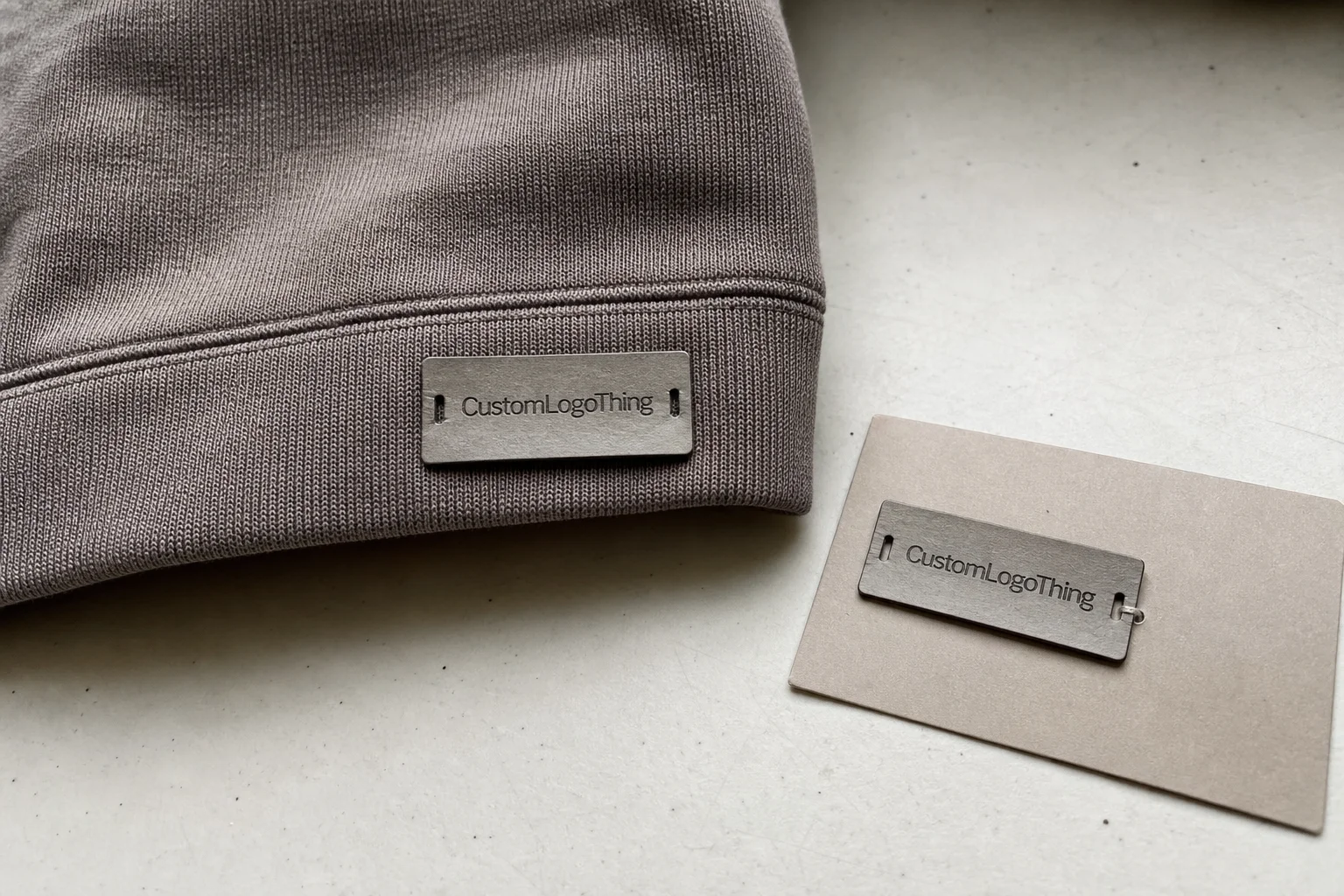
Most garment labels fail in predictable ways: they curl, fade, crack, or lose edge integrity after repeated wear and washing. Custom engraved labels avoid the common surface-wear problem because the mark is cut, pressed, or etched into the label itself rather than printed on top.
The visual effect matters too. Engraving adds depth without depending on loud graphics or heavy color contrast. That makes it a strong fit for premium basics, denim, outerwear, uniforms, childrenswear, and smaller apparel lines where branding should support the product story instead of overpowering it.
There is also a practical durability angle. A well-made engraved label usually outperforms many printed alternatives in wash-heavy or high-friction use cases. That makes it useful for workwear, activewear, hospitality uniforms, and repeat-replenishment programs where consistency across size runs and colorways matters.
I have reviewed label samples that looked almost identical in supplier photos and then felt completely different in person. The biggest difference was usually edge finishing and material thickness, not the logo itself. A clean engraving on a thin, sharp-edged tag can still feel cheap or uncomfortable. A slightly thicker label with cleaner corners often wears better and gives the garment a more intentional finish. That hands-on detail is easy to miss if you skip sampling.
Presentation across the full package still counts. Hanger tags, tissue, folding, polybags, and custom printed boxes shape the first impression alongside the garment label. If the rest of the package looks deliberate and the label looks flimsy, buyers notice the mismatch quickly. For a broader view of trim planning, our Custom Labels & Tags page is a strong starting point.
A label can stay quiet and still do serious work. The goal is not volume. The goal is readability, durability, and consistency after real use.
How the Engraving Process Works
The process starts with the spec sheet. Material choice, size, attachment method, artwork, finish, and placement all affect the result. Leave those details vague and the supplier has to interpret them, which is where avoidable mistakes usually begin.
Artwork setup comes first. Clean vector files are standard because engraving depends on clear lines, legible spacing, and predictable stroke weight. Thin fonts, tiny logos, and detailed icons often look sharp on screen and become muddy once reduced to label size. For custom engraved labels for clothing order better tags, file quality is one of the quickest ways to protect both readability and production speed.
Proofing is the next checkpoint. A proper proof should show overall size, logo placement, contrast level, edge treatment, hole position if needed, and attachment location. For higher-value programs, a physical sample is better than a digital mockup because it reveals texture, reflectivity, stiffness, and how the engraving reads on the actual substrate.
Production is usually straightforward: the material is engraved, debossed, laser marked, or etched depending on the substrate, then cut to size, edge-finished, and inspected. If the design includes mounting holes, adhesive backing, heat-transfer support, or a sewn attachment point, those are added before final packing. Good suppliers inspect consistency across the batch so the first and last pieces match in color, depth, and finish.
If you are comparing engraved labels with other trim options, start with the use case rather than the cheapest unit price. A simple woven label may be enough for a low-touch basic. An engraved tag makes more sense for a higher-margin garment, a uniform program, or a line where packaging and product presentation matter at the same level as the garment itself. Brands also pair engraved trims with Custom Stickers & Seals for branded packaging closures and retail-ready finishing.
Cost Drivers, MOQ, and Unit Price Tradeoffs
Pricing is driven by material, size, finish, artwork complexity, attachment style, packaging, and quantity. If a price looks unusually low, one of those variables has probably been simplified. If it looks unusually high, setup, tooling, or finishing is usually responsible.
MOQ is where expectations often break down. Unit price does not stay flat as quantity changes because setup time, tooling, proofing, and inspection are spread across fewer pieces on short runs. A 500-piece order can cost several times more per label than a 5,000-piece run, even when the product looks nearly identical.
Setup charges deserve equal attention. Some suppliers fold them into the unit price, while others list them separately. Dies, laser setup, mold work, or fixture preparation can add materially to the first invoice. If you are comparing quotes for custom engraved labels for clothing order better tags, ask for the all-in total so you are not comparing one complete price against several partial prices.
A practical 2026 pricing framework for a straightforward engraved label program looks like this:
| Run Size | Typical Spec | Approx. Unit Price | Best Fit |
|---|---|---|---|
| 300-500 pcs | Simple shape, one finish, standard attachment | $0.55-$1.25 | Samples, pilots, limited drops |
| 1,000-3,000 pcs | Standard size, moderate artwork detail, one or two finishes | $0.22-$0.48 | Seasonal programs, small retail runs |
| 5,000+ pcs | Consistent spec, minimal variation, efficient packing | $0.10-$0.26 | Core styles, uniforms, repeat replenishment |
Those figures are directional, not fixed. Material selection can push them up or down, as can custom shapes, multiple finishes, color fills, soft-touch coatings, recycled substrates, or uncommon attachment methods. If you are also sourcing broader Custom Packaging Products, it helps to price the label program alongside the rest of the packaging so you can see where margin is actually going.
Sustainability claims should be checked rather than assumed. Recycled PU, FSC-certified paper tags, and low-impact metal finishing are all more common in 2026, but documentation still matters. Ask for substrate details, coating information, and chain-of-custody paperwork where relevant. The FSC site remains the clearest source for paper-based certification references.
New 2026 Trends in Custom Engraved Clothing Labels
Several clear shifts are shaping custom engraved labels for clothing order better tags in 2026. First, brands are moving toward mixed-material trims that combine an engraved face with softer backing materials to improve comfort. This is especially common in loungewear, kidswear, and performance apparel where rigid trims can irritate skin or interrupt stretch.
Second, more buyers are asking for lower-profile branding. Large metallic logo plates still have a place in denim and outerwear, but many current apparel programs favor subtle matte finishes, tonal engraving, and smaller dimensions. The label still needs to feel premium, but the branding language is quieter than it was a few seasons ago.
Third, traceability is becoming more practical at the trim level. Some brands now request engraved labels with QR-compatible companion tags or batch-linked internal coding for inventory control, warranty programs, and resale authentication. The engraved label itself may stay visually simple, while the broader trim set handles the digital tracking function.
Lead times have also improved modestly for standard programs compared with the supply bottlenecks many buyers dealt with earlier in the decade. For repeat orders using approved tooling and unchanged specs, many suppliers can now move faster than they could on first-run jobs. That said, specialty finishes, custom metalwork, and sustainable material sourcing still add time, so planning ahead remains the safest path.
One updated buying pattern is worth calling out: more small brands are ordering pilot quantities first, testing the labels through wash cycles, then scaling only after they confirm comfort and wear performance. That is a smart move. In my experience, the most expensive label is not the premium one. It is the one that has to be remade because no one checked how it behaved on the actual garment.
Timeline: From Spec Sheet to Production Run
A sensible timeline begins with the brief. Quantity, dimensions, garment type, attachment method, artwork files, and finish preferences should be in the request before the first quote goes out. If those details are missing, the supplier has to chase them and the schedule slows down.
The sequence is usually intake, artwork review, proof, sample or approval, production, finishing, and shipment. For simple orders, that can move in roughly 10-15 business days after proof approval, with shipping added on top. More involved jobs take longer, especially if tooling, color matching, or revisions are involved.
The biggest delay is indecision. The second biggest is missing files. A fuzzy logo, no dieline, or a last-minute size change can stop the schedule cold. If the labels are tied to a launch inventory date, build in room for at least one correction cycle.
Rush service exists in many programs, but it usually comes with a cost. Faster turnaround often means fewer finish options, a simpler design, or a reduced sample window. That tradeoff can make sense when the deadline is real, not when the project was simply started late.
Spec Choices That Change Durability and Appearance
Size and thickness matter more than many buyers expect. A label that is too large can feel bulky or interrupt the garment silhouette. A label that is too thin can bend, curl, or read as cheap even when the engraving is clean. The right balance depends on fabric weight, placement, and whether the label touches the skin.
Material selection changes both appearance and wear performance. Metal gives the strongest premium signal and the best structural durability, but it can feel rigid on lightweight garments. Synthetic leather, TPU, silicone, and coated paperboard each solve different problems. For custom engraved labels for clothing order better tags, the right substrate should match the garment category first and the brand aesthetic second.
Surface texture changes the look immediately. Matte finishes read understated and premium. Glossy finishes catch light more aggressively and can improve contrast, but they also show fingerprints and scuffs faster. If the engraving is meant to be subtle, matte is usually the safer choice. If the trim needs to stand out in retail presentation, stronger contrast may help.
Attachment method deserves the same attention. Sew-on labels are dependable and widely used in apparel. Heat-applied or adhesive-supported options can work for certain builds, but they have to match the fabric, laundering conditions, and end use. Rivets, snaps, and looped attachments may suit outerwear or utility pieces, though they can affect comfort and wash performance.
Comfort is not optional on clothing. If the label will touch skin, edges need to be smooth and the material should not feel sharp, cold, or abrasive. This is exactly where a sample matters, because the issue is tactile as much as visual. A label can pass the photo test and still fail the wearer test.
Compliance belongs in the spec sheet too. Fiber content, country of origin, care instructions, and any required tracking information should be settled early so branding does not fight regulatory text. Retail programs expose those mistakes quickly, and fixing them after production is expensive.
Before final approval, ask one direct question: does this label need to do one job or three? Identification, luxury signaling, and wash durability are different requirements. If the answer is unclear, the quote will usually be unclear too.
| Label Choice | Strength | Tradeoff | Best Use |
|---|---|---|---|
| Engraved metal tag | High durability, strong premium feel | Can feel rigid or cold against skin | Outerwear, denim, premium accessories |
| Debossed synthetic label | Flexible, lighter on the garment | Less tactile depth than metal | Tops, casualwear, folded presentation pieces |
| Laser-marked silicone label | Soft touch, good flexibility, modern look | Higher cost than basic woven trims | Activewear, kidswear, comfort-focused lines |
| Printed woven label | Low cost, easy to scale | Surface wear and fading over time | Basic trims, volume programs, budget lines |
Common Ordering Mistakes That Waste Time
Bad artwork causes more trouble than almost anything else. Raster logos, low-resolution exports, thin lines, and tiny type all create avoidable problems. Engraving exposes poor file prep because the process is unforgiving.
Another common mistake is overcomplicating the first run. Too many sizes, too many finishes, and too many attachment methods create a SKU problem before the design has been proven on the garment. Start simple, test the core label, then expand only if sales data and wear testing support it.
Wash testing is routinely underestimated. A label that looks fine on a desk can behave differently once it meets heat, detergent, friction, and repeated folding. If the fabric is textured, stretchy, coated, or unusually soft, test on that exact material. Otherwise the quote is only an estimate with better formatting.
The approval trap shows up often: teams skip samples because the schedule feels tight, then lose more time fixing a batch that should never have been approved. One good sample is usually cheaper than one bad remake.
A tighter ordering process looks like this:
- Send clean vector artwork and a clear size target.
- Confirm garment type, placement, and attachment method.
- Ask for a proof and, if possible, a physical sample.
- Test the label on the actual fabric.
- Approve only after legibility, feel, and durability checks pass.
Next Steps Before You Request a Quote
Gather the basics first: label dimensions, quantity, garment type, attachment method, and finish. If the quote needs to be useful, include the actual logo files and say what must be readable at a glance. Not every element carries equal weight. The brand mark can be subtle. Care information cannot.
Then decide what the label is supposed to win on. Durability, luxury feel, speed, and cost do not all optimize at once. You can usually get two of them without much damage, but trying to maximize all four tends to produce a messy spec and a mediocre result.
Ask about sample timing, production lead time, and setup fees before locking a launch schedule. If the supplier cannot give those numbers, the project is not ready. A clean quote should also state whether the label is sew-on, adhesive, heat-applied, or another attachment style, because that choice affects both price and wear performance.
For brands building a larger line, keep the label decision close to the rest of the packaging plan. Your Custom Labels & Tags, mailers, inserts, and other Custom Packaging Products should feel like one system, not a pile of unrelated purchases. That is usually how custom engraved labels for clothing order better tags create the most value: not alone, but as part of a consistent brand presentation.
How are custom engraved labels different from printed clothing labels?
Engraving creates a physical mark or relief effect, while printing sits on the surface and can wear away more quickly. Engraved labels usually feel more premium and hold up better in harsh use cases like laundering and abrasion. Printed labels can be cheaper for short runs, but longevity is where engraved options usually win.
Are custom engraved labels durable enough for wash-heavy apparel?
Yes, if the material, finish, and attachment method are specified for laundry and daily wear. Durability depends on the full build, not just the engraving itself. Always ask what wash conditions the label is expected to survive before placing a production order.
What affects the price of custom engraved labels the most?
Material choice, size, finish complexity, quantity, and setup costs are the biggest pricing drivers. Special packaging, custom shapes, and rush turnaround can raise the total quickly. For custom engraved labels for clothing order better tags, small runs usually have the highest cost per piece.
How long does production usually take for engraved clothing labels?
Typical timing includes artwork approval, sample signoff, production, finishing, and shipping. Simple orders can move in about 10-15 business days after proof approval, while complex specs and revision cycles take longer. Rush orders are possible in many cases, but they usually cost more and reduce flexibility.
What do I need before I order custom engraved labels?
Have your quantity, size, garment type, artwork, and attachment method ready. Decide whether the label needs to prioritize durability, comfort, luxury appearance, or compliance details. A clear spec sheet cuts quote time and reduces revision loops.