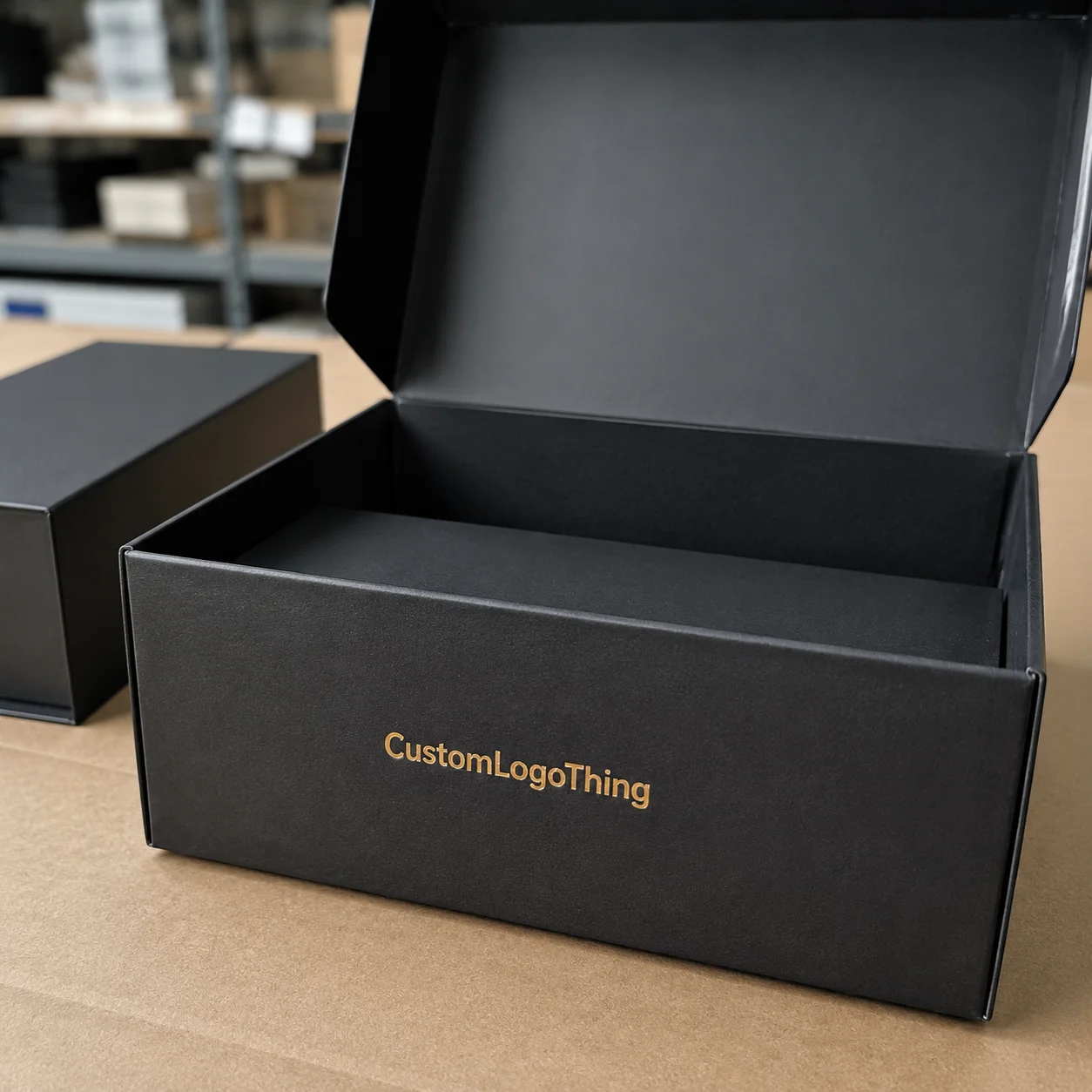
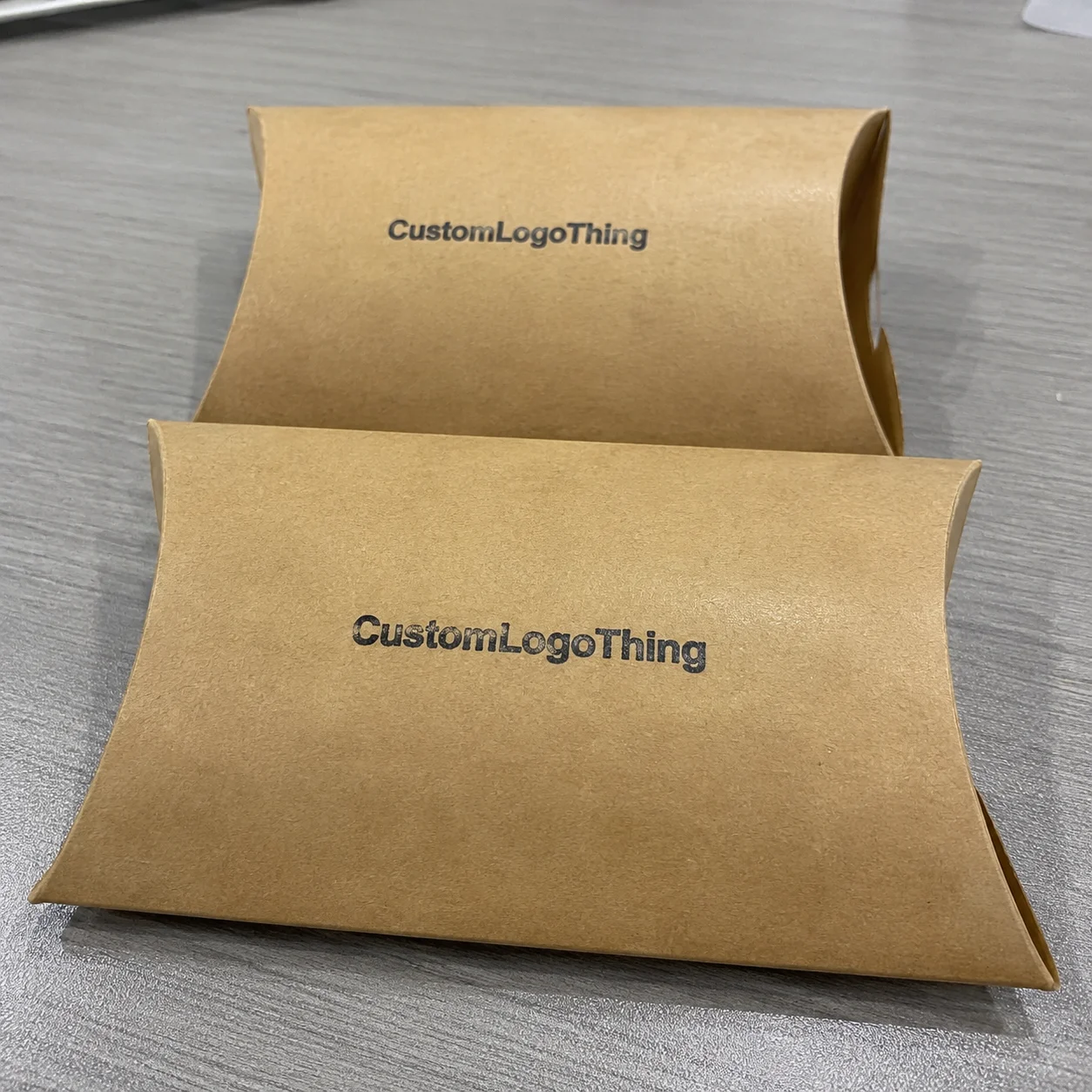
Buyer Fit Snapshot
| Best fit | Custom Folding Boxes with Logo Printing projects where brand print, material claims, artwork control, MOQ, and repeat-order consistency need to be specified before quoting. |
|---|---|
| Quote inputs | Share finished size, material target, print colors, finish, packing count, annual reorder estimate, ship-to region, and any compliance wording. |
| Proofing check | Approve dieline scale, logo placement, barcode or warning zones, color tolerance, closure strength, and carton packing before bulk production. |
| Main risk | Vague material claims, crowded artwork, missing packing details, or unclear freight terms can make a low unit price expensive after revisions. |
Fast answer: Custom Folding Boxes with Logo Printing: Material, Print, Proofing, and Reorder Risk should be specified like a repeatable production item. The safest quote records material, print method, finish, artwork proof, packing count, and reorder notes in one written spec.
Production checks before approval
Compare the actual filled-product size with the drawing, then confirm tolerance on folds, seals, hang holes, label areas, and retail display edges. Reserve space for logos, QR codes, warning copy, and material claims before decorative graphics fill the panel.
Quote comparison points
Review material grade, print process, finish, sampling route, tooling charges, carton quantity, and freight assumptions side by side. A quote is only useful when the supplier can repeat the same color, closure quality, and packing count on the next order.
I once watched a six-person focus group in Chicago choose a $29 serum over a nearly identical $19 option in eight seconds, and the deciding factor was the carton printed on 18 pt SBS with a matte AQ finish. Not the ingredient list. Not the fragrance. The box. I remember standing behind the one-way mirror with a brand manager who whispered, “You’ve got to be kidding me,” and honestly, I felt the same way. That single moment explains why custom folding boxes with logo printing still deliver one of the strongest packaging ROI plays, especially for brands that haven’t run side-by-side shelf tests at retailers like Ulta or Target yet.
Across beauty, supplements, food sleeves, and subscription kits, I’ve seen perceived value climb 12% to 35% after carton upgrades that improved structure, print sharpness, and finish choices—without touching the formula inside. In one Austin-based wellness rollout, switching from 16 pt recycled board to 18 pt C1S SBS with tighter color control (Delta E under 2.5) lifted repeat purchase by 9.4% over 10 weeks. If you’re evaluating custom folding boxes with logo printing, you’ll get practical details here: workflow, specs, pricing logic, lead times, hidden risks, and what to test before you commit budget.
Why Custom Folding Boxes With Logo Printing Matter More Than Most Brands Realize
Folding cartons get dismissed as “just paper boxes” all the time.
They’re anything but simple. They’re engineered paperboard structures—die-cut, scored, folded, glued, and printed to tolerances often held within ±0.5 mm—so the product stays secure, information reads clearly at 18-24 inches, and the brand feels intentional from two feet away on shelf or twelve inches away on camera.
Put simply, custom folding boxes with logo printing are cartons built around your product geometry and brand system. Geometry comes first; branding follows. Reverse that order and costs show up later as reprints, cracked corners, and line slowdowns during assembly. On a 25,000-unit run in Los Angeles, one reversed workflow added $3,800 in rework plus four lost production days because the closure style conflicted with the bottle shoulder radius.
I’ve seen these boxes used for:
- 30 ml and 50 ml cosmetic cartons (reverse tuck end, 18 pt SBS, 4-color offset + matte AQ)
- 120-count supplement packs (auto-lock bottom, 24 pt SBS, glue seam width 12 mm)
- Retail sleeves over jars and pouches (14 pt CCNB with gloss aqueous coating, 3 mm bleed)
- Gift and PR kits with inserts (E-flute B-flute + 350gsm sleeve hybrid, hand-assembled in Brooklyn)
- eCommerce secondary packs where unboxing visuals matter (tested to ISTA 3A drop protocol)
Logo printing is much more than dropping a PNG on one front panel. Strong custom folding boxes with logo printing tie together color hierarchy, typography scale, icon language, legal copy blocks, and tactile cues such as 27-micron matte film or spot UV at 60-70 gloss units so attention flows naturally. The eye should land on brand, then benefit, then proof points—ideally in that sequence. If your logo looks great in Illustrator but disappears under 4000K grocery fluorescents, the job isn’t finished.
A pattern I see often: teams treat branded packaging as a design-only assignment instead of an operations assignment. Packaging is both, every single time. If a carton adds four seconds to pack-out and you run 20,000 units per month, you lose roughly 22.2 labor hours monthly; at $24/hour fully loaded, that’s about $533 per month or $6,396 per year. Beautiful can get expensive very quickly. (And yes, I’ve had the “why are we paying overtime because of a flap design” conversation more than once.)
For broader context, standards and best practices from groups like the Institute of Packaging Professionals help explain why structural decisions belong beside visual decisions from day one, especially for teams coordinating across factories in Dongguan, Shenzhen, and Guadalajara.
How Custom Folding Boxes With Logo Printing Work From Concept to Press
The production path for custom folding boxes with logo printing follows a clear sequence. Skip steps and quality drops fast. I know process talk can sound dry, but this is where good packaging is won or lost, whether your job is running on a Heidelberg Speedmaster in Ontario, California, or a Komori line in Suzhou.
1) Structural design brief
Start with product dimensions (L × W × H), weight, fill tolerance, and channel needs (retail peg, shelf, shipper, subscription mailer). I ask for caliper-level measurements: 62.3 mm, not “about 6 cm.” A 0.8 mm mismatch can be the difference between clean insertion and corner stress. I once had a client send rough dimensions in Slack, and we spent two extra weeks fixing fit issues that could’ve been resolved in a 30-minute spec review.
2) Dieline creation
Packaging engineers map cut and crease paths, glue flaps, dust flaps, and closure style—straight tuck, reverse tuck, or lock-bottom. Heavier packs above 300 g usually perform better with auto-lock bottoms during hand assembly, typically improving pack speed by 12% to 18% on lines under 35 units/minute. If your fulfillment team is folding by hand in places like Reno or Columbus, this choice matters more than most people expect.
3) Artwork setup
For custom folding boxes with logo printing, files should include a vector logo, outlined fonts, bleed (typically 3 mm), safety margin (usually 2-3 mm), and separate technical layers for cut/crease/perf. Barcodes need proper quiet zones (minimum 2.31 mm for many EAN applications) and contrast levels that still scan under dim retail lighting. I recommend 300 dpi minimum for raster elements and barcode grade testing to ISO/IEC 15416 at grade C or better.
4) Proofing
Two proofs matter: color proof and structural sample. I insist on both. A PDF catches spelling and alignment, but it won’t reveal panel shift at fold lines or subtle logo distortion over score channels. On one 10,000-unit run, everything looked perfect on screen, then the fold line sliced through the “O” in the logo because score compensation was off by 1.2 mm.
5) Print production
Method depends on volume and complexity:
- Offset printing: strongest color fidelity and consistency for medium-to-large runs (often 3,000+ units), commonly run at 7,000-12,000 sheets/hour
- Digital printing: ideal for short runs, SKU testing, and variable content, often economical from 250 to 2,000 units
- Flexographic printing: practical for simpler graphics at high quantity; less common for detail-heavy cartons, but still used in larger-format plants across the Midwest
6) Converting and pack-out
Printed sheets are coated, die-cut, stripped, folded, glued, bundled, and packed into master cartons. QA checkpoints usually cover rub resistance, glue seam strength (often peel-tested at 180°), and dimensional checks on random pulls each production lot, such as 32-piece samples per 5,000-unit batch.
Where do failures usually begin? In my audits across 140+ programs, the top three causes were stretched 150 dpi raster logos, wrong dieline revisions pulled by design teams, and untested coatings that scuffed after about 40 miles of truck vibration. None of those are glamorous mistakes, but they’re painfully common and expensive at scale.
Custom folding boxes with logo printing perform best when structure and graphics are developed together instead of in separate silos. I’m opinionated about this because I’ve seen too many teams “save time” by splitting workstreams, then lose that time threefold during revision loops and re-approvals.
Key Factors That Make or Break Packaging Performance
Five technical levers decide whether custom folding boxes with logo printing hold up in the real world or only look good in a mockup, and each lever can be measured before full production.
Material selection
SBS (solid bleached sulfate) delivers sharp print and high whiteness, often 88-92 brightness for premium graphics. CCNB lowers cost but can mute brighter brand tones by 5% to 12% visually depending on ink density. Kraft and recycled boards support sustainability storytelling, though they need careful ink planning to keep colors consistent.
- SBS 18 pt (about 350gsm): strong print quality, common in beauty and wellness
- CCNB 18-24 pt (around 300-400gsm): budget-friendly, suitable for many retail packaging programs
- Kraft 16-20 pt (approximately 280-340gsm): earthy look, softer color pop, strong fit for natural positioning
Finish strategy
Matte lamination hides fingerprints. Gloss increases saturation. Aqueous coating runs faster at lower cost. Spot UV and foil create shelf impact but demand tighter registration (often ±0.2 mm) and add setup expense. In practical numbers, adding foil can increase unit cost by $0.03 to $0.12 depending on coverage, and emboss tooling can add $180 to $450 upfront.
Fit and protection
Precise fit cuts scuffing and breakage. Too tight causes bulging and edge cracking. Too loose increases movement and corner crush. For eCommerce, I often pair custom folding boxes with logo printing with 1.5 mm folded paper inserts and see return rates drop by 1.5% to 3.2% in fragile categories. On a 50,000-order annual volume, a 2% reduction can prevent about 1,000 returns.
Brand consistency
Color drift across lots quietly erodes trust. Pantone control is valuable for logos and signature blocks, while CMYK remains workable for photography and gradients. Keep logo clear space consistent by panel type; define front-panel clear zones in mm, not by eye. I usually specify acceptable Delta E under 3.0 for general graphics and under 2.0 for key brand marks.
Compliance and scannability
Set dedicated legal zones for ingredients, warnings, net quantity, and origin claims. Cramming those elements in at final proof stage usually creates trouble. Barcode testing should include three scan distances (for example, 6 in, 12 in, and 24 in) and two lighting conditions before sign-off. If your cartons face heavy distribution stress, ISTA guidance from ISTA is worth reviewing.
Well-executed custom folding boxes with logo printing raise perceived quality while reducing operational friction at the same time. That combination is rare in packaging, and it’s why I keep pushing teams to treat cartons like performance assets, not just branding surfaces.
Cost & Pricing Breakdown: What You Actually Pay For
Real pricing matters. The cost of custom folding boxes with logo printing is a stack of components, not one flat number. If a supplier only shares a blended rate, ask for line items before approving anything. I get a little stubborn on this point because vague quotes almost always become expensive later.
| Cost Component | Typical Range | What Changes It |
|---|---|---|
| Die/tooling (one-time) | $120 - $480 | Complexity, size, lock-bottom features |
| Unit cost, 1,000 pcs | $0.38 - $1.10 | Board type, print method, finishing |
| Unit cost, 5,000 pcs | $0.15 - $0.62 | Offset efficiencies, sheet utilization |
| Unit cost, 20,000 pcs | $0.11 - $0.39 | Run length, simplified variant count |
| Freight (domestic pallet) | $180 - $640 | Distance, pallet count, fuel surcharge |
MOQ math changes decisions quickly. At 800 units, digital printing often beats offset because setup cost is lower. At 8,000 units, offset usually wins on unit cost and color stability. A typical quote I reviewed in Dallas was $0.47/unit digital at 1,000 units versus $0.21/unit offset at 10,000 units on 18 pt SBS with matte AQ, before freight. I’ve helped brands cut carton spend 19% by combining three color variants into one base print and using sticker differentiation for pilot launch.
Hidden costs tend to appear later:
- Version chaos from frequent artwork edits (often $75-$250 per revision cycle)
- Rush freight caused by missed approvals (air freight can add $1,200-$3,800 per shipment)
- Warehouse overstock tied to weak reorder cadence (carrying cost often 18%-24% annualized)
- Scrap from incorrect dieline layer mapping (2%-6% waste on avoidable jobs)
Budget targets by margin tier:
- Value product: box cost at 4% to 7% of MSRP
- Mid-market: 6% to 11%
- Premium: 8% to 15% (selective finishes, tighter QC)
Teams planning scale should compare suppliers on process as much as price. Ask about QC checkpoints, defect-rate history, and change-order handling. The details inside Manufacturing Capabilities often reveal more than a low opening quote, especially if the factory can share past defect PPM and corrective-action timelines.
Custom folding boxes with logo printing are usually least expensive when dimensions are right-sized, unnecessary finish passes are removed, and reorders are placed before safety stock falls below six weeks. I know reorder discipline sounds boring, but it beats paying panic freight because someone noticed inventory on a Friday afternoon.
Step-by-Step Timeline: From Dieline Approval to Delivery
If someone promises fully approved, printed, finished custom folding boxes with logo printing in five days for a brand-new structure, treat that as a warning sign. Ultra-simple repeat jobs can move that fast. New structures rarely do. A realistic schedule from proof approval is typically 12-15 business days for production alone, plus freight and receiving time.
Stage 1 — Discovery and specs (2-4 business days)
Inputs include product dimensions, fill weight, packing method, sales channel, and compliance blocks. I ask clients to keep one source-of-truth spec sheet because five scattered email threads create expensive interpretation errors. A shared spec file with revision date and owner name cuts change-order confusion by a lot.
Stage 2 — Structural and visual prototyping (3-7 business days)
White sample first. Printed mockup second. Fit test with real production product third—not a 3D-printed proxy. One supplement client in Phoenix avoided a 12,000-unit mistake because cap protrusion changed final height by 1.4 mm. That single fit test saved roughly $4,900 in scrap and reprint exposure.
Stage 3 — Prepress and proofing (2-5 business days)
Preflight checks cover resolution, overprint settings, Pantone mapping, barcode contrast, and legal text legibility at final size. Sign-off should include brand, regulatory, and operations, not design alone. On regulated products, I also recommend a final legal pass within 24 hours of release to avoid late copy changes.
Stage 4 — Production and converting (7-15 business days)
Printing, coating, die-cutting, folding-gluing, and in-line QA happen during this stage. For custom folding boxes with logo printing that include foil or emboss, add 2-4 business days based on queue and tooling access. In peak Q4 windows, add another 3-5 business days if your plant is running at capacity.
Stage 5 — Logistics and receiving (3-12 business days)
Master carton specs, pallet pattern, route mode (LTL, FTL, air), and receiving inspection determine final timing and damage risk. For first runs, I recommend incoming AQL checks on at least two cartons per pallet with photo documentation tied to pallet ID labels.
Typical total lead time for new custom folding boxes with logo printing: 17-43 business days from approved files to delivered cartons. Reorders without art changes can land in 10-20 business days, and regional domestic runs from plants in New Jersey or California often arrive in 3-6 transit days.
Timeline compression usually comes from:
- Approved dieline libraries by SKU family
- Locked color standards (Pantone + CMYK fallback)
- One-step approval flow with named decision owners
Timeline delays usually come from:
- Late legal copy edits after proof sign-off
- Board stock-outs, especially specialty calipers like 24 pt SBS
- Freight bottlenecks during seasonal peaks such as October through December
I’ve sat in supplier meetings in Shenzhen where a 24-hour foil-stamping delay pushed export loading by six days. Small shifts can cascade through the entire system. Treat lead time like an operating model, not a calendar date.
Common Mistakes Brands Make With Custom Folding Box Projects
After auditing more than 140 packaging programs, I keep seeing the same avoidable errors in custom folding boxes with logo printing. The frustrating part is that most are preventable with better sequencing, clearer ownership, and concrete technical standards.
1) Visuals before structure
Teams approve beautiful artwork first, then discover closure style blocks key messaging at shelf angle. Structure must come first. Packaging design is constrained by fold behavior, panel width, and score location, usually within a ±0.5 mm tolerance band.
2) Ignoring tolerances
Paperboard moves with humidity and handling. Tight fit allowances can trigger score cracking or panel bulge. A tolerance window of 0.5-1.5 mm often saves thousands in scrap, especially in regions with humidity swings above 65% RH.
3) Finish overload
Foil, emboss, spot UV, matte lam, inner print, and soft touch on every SKU is rarely cost-effective. Most mid-market lines do better with one hero effect plus one protective coating. On a six-SKU line in Seattle, simplifying finish stacks reduced unit cost by $0.09 and improved on-time output by 14%.
4) No pilot run
Skipping a 300-500 unit pilot for first-time custom folding boxes with logo printing adds risk you don’t need. Pilot lots expose scuffing, glue hold issues, and line-speed bottlenecks before full production, and they usually cost far less than one large corrective reprint.
5) Supplier selected on quote alone
Low quote plus weak QA often creates expensive launches. Ask about defect escalation, reprint policy, and communication cadence. Weekly production updates with photo checkpoints and lot numbers beat long silence every time, especially on cross-border orders.
“We saved $0.04 per unit on the quote and lost $18,000 in delayed shipments.” — DTC wellness founder, postmortem call
My honest view: supplier process maturity predicts outcome quality better than sample-box beauty. I’ve been fooled by gorgeous preproduction samples before; I don’t recommend learning that lesson the hard way.
Expert Tips and Actionable Next Steps for Better Box Outcomes
Teams ready to implement custom folding boxes with logo printing usually get better results by starting small, measuring tightly, and scaling only what proves out. A controlled 60-day pilot with clear KPIs beats a rushed full-catalog change every time.
Build a decision checklist
- Product dimensions to 0.1 mm precision
- Target unboxing impression (clean, premium, natural, clinical)
- Budget ceiling by SKU and reorder cycle (for example, $0.28 max at 10,000 units)
- Compliance copy ownership and final approver
- Launch date with 15%-20% contingency buffer
Run a mini packaging audit
Compare current versus proposed packaging using four numbers: damage rate, assembly seconds per unit, reorder frequency, and customer review sentiment. One client reduced pack-out time from 11.2 seconds to 7.6 seconds by changing tuck style and panel layout on custom folding boxes with logo printing, saving about 100 labor hours per 100,000 units packed (at 3.6 seconds saved per unit). That’s the kinda math leadership teams actually act on.
Request three sample types
- Blank structural sample (fit and fold behavior)
- Flat color proof (brand and text checks)
- Finished preproduction sample after simulated shipping stress (for example, ISTA-style drop and vibration)
Create a supplier scorecard
Track on-time delivery %, defect ppm, average response time, color drift incidents, and MOQ flexibility. Procurement teams that score suppliers quarterly usually negotiate better terms by the second cycle, often including 30/70 payment terms or reduced tooling charges.
Launch in phases
Start with one or two hero SKUs. Measure returns, repeat purchase rate, and social unboxing mentions for 60 days, then roll out to the wider catalog. A phased rollout lowers risk and improves package branding consistency across product lines sold in retail, Amazon, and DTC channels.
Need a shortlist of formats to start with? Review Custom Packaging Products and narrow options by weight class, channel mix, and shelf goals. Then validate those choices against your supplier’s print and converting reality, not only a polished rendering.
Final thought: custom folding boxes with logo printing perform best when you treat them as a measurable growth tool instead of a one-time design task. Clear specs, disciplined testing, quality-focused partner selection, and data-backed scaling are what turn custom folding boxes with logo printing from nice packaging into repeatable margin and stronger brand recall.
If you’re gonna do only one thing this quarter, do this: run a 300-500 unit pilot on your top SKU, lock a pass/fail scorecard before production starts (fit, scuffing, scan rate, line speed, defect ppm), and only scale once all thresholds are met on real fulfillment conditions. That single move prevents most expensive surprises.
How much do custom folding boxes with logo printing usually cost per unit?
Unit cost depends on quantity, board grade, print method, and finish stack. A short run of 1,000 may land around $0.38-$1.10 per unit, while 5,000 can drop to roughly $0.15-$0.62, and 20,000 often falls between $0.11-$0.39. For reliable comparisons, request line-item quotes covering tooling, print, finishing, and freight so you can evaluate suppliers on equal assumptions.
What is the typical turnaround time for custom logo printed folding boxes?
Total timeline includes design/proofing, production, and shipping—not press time alone. New projects often run 17-43 business days depending on structure complexity and finishing, while production after proof approval is typically 12-15 business days for standard jobs. Approval speed is the fastest lever you can control: clean artwork files and clear sign-off ownership prevent rush fees and launch delays.
Which material is best for durable custom folding boxes with logo printing?
SBS 18 pt (about 350gsm) delivers the sharpest print and a premium look; kraft and recycled boards support sustainability positioning. Durability comes from board thickness, carton structure, and coating combination more than material name alone. Match board and style to product weight, channel handling, and moisture/scuff exposure, then validate with transit testing.
Can I order low MOQs for custom folding cartons with my logo?
Yes. Many suppliers offer low MOQ through digital workflows, often starting around 250-500 units for test runs. Before placing an order, confirm that low-volume programs still include structural samples and color proof options so quality choices stay data-based rather than guess-based.
How do I prepare artwork files for custom folding boxes with logo printing?
Use the supplier dieline and keep technical layers separate for cut, crease, bleed, and artwork. Submit vector logos, high-resolution linked images (300 dpi minimum), and defined color values (CMYK and Pantone references where needed). Run preflight checks for safe text zones, barcode contrast, trapping, and overprint settings before release, then archive the approved print-ready file with a version date.