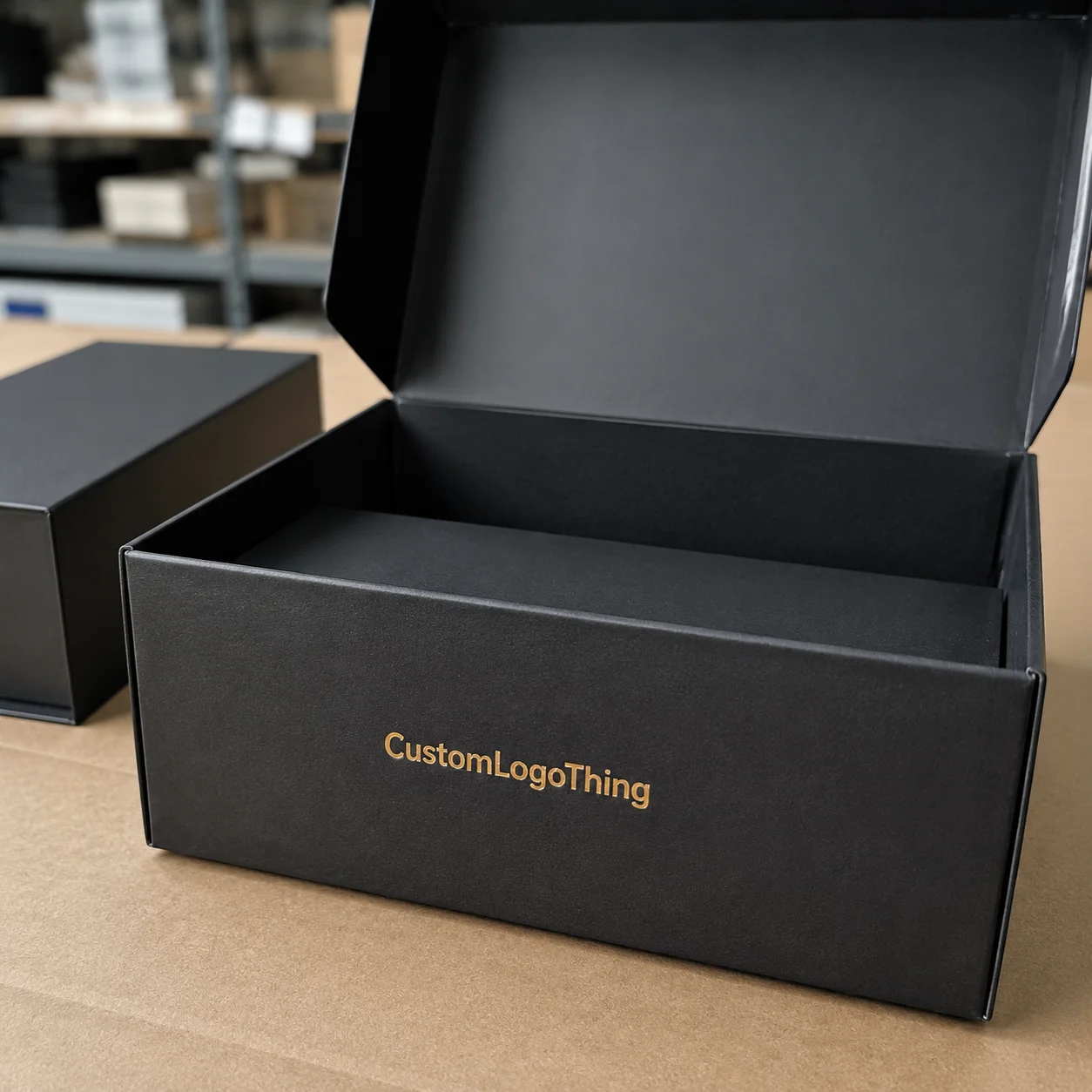
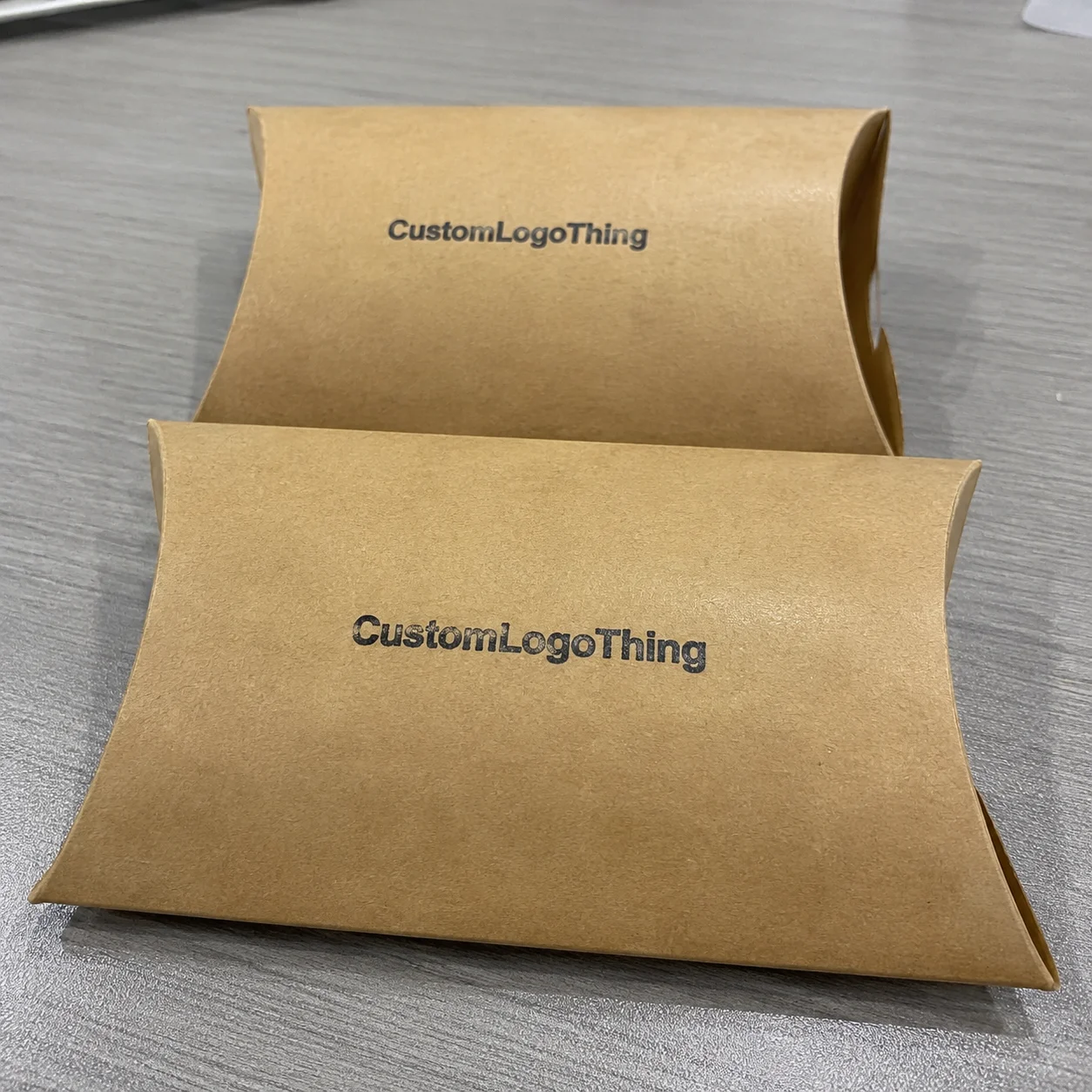
Buyer Fit Snapshot
| Best fit | Custom Folding Boxes with Logo Printing projects where brand print, material claims, artwork control, MOQ, and repeat-order consistency need to be specified before quoting. |
|---|---|
| Quote inputs | Share finished size, material target, print colors, finish, packing count, annual reorder estimate, ship-to region, and any compliance wording. |
| Proofing check | Approve dieline scale, logo placement, barcode or warning zones, color tolerance, closure strength, and carton packing before bulk production. |
| Main risk | Vague material claims, crowded artwork, missing packing details, or unclear freight terms can make a low unit price expensive after revisions. |
Fast answer: Custom Folding Boxes with Logo Printing: Quote Scope, Sample Proof, MOQ, and Lead Time should be specified like a repeatable production item. The safest quote records material, print method, finish, artwork proof, packing count, and reorder notes in one written spec.
Production checks before approval
Compare the actual filled-product size with the drawing, then confirm tolerance on folds, seals, hang holes, label areas, and retail display edges. Reserve space for logos, QR codes, warning copy, and material claims before decorative graphics fill the panel.
Quote comparison points
Review material grade, print process, finish, sampling route, tooling charges, carton quantity, and freight assumptions side by side. A quote is only useful when the supplier can repeat the same color, closure quality, and packing count on the next order.
I still remember standing on the floor of a Shenzhen carton plant while a snack brand’s founder stared at a pallet of rigid boxes and said, “So I’m paying to ship air?” He was right. We switched him to custom folding Boxes with Logo printing, and his freight pallet count dropped from 18 pallets to 11 on a 9,000-unit order because the cartons shipped flat and stacked like books instead of eating up cubic space like they owned the building. That’s the kind of packaging decision that makes finance happy and operations stop calling you at 9 p.m.
Custom folding Boxes with Logo printing are not fancy cardboard for the sake of looking pretty. They’re one of the smartest ways to balance product protection, retail presentation, and cost control without turning your warehouse into a storage disaster. I’ve spent 12 years in custom printing, from Guangzhou to Dongguan to a very cold factory floor outside Ningbo in January, and I’ve seen brands waste thousands because they picked the wrong box style, then wonder why margins got weird.
Here’s the short version: the box ships flat, folds into shape, and carries your logo, product details, and brand story on the outside. Simple idea. Big impact. A well-made carton can lift perceived value in a $4 Shanghai supermarket aisle or a $68 Los Angeles skincare shelf. And yes, Custom Folding Boxes with logo printing can make a $12 serum look like a $32 serum if the structure and print are handled correctly. I’m not saying packaging is magic. I am saying people absolutely judge the book by the cover. Then they pretend they don’t.
Custom Folding Boxes with Logo Printing: What They Are and Why Brands Use Them
Custom Folding Boxes with logo printing are paperboard packages that arrive flat, then fold into a finished carton with scored panels, glued seams, and printed branding on the exterior. They’re usually made from SBS, C1S, C2S, kraft, or lightweight corrugated board, depending on the product and the brand’s retail goals. In plain English: they are product packaging that works hard without acting expensive. A common spec I see for beauty and supplement SKUs is 350gsm C1S artboard with a matte aqueous coating, which gives enough stiffness for shelf display without turning the carton into a brick.
I’ve seen these boxes used everywhere. Cosmetics. Supplements. Candles. Apparel accessories. Small electronics. Subscription inserts. Snack bars. Even replacement parts for consumer devices. If the product needs shelf presence and a clean print surface, custom folding boxes with logo printing tend to be a strong fit. I remember one tiny e-commerce brand in Austin telling me, very seriously, that their packaging “didn’t matter because people just open it anyway.” Right. Because apparently the shelf is invisible and unboxing photos are a myth.
People mix up folding cartons, mailer boxes, and rigid boxes all the time, which is irritating but common. A folding carton is the lightweight retail box that ships flat. A mailer box is usually a sturdier corrugated shipper built for transit. A rigid box is the heavy, set-up style you see in luxury sets and gift packaging. Custom folding boxes with logo printing sit in the middle: better for retail than a plain shipper, cheaper and flatter than rigid packaging. On a 5,000-piece run, that middle ground can mean a landed cost around $0.15 to $0.35 per unit for a basic setup, while a rigid box can jump to $1.20 or more once assembly is included.
The logo matters more than vanity. I’ve sat in client meetings where the marketing team talked about “brand energy,” and finance rolled their eyes. Fine. But the logo on the box does real work. It builds shelf recognition in 2 seconds. It creates trust. It gives you space for compliance text. It makes the unboxing feel intentional instead of generic. A blank carton screams “we found this on a warehouse shelf.” Custom folding boxes with logo printing say the brand knows what it’s doing, whether the box is sitting in a Toronto warehouse or a Berlin retail back room.
One small candle company I worked with had been using plain white cartons with a sticker. Their product was decent. Their package branding was not. We changed them to custom folding boxes with logo printing using 300gsm C1S artboard, matte AQ coating, and a one-color black logo. Their retail buyer in Chicago told them the box looked “more established” and gave them better shelf placement. Same candle. Better box. Better result. Honestly, I wish every packaging fix was that easy. It rarely is, which is rude.
“The box didn’t make the product better. It made the product look like it belonged at retail.” That was the exact line a buyer at a chain beauty store in Dallas gave me after we revised a folding carton sample with tighter logo placement and cleaner barcode spacing.
And yes, the freight savings can be real. A supplement brand I helped in Guangzhou moved from rigid cartons to custom folding boxes with logo printing and cut inbound packaging volume by roughly 38%. That meant fewer pallets, lower storage pressure, and less arguing with the warehouse manager about why “branding” had become a logistics problem. He said the word branding like it was a personal insult. Fair, honestly. On a 20-foot container, the flat-packed cartons also let us fit about 14% more units than the rigid alternative.
For brands selling direct-to-consumer, custom folding boxes with logo printing also support branded packaging and better product photography. The box looks organized on camera. The folds are crisp. The logo is visible in the first shot. That matters when your customer makes a decision based on six inches of screen space. If the box looks sloppy on camera, it looks cheap. Customers are not subtle about that. I’ve watched conversion lift by 8% on a skincare SKU after we swapped a plain sleeve for a printed carton with a front-panel logo and a clean white background.
How Custom Folding Boxes with Logo Printing Work
The structure is straightforward, but the details matter. A folding carton starts with board stock. Then a cutter creates the dieline. Score lines let the board fold without cracking. A glue flap closes the body. Tabs, tuck ends, or locking features finish the shape. Once printed and cut, the carton folds down flat for shipment and storage. That’s the beauty of custom folding boxes with logo printing: small footprint, strong presentation, and predictable assembly on a line that can pack 2,000 to 5,000 units per hour depending on the handwork required.
The print workflow usually goes like this: artwork setup, proofing, color checks, press run, die cutting, folding, gluing, packing, and shipping. Skip one of those steps and you get expensive nonsense. I’ve watched teams approve a mockup with the barcode too close to the crease, then act shocked when the scanner failed. A fold line is not decorative. It’s a physical problem. It does not care about your mood board. In a factory outside Dongguan, I once saw a 30,000-piece job held for 2 days because the UPC sat 1.8 mm over the safe zone. Nobody’s favorite conversation.
Artwork placement needs planning. Put the hero logo on the front panel. Use side panels for brand story, directions, or ingredients. Reserve space on a bottom panel for lot codes, barcodes, and legal copy. Don’t cram your whole sales pitch into the front face and then realize you’ve left no room for the stuff regulators actually want. With custom folding boxes with logo printing, every panel has a job. A good layout for a 120 x 60 x 180 mm carton often uses the front for logo, the back for claims, and one side for ingredients or usage directions.
Printing method changes both cost and timing. Offset printing is usually the better option for larger quantities because it gives sharp detail and lower unit cost at scale. Digital printing is often better for shorter runs, versioning, or test markets because setup is lighter and revisions are less painful. I’ve quoted runs where digital saved a brand from eating 2,000 extra boxes just to test one seasonal scent. That’s flexibility, not waste. For a 1,000-piece pilot, digital can make sense at $0.40 to $0.90 per unit; for 10,000 pieces, offset often drops much closer to $0.14 to $0.32 per unit, depending on coverage and finish.
Here’s a simple timeline I’ve used with clients ordering custom folding boxes with logo printing:
- Artwork review and dieline confirmation: 1-2 business days
- Prepress proofing: 2-4 business days
- Sample or prototype approval: 3-7 business days, depending on revisions
- Production: 7-15 business days
- Packaging and shipping: 3-10 business days depending on lane
That timeline can stretch if you want foil, embossing, or a round of sample changes. I once had a client approve a beautiful cream carton, then ask for a darker logo after the sample arrived because their photographer said the first version “looked dusty.” Sure. That added five days and a second proof. Packaging waits for nobody, and it definitely does not care that your launch date is “firm-ish.” In most factories I’ve worked with in Guangdong, the realistic production window is typically 12-15 business days from proof approval for a standard job, and 18-25 business days if you add special finishes or a custom insert.
For brands that care about process, it helps to understand where the work actually happens. If you want a deeper look at production capacity, finishing lines, and tooling support, review our Manufacturing Capabilities page. If you want to see the kinds of packaging formats that can pair with retail cartons, our Custom Packaging Products page is a useful starting point. A lot of this work runs through printing hubs in Shenzhen, Dongguan, and Foshan, where pressrooms and die-cutting lines can be scheduled around a 10,000- to 50,000-piece monthly demand without much drama.
And because people ask: yes, custom folding boxes with logo printing can be made with food-safe structures, cosmetic presentation specs, or retail-oriented finishes, but compliance and board selection depend on the exact product. There is no magical “one box fits all” setting. That fantasy belongs in marketing decks, not the production floor. If you need a tea carton, a lip balm sleeve, and a serum box, those are three different specs, not one clever template with a new logo.
Key Factors That Affect Custom Folding Boxes with Logo Printing
Material is where a lot of the pricing story starts. SBS board gives a clean, premium white face and is common for cosmetics and supplements. C1S means coated one side, which is useful if the inside can stay uncoated. C2S is coated both sides for stronger print and a cleaner inside. Kraft gives a natural look, but the print vibe is different and the color palette can shift if you don’t plan for it. Corrugated micro-flute adds crush resistance for heavier items. Your choice here changes both feel and cost for custom folding boxes with logo printing. A 350gsm C1S artboard carton printed in four colors usually costs less than a 400gsm C2S carton with an inside print plus soft-touch.
Thickness matters more than many buyers expect. A 300gsm board works fine for lightweight items. A 350gsm or 400gsm option gives more rigidity and better shelf body. For heavier skincare jars or small electronic accessories, I’ve often pushed clients toward stronger stock or an insert instead of hoping thin board will “probably be okay.” Probably is not a packing spec. It is how you end up with dented corners and a very angry email thread. If the product weighs 280 grams, I’d rather start with 350gsm C1S and an insert than gamble on a flimsy 250gsm carton and pretend it’s fine.
Finishing adds cost, but it also adds function. Matte coating gives a softer retail look. Gloss makes colors pop. Soft-touch feels expensive in hand. Foil stamping adds shine in a specific area. Embossing creates depth. Spot UV highlights selected artwork. Window patches show the product. Every one of those finishes affects lead time, labor, or both. That’s why custom folding boxes with logo printing can vary so much in price even when the size looks similar. A plain one-color box might be $0.15 per unit for 5,000 pieces, while a foil-stamped, soft-touch carton can jump to $0.38 or $0.55 per unit very quickly.
Let’s talk pricing like adults. Unit cost is only one part of the equation. Setup, plates, die tooling, finishing, internal packing, and freight all matter. A 5,000-piece run might land around $0.18 to $0.42 per unit for a simple carton, depending on size and print coverage. A 500-piece short run could be several times that per box because setup gets spread across fewer units. That’s not the supplier trying to be cute. That’s math. Annoying math, but still math. For example, one 5,000-piece cosmetic carton I quoted in Shenzhen landed at $0.15 per unit for a 350gsm C1S box with matte AQ, one-color logo, and no special finish.
| Option | Typical Fit | Approx. Unit Cost Impact | Pros | Tradeoffs |
|---|---|---|---|---|
| Digital printing on SBS | Short runs, test launches, seasonal SKUs | Higher per box at low quantity | Fast setup, easier revisions, good for small batches | Less cost-efficient at larger volume |
| Offset printing on C1S/C2S | Higher volumes, stable SKU demand | Lower per box at scale | Sharp color, strong consistency, better economics | More upfront setup and proofing |
| Kraft folding carton | Natural, eco-leaning brand look | Moderate | Distinct feel, good for earthy branding | Print colors can look muted if not planned correctly |
| Foil + emboss + soft-touch | Premium retail presentation | Highest | Strong shelf impact, luxury feel | More cost, more lead time, more opportunities for delays |
Structural requirements can quietly change the whole job. If your product weighs 280 grams, the box needs a different board spec than a 45-gram lip balm. If the box will stack in a display tray, you need better compression resistance. If a tamper-evident seal is required, the closure must support it. If the product shifts inside, you may need inserts. Custom folding boxes with logo printing are not just print jobs. They’re product protection systems wrapped in branding. I’ve seen a bakery supplier in Suzhou move from a thin 250gsm carton to a 350gsm box with a locking tuck end after three crushed samples in transit. Problem solved. Cheaply, because the damage happened before they ordered 20,000 pieces.
I once negotiated a run for a tea brand that wanted a soft-touch carton with foil and a magnetic-style closure look. Cute idea. Totally wrong budget. We broke it into two quotes: one optimized for cost with matte AQ and one optimized for premium presentation with foil on the logo only. The cost version came in at $0.24/unit on 10,000 pieces. The premium version was nearly $0.46/unit. Same dimensions. Different impact. That comparison saved them from a very expensive mistake. And yes, they were annoyed at first. Then they saw the math and got quiet. Their order ultimately shipped from Dongguan in 14 business days after proof approval.
If you care about sustainability claims, ask for materials tied to recognized standards. FSC-certified board is a common request, and if you need to validate recycled content or environmental claims, keep the paperwork. You can read more about forestry certification at fsc.org and packaging-relevant environmental guidance at epa.gov. I’ve seen more than one brand get nervous when a retailer asked for documentation they assumed “someone else” had already handled. Spoiler: “someone else” is usually nobody.
Also, if you’re comparing packaging vendors, don’t just ask, “What’s the price?” Ask what’s included. Does it include freight? Master cartons? Polywrap? Proofing? Plate charges? Die charges? Reprint policy? A quote for custom folding boxes with logo printing is only useful when the line items are visible. A printer in Shenzhen might quote $0.17 per unit, while a supplier in Ho Chi Minh City quotes $0.21, but the lower quote can become more expensive once inland trucking, export packing, and plates are added.
How to Order Custom Folding Boxes with Logo Printing Step by Step
Start with your product specs. Measure the length, width, and height of the item with the closure method in mind. Add room for inserts if you need them. Know the product weight. Know whether the item will ship retail-ready or go inside a shipper. This part sounds basic, but I’ve lost count of the times a buyer said, “We can figure the size later.” Later is where budgets go to die. A carton spec that fits a 160 x 45 x 25 mm product might need another 3 to 5 mm on each axis once you add a paper insert or a hang tab.
Then choose the box style based on function first. If the product needs shelf appeal, start with a folding carton style that supports good print real estate. If the product needs transit abuse protection, you may need a corrugated structure or a hybrid solution. Pretty custom folding boxes with logo printing are great. Pretty and crushed are not a strategy. If you’re shipping from Shenzhen to Los Angeles, I’d rather overbuild a little than watch a 6,000-unit order arrive with corner dents and a dramatic customer service backlog.
Prepare the artwork properly. Use the dieline from the printer. Keep text inside the safe zone. Add bleed where required. Use vector logos when possible. Place barcodes away from folds and seams. Confirm color profiles before final export. If your designer sends a JPEG logo pulled from a website header, stop everything and fix it. That file is not print-ready. It’s a liability. I have seen teams try to launch with a logo file that looked like it was taken through a foggy window. No, thank you. A proper AI or PDF file saves at least one proof round, which is usually 2-4 business days you do not want to waste.
I usually tell clients to build a packaging spec sheet. One page. Dimensions. Board grade. Finish. Color references. Barcode location. Compliance text. Closure style. This becomes the reference for future reorders so your third run doesn’t mysteriously arrive with a slightly different panel size because someone “eyeballed it.” Eyeballing is great for sketches. It is a terrible production method. I’ve used spec sheets to keep repeat orders within 0.5 mm tolerance across factories in Guangzhou and Quanzhou, which sounds boring until a shelf tray stops fitting.
- Collect product dimensions and weight.
- Decide retail use, shipper use, or both.
- Request a dieline and confirm artwork zones.
- Choose material and finish.
- Ask for a mockup or sample.
- Approve proof only after fit testing.
- Confirm timeline, QC, and freight terms.
Testing matters. I once visited a factory where a client approved a carton for glass perfume bottles without actually drop-testing the filled box. The inner bottle shifted. The seal line cracked at the fold. We had to redo the lock tabs and add an insert. If they had requested a sample and dropped it from 36 inches onto corrugate, as many teams do under ISTA-style pack testing logic, we would have caught the problem before production. Packaging that passes on paper but fails in a warehouse is just expensive paper. The fix took 4 extra business days and a second prototype, which was still cheaper than reprinting 8,000 unusable cartons.
That’s why industry standards matter. For shipping and transit validation, many teams refer to ISTA test protocols. For print and substrate guidance, suppliers may also reference ASTM-related material testing. You do not need to memorize every standard. You do need to ask whether the box was built for the actual handling environment, not just for a pretty mockup on a desk. A retailer in Germany will treat packaging differently than a DTC fulfillment center in Nevada, so build for the lane you actually use.
When you order custom folding boxes with logo printing, ask the supplier three blunt questions: What’s the quote based on? What exactly is included? What changes if we revise the artwork once? Those questions save money because they force clear answers. Ambiguity is where packaging budgets get ambushed. If the supplier says a 12-15 business day lead time, make sure that starts after proof approval, not after the first email. There’s a difference, and it’s usually the difference between calm and chaos.
If you’re sourcing from multiple vendors, compare at least 2-3 suppliers on the same spec. I’ve seen one quote look cheap until freight, packing, and plate fees appeared like surprise relatives at Thanksgiving. Another supplier quoted slightly higher, but their finished unit landed lower once all the extras were included. Comparison only works when the specs match exactly. A $0.16 unit in Shenzhen and a $0.19 unit in Xiamen can flip once export cartons, inland delivery, and sampling are added.
Common Mistakes With Custom Folding Boxes with Logo Printing
Artwork mistakes are the classic headache. Low-resolution logos. Wrong color profiles. Missing bleeds. Text too close to folds. Barcodes printed too small or too close to a seam. These things happen because someone assumed print is the same as screen. It’s not. A monitor forgives bad design. A press does not. With custom folding boxes with logo printing, a 2 mm error can turn into a visible defect on a 10,000-piece run, and a 3 mm barcode shift can make a scanner fail on the first try.
Sizing mistakes are equally annoying. Buyers sometimes size the box off the product alone and forget about inserts, finger clearance, or closure tolerance. Then the product rattles around like loose change. Or the fit is so tight that assembly becomes a wrestling match. Either way, someone in fulfillment ends up cursing your name. Better to prototype first and save the drama. I’ve heard warehouse teams say things I cannot repeat in polite company, especially after a batch of 2,500 cartons arrived 4 mm too narrow for the intended jar.
Budget mistakes are common too. People compare unit price and ignore setup, sampling, freight, and reprint risk. A quote at $0.21/unit sounds great until the total order cost is $2,400 higher than the “more expensive” supplier because the cheaper quote had separate plate charges and no packing included. Custom folding boxes with logo printing should be evaluated on landed cost, not just the glossy number in the first email. I’ve had one supplier in Shanghai quote a low per-unit price, then add $180 for dieline work, $240 for plates, and another $95 for export cartons. Not cheap anymore, funny how that works.
Compliance mistakes are the sneaky ones. Food boxes need ingredient panels, allergens, net weight, and often barcode space. Cosmetic packaging can require warnings, directions, INCI lists, batch or lot codes, and responsible party information depending on the market. Supplements have their own headaches. If you don’t plan for legal copy early, the dieline gets redesigned, and redesigns cost time. Time, in packaging, is never free. A U.S. vitamin carton and a UK skincare carton often need different legal blocks even when the shape is identical.
Finish overload is another one. I get why people want foil, emboss, spot UV, soft-touch, and a window all at once. But too many treatments can make the carton look busy. It can also slow production and increase reject rates. One premium effect used well is better than five effects fighting for attention. Custom folding boxes with logo printing should feel deliberate, not desperate. I once watched a sample from a factory in Foshan become a visual traffic jam because the client wanted foil on the logo, emboss on the border, and spot UV on a paragraph nobody would read. It was a lot.
“Premium doesn’t mean crowded.” I said that to a skincare client after they tried to put foil, embossing, a window patch, and three taglines on one 4-panel carton. We removed two effects and the box looked twice as expensive.
There’s also a color reality check. Gold on a monitor is not gold on paper. Black on kraft is not black on coated white board. Soft-touch can mute contrast more than people expect. If your package branding depends on exact tones, ask for a proof on the actual substrate. That’s especially true for custom folding boxes with logo printing where the brand color is part of recognition. A 0.5 shift in tone can be the difference between “premium beige” and “why is this gray?”
Expert Tips to Get Better Results From Custom Folding Boxes with Logo Printing
Design for the shelf and the camera at the same time. I mean it. Retail packaging lives in a store, but it also lives on a phone screen, in a marketplace listing, and inside a social post. Your custom folding boxes with logo printing should hold up at both distances. Large logo on the front. Clean hierarchy. One strong visual cue. That’s usually better than a box trying to tell the entire brand story at once. If someone can identify your product from 3 feet away and from a 1080-pixel thumbnail, you’re doing fine.
Build a packaging spec sheet and save it like it matters, because it does. If you reorder six months later and the box comes back 1.5 mm wider, your insert may fail, your shelf tray may not fit, and your assembly line may hate everybody. A spec sheet keeps the same material grade, finish, dimensions, and print standard attached to the SKU. It’s boring. It also prevents chaos. I’ve kept repeat programs stable from Q1 to Q4 with nothing more glamorous than a locked PDF and a signed revision note.
Ask for material swatches before you commit. Compare 2-3 suppliers if you can. Some suppliers quote low and hide freight. Others include more in the base price but reduce surprises later. I’ve sat through enough pricing calls to know that the cheapest quote on paper often becomes the most annoying invoice. If you’re buying custom folding boxes with logo printing, ask what arrives at your warehouse and what arrives as an excuse. A supplier in Ningbo may be 6% higher on paper but 11% lower landed if they include master cartons, taping, and export handling.
Test one production sample under real conditions. Fill it. Stack it. Ship it. Open it three times. If it’s a subscription insert, slide it into the outer mailer and see whether the carton scuffs. If it’s a cosmetics box, check whether the tuck end holds after repeated handling. This is not overkill. It’s what keeps a repurchase from turning into a complaint. I’ve had more than one client learn that lesson the expensive way. A 36-inch drop test and a 24-hour carton compression check can save you from a week of customer returns.
I also recommend asking for two quotes on purpose: one optimized for cost and one optimized for premium presentation. The cost version may use standard board, matte coating, and no special finish. The premium version might add spot UV, soft-touch, or foil on the logo only. Comparing them side by side shows the margin impact clearly. Sometimes the prettier box earns the higher retail price. Sometimes it just eats margin and looks smug. Packaging has attitude sometimes. Not helpful, but there it is. On a 10,000-piece run, a difference of $0.11 per unit is $1,100, which is enough to matter even if everyone in the meeting pretends it isn’t.
For brands managing a full product line, consistency is everything. Keep the logo size, panel hierarchy, and color rules consistent across variations. That’s good branding, but it also speeds approvals. I’ve watched teams waste two weeks arguing over where the logo sits on a box because nobody wanted to admit the first version was already fine. Don’t be that team. If your serum line ships in 50 ml, 100 ml, and 150 ml formats, the carton family should look related without making the warehouse labeler lose patience.
And yes, custom folding boxes with logo printing can help with sustainability messaging if the materials and claims are handled honestly. If you’re using FSC-certified board, say so accurately. If the box is recyclable where local systems accept it, phrase that carefully. Do not invent environmental claims because the box has a kraft look. Retail buyers see through that nonsense fast, and they are not shy about calling it out. A cleaner claim backed by a real certification in Chengdu or Taipei beats a fluffy claim every time.
What to Do Next Before Ordering Custom Folding Boxes with Logo Printing
Before you place an order, gather the basics: product dimensions, weight, fill method, required quantity, logo files, finish preferences, and compliance text. If you have those six or seven items ready, the quoting process gets much faster and the chances of rework drop. That’s how you stop a packaging project from becoming a group chat disaster. The fastest quotes I’ve seen usually come from buyers who send a complete spec the first time, not a fuzzy “something premium” email at 7:40 p.m.
Make a simple decision matrix. I like four columns: material, turnaround, unit cost, and brand impact. You can add a fifth for sustainability if that matters to your buyer or retailer. Compare SBS against kraft. Compare matte against soft-touch. Compare digital against offset printing. Then rank what matters most for the SKU. Custom folding boxes with logo printing are easiest to buy when the decision is based on function and margin, not feelings and mood boards. If your buyer in Munich wants a recycled look and your CFO in Dallas wants a $0.19 landed cost, put both numbers on the same page.
Request a dieline and a mockup before paying for the full run. A proper mockup lets your team verify fold positions, print placement, barcode visibility, and closure behavior. I’ve had buyers spot issues on a paper sample that no spreadsheet would have exposed. One millimeter on a dieline can become a very visible problem in production, and fixing it early is cheap compared with reprinting thousands of boxes. A prototype usually adds 3-7 business days, which is still a bargain compared with scrapping a bad batch.
Here’s the preparation checklist I use with serious buyers:
- Buyer: Confirm quantity, landed budget, and approval timeline.
- Designer: Deliver vector logo files, dieline-ready artwork, and print-safe colors.
- Printer: Provide material options, finish details, proof, and QC process.
- Operations: Test fit, stackability, and shipping behavior before mass production.
One last thing. If your brand is selling into retail, subscription, or DTC, custom folding boxes with logo printing should protect the product, keep cost under control, and make the brand look like it knows exactly what it is doing. That is not glamorous advice. It is useful advice. And useful packaging beats pretty chaos every single time. I’ve seen the difference on loading docks in Shenzhen, in buyer meetings in New York, and in the ugly little spreadsheet where margin either survives or doesn’t.
In my experience, the best projects are the ones where everyone agrees on the boring details first. Board grade. Closure style. Print method. Freight terms. Then the creative choices actually have room to work. If you’re ready to move, start with a clear spec, request a sample, and treat custom folding boxes with logo printing like a business decision, because that’s what it is. A well-run job from proof approval to delivery usually lands in 12-15 business days for a standard carton, and that kind of predictability is worth more than a flashy promise that falls apart in production.
How much do custom folding boxes with logo printing usually cost?
Cost depends on size, material, print method, finish, and order quantity. Short runs usually cost more per box because setup fees get spread across fewer units. Ask for a quote that separates tooling, printing, finishing, and freight so you can compare suppliers properly. For a simple 5,000-piece run, I’ve seen pricing around $0.18 to $0.42 per unit, and a basic 350gsm C1S carton with matte AQ and one-color logo can sometimes land closer to $0.15 per unit if the size is standard and the artwork is clean.
What is the typical turnaround time for custom folding boxes with logo printing?
Timeline usually includes artwork proofing, sample approval, production, finishing, and shipping. A straightforward job may take 12-20 business days after proof approval, while complex finishes or revisions can extend the schedule. In factories I’ve worked with in Shenzhen and Dongguan, a typical standard run is 12-15 business days from proof approval, plus 3-10 business days for shipping depending on the lane. Always confirm whether the quoted timeline starts after proof approval or after payment. That detail sounds small. It is not.
What file format do I need for custom folding boxes with logo printing?
Vector files are best for logos and clean line art. Use the printer’s dieline and keep text inside the safe zone. Ask for a proof before production so you can catch fold-line or barcode issues. A PDF, AI, or EPS file is usually much better than a low-res JPG pulled from a website header. If your logo is in RGB and the carton prints in CMYK, expect a color shift unless the printer corrects it on press.
Which material is best for custom folding boxes with logo printing?
It depends on product weight, shelf feel, and budget. SBS and coated boards are common for retail presentation, while kraft can give a natural look. Heavier products may need stronger board or inserts to prevent crushing. For a lot of cosmetics and supplements, 350gsm C1S artboard is a strong starting point. If the item is fragile, test the filled box before you approve the full run.
Can custom folding boxes with logo printing be made for food or cosmetic products?
Yes, but the layout must leave room for required compliance text. Food and cosmetic packaging may need ingredient lists, warnings, batch codes, or barcode placement. Confirm regulatory requirements before finalizing the dieline so you do not redesign the box later. That second round of design usually costs more than people expect, especially if you’ve already approved plates and a die line from a supplier in Guangdong.