Hot food, cold drinks, stacked takeout boxes, and a driver trying to move quickly are a hard combination for any carrier. That is why custom food delivery bags matter: they are built to keep meals organized, hold temperature longer, and carry a brand clearly from the prep table to the customer’s door.
For buyers, the real question is rarely whether a bag is needed. It is which bag can survive the menu, the route length, and the delivery volume without collapsing, leaking, or losing heat too quickly. That decision affects insulation, seam strength, print method, and order quantity in ways that are easy to miss at the quoting stage.
The better the bag fits the way food actually moves, the fewer problems show up later in service. A carrier that works for a quick handoff may be wrong for a multi-stop route, and a bag that looks premium in a mockup may still fail if the interior dimensions do not match the containers.
Why delivery bags fail when the food arrives hot, heavy, or stacked
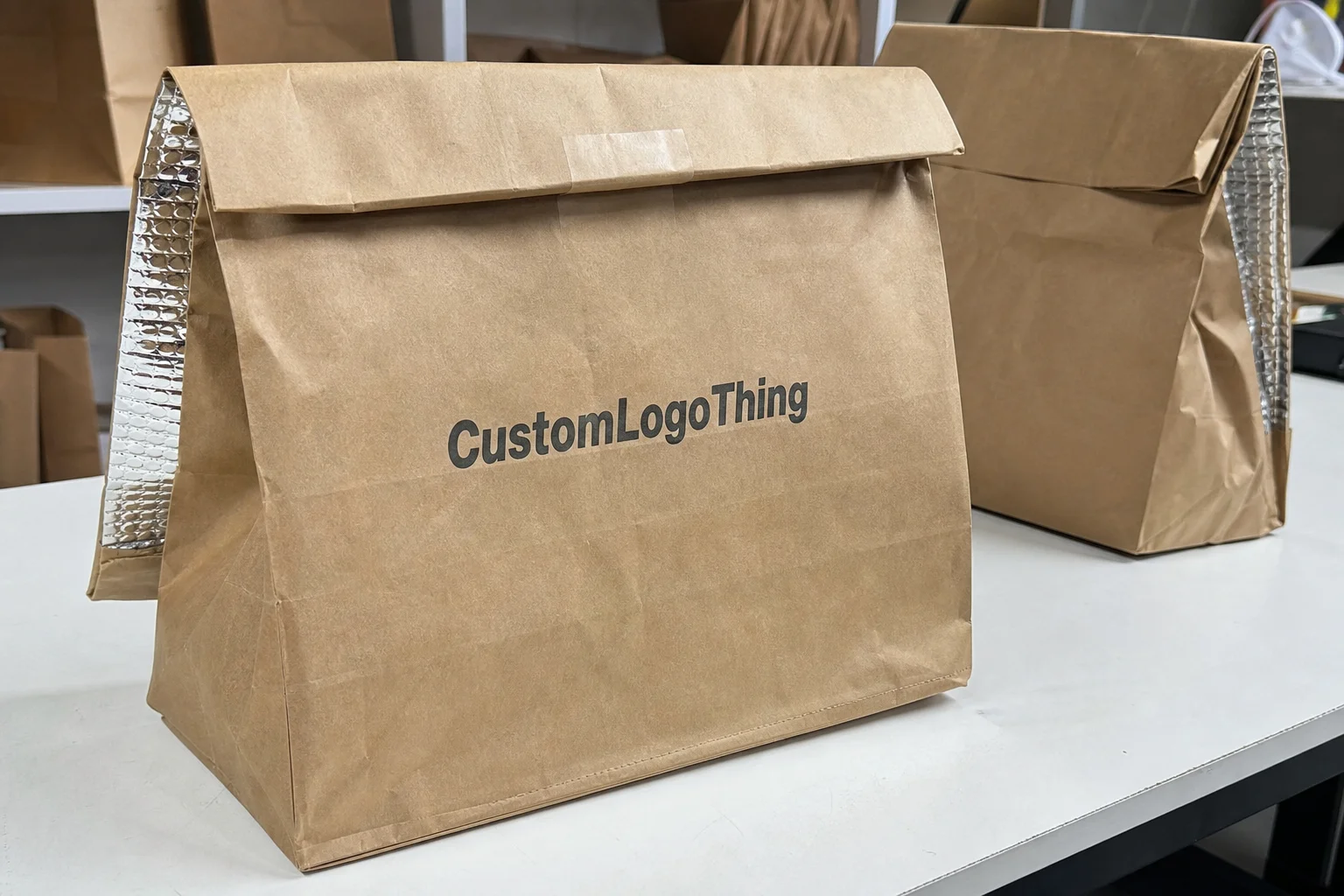
The first signs of failure are usually visible within a few uses. Condensation builds inside the bag, paper handles soften, the base sags under stacked containers, and branding starts to look worn before the run is even established. Hot food creates steam, steam turns into moisture, and moisture exposes weak seams, thin liners, and poor closure choices faster than most buyers expect.
Custom food delivery bags are practical carriers designed for more than appearance. They need to manage temperature, protect food shape, and hold up to repeated loading and unloading. In practice, that makes them closer to light logistics equipment than simple retail packaging.
One common mistake is choosing by logo size or exterior color before checking load type. A bag carrying two pizza boxes behaves very differently from one carrying six entrées and three drinks. The shell may look right on screen, yet fail in use if the footprint is off by even an inch or two.
There are three broad categories worth separating:
- Basic carry bags — lighter-duty carriers, usually suited to short handoffs or non-insulated transport.
- Insulated courier bags — built for temperature retention, frequent handling, and route delivery.
- Reusable delivery totes — heavier builds with stronger panels, better closures, and longer service life.
The right choice depends on how the order moves. A single-store pickup with a short drive does not need the same structure as a multi-stop fleet. That is the practical starting point for branded packaging that also performs operationally.
It also helps to think in terms of failure points rather than just bag style. Most returns and complaints trace back to one of four issues: poor fit, weak seams, too little insulation, or a closure that does not stay shut once the bag is in motion. Fix those first and the rest of the spec becomes much easier to evaluate.
How custom food delivery bags are constructed and used
Most custom food delivery bags are built from a combination of exterior fabric, insulation, liner, closure hardware, and reinforced stitching. The exact formula changes by price point, but the building blocks are familiar: non-woven polypropylene, coated fabric, PEVA or foil-style linings, foam insulation, zipper or hook-and-loop closures, and reinforced handles or webbing straps.
Non-woven polypropylene is common because it is light, inexpensive, and easy to brand. Coated polyester or similar fabrics add more structure and a cleaner wipe-down surface. Foam insulation slows heat loss, while a moisture-resistant liner protects the inside from grease, soup spills, and condensation. For buyers comparing packaging options, that liner is not a minor detail; it is part of the bag’s usable life.
Closure style changes how the bag behaves during delivery. Zippers help trap heat and reduce accidental openings in a moving vehicle. Hook-and-loop closures are fast and simple, though they can wear sooner if they are used hard and cleaned infrequently. Box bottoms improve stability for trays, sushi sets, or stacked containers. Gussets matter too, because a side gusset that opens cleanly can speed loading and reduce crushed lids.
Decoration methods depend on the surface. Screen print works well on flatter panels and usually gives strong opacity for logo visibility. Heat transfer can handle more detailed artwork, though it may be less forgiving on textured or heavily flexed surfaces. Sewn-on labels and patches are another route when the bag material does not accept heavy ink coverage cleanly. For branded packaging, the best decoration method is the one that still looks acceptable after folding, wiping, and repeated carrying.
The bag should be treated as a working tool, not a billboard with straps. If it cannot hold shape, protect the meal, and survive a busy route, the branding is just decoration.
A typical delivery cycle is straightforward but demanding. Meals are packed at the station, loaded into the carrier, transferred to a vehicle, then carried to the final handoff point. Every one of those steps puts stress on seams, handles, and closure points. That is why packaging design for delivery has to account for friction, stacking, and repeated opening much more than static shelf display.
In real use, the bag is also a handling aid. Staff need to open it quickly, place the order without tipping sauces or drinks, close it without fighting the flap, and carry it in a way that does not strain the wrist or shoulder. Small design choices, like handle placement and zipper pull size, matter more than buyers sometimes expect.
Key specs that decide durability, insulation, and brand visibility
Size is usually the first spec buyers ask about, and for good reason. A bag should fit the actual packed load, not just a single container. Measure the footprint of the most common meal setup, then add space for clearance, insulation, and handling. If you routinely ship pizza, drinks, and combo orders, you may need more than one format rather than forcing one oversized carrier to do everything.
Insulation is not always described the same way by every supplier, so ask what the wall build actually includes. A thin foam layer can help with short trips, but thicker insulation and a better liner make a noticeable difference for longer routes. Wall thickness, seam sealing, and material density all matter. For hot food, the goal is not to keep a meal piping hot forever; it is to slow the temperature drop long enough for the order to arrive in good condition.
Durability comes from the parts customers never see. Handle style, stitch count, seam reinforcement, and base support decide whether the bag lasts a month or a season. A simple hand-carry handle might be fine for short distances, while shoulder straps can improve driver comfort and reduce fatigue on heavier routes. If you are comparing retail packaging with delivery carriers, the load demands are not even close.
Brand visibility has its own technical side. A logo needs contrast to stay readable in low light, from the street, or in a quick photo at the door. Large imprint areas help, but only if the surface stays flat enough for the art to print cleanly. In many cases, a medium-size logo placed well performs better than a stretched graphic on a curved panel.
Cleaning and moisture resistance are everyday concerns, not extras. A wipe-clean exterior and liner can save time between shifts. Foldability matters too, especially if the bag needs to be stored in a car trunk or a crowded prep area. Some operators want a rigid carrier, but others need something that collapses flat after use. There is no single best build; there is only the build that fits the operation.
| Feature | Light-duty carrier | Insulated courier bag | Reusable delivery tote |
|---|---|---|---|
| Typical use | Short handoff, low volume | Daily delivery, mixed meals | High-frequency routes, heavier loads |
| Build | Simple fabric or non-woven | Foam insulation, lined interior | Heavier fabric, reinforced seams |
| Price level | Lowest | Midrange | Highest upfront |
| Service life | Shorter | Moderate | Longest |
| Best for | Occasional branded use | Most restaurant delivery programs | Fleet or recurring routes |
Buyers often ask whether the same bag can handle both hot and cold orders. It can, if the load is short and the meal is packed well, but mixed-temperature delivery is always a compromise. If cold items must stay cold for longer periods, or hot items need more insulation, separate formats are usually easier to manage and less likely to create quality complaints.
For a broader look at branded packaging formats, Custom Packaging Products can be useful as a starting point when comparing bag structures to other product packaging needs. The key is matching the physical build to the actual meal flow, not just the marketing brief.
Custom food delivery bags pricing: what changes the quote
Pricing for custom food delivery bags is driven by a few predictable variables, and once you know them, quote differences make more sense. Material choice usually has the biggest impact. Non-woven polypropylene tends to be less expensive than coated fabric, and a simple liner costs less than a more technical insulated build with moisture control and reinforced panels.
Order quantity matters a lot. Larger runs usually lower the per-unit cost because setup, artwork, and production prep get spread across more bags. For a practical sense of range, a simple branded insulated bag at around 5,000 pieces may land very differently than the same bag at 500 pieces. In many cases, the per-unit price could shift by 20% to 40% or more depending on print coverage, structure, and freight terms.
Decoration complexity also changes the quote. One-color screen print on a flat panel is generally easier than multiple print locations, full-color artwork, or decoration on a flexible surface that moves during use. Add reinforced handles, external pockets, waterproof lining, or specialty closures, and the cost climbs again.
Here is a practical comparison buyers can use during early quote discussions:
| Quote driver | Lower-cost choice | Higher-cost choice | What changes in use |
|---|---|---|---|
| Material | Non-woven polypropylene | Coated fabric with insulation | Durability, wipeability, structure |
| Decoration | Single-color logo | Multi-color or larger coverage | Brand impact and setup time |
| Closure | Hook-and-loop | Zipper with tighter seal | Temperature retention and security |
| Construction | Standard seams | Reinforced seams and base | Load strength and lifespan |
| Quantity | Small order | Larger run | Unit price usually drops |
If you want pricing to come back quickly and accurately, have the basics ready: target dimensions, meal count, type of food, artwork files, print colors, closure preference, and quantity. Quotes slow down when the request says “a bag for deliveries” but does not say whether it needs to hold two entrées or a full family meal with drinks.
Freight and carton packing can also move the final number more than some buyers expect. A bag that nests well and ships efficiently is cheaper to land than a larger, bulkier build that takes more carton space. If the quote does not separate unit cost from shipping, the comparison is only half complete.
Production steps and turnaround: from concept to shipped cartons
The production path is usually straightforward, but only if the buyer answers the right questions early. First comes sizing and structure review. Then artwork is checked for placement, color count, and print method. After that, the supplier prepares a proof or sample reference, production begins, quality checks happen, and the finished bags are packed into cartons for shipment.
What slows the schedule most often? Artwork revisions, special materials, unusual dimensions, and peak-season capacity. A simple build with ready-to-use artwork may move relatively fast, while a fully custom insulated bag with multiple print areas and reinforced construction takes longer. That is normal. It is also why buyers should not promise a launch date before the proof stage is settled.
There are a few approvals that keep the schedule moving efficiently: final dimensions, closure type, logo placement, copy accuracy, and packaging count per carton. If those items are still changing, production can stall. Communication checkpoints usually include the initial quote, proof review, a pre-production confirmation if needed, and a ship notice once cartons are ready.
For many orders, a realistic expectation is somewhere around 12 to 20 business days after proof approval, though it depends on the build, materials, and production schedule. Stock-style customization can move faster. Fully made-to-order delivery bags can take longer. If a supplier promises a fixed timeline without asking about construction details, caution is reasonable.
Shipping and handling also matter. Carton count, nesting, and compression affect freight costs and condition on arrival. A well-built bag that gets crushed in transit is still a problem, so ask how cartons are packed and whether the goods are protected against moisture and scuffing during shipment. For standards and testing references, organizations like ISTA are a useful benchmark when buyers want to think about distribution durability more formally.
Quality control should not be limited to appearance. Useful checks include zipper travel, seam alignment, handle pull strength, liner adhesion, print registration, and whether the loaded bag stays upright under normal use. If the order is for a repeat program, testing one finished sample against the actual containers is time well spent.
Common mistakes buyers make when ordering delivery carriers
The biggest mistake is choosing by appearance first and capacity second. A bag can look premium and still fail the job if the base is too small, the sides collapse, or the closure is awkward for staff. If meals arrive bent, tipped, or lukewarm, the bag did not do its job.
Another common miss is underestimating moisture. Hot food releases steam, cold drinks sweat, and mixed orders create condensation in all the wrong places. Grease and sauce are part of the reality too, especially if the carrier is used for fried items, sauced bowls, or dessert packs. A bag that cannot be wiped down quickly becomes a sanitation and appearance problem.
Artwork issues are another avoidable headache. Low-resolution files, vague logo placement, and uncertain color expectations can lead to delays or print results that feel off-brand. Good packaging design starts with clean vector artwork and a clear note about where the logo should sit when the bag is loaded and closed.
Skipping sample review is risky. Even a simple test with your real containers can reveal problems that never show up on paper: lids touching the top panel, drink carriers shifting, or handles digging into a driver’s hand. If you are ordering for a large rollout, test before you commit. That is especially true for any custom printed boxes or bag system that has to work alongside them in the same order flow.
Finally, some buyers ignore how the bag will actually be carried. Hand carry works for short drops. Shoulder straps help on longer routes or when drivers carry multiple items. The wrong handling style can slow delivery and make staff less willing to use the bag correctly. That kind of friction costs more over time than a slightly better build would have.
There is also a tendency to overbuy a feature that looks impressive but has little daily value. Extra pockets, oversized branding panels, or a rigid base can be helpful in some programs, yet unnecessary in others. The most durable buying decisions usually come from matching the bag to the route and the menu, not to a general idea of what “premium” should look like.
Expert tips for choosing the right build, print, and order quantity
The best orders start with reality, not assumptions. Match the construction to the route. Short urban trips, long suburban loops, and high-heat environments all stress a bag differently. If the bag is going to sit in a hot vehicle for part of the day, better insulation and a more durable liner are worth the added cost. If it is used only for a brief handoff, a simpler build may be enough.
Ask for a proof that shows exact logo size and placement. This matters more on textured or flexible surfaces, where the art can warp or disappear into folds. A good proof is not just a pretty image; it is a working reference that shows how the brand will appear when the bag is full, not empty.
Confirm container compatibility with the meals you sell most often. A lot of trouble disappears when a buyer measures the actual packed load, including drinks, inserts, sauce cups, and any divider or cold pack. That is a much better approach than guessing from box dimensions alone.
Quantity planning should reflect replacement cycles, not just opening day. If bags are used daily, some wear-out is inevitable. I usually tell buyers to think about the first order plus expected replacement, because ordering too few can create an awkward color or specification mismatch later. Ordering too many can tie up cash in inventory that ages before it is used.
Order mix matters as well. Some teams need one bag size for standard meals and a second format for pizzas, catering trays, or bundled drinks. Splitting the order into two practical sizes can improve handling and reduce wasted space, even if the unit cost is slightly higher than forcing one oversized carrier to do everything.
And sometimes the smartest option is the plain one. A rugged, moderate-cost carrier that holds temperature, cleans easily, and survives repeated use may outperform a premium-looking bag that feels better in the mockup but falls apart in operations. That is true across branded packaging, retail packaging, and food delivery alike: function first, polish second.
For general material and environmental guidance, the EPA has useful resources on waste reduction and reuse at EPA, and FSC is a helpful reference if your packaging program also includes fiber-based components or paperboard elements: FSC.
Next steps for ordering bags that work on day one
Before contacting a manufacturer, gather the essentials: target capacity, food types, packed dimensions, logo files, print colors, quantity, and the kind of handling the bag must support. If you already know whether the carrier needs to fit pizza, deli trays, meal combos, or drink-heavy orders, the spec conversation becomes much sharper.
Test the bag with actual containers if you can. Use the same meal boxes, drink carriers, and cold packs that go out in real service. That quick step reveals fit problems, balance issues, and closure frustrations long before an order reaches full production. A sample that looks fine empty can behave very differently once loaded.
Ask for a quote that separates unit cost, setup, decoration, and freight. Once those items are broken out, it is much easier to compare offers honestly. One supplier may appear cheaper until freight or print setup is added back in. Another may cost more upfront but last long enough to lower replacement spend. That is the kind of comparison that helps a buyer make a sensible decision.
A good order checklist usually includes these items:
- Final internal dimensions and target load
- Closure style and handle preference
- Artwork files and logo placement notes
- Material and insulation preference
- Quantity, timing, and shipping destination
If those details are organized before the order is placed, custom food delivery bags become much easier to spec, quote, and approve. More than that, the final carrier will do the job it is supposed to do: protect the meal, support the staff, and keep the brand visible from the prep table to the doorstep.
What materials are best for custom food delivery bags?
Non-woven polypropylene is common for lightweight branded carriers, especially when budget matters. For better heat retention and mess control, foam insulation with a wipe-clean liner is usually a stronger choice. Reinforced stitching and coated surfaces also improve daily durability, particularly in busy delivery programs.
How do I choose the right size for custom delivery bags?
Start with the most common meal containers and measure the full packed load, not just one box. Leave room for stacking, drink carriers, and insulation so the food is not crushed. A prototype test with real menu items is the best way to confirm the dimensions before you place a large order.
What affects the price of custom food delivery bags the most?
The biggest pricing drivers are material type, insulation build, bag size, decoration method, and order quantity. More complex construction, stronger hardware, or multi-color printing generally raises cost. Larger quantities usually reduce the unit price because setup is spread across more pieces.
How long does production usually take for custom delivery bags?
Turnaround depends on artwork approval, material availability, print complexity, and the production schedule. Simple builds with ready artwork usually move faster than fully customized insulated bags. Quick proof approval is one of the easiest ways to keep the timeline on track.
Can custom delivery bags be reused and cleaned easily?
Yes, many are designed for repeated use with moisture-resistant exteriors or wipe-clean liners. Look closely at seams, closures, and handle reinforcement if the bag will be opened and closed many times per day. Reusable construction can reduce replacement frequency and improve long-term value.