Buy a Custom Gift Box With Foam Insert That Fits Right
Most premium boxes do not fail because the paper looks cheap. They fail because the product shifts half an inch, rattles in transit, or greets the buyer sitting slightly crooked. A custom gift box with foam insert solves that quiet but expensive problem: it controls protection and presentation before the customer even touches the product.
For Custom Logo Things buyers comparing Custom Packaging Products, the aim is not to overbuild a box until it feels like protective equipment. The smarter target is balance: enough structure to protect the item, enough visual control to support the brand, and enough cost discipline to keep the project commercially sane.
That balance is harder than it looks. A 2 mm change in cavity depth can improve the reveal or make the lid press against the product. A denser foam can protect a glass award but make a small accessory difficult to remove. The best box is not always the heaviest one. It is the one that holds the product in the right position, survives the intended route, and still feels deliberate when opened.
What a Custom Gift Box With Foam Insert Really Does
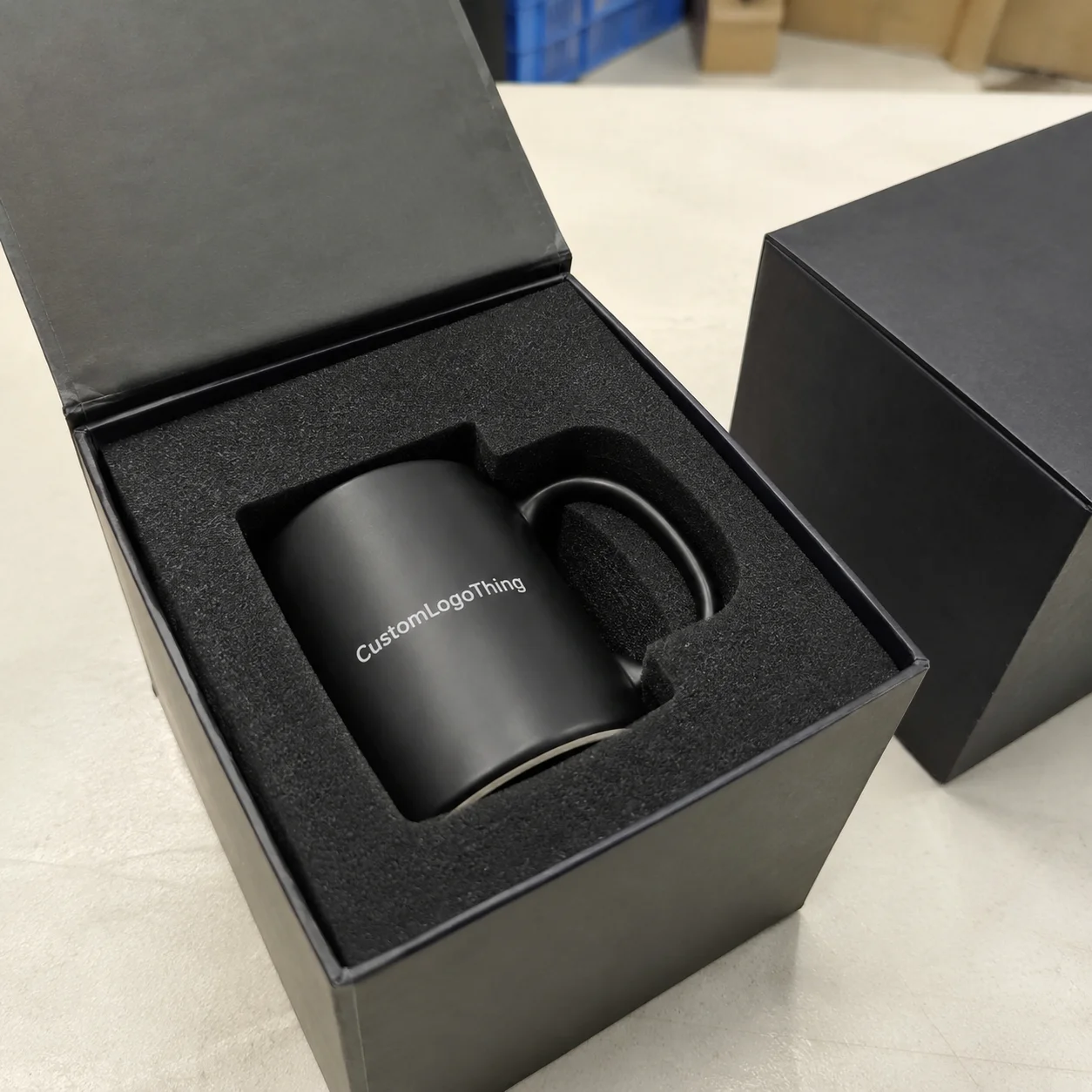
A gift box has two jobs, and buyers often focus on only one. The outside creates perceived value through board thickness, color, print finish, logo placement, and closure style. The inside does the less glamorous work: holding the product in a fixed position through packing, storage, handling, and delivery.
Think of it as a miniature retail display. Before the customer lifts anything out, the box has staged the product: face-up, evenly spaced, framed by negative space, and protected from scraping against accessories. That small reveal can make a $40 product feel closer to a $90 gift. It can also make a $200 product feel careless if the insert is loose, dusty, or hard to use.
A typical foam gift box may include a rigid setup box or folding carton, a die-cut foam tray, product cavities, accessory wells, pull ribbons, printed paper wrap, a magnetic closure, a sleeve, and sometimes a booklet or thank-you card. Each component affects the others. Add a 16-page instruction booklet after the insert is approved, and lid clearance may change by 2-3 millimeters. That is enough to create pressure marks on soft foam or leave the lid sitting proud.
Foam is not always the right answer. Paperboard inserts work well for lightweight cosmetics. Molded pulp may tell a stronger sustainability story for some retail packaging. Thermoformed plastic trays can suit high-volume consumer goods that need consistent nesting and fast packing. Foam earns its place with fragile, high-value, irregular, multi-piece, or heavy products: glass awards, drinkware, candles, electronics, jewelry sets, medical demo kits, influencer mailers, and corporate gifting programs.
Practical rule: if a product must arrive in a precise position and stay there after a shake test, the insert deserves as much attention as the box exterior.
The insert also affects labor. A tray that looks elegant in a rendering can slow packing if the operator has to wiggle every item into place. On a 100-unit executive gift run, that may be manageable. On 5,000 units, ten extra seconds per box becomes almost fourteen labor hours before rework, inspection, or repacking. Presentation and throughput are not separate problems.
How Foam Inserts Hold, Protect, and Present Products
Foam works by doing three things at once. It absorbs shock, limits movement, and spreads pressure away from fragile edges or coated surfaces. The material looks simple. The details decide whether the finished package feels premium or improvised.
Cavity depth is one of the first choices. A product can sit flush with the foam, stand proud by 3-6 millimeters for a showroom look, sit recessed for added protection, or appear in layers so the buyer discovers accessories in sequence. A shallow cavity often photographs beautifully. A full-depth cavity usually protects better. Neither is automatically correct.
Material matters. EVA foam is common in premium branded packaging because it is firm, clean-looking, and holds precise shapes well. Polyurethane foam is softer and better for cushioning lightweight or delicate items. Polyethylene foam is tougher and more industrial, often used for heavier tools, parts, or equipment kits. Flocked foam adds a velvet-like surface for jewelry or awards, though it can raise cost and collect lint if handled casually.
Density is where many quotes become misleading. Soft foam can look luxurious in a render, then collapse under a 600-gram candle. Dense foam can protect beautifully, then make the customer fight to remove a polished metal pen. For glass, electronics, or painted finishes, suppliers often test more than one density before final approval.
Fit tolerance needs equal care. Cavities that are too tight slow down packing and frustrate users. Cavities that are too loose create rattling, scuffs, and that unmistakable “cheap insert” feeling. A 1-2 millimeter adjustment can change the whole experience. Finger notches, thumb cuts, ribbon lifts, and angled cavities are not decorative extras; they decide whether the product comes out gracefully.
Surface testing is easy to skip and expensive to regret. Glossy plastic, painted metal, coated glass, anodized aluminum, and soft-touch finishes can abrade against foam during vibration. For higher-risk finishes, ask for scratch testing or add a protective film, tissue wrap, sleeve, or non-abrasive contact layer. For shipping performance, the International Safe Transit Association offers useful context on package testing through ISTA procedures.
Color changes perception. Black foam hides shadows and makes metallic products pop, but it can swallow dark items. White foam signals cleanliness for medical, beauty, or wellness products, yet it shows dust and fingerprints quickly. Gray can feel technical and forgiving. Brand-color foam creates contrast, though custom colors may require higher minimums, a longer lead time, or a closer review for color shift between samples and production.
Key Specs to Decide Before You Request a Box
Before asking for a quote, collect hard product data. Exact dimensions. Weight. Fragility. Surface finish. Quantity per box. Accessory count. Battery restrictions if electronics are involved. If the item is handmade or varies by batch, measure several units, not just the cleanest sample.
Orientation comes next. Face-up layouts create the strongest first impression. Angled layouts add drama but can increase box depth. Stacked layouts reduce footprint but may need layered foam or pull tabs. Side-by-side layouts work for kits, although they can increase width and shipping carton size. Nested layouts save space when products fit into one another, but pressure testing becomes more important.
Box structure changes both the look and the economics. Rigid setup boxes are the default for luxury gifting because they feel substantial, often using 1.5-2.5 mm greyboard wrapped with printed paper. Magnetic closure boxes add convenience and presentation value. Drawer boxes create a slower reveal and suit awards, jewelry, and premium tech accessories. Folding cartons are lighter and cheaper to ship, but they may need a protective mailer or corrugated shipper.
Insert exposure is a design decision, not just an engineering detail. Full-depth cavities maximize hold. Shallow cavities show more product. Layered cavities can hide accessories below the hero item. For packaging that needs protection and theater, the strongest layout usually comes from testing two or three options instead of forcing one concept through production.
Branding surfaces add up quickly: lid exterior, lid interior, side panels, belly band, sleeve, foam color, printed card, QR code, thank-you note, and shipping carton label. A useful spec sheet identifies each surface and states whether it needs one-color print, full-color print, foil stamping, embossing, debossing, spot UV, or lamination.
Shipping cannot be treated as a separate problem. A box that looks perfect on a desk may fail in parcel networks, where drops from 18-30 inches are common during handling. If the gift box will ship directly to recipients, plan an outer mailer or corrugated shipper. If it will travel palletized to an event, compression, carton count, and storage volume matter more.
Sustainability deserves a frank conversation. Foam can be difficult to recycle, depending on material type and local recovery systems. That does not make every foam insert irresponsible. Right-sizing the box, reducing foam thickness, designing replaceable inserts, and creating durable keepsake boxes can reduce waste per use. Buyers comparing paper-based alternatives can review broader packaging guidance from the EPA’s waste management hierarchy.
- Product data: length, width, height, weight, finish, fragility, and variation tolerance.
- Layout data: product sequence, accessory wells, removal method, and visibility priority.
- Brand data: logo files, print colors, finish preferences, and insert color direction.
- Commercial data: quantity, budget range, shipping destination, and launch deadline.
Do not rely on product photography alone. Photos hide tapers, rounded corners, overhanging caps, cable bulges, and slight asymmetry. A candle jar that looks cylindrical may have a wider lid. A tech device may have a raised button that changes how it sits in foam. These small features drive cavity shape.
Process and Timeline From Sketch to Finished Boxes
The process usually moves through nine stages: brief, layout concept, material selection, prototype, artwork proof, pre-production sample, production, quality check, and shipping. The order matters. Approving artwork before confirming product lift-out can create rework. Approving foam before confirming the outer box can create clearance problems.
The foam insert often controls the schedule because the cavity fit depends on real product samples or accurate 3D data. A supplier can draw a cavity from measurements, but drawings rarely reveal how a hand removes a product. The gap between “fits” and “feels right” is often discovered only after a physical prototype.
During prototyping, the supplier checks cavity depth, lid clearance, accessory spacing, product compression, removal force, and surface contact. For a multi-piece cosmetics kit, that may mean checking whether a bottle cap sits higher than the jar beside it. For a tech kit, it may mean leaving cable wells loose enough for fast packing but tight enough to avoid a tangled reveal.
Simple projects can move from approved proof to finished boxes in a few weeks, depending on quantity and production queue. More complex jobs often need 3-5 business days for concept development, 5-10 business days for prototyping, 7-14 business days for sample revisions, and several additional weeks for production and shipping. Specialty materials, strict color matching, imported components, foil dies, flocked foam, or multiple sample rounds can extend that timeline.
The bottlenecks are predictable. Missing product samples. Changing product dimensions. Late artwork. Unclear order quantities. No decision-maker available to approve the sample. Buyers avoid most delays by treating packaging development as part of the product launch calendar, not a final-week purchasing task.
A pre-production sample is worth the wait for a premium custom gift box with foam insert. Digital renders cannot show magnet strength, lid resistance, paper texture, foam recovery, or whether the customer naturally grabs the product from the intended side. They also cannot show whether a printed insert card rubs against the lid or whether a ribbon tail gets trapped in the closure.
Quality checks should include box squareness, wrap adhesion, magnet alignment, print registration, foil position, foam bonding, cavity accuracy, and transit results. If the packed box ships individually, request a packed sample and run a basic drop or vibration review before full rollout. For larger programs, formal testing through ISTA-style methods may be justified.
Cost, Pricing, and MOQ Factors Buyers Should Know
Pricing is driven by structure, size, board thickness, foam type, foam thickness, number of cavities, printing method, finishing, quantity, assembly time, packing method, and freight. That is why two boxes with the same outside dimensions can land at very different unit costs.
The insert can be a major cost driver. Custom cavities require tooling, cutting time, waste allowance, and sometimes hand assembly. A one-piece tray with a single rectangular cutout is relatively efficient. A layered insert with six cavities, thumb notches, flocked surface, and glued ribbon pulls is not.
MOQ depends on production method and supplier setup. Some simple Custom Printed Boxes can run at lower quantities, but rigid boxes with custom foam usually price better as volume rises because sampling, setup, tooling, and freight are spread across more units. For small runs, unit pricing may look high compared with the product value. That is not always markup; it is math.
| Option | Best Fit | Typical Cost Behavior | Watchouts |
|---|---|---|---|
| Rigid box with EVA foam | Luxury gifts, awards, electronics, premium kits | Higher unit cost; stronger perceived value at 500+ units | Freight and storage volume can be significant |
| Magnetic closure box with foam | Corporate gifts, influencer kits, retail launches | Magnets and wrap finishing add cost quickly | Magnet strength and lid alignment need sample approval |
| Folding carton with foam insert | Lighter products and tighter budgets | Lower freight and storage cost than rigid boxes | May need an outer shipper for parcel delivery |
| Drawer box with layered foam | Jewelry, tech accessories, limited-edition sets | Premium structure with added assembly labor | Drawer friction and ribbon placement must be tested |
Finishing choices can raise price quickly: foil stamping, embossing, debossing, spot UV, soft-touch lamination, custom sleeves, flocked foam, magnetic closures, ribbon pulls, and full-color interior printing. A 350gsm C1S sleeve with soft-touch lamination and foil may look excellent, but it is not the same budget as a plain printed wrap.
Be careful with cheap quotes. They may exclude sampling, insert tooling, artwork adjustment, freight, assembly, outer cartons, or replacement allowance. Ask for tiered pricing at three or four quantities, such as 250, 500, 1,000, and 2,500 units. The useful question is not “What is the lowest price?” It is “Where does the unit cost drop enough to change the buying decision?”
For rough planning, a small-run rigid gift box with a simple foam tray may cost several times more per unit than the same structure ordered in the thousands. Complex foam, magnetic closures, imported specialty paper, and air freight can move the number sharply upward. A low-cost folding carton with a basic foam pad may fit a tighter campaign, but it will not deliver the same reveal or rigidity.
Match packaging spend to product value. If the gift value is $25, a heavy rigid box may be hard to justify unless the campaign is about brand impact rather than unit economics. If the product is a $300 award, medical demo kit, investor gift, or retail launch kit, underinvesting in the insert can make the entire program look careless.
Common Mistakes That Make Foam Gift Boxes Feel Cheap
The biggest mistake is designing from the outside inward. A beautiful lid, perfect foil logo, and expensive paper wrap cannot rescue a product that wobbles in the cavity or requires two fingers and a prayer to remove. Start with the product fit, then build the visual system around it.
Oversizing is another trap. Empty space can look luxurious in a photo, especially with jewelry or fragrance. In shipping, that empty space costs money. A box that is 25% larger in footprint can increase carton size, pallet volume, storage cost, and freight charges. Worse, it may make a small product feel less important.
Copying another brand’s layout is risky. Their product may weigh 120 grams while yours weighs 420 grams. Their bottle may have a matte label while yours has a glossy coating. Their accessories may be flat, while yours include a charger, cable, card, and sample vial. Similar photos do not mean similar packaging engineering.
Finger access is often forgotten. Without thumb notches, ribbon lifts, or undercuts, customers pry products out awkwardly. That damages foam edges and turns the reveal into a struggle. In packing operations, poor access also slows line speed. Ten extra seconds per box becomes nearly three labor hours across 1,000 units.
Material mismatch creates another credibility gap. A premium rigid box with low-density foam feels inconsistent. Dense industrial foam inside a luxury jewelry box can feel harsh. White foam can look clean but show lint and scuffs. Black foam can look sharp but hide small dark products unless the layout creates contrast.
Artwork timing causes quieter problems. If a printed booklet, warranty card, or QR insert is added late, it can affect internal clearance. If the lid liner changes thickness, the product may compress the foam. If a sleeve is added after the shipper is specified, carton dimensions may need revision. Packaging design is connected; small changes travel.
Test the full packed box, not just the insert. Lid pressure, shaking, humidity, and temperature changes can reveal weaknesses that a clean desktop sample hides. For candles, check scent oil migration and heat exposure. For electronics, check cable movement. For glass, check edge protection. For awards, check whether the heaviest point bears against a thin foam wall.
Also inspect the production run, not only the approved sample. Foam can vary slightly by batch. Wrapped boxes can show corner gaps or glue marks if quality control is weak. Foil can drift. Magnets can be misaligned. A simple incoming inspection plan should check a meaningful sample of boxes for cavity fit, surface marks, lid closure, insert adhesion, and packed-product movement.
Next Steps: Build a Better Brief Before You Buy
A strong brief saves days of back-and-forth and prevents vague quotes. Before contacting a supplier, gather product dimensions, product weight, photos from multiple angles, fragility notes, preferred box style, order quantity, launch date, shipping destination, and budget range. If you are comparing options, review Custom Packaging Products with the product layout already in mind.
Send an actual product sample whenever possible. This matters for glass, electronics, coated finishes, cosmetics, candles, drinkware, jewelry, and multi-piece kits. If a physical sample is not available, provide CAD files, 3D scans, or measured drawings with tolerances. “About the size of a phone” is not a packaging specification.
Choose the unboxing sequence before design starts. What should the recipient see first? What should they remove first? Should accessories be visible immediately or hidden underneath? Does the product need a printed card above it, below it, or tucked into the lid? These decisions influence cavity placement, foam thickness, and box depth.
Ask for two layout options: one optimized for premium presentation and one optimized for cost or shipping efficiency. The premium version may use a wider rigid box with more visual spacing. The efficient version may rotate products, stack accessories, or reduce foam area. Seeing both makes tradeoffs concrete.
- Confirm product dimensions and weight using actual samples.
- Define the desired reveal sequence and accessory placement.
- Select a box style: rigid, magnetic, drawer, or folding carton.
- Choose foam direction: EVA, polyurethane, polyethylene, or flocked finish.
- Request a prototype before approving full production.
- Document revisions to cavity size, foam density, print placement, and structure.
For higher-value programs, sample approval is not optional. It is the point where theory meets fingers, gravity, and shipping reality. If the gift box supports a launch, event, influencer kit, retail sale, or executive gifting campaign, a prototype can prevent expensive embarrassment.
If you are planning a custom gift box with foam insert, start by mapping the product layout, protection needs, quantity, and deadline before asking for a quote. That one step gives the supplier better data, gives you cleaner pricing, and gives the finished box a much better chance of feeling intentional from the first opening.
Frequently Asked Questions
What products are best for a custom gift box with foam insert?
Foam inserts work best for fragile, high-value, irregular, or multi-piece products that need controlled placement. Good examples include cosmetics sets, tech devices, glassware, candles, jewelry, awards, sample kits, and corporate gifts. If the product is lightweight, flat, or low-risk, paperboard or molded pulp may be more cost-efficient.
How much does a custom foam insert gift box cost?
Cost depends on box structure, dimensions, foam type, insert complexity, print method, finishing, quantity, and freight. Rigid boxes with EVA foam, magnetic closures, foil stamping, and multiple cavities cost more than simple folding cartons with basic foam. Ask for tiered pricing and confirm that the quote includes sampling, tooling, assembly, packing, and shipping.
How long does production take for custom gift boxes with foam inserts?
The schedule depends on prototype approval, material availability, artwork readiness, production quantity, and shipping method. Foam insert projects often take longer than standard boxes because the cavity fit must be tested against the real product. To reduce delays, provide samples, final artwork, product dimensions, and approval feedback as early as possible.
What foam type should I choose for a gift box insert?
EVA foam is common for premium presentation because it is firm, clean-looking, and holds precise cavities well. Polyurethane foam is softer and useful for cushioning, while polyethylene foam is tougher for heavier or more industrial products. The best choice depends on product weight, surface finish, desired look, and how tightly the item needs to be held.
Can a custom gift box with foam insert be eco-friendly?
Foam is not always easy to recycle, so sustainability depends on material choice, box durability, right-sizing, and total packaging waste. You can reduce impact by using less foam, avoiding oversized boxes, designing reusable keepsake packaging, or comparing paper-based insert alternatives. For premium gifts, a durable box that customers keep may create less waste than disposable packaging that fails after one use.