Custom Groomsmen Boxes: What Matters Before You Order
custom groomsmen boxes do more than hold gifts. They shape the reveal, keep mixed items from shifting, and make a set feel intentional instead of assembled at the last minute. That matters because wedding-party gifts are often a collection of small objects that do not look special on their own. Put them into a well-built box, and the same contents read as coordinated, finished, and worth keeping.
The box has to do practical work as well as presentation work. It needs to protect contents with different sizes, weights, and fragility levels. It also needs to close cleanly, survive packing and transit, and still look right when the lid opens. If the structure photographs well but the items move around inside, the packaging has failed where it counts.
The real decision is not whether the box looks good in a rendering. It is whether the structure fits the gifts, supports the insert, and stays intact through packing, shipping, and handoff. A strong concept without fit is just expensive decoration.
What Custom Groomsmen Boxes Actually Solve
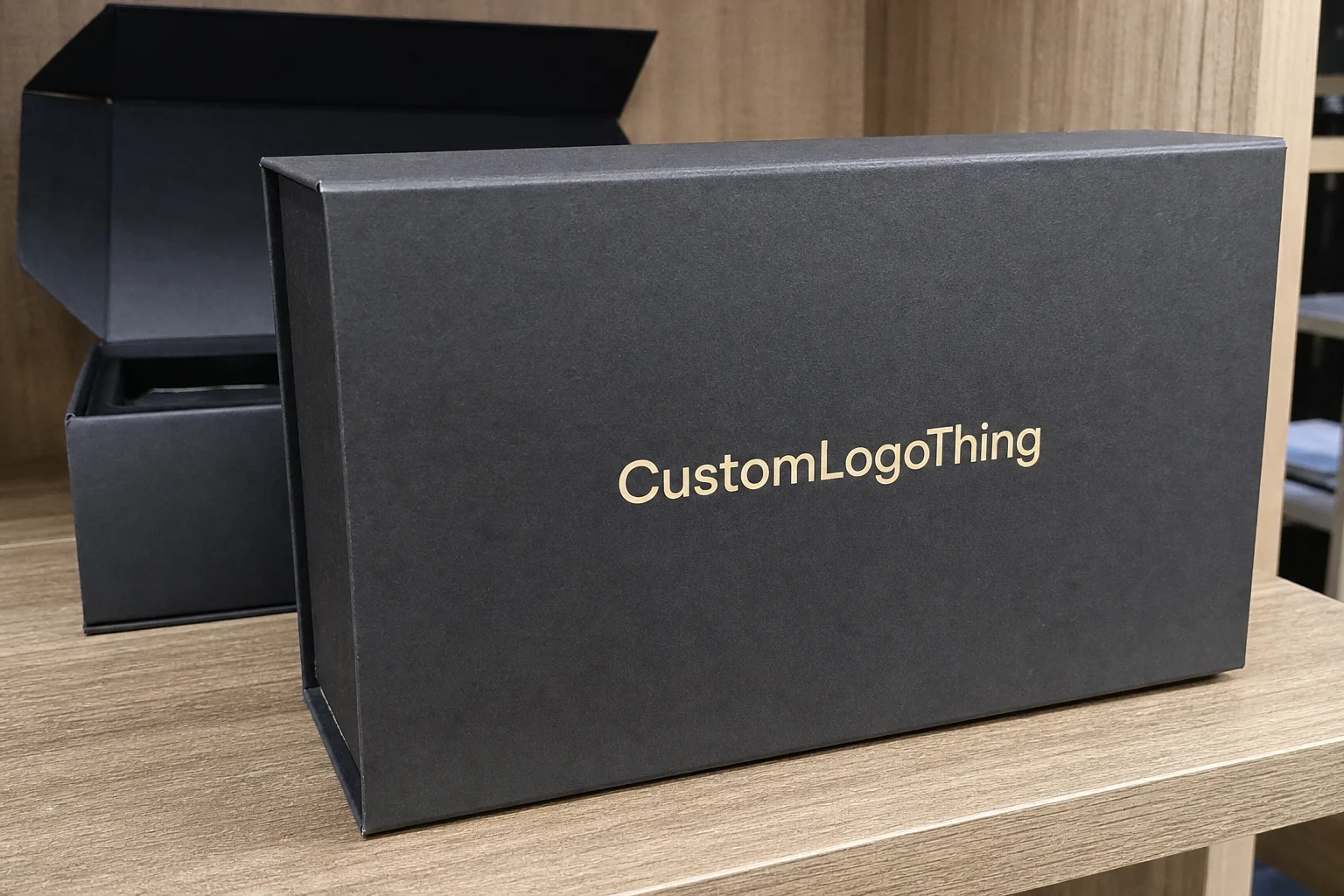
These boxes solve a practical layout problem first: mixed items rarely share the same footprint, depth, or handling needs. One piece may be heavy and rigid, another soft, another narrow and sharp-edged. Without a defined interior, those items collide, scuff, and shift. The set stops feeling premium very quickly.
That is why boxes outperform bags, sleeves, and loose wrapping when the goal is a controlled presentation. Bags can look nice, but they do not organize contents. Sleeves work for a single flat item. Boxes allow for inserts, dividers, tissue, and a sequence that makes the contents feel planned rather than gathered together.
The best use case is a set with one or two hero items and a few supporting pieces, such as a watch, flask, wallet, note card, and small accessory. If the interior is designed properly, each item has a place. If it is not, the box becomes a loose container with branding on top.
If the lid lifts and everything shifts, the structure was designed for the artwork, not the contents.
Format matters too. A rigid set-up box gives the strongest presentation and the best keeper value. A folding carton works better when budget and volume matter more than a luxury feel. A mailer-style box is a better answer when shipping strength matters and the package still needs to arrive polished. The smartest buyers choose the structure from the inside out. If you need a broader view of options, start with Custom Packaging Products and match the box to the contents before you lock a style.
There is also a repeatability benefit. When every box is built around the same insert and packout sequence, quality control is easier. That matters whether the order is assembled by a vendor, a fulfillment team, or your own staff close to the event date.
Production Process: From Dieline to Packed Sets
The cleanest production process starts with measurements, not graphics. Before anyone talks about foil, embossing, or monograms, the contents need to be measured in three dimensions. Height is the dimension buyers miss most often. The footprint may fit, but the lid can still compress the insert or create too much pressure on the contents.
That is where the dieline comes in. A dieline is the structural template that defines cut lines, folds, glue areas, panel sizes, and insert placement. It is not a decorative file. It is what tells you whether the box closes, whether the insert has enough clearance, and whether the finished set will hold up under handling.
Most projects follow one of two paths: fully custom sizing with a custom insert, or a stock-size structure with custom print and a fit-in insert. Fully custom sizing gives the best fit and the cleanest reveal. A stock structure often lowers cost and shortens lead time. Neither is automatically better. The right choice depends on how fixed the contents are and how much room the budget has for structure.
Assembly has to be planned early. Decide whether the boxes ship flat, pre-built, or partially assembled. Decide whether the inserts are paperboard, foam, molded pulp, or just tissue and dividers. Decide who is packing the order. If that question stays open too long, the estimate may look fine while the labor burden quietly grows.
For buyers comparing structural options, the range at Custom Packaging Products helps separate rigid boxes, folding cartons, and mailers by function rather than appearance. They are tools with different behavior, not interchangeable shells.
Cost, MOQ, and Unit Price Drivers
Price is driven by a short list of variables: quantity, structure, board thickness, print coverage, insert complexity, and whether packing is included. If a quote ignores those items, it is incomplete. The final bill will not ignore them.
Small runs are expensive per unit because setup costs do not disappear when the order is small. A 100-piece run and a 1,000-piece run can involve similar design work, proofing, and tooling, but those costs are spread very differently. For Premium Rigid Boxes, it is common to see $5 to $12 per unit before freight at low to moderate quantities when the build is straightforward and the finish is restrained. Folding carton versions with a custom insert often fall closer to $1.25 to $3.25, depending on size, coverage, and finishing.
As quantity increases, unit cost usually improves, but structure still matters. Rigid board uses more material and labor. Folding cartons are lighter and more economical. Mailer-style boxes can sit between the two if the exterior print is simple and the shipping size stays efficient. Buyers who want to control cost should pick the structure first, then decide how much finish is actually necessary.
| Option | Typical Use | Typical Unit Price | Pros | Tradeoff |
|---|---|---|---|---|
| Rigid set-up box | Premium keepsake gifting | $5.00-$12.00+ | Strong structure, high perceived value, better presentation | Heavier, bulkier, and more labor-intensive |
| Folding carton | Budget-conscious gift sets | $1.25-$3.25 | Ships flat, lower cost, faster to pack | Less premium feel and lighter protection |
| Mailer-style box | Shipping-first gifting | $1.80-$4.50 | Good transit strength, clean exterior branding | More functional than luxury in appearance |
The hidden costs are usually the ones that distort a budget. Freight rises with volume because rigid boxes are bulky. Assembly labor matters if the vendor is packing inserts, tissue, or mixed gifts. Sample charges appear when fit needs to be validated before production. Rush fees enter the picture when the date is fixed and the order starts late.
A better rule is to budget in three layers: box cost, packout cost, and freight cost. That gives a more honest number than unit price alone and keeps packaging decisions tied to real output rather than the cheapest line item on a quote.
Timeline, Lead Time, and Approval Milestones
Most delays happen before printing starts. Concept, proofing, sample approval, and structural revisions take longer than buyers expect, especially when the contents are still changing. Production itself is only one part of the schedule.
For a standard custom run, it is common to see 2 to 5 business days for quoting and digital proofing, then 7 to 12 business days for a physical sample if one is required, and roughly 12 to 15 business days from proof approval to production on simpler jobs. Add custom inserts, specialty finishes, or structural changes, and the schedule can stretch to 18 to 25 business days or more. Freight has to be added on top.
Proof approval is not the same thing as production approval. A digital mockup confirms artwork placement, general color intent, and text accuracy. It does not fully prove material behavior, fold tolerance, or the way an insert feels once the gifts are packed. If the contents are fragile, tightly fitted, or unusually shaped, a sample is worth the time.
Buffer time matters because wedding planning introduces revisions at the worst possible moment. The gift list changes. Someone asks for a different foil color. An approved item gets replaced late in the process. A practical buffer absorbs that churn without turning the packaging schedule into a scramble.
For shipping-sensitive projects, ask whether the packaging has been tested against transit standards such as ISTA procedures. If the paper source matters to the brief, certification from FSC can support the sourcing story without relying on vague sustainability language.
Material, Insert, and Print Choices That Change the Result
Material choice controls cost, feel, durability, and the way the box behaves in transit. Rigid board, often built from thick chipboard or similar set-up stock, gives the strongest premium impression. Paperboard is lighter and cheaper, which makes sense for compact sets or lower-cost runs. Mailer-style structures are closer to shipping packaging and can perform better when the box needs to survive distribution without an outer shipper.
Insert choice changes the opening experience as much as the exterior does. Tissue is fine for soft goods. It is not enough for glassware, knives, flasks, watches, or mixed sets with hard edges. Paperboard dividers are clean and economical. Foam creates tighter protection and a more controlled reveal. Molded pulp is worth considering when protection and recyclability both matter.
Printing deserves the same discipline. Full-coverage artwork is useful when the design truly needs it, but it is not automatically the smartest route for a one-time wedding order. One-color branding, a foil logo, or a restrained spot UV treatment can look more refined than a busy all-over print. That is especially true for package branding where the objective is a premium impression, not visual noise.
Finishes should be chosen for a reason. Matte lamination gives a calm, modern surface. Soft-touch adds a richer handfeel but can show handling marks more easily. Foil works well for monograms, initials, or short phrases. Spot UV can sharpen a mark without covering the whole box in shine.
- Rigid board: best for keepsake presentation and strong lid structure.
- Paperboard: good for lower-cost custom printed boxes and compact sets.
- Foam insert: best for fragile or precisely shaped items.
- Paperboard divider: practical for mixed accessories and repeatable packout.
- Matte or soft-touch finish: useful when the goal is a restrained, premium look.
If the budget is limited, keep the structure simple and spend on one high-impact detail. A well-fitted box with one strong finish often looks better than a box overloaded with effects. The goal is polished packaging, not decoration for its own sake.
Common Ordering Mistakes That Waste Budget
The first mistake is designing the box before the gifts are finalized. One item changes and the insert no longer fits. A lid depth that was fine for version one becomes too shallow in version two. The result is a second round of samples, a revised dieline, and a higher bill.
The second mistake is overpacking the layout. A mood board can make a dense arrangement look elegant, but production does not care about the mood board. If the lid presses on the contents, the box distorts. If the base is overloaded, corners collapse. Fit the contents first, then style the presentation.
The third mistake is comparing only the unit price. That is how buyers get caught by freight, assembly, sample costs, and rush fees. A quote that looks cheaper can become more expensive once the boxes are built, packed, and shipped. If the order has a deadline, cheap can turn into a false economy.
The fourth mistake is overdesigning a one-time run. A wedding package does not need every finish available. Too many effects can make the set look busy, and busy usually reads as less premium. A clean monogram, a strong structure, and one deliberate material choice often work better than a box trying to prove too much.
Transit is the other issue that gets overlooked. If the boxes will be stored, stacked, moved, and handed off more than once, the structure needs enough corner strength, sensible stackability, and an insert that prevents items from floating inside the cavity. The cheapest-looking option is not always the cheapest outcome after damage and rework are counted.
Before approving production, ask for a sample photo, a dieline, and a packed mockup. Those three pieces reveal more than a polished rendering ever will. They expose fit, fill, closure, and how the set behaves when real products go inside.
Next Steps Before You Request a Quote
Start with a full contents list. Then measure everything. Then decide how premium the presentation needs to feel. That order keeps the project grounded. If pricing comes before the contents are defined, every quote is provisional and every revision costs time.
Use this checklist before you ask for pricing on custom groomsmen boxes:
- List every item in the set, including cards, filler, and protective wrap.
- Measure length, width, height, and any oddly shaped pieces.
- Decide the quantity, plus a small overrun for spoilage or replacements.
- Choose the box style: rigid, folding carton, or mailer-style.
- Pick the insert type based on weight, fragility, and packout speed.
- Set the finish level before anyone starts quoting specialty upgrades.
- Ask for a dieline, sample photos, and lead time in the same conversation.
A cleaner quote request usually produces a cleaner answer. It also makes vendor comparison easier because the numbers are based on the same assumptions. If you need to review format ideas, the range at Custom Packaging Products can help separate presentation goals from structural needs.
The practical approach is simple: lock the budget tier first, then choose the structure and finish that fit it. That keeps the order under control and avoids paying for features that do not improve the result. If the fit, finish, and timing are right, custom groomsmen boxes make the gift set look intentional, keep the contents protected, and arrive without drama.
How do I choose the right size for custom groomsmen boxes?
Start with the largest item in the set and leave room for inserts, tissue, and any protective fill. Measure height as carefully as footprint dimensions, because lid pressure causes more problems than most buyers expect. If the contents are fragile or unusually shaped, ask for a dieline or a sample before production.
What affects the price of custom groomsmen boxes the most?
Quantity, structure type, print coverage, and insert complexity usually have the biggest impact. Small runs cost more per unit because setup and proofing are spread over fewer boxes. Rush timing, shipping volume, and specialty finishes can raise the total quickly if they are added late.
How long does production usually take for custom groomsmen boxes?
Expect extra time for proofing and sample approval, especially if the box needs a custom insert or a structural change. Standard production can move fairly quickly once the proof is approved, but freight adds its own schedule. If the date is fixed, build in buffer time for revisions and transit.
What should go inside custom groomsmen boxes?
Keep the set focused. One or two hero gifts plus smaller supporting items usually work better than packing everything into one box. Choose items with similar weight and shape so the set opens cleanly and feels balanced. A card or note card adds a personal touch without adding much cost.
Can I order custom groomsmen boxes with a low MOQ?
Yes, but low minimums usually mean simpler structures, stock sizes, or lighter customization. Fully custom sizing and premium finishes often need higher quantities to stay economical. If the run is small, put the budget into one strong design choice instead of trying to customize everything.