Why custom hazard stickers with logo stand out on busy packaging
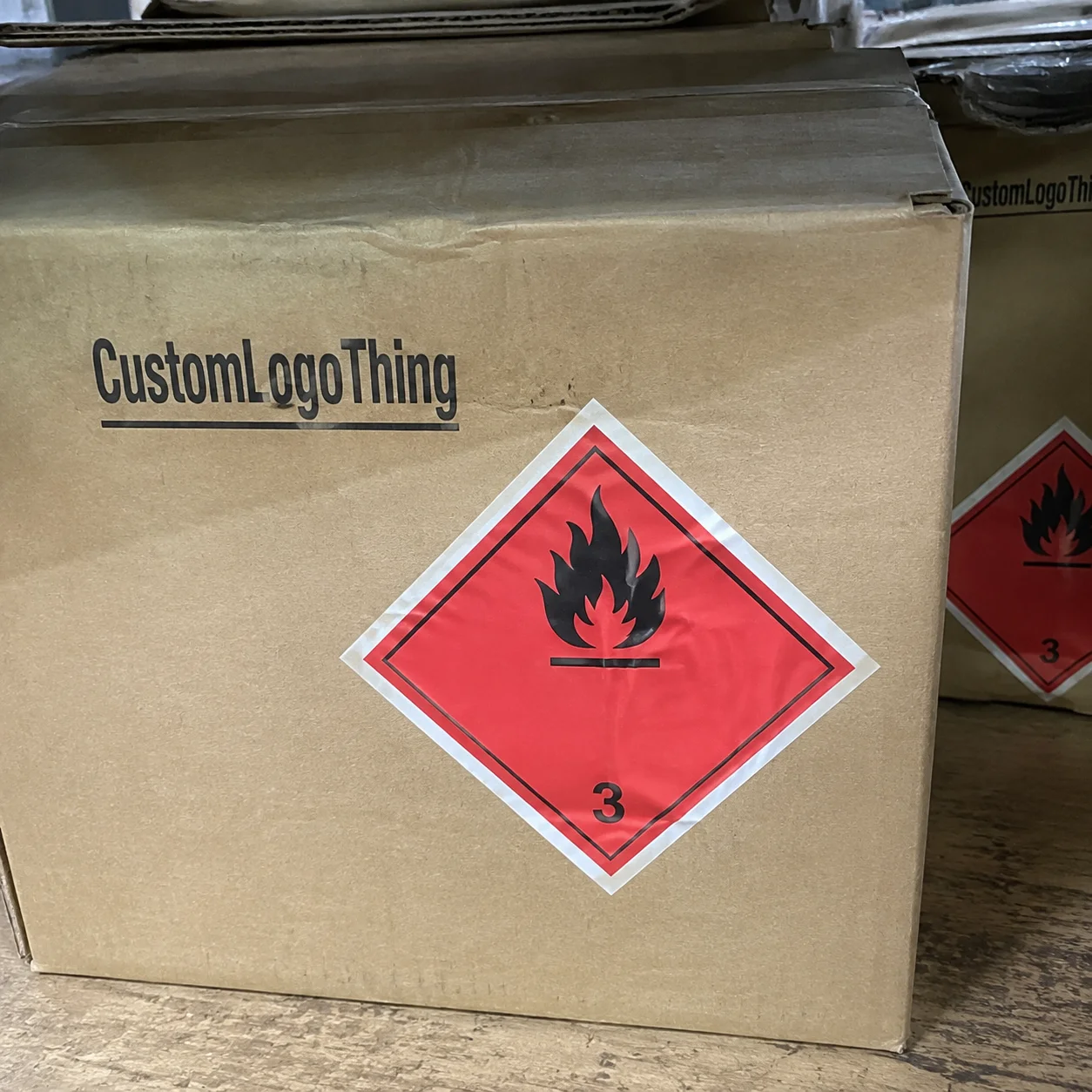
On a crowded dock, inside a fulfillment center, or along a production line, plain warning labels can disappear into the noise. That is the practical reason custom hazard Stickers With Logo get attention: they make the safety message feel official, easier to spot, and easier to trust before a pallet moves, a drum is opened, or a carton is staged for shipment.
These labels are not decorative stickers with a warning slapped on top. They are purpose-built hazard labels that still carry the symbols, warning language, sizing, and adhesive performance a real operation needs, while also carrying a brand mark. In practice, that can mean a 2-inch square label for carton seams, a large drum label for chemical storage, or a machine-identification sticker used alongside inspection tags.
The logo matters, but mostly because it supports recognition. Workers are faster at reading Labels That Look consistent across shipments, product lines, and facilities. A branded warning label also helps tie together product packaging, shipping cartons, and handling materials without muddying the actual hazard message.
Most buyers use these labels on shipping cartons, chemical containers, warehouse equipment, transport totes, and secondary packaging. The better the match between the design and the environment, the less likely the label is to be ignored. That is the real value here: not decoration, but clarity under pressure.
Good hazard labeling should be hard to miss and easy to trust. The logo supports trust, but only if the warning itself stays visually dominant.
That balance is where packaging design starts to affect more than appearance. It influences safety, consistency, and how quickly people can process a package at a glance. For teams managing branded packaging and Custom Labels & Tags, the warning label should be treated as part of the system rather than a loose add-on.
How branded hazard labels work in real operations
A hazard sticker does two jobs at once. First, it signals risk: flammable, corrosive, irritant, fragile, or machine-related. Second, it identifies ownership. That identity cue becomes useful when a pallet changes hands several times, or when shipping, production, and maintenance teams all touch the same item during the course of a shift.
A good layout usually includes a hazard pictogram, a signal word such as Danger or Warning, a border color that supports quick recognition, the company logo, and any secondary handling text. Some buyers also add batch identifiers, routing notes, or short instructions like “store upright” or “keep away from heat.” The challenge is fitting that information without crowding the label.
Substrate and adhesive matter just as much as the artwork. Corrugated boxes need a different adhesive profile than powder-coated metal bins. Plastic drums are trickier because low surface energy can weaken bond strength. Refrigerated surfaces add another variable: condensation. A label that performs well on a dry carton may lift the first time it sees humidity or cold-chain handling.
That is why decorative labels and safety labels cannot be treated as the same thing. One can be visually attractive; the other has to survive abrasion, handling, and poor lighting while staying legible. In practice, that means stronger contrast, simpler typography, and materials chosen for the job rather than for shelf appeal.
The operational payoff is modest but real. In a facility where multiple suppliers send similar cartons, a branded hazard label helps workers tell which pallet belongs to which product line without digging through paperwork or squinting at tiny print. Small changes like that reduce confusion more reliably than slogans do.
For broader Custom Packaging Products, the label should be planned as part of the packaging system. When the carton, label, and handling workflow line up, the whole packout process feels cleaner and less error-prone.
For teams that need an industry reference point, the Packaging Machinery Manufacturers Institute is a useful resource for packaging and handling context, especially when labels need to fit real production conditions rather than ideal mockups.
Key cost, pricing, and MOQ factors
Pricing for hazard labels is usually shaped by the same variables that affect most printed packaging: size, material, finish, ink coverage, die-cut shape, quantity, and whether the artwork is standard or fully custom. A simple one-color warning label on paper stock is a very different order from a chemically resistant polyester sticker with multiple inks, rounded corners, and variable data.
Minimum order quantity is where the trade-off becomes visible. Small runs usually cost more per piece because setup is spread across fewer units. Larger runs lower unit cost, but they also tie up cash and create inventory risk. If a label is only used once a quarter, buying a warehouse-sized quantity because the per-piece price looks better can be a false economy.
| Order Type | Typical Use | Relative Unit Cost | Best Fit |
|---|---|---|---|
| Short-run digital | Test launches, seasonal SKUs, small facilities | Higher at low volume | Fast changes, lower commitment |
| Flexographic production | Stable artwork, recurring replenishment | Lower at higher volume | Repeat orders, consistent specs |
| Specialty material run | Harsh environments, chemical exposure, cold storage | Highest | Durability first |
Setup and proofing can also affect total spend. Custom die-cut shapes, unusual adhesives, and multi-version warning sets often require extra prepress checks or tooling. On smaller orders, a proof fee can feel like a large share of the budget. On larger orders, it is usually minor compared with the cost of a label failure after the product leaves the dock.
The real question is not “cheap or expensive.” It is which cost you are trying to reduce. Unit price matters if you run high volume. Replenishment speed matters if inventory changes often. Durability matters if the label lives on a cold, wet, oily, or abrasive surface. That is why buyers of custom hazard Stickers With Logo should compare quotes and service life together, not separately.
A practical planning range for a straightforward order might be around $0.18 to $0.28 per unit at 5,000 pieces on a standard digital run, with cost rising as coverage, durability, and finishing requirements increase. That range is only for budgeting. Actual pricing depends on spec, artwork, material availability, and how much review the order needs.
Process and timeline: from artwork to delivery
The cleanest orders follow a predictable path. First comes the spec request: dimensions, substrate, quantity, warning text, logo files, and the environment where the label will be applied. Then the vendor checks the artwork and confirms whether the layout matches the message hierarchy. After that comes the proof, sample review if needed, print approval, finishing, and shipment.
Most delays show up during prepress. Small fonts that look fine on a screen can collapse when printed. Low contrast between the background and the warning text can make the label hard to read from arm’s length. Poorly spaced symbols or cropped pictograms can trigger a revision cycle. In packaging, tiny layout mistakes become real problems very quickly.
Lead time depends on how much review the order needs. A repeat order with approved art and a standard material choice may move through production in about 5 to 10 business days after proof approval. A more complex run with multiple SKUs, specialty stock, or revisions may take 12 to 18 business days, sometimes longer if a sample round is required or if the substrate is hard to source.
Shipping time is separate, and buyers sometimes forget that. A label that prints quickly can still arrive late if the freight method is slow or if the cartons are consolidated with other jobs. That is why it helps to build in margin when labels support a launch, a regulatory update, or a packaging line change.
One simple workflow step saves time: prepare logo files, safety copy, dimensions, and surface details before requesting a quote. If the label must stick to textured plastic, powder-coated metal, frozen corrugate, or a curved drum, say so up front. A better brief produces a better proof, and a better proof cuts down on revisions.
Choosing the right materials, adhesives, and print specs
Material choice should start with where the label lives. Paper stocks can work for short indoor use on dry cartons. Polypropylene is often a better fit when moisture is part of the job. Polyester is usually the stronger option when abrasion, chemical exposure, or repeated handling are common. For harsh work, the label should be chosen like a tool, not like a flyer.
Adhesive selection is just as specific. Removable adhesives are useful for temporary routing or seasonal applications. Permanent adhesives suit most safety labels because the message should stay in place. Freezer-grade options matter in cold-chain environments, and high-tack adhesives help on rougher or lower-energy surfaces. If the label must bond to an oily or dusty substrate, test that first. Guessing is expensive.
Legibility specs deserve real attention. A hazard symbol should not be squeezed into the corner just to make room for the logo. Font size needs to be large enough for the actual viewing distance, not the design mockup. Border thickness and color contrast should help the eye land on the warning first. If the background is busy, simplify it.
Finish matters too. Gloss can make some colors pop, but matte often reduces glare in warehouse lighting and improves quick reading at odd angles. Soft-touch or specialty finishes may look premium, but for safety labels the practical question is whether the finish helps or hurts readability. On many orders, plain and clear wins.
The best way to avoid surprises is to test on the real surface. A label that looks perfect on a sample sheet can fail on textured plastic, bowed corrugate, or cold-storage packaging. Production packaging is unforgiving that way. What looks fine in a proof can become unreadable after a forklift pass and a little condensation.
If the application is tied to regulated shipping or chemical handling, review the relevant internal standards and any external guidance. For environmental and materials questions, the EPA is a useful reference point when labels interact with chemical storage, containment, or disposal practices.
Common mistakes that weaken safety and branding
The most common error is also the easiest to spot: making the logo larger than the warning. A safety label is not a billboard. The brand mark can support recognition, but the hazard message has to stay visually dominant. If the reader notices the logo first, the layout is probably out of balance.
Another mistake is using vague wording or decorative styling that makes the label look promotional instead of instructional. Curved type, flashy gradients, or cluttered icon sets can look polished on a screen and still perform poorly in a warehouse aisle. For custom hazard Stickers With Logo, clarity beats style every time.
Adhesive errors are equally costly. A label chosen for a smooth carton might peel from cold plastic, dusty drums, or oily equipment. Curved surfaces are another trouble spot, especially when the label is too rigid or too large for the wrap. If the label lifts at the edges, it will fail faster than most teams expect.
Ignoring internal safety standards can slow everything down. If operations, quality, and compliance are not aligned on wording or symbol use, the order may bounce back for revisions. That creates rework, not value. The faster route is usually the one that respects the approval chain from the start.
Skipping samples can be a hidden cost. A label that reads cleanly on a screen may print darker, duller, or smaller than expected. On a live package, that can mean reduced visibility from a distance. In retail packaging and warehouse work alike, visual mistakes show up fast and are hard to ignore.
For teams that also manage custom printed boxes or other branded packaging, the lesson is simple: do not let the safety layer drift away from the rest of the package system. Consistency helps, but not if it weakens the warning.
Expert next steps before you order
Before you request quotes, build a one-page spec sheet. Include dimensions, quantity, warning text, logo file format, substrate type, temperature range, finish, and the application environment. If the label needs to survive shipping abrasion, refrigerated storage, or frequent handling, say that plainly. Clear input leads to cleaner recommendations.
If the label will be used in a regulated, high-risk, or high-volume setting, ask for a printed proof or a sample set. That one step can expose contrast issues, trim problems, or adhesive mismatches before they become a production headache. It also gives your internal reviewers something real to approve instead of debating pixels.
Price comparison should include more than the number on the quote. Look at material, adhesive, proof rounds, turnaround, and reorder consistency. A slightly higher quote can make more sense if it includes better proofing or a stock that performs well in the actual environment. A lower quote that peels off in transit is not cheap. It is waste with a receipt.
Plan for repeat ordering now, not later. Save approved artwork, note the substrate and adhesive used, and keep SKU naming organized. That makes reorders faster and reduces the odds of accidentally changing a label that already works. For packaging teams, that kind of discipline pays off across the whole line, from label art to package branding.
The best custom hazard stickers with logo are the ones that stay readable, stay put, and support the workflow around them. Match the label to the real packaging environment, and it becomes a safety tool first, a branding asset second, and a reordering headache never.
How do custom hazard stickers with logo differ from standard warning labels?
They combine safety messaging with brand identity, so the label identifies both the hazard and the responsible company. They also usually allow more control over size, material, adhesive, and print layout than off-the-shelf labels.
What affects the price of custom hazard stickers with logo the most?
Quantity, material, size, ink coverage, and whether the design needs a custom shape or specialty adhesive have the biggest impact. Proofing and setup can also affect total cost, especially on smaller orders.
What is a typical turnaround for custom hazard stickers with logo?
Turnaround depends on artwork readiness, proof approvals, and production method. Simple repeat orders usually move faster than highly customized labels or orders requiring multiple revisions.
Which material is best for harsh environments?
Polyester or other durable synthetic materials are often better for moisture, abrasion, and chemical exposure. The adhesive should also match the surface, temperature, and cleaning conditions.
What should I prepare before requesting a quote?
Have the label dimensions, quantity, warning text, logo file, substrate type, and application environment ready. Providing these details helps vendors recommend the right material and gives you a faster, more accurate quote.


