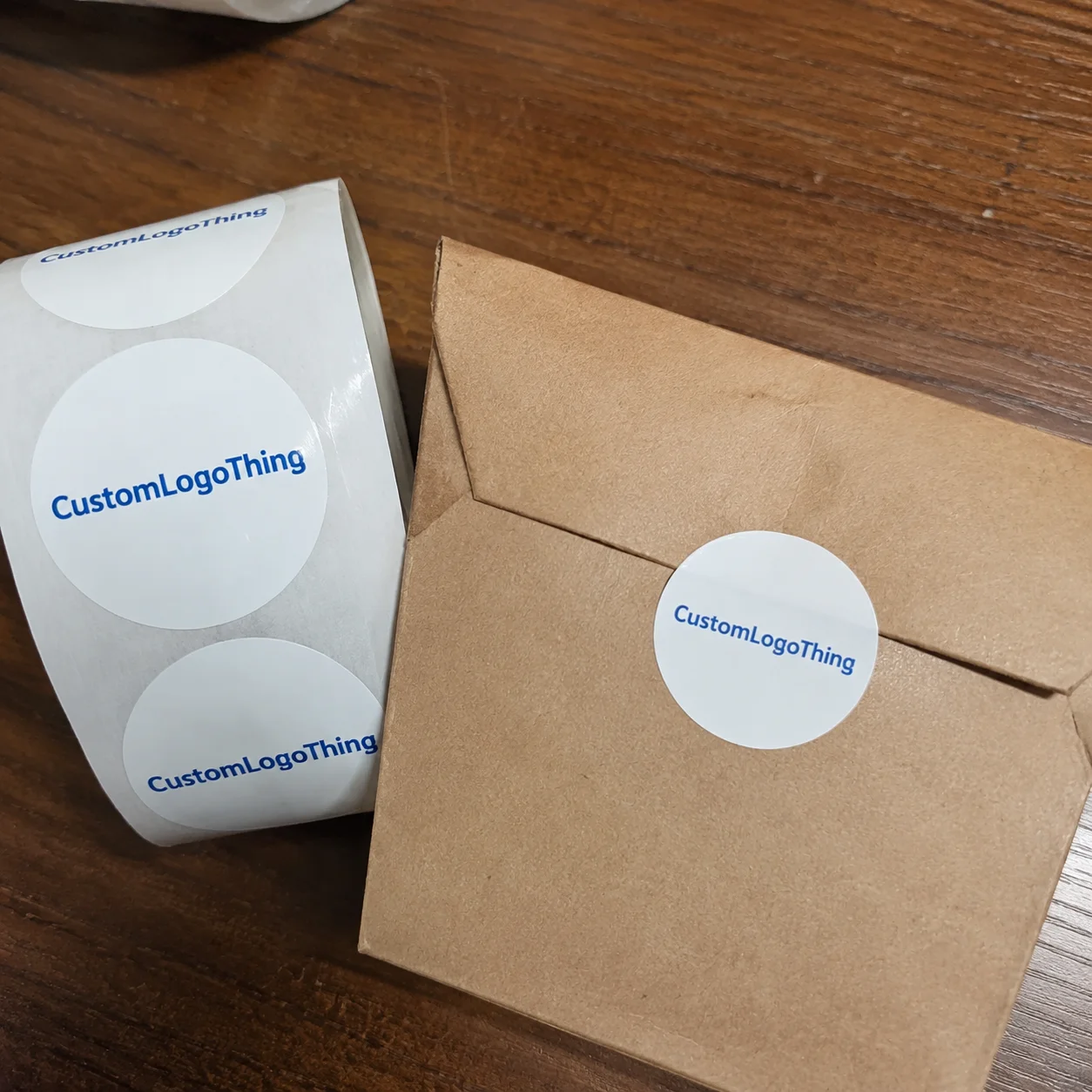
Address stickers custom orders look like a small packaging decision until they start touching real operations: packing speed, mail accuracy, brand presentation, and reorder timing. A clean label can make a plain mailer feel deliberate. A weak one can make a premium box look improvised before the customer even opens it.
The practical question is not only whether the label looks good on a mockup. It is whether the type stays readable at final size, the adhesive bonds to the package surface, the format fits the packing station, and the material survives the conditions it will meet between your shelf and the recipient’s hand.
What Makes Address Stickers Custom Different?
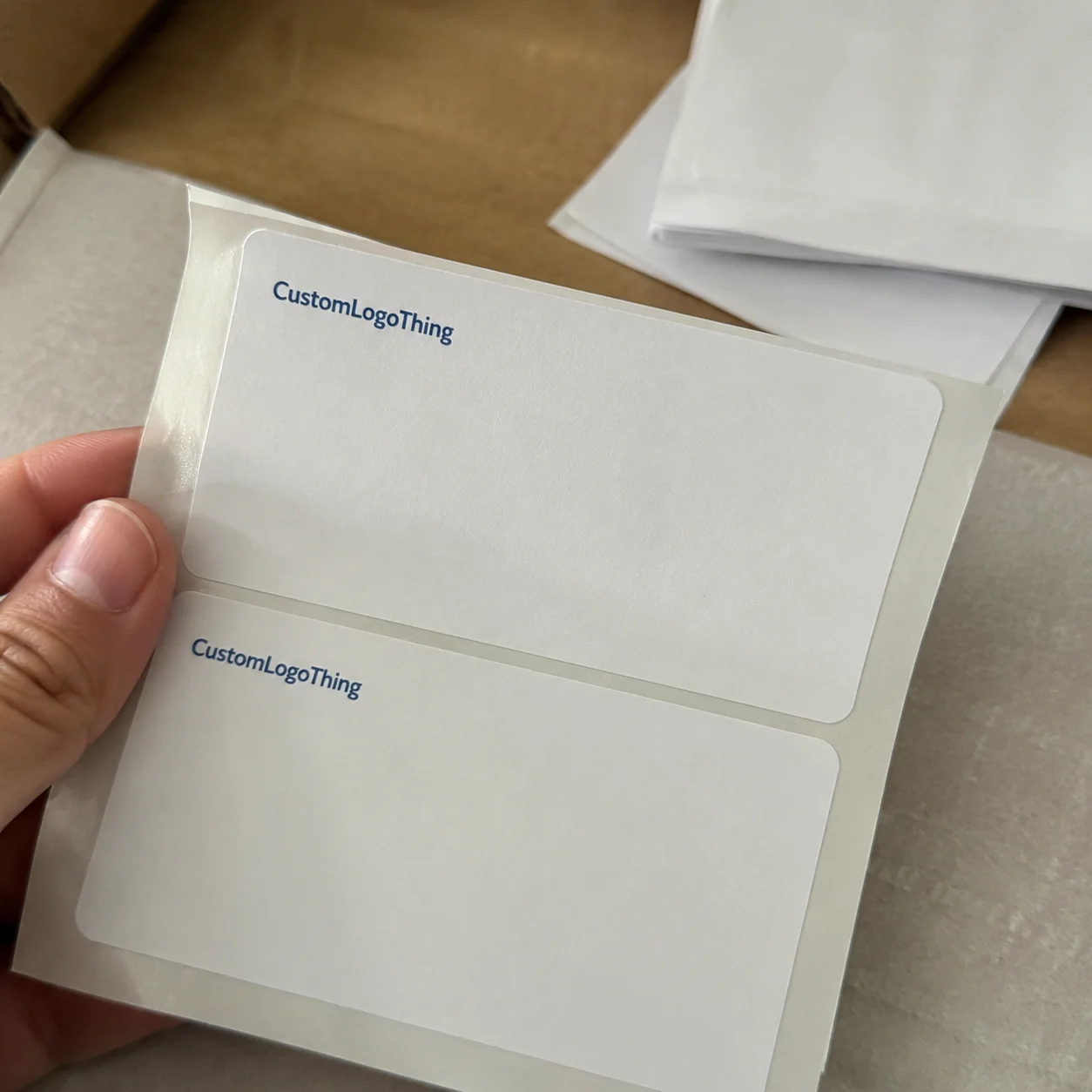
Generic office labels are built for convenience. Custom address stickers are built around a specific package, mailing use, and brand system. That distinction changes the design and the production choices. A custom version can control font weight, logo position, address spacing, label shape, finish, and adhesive instead of forcing the package to work around whatever sheet stock is already in the office cabinet.
Repeatability is the quiet advantage. The same return address lands in the same place. The logo stays the same size. The color does not drift from one batch of envelopes to the next, assuming the file and stock remain consistent. For a small ecommerce brand, that kind of control can make modest packaging look more established. For a larger mailroom, it reduces decisions at the packing table.
Small labels also sit at an odd intersection of design and logistics. They need to look polished, but they cannot sacrifice legibility. A pale serif typeface might look elegant on a proof and still slow down sorting if the contrast is weak. A wide logo might look balanced on screen and leave too little room for apartment numbers or long business names. The label has one job before branding: it must get the piece where it is going.
Common uses include:
- Shipping boxes that need a consistent branded address panel.
- Direct mail envelopes, thank-you cards, and invitation suites.
- Product mailers where the address block is part of the presentation.
- Return address labels for recurring customer communications.
- Fulfillment inserts or outer wraps that combine logo, address, and routing details.
Design restraint usually wins. If the box already carries strong artwork, the address sticker should support it, not compete with it. If the mailer is plain kraft or white stock, the sticker can carry more of the visual identity through color, shape, or finish. The best result feels integrated with the package, not pasted on as an afterthought.
For teams building a broader packaging set, a label specification can sit beside Custom Labels & Tags for product identification and a wider group of Custom Packaging Products. The goal is not to make every item identical. It is to make the pieces look like they belong to the same brand family.
Three questions separate a useful label from a decorative one: how it is produced, how much the full order costs, and which material matches the actual mailing environment.
How the Process Works from File to Finished Labels
Production starts with the file. A supplier should confirm final size, bleed, safe margins, color setup, barcode clearance if needed, and whether the smallest text will hold at print scale. Address labels are unforgiving because the available space is limited. A one-eighth-inch margin error can make a neat proof feel cramped once the label is trimmed.
Proofing is the first quality-control checkpoint. It should show finished dimensions, shape, orientation, material, finish, quantity, and whether the stickers will be delivered on rolls, sheets, or individually cut pieces. If variable data is involved, the proofing process also needs to check line breaks, long names, ZIP or postal code placement, and any characters that may not render correctly.
Digital printing is common for short runs, quick changes, and variable information. Setup is lighter, and the process is well suited to smaller campaigns or frequent artwork updates. Flexographic or offset printing may make more sense for larger, repeatable runs where the same design will be ordered again and again. Those methods can offer strong efficiency at scale, but setup costs and lead times are different.
The print method affects more than price. It can influence sharpness on small type, consistency in solid color areas, compatibility with certain stocks, and the finishing options available. A high-coverage black label on paper, for example, has different production risks than a simple one-color return address label on white stock.
After printing, the labels are converted. That may mean die-cutting to shape, slitting rolls, trimming sheets, removing matrix waste, checking registration, and packing the finished pieces. Rolls work well for dispensers and medium- to high-volume packing stations. Sheets are easier for office storage, short campaigns, and hand-applied mailings. Individually cut stickers can feel premium for small projects, but they are usually slower to apply at volume.
Lead time depends on complexity. A standard paper label with a clean file, common size, and quick proof approval may ship in roughly 5 to 10 business days after approval. Specialty materials, laminates, unusual shapes, variable data, or multiple proof revisions can push production toward 12 to 15 business days or longer. Material availability also matters; a quote based on an in-stock coated paper is not the same as a quote requiring a specialty film.
“The fastest label jobs tend to have the fewest surprises: confirmed size, readable address block, approved proof, and no last-minute file rebuild.”
Turnaround claims deserve careful reading. “Fast production” may not include proofing time, freight, weekends, or the time needed to correct artwork. A buyer comparing vendors should ask what starts the clock. Is it the date the quote is accepted, the date the proof is approved, or the date materials arrive? That small clarification prevents a surprising number of schedule problems.
Materials, Adhesives, and Finishes That Change Performance
Material choice determines how the sticker prints, feels, bends, and survives handling. Paper labels remain the most common option because they print cleanly and keep costs down. They are a sensible fit for envelopes, boxed sets, dry indoor shipping, and retail mailers that are not likely to face moisture or heavy abrasion.
Coated paper, often described as C1S or similar depending on the supplier, gives a smoother print surface than uncoated stock. It can support sharper graphics and stronger color. Uncoated paper can feel softer and more natural, but fine detail may appear less crisp. Recycled paper stocks are available in many markets, although texture and fiber content can affect ink coverage and adhesive performance.
Film stocks cost more, but they solve problems paper cannot. Polypropylene is often the practical middle ground: lighter and usually less expensive than vinyl, more moisture resistant than paper, and clean enough for branded packaging. Vinyl offers more flexibility and toughness, which can help on curved surfaces or rougher handling conditions. Polyester may be used where dimensional stability or heat resistance matters, though it is often more than a standard mailing label needs.
Adhesive selection deserves the same scrutiny. Permanent adhesive is the default for shipping because it is designed to stay put. Removable adhesive works for temporary routing, reusable packaging, and promotional pieces where residue would be a problem. Freezer-grade adhesive is built for cold storage and condensation. High-tack adhesive may be needed for textured kraft, recycled board, or low-energy plastic surfaces.
A label can fail even when the artwork and stock are correct. Surface energy, dust, varnish, moisture, temperature, and application pressure all influence the bond. Corrugated board with a rough recycled surface behaves differently from a smooth coated mailer. A cold box pulled from storage may not accept adhesive the same way a room-temperature sample does.
Finishes change appearance and handling. Matte reduces glare and can make address text easier to read under bright light. Gloss boosts color and gives a polished retail look, though it can show scuffs and fingerprints. A laminate can add abrasion resistance and moisture protection. Soft-touch finishes feel elevated, but they should be chosen for a real reason; on high-friction parcel surfaces, scuff resistance may matter more than texture.
| Material | Best Use | Durability | Typical Cost Impact |
|---|---|---|---|
| Paper C1S or coated paper | Standard mailers, envelopes, box panels | Good for dry indoor use | Lowest |
| Polypropylene | Shipping, damp storage, frequent handling | Better moisture resistance | Moderate |
| Vinyl | Curved surfaces, tougher environments | High flex and surface durability | Highest |
Writable areas need extra planning. If staff add apartment numbers, routing marks, or internal notes by hand, the finish must accept the intended pen or marker without smearing. If variable data will be printed in-house, confirm whether the stock is direct thermal, thermal transfer, inkjet, or laser compatible. These are not interchangeable details. The wrong match can create smudging, curling, poor feed, or unreadable data.
For demanding shipping environments, ask about testing against realistic handling. Full parcel certification may not be necessary for every order, but the habit matters: apply samples to the actual package, expose them to expected temperature and humidity, rub the surface, then check edge lift and readability. Industry methods from groups such as ISTA can provide useful context for transport testing, although the exact protocol depends on the packaging system.
Address Sticker Pricing: Cost, MOQ, and Quote Variables
Pricing for address stickers custom orders usually turns on six variables: size, quantity, material, adhesive, print coverage, and finishing. Format matters too. Sheets can be economical for short runs and office use. Rolls may be more efficient for packing teams, especially when labels are applied with a dispenser or paired with other fulfillment labels.
As a working range, a simple 2 x 3 inch paper label printed in limited color might land around $0.05 to $0.12 per piece at 5,000 units. A film label with heavier coverage, specialty adhesive, or a protective finish may run closer to $0.10 to $0.24 per piece at a similar quantity. Very small runs can cost far more per piece because proofing, setup, and waste are spread across fewer labels. Very large runs can drop significantly if the design is stable and production is efficient.
These numbers are not universal price promises. They are useful for spotting quote logic. If one quote is dramatically lower, check whether it excludes setup, proofing, freight, rush handling, special cores, or overrun/underrun terms. If one quote is much higher, it may include a better stock, a laminate, a custom die, or tighter quality requirements.
MOQ, or minimum order quantity, can be misunderstood. Digital production often allows lower quantities, but the unit cost may be unattractive for labels used every week. Larger runs reduce unit cost, yet overbuying creates its own waste if addresses, logos, regulatory notes, or brand colors change. A good order quantity balances unit price against real usage and the risk of obsolete stock.
Custom shapes add charm and cost. A rectangle or rounded rectangle is generally easier to produce, inspect, and apply. A complex contour can require a custom die, slower conversion, and more waste around the shape. Embossing, foil, spot gloss, and heavy ink coverage can also increase cost. Some effects are worth it for premium mailers. Many are unnecessary for routine shipping.
Compare quotes with the same information each time:
- Finished size, shape, and corner style.
- Exact quantity and acceptable overrun or underrun.
- Material, adhesive, and liner.
- Print method, number of colors, and coverage.
- Finish, laminate, or specialty effect.
- Delivery format: rolls, sheets, or singles.
- Proof fees, setup charges, freight, and rush costs.
Freight can distort the final cost, especially for heavy rolls or split shipments. So can packaging requirements. Labels packed for a clean office cabinet are not always packed the same way as rolls meant to feed into a production line. Ask how the labels will arrive: roll core size, roll outer diameter, labels per roll, sheets per pack, and carton labeling all affect receiving and storage.
For sustainability-focused packaging programs, ask whether FSC-certified paper is available and whether the supplier can document the claim. The FSC system addresses responsible forest sourcing; it does not automatically mean the label performs better. Adhesive, liner recyclability, coatings, and local recycling realities still need separate review.
Step-by-Step Ordering Guide for Cleaner Mailings
Start with the use case. A fulfillment label needs speed, clarity, and reliable adhesion. An invitation label may prioritize paper texture and a quieter finish. A sticker for premium retail mailers may need to coordinate with box art, tissue, insert cards, and product labels. One label spec rarely serves every job equally well.
Measure the actual application area next. Do not rely on the front panel dimensions from a box drawing without checking folds, seams, tape paths, postage zones, and scanner clearance. On envelopes, check flap style and curvature. On small mailers, leave enough breathing room so the address block does not feel pinned to the edge.
Then decide how the label will be applied. A mailroom using dispensers should specify roll direction, core size, outside diameter, and labels per roll. An office team applying a few hundred labels by hand may prefer sheets. A campaign kit with individual cards may justify singles, even if the labor cost is higher.
Build the artwork around legibility. Keep sufficient bleed at the edge, protect safe margins around text, and choose a type size that can be read at arm’s length. Avoid cramming the logo, return address, recipient address, tagline, and decorative border into a space meant for basic mailing information. If a barcode or QR code is included, leave a quiet zone and test scanning at final size.
File preparation should be boring in the best way. Vector artwork is preferred for logos and text. Fonts should be outlined or packaged correctly. Images should be high enough resolution for the final print size, not simply enlarged from a web graphic. Colors should be specified clearly, especially if the label must match printed boxes or brand guidelines.
Review the proof slowly. Check spelling, punctuation, suite numbers, postal codes, line breaks, trim, bleed, orientation, material, and quantity. If the proof includes a dieline, make sure the dieline will not print unless that is intentional. If the order includes multiple versions, confirm each version count. Version mix-ups are one of the easiest ways to create waste.
After approval, save the production file, proof, quote, and spec details together. The next reorder should not depend on someone remembering which matte stock or roll direction worked last time. A five-minute archive habit can remove hours of back-and-forth later.
Common Mistakes That Create Waste and Reprints
The most expensive errors often begin with size. A label may look balanced in a digital mockup and still feel crowded once printed at 2 x 3 inches. Tiny type, tight line spacing, and narrow margins all become more obvious in hand. Print a paper mockup at actual size before approving the order.
Contrast problems are just as common. Light gray text on cream stock may suit a stationery mood board, but it can fail under warehouse lighting or during quick sorting. Decorative scripts create similar trouble, especially for names, street numbers, and postal codes. Clean typography is not plain if it protects readability.
Adhesive mismatch creates waste that looks mysterious at first. Labels lift at the edge, slide on coated stock, or wrinkle on rough board. The artwork gets blamed, then the material, then the packer. Often the real issue is that the adhesive was never tested on the actual surface under the actual temperature and pressure.
Roll specifications also get missed. Wound-in versus wound-out orientation, core size, and roll diameter can decide whether a roll works with a dispenser or applicator. If the labels are going into a machine, the gap, liner, sensor mark, and unwind direction may matter. A correct label in the wrong roll format is still a production problem.
Variable data brings its own traps. Long names may wrap badly. International addresses may not fit a domestic template. Accents and special characters can disappear if the file or font handling is poor. A data proof should include edge cases, not just the first few clean records.
Color expectations need discipline. Sticker stock, box material, and screen previews do not behave the same way. A brand color printed on white polypropylene may look different from the same color printed on kraft paper or a matte carton. If color matching is critical, request a physical sample or drawdown rather than approving only from a monitor.
Storage conditions matter after delivery. Rolls left near heat, direct sunlight, or moisture can curl or lose adhesive performance. Sheets stored loosely can collect dust or bent corners. Labels are packaging components, not office scraps; treat them that way if consistency matters.
Expert Tips and Next Steps for a Smarter Reorder Plan
The most reliable repeat orders start with a master spec sheet. Record finished size, material, adhesive, finish, liner, delivery format, roll direction, quantity, file name, proof date, and any production notes. That document does not need to be elaborate. It needs to be accurate.
Standardize a few formats instead of redesigning every mailing. One main shipping label, one smaller return address label, and one premium version for higher-touch mailers can cover a surprising amount of ground. Standardization also improves price stability because the supplier is not quoting a new configuration every time.
Set a reorder trigger based on usage, not panic. If the team uses 800 labels a month and lead time is two weeks, reordering when only 100 remain is risky. Many packing teams use the last 20% to 25% of stock as the trigger point, adjusted for seasonal spikes. The right number depends on volume and supplier lead time, but the principle is simple: emergency runs are expensive.
Keep a small sample library. Save one approved label from each order, labeled with the date and spec. Physical samples reveal differences that files cannot: finish, opacity, stiffness, liner behavior, and adhesive feel. They also help new team members understand what “correct” looks like.
For higher-volume programs, inspect the first shipment before releasing labels into daily use. Check count, roll direction, print registration, edge lift, scuffs, color, and readability. Apply a few labels to real packaging and leave them for 24 hours. Adhesive issues sometimes show up after dwell time, not in the first thirty seconds.
A good buying decision is rarely the cheapest sticker in isolation. It is the label that prints cleanly, sticks to the package, feeds through the workflow, arrives on time, and can be reordered without reinventing the specification. That is where address stickers custom earn their keep: not as decoration, but as a small control point in a larger packaging system.
Frequently Asked Questions
What size works best for custom address stickers?
The best size depends on the package panel, address length, logo use, and barcode needs. Common mailing labels often start around 2 x 3 inches or 2 x 4 inches, but the safer approach is to print a full-size mockup and check readability on the actual envelope or box.
Are custom address stickers better on rolls or sheets?
Rolls are better for faster application, dispensers, and packing stations with repeat volume. Sheets suit smaller mailings, office storage, and hand application. If equipment is involved, confirm roll direction, core size, and outside diameter before ordering.
What file type should I send for address sticker artwork?
Print-ready vector files are usually preferred because they keep logos and text sharp. Include final dimensions, bleed, safe margins, outlined or packaged fonts, and any dieline instructions. For variable data, provide a clean spreadsheet and ask for a data proof.
How long does production usually take for address stickers custom orders?
Simple orders may take about 5 to 10 business days after proof approval. Specialty stocks, laminates, custom shapes, variable data, or proof revisions can extend production to 12 to 15 business days or more. Proof approval and material availability often drive the schedule.
Can address stickers be made to withstand shipping or moisture?
Yes. Film stocks such as polypropylene or vinyl, paired with the right adhesive and finish, can improve moisture resistance and durability. For cold, humid, textured, or high-friction conditions, test samples on the real package before committing to the full run.