Buyer Fit Snapshot
| Best fit | Custom Laminated Labels Wholesale projects where brand print, material claims, artwork control, MOQ, and repeat-order consistency need to be specified before quoting. |
|---|---|
| Quote inputs | Share finished size, material target, print colors, finish, packing count, annual reorder estimate, ship-to region, and any compliance wording. |
| Proofing check | Approve dieline scale, logo placement, barcode or warning zones, color tolerance, closure strength, and carton packing before bulk production. |
| Main risk | Vague material claims, crowded artwork, missing packing details, or unclear freight terms can make a low unit price expensive after revisions. |
Fast answer: Custom Laminated Labels Wholesale: Pricing, Specs, Lead Time should be specified like a repeatable production item. The safest quote records material, print method, finish, artwork proof, packing count, and reorder notes in one written spec.
Production checks before approval
Compare the actual filled-product size with the drawing, then confirm tolerance on folds, seals, hang holes, label areas, and retail display edges. Reserve space for logos, QR codes, warning copy, and material claims before decorative graphics fill the panel.
Quote comparison points
Review material grade, print process, finish, sampling route, tooling charges, carton quantity, and freight assumptions side by side. A quote is only useful when the supplier can repeat the same color, closure quality, and packing count on the next order.
A single scuffed label can make a polished product look like something that should have stayed on the warehouse shelf. That is why custom laminated labels wholesale often ends up being the less expensive choice in the long run, even if the unit price is a little higher than a basic paper label. Once a package has to survive shipping, stocking, refrigeration, wipe-downs, and everyday handling, the label needs to do real work, not just look good for the proof.
Over the years, I have seen plenty of packaging projects get into trouble because the team only judged the label from a design mockup. Day-one appearance is the easy part. The harder part is making sure the label still looks clean after a cold chain run, a few weeks on shelf, or a stack of cartons rubbing against each other in transit. Custom laminated labels wholesale is built for that kind of wear, because the laminate protects the printed face and keeps the overall package looking intentional instead of tired.
A label is part of the package, not decoration sitting on top of it. Once it lifts, scuffs, or clouds over, the product can look cheaper than it really is.
Cosmetics, supplements, jars, bottles, refrigerated items, and shipping-heavy products all benefit from a tougher label build. Standard paper labels can look perfectly fine on a screen and still fail once condensation, oils, abrasion, or repeated handling get involved. Custom laminated labels wholesale gives the package a more durable surface while keeping the visual direction consistent across the run. Strong package branding depends on more than color. It depends on how long the label stays readable, attractive, and attached.
Why Custom Laminated Labels Wholesale Beat Reprints
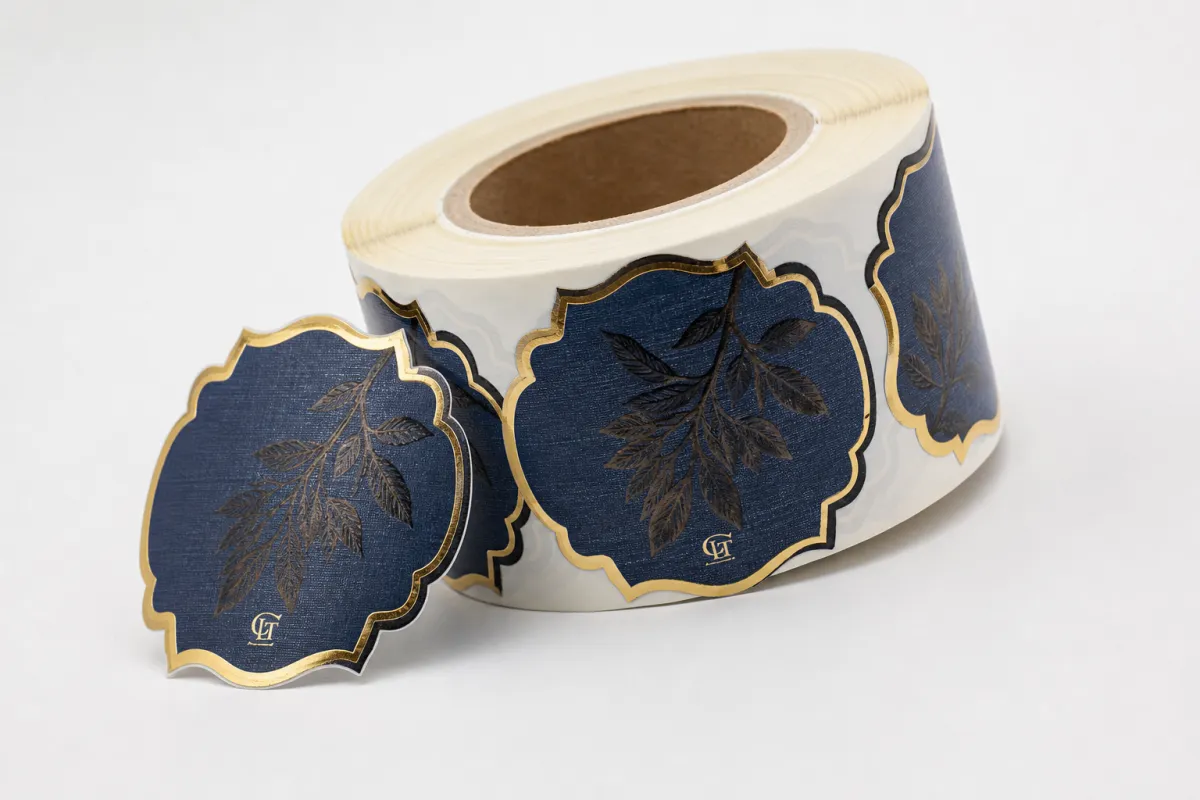
Most buyers learn the real cost of a weak label after the order has already shipped. A corner lifts. The surface rubs dull. Condensation fogs the print. The batch still exists, but now it looks inconsistent, and that one small failure starts dragging the whole brand down. Custom laminated labels wholesale lowers that risk because the laminate protects the printed face from the kind of wear that shows up fast in actual use.
Paper labels and laminated labels behave very differently once they leave the sample table. Paper can photograph well and still struggle on a cold bottle, a condensation-heavy jar, or a mailer that spends a day rubbing against other cartons. Custom laminated labels wholesale brings better abrasion resistance, more dependable moisture protection, and steadier visual consistency across the full run. That matters for custom printed boxes, bottle labels, health and beauty items, and any package that gets stacked, touched, or shipped more than once.
Common uses for custom laminated labels wholesale include:
- Refrigerated packaging that sees condensation or wipe-downs
- Cosmetics and personal care products exposed to oils or frequent handling
- Supplements and wellness packaging that needs a sharper retail presentation
- Jars and bottles with curved surfaces or steady shelf contact
- Secondary packaging and logistics labels that need extra scuff resistance
Brand perception shifts fast when a label wears out early. A dull or damaged label can make a premium item look like clearance stock, even when the product itself is excellent. That is a poor trade. Custom laminated labels wholesale keeps the finish cleaner, which helps the package look deliberate from the first touch to the final delivery. For teams building a serious package branding system, that consistency matters more than squeezing a tiny savings out of a label that fails early.
Wholesale buying is about repeatable quality at scale, not the cheapest number on a quote sheet. A low first-order price means very little if the second run drifts in color, cuts unevenly, or starts peeling on the line. Then the savings disappear into rework. Custom laminated labels wholesale makes more sense when the label is part of the product story rather than a disposable identifier.
Custom laminated labels wholesale also helps brands keep packaging consistent across multiple SKUs. A label program that holds color, finish, and cut quality is easier to manage than a mix of paper stickers and emergency reprints. That matters for packaging design, retail display, and any line that needs a cohesive look across jars, bottles, cartons, and bundles. The fewer moving parts, the fewer headaches later on.
Custom Laminated Labels Wholesale: Product Options and Build Details
Custom laminated labels wholesale is not one material choice. It is a stack of decisions that shape how the label looks, feels, and performs. The build usually includes face stock, print method, laminate layer, adhesive, and backing liner. If one of those pieces is mismatched, the label can still look fine on a proof sheet and fail on the actual package. A serious quote has to go beyond size and quantity.
Most buyers will see a few common face stock options. Paper still has a place for dry products, short shelf life, and lower-touch packaging. BOPP and other synthetic stocks are the tougher route, especially when moisture, refrigeration, or long shelf exposure enter the picture. For custom laminated labels wholesale, synthetic stocks usually come out ahead because they pair well with a protective film and stand up better to the everyday wear that makes standard paper labels look tired.
Finish choices change the label more than many buyers expect. Gloss gives strong shine and helps bright colors pop on shelf. Matte softens glare and usually reads more premium on natural, restrained packaging. Soft-touch creates a richer hand-feel, though it is not always the best choice for wet or rough handling. Clear laminate can preserve a cleaner no-label look on transparent packaging, which works well for glass jars, bottles, and minimalist product lines. Each finish changes the visual tone of custom laminated labels wholesale in a very real way.
Shape and format matter just as much. Custom Die Cuts let the label follow the package instead of fighting it. Rounded corners are easier to live with on hand-applied runs because they resist edge lift better. Roll labels suit automated application and larger wholesale runs. Sheet labels fit smaller in-house applications, though they are not always the smartest choice for scale. For custom laminated labels wholesale, the format should match the application method, not the mockup that looked best in a design review.
A well-built label can improve legibility, especially on curved or textured surfaces. On bottles and jars, tight edges and poor sizing create bubbles, wrinkles, and early lift at the corners. A flat proof can look excellent and still misbehave once it wraps around a real container. That is why good custom laminated labels wholesale planning includes the package shape, not just the artwork. The best outcome comes from matching label geometry to the container that will actually carry it.
Common build combinations for custom laminated labels wholesale include:
- Paper face stock + gloss laminate for dry, low-wear retail items
- BOPP face stock + matte laminate for cosmetics, supplements, and general retail packaging
- Clear BOPP + clear laminate for transparent containers and minimalist branding
- Specialty synthetic stock + soft-touch laminate for premium presentation where handling is moderate
If the label belongs in a larger packaging system, it should not be treated as a standalone island. A label that clashes with the carton finish or fights the bottle shape can make the whole line feel disconnected. The same goes for Custom Packaging Products and Custom Labels & Tags. Custom laminated labels wholesale works best as part of a coordinated packaging setup, not as a last-minute add-on.
Materials, Finish, and Adhesive Specs That Decide Performance
Specs decide whether custom laminated labels wholesale becomes a smart investment or just a prettier sticker. The first thing to pin down is the real environment the label will face. Dry shelf storage, cold chain handling, high humidity, kitchen use, oil exposure, and repeated shipping abrasion all behave differently. Those conditions matter more than the font choice or the mockup background. A label that survives on a room-temperature sample bottle can still fail in a refrigerated case.
Adhesive selection matters more than most buyers expect. A permanent adhesive works well on glass, coated cartons, PET, and many plastic containers, but surface texture and temperature can change the result. For custom laminated labels wholesale, the adhesive should be matched to the packaging surface instead of chosen by habit. A chilled bottle, a coated box, and a glossy jar lid do not behave the same way. The wrong adhesive leads to edge lift, and edge lift becomes a production problem quickly.
A practical starting point looks like this:
- Paper labels for dry goods, short shelf runs, and lower-cost packaging
- BOPP or synthetic labels for moisture, freezer-adjacent storage, and frequent handling
- Permanent acrylic adhesive for most retail and wholesale packaging uses
- Freezer-grade or cold-condition adhesive for refrigerated containers and condensation-prone products
Gloss and matte each serve a different purpose. Gloss adds stronger visual impact and can make saturated colors feel deeper. Matte reduces glare and tends to feel calmer, which fits natural skincare, supplements, and more restrained branding. For custom laminated labels wholesale, gloss can hide small print flaws a little better in some cases, while matte is often better if buyers need to handwrite batch numbers or dates. Small details like that affect the final experience more than people expect.
Laminate is not decoration. It is the layer that protects the print from smearing, scratching, fingerprinting, and edge wear. Without it, even strong inks dull quickly under friction. If the product goes into shipping cartons, sits in a cooler, or gets handled by retail staff, custom laminated labels wholesale is doing real work. It is not there to make the quote sound more impressive.
Brands with sustainability goals should pay attention to paper selection too. FSC-certified paper is available for some label constructions, and buyers can review sourcing standards through FSC. That does not make a label automatically eco-friendly. It does give the paper side of the build a cleaner sourcing story when sustainability sits inside the brand narrative. FSC paper and waterproof performance still remain two separate things.
Testing should happen on the actual container type, not on a random smooth sample. Put the label on the real glass, plastic, or coated carton. Let it sit. Chill it. Wipe it. Push it through the same rough treatment the final package will see. If you need packaging abuse testing, a few simple checks modeled on shipping standards from the ISTA world can catch problems before a wholesale run turns expensive. For custom laminated labels wholesale, that extra testing step pays for itself fast.
One more point belongs here. If your label sits beside custom printed boxes or coordinated inserts, the finish should support the rest of the system rather than fighting it. A high-gloss label on a soft, uncoated carton can feel mismatched. A matte label on a polished bottle can feel too muted. Good custom laminated labels wholesale supports the broader packaging design instead of stealing attention from it.
Custom Laminated Labels Wholesale Pricing, MOQ, and Quote Factors
Pricing for custom laminated labels wholesale comes down to a few controllable variables: size, material, finish, print complexity, quantity, and format. That is the real equation. Not mystery. Not “custom pricing” used as a polite way to avoid the math. Once those inputs are known, it becomes much easier to predict whether a quote will land in a low, medium, or high range before the request goes out.
Here is the rough shape of wholesale pricing for custom laminated labels wholesale on a common small-to-medium label, assuming standard full-color printing and no unusual special effects:
| Build Type | Best Use | Approx. Wholesale Range at 5,000 pcs | Durability | Buyer Notes |
|---|---|---|---|---|
| Paper + gloss laminate | Dry retail items, short shelf life | $0.12-$0.22 per label | Moderate | Good appearance, but not the strongest choice for moisture or heavy handling |
| BOPP + matte laminate | Cosmetics, supplements, jars, bottles | $0.14-$0.28 per label | High | Often the best balance of cost, print quality, and day-to-day performance |
| Clear synthetic + clear laminate | Transparent packaging and minimalist branding | $0.16-$0.32 per label | High | Can look excellent on glass or clear plastic, though application has to be clean |
| Premium synthetic + specialty finish | High-end retail packaging | $0.22-$0.45 per label | Very high | Soft-touch and specialty textures raise cost, so save them for packages where the finish matters |
MOQ is straightforward once the setup costs are understood. Wholesale orders start higher than retail sticker runs because proofing, press preparation, finishing, and material setup are spread across fewer units. Lower quantities almost always mean a higher per-label price. Custom laminated labels wholesale is built for repeatable volume, so the savings usually show up as the run gets larger. That is simply how fixed production costs behave.
For many buyers, a first order might sit around 500 to 1,000 pieces per SKU. Better unit pricing often starts to improve at 2,500 pieces and becomes much more comfortable at 5,000 pieces or more. On some runs, the jump from 1,000 to 5,000 units can reduce the per-label price by a meaningful margin. That is why custom laminated labels wholesale makes sense for product lines with stable demand rather than one-off tests that may never repeat.
The most common quote drivers are easy to spot once you know where to look:
- Number of print colors or full-color coverage
- Special finishes like soft-touch, metallic, or spot effects
- Die-cut complexity and unusual shapes
- Variable data such as batch codes or serial numbers
- Rush production and tighter turnaround windows
- Packaging format, including sheet labels versus roll labels
Per-label price alone does not tell the full story. A quote can look cheap and still cost more once shipping, finishing, and unusable format are added in. Ask what is included: proofing, shipping, finishing, and whether the label will arrive in a format that fits the line. For custom laminated labels wholesale, the right comparison is total landed cost. A low number that creates extra labor or arrives in the wrong format is not truly low.
One practical buying habit helps a lot: request pricing at two or three volume points. Compare 1,000, 3,000, and 5,000 pieces. That shows where the unit cost drops enough to matter and where warehouse space or cash flow starts to push back. A good custom laminated labels wholesale quote should make that tradeoff visible instead of hiding it behind a single figure.
If you also buy broader packaging materials, compare the label budget with the rest of the line. A stronger label on a weak carton still leaves the customer with a mixed experience. That is why Wholesale Programs often make more sense than piecemeal ordering. Custom laminated labels wholesale should sit inside a packaging plan, not float alone as a separate purchase.
Production Process, Timeline, and Lead Time Expectations
Custom laminated labels wholesale follows a fairly ordinary production path, which is a good sign. Ordinary means predictable. The typical flow is quote, artwork review, proofing, print setup, lamination, cutting, inspection, and shipping. The cleaner that chain stays, the faster the order moves. The more unclear the files are, the more likely the schedule slips. That is not a moral lesson; it is just how production works.
- Quote and spec check - size, quantity, stock, finish, and application surface
- Artwork review - file setup, dieline check, bleed, and safe area
- Proof approval - color notes, placement, and final sign-off
- Print setup - press calibration and material staging
- Lamination and cutting - film application, die cut, slitting, or sheet finishing
- Inspection and packing - count check, adhesion review, and shipment prep
Fast orders usually come from clean artwork. A print-ready file, correct dimensions, and a proper dieline remove a lot of friction from the process. A blurry logo, missing fonts, or guessed-at sizing adds time. For custom laminated labels wholesale, bad files are one of the most common reasons a quote turns into a delay. Production teams can fix plenty of things, but they cannot guess the final shape of a container that was never measured.
Standard lead time for custom laminated labels wholesale often lands around 10 to 15 business days after proof approval, though quantity, finishing, and shop load all affect the schedule. Rush options can sometimes shorten that to 5 to 7 business days when the artwork is ready and the specs are straightforward. Specialty laminate, unusual die cuts, or variable data deserve a buffer. The timeline should be realistic before anyone promises a launch date to sales or retail.
A simple timeline for a clean wholesale order usually looks like this:
- Day 1: Quote approved and files received
- Day 2: Prepress review and proof sent
- Day 3: Proof approved
- Days 4-8: Print, laminate, and cut
- Days 9-10: Inspection, packing, and dispatch
That is the ideal flow, not a universal guarantee. Even so, it shows how quickly custom laminated labels wholesale can move when the buyer is organized. If a launch date matters, ask early about the actual turnaround instead of assuming a vendor can absorb a last-minute change. Production calendars do not care about marketing panic. They care about proof approval.
Lead time is also shaped by the format you choose. Roll labels often suit larger wholesale quantities and automated application better than sheets. Sheets can be handy for small operations, but they are not always the most efficient for big runs. If your team applies labels by hand on bottles or jars, ask which format reduces labor. Custom laminated labels wholesale should save time on the line, not just look good in a sample photo.
If your packaging program includes multiple items, align the label schedule with the rest of the rollout. A line of custom printed boxes can sit waiting if the labels arrive late, and that creates more waste than many buyers expect. Good custom laminated labels wholesale planning coordinates printing, fulfillment, and packaging assembly so the whole launch lands together.
Why Choose Us for Custom Laminated Labels Wholesale
The best reason to buy custom laminated labels wholesale from a serious packaging partner is boring in the best way: consistent quality, stable materials, and clear communication. Buyers do not need theatrics. They need labels that arrive on time, match the approved proof, and keep performing after the package leaves the warehouse. That is the job.
We focus on the parts that actually affect results. Prepress review happens before production starts. Material and laminate choices get checked against the package surface. File issues get flagged before they turn into wasted rolls. In wholesale runs, small mistakes become expensive fast, so the review process exists to stop reprints, wasted cartons, and avoidable frustration. That matters even more for custom laminated labels wholesale on products that ship often or sit in retail environments.
Repeat orders matter too. A first run can look fine. The real test is whether the second and third runs match the first. Wholesale customers need stable color, consistent cut quality, and predictable adhesion across reorders. That is where a supplier earns trust. If the label belongs in a larger branded packaging program, the goal is not “good enough.” The goal is the same look every time.
If the package has to survive transit and shelf handling, the label should be treated like a functional component, not decoration.
We also help buyers keep the package system connected. Labels need to work with bottles, jars, cartons, inserts, and shipping packs instead of fighting them. If a broader packaging rollout is part of the plan, the team can coordinate label planning with Custom Packaging Products so the branding reads as one system across the line. Custom laminated labels wholesale is stronger when the rest of the package follows the same logic.
Professional buyers return to wholesale programs for a simple reason: fewer surprises. Fewer surprises mean fewer reworks, fewer emergency reprints, and fewer awkward conversations with operations and sales. Labels should do their job quietly. That is not glamour. It is competence. Competence is what protects margin and keeps launches on track.
From a packaging buyer’s point of view, that is the real value of custom laminated labels wholesale: not a flashy claim, just a stable part of the supply chain. If the label survives handling, shipping, and shelf contact, it has already paid for itself once. If it also sharpens the look of the product packaging, that is a bonus rather than a coincidence.
Next Steps to Order Custom Laminated Labels Wholesale
The cleanest way to start custom laminated labels wholesale is to gather a few facts before asking for pricing. Confirm the label size, material preference, finish, quantity, application surface, and target ship date. That gives the quote team enough information to recommend the right stock and adhesive instead of guessing. Guessing is how buyers end up with a label that looks fine on screen and fails on the package.
Send artwork if you have it. If you do not, send a logo file, dimensions, and a clear photo of the package. That is usually enough to start a useful quote. If the label will face moisture, cold storage, abrasion, or retail display, ask for a sample or proof before committing to the full run. For custom laminated labels wholesale, a quick sample check is far cheaper than discovering a problem after 10,000 pieces arrive.
Use this short checklist before you place the order:
- Size and shape confirmed
- Face stock selected
- Laminate finish chosen
- Adhesive matched to the surface
- Quantity set at a useful volume level
- Artwork file checked for bleed and dieline accuracy
- Ship date aligned with launch or replenishment needs
If you are comparing wholesale options, ask for pricing at more than one quantity level, and compare total landed cost rather than sticker price alone. That gives a truer picture of the savings. A slightly higher unit cost can still be the better deal if it means stronger adhesion, better print quality, or fewer labor issues on the line. Custom laminated labels wholesale should make your packaging easier to sell and easier to handle. That is the point.
Start with the specs, approve the proof, and move to production once the sample passes the real-world test. If the label needs to survive shipping, moisture, and handling, custom laminated labels wholesale is the direct next step. Request pricing, confirm MOQ, and place the order when the proof matches the package. That is how you buy labels that work instead of labels that merely look busy.
FAQ
What is the minimum order for custom laminated labels wholesale?
MOQ varies by size, print method, and finishing, but wholesale orders usually start higher than retail sticker runs. Smaller quantities cost more per label because setup and proofing are spread across fewer pieces. Ask for a quote at two or three volume levels so you can see where custom laminated labels wholesale starts to become cost-efficient.
Are custom laminated labels wholesale waterproof?
Lamination improves moisture resistance, but waterproof performance still depends on the face stock and adhesive. BOPP or other synthetic materials usually perform better than standard paper in wet or cold environments. If the label will face condensation, refrigeration, or frequent wiping, request a sample test on the actual container before approving custom laminated labels wholesale.
How long does production take for custom laminated labels wholesale?
Production time usually depends on artwork readiness, quantity, finishing, and current shop volume. Clean files and fast proof approval shorten lead time more than almost anything else. If you have a launch date, ask for the standard turnaround and the fastest realistic option before placing custom laminated labels wholesale.
What files do you need for a custom laminated labels wholesale quote?
A print-ready file, dieline or dimensions, quantity, material preference, and finish preference are the basics. Include surface details like glass, plastic, corrugate, or refrigerated packaging so adhesive recommendations stay accurate. If you only have a rough idea, a clear photo and dimensions are enough to start a useful custom laminated labels wholesale quote.
Can I get a sample before placing a wholesale order?
Yes, and you should if the label needs to survive moisture, abrasion, or repeated handling. A sample helps confirm size, color, laminate finish, and adhesion before you commit to a full run. Testing on the real package is the fastest way to avoid expensive surprises with custom laminated labels wholesale.
Custom laminated labels wholesale is the practical choice when the label has to do more than sit there and look pretty. If the product needs better durability, cleaner shelf appeal, and fewer reprints, this is the smarter route. Request a quote, compare specs, approve the proof, and move forward with custom laminated labels wholesale only after the sample passes the real-world test. That last check is the one that saves you from a headache later, and honestly, it is where the whole job either holds together or falls apart.

