Buyer Fit Snapshot
| Best fit | Custom Die Cut Boxes Wholesale projects where brand print, material claims, artwork control, MOQ, and repeat-order consistency need to be specified before quoting. |
|---|---|
| Quote inputs | Share finished size, material target, print colors, finish, packing count, annual reorder estimate, ship-to region, and any compliance wording. |
| Proofing check | Approve dieline scale, logo placement, barcode or warning zones, color tolerance, closure strength, and carton packing before bulk production. |
| Main risk | Vague material claims, crowded artwork, missing packing details, or unclear freight terms can make a low unit price expensive after revisions. |
Fast answer: Custom Die Cut Boxes Wholesale: Pricing, Specs & Ordering should be specified like a repeatable production item. The safest quote records material, print method, finish, artwork proof, packing count, and reorder notes in one written spec.
Production checks before approval
Compare the actual filled-product size with the drawing, then confirm tolerance on folds, seals, hang holes, label areas, and retail display edges. Reserve space for logos, QR codes, warning copy, and material claims before decorative graphics fill the panel.
Quote comparison points
Review material grade, print process, finish, sampling route, tooling charges, carton quantity, and freight assumptions side by side. A quote is only useful when the supplier can repeat the same color, closure quality, and packing count on the next order.
Custom Die Cut boxes wholesale is never just a line on a purchase order. It affects how a product travels, how it lands in a customer’s hands, and how much waste, rework, or damage a team has to absorb along the way. A box that fits too loosely invites movement. A board spec that is too light invites crushed corners. A poor structural choice can make a polished product feel ordinary before the lid even opens.
Serious packaging buyers treat Custom Die Cut boxes wholesale as part of the operating system, not as a last-minute expense. The right box holds the product steady, trims void fill, improves pallet use, and gives branded packaging a cleaner, more deliberate presence in transit and on the shelf. Better fit usually means fewer damages, less hand packing, and less wasted cube. That is why the unit price alone never tells the full story.
Custom die cut boxes wholesale: why the right fit lowers damage
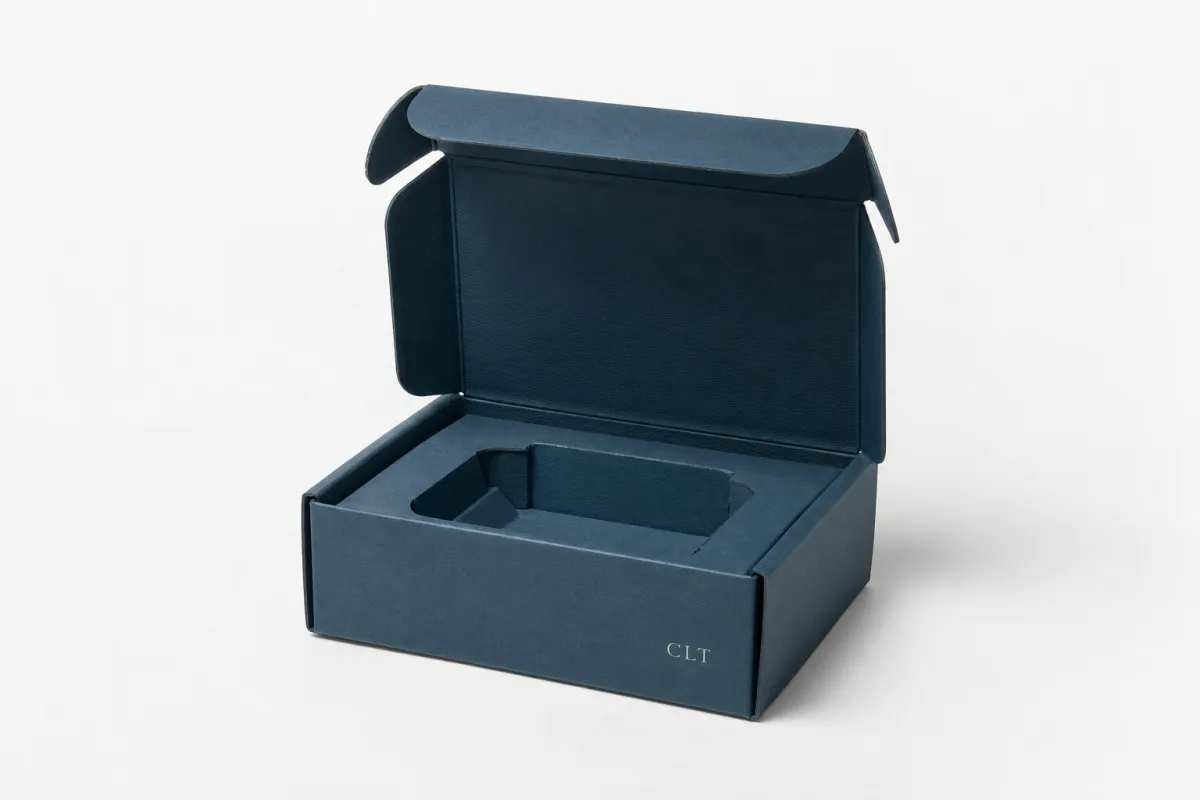
Even a small mismatch in dimensions can start a costly chain reaction. The item shifts, a finish scuffs, an insert slides out of place, and a return shows up a few days later. I have looked at more than a few packaging programs where a quarter inch on the inside made the difference between a clean ship and a mess of broken inserts. The whole point of Custom Die Cut boxes wholesale is to build around the real product footprint instead of forcing that product into a generic size that only almost works.
Fragile goods, cosmetics, electronics, subscription sets, and retail launches all benefit from that kind of precision because the package has to look intentional the moment it is opened. If the box feels sloppy, the product starts with the wrong first impression, and that is hard to undo later. A box that is too roomy is kinda asking for trouble.
From a buyer’s point of view, the best box is rarely the biggest one. It is the box that controls movement with the least amount of empty space. Extra cube costs money. Over a full shipping program, wasted space can push freight higher, increase fill material consumption, and weaken pallet density. Trim even half an inch from each side on a large run of custom Die Cut Boxes wholesale, and the math can change in ways that show up quickly on the bottom line.
Stock packaging has its place, especially for very standard products. Once the item becomes valuable, oddly shaped, or sensitive to movement, custom tooling starts to earn its keep. A generic mailer might be enough for an apparel shipment. It is a weaker fit for a glass jar, a fitted accessory kit, or a premium presentation box that needs to arrive looking retail-ready. Custom die Cut Boxes Wholesale becomes the stronger choice when protection and presentation need to work together instead of pulling in different directions.
A lower unit price means little if the box causes breakage, forces extra labor, or adds void fill to every shipment. The hidden cost in packaging usually sits outside the carton itself.
The business case tends to show up in four places: fewer returns, less product movement, lower material waste, and a more consistent unboxing experience. For a growing brand, those gains can easily justify the setup cost of a die, a proof, or a structural sample. That is why custom die cut boxes wholesale should be treated as a margin tool, not merely as an expense category that lives on the packaging tab.
Custom die cut boxes wholesale product details and formats
Buyers usually encounter several box families under the custom die cut boxes wholesale umbrella. Corrugated die cut boxes are common for shipping and e-commerce. Folding cartons are more common for retail packaging and lighter products. Mailer formats sit in the middle, giving brands a sturdy presentation box that still runs well through fulfillment. Some projects also call for display-ready packaging or inserts that keep components aligned inside the same assembly.
The dieline controls more than the shape. It defines how the box opens, closes, folds, and holds up under load. Locking tabs, tuck flaps, window cutouts, thumb notches, tear strips, and friction-fit panels all change how the customer handles the package. A small shift in tab placement can strengthen closure. A modest window can turn a plain carton into a better merchandising piece. Those details are what separate average custom printed boxes from packaging that feels planned from the start.
- E-flute corrugated works well when the goal is a lighter premium look with better printability.
- B-flute corrugated gives more rigidity and is often chosen for added stacking strength.
- Single wall shipping grades are common for general transit protection and cost control.
- Heavier corrugated builds make sense for higher-weight products or rougher distribution paths.
- Folding carton board is useful for retail packaging where print quality and shelf display matter more than crush resistance.
Finishing is where package branding becomes visible. Gloss coating gives a sharper, brighter look. Matte reduces glare and reads more restrained. Aqueous coating adds basic protection without much bulk. Soft-touch laminate creates a richer tactile feel, though it raises the budget. Spot UV, foil stamping, and embossing can move a carton from functional to premium, but every one of those choices changes cost and lead time. In custom die cut boxes wholesale, each finish should tie back to a real goal, not a stylistic impulse.
The stack inside the carton matters just as much. Inserts, dividers, pads, and product restraints often do more to stop damage than the outer shell alone. If the product can move, it eventually will. Many custom die cut boxes wholesale programs perform better when the outer carton and the internal support system are designed together instead of being stitched together later as a workaround.
Specifications to confirm before you order
Good quotes begin with exact measurements. For custom die cut boxes wholesale, the essential numbers are product length, width, height, protrusions, clearance for inserts, and whether the item ships assembled or flat. A cap, handle, cord, hinge, or raised label can change the build more than a buyer expects. A carton that looks correct on paper can still fail if the actual product profile was left vague.
Board grade and caliper deserve the same attention as dimensions. A 12 oz cosmetic jar and a steel accessory kit may fit the same footprint, but they should not share the same material spec. A lighter retail carton can hold a compact item with confidence, while a heavier corrugated build may be needed for transit pressure. In practice, the wrong board choice is one of the fastest ways to turn custom die cut boxes wholesale into a rework problem.
Artwork details should be locked early. Ask for the supplier’s dieline template before final layout starts. Confirm file format, bleed, safe area, image resolution, and color expectations. If the design prints inside and outside, both sides should be checked for alignment and text safety. High-resolution vector files usually work best for crisp custom printed boxes, especially when logos, legal copy, or fine type need to stay sharp at production scale.
Sustainability and compliance can also shape the spec sheet. Many brands now ask for recycled content, curbside recyclability, or FSC-certified sourcing. If the product sits near food or personal care, the team may need to review contact and ink requirements before the build gets locked. For broader sustainability guidance, the FSC site is useful for understanding certified sourcing, and the ISTA standards library helps buyers think through distribution testing and transport risk.
Do not skip tolerance and sample approval. Ask what variance is acceptable on cut lines, fold lines, print registration, and finished dimensions. Then approve a structural sample or proof before full production starts. That step may look small, but it often keeps a custom die cut boxes wholesale program from drifting away from the approved design once volume starts moving.
Checklist before quoting:
- Final product dimensions and weight
- Insert depth and internal clearance
- Print coverage, inside or outside
- Finish requirements and color targets
- Recyclability or certification needs
- Target quantity and delivery date
Custom die cut boxes wholesale pricing, MOQ, and quote drivers
Pricing for custom die cut boxes wholesale usually comes down to a handful of variables, and buyers who understand those variables can compare quotes with much more confidence. Box size is the obvious one. Larger sheets and bigger blanks use more material and can reduce sheet efficiency. Board type comes next. Premium corrugated grades or thicker folding board cost more than a light stock. Print coverage matters too; full bleed printing generally costs more than a restrained one-color logo or a modest mark.
Finishing and structure often move the quote more than people expect. A simple mailer with one-color print and no insert is one thing. A die cut retail carton with foil, soft-touch coating, and a custom insert is another. In custom die cut boxes wholesale, even a small structural change can trigger new tooling or another setup step. That is why a tiny design adjustment can shift the final price in a way that surprises the buyer.
| Order Type | Typical Use Case | Approximate Unit Cost Trend | Quote Notes |
|---|---|---|---|
| Simple mailer, limited print | E-commerce, light retail kits | Lowest | Best sheet efficiency, fewer setup steps, usually the fastest route in custom die cut boxes wholesale. |
| Printed die cut carton with insert | Cosmetics, accessories, subscription boxes | Moderate | Insert design, print coverage, and finishing add cost, but damage control usually improves. |
| Premium retail box with specialty finish | Launches, gift sets, high-margin goods | Higher | Foil, embossing, or soft-touch lamination can raise the quote, especially at lower quantities. |
| Heavy-duty shipping carton | Fragile or dense products | Higher on material, lower on damage risk | Material cost rises, but the box may reduce claims and repacking labor across the program. |
MOQ behavior does not always map to a single number. Some suppliers set minimums by press setup. Others price by sheet efficiency or die cost. A low minimum can still carry a higher unit cost if the design wastes material or relies on an unusual structure. In custom die cut boxes wholesale, the cheapest quote is not always the most efficient program once freight, waste, and labor are included.
Here is a practical way to read two quotes side by side:
- Confirm whether the quote includes tooling, samples, and proofs.
- Check if freight is prepaid, collected, or excluded.
- Compare the exact board spec, not just the box size.
- Review finishing, inserts, and print coverage line by line.
- Ask whether the quoted MOQ changes if the artwork or structure changes.
Volume still matters. Setup charges are spread across more units as quantity rises, so the unit price usually falls. That does not mean every large order is efficient. A poorly nested dieline can waste sheet space and keep the quote high even at scale. The strongest custom die cut boxes wholesale proposals usually show their logic in the material layout, not just the headline number.
Hidden costs deserve equal attention. Freight, reproofing, plate or die charges, storage, rush fees, and rework from incomplete artwork can erode a good-looking quote. If a supplier only presents unit price and ignores landed cost, the buyer is not seeing the whole picture. That is especially true in custom die cut boxes wholesale, where the carton may be only one part of a broader fulfillment workflow.
Production steps, process, and lead time
Most custom die cut boxes wholesale jobs follow the same sequence: inquiry, requirements gathering, dieline creation, artwork placement, proof review, tooling approval, sample or prototype approval, production, finishing, packing, and shipment. The timeline looks tidy on paper, but the real pressure point usually sits in the proof stage. A late artwork change or a missing spec can add days in a hurry.
Lead time depends on complexity and quantity. A simple structural mailer can move quickly once the files are ready. A multi-part build with inserts, special coating, or foil takes longer because each process step needs its own approval. As a general planning range, many buyers should expect about 10-15 business days after proof approval for straightforward custom die cut boxes wholesale runs, while more complex programs may need more time.
Quality checkpoints matter. A digital proof confirms layout and copy placement. A structural sample confirms fit and closure. A color check helps prevent a costly mismatch between the brand’s packaging design and the printed result. For products that face rough distribution, it also makes sense to review test methods aligned with ISTA protocols, especially for transit risk and vibration sensitivity. That discipline is one reason experienced buyers treat custom die cut boxes wholesale as a controlled process instead of a one-step purchase.
Set the timeline before asking for a production date. Final dimensions, print-ready files, target ship date, delivery address, and approval turnaround should all be clear before the quote starts. If the team still needs internal sign-off, say so early. A supplier can work around a real schedule. It is much harder to work around a moving target in custom die cut boxes wholesale.
One practical rule holds up well: cleaner files shorten the timeline. A complete dieline, outlined fonts, high-resolution images, and exact PMS or CMYK expectations reduce back-and-forth. That becomes especially useful for custom printed boxes with tight brand standards, because a clean start usually means fewer revisions later.
Why choose us for custom die cut boxes wholesale
Custom Logo Things is built for buyers who want packaging that performs in market, not just on a quote sheet. For custom die cut boxes wholesale, that means careful structural planning, steady production control, and a process that catches problems before they become expensive. A box that arrives late or off spec can disrupt inventory and erode brand trust. A stronger supplier process reduces that risk.
Repeat orders are where quality control becomes visible. Once a packaging program scales, small shifts in color, board texture, or dieline stability become obvious. A buyer may not notice them on the first sample. They will notice them on the third reprint. That is why strong custom die cut boxes wholesale support is about continuity as much as creativity.
Technical guidance matters too. Many brands know the look they want, but they do not always know which material gets them there at a workable cost. A capable packaging partner can suggest a lower-cost board without giving up crush resistance, adjust a structure to improve packing speed, or trim wasted space so freight becomes easier to manage. That kind of input matters for branded packaging because the box is part of the product story and part of the operating budget.
If you are comparing options, our Custom Packaging Products page is a useful starting point for exploring structural formats and finishing directions. If your buying team needs scale, pricing discipline, or recurring procurement support, the Wholesale Programs page lays out how volume planning can fit a growing order cadence. Both matter in custom die cut boxes wholesale, because a good program should support operations and marketing at the same time.
We also pay attention to the unglamorous details that protect margin. That includes checking sheet utilization, checking whether a dieline can be tightened, and reviewing whether the requested finish is worth the added spend. A buyer should never have to guess why a quote moved. In custom die cut boxes wholesale, transparency is part of the job, not an extra.
Next steps to move your custom die cut boxes wholesale order forward
Start with a packaging intake sheet. List the product dimensions, weight, shipping method, artwork needs, target quantity, and required delivery date. Once those facts are clear, a quote for custom die cut boxes wholesale becomes much more accurate. Without them, every number is a guess, and guesses get expensive once tooling and print enter the picture.
Request a structural recommendation before final artwork is locked. That one step prevents expensive redesign later. The dieline should guide the layout, not the other way around. If the box needs inserts, show the product and any movement concerns early. If it needs a presentation finish, say so before the quote is finalized so the budget reflects reality. That approach keeps custom die cut boxes wholesale aligned with the final user experience instead of creating a scramble after proofing.
Then compare two versions of the project: one optimized for the lowest unit cost and one optimized for presentation or protection. The lowest-cost version may be fine for replenishment. The premium version may be the better move for a launch kit or retail packaging program. In practice, the right choice is the one that supports margin, damage control, and shelf impact together. That is the real value of custom die cut boxes wholesale.
Before you place the order, approve a sample, confirm the schedule, and align inventory with your sales forecast. Too many packaging buys happen too early or too late. If the first production run lands before the product is ready, storage becomes a problem. If it lands too late, fulfillment gets messy. A disciplined plan keeps custom die cut boxes wholesale from turning into a bottleneck.
Best next move: gather the product specs, request a dieline, and ask for a quote that separates tooling, material, print, finish, and freight. That is the fastest way to compare options with clarity and place a custom die cut boxes wholesale order that supports both the brand and the bottom line.
How much do custom die cut boxes wholesale orders usually cost?
Pricing depends on box size, board grade, print coverage, finish, inserts, and order quantity. A simple run of custom die cut boxes wholesale may land in a lower unit-cost range than a premium retail build with foil or custom inserts. Higher quantities usually lower the unit price because setup costs are spread across more boxes. Freight, tooling, and proofing can affect the total, so compare full landed cost rather than only the base unit price.
What MOQ should I expect for custom die cut boxes wholesale?
MOQ varies by supplier and by how efficiently the design fits on the sheet or press. Simple structures often support lower minimums than complex multi-part builds or specialty finishes. Ask whether the MOQ is tied to tooling, material availability, or print setup so you can plan accurately. For custom die cut boxes wholesale, the minimum only helps if it matches your inventory plan and sales pace.
How long does production take for custom die cut boxes wholesale?
Lead time depends on artwork readiness, approval speed, material choice, and order complexity. Sampling and proof revisions are the most common schedule risks, so final files should be ready before quoting. Rush orders are sometimes possible, but they usually require tighter specifications and faster approvals. Many straightforward custom die cut boxes wholesale runs move within a short window after approval, while more complex builds take longer.
What file format is best for artwork on custom die cut boxes wholesale?
Vector files such as AI, EPS, or PDF are usually best for crisp print and accurate dieline alignment. Fonts should be outlined, images should be high resolution, and bleed should be included where needed. Ask for the supplier’s dieline template before placing artwork so panel placement is correct from the start. That step saves time on custom die cut boxes wholesale projects and reduces the risk of print-side surprises.
Can custom die cut boxes wholesale include inserts or special finishes?
Yes, many projects can include inserts, dividers, windows, coatings, foil, embossing, or other finishing details. Each add-on affects cost, structure, and timeline, so it should be specified before the quote is finalized. If protection is the priority, ask for an insert recommendation that matches the product’s weight and movement risk. Well-planned custom die cut boxes wholesale packaging usually performs better when the outer carton and the internal support are designed together.
If you want packaging that protects the product, supports the brand, and keeps the math in line, start with the dimensions, the material spec, and the quote structure. That is how custom die cut boxes wholesale becomes a dependable part of your packaging program instead of a recurring correction.

