Custom laminated tote bags sit between packaging and reusable retail carry. They protect the purchase, carry branding in public, and often stay in circulation after the sale. That makes them useful for retail, cosmetics, apparel, gifting, and event packaging where the bag itself is part of the experience.
The value only holds if the build is right. Lamination changes the print, the feel, and the way the bag handles wear. If the stock is too light or the finishing is sloppy, the bag can look tired before it leaves the store. If the spec is controlled, it reads as part of the product rather than a throwaway carrier.
Buyers usually need the same set of answers before ordering: what does it cost, what is the MOQ, how long does it take, what finish should be used, and how much inspection is needed before approval. Those are the practical questions that determine whether the bag works in the real world.
Why laminated totes punch above their weight
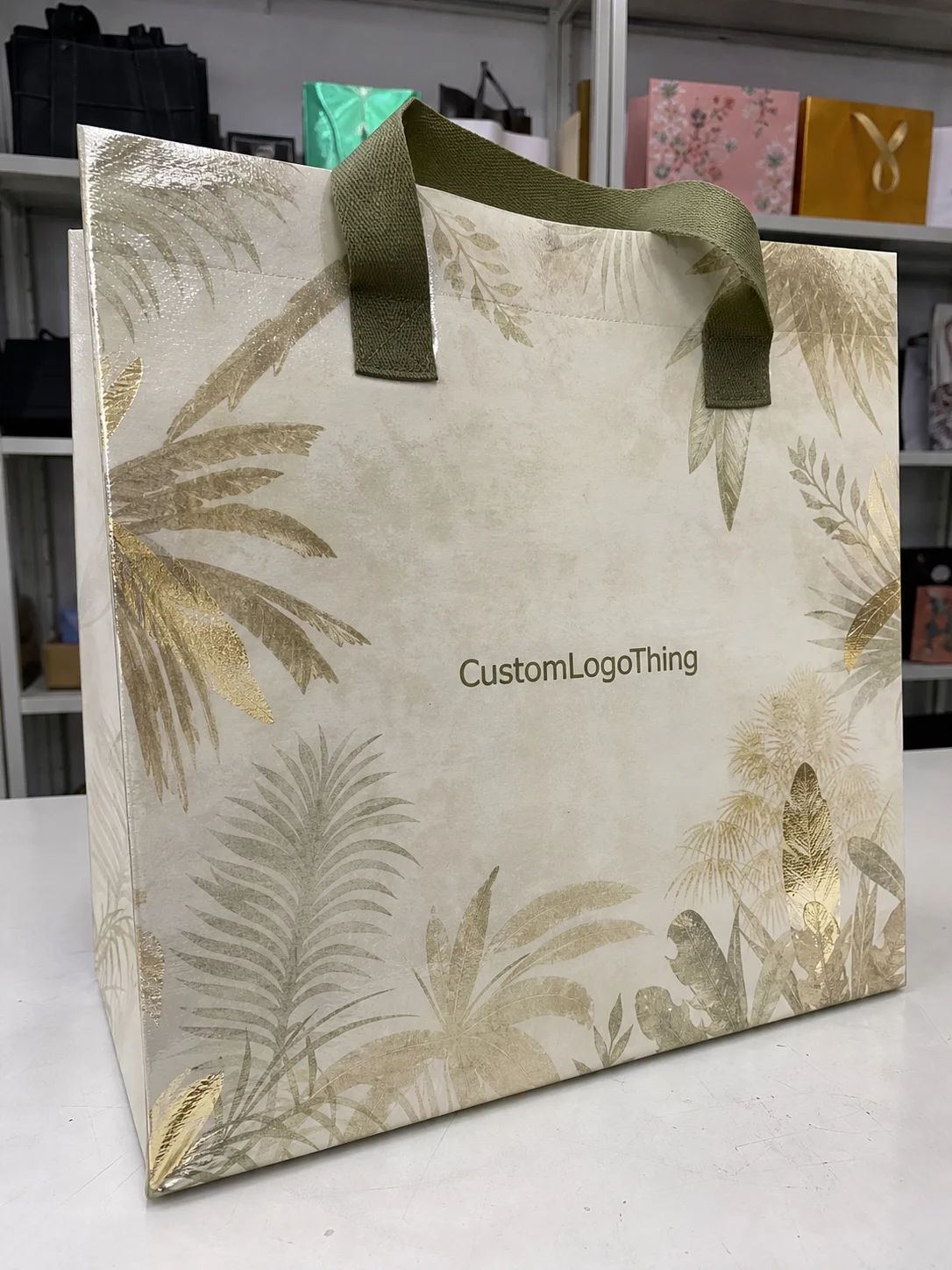
A laminated tote does more than hold a product. It changes how the product is perceived once the customer walks away with it. Gloss makes color feel sharper and more active. Matte reduces glare and usually reads more controlled. The same artwork can look energetic in gloss and restrained in matte, so the finish becomes part of the brand message.
That matters because the bag is often the last physical touchpoint before the customer leaves. A finish that matches the product tier makes the package feel planned. A finish that clashes with the artwork or the contents makes the whole order feel less considered.
There is also a practical benefit. Lamination helps resist scuffs, fingerprints, and light moisture better than an uncoated surface. It does not replace structural strength, but it does improve the bag’s ability to survive handling, transport, and retail display without looking worn too early.
For brands already using custom printed boxes, the bag should sit in the same visual system. Matching surface treatment and print tone across packaging components makes the order feel intentional. That consistency is often more valuable than adding another special effect.
A strong bag earns impressions after the sale. A weak one only costs money once.
How the bag construction and lamination process works
Most laminated totes start with paper stock or heavy board, then printed graphics, then the laminate film or coating, and finally the structural details: handles, gussets, folds, reinforcement at the top edge, and any internal support. The outside gets the attention, but the build determines whether the bag holds up in use.
Gloss lamination is common because it produces bright color and a retail-ready shine. Matte is softer and less reflective. Soft-touch and specialty coatings are used less often, but they can be right when the goal is a more tactile premium finish. The finish should be selected with the artwork, not after the artwork is already fixed.
Print quality comes first, because lamination cannot repair weak files. If the logo is low resolution, the type is poorly spaced, or the color separation is off, the defect stays visible after finishing. On glossy surfaces, certain flaws can become more obvious because light reflects across them.
Structural failures are usually where the bag disappoints. Weak glue, handles attached too close to the edge, thin gussets, or poor fold alignment can make a premium-looking bag fail under load. Sample approval should include more than color. Pull the handle, check the folds, and load the bag close to the intended weight.
For shipping and warehouse handling, some buyers compare packing and testing methods against references from ISTA. That is useful when flat-packed bags are moving through distribution before they reach stores.
Edge quality also matters. A clean cut, crisp fold, and reinforced top line often do more for perceived quality than extra decoration. Buyers notice shine first, but end users grab the handle first. That contact point tells them whether the bag feels sturdy.
Paper choice is part of the spec too. Heavy stock gives the tote body and helps the panels stay upright. A lighter stock can still work for small gift bags, but once the contents get heavier, the structure has to increase with the load. Lamination is not a substitute for adequate board thickness.
Custom laminated tote bags pricing: what changes the quote
Pricing changes with size, stock thickness, print coverage, finish, handle style, reinforcement, and quantity. Two quotes can look similar while being based on completely different specs. A 9 x 12 gloss bag with paper twist handles is not the same job as a 12 x 15 matte bag with cotton rope handles, even if the artwork is identical.
Quantity is the biggest lever. Setup costs do not disappear just because the bag is simple. At lower volumes, those fixed costs are spread across fewer units, so the unit price rises. At higher volumes, the price per bag drops. A 500-piece order and a 5,000-piece order can sit in very different price bands.
For production-only estimates, the following ranges are a reasonable working guide. Freight, duties, carton packing, and rush charges can move the final number.
| Finish | Typical MOQ | Indicative unit price | Best use case |
|---|---|---|---|
| Gloss lamination | 500-1,000 pcs | $2.20-$3.80 | Retail packaging with strong color pop |
| Gloss lamination | 5,000 pcs+ | $1.05-$1.75 | High-volume branded packaging |
| Matte lamination | 500-1,000 pcs | $2.40-$4.10 | More restrained premium presentation |
| Matte lamination | 5,000 pcs+ | $1.15-$1.90 | Retail bags that need a softer finish |
| Soft-touch or specialty coating | 500-1,000 pcs | $3.10-$5.50 | Higher-end launch kits and gifting |
| Soft-touch or specialty coating | 5,000 pcs+ | $1.60-$2.60 | Premium package branding at scale |
One-time charges can matter as much as the unit price. Art setup, plates or cylinders, color matching, sampling, and dieline adjustments all add cost before the first finished bag is boxed. The bag price may look reasonable until the setup line appears.
If you are collecting quotes, make sure every supplier is pricing the same size, stock, finish, handle type, and packing method. Otherwise you are comparing assumptions, not suppliers. Ask whether the price assumes flat-packed bags, bundled sets, or carton-ready packing, because each format changes labor and shipping weight.
If one quote is far below the others, something is usually missing. The gap is often in the handle spec, a reinforcement detail, or a finish step that never made it into the number. Freight can distort the picture too, so landed cost matters more than the production line alone.
Production steps and lead time: from proof to shipment
The flow is usually simple: request, spec confirmation, artwork prep, proof review, sample approval if needed, production, inspection, packing, and shipment. Delays usually happen at the handoff between steps, not during the actual run.
For a standard order with approved artwork, a typical production window can be 12-15 business days after proof approval. Custom finishes, unusual handles, color matching, or extra revisions can extend that schedule. Freight booking adds another variable, so the fastest orders are the ones with a clean brief at the start.
Most avoidable delays come from missing dielines, low-resolution logos, unclear print instructions, or changing the bag size after proofing has started. Those issues are common, but they cost time. Once the file is live, changes become rework.
Ask for milestone dates instead of a single promise. You want proof approval, production start, completion, and dispatch dates. Those checkpoints make it easier to see whether the supplier is tracking the job properly.
For sustainability questions, paper sourcing, recycled content, and certification should be checked before the order is placed. The FSC reference is useful if your packaging needs certified paper or documentation for a claim. If a retailer or compliance team asks later, the paperwork has to exist.
Flat-packed bags also need a packing plan. Carton size, carton count, pallet pattern, and storage space affect the real schedule and cost. A bag that is easy to produce can still be inconvenient to receive if packing is not planned upfront.
A step-by-step buying checklist for first orders
Start with use, not artwork. What is the bag carrying? How heavy is it? Will it be handed out at checkout, used for gifting, or kept for repeat retail use? Those answers shape the build more than the logo does.
- Define the load. Product weight and shape determine bag size, board thickness, and handle reinforcement.
- Lock dimensions before design work begins. Size affects print layout, gusset depth, and cost more than most buyers expect.
- Choose finish and construction together. A premium surface with weak handles is a bad trade.
- Request a proper spec sheet. Include material, thickness, print method, finish, handle style, and packing format.
- Check artwork carefully. Bleed, safe area, barcode placement, and legal copy should all be settled before proof approval.
That last step is critical. A polished layout is not enough if the logo lands too close to a fold, or a barcode gets covered by the handle, or a legal line becomes unreadable after lamination. A bag can look attractive and still fail as retail packaging.
For first-time buyers, one direct question helps a lot: what matters most? Lowest unit cost, fastest turnaround, premium feel, or durability? You usually cannot maximize all four. If the priority is clear, the spec is easier to judge and the quote is easier to compare.
If you need other packaging items alongside the bag, keep the brief consistent across your Custom Packaging Products. Matching stock, print direction, and finish choices across the range keeps the system coherent and makes color approval easier.
Inspection should be part of the process, not an afterthought. Check handle attachment, fold symmetry, corners, scuff resistance, and print alignment. If the sample looks good but feels weak in hand, do not assume the production run will solve it.
Common mistakes that wreck budgets or performance
The first mistake is buying on appearance alone. A mockup can look expensive and still fail if the stock is thin, the seams are weak, or the handle is attached badly. Pretty is not a performance spec.
Second, buyers change the artwork after proof approval. That causes rework and can force a new setup. The schedule slips, and the delay is usually avoidable.
Third, people ignore the load rating. If the bag will carry heavier merchandise, say so early. A paper twist handle and a rope handle are not interchangeable, and neither is a lightweight gift bag and a retail carrier for boxed cosmetics or folded apparel.
Fourth, samples get compared to production without checking the build method. A sample may be hand-finished or made with a slightly different process. That does not automatically mean the supplier is hiding something. It usually means the production spec was never pinned down tightly enough.
Fifth, the order is placed too late. Rush work removes options and leaves no room for corrections if the proof needs another pass. If the event date is close, freight options narrow and the tolerance for mistakes disappears.
Surface finish affects color as well. Matte can mute bright artwork slightly. Gloss can deepen dark tones and make graphics feel more saturated. If the brand depends on a specific color read, that needs to be discussed before proofing.
Packing density is another common miss. If the bags are packed in a way that increases scuffing, the finish can arrive marked before the customer ever sees it. That is avoidable with the right carton count, separator choice, and handling method.
Expert checks before you ask for a quote
Make a one-page brief first. Suppliers can quote faster and more accurately if they receive the same data every time: size, material, thickness, finish, handle type, artwork count, packing format, and target quantity. Loose requests produce loose pricing.
Ask for a digital proof or sample view that shows real logo placement and finish behavior. Lamination changes how dark colors, thin lines, and small text read. A design that looks sharp on screen can soften once it hits a reflective surface.
Check shipping assumptions as well. Are the bags packed flat? How many per carton? Are cartons palletized? Is there a carton size limit? Those details affect landed cost, especially if the bags are moving through a warehouse or being split across retail locations.
Here is the cleaner way to compare suppliers:
- Use the same brief for every quote request.
- Ask for the same unit count, finish, and packing method.
- Separate production cost from freight and duties.
- Confirm whether the sample is an exact production match.
- Check whether the paper stock is FSC-certified if that matters to your brand story.
That last point is not a formality. If sustainability claims matter, the documentation has to hold up under scrutiny. Retailers and compliance teams care about whether the paper source, coating, and claims can be verified.
Custom laminated tote bags perform best when the spec is intentional. Start with the load, the finish, the handle, and the reuse goal, then compare quotes against the same requirements. That gives you a bag that looks right, carries well, and survives long enough to justify the spend.
What is the minimum order for custom laminated tote bags?
MOQ depends on size, print complexity, and the factory’s setup method, but smaller runs usually cost more per bag because fixed production costs are spread across fewer units. If you only need a short run, ask whether lower-MOQ sampling or digital production options are available before you commit to a full custom line.
Is gloss or matte better for laminated tote bags?
Gloss usually gives stronger color pop and a more reflective retail look. Matte reads quieter and often feels more premium to buyers who want something restrained. The better choice depends on the brand mood and how much handling the bag will get.
How long do laminated tote bag orders usually take?
A straightforward order can move quickly after artwork approval, but custom finishes, proof revisions, and freight planning can extend the schedule. The slowest part is often not production itself, but waiting on final file approval or changes to the spec after quoting.
What files do I need for the best print quality?
Use vector artwork for logos and text whenever possible so the print stays sharp at any size. Provide the dieline, bleed, and safe-area setup the factory asks for, and keep colors and fonts locked before proofing. If you have raster art, submit it at high resolution and confirm the supplier can match it cleanly after lamination.
Are custom laminated tote bags strong enough for retail use?
They can be, but strength comes from the full build spec, not the laminate alone. Material thickness, seam construction, and handle reinforcement matter more than the finish if the bag is carrying heavier merchandise. For retail use, always confirm the intended load before you approve the design, because custom laminated tote bags only perform well when the whole structure is specified properly.