Custom Large Stickers for Walls: Plan, Price, Order
What Custom Large Stickers for Walls Really Need to Do
A wall graphic gets judged twice: first from across the room, then from twelve inches away by the person standing next to it. That double inspection is the practical reality of custom large stickers for walls. They have to read clearly at scale, hold their edges, survive cleaning and foot traffic, and still look intentional under real lighting rather than perfect studio lighting.
The terminology can get messy. Decorative wall stickers are usually accents: patterns, icons, short phrases, or small design elements. Promotional wall decals support campaigns, launches, sales, menus, or seasonal displays. Murals cover larger areas and often use photography, illustration, or full-wall brand environments. Cut vinyl lettering uses solid-color vinyl with no printed background, which works well for hours, quotes, wayfinding, mission statements, and simple logo marks. Removable wall graphics use lower-tack adhesives, although “removable” does not mean “safe for every paint job.”
The common mistake is treating a wall sticker like a small label made larger. It is not. Once a graphic reaches 72, 96, or 144 inches wide, the weak points become visible: low-resolution art, poor panel planning, thin strokes, crooked seams, glare, adhesive mismatch, or a wall surface that was never ready for vinyl.
Use cases are broad: lobby logos, menu walls, wayfinding graphics, classroom displays, retail product launches, restaurant feature walls, photo backdrops, office values walls, trade show environments, and branded interiors. For companies already investing in Custom Packaging Products, a wall graphic can extend the same identity into the room. The package, shelf, counter, and wall start acting like one system instead of separate design decisions.
Practical callout: Before pricing or printing, define the wall surface, viewing distance, expected lifespan, and removal requirement. Those four details influence material, adhesive, finish, panel layout, and installation method.
How Oversized Wall Decals Are Printed, Cut, and Finished
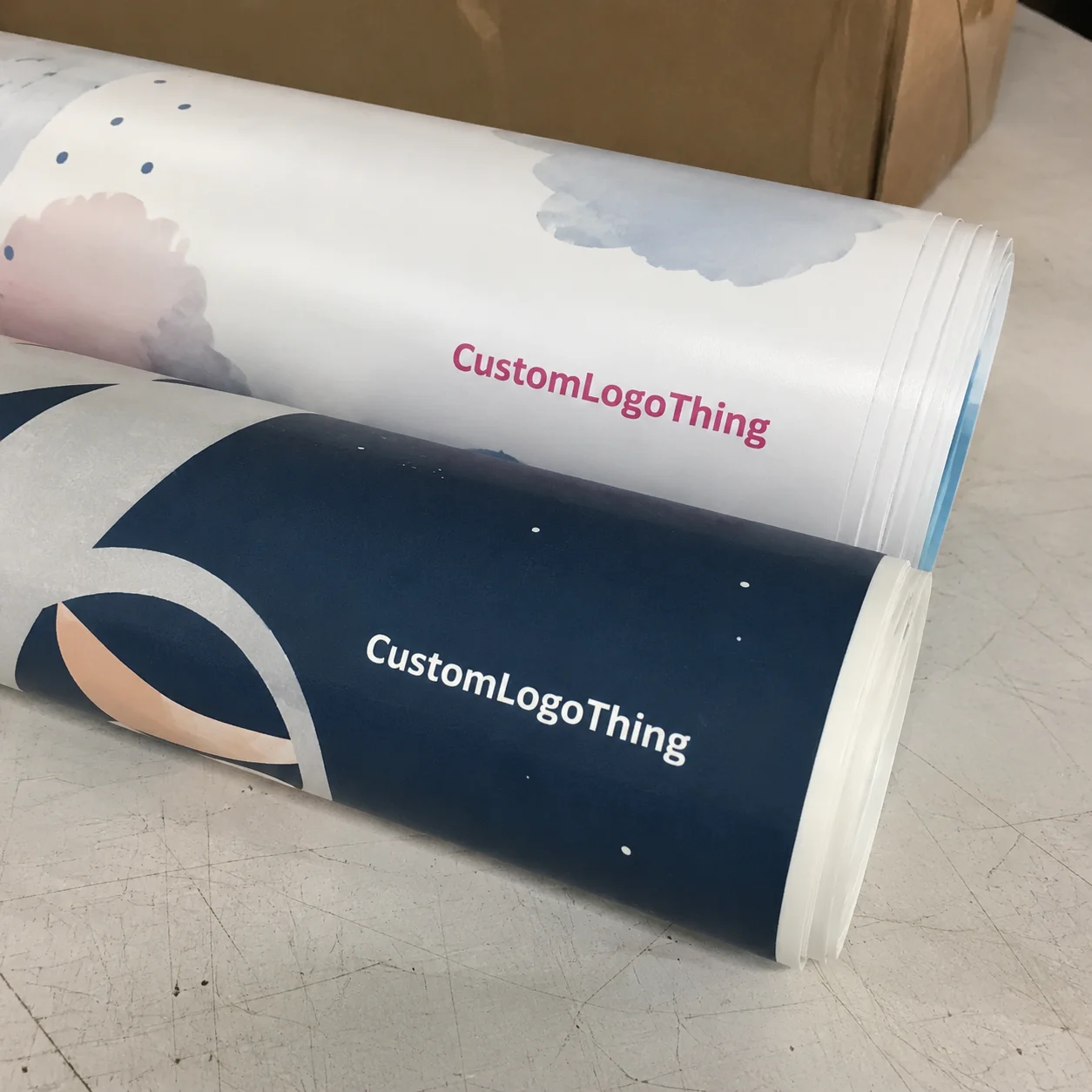
Most oversized wall graphics start as printable vinyl or specialty wall film. The material is loaded into a wide-format printer, printed with latex, eco-solvent, UV, or similar production ink systems, then allowed to dry or cure based on the ink and film combination. After that, the graphic may be laminated, trimmed, contour cut, quality checked, labeled, rolled around a core, or packed flat.
Full-color printed graphics make sense for murals, gradients, photography, illustrated backgrounds, product imagery, and multi-color brand art. Single-color cut vinyl is usually cleaner for typography, arrows, hours of operation, simple logos, and graphic shapes where no printed background is needed. Printed graphics may use white film, clear film, blockout film, or textured media. Cut vinyl is weeded by removing unused material around the design, then covered with transfer tape so the installer can place the letters or shapes in one aligned piece.
The best production route depends on the artwork. Wide-format digital printing handles photography and multi-color designs well, especially for panels in the 24- to 54-inch range, depending on equipment and material width. Plotter cutting handles clean vector shapes and type. Problems usually appear when a design meant for one method is forced into another: tiny serif type cut from vinyl, for example, or a photographic mural printed from a compressed web image.
Lamination is not just cosmetic. It adds scuff resistance, cleaning tolerance, UV protection, and finish control. A hallway graphic near shoulder height needs more protection than a temporary display above eye level. Retail aisles, restaurant walls, school corridors, reception areas, and event spaces often justify laminate because people touch, brush, clean, and bump those surfaces.
Finish choice changes the look more than many buyers expect. Matte reduces glare and hides minor wall imperfections better. Gloss makes color feel brighter but can reflect overhead lighting. Satin sits between the two and is often safest for branded interiors. Textured laminates can create a more architectural finish, though they may raise cost and soften very fine detail.
Very large graphics are often split into panels. A 12-foot mural may ship and install more reliably as three or four numbered drops with planned overlaps, often around 0.25 to 0.5 inch depending on the film, installer preference, and wall conditions. Good panel planning avoids putting seams through faces, logo centerlines, thin type, or product details. A seam in a field of background color is forgettable. A seam through an eye, letterform, or bottle label is not.
Wall Surface, Adhesive, and Size Specs That Decide Success
The wall usually decides whether the project works. Smooth painted drywall, glass, sealed wood, metal, concrete, brick, and textured paint all behave differently. A graphic that bonds beautifully to glass may lift on low-VOC paint with orange peel texture. A decal that works on sealed metal may fail on dusty masonry. Not every time, but often enough that surface details should never be guessed.
Adhesive selection is the quiet technical decision behind custom large stickers for walls. Removable adhesive fits temporary campaigns, rented spaces, events, and seasonal graphics. Permanent adhesive is better for long-term installations where clean removal matters less than holding power. Repositionable adhesive gives installers more forgiveness during placement. Low-tack adhesive can protect delicate surfaces but may not grip texture. High-tack adhesive grabs harder, which helps on difficult walls but increases the risk of paint damage during removal. Air-release adhesive uses tiny channels to help trapped air escape during squeegee work, reducing bubbles on large panels.
Fresh paint deserves caution. Many paints need two to four weeks to cure fully, and some low-VOC, scrubbable, or stain-resistant paints can continue to outgas or resist adhesive longer than expected. If the paint is soft, damp, dusty, chalky, or poorly primed, premium film cannot compensate. Industrial settings may reference ASTM surface and adhesion test methods, but for most wall graphics the useful field practice is simpler: clean the wall, apply a sample, press it properly, and wait long enough to see whether edges lift.
Texture affects contact. Light orange peel may be manageable with the right film and firm pressure. Knockdown, stucco, brick, and concrete block are less predictable. Some conformable films can be installed with heat and foam rollers to push material into texture, but that should be specified before production. Discovering the wall is rough after the printed roll arrives is an expensive way to learn about surface energy.
Size planning is not just width by height. Check viewing distance, door swings, trim, outlets, switches, corners, windows, ceiling height, furniture, sprinkler heads, and sight lines. A 72-inch logo can feel right in a lobby with a 16-foot viewing distance, then feel oversized in a narrow hallway. Eye level, usually around 57 to 60 inches from the floor, matters for key messages.
Artwork needs similar discipline. Vector logos are preferred for crisp edges. Raster photos should be high enough resolution for final size and viewing distance; 100 to 150 dpi at final size is common for many large wall graphics, while close-viewed art may need more. Add bleed, keep safe margins away from trim and corners, outline fonts, include brand color references, and avoid tiny type that only looks elegant on a screen.
Cost, Pricing, and Quote Details for Large Wall Stickers
Pricing is driven by finished size, material type, adhesive, ink coverage, lamination, contour cutting, panel count, artwork prep, quantity, packaging, freight, and installation requirements. Square footage matters, but it is not the whole quote. Two graphics can both measure 24 square feet, while one costs more because it needs contour cutting around a complex logo, high-tack film, matte laminate, and panel layout.
For planning, a simple indoor printed wall decal may fall around $8 to $18 per square foot before installation, depending on material and finish. Premium wall film, textured laminate, custom contour cutting, blockout media, specialty adhesive, or short-run production can push the price higher. Cut vinyl lettering may price differently because labor shifts into weeding, masking, and protecting small details. These ranges are broad; rush timing, artwork repair, freight, installer availability, and regional labor rates can change the final number.
Quantity affects unit cost because setup time spreads across more pieces. File checks, printer setup, material loading, calibration, color checks, finishing setup, packing, and labeling take time whether the order is one lobby logo or fifty store graphics. Minimums may apply for specialty materials, custom color matching, sample runs, or projects that require unusual packaging.
| Wall Graphic Type | Typical Use | Common Cost Driver | Buyer Tip |
|---|---|---|---|
| Printed removable decal | Promotions, events, seasonal displays | Film, ink coverage, laminate | Confirm paint condition and removal needs |
| Permanent wall mural | Feature walls, restaurants, offices | Panel count, laminate, installation complexity | Plan seams around key artwork |
| Cut vinyl lettering | Logos, hours, quotes, wayfinding | Weeding time and small detail | Use vector files and avoid hairline strokes |
| Specialty textured film | Premium interiors, high-touch areas | Material cost and finishing | Request a sample before full production |
To get a usable quote, prepare wall dimensions, desired finished size, surface type, indoor or outdoor location, expected lifespan, artwork files, quantity, and delivery deadline. Photos help more than written descriptions alone. A straight-on image and a wider room view can save several rounds of clarification.
There are sensible ways to control cost without cheapening the result. Simplify cut paths where possible. Use standard material widths to reduce waste. Avoid unnecessary laminate upgrades for short indoor campaigns. Consider one spare panel for a difficult installation, especially if the graphic wraps near corners or includes narrow contour-cut sections. The cheapest decal can become expensive fast if the adhesive fails, the wall was misidentified, or the installer has to trim around an outlet nobody mentioned.
Process and Timeline from Artwork to Installation
A typical production flow starts with project specs, artwork review, material recommendation, proofing, approval, printing, drying or curing, lamination, cutting, quality check, packing, and shipping. Simple jobs can move quickly after proof approval. Detailed murals, specialty films, sample testing, and brand color matching add time.
Many indoor wall graphic orders take roughly 5 to 10 business days after proof approval for standard production. Larger or more complex jobs may need 10 to 15 business days or more. Rush work depends on material availability, press schedule, finishing capacity, and how quickly the buyer approves details. If a physical sample is needed, add time for sample production, shipping, wall testing, and feedback.
The proof should show size, layout, spelling, panel breaks, cut lines, orientation, and color expectations. A digital proof cannot predict final color perfectly because screens vary, but it catches scale and content problems. For brand-sensitive colors, provide Pantone references, previous print samples, or packaging design standards. If the wall graphic needs to match Custom Labels & Tags, printed boxes, or other product packaging, state that before printing starts.
A physical swatch is useful for high-value interiors, textured walls, permanent installations, or strict brand color work. Samples turn vague concerns into visible evidence. Does the film grip the paint? Does matte look too dull under warm lighting? Does the wall color show through clear film? A small test can answer those questions cheaply compared with replacing a full mural.
Shipping and receiving deserve attention. Some graphics ship rolled around a core, while smaller rigid or delicate pieces may ship flat. Panel labels should be clear, edges should be protected, and installation instructions should stay with the package. Let graphics acclimate to room temperature before installation, especially after cold freight conditions. Cold vinyl is less flexible, and rough handling can create edge stress or tunneling.
Installation scheduling should include wall cleaning, paint cure time, access to the space, ladders or lifts, and whether work must happen outside business hours. For large panels, two installers are often safer than one. Trade show work also needs freight planning; organizations such as ISTA publish packaging test resources that are useful when graphics, displays, and branded materials must survive shipping networks.
Step-by-Step Guide to Planning and Ordering Wall Graphics
Good ordering starts before the file is uploaded. A little measurement and surface homework can prevent reprints, rushed calls, and installers making decisions on the wall with a blade in hand.
- Measure the actual wall space. Record usable width and height, then note trim, outlets, switches, corners, windows, fixtures, sprinkler heads, and anything else that may interrupt the graphic.
- Photograph the wall. Take one straight-on photo and one from the normal viewing distance. Add a tape measure, sheet of paper, or reference object for scale.
- Define the job goal. Decide whether the graphic is for brand presence, wayfinding, promotion, privacy, atmosphere, an event backdrop, or a long-term interior feature.
- Choose the graphic type. Options include a full mural, logo decal, cut lettering, partial wall accent, removable campaign sticker, or panelized wall wrap.
- Prepare artwork properly. Use vector files for logos and type whenever possible. For photo murals, supply high-resolution raster files suitable for final viewing distance.
- Share surface and lifespan details. Provide paint age, texture, cleaning exposure, sunlight, humidity, and whether clean removal matters.
- Review the proof slowly. Check scale, spelling, crop, seams, color notes, orientation, and whether panel breaks fall in acceptable locations.
- Plan installation before delivery. Confirm tools, people, ladders, access hours, wall cleaning, and whether a professional installer is needed.
For buyers managing broader retail packaging or branded packaging programs, wall graphics should sit in the same asset system as cartons, labels, inserts, and signs. Consistent logos, color references, and type hierarchy reduce file confusion and help packaging graphics stay coherent across physical touchpoints.
Common Mistakes That Make Wall Stickers Lift, Bubble, or Look Off
Many failures start before printing. Poor wall information, low-resolution artwork, rushed proofing, and the assumption that every painted wall accepts vinyl the same way are repeat offenders. A production team can recommend a better film only when the buyer provides real surface details.
Dirty, dusty, damp, or newly painted walls are high-risk surfaces. Cleaning should remove dust, grease, and residue, but harsh cleaners can leave films that interfere with adhesive. A mild cleaning method followed by proper drying is usually safer. If the wall was recently painted, wait for cure time and test adhesion. Paint can feel dry to the hand while still being too fresh under the surface.
Stretching vinyl during installation creates another failure point. Pulling hard to “make it fit” builds memory into the film, and that stress may later show up as curled edges, lifted corners, or shrinking around seams. Tight contour cuts and corners are especially vulnerable. Slow placement, even squeegee pressure, and correct hinge methods matter more than speed.
Air-release vinyl helps reduce bubbles, but it does not replace technique. Large panels still need controlled placement from the center outward or from one edge across, depending on the installation method. Moisture can also cause trouble, especially in bathrooms, kitchens, entry areas, and spaces cleaned frequently with sprays.
Scale mistakes are easy to miss. Artwork that looks balanced on a 13-inch laptop can feel too small, too crowded, or oddly placed on a 10-foot wall. Print a tiled paper mockup for critical logos or mark the wall with painter’s tape to test size. It is low-tech, and it works.
Color surprises happen too. Screen-only review, lighting differences, wall color show-through, and missing brand references can shift expectations. If color matching matters, provide references. For sustainable paper-based packaging components used elsewhere in the brand system, buyers may review certified sourcing programs such as FSC, but wall vinyl should be evaluated by its own film, adhesive, durability, and removal requirements.
Panel planning can make or break the finished look. Avoid seams through faces, small type, logo centers, and critical product images. For difficult installations, do not order only one exact piece unless the schedule can tolerate a reprint. A spare panel or replacement section can save an opening day, launch event, or retail reset.
Next Steps Before You Request a Wall Sticker Quote
Before asking for pricing, gather the facts that actually affect the quote: wall measurements, straight-on photos, wider room photos, surface type, paint age, indoor or outdoor location, quantity, deadline, artwork files, and expected lifespan. If the graphic must remove cleanly later, say so. If it needs to stay firmly in place for years, say that too. Adhesive choice starts with that decision.
Mark critical details on photos if possible. Circle outlets, trim, corners, furniture, eye-level zones, door clearances, high-touch areas, and sections that cleaners wipe frequently. Those marks help the production team recommend panel breaks, laminate, and sizing for the real space rather than an ideal blank rectangle.
Ask about samples or adhesion testing for textured walls, recently painted walls, sunlit spaces, high-visibility interiors, and long-term branded installations. A 4-by-6-inch sample cannot answer every question, but it can reveal obvious adhesion, glare, or color concerns before the full order is printed.
Compare quotes carefully. Check material, adhesive type, laminate, size, panel count, proofing, packaging, shipping, artwork adjustments, and whether installation is included or quoted separately. A lower number may be fine for a short promotional decal. A permanent feature wall deserves tighter material discipline.
Custom large stickers for walls work best when the quote request includes real wall conditions, clean artwork, and a clear installation plan. Give the manufacturer those details early, and the finished graphic has a much better chance of looking sharp from across the room while holding up when people walk right up to it.
FAQs
How long do custom wall decals usually last indoors?
Indoor lifespan depends on material, adhesive, wall condition, cleaning exposure, sunlight, and installation quality. Temporary removable decals may be planned for weeks or months, while properly installed premium wall graphics can last several years indoors. High-touch hallways, textured paint, moisture, and harsh cleaners can shorten performance.
Can custom large wall stickers be removed without damaging paint?
Removable adhesives are designed to reduce paint damage, but no wall graphic can guarantee perfect removal on every painted surface. Paint quality, cure time, primer, wall prep, humidity, and installation length all affect removal. For rented spaces or temporary campaigns, request removable film and test a small area first.
What file type is best for oversized wall sticker artwork?
Vector files such as AI, EPS, or print-ready PDF are best for logos, lettering, shapes, and clean brand graphics. Photos or murals should be high-resolution raster files sized appropriately for the final viewing distance. Include linked images, outlined fonts, bleed, cut lines if needed, and brand color references.
Do large wall decals work on textured walls?
Some lightly textured walls can work with the right high-tack or conformable film, but heavy texture is more challenging. Orange peel, stucco, brick, concrete block, and knockdown finishes may require testing, heat installation, or a different display solution. A surface photo and material sample test help prevent lifting edges and poor adhesion.
How should I measure for custom oversized wall stickers?
Measure the full usable wall width and height, then note trim, outlets, switches, corners, windows, furniture, and sight-line restrictions. Take straight-on photos with a tape measure or reference object visible so scale can be checked. For murals or multi-panel graphics, confirm whether the design should bleed past the visible area for trimming.