Custom Made Canvas Tote Bags: Bulk Order Buyer Guide
Canvas tote bags look simple until they have to work in real use. A mockup can hide weak seams, thin handles, print that is too small, or a body that sags once the bag is loaded. Custom Made Canvas tote bags are only useful when the material, construction, and decoration are matched to the job.
For packaging and merchandise buyers, canvas sits in a practical middle ground. It is more substantial than a thin promo bag, easier to store and ship than a rigid gift box, and flexible enough to handle different weights, sizes, and finishes. The quote depends on more than the logo, so buyers need to look at fabric, sewing, print method, and inspection as one decision.
Why Canvas Totes Hold Up Better Than Basic Giveaway Bags
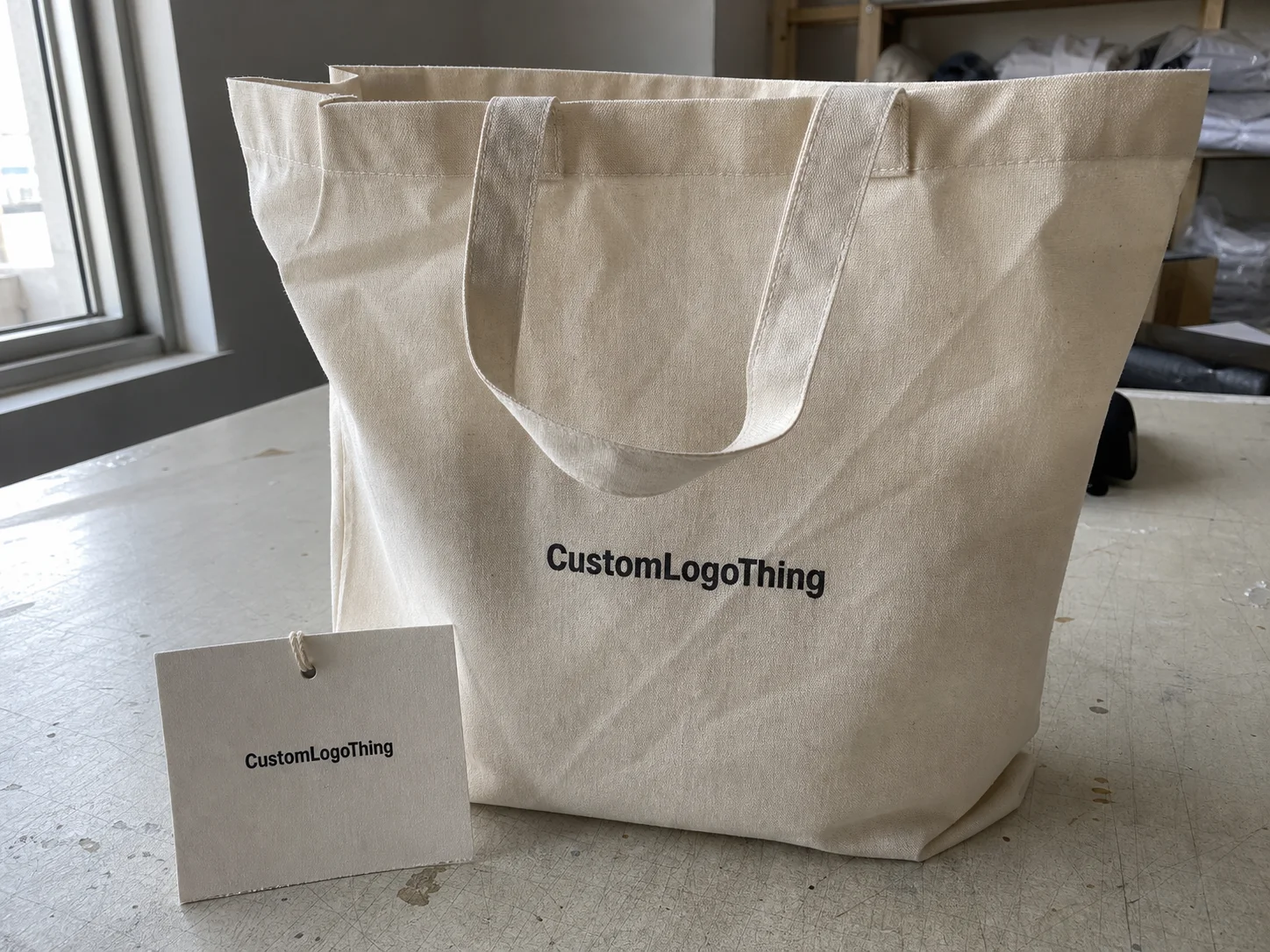
Canvas has a structural advantage that becomes obvious as soon as the bag is used for anything heavier than a pamphlet. A lightweight polypropylene giveaway bag can work for one event, but canvas usually gives a better balance of body, print presentation, and perceived value. It feels more deliberate, which matters in retail packaging, event handouts, and merchandise programs.
The practical advantage is repeat use. A tote given out at a launch may stay in rotation for months, which gives the brand more impressions after the first handoff. That is where the value tends to show up: in the store, at work, in transit, or on a daily commute. A bag that lasts becomes part of the brand system instead of a one-time giveaway.
There are a few common use cases where custom made canvas tote bags make sense. Retail teams use them as shopper bags or with purchase. Event teams like them because they fold and stack efficiently. Internal teams use them for welcome kits because the tote helps the contents feel organized. In each case, the buyer is paying for durability, presentation, and a usable carrying solution, not just decoration.
Start with the use case, then choose the bag. A logo on the wrong structure still gives you the wrong result.
How the Production Process and Timeline Work
The production sequence usually starts with the specification: dimensions, canvas weight, handle style, print method, quantity, and finishing details. After that comes artwork review and proofing. Production should not begin until the layout is approved, and if a sample is needed, it should be made before the bulk run, not after it.
Proofing is where schedules often slip. Artwork that looks fine on a screen may still need adjustment once it is scaled to fabric and placed near a seam or gusset. Tiny type, thin strokes, and crowded logos can become problems quickly. Late changes are especially expensive if they affect stitch placement, panel size, or print setup.
For a standard order of custom made canvas tote bags, a realistic lead time is often 10 to 15 business days after proof approval if fabric is in stock and the decoration is straightforward. More complex builds take longer. Add a gusset, lining, pocket, zipper closure, woven label, or custom trim, and the sewing sequence becomes more layered. That may only add a few days, but it should be planned for early.
Typical timing looks like this:
- Spec review and quote: 1 to 3 business days if quantity and artwork are clear.
- Artwork proof: 1 to 3 business days, longer if revisions are needed.
- Sampling: often 5 to 10 business days when a physical sample is requested.
- Bulk production: commonly 7 to 15 business days for standard builds.
- Freight and delivery: depends on destination, shipping method, carton count, and handoff requirements.
Lead time should also include fabric availability, thread matching, trim sourcing, carton packing, and final inspection. Those are the steps that keep a simple order from becoming a rushed one. For projects with a fixed launch date, some teams also ask whether packed cartons should be checked against ISTA test profiles if the bags will travel through multiple handling points before arrival.
Choosing Canvas Weight, Size, and Construction
Canvas weight affects both price and performance. Lightweight canvas is easier on the budget and works for short-term events, but it can feel soft when the contents are heavy. Medium-weight canvas is the most common middle ground because it gives enough structure for presentation without feeling overly stiff. Heavy canvas is better for daily carry, groceries, books, or repeated loading.
Many buyers compare weights in the 8 oz to 12 oz range, with heavier builds used for premium or utility-focused bags. The exact result depends on weave density as much as raw weight. A tightly woven 10 oz fabric can feel more substantial than a looser 12 oz fabric, so the spec should include both weight and construction notes whenever possible.
Size changes how the tote behaves. A flat body looks simple but limits volume. A gusseted tote adds depth, which makes it more useful for boxed products, folded apparel, catalogs, or welcome kit contents. Handle length matters too. Short handles look neat in hand and suit lighter loads. Longer handles improve shoulder carry, which matters if the tote will be reused outside the original event.
Construction details separate a basic bag from one that feels well made. Reinforced handle attachment points help the bag hold weight without tearing at stress zones. Even seam allowance keeps the tote square and helps the print sit cleanly. A stable bottom panel improves load distribution. If the contents are small or loose, a lining or internal pocket can keep them from disappearing into the base of the bag.
For buyers comparing tote options with the rest of a product packaging program, it helps to see the bag alongside other branded packaging pieces. A tote that feels too delicate beside a premium box weakens the system, while a well-built tote can extend the same visual language without competing with it.
Pricing, MOQ, and What Changes the Quote
Pricing depends on a few variables that matter a lot. Fabric weight is usually one of the biggest drivers, followed by bag size, print coverage, decoration method, and construction complexity. Finishing can also move the number. A folded edge, custom label, banding, tag insertion, or individual polybagging may only add a modest cost per unit, but on a large run those details become visible in the total.
MOQ affects unit price directly. Smaller runs carry more setup cost per bag because artwork prep, screen prep, sewing setup, and inspection labor are spread across fewer pieces. Larger orders lower the unit cost if the spec stays fixed. Once the bag changes shape, size, or decoration, the savings start to shrink. This is why buyers should compare quotes only when the specs match closely.
Common price ranges for standard custom made canvas tote bags often fall into these bands:
| Canvas Spec | Typical Use | Approx. Unit Price at 1,000 pcs | Approx. Unit Price at 5,000 pcs | Notes |
|---|---|---|---|---|
| Light canvas, flat tote, single-color print | Events, giveaways | $1.40-$2.10 | $0.95-$1.45 | Best for lighter loads and short-term distribution |
| Medium canvas, gusseted, one- or two-color print | Retail packaging, onboarding kits | $2.10-$3.40 | $1.45-$2.25 | Common balance of structure, appearance, and cost |
| Heavy canvas, reinforced seams, larger print area | Daily carry, grocery, premium branding | $3.20-$5.50 | $2.10-$3.80 | Higher material cost, stronger long-term utility |
Those figures are directional, not universal. A quote can move quickly if the order includes a rush schedule, specialty thread, custom labels, lining, inside pockets, zippers, or more complicated sewing. Freight can also change the picture, especially when the order is packed into cartons that need to be nested, folded a certain way, or protected during transit.
One of the most common quoting mistakes is comparing two products that are not actually the same build. A 10 oz flat tote with a single-color imprint should not be measured against a 14 oz gusseted bag with reinforced handles and folded edges. If the price gap seems too wide or too narrow, ask for the dimensions, fabric weight, print method, and finishing notes in writing.
For broader sustainability or paper-packaging programs, some buyers also ask whether inserts, tags, or cartons can be sourced from FSC-certified materials through FSC. That does not change the tote itself, but it helps align the bag with the rest of the packaging story.
Decoration Methods and File Prep That Protect Brand Quality
Screen printing is the most common decoration method for custom made canvas tote bags because it is efficient for larger runs and handles bold artwork well. It works especially well for solid shapes, limited colors, and logos that do not depend on tiny detail. Heat transfer can be useful when the design has gradients or fine lines, while embroidery creates a more textured premium look, though it is not always right for very delicate lettering.
File prep matters because canvas is woven, and woven surfaces behave differently from coated paper or smooth plastic. Fine lines can break up and tiny text can fill in. Vector artwork is usually the safest starting point, and it is better to specify the intended size early than to assume it can be adjusted later. Pantone or PMS references help guide color expectations, but the final result still depends on the substrate, ink system, and printing method.
Placement deserves the same attention as the artwork itself. A logo that sits too close to a side seam can distort once the bag is assembled. A print that crosses a gusset may split awkwardly if the layout was not planned against the sewn structure. This is why production proofs should show exact dimensions and position, not just a generic mockup.
- Use vector artwork whenever possible.
- Confirm final print size in inches or millimeters, not only on screen.
- Map colors to PMS or another agreed reference.
- Keep small text large enough to remain legible on woven canvas.
- Ask for a production proof if the logo sits near seams, gussets, or handles.
The best print results usually come from respecting the material. Canvas has texture. Thread has thickness. Sewing creates a boundary. If the design acknowledges those limits, the finished tote looks more deliberate and less forced.
Quality Control and Ordering Mistakes to Avoid
A tote bag can pass a quick visual check and still fail in use, so quality control needs to go beyond the mockup. The first thing to test is load behavior. Fill the bag with the kind of weight it will actually carry, then look at the handle angle, seam stress, and bottom support. If the bag twists, bows, or digs into the hand, the build is too light for the job.
Another common issue is assuming all canvas is interchangeable. It is not. Weave density, actual fabric weight, stitch quality, and handle reinforcement all change the final result. Two bags can look close in a product photo and behave very differently after they are packed. That matters in retail packaging, where the bag is judged both as a carrier and as part of the brand experience.
Unclear order information slows production and leads to mistakes. Missing quantities, vague artwork files, and post-approval copy changes all create unnecessary rework. If the brief does not define the tote’s purpose, the supplier has to guess at the spec, and guesswork is where most avoidable problems start. A tote intended for one-time event handout should not be built to the same standard as a bag expected to survive daily use.
Buyers also underestimate how much small details affect the finished look. Handle width changes comfort. Stitch density changes durability. A zipper or inner pocket changes both function and cost. Even the fold method for packing can influence how the bag presents when it is first handed over.
Do not approve from the photo alone. Ask for dimensions, canvas weight, stitch notes, and print method, then decide whether the bag fits the actual use case.
How to Spec a Better Order from the Start
The easiest way to get a better result is to gather the basics before requesting a quote: quantity, intended use, dimensions, fabric weight if known, decoration method, artwork files, and delivery date. That gives the supplier enough information to quote the right product instead of estimating around a vague description. If the tote will sit alongside other branded packaging, keep the graphic language aligned so the bag feels like part of the same system.
It also helps to compare two or three versions of the spec side by side. A lighter, lower-cost tote may be fine for a one-day event, while a heavier version makes more sense for retail or repeated use. Seeing the options together makes the tradeoff obvious. In many programs, a small increase in material cost buys better structure, cleaner presentation, and fewer complaints after delivery.
If the order is important to the brand experience, ask for a physical sample or a detailed production sheet before the main run begins. That small step can prevent a large reprint, and it gives the team a chance to evaluate the tote in the same context as the rest of the packaging. Once the bag has been tested with actual contents, the conversation shifts from abstract preference to practical fit.
For many buyers, custom made canvas tote bags are the most familiar item in the program and still the one people remember most. They are visible, reusable, and easy to repurpose, which gives them more staying power than many branded items. Choose the canvas weight, structure, and decoration with that in mind.
What should I know before ordering custom made canvas tote bags?
Start with the intended use. A giveaway tote, a retail tote, and a daily-carry tote all need different fabric weights and construction. Have quantity, artwork, and delivery timing ready before requesting pricing, and ask for the fabric weight and stitch details so you can compare quotes fairly.
How long does the process take for custom canvas tote bags?
Simple orders can move quickly after artwork approval, but the timeline depends on stock fabric, print method, and order size. Proof approval is usually the slowest step. Sampling and extra sewing details add time, so include them in the schedule from the beginning.
What affects the cost of custom canvas tote bags the most?
Fabric weight, bag size, and decoration method usually have the biggest impact. MOQ matters too because smaller runs spread setup costs across fewer pieces. Custom labels, lining, pockets, and rush production can raise the price even if the bag looks simple from the outside.
Which canvas weight is best for everyday use?
Medium-weight canvas is often the best balance of structure, cost, and durability for everyday carry. Heavier canvas makes sense for groceries, books, or repeated use. Lighter canvas is better for short-term events, but it usually will not hold up as well over time.
How do I make sure my logo looks good on custom made canvas tote bags?
Use clean vector artwork whenever possible, and choose a decoration method that suits the design. Fine lines and tiny text can disappear on woven fabric, so review the proof for placement, size, and color before approving production.


