Custom Made Canvas bags look straightforward. That simplicity is misleading. A mockup can hide weak stitching, a flimsy weave, or handles that twist after the first heavy load. In production, the differences show up quickly. If you are buying custom made canvas Bags for Retail, events, or packaging, the spec matters more than the logo.
The bag is really a bundle of decisions: fabric weight, finished size, handle length, reinforcement, print method, and closure. Each choice affects cost, durability, and how the bag feels in use. Get those details right and the bag stays in circulation. Get them wrong and you end up paying for something that only works in a presentation slide.
Why the spec matters more than the logo
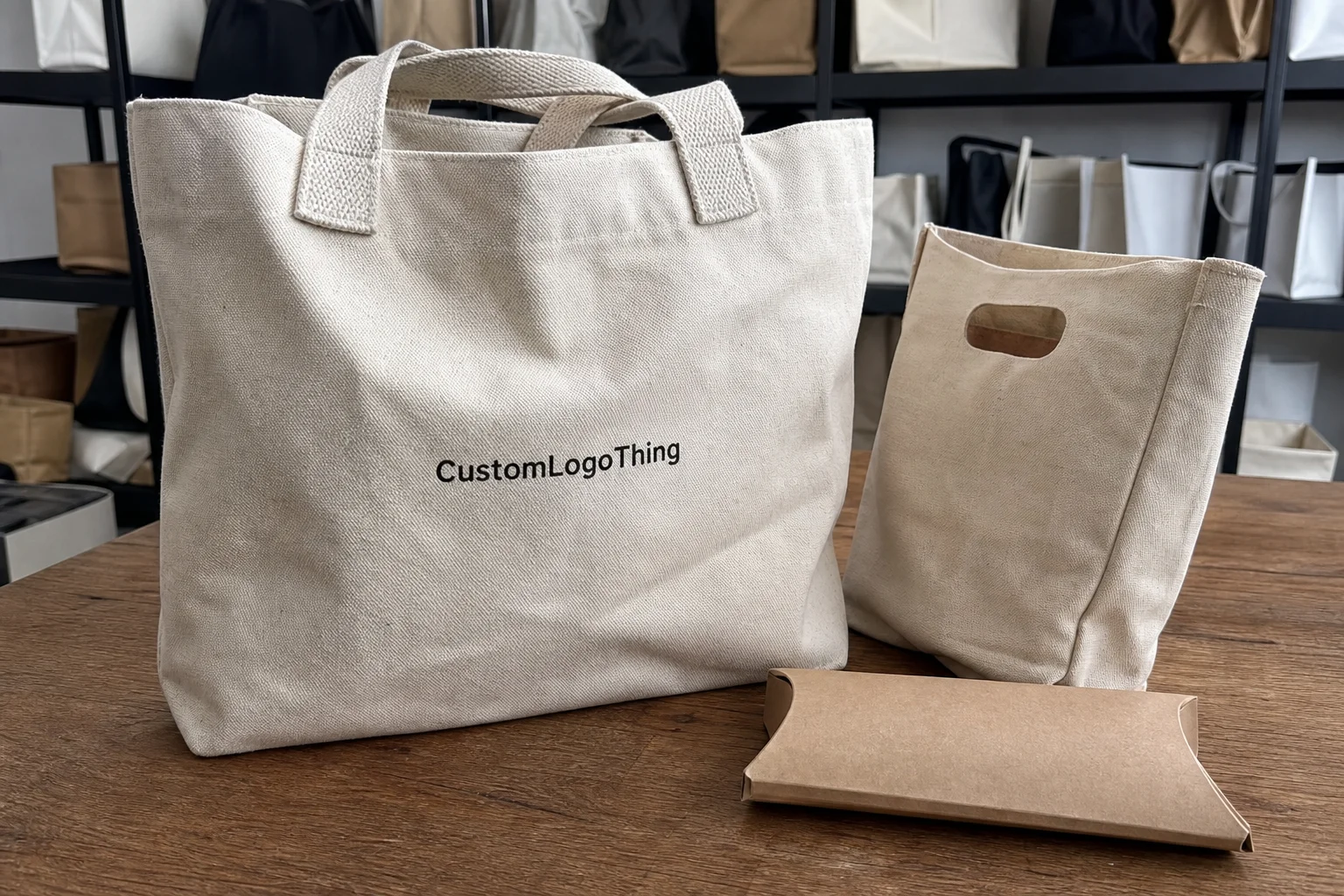
A tote can look premium and still fail at the job it was supposed to do. Light canvas can handle a flat insert or a folded brochure. It will not stay graceful once someone adds a bottle, catalog, or a full retail purchase. Heavier canvas, reinforced handles, and cleaner stitching improve carry comfort and extend usable life.
The practical way to evaluate a tote is to think in layers. Fabric weight shapes structure. Dimensions determine capacity. Handle length affects how the bag carries. Reinforcement determines whether it survives repeated use or starts fraying at the stress points after a few trips. For custom made canvas bags, the logo is only the visible part. The build is what decides whether people keep the bag.
Before asking for quotes, lock down the core specification:
- Fabric weight: usually described in oz or gsm; higher weight generally means better structure and a higher price.
- Dimensions: width, height, and gusset depth define usable volume.
- Handle style: self-fabric, cotton webbing, short carry, or shoulder length.
- Print method: screen print, embroidery, heat transfer, or digital transfer.
- Reinforcement: bar-tacks, double stitching, bottom inserts, or cross-stitching at stress points.
- Extras: zipper, lining, inner pocket, snap, or no closure at all.
If the bag is part of a retail program or packaging system, it should behave like part of the product, not as an afterthought. That is where spec discipline matters. A carefully chosen canvas bag can support package branding, improve perceived value, and keep the order within budget. A loosely defined one usually creates revision cycles and avoidable rework.
FSC-certified inputs can matter if sourcing claims are part of the brand story, and EPA sustainable materials guidance is useful when you are thinking about reuse and end-of-life behavior. Neither is decorative. Both help keep sourcing claims grounded.
How the process works from quote to delivery
The workflow is usually predictable. You Request a Quote. The supplier checks the specifications. Artwork is reviewed. A sample or proof is approved. Production begins. Then comes inspection, packing, and shipment. The sequence looks simple because the hard part is hidden inside each step.
To get a useful quote, do not send “canvas tote with logo” and expect precision. Include quantity, finished size, canvas weight, handle length, print colors, print placement, closure details, and your target delivery window. If you leave out the gusset depth or lining requirement, the quote will either be vague or wrong. The more ambiguous the request, the more expensive the corrections later.
The usual checkpoints are:
- Inquiry and quote: specifications, quantity, artwork, deadline.
- Deposit and proof: digital mockup, sampling request, or pre-production confirmation.
- Sample or proof approval: check size, color, placement, and build.
- Mass production: cutting, printing, sewing, finishing.
- Quality inspection: seam checks, measurement checks, print review, and handle strength checks.
- Packing and shipment: carton packing, freight booking, and delivery.
Lead times vary with complexity, but a realistic planning window is often 5 to 10 business days for sampling or proofing and 15 to 30 business days for production after approval. That does not include shipping. Air freight and sea freight behave very differently, and neither one cares about a launch date that was set before production started.
“The smoothest order is the one where the size, material, and artwork are already settled before the first quote goes out.” That sounds obvious. It also prevents most of the delays.
For larger branded packaging programs, it helps to think ahead about related items as well. If the tote is part of a launch bundle, you may also need Custom Packaging Products for inserts, sleeves, or boxes. Coordinating those pieces early avoids mismatched schedules and awkward gaps in the rollout.
Cost, pricing, and MOQ: what changes the unit price
Pricing for custom made canvas bags is driven by a few stubborn variables. Fabric weight. Bag size. Number of print colors. Print location. Lining. Zippers. Pockets. Reinforcement. Every added feature increases labor, setup, or both. That is not a sales tactic. It is production math.
MOQ matters because setup costs are spread across the order. A simple tote at 300 pieces will usually sit in a different price band than the same tote at 3,000 pieces. Small runs are less efficient to cut, print, and sew. The unit price reflects that inefficiency. That is why buyers are often surprised that “just a few samples” can be more expensive than expected.
For a rough buying range, simple unlined canvas totes with one-color printing often fall around $0.90 to $2.20 per unit at mid-volume, depending on size and fabric weight. Add zippers, lining, multiple colors, or heavier canvas, and the number climbs quickly. Premium finishing can push the price well past that. Freight, sample fees, and rush charges sit outside the unit cost, which is where most budget surprises start.
| Build level | Typical features | Indicative unit price range | Best for |
|---|---|---|---|
| Basic promo tote | Light canvas, one-color print, no lining | $0.70-$1.40 | Giveaways, events, insert bags |
| Mid-range retail tote | Heavier canvas, reinforced handles, simple print | $1.20-$2.80 | Retail packaging, resale, brand merch |
| Premium custom tote | Thicker canvas, lining, zipper, pockets, multi-color print | $2.50-$5.50+ | High perceived value, premium programs |
Hidden costs usually come from assumptions. Ask whether freight is included. Ask about sample charges. Ask whether the quote includes bulk packing or retail-ready polybagging. Ask about overrun and underrun tolerances. Ask whether rush production is possible and what it does to the price. If those questions are not answered up front, the “cheap” quote tends to gain weight later.
Compare vendors using the same spec sheet. Same dimensions. Same canvas weight. Same print method. Same quantity. Same delivery target. Comparing a 10 oz tote against a 12 oz tote is not a real comparison. It is a shortcut to the wrong decision.
Choosing size, weight, and build for the use case
Not every canvas bag should be built like it is going to carry textbooks for a semester. Sometimes lighter is the smarter choice. A conference giveaway does not need the same structure as a retail bag that will be reused for grocery runs or daily commuting. Match the build to the load. Otherwise you either overspend or underbuild.
As a practical range, 8 oz to 10 oz canvas is usually enough for promo use and light carry. 10 oz to 12 oz is a strong middle ground for everyday branded totes and moderate loads. 12 oz and up makes more sense for repeated use, heavier items, or a more structured look. Heavier fabric also tends to feel more substantial, which can help if the bag is serving a premium retail role.
Size deserves more attention than it usually gets. A bag can look large on a spec sheet and still be awkward if the gusset is too shallow. A deeper gusset gives real capacity. A flat body looks neat, but it often behaves like a decorative sleeve. Handle length matters in the same way. Short handles are fine for hand carry. Longer handles work better on the shoulder. If the handles are too narrow or poorly anchored, users notice immediately.
Build details that pull their weight:
- Bottom panel or gusset: improves volume and helps the bag sit upright.
- Bar-tack reinforcement: strengthens the stress points where handles meet the body.
- Double stitching: reduces seam failure when the load gets heavier.
- Lining: useful when the bag carries smaller items or needs a cleaner interior.
- Inner pocket: adds value for premium use, but it is unnecessary for many promo runs.
Extra features are not automatically better. A zipper improves security, but it adds cost and another component that must be sewn accurately. Lining can make the bag feel finished, but it also adds labor. If the bag is meant to be efficient and functional, the smartest order is often the one that removes unnecessary parts instead of piling them on.
Artwork and print methods that keep designs clean
Artwork can make or break the final result. A clean logo file is not automatically print-ready. Thin lines, crowded text, and tight placements near seams often look fine on a screen and rough on canvas. The problem is usually the artwork file, not the factory.
For canvas, screen printing is usually the best value for simple logos and larger quantities. It handles solid shapes well and keeps unit cost manageable. Embroidery delivers a more premium finish, but it adds thickness and usually works best on smaller logo areas. Heat transfer and digital transfer can handle complex graphics or multiple colors, although the hand-feel and durability depend on the material system and the print quality.
Send vector files whenever possible: AI, EPS, or editable PDF. Keep line weights practical. Avoid tiny text unless the bag is large and the print area gives it enough breathing room. One-color art is usually cheaper and cleaner than a crowded multi-color layout, and in many cases the visual difference is smaller than buyers expect.
Placement matters too. Leave safe margins away from seams, zippers, and edge stitching. A print that sits too close to a fold line will age badly. A centered print can make the tote act like branded packaging in motion. A smaller mark can feel restrained and premium. Both can work. The right choice depends on how the bag will be used and how much of the visual field you want to claim.
If the tote is part of a wider packaging system, keep the artwork language aligned across the bag, labels, inserts, and cartons. That does not mean every item needs to match exactly. It means the pieces should look intentionally related instead of accidentally assembled.
For larger runs, ask the supplier how print approval and measurement checks are handled before production starts. A basic proof process should show artwork placement, color direction, and approximate dimensions. If shipping-heavy programs are involved, testing and handling guidance from sources like ISTA can be useful for packaging coordination. No one puts that on a mood board, but it keeps failures down.
Common ordering mistakes that inflate the bill
The expensive mistakes are rarely dramatic. Buyers approve a sample too quickly. They skip seam checks. They forget to measure handle drop. They do not confirm whether the quoted size includes seam allowance or only finished dimensions. Then production starts, and everyone suddenly pays attention to details that should have been settled first.
Lead time is another place where orders go sideways. A supplier might need 15 to 30 business days for production, but shipping can add another stretch depending on route and method. If one part of the order sits behind a printing queue or a sewing bottleneck, the whole schedule slips. Canvas bags are ordinary products, which means they still depend on ordinary manufacturing time.
Special finishes are where budgets quietly expand. Extra colors, embroidery, foil effects, lining, zipper pulls, custom labels, and premium retail packaging all stack up. Many buyers approve the first quote and only realize later that the final version is a different product class. That is usually how a budget ends up 20% or 30% higher than planned.
Watch for these mistakes:
- Approving a sample without checking seams, stitch density, and handle strength.
- Assuming the quoted dimensions already include all tolerances.
- Ignoring overrun or underrun terms.
- Sending vague packaging instructions.
- Using artwork that needs last-minute cleanup.
Tolerance ranges deserve a direct question. Small variation is normal in sewn goods. The mistake is assuming every tote will match a drawing down to the millimeter and then treating ordinary manufacturing variation as a defect. A good supplier should state the acceptable range for size and quantity clearly. If they cannot, the order is not fully defined.
What to confirm before you request quotes
If you want accurate pricing for custom made canvas bags, build a one-page spec sheet before you contact suppliers. Keep it plain. Quantity. Finished size. Canvas weight. Handle length. Print method. Number of print colors. Artwork file type. Delivery target. Extras like lining, pocket, zipper, or individual packing. That one page removes a large share of the back-and-forth.
Use this checklist before you request quotes:
- Confirm quantity tiers: 100, 300, 500, 1,000, or whatever bracket fits the program.
- Lock the size: width, height, gusset, and handle drop.
- Choose the fabric weight: lighter for promo use, heavier for retail use.
- Select the print method: based on artwork complexity and budget.
- Prepare artwork files: vector preferred, with clear color references.
- Set the delivery window: include production plus shipping time.
- Ask for proofing: sample, photo proof, or pre-production confirmation.
Then compare quotes on the same basis. Look at unit cost, setup fees, freight, sample charges, and lead time. If one supplier is cheaper but vague on specs, the quote is not really cheaper. It is just less complete. That usually ends with change requests, delay, or a final bag that does not match the proof.
Buyers who treat the tote as part of the packaging system, rather than a throwaway promo item, usually get better results. They think through the use case, align the bag with package branding, and choose a specification that will survive actual use. That is what turns custom made canvas bags from a guessing exercise into a repeatable purchase.
FAQ
What is the minimum order for custom canvas bags?
MOQ depends on the bag construction and print method, but many suppliers quote lower minimums around 100 to 300 pieces. Smaller runs usually cost more per unit because setup, labor, and material waste are spread across fewer bags. Ask for tiered pricing so you can see when the unit cost drops enough to justify a larger order.
How long does the process usually take for canvas bags?
Sampling often takes about 5 to 10 days, while production is commonly 15 to 30 days depending on complexity and order size. Shipping time is separate, so a fast production run can still miss a launch if freight is ignored. Rush jobs are possible in some cases, but they usually cost more and reduce flexibility on finishing details.
Which canvas weight is best for reusable shopping bags?
Lighter canvas works for giveaways and low-load carry, while heavier weights are Better for Retail bags and repeated use. A heavier build gives better structure and a more premium feel, but it also raises the unit price. Match the weight to the real load, not the mood board.
What print method works best on canvas bags?
Screen printing is usually the best value for simple logos and larger quantities. Embroidery can look premium, but it adds thickness and usually costs more. Choose based on artwork complexity, color count, and the finish you want in hand.
How do I reduce the price without making the bag look cheap?
Keep the design simple, use fewer print colors, and avoid unnecessary extras like lining or pockets. Use standard dimensions and a standard canvas weight when possible. Order a quantity that gives you a better unit price if demand is already clear.


