Custom made garment bags do more than cover clothing. A well-built bag protects apparel from dust, abrasion, hanger dents, moisture, and the small knocks that happen during storage, delivery, and repeated handling. Those are not dramatic failures, but they are the kind that quietly create re-pressing costs, returns, and a weaker first impression.
For buyers, the real question is not whether a bag exists. It is whether the bag is built for the actual job. Suit garments, bridal pieces, outerwear, uniforms, and dry-cleaning delivery all place different demands on size, material, closure type, and print coverage. A generic cover can work for basic storage, but a custom spec is what makes the bag part of the packaging system instead of an afterthought.
That distinction matters because packaging is often the first physical touchpoint after the garment itself. If the bag feels flimsy, the product feels less considered. If it is overbuilt, the operation pays for features that do not add value. The best result sits between those two extremes: enough protection to preserve the garment, enough structure to make packing efficient, and enough finish to match the brand.
“The right garment bag should protect the item without getting in the way of how the item is packed, stored, or presented.”
That is the standard most experienced buyers end up using. If the bag makes handling harder, it is the wrong bag, no matter how good it looks in a mockup.
Why custom made garment bags matter for protecting apparel
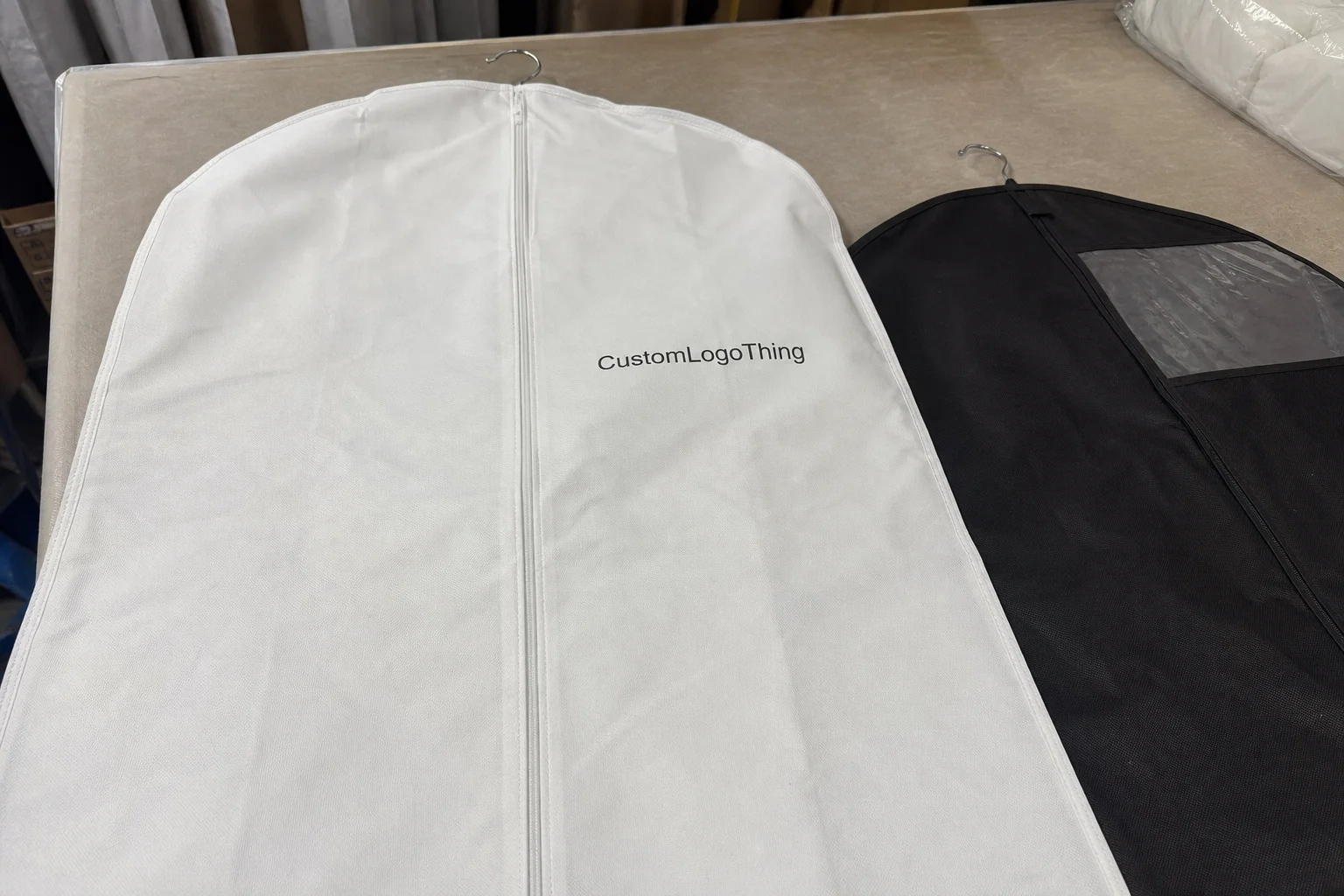
A basic cover can keep dust off a hanger, but a purpose-built garment bag is shaped around the clothing itself. A suit coat needs a different profile than a long dress. A hospitality uniform program has different needs than a boutique bridal order. Even the same coat may require different construction depending on whether it will stay in a closet, travel on a truck, or move through a high-volume back room.
That matters because apparel damage is often subtle. A slight shoulder crush, a wrinkle set during transit, or a scuff from rubbing against another hanger can lower perceived value before the item is even worn. The repair work is not always expensive in isolation, but it adds up fast when it happens across a season’s worth of orders.
Custom made garment bags also support the brand side of the equation. Print placement, opacity, surface finish, and window layout change how the item is perceived before the bag is opened. A clean logo on the right material can make packaging feel intentional; too much decoration can do the opposite. For premium apparel, presentation is part of the product experience, not a separate layer.
There is another practical benefit that buyers often care about more than branding: standardization. When staff pack the same garment type into the same size bag every time, mistakes drop. Closet storage becomes neater, warehouse handling gets more predictable, and returns are easier to manage. In a business setting, consistency is a form of protection.
That is also why the bag should be matched to the use case. A retail display bag does not need the same construction as a shipping bag. A reusable closet bag needs different closure durability than a one-way delivery cover. The more precisely the bag fits the application, the less waste you get from overengineering or premature failure.
How custom garment bag construction works
Most garment bags are built from a limited set of materials, but those materials behave differently in real use. LDPE is common for economical protection because it is flexible, easy to convert, and available in many thicknesses. PEVA tends to have a cleaner, softer feel and is often chosen for reusable closet storage or mid-tier presentation. Nonwoven laminated material usually reads as more premium and can be a stronger choice when the bag is expected to be handled often. Clear PVC-style options show the garment well, though they are not right for every buyer because of odor, weight, and end-of-life considerations.
Construction usually starts with the film or fabric spec, then moves into print planning and conversion. The bag may be cut, sealed, gusseted, printed, and then fitted with a closure such as a zipper, snaps, or hook-and-loop. Handle punching, hanger openings, and reinforced top sections come after that, depending on the machine setup and the style. A plain flat cover is faster to produce than a zipper-front garment bag with side gussets and a shaped opening, and the price difference usually reflects that complexity.
Small usability details matter more than many first-time buyers expect. A bottom gusset lets the garment hang naturally instead of being pressed flat against the film. Vent holes allow airflow, which helps in humid storage conditions or long-term hanging. A hanger opening has to be wide enough for the hanger hardware but reinforced well enough to avoid tearing. Side zippers can improve access, but they also affect how the bag folds and stacks.
For buyers comparing styles, it helps to separate the main use cases:
- Retail display bags focus on appearance, print clarity, and clean finishing.
- Shipping bags need stronger seals, better puncture resistance, and enough room for transit handling.
- Closet storage bags benefit from ventilation, a smoother drape, and a closure that can be reused without wearing out quickly.
- Dry-cleaning delivery bags usually need quick packing, repeatable sizing, and easy handling across many units.
If the garment bag is part of a broader packaging program, keeping it visually aligned with other materials helps. Matching the bag style with tissue, hangtags, inserts, or Custom Packaging Products creates a cleaner system than mixing unrelated finishes and print styles.
Key specs that affect cost, durability, and presentation
Three specifications drive most buying decisions: thickness, size, and decoration. Each one changes the final price, but each one also changes how the bag performs in the hand and in transit.
Thickness or gauge is usually the first thing buyers ask about. Thinner film reduces unit cost, while heavier material improves puncture resistance, seam strength, and the way the bag hangs. For simple dust covers, a lighter gauge can be enough. For repeated handling or shipping, a heavier specification often pays for itself by reducing tears around seams, hems, or zippers. The exact gauge depends on the material, so a useful quote should state the supplier’s own measurement method rather than assuming all films compare directly.
Dimensions have to match the actual garment, not just the hanger. Shoulder width, sleeve bulk, hem length, and garment depth all affect the finished size. A slim shirt cover may only need a small amount of extra room, while an outerwear bag may need both added width and a deeper gusset. If the bag is too tight, wrinkles show up quickly. If it is too large, material cost rises and the bag becomes awkward to store or carry.
Print can be simple or extensive. A single-color logo usually costs less than a full-coverage design, especially on clear or translucent material where registration has to be controlled carefully. More print colors increase setup time and usually increase waste during startup. For many buyers, restrained branding looks better than filling the entire surface, especially when the garment is meant to remain the focal point.
Closures and hardware deserve their own line in the spec sheet. Zippers vary in smoothness and durability, snaps need the right spacing and pull strength, and hook-and-loop can work well for repeated access but may not feel as refined. The same is true for hanging features. A reinforced hanger slot, carry handle, or top loop changes both the way the bag functions and the way it is priced.
Surface finish matters too. Matte finishes often read as softer and more premium. Gloss surfaces can make color pop, but they may show scratches more easily. Anti-static performance can matter when garments cling or when the bag will be used in dry conditions. Venting becomes more important if the bag will hold clothing for a long period rather than a short transfer.
| Spec | Lower-cost option | Higher-performance option | Typical effect |
|---|---|---|---|
| Material | LDPE | Nonwoven laminate or PEVA | Changes look, feel, and reuse potential |
| Thickness | Lighter gauge | Heavier gauge | Affects puncture resistance and drape |
| One-color logo | Full-coverage branding | Impacts setup cost and visual impact | |
| Closure | Simple snap or open top | Zipper with reinforced track | Changes ease of use and unit cost |
For buyers who care about supply-chain standards, references from organizations such as ISTA can be helpful when transit stress is part of the evaluation, and FSC matters if paper components or cartons are included in the packaging system. Those standards do not define garment bags on their own, but they help frame the rest of the packaging environment.
Custom made garment bags pricing and MOQ basics
Pricing usually comes down to five variables: material, size, thickness, print coverage, and quantity. Special hardware such as zippers, reinforced edges, hanger loops, or custom pulls raises the cost further. In most cases, the unit price drops as volume increases because setup and changeover costs are spread across a larger run.
MOQ, or minimum order quantity, is the point where a production run becomes efficient for the supplier. That number varies by material and construction, and it can feel high for a small seasonal order. For uniform programs, hospitality use, or repeat brand packaging, MOQ may be easier to absorb because the bags are part of an ongoing system rather than a one-time purchase.
Setup costs matter more than many buyers expect. Printing plates, cutting dies, zipper tooling, and sample runs can change the economics of the order. A plain unprinted cover may have a relatively low barrier to entry, while a fully branded bag with multiple print colors and a custom zipper pull can create a much larger upfront cost. Comparing two or three versions is often the fastest way to understand where the money is going.
A useful quote comparison usually includes these three paths:
- Version A: standard material, simple logo, open top or basic closure
- Version B: heavier material, reinforced zipper, clearer branding
- Version C: premium finish, full print, custom handle or window
Buyers should also ask what is included beyond the unit price. Sample development, freight, carton packing, and any special folding or labeling requirements can change the total cost more than expected. A quote that looks strong on paper can become expensive if the receiving team has to rework the cartons or repack the bags on arrival.
For planning purposes, it is usually better to think in ranges than to chase a perfect per-unit number. A plain high-volume garment bag often sits in a lower unit-cost band, while a thicker, printed, or reusable version costs more because the material and conversion steps are more involved. The best quote is not always the cheapest one; it is the one that matches the actual job.
Process and timeline from artwork to production
The normal workflow starts with inquiry, then moves to spec review, quote, artwork proofing, sample approval, production, quality checks, packing, and shipment. The process sounds linear, but delays usually happen earlier, when the buyer is still refining dimensions, closure type, or print layout after the quote has already been prepared.
Artwork problems are common. A logo may be too close to the seam, the bleed may not be set correctly, or the file may not contain enough detail to show how the print will sit on translucent material. Clear or semi-clear bags require extra attention because registration and visibility can shift once the design is applied to the finished surface. Clean files and a complete spec sheet save time later.
Lead times depend on complexity. Plain bags generally move faster than highly printed or heavily customized versions, and a simple flat conversion usually turns around more quickly than a bag with gussets, a zipper, and premium finish details. A straightforward order is often measured in business days after proof approval, while more complex builds can take longer because of setup, sample review, and quality checks.
Approval points matter because production settings are locked in once film, plates, cutting tools, or sealing dimensions are confirmed. If the buyer changes width or print placement after tooling is ready, time and cost can both reset. That is why good suppliers push for clarity early. It is not bureaucracy; it is how they avoid making the wrong thing at volume.
Rush orders are possible in some cases, but they are limited by material availability, machine scheduling, and transit time. A rush does not cancel the realities of tooling or printing setup. If the correct film is not in stock, or the design needs new plates, the schedule still has to reflect that. Buyers who need speed should say so immediately and ask which specs can be accelerated without reducing fit or print quality.
Common mistakes when ordering garment bags
The first mistake is choosing the wrong size. A bag that fits the hanger but not the garment compresses shoulders, folds sleeves into awkward angles, and creates wrinkles in the places buyers notice first. Oversizing has its own cost. It wastes material, raises the price, and makes the bag harder to fold or store.
The second mistake is buying on price alone. A very low quote may hide thinner film, weak closure parts, or poor print durability. That may be acceptable for a one-time cover, but not for repeated handling or shipping. If the bag is part of a retail packaging program, the cheapest option can turn into the most expensive one once rework and damage are counted.
Ignoring the environment is another common miss. Humid storage needs different material behavior than a dry back room. Dry-cleaning delivery has different handling pressure than boutique presentation. Shipping has different demands than closet storage. Custom made garment bags should match the conditions they will actually face, not just the visual style a buyer prefers.
Artwork errors are also easy to make. Buyers sometimes send a logo file without confirming bleed, print limits, or exact placement on the finished bag. That can produce surprises when a mark falls into a seam or becomes too faint on translucent material. A simple proof review catches most of those problems before production starts.
Skipping a sample is the last big risk, especially when the bag has unusual dimensions, a zipper, or a premium finish. Even a basic prototype can reveal issues with drape, opening size, handle placement, or closure alignment long before volume production begins. One sample costs less than one wrong run.
Expert tips for getting the right fit and finish
Start with the garment, not the bag. Hang the actual item, then measure the width, total length, and the bulk at the shoulders or hem. If the garment is padded, layered, or unusually structured, leave enough room for the fabric to hang without being squeezed into a tight sleeve.
Match the material to the use case. Lightweight covers are usually fine for short-term retail use. Reusable closet storage may call for a cleaner-feeling material and a stronger closure. Protective shipping often needs heavier film, better sealing, and fewer exposed edges. The right answer is rarely “the strongest bag possible.” It is the bag that survives the actual handling pattern without adding unnecessary cost.
If the presentation needs to feel premium, ask for a production sample or pre-production proof. Screen images can hide a lot. The same is true for branding choices. Sometimes a restrained logo and a clear viewing window do more for the presentation than a fully printed surface because the garment stays visually dominant.
Request folding instructions and carton counts early. If the receiving team needs bags packed in a particular way, say so before the quote is finalized. That helps avoid repacking labor, crushed folds, or cartons that do not fit warehouse flow. A little planning here prevents a surprising amount of friction later.
For buyers building a wider retail packaging program, it often helps to align garment bags with custom printed boxes, tissue, and inserts so the line feels coherent. The goal is not perfect matching. The goal is a system that feels deliberate and behaves well operationally.
A practical rule holds up across most apparel programs: if the garment is expensive, delicate, or returned often, spend more time on the spec sheet. The bag should protect the item, support the brand, and fit the workflow without creating extra work for staff.
Next steps before you request a quote
Before asking for pricing, gather the basics: garment type, dimensions, material preference, closure style, print needs, target quantity, and delivery destination. The clearer the end use, the more accurate the quote. A capable supplier can still help refine the spec, but they should not have to guess what the bag is supposed to do.
Compare at least two spec options. One can be a standard version, while the other adds thickness, stronger closure hardware, or better print coverage. That side-by-side view makes it easier to see where the money goes and whether the upgrade is worth it. In many cases, a slightly simpler design delivers nearly the same protection at a lower unit cost.
Prepare artwork in the requested format and confirm whether the supplier needs a sample, a prototype, or only a production proof. If internal approvals take time, build that into the schedule instead of compressing it later. That small cushion can prevent a last-minute scramble when the bags are tied to a launch or replenishment window.
A short internal checklist usually covers the decision well:
- Fit: does the bag suit the garment dimensions?
- Appearance: does it match the brand and packaging style?
- Durability: will it survive storage, transport, and handling?
- Budget: does the unit cost fit the program?
- Timeline: does production fit the launch or replenishment window?
When those five points are answered, the quote becomes much easier to judge. That is the most practical way to buy custom made garment bags: not as a generic accessory, but as part of the apparel and packaging system that has to work in real conditions.
What are custom made garment bags used for beyond retail display?
They protect garments during storage, delivery, travel, and repeated handling. They can reduce dust, scuffing, and wrinkle-related rework for suits, dresses, uniforms, and outerwear, while also helping brands standardize packing and presentation.
Which material is best for custom garment bags?
LDPE is common for lightweight, economical protection. Nonwoven or laminated options can feel more premium and work well for reusable applications. The best choice depends on garment weight, desired appearance, and how often the bag will be reused.
How do I estimate the right size for custom made garment bags?
Measure the garment on its hanger, not just the hanger alone. Allow extra width for shoulder shape, sleeves, or bulkier fabrics. Add gusset depth if the garment needs room to hang naturally without compressing the fabric.
What affects the lead time for custom made garment bags?
Material availability, artwork approval, print complexity, and order quantity are the biggest factors. Special closures, custom tooling, or sample revisions can extend the schedule. Plain or simpler bags usually move faster than fully branded or highly engineered versions.
How can I lower the unit cost without hurting performance?
Simplify the print layout and avoid unnecessary hardware. Choose a standard material and size if it still meets the use case. Increase order quantity where possible, since larger runs often spread setup costs more efficiently.
For buyers comparing custom made garment bags across materials, closures, and finish levels, the strongest decision usually comes from fit first, then performance, then branding. That order keeps the bag honest: it protects the garment, fits the operation, and earns its place in the packaging program.


