Two bags can carry the same logo and behave very differently. One keeps its shape, feels solid in the hand, and gets used for months. The other twists at the handles, sags at the base, and disappears after a single trip. That gap is why custom made reusable bags need more than artwork approval. They need a real spec. Material choice, seam strength, handle style, print method, and finishing all affect whether the bag earns repeat use or gets treated like disposable packaging with a logo on it.
From a packaging buyer’s point of view, these bags sit between product packaging and branded packaging. They might be used for retail carryout, grocery programs, trade shows, sample kits, or premium shopping orders. The same basic rule applies in every case: the bag has to look good, hold weight, and survive more than one trip. A buyer comparing Custom Packaging Products should treat the bag as part of the full carry and unboxing experience, not as a stray promotional item.
The useful questions are simple. What should the bag do, what should it cost, and how long should it last? Once those answers are clear, the rest of the decision becomes easier. The buyer can then choose a bag that fits the use case instead of chasing the cheapest-looking quote.
Why small details decide whether a bag gets reused
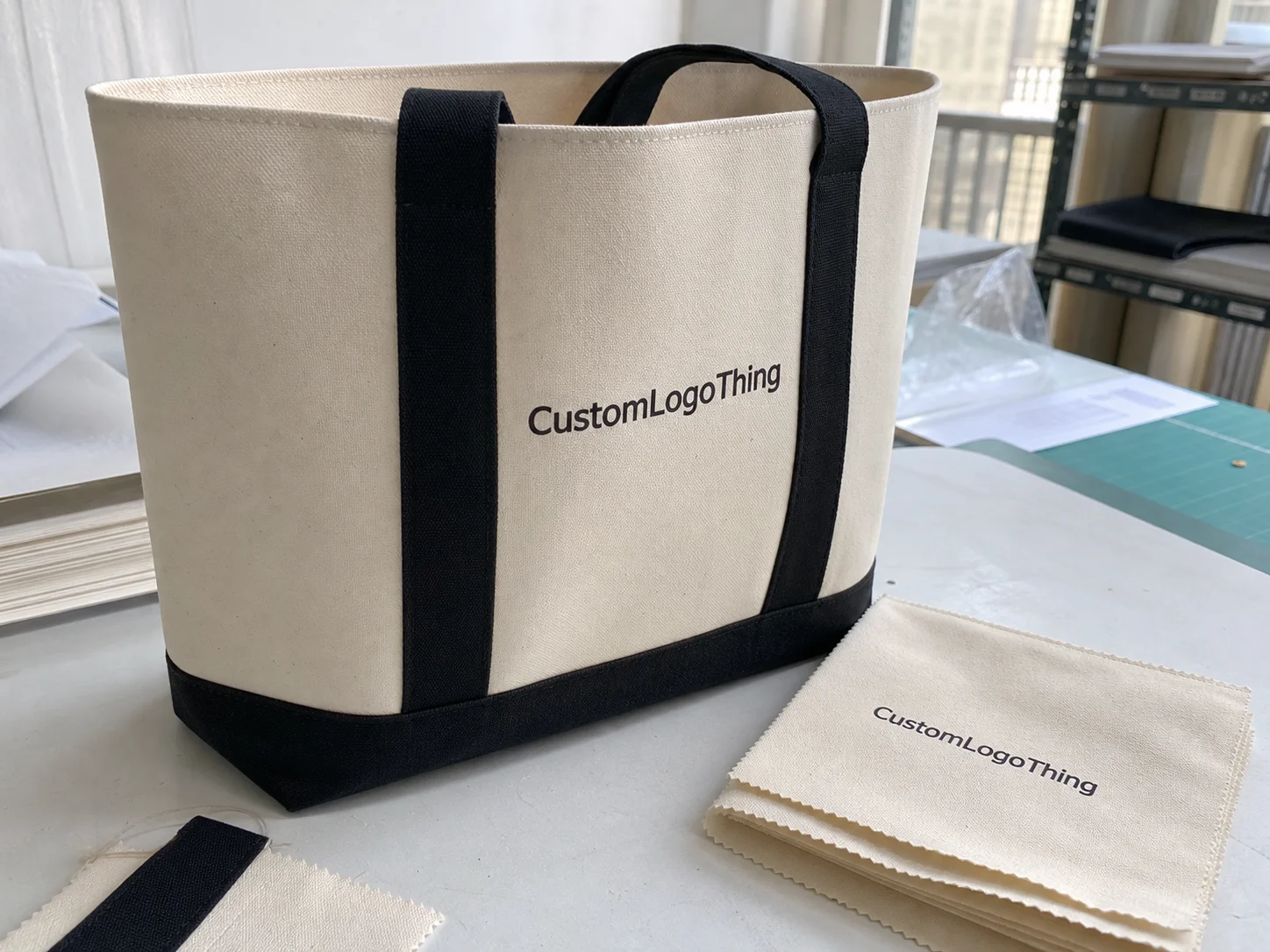
Most bag failures are not dramatic. They start with one detail that looked harmless during quoting. A narrow handle digs into the hand. A weak seam splits after a heavier load. Thin film wrinkles enough that the print looks cheaper than the artwork did on screen. Buyers often focus on the logo and miss the fact that the logo is only one part of the final object.
A reusable bag is repeated-use packaging. That means the spec has to balance appearance, durability, and cost. If the bag is intended for grocery-style use, a laminated woven polypropylene build may be the right fit. If it is for lightweight retail giveaways, nonwoven polypropylene can be a practical middle ground. If the goal is a more polished retail presentation, heavier stock, reinforcement, or a paper-look construction may be worth the added cost.
Most buyer scenarios fall into a few buckets. Some bags need to move merchandise from store to car. Others need to hold event materials, samples, or collateral without tearing at the seams. Some need to support a cleaner retail packaging program where the bag itself becomes part of the brand experience. In each case, the wrong material choice can make the bag feel disposable even if the print looks good.
A reusable bag is only as strong as its weakest detail. If the handles, gusset, or stitch line cannot support the actual load, the print will not rescue it.
That is why a good spec starts with use case, not decoration. Once the buyer knows whether the bag needs structure, water resistance, a higher-end finish, or simply a clean branded carry solution, the rest of the decisions become much more grounded. If the bag is part of a larger kit, it is worth reviewing it alongside other Custom Packaging Products so the print style, color, and finish feel consistent across the program.
How the bag is built: materials, panels, handles, and print
The construction choices determine whether a bag just looks acceptable on a proof or actually holds up in use. The most common starting point is nonwoven polypropylene. It is light, economical, and easy to decorate. Woven polypropylene adds strength and a more technical feel. Laminated surfaces improve scuff resistance and make graphics pop. Heavier plastic structures, paper-look builds, or specialty carriers can be better when the bag needs a more premium retail face.
Panels matter just as much. Side gussets give width without making the bag boxy. Bottom gussets help the bag stand and spread the load. Stitching, heat sealing, and welded seams each change the way stress moves through the body. A stitched bag can be reliable if the seam allowance, thread count, and reinforcement are right. A heat-sealed bag can work well for compatible film structures, but only if the material supports the seal. None of that is obvious on a mockup, yet it drives actual performance.
Handles deserve more attention than they usually get. Die-cut handles are simple and inexpensive, but they can feel rough if the opening is too small or the edge finish is poor. Loop handles and webbing handles usually feel more substantial. Reinforced handles are often worth the cost when the bag is meant to be reused many times. Handle length matters too: too short and the bag rides awkwardly; too long and it swings into the body during carry.
Print method affects both look and cost. Flexographic printing can be efficient for larger runs with straightforward graphics. Screen printing offers strong opacity and good color coverage on some materials. Full-surface decoration, especially on laminated or higher-end structures, can create a stronger retail presentation, but it usually comes with higher setup expectations and tighter artwork requirements. The same logo can read very differently depending on the bag surface and decoration method.
| Bag type | Typical use | Common strengths | Typical price range at 5,000 pcs |
|---|---|---|---|
| Nonwoven polypropylene | Retail giveaways, light shopping | Low unit cost, flexible, easy to brand | $0.28-$0.65 |
| Woven polypropylene | Heavier carry, repeated use | Better tear resistance, stronger body | $0.45-$0.95 |
| Laminated woven polypropylene | Retail packaging, premium promotions | Water resistance, sharper graphics, cleaner wipe-down | $0.65-$1.35 |
| Paper-look reusable bag | Upscale retail presentation | Premium appearance, brand-forward finish | $0.80-$1.60 |
Those ranges are only a starting point. Size, handle build, print coverage, and freight can move the final number quite a bit. Still, they give a buyer a realistic frame for comparing options instead of guessing from one quote. For branded packaging programs, that is more useful than chasing the lowest line item.
Material choices and finishing details that change performance
The best material choice depends on how the bag will be used, not on what sounds strongest in a sales conversation. A lighter construction lowers unit cost and shipping weight, which matters on large programs. A heavier or reinforced construction usually improves hand feel, load capacity, and the chance that the bag will be reused enough to justify the spend. If the goal is longer life, it is usually smarter to improve the seams and handles before overspending on cosmetic upgrades.
Water resistance becomes important faster than many buyers expect. Grocery items leak. Beverage condensation happens. Event materials get handled in parking lots, on sidewalks, and in crowded booths. A wipe-clean or laminated surface can keep the bag looking presentable longer, especially in retail packaging or outdoor promotional use where scuffing and moisture are common. The same logic applies to printed surfaces: if the bag will be wiped down often, choose inks and finishes that can tolerate that kind of use.
Closures and finishing details also change the life of the bag. Zippers, snaps, hook-and-loop, edge binding, and hem reinforcement all add function, but they also add steps, labor, and cost. The key is to match the finish to the use case. A zipper may make sense for a premium reusable tote or a carry bag for high-value merchandise. An open-top build may be perfectly fine for a value-driven giveaway, as long as the seam strength and handle attachment are designed properly.
Sizing is where many orders lose efficiency. A bag that is too large wastes material, increases freight weight, and can feel floppy if it does not carry enough contents. A bag that is too small creates annoyance at the point of use and can lead to damage when items are forced inside. Width, depth, and handle drop should be chosen around the real product mix, not an arbitrary visual preference. For packaging design, that one decision often separates a useful carrier from a branded object that never gets reused.
For buyers who care about sustainability messaging, material selection can also support the story. FSC-certified paper components matter when the design uses paper-based elements, and external guidance from groups like FSC helps separate credible sourcing claims from generic green language. For return logistics, reuse rates, and waste-reduction thinking, the EPA’s packaging and materials resources are also a useful reference: EPA recycling guidance.
Production steps and lead time from quote to carton pack
The production path is straightforward on paper, but the schedule can drift if the spec is incomplete. A clean quote starts with the basics: finished size, material, handle style, print coverage, decoration method, quantity, and delivery timing. If any of those pieces are vague, the quote is a guess. That is the first place buyers lose time on custom made reusable bags.
Artwork prep is another common source of delay. Files need to be checked for resolution, color separation, bleed, and placement. If the bag has a gusset, a wraparound print, or multiple panel placements, the print area needs to be mapped correctly before proofing. Missing dielines, low-resolution logos, and late copy edits are the usual reasons a job slows down before production even starts.
Once the proof is approved, the lead time depends on how the bag is built and decorated. Simple, repeatable specs with standard materials can often move in about 12 to 15 business days after approval, though the actual schedule depends on factory load and shipping mode. More complex builds, special coatings, multi-color decoration, or custom tooling can extend the window. Buyers who need bags for a launch or event should build in buffer time instead of assuming the fastest path will hold.
After production begins, there are still several checkpoints. Manufacturing has to stay consistent. Inspection should catch seam issues, print shifts, and handle attachment problems. Counting and carton packing need to be accurate, especially on large runs where one carton short creates downstream problems. Freight booking also matters, because a finished order can still miss its target date if shipping space is tight or customs paperwork is incomplete.
For buyers who compare packaging workflows across categories, the logic is the same as ordering Custom Printed Boxes or other retail packaging components: the earlier the spec is finalized, the fewer surprises appear near the end. That is one reason buyers often keep a consistent internal checklist for Custom Packaging Products across bag programs, box programs, and promotional kits.
Pricing, MOQ, and unit cost: what actually drives the quote
Price is usually the easiest number to ask for and the hardest number to interpret. Material thickness, bag size, handle style, print colors, finishing details, and quantity all push the unit cost up or down. A small bag with one-color print will almost always cost less than a large laminated tote with a reinforced handle and full-coverage graphics. That sounds obvious, but many buyers still compare quotes as if size and construction were interchangeable.
MOQ, or minimum order quantity, is not just a sales rule. It usually reflects setup labor, print prep, cutting, sewing, folding, and carton configuration. If the bag requires special dies, color matching, or a complex decoration process, the minimum tends to rise because the setup cost has to be spread across enough pieces to make the run workable. Simple specs can support smaller runs more easily than complex ones.
There is a reliable pattern in pricing: larger runs usually lower the unit cost because setup is spread over more bags. Smaller runs can still make sense, but only when the design is simple and the print coverage is limited. If a buyer wants a premium finish on a short run, the cost per unit can climb quickly. That is not a markup trick; it is the math of labor and setup.
Here is a practical way to look at cost drivers:
- Material: nonwoven PP is usually the low-cost baseline; laminated or woven constructions cost more.
- Size: larger panels use more material and add freight weight.
- Handles: webbing, reinforced, or long-drop handles add labor and often improve usability.
- Print colors: more colors usually mean more setup and more prepress work.
- Finish: zippers, snaps, binding, or special coatings add both time and cost.
- Quantity: higher volume generally improves the unit rate.
Unit price is only part of the story. Freight, cartons, and rush charges often change the real budget more than a small difference in the base quote. A buyer who focuses only on ex-factory price may be surprised later by shipping weight or packaging requirements. Total landed cost is the cleaner way to compare suppliers, especially when the bags are part of a broader retail packaging rollout or a seasonal campaign.
The best quotes are the ones that separate the variables clearly. If one option is a plain nonwoven tote and another is a reinforced laminated build, the buyer should be able to see exactly why the price moved. That transparency makes it easier to Choose the Right bag instead of the cheapest-looking number.
Common mistakes that make reusable bag orders more expensive
The most expensive mistake is choosing the bag before defining the use case. Buyers sometimes start with a material they like, then discover it is too light for the load or too heavy for the budget. The better sequence is simple: define the contents, weight, carry distance, and reuse expectation first, then select the construction. That prevents both overbuilding and underbuilding.
Artwork problems are another recurring issue. Oversized files, missing dielines, and last-minute copy edits all slow proofing. Each revision creates more prepress work and can push the schedule back a few days. On a production calendar that already includes cutting, printing, sewing, inspection, and shipping, those delays add up quickly. A clean art package saves money because it reduces back-and-forth.
Quantity mistakes can hurt just as much. Some buyers order too few bags for the campaign and then have to rush a second run. Others order too many and tie up budget in inventory that never moves. A better approach is to estimate distribution carefully and then compare a few volume options side by side. On some specs, moving from a low quantity to a slightly higher run can reduce the unit cost enough to justify the extra inventory.
Skipping a sample or mockup is risky when the bag must fit merchandise, stand upright, or feel premium at point of sale. A sample does not just confirm appearance. It shows how the handle feels in the hand, whether the base sits properly, and whether the print reads correctly at full size. For retail packaging programs, that test is often worth more than another round of email discussion.
Two more problems show up often in branded packaging work. First, buyers forget to align the bag with the rest of the kit, so the color and finish clash with the box or insert. Second, they approve a decoration layout that looks balanced on screen but feels crowded on the finished bag. Both issues are avoidable with a better spec review and a more honest proof check.
Next steps for a cleaner spec and faster approval
If you want a cleaner quote, start with a short internal checklist. Define the use case, target weight, quantity, decoration, and delivery date before asking for pricing. Gather the artwork files, brand colors, and any packaging constraints so the supplier can quote a realistic build instead of a rough concept. That alone removes a lot of back-and-forth.
It also helps to compare two or three spec options instead of asking for one perfect answer. A small change in material thickness, handle style, or print coverage can improve durability without adding a dramatic amount to the budget. Buyers who review options this way usually make better decisions because they can see the tradeoff between appearance, strength, and cost.
If the bags are part of a larger retail or promotional rollout, keep the timeline anchored to the full fulfillment window. Proof approval, production, freight, and packing all need margin. That is especially true for seasonal launches, event kits, and store openings where late delivery has real consequences. A bag that arrives on time and holds up well supports the brand better than a flashy sample that never gets through a busy week of use.
For teams buying custom made reusable bags as part of a broader packaging program, the smartest move is usually the simplest one: lock the spec early, approve the proof carefully, and leave enough time for production and freight. That is how the order lands cleanly, and it is how the bag becomes a useful part of the brand rather than another short-lived giveaway.
FAQ
What materials are best for custom reusable bags?
The best material depends on weight, appearance, and reuse goals. Woven or nonwoven polypropylene is common for value-driven orders, while heavier laminated options work better when structure, wipeability, or a more premium look matter. If the bags will be used around groceries, outdoors, or in spill-prone settings, choose a surface that is water-resistant or easy to clean.
What is the usual minimum order for custom reusable bags?
MOQ varies by construction and print method, but it is usually tied to setup labor, decoration prep, and packaging requirements rather than a fixed industry number. Simple designs and standard materials can support smaller runs more easily than complex builds with multiple colors or special finishes.
How do I estimate the cost of custom reusable bags?
Start with material, size, print colors, handle style, and quantity, since those are the biggest unit-cost drivers. Then add freight, cartons, and any rush charges so you understand the real landed cost instead of relying on the base price alone.
How long does production usually take?
Lead time depends on proof approval speed, material availability, and how complex the bag is to build and decorate. The fastest orders are simple, repeatable specs with complete artwork and fast approval, while custom structures or special finishes take longer.
How can I make sure my custom made reusable bags feel durable?
Prioritize reinforcement at the handles and seams, because those are the first failure points in real-world use. Match the material thickness and bag size to the actual items being carried so the bag is not overloaded from day one.

