Custom Made Tote Bags: Buy Smarter, Brand Better
Custom made tote bags are not disposable branding. They get carried to work, folded into handbags, used for groceries, stuffed with samples, notebooks, chargers, and whatever else a person needs to haul on a given day. That is why they outperform many promotional items: a tote can stay in circulation long after the event table is cleared and the banners are packed away.
That repeated use changes the economics. A cheap item that disappears into a drawer has little value after the first handoff. A well-made tote keeps your logo visible, but more importantly, it keeps the brand attached to something useful. In packaging terms, that matters. People remember what helps them carry their life, not what clutters their desk.
If you are comparing tote bags with cartons, mailers, inserts, or other branded packaging, the core decision is the same: choose the format people will actually keep using. Tote bags often sit at the intersection of retail packaging, gift packaging, and everyday carry, which is why they remain a practical buy for brands that want function to do some of the marketing work.
Why custom made tote bags work harder than most promo items
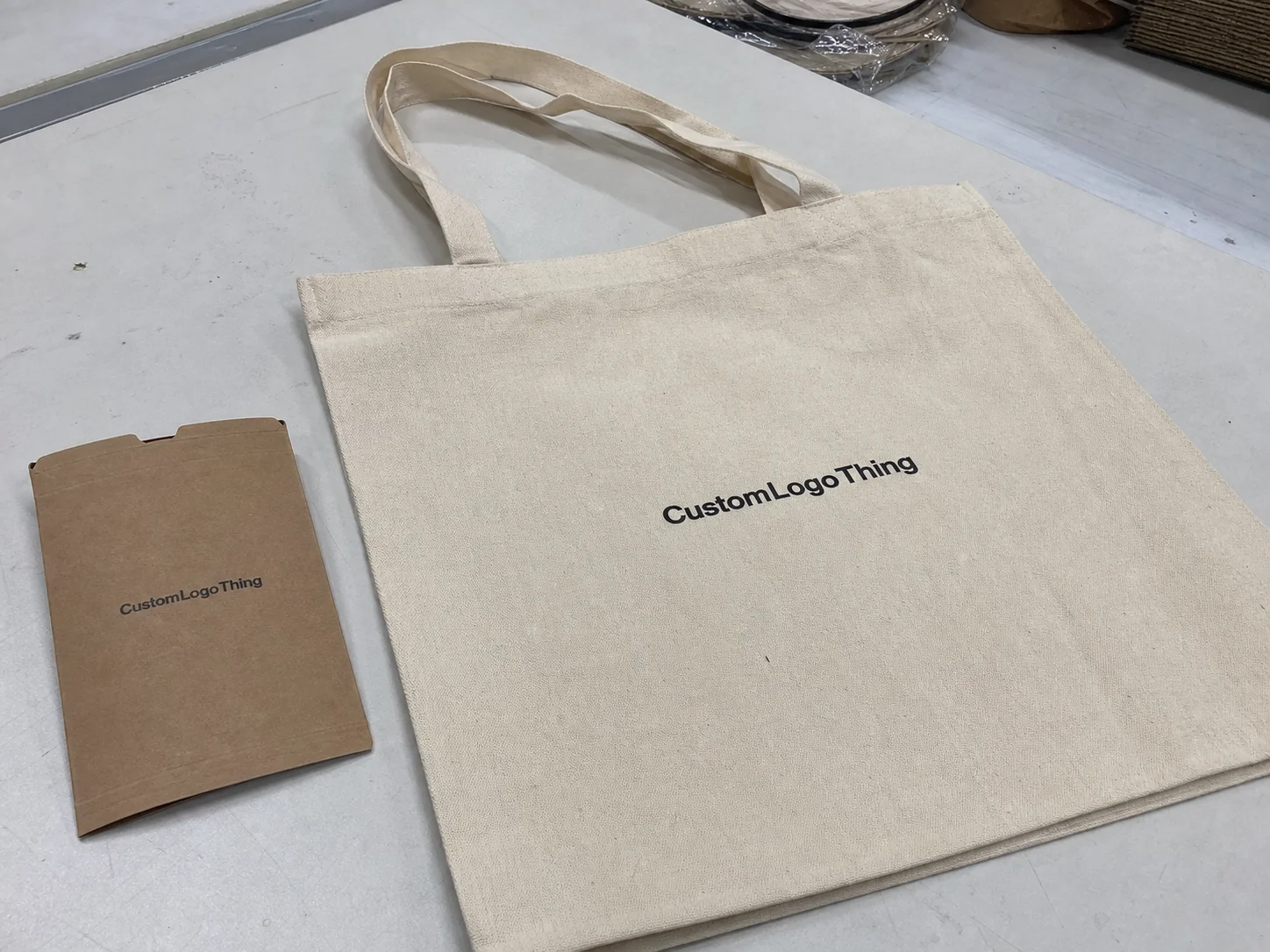
A tote is simple by design, and that simplicity is the selling point. There is no battery, no app, no setup, and no learning curve. A person either uses the bag or they do not. If the size is right, the handles are comfortable, and the print is clean, the bag slips into daily life instead of fighting it.
That kind of utility is hard to buy elsewhere. A tote used thirty times delivers more exposure than a cheaper item that only works once. The numbers are not exact because usage varies, but the pattern is consistent: the more practical the product, the longer the brand stays visible. For trade shows, retail counters, welcome kits, and event handouts, that visibility matters more than novelty.
Custom made tote bags also pull their weight across different jobs. Retail brands use them as purchase bags. Events use them for kits and literature. Some businesses sell them as a standalone product, where the bag itself becomes part of the margin rather than just a carrier. That flexibility is one reason buyers return to them even when they are reviewing other packaging options.
A tote that gets used again and again is better marketing than a cheaper bag that tears before the week is over.
The buyer’s mistake is usually not the idea. It is the spec. People approve a mockup that looks good on screen, then discover the handle length is wrong, the print is too small, or the fabric collapses when the bag is actually loaded. None of that helps package branding. A tote has to look good, yes, but it also has to hold up under real use.
Seen from an E-E-A-T angle, the product is easy to underestimate. It is not complicated machinery, but it does have production constraints. Fabric weight, stitch count, print coverage, and seam construction all affect how the finished bag behaves. That is why a bag can look premium in a digital proof and still feel ordinary in hand if the specs are thin.
How they are produced from artwork to delivery
The production flow is usually orderly: quote, spec confirmation, artwork check, proof, sampling if needed, printing, finishing, packing, and shipping. The order matters. If the buyer keeps changing dimensions after the proof is approved, the schedule slips. That is not a supplier issue so much as a production reality.
Four details should be settled early: size, material, handle length, and print method. Quantity matters too, because it affects unit cost and the production slot available. A clean spec sheet saves time, reduces back-and-forth, and prevents the common situation where everyone agrees on the idea but not on the actual bag.
Different decoration methods lead to different workflows. Single-color screen print is usually the most direct option for bold logos and strong contrast. Heat transfer can handle more detailed graphics or smaller runs, though results depend on the surface and finish. Full-color digital or transfer-based methods open the door to gradients and complex artwork, but they also raise the cost and can be less forgiving on textured materials.
Most delays come from a handful of avoidable issues:
- Artwork is not print-ready.
- The buyer changes size after proof approval.
- The selected material needs different handling or ink.
- The file resolution is too low for production.
That last point deserves plain language. A logo saved for a website is not automatically ready for print. Low-resolution artwork often looks fine on a laptop and then falls apart on fabric, where edges blur and fine text disappears. If the file cannot hold up at production size, the proof stage is the moment to catch it.
A realistic timeline often looks like this:
- Day 1 to 2: quote request and spec alignment.
- Day 2 to 4: artwork review and digital proof.
- Day 4 to 7: revisions, if needed, and proof approval.
- Next 5 to 15 business days: production, depending on material and print complexity.
- Final step: packing, carton labeling, and transit.
That schedule can shrink when the spec is standard and the artwork is final. It can also stretch if you want custom sizing, special finishes, or a rush run during a busy season. Custom tote orders are not unpredictable, but they are sensitive to last-minute changes. If a launch or event depends on the bags arriving on time, build in margin.
Cost, pricing, MOQ, and unit cost: what really changes the quote
Pricing is driven by a small set of variables. Material is the biggest one. Size comes next. After that, the main cost drivers are print colors, print coverage, sides printed, handle construction, and finishing. A simple one-color tote on a standard body is a very different quote from a custom-sized bag with full-color print on both sides and reinforced seams.
MOQ, or minimum order quantity, is the point where the factory can produce the run economically. Lower quantities usually cost more per unit because setup time is spread across fewer bags. That does not make small runs bad. It just means the math is honest. A 250-piece order will not price like a 5,000-piece order, even if the artwork is identical.
Buyers should also separate unit cost from total project cost. Setup charges, screen fees, plate charges, sampling fees, and shipping can change the actual spend more than the product price alone suggests. A quote that looks low on the first line can become less attractive once the full order is tallied.
For a practical buying frame, these material types behave roughly like this:
| Option | Typical use | Relative unit cost | What you get |
|---|---|---|---|
| Non-woven tote | Events, giveaways, mass handouts | Low | Lightweight, economical, decent print area |
| Cotton tote | Retail packaging, welcome kits | Medium | Soft feel, reusable, better perceived value |
| Canvas tote | Resale, premium branded packaging | Medium to high | Heavier body, stronger structure, longer life |
| Laminated woven tote | Trade shows, shopping, premium giveaways | Medium to high | Wipeable surface, stronger structure, vivid graphics |
As a rough market frame, a basic non-woven tote at higher volumes may land around $0.60 to $1.50 per unit. Cotton and canvas often sit closer to $1.50 to $4.00 or more, depending on size, construction, and print complexity. Small runs move those figures up fast. If you need only a few hundred bags, the setup cost has less room to spread out.
The better comparison is not just price per bag. It is cost per use. If a $2.25 tote is reused twenty or thirty times, it can be better value than a $1.10 bag that looks tired after one event. That calculation becomes even more relevant when the tote sits alongside premium packaging or a product launch where the bag needs to support the brand rather than distract from it.
There is also a practical truth many buyers learn after a few orders: the cheapest quote often cuts corners somewhere visible. It may be thinner material, weaker stitching, or print that looks acceptable until the bag is packed. If the tote is meant to be kept, not discarded, paying a little more for structure is usually the more rational move.
Choosing the right spec: material, size, handle, and print method
Material affects feel, weight, durability, and the overall impression the bag gives off. Cotton is familiar and easy to brand. Canvas is heavier and usually feels more substantial. Non-woven is the workhorse option for promotions and high-volume distribution. Laminated woven materials add structure and wipeability, which helps if the bag will be used around food, cosmetics, or wet transit conditions.
Recycled-content options exist too, but buyers should check the actual composition rather than relying on broad green language. An “eco” label does not mean the same thing from one factory to the next. If sustainability claims matter to the brand story, ask for specifics on fiber content, finish, and any supporting documentation that goes with the order.
If the tote is part of a broader sustainability message, it helps to keep claims grounded. For paper or wood-based packaging elements, FSC certification remains a useful reference point. For recycling and reuse messaging, the EPA recycling guidance provides a straightforward baseline. For distribution and transit durability, ISTA testing standards matter when bags are packed into master cartons and sent through shipping networks. Different category, same principle: claims should survive real handling.
Size should match the contents, not the mockup. A bag that is too small makes the contents bulge and looks awkward. A bag that is too large wastes material and can feel underbuilt if the load is light. If the tote will carry catalogs, apparel, boxed sets, or sample kits, measure the actual contents first and choose around that.
Handle length is not just a visual detail. Short handles are fine for hand carry. Longer handles allow shoulder carry, which is a real usability upgrade for trade shows and retail shopping. Reinforced handles matter when weight goes up. So do stitched seams and gussets. A gusset gives the tote depth, which improves capacity and helps the bag keep its shape.
Print method should follow the artwork, not the other way around. Bold logos with clean edges usually work well with screen print. Fine text, gradients, and multi-color graphics often need a transfer or digital method. If the design uses tiny copy or photo-like detail, check the minimum line thickness before approval. A design can look sharp in a layout file and still fail on fabric because the substrate is too textured or the elements are too small.
A useful shortcut:
- Bold logo, one color: screen print is often the cleanest route.
- Detailed art or gradients: transfer or digital methods may be better.
- Premium retail use: consider heavier fabric, reinforced stitching, and a restrained layout.
- Event giveaway: prioritize readability and a bag size people will actually keep.
Anyone who has ordered custom printed boxes will recognize the logic. The best-looking option is not always the best-performing one. Spec choices should match the content, the distribution channel, and the brand goal. That is the difference between a bag that looks fine in a mockup and one that holds up in the field.
Process and turnaround: how long custom tote orders usually take
Simple orders move quickly when the artwork is final and the specs are standard. A straightforward tote with a one-color logo can often finish in about 10 to 15 business days after proof approval, with shipping time added after production. Fully custom sizing or specialty fabric pushes the schedule further out.
Three things speed the job up. First, send print-ready files rather than editable sketches. Second, approve proofs quickly. Third, avoid unusual specs unless they are genuinely needed. Standard material and standard construction are not exciting, but they reduce friction.
Three things slow it down: revisions after proof approval, custom sizing, and peak-season demand. The third one is the most common surprise because buyers plan around their launch date and ignore the production calendar. The factory schedule does not bend just because the event is close.
Samples and bulk orders are not interchangeable. A sample may take a few days or a couple of weeks depending on the build. Bulk production should start only after the sample or proof is approved. If something is wrong at sampling stage, it should be fixed before the full run begins. Moving ahead to save time usually costs more time later.
If the bags are tied to a launch, seasonal campaign, or trade show, build in buffer time. A practical rule is to leave at least one extra week beyond the vendor’s quoted timeline. That gives room for art changes, transit delays, and the minor production issues that show up even when the order is well managed.
Common ordering mistakes that make tote bags look cheap
The fastest way to make a tote look low-end is to use artwork that was never prepared for print. Blurry logos, tiny text, and poor contrast show up immediately on fabric. If the logo cannot be read from a few feet away, the bag is not doing its job.
Color choice matters too. A logo can disappear on a bag color that looked good on a screen but weak in daylight. Strong contrast usually wins. If the palette is soft, use it with restraint. Minimal layouts often look more premium than crowded ones. That is true for tote bags, custom printed boxes, and most packaging formats that rely on a single surface to carry the brand.
Wrong size is another classic mistake. If the tote is too small, the contents bulge and the bag looks strained. Too large, and the bag can feel empty and underbuilt. Measure the real contents, then choose the bag around them. Starting with the mockup and hoping the product will fit later is backwards.
Weight and construction are easy to overlook because they do not show up clearly in the first proof. Thin fabric, weak stitching, and poorly attached handles can make a good print look cheap the moment the bag is loaded. Buyers tend to focus on the logo because it is visible on screen. The customer focuses on the physical object because they have to carry it.
There is also the temptation to chase the lowest price without checking finishing details. A low quote that fails after a few uses is not a bargain. It is waste. If the tote is supposed to support branded packaging or retail sales, the structure has to match the intended use.
One more issue shows up repeatedly: too much decoration. A tote with every inch covered in copy often looks busy, not premium. The surface area is valuable, but restraint usually makes the brand look more deliberate. A smaller, sharper graphic can outperform a crowded layout.
Expert next steps for ordering without guesswork
Start with the use case. Is the tote for retail sale, an event giveaway, a shipping insert, or an employee kit? That answer determines most of the spec. A resale tote needs more structure and a stronger finish. A giveaway tote can prioritize price and legibility. A shipping insert may need smaller dimensions and simpler printing.
Then choose one main priority: lowest cost, best print impact, or strongest durability. More than one goal is possible, but rarely at the very bottom of the price range. Buyers run into trouble when they expect premium feel, complex artwork, and the lowest unit cost in the same order.
Put the spec on one page. Include size, material, quantity, print colors, handle length, deadline, and the intended use. If the tote is part of a larger packaging program, add that context too. It helps align the bag with other branded packaging items so the final experience feels coherent rather than improvised.
Request two or three comparable quotes. Comparable means the same size, same material, same print method, and same quantity. Otherwise the pricing comparison is meaningless. Ask for total landed cost where possible, not just the factory price, because shipping can change the final number more than buyers expect.
Approve the spec, confirm the artwork, and lock the production slot before the deadline gets close. That approach reduces rework, keeps the timeline honest, and gives you a better chance of receiving custom made tote bags that look intentional instead of rushed.
The short version is plain: Choose the Right bag for the real use, keep the artwork clean, and let the spec do the heavy lifting. That is how custom made tote bags earn their place beside stronger retail packaging, instead of feeling like another forgettable promotional item.
Common questions
What do I need ready before ordering custom made tote bags?
Have your logo file, preferred bag size, material idea, quantity, and deadline ready. If those details are still undecided, start with the use case and a budget range. That is enough to get a useful quote without wasting time.
What is the best material for custom tote bags?
Cotton and canvas feel more premium and work well for retail or resale. Non-woven and laminated options usually cost less and are better for giveaways, events, or high-volume distribution.
Why does the unit cost drop when I order more tote bags?
Setup costs get spread across more bags, and larger runs usually improve production efficiency. The per-bag price comes down because the fixed work is diluted over a bigger order.
How long does the tote bag process usually take?
Simple orders move faster if the artwork is final and the specs are standard. Custom materials, revisions, and busy seasons add time, so plan ahead and leave buffer if the bags support an event or launch.
How can I make custom made tote bags look more premium?
Use a bag color that complements the logo and keep the design clean. If you want a stronger finish, upgrade the material, handles, or print method rather than loading the surface with too much artwork.

