Buyer Fit Snapshot
| Best fit | custom magnetic closure boxes for packaging buyers comparing material specs, print proof, MOQ, unit cost, freight, and repeat-order risk where brand print, material, artwork control, and repeat-order consistency matter. |
|---|---|
| Quote inputs | Share finished size, material target, print colors, finish, packing count, annual reorder estimate, and delivery region. |
| Proofing check | Approve dieline scale, logo placement, barcode or warning zones, color tolerance, and any recyclable or compostable wording before bulk production. |
| Main risk | Vague material claims, crowded artwork, or missing packing details can create delays even when the unit price looks attractive. |
Fast answer: Custom Magnetic Closure Boxes: Costs, Design, and Use should be specified like a repeatable production item. The safest quote includes material, print method, finish, artwork proof, carton packing, and reorder notes in one written spec.
What to confirm before approving the packaging proof
Check the product dimensions against the actual filled item, not only the sales mockup. Ask for tolerance on folds, seals, hang holes, label areas, and retail display edges. If the package carries a logo, QR code, warning copy, or legal claim, reserve that space before decorative graphics fill the panel.
How to compare quotes without losing quality
Compare board or film grade, print process, finish, sampling route, tooling charges, carton quantity, and freight assumptions side by side. A lower quote is only useful if the supplier can repeat the same color, closure quality, and packing count on the next order.
Custom Magnetic Closure Boxes: Costs, Design, and Use
I watched a $0.12 magnet pair change a buyer's mind faster than a $2.40 foil stamp ever could. That is why custom magnetic closure boxes keep getting approved for skincare sets, electronics, PR mailers, and gift-ready retail packaging, even when the budget meeting gets ugly. I saw the same reaction on a factory floor in Shenzhen's Bao'an district, and the magnet snap did more work than the art team expected. That stings a little, but it is true.
In premium packaging, these boxes sit right between Rigid Setup Boxes and book-style presentation boxes. They are not fancy because they shout. They are fancy because they feel controlled. Once a customer gets that clean snap, the product starts looking more valuable before the lid even lifts. That is the trick. No smoke, no mirrors. Just good construction and a closure that lands the way it should.
What custom magnetic closure boxes are, and why they stand out
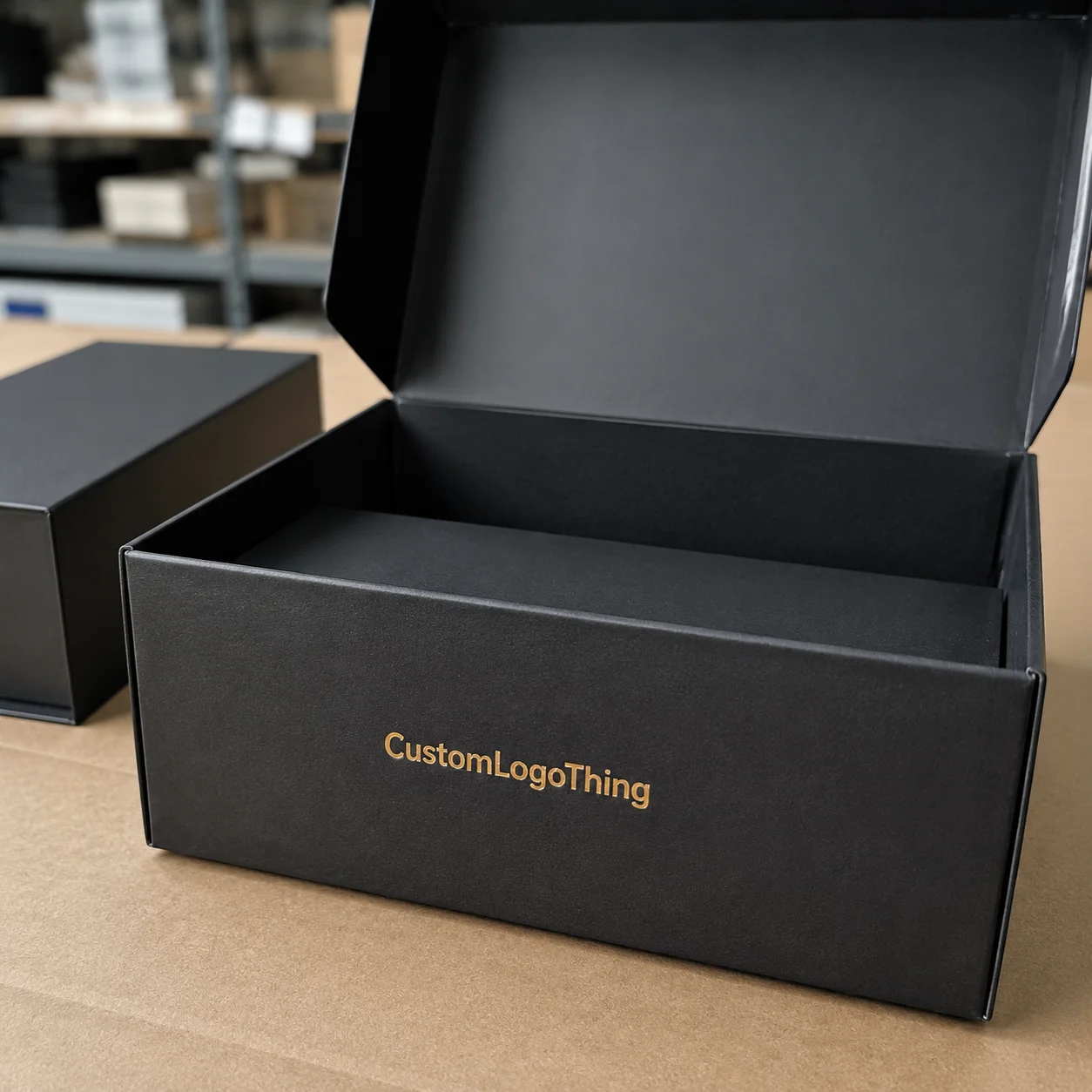
Custom magnetic closure boxes are rigid setup boxes with hidden magnets built into the flap and front wall, so the lid shuts with a clean snap instead of a sloppy tuck. In plain English, they are packaging with manners. Firm. Controlled. Hard to forget. If you have ever opened a premium phone box or a luxury candle set and thought, “Okay, this feels expensive,” you already know the effect. That reaction is not random. It is engineered, usually around a 1.5 mm to 2.5 mm board shell and a magnet pair placed with pretty tight tolerance near the centerline.
Structurally, custom magnetic closure boxes are usually built from 1.5 mm to 2.5 mm greyboard or chipboard, then wrapped in printed paper, specialty paper, or soft-touch laminated stock. A common spec is 2.0 mm greyboard with a 157 gsm C2S wrap, or a premium version with 350 gsm C1S artboard laminated to the board. The shell is rigid, the closure is hidden, and the experience is deliberate. Customers absolutely notice that. They may not know what greyboard is, but they know when a box feels flimsy. And once they feel flimsy, the brand starts looking a little cheap. Brutal, but true.
I use custom magnetic closure boxes for gift sets, cosmetics, apparel kits, corporate PR boxes, premium supplements, and electronics because they give a strong first impression without foam overload or silly gimmicks. One client brought me a $38 serum set that was selling in a plain folding carton with a sticker seal. We moved it into custom magnetic closure boxes with a 120 gsm art paper wrap, a paperboard insert, and a single-color foil mark, and the shelf response changed fast enough that the buyer asked for a second print run within 18 days. That is not magic. That is packaging doing its job. Honestly, the old box looked like it was trying to apologize for existing.
There is a simple reason these boxes stand out in retail packaging: they feel heavier, more protective, and more giftable than standard folding cartons. They also cost more and take more labor, which is why I tell people to use them where the unboxing moment actually matters. If the box goes straight into a warehouse carton and nobody sees it, spend the money somewhere else. Save the fancy box for the place where it can actually earn its keep, like a Sephora endcap, a DTC influencer kit, or a holiday launch in Los Angeles and London.
Inside a typical build, you will find five core parts: the rigid board shell, the wrapped paper exterior, the hidden magnets, the lid or flap structure, and optional inserts. The inserts can be EVA, paperboard, molded pulp, or a custom tray depending on the product and budget. That combination is why custom magnetic closure boxes sit in a different class than standard Custom Printed Boxes; they are not just printed, they are built. A supplier in Dongguan will talk about it in millimeters, not adjectives, and that matters more than people think when the sales team is waving around a mood board like it is a strategy.
Here is the blunt version I give clients during packaging reviews: if your product is a $12 item sold on promo, custom magnetic closure boxes may be too much box for the business model. If your product is a $75 set, an $180 accessory bundle, or a gift item that depends on perceived value, these boxes can pull their weight quickly. Custom magnetic closure boxes are not magic. They are a tool, and like any tool, they make sense only when the margin and the brand story justify them. I have said no to prettier packaging than this when the math was ugly. Nobody loves that conversation, but math does not care about feelings.
How custom magnetic closure boxes work inside the carton
The closure mechanism is simple once you have watched it on a line: one magnet is embedded in the lid, another is buried in the front panel, and the box closes because the magnets find each other rather than because the user has to wrestle with the lid. That alignment creates the snap. When the build is done well, custom magnetic closure boxes shut with a quiet click that feels intentional, not mechanical. There is a big difference between “premium” and “surprisingly annoying,” especially when a customer opens the box at a kitchen table in Chicago or a desk in Singapore.
Magnet strength matters more than most buyers expect. Too weak, and the flap pops open in transit or rattles loose on a shelf. Too strong, and the user has to tug the lid awkwardly, which makes a premium box feel like cheap hardware. I once had a client insist on a stronger magnet because “stronger sounds better,” then watched her own team struggle to reopen the sample after three tries. We changed the pull spec from 0.9 kg to 0.55 kg, and the box immediately felt more polished. Sometimes the “stronger” option is just the more annoying option in a nicer coat.
The build sequence is rigid board first, wrap second, magnets in the structure before the final wrap. That sequence is the whole game. Put the magnets badly and the box may look perfect from the outside but close crooked by 2 mm or 3 mm, which is enough to make custom magnetic closure boxes feel off. A luxury box can survive a weak print file. It cannot survive sloppy magnet placement. The carton will tell on you every single time, especially under a bright LED retail shelf in Tokyo or a warehouse receiving dock in Rotterdam.
Assembly skill is the part buyers underestimate. In our Shenzhen facility, I watched a crew member stop a run because the magnet jig was drifting by less than 1 mm, which sounds obsessive until you see 500 boxes close unevenly. That tiny error becomes a big complaint once the cartons hit a retail shelf. Good manufacturers use placement guides, polarity checks, and pull tests, because custom magnetic closure boxes only work when the hidden parts are exactly where they should be. I respect that kind of fussiness. It saves everyone from expensive embarrassment later.
The customer experiences the result before they see the product. They feel the flap engage, they hear the snap, and they notice the wall thickness before the lid opens. That is why custom magnetic closure boxes are so effective for branded packaging. The box is already telling the brand story while the product is still hidden. Which, frankly, is the whole point. If the packaging has no presence, the product has to do all the heavy lifting from second one.
“We changed the closure from a ribbon tie to a magnetic flap, and the client stopped asking if the box was premium enough. They could feel it before they could argue with it.”
Why do custom magnetic closure boxes cost more?
Pricing for custom magnetic closure boxes starts with the obvious stuff: board thickness, box size, magnet count, insert material, print coverage, and finish. Then the factory adds labor, because these are hand-built in most cases, not punched out like folding cartons. A box with 2.0 mm greyboard, a full-color outer wrap, soft-touch lamination, and a paperboard insert will always cost more than a plain white rigid box with no insert and one small logo. That is not a surprise. That is the invoice explaining itself.
For real-world context, simple runs of custom magnetic closure boxes often land around $1.60 to $2.50 per unit at mid-size quantities. If you are buying 5,000 pieces of a plain printed wrap, the paper component alone can land near $0.15 per unit, but the full rigid structure still adds board, magnet, and labor costs on top of that. Once you add foil stamping, embossing, soft-touch coating, custom inserts, or a two-piece wrapped structure, the price can climb to $4.00 to $6.00+ before freight. I have quoted a 1,000-unit beauty launch at $2.18 per box with paperboard inserts, then watched the same concept jump to $5.14 after the client added spot UV, a satin ribbon, and a denser foam tray. Nobody was shocked except the person who never asked for a full spec sheet. That person usually shows up late and wants miracles on a budget.
Magnets themselves are cheap. The labor is not. A pair of magnets might cost pennies, but positioning them correctly, checking polarity, wrapping corners cleanly, and keeping the lid square all eat time. That is why the true price driver in custom magnetic closure boxes is usually hand work, not the magnet bill. The magnet is the small line item. The human hands are the expensive part, especially in factories around Shenzhen, Dongguan, and Guangzhou where rigid-box work is still done with a lot of manual alignment.
Quantity changes the math fast. At 250 units, setup and sampling can make the per-box cost look painful. At 2,000 units, the same tooling and file prep get spread out, and the rate drops in a way that makes procurement people relax a little. If you are sourcing custom magnetic closure boxes, always ask for price breaks at 250, 500, 1,000, and 2,500 units, because that is where the actual decision points tend to be. Sometimes the difference between two quotes is not the box. It is the volume curve hiding underneath it.
There are hidden costs that show up after people fall in love with the sample. Dieline changes can add a $50 to $150 revision fee. Extra prototypes can add another $40 to $120 each. Freight can dwarf the manufacturing price if the boxes are oversized or the order is moving by air. If the product needs transit testing, you may spend a little more to make sure the packaging survives abuse instead of hoping for the best. For shipping standards, I lean on the guidance from ISTA, especially when the product is fragile or the box is carrying a premium product story.
| Build type | Typical quantity | Unit price range | Best use case |
|---|---|---|---|
| Basic rigid box with magnetic flap | 500-2,000 units | $1.60-$2.50 | Simple gift sets and retail launches |
| Printed rigid box with insert | 1,000-5,000 units | $2.50-$4.00 | Beauty, candles, and branded packaging programs |
| Premium finish box with foil, embossing, and EVA | 500-3,000 units | $4.00-$6.00+ | Luxury gifts, electronics, and PR kits |
Freight matters too, because landed cost is where packaging budgets get real. I have seen a buyer celebrate a $1.88 unit price, then get rattled when ocean freight, duties, and domestic delivery added another 28% to the final number. That is why I always tell people to compare custom magnetic closure boxes on a landed basis, not just ex-factory. A good quote should include size, quantity, packaging method, and destination, or it is not really a quote. It is a guess wearing a tie. I have no patience for dressed-up guesses.
If sustainability is part of the brief, ask about FSC-certified paper wraps and board sources. The FSC site explains certification clearly, and that matters when marketing wants a clean environmental claim without getting sloppy about it. I have sat in meetings where somebody wanted a recyclable box with plastic lamination, foam, and a magnetic closure. Sure, that sounds nice in a deck. The factory still has to build the thing. The planet also still has to deal with it.
How to order custom magnetic closure boxes, step by step
Start with the product, not the packaging dream. I want exact dimensions in millimeters, product weight in grams, whether the item is fragile, and how the customer should open the box. If a serum bottle is 48 mm wide, 48 mm deep, and 125 mm tall, I need that number before I can size the cavity in custom magnetic closure boxes. Guessing at dimensions is how you end up paying for a second sample because the lid looked good but the insert squeezed the product like a vice. I have seen that exact mistake in a sample room in Ningbo. It is not charming. It is expensive.
Pick structure and artwork together. Choose the rigid board thickness, outer paper, finish, and print placement before you ask for quotes. A good supplier can quote custom magnetic closure boxes faster when the structure is settled, because the magnet location, corner wrap, and insert depth all depend on the dieline. I usually start from a structural mockup, then build the graphics around it, not the other way around. The box is a physical object. The file on your desktop is not the finished thing, no matter how confident the PDF feels.
I point clients toward our Custom Packaging Products page, because looking at real formats beats arguing about adjectives in a meeting. If you can see the difference between a wrapped rigid box, a book-style magnetic box, and a clamshell presentation box, your quote gets cleaner immediately. Packaging design is not abstract. It is dimensions, paper weight, closure style, and how much labor you are willing to pay for. I have never once seen a packaging brief improve because somebody used the word “elevated” six times.
Request a dieline or mockup before you approve artwork. I cannot say this enough. A PDF placed on the wrong template is a classic waste of time and money, and I have watched it happen with a cosmetics client who burned two weeks arguing over the seam line on a file that did not even match the actual box size. The supplier was right, the brand was wrong, and everybody lost a week they could have spent selling. That kind of delay is the sort that makes a buyer stare at the ceiling at 11 p.m.
The sample flow is usually straightforward if you do not keep changing the brief. Prototype, revision if needed, final pre-production sample, then mass production. For custom magnetic closure boxes, sampling often takes 7 to 14 days when the structure is simple, and production typically runs 12 to 15 business days from proof approval for a standard run in Guangdong or Zhejiang. Ocean freight can add another 2 to 5 weeks. If your launch date is fixed, build around the shipping date, not the day the factory says the cartons will leave the line. That mistake has cost brands entire campaign windows. I have had people act shocked by transit time like the ocean was supposed to read their calendar. Cute idea. Wrong planet.
Before you release the order, confirm carton count, magnet polarity, insert orientation, print tolerance, and the delivery deadline. I ask suppliers for a final photo of the sample with a ruler in frame, because “looks fine” is not a measurement. When the order is for custom magnetic closure boxes, a 2 mm error can matter more than a 2% price discount. One is a visible defect. The other is a spreadsheet victory nobody remembers.
One more detail: ask about testing. If the box is going into retail, direct-to-consumer, or mailer channels, I want to know whether the factory can perform drop, vibration, and compression checks against a known standard. A lot of people throw around ASTM and never look at the actual test method. That is marketing theater. I care more about whether the box survives a real route from the warehouse to the customer’s kitchen table, whether that route starts in Qingdao, Savannah, or Madrid. The kitchen table is where the brand gets judged, not in the slide deck.
Common mistakes brands make with custom magnetic closure boxes
The first mistake is under-specifying the box. A fragile product still needs board strength, corner support, and an insert that keeps the item from shifting. I once saw a client save $0.22 per unit by dropping board thickness from 2.0 mm to 1.5 mm, then spend far more on replacement stock after the first shipment arrived crushed at one corner. Custom magnetic closure boxes do not forgive weak structure if the product is heavy or the route is rough. The box is not there to make bad planning feel fancy.
The second mistake is poor magnet planning. Choosing the wrong magnet size, skipping a pull test, or placing the magnet 4 mm off center can leave the lid unreliable in transit. I have watched a box arrive beautifully printed and perfectly wrapped, only to pop open when the shipper tilted the carton. That is not a premium moment. That is a return rate waiting to happen. And then everyone acts surprised, which is my favorite part of the disaster.
The third mistake is treating artwork like the wrap does not exist. Seams, folds, and magnet zones can wreck a design if they are ignored during packaging design. A full-bleed logo placed across the spine can split at the fold, and a delicate pattern can look messy right where the closure meets the front panel. The same file that looks gorgeous on a screen can become awkward on custom magnetic closure boxes once the paper wraps around a corner radius. Screens lie. Physical boxes do not.
Another problem is overbuilding. Too much board, too many finishes, oversized inserts, and extra decorative elements can inflate the unit cost without improving the user experience. I had a client ask for embossing, foil, soft-touch lamination, a ribbon pull, and a foam insert for a $29 accessory bundle. The box looked great on paper. The margin looked dead. We cut two finishes, changed the insert to paperboard, and kept the presentation strong enough to sell the product without turning the packaging into a luxury tax. That was a much better day for everybody except the finishing vendor in Shanghai who had already written the quote.
Then there is the classic skip-the-sample mistake. Approving custom magnetic closure boxes from a PDF instead of a physical sample is how small errors become expensive repeat orders. I still remember a client who signed off on a box with a beautiful flap closure, then discovered the magnet polarity was reversed in the production sample. The lid still closed, but it fought the user every time. One mistake. One expensive lesson. The kind of lesson nobody wants to invoice the brand for, but somebody always should.
“The sample was pretty. The production box was usable. The difference between those two things cost us three days and one very long call with procurement.”
Expert tips for better custom magnetic closure boxes
Keep the exterior design focused. One strong visual idea beats a crowded layout that looks busy under retail lighting. For custom magnetic closure boxes, I prefer a clean logo, one accent finish, and a controlled color palette rather than a box that tries to say five things at once. I have seen a matte black box with one copper foil mark outperform a louder design that used three inks, two patterns, and a holographic strip nobody asked for. The shelf does not reward chaos just because you worked hard on it.
Test the opening motion with the real product inside. An empty sample can fool you. A bottle, charger, candle, or apparel kit changes the balance and the way the lid opens. If the product lifts the insert by 3 mm or pushes the flap out of alignment, the customer feels that immediately. That is one reason custom magnetic closure boxes should always be reviewed with actual filled samples, not just empty shells. A box in a vacuum is a lie with nice corners.
Use inserts strategically. EVA is precise and clean, paperboard is usually cheaper, and molded pulp makes sense when sustainability is part of the brief. Each one changes the price, the presentation, and the weight. A premium electronics set may justify EVA because the fit needs to be exact. A candle pair in a gift box may do better with a folded paperboard insert and a tighter print budget. The point is to match the insert to the product, not to the mood board. Mood boards do not ship.
Ask vendors how they place the magnets and wrap the corners. That sounds like a small question, but it separates decent boxes from premium ones. I learned this after a supplier in Dongguan explained, with no drama at all, that his team used a two-step alignment jig and edge-pressure rollers to keep magnet pockets invisible. That one process detail explained why his custom magnetic closure boxes looked more expensive than the quote suggested. Factory process is design, whether people admit it or not. The box remembers every shortcut you took.
Negotiate the right variables. MOQ, lead time, insert material, and freight terms usually matter more than shaving a few cents off print. If you can move from air to ocean, or from EVA to paperboard, you may save more than any hard bargain over a magnet pair. The real win is matching the packaging to the product strategy, not proving you can argue over a 3% variance like it is a moral victory. I respect a good negotiation, but I respect a good margin more.
If the box is going to travel far, think about shipping abuse early. A good supplier should be comfortable discussing ISTA-style tests and compression limits, especially when custom magnetic closure boxes are part of a direct-to-consumer program. For paper content, recycled fiber choices, and responsible sourcing, I keep the FSC standard in view because it avoids sloppy claims later. The cleanest packaging story is the one you can explain without crossing your fingers. If you have to squint at your own sustainability claim, it is probably not ready.
And yes, I still care about money. If a finish adds $0.34 per box and does not improve sell-through, I cut it. If a slightly thicker board adds $0.11 and reduces damage by 2%, I keep it. That is how packaging budgets should work. Not by ego. By numbers. I know that sounds unromantic. Packaging is expensive enough without pretending otherwise.
What to do next if you are sourcing custom magnetic closure boxes
Before you request quotes, gather the basics: product dimensions, target quantity, finish preferences, insert requirements, delivery deadline, and the destination country. If you hand a supplier that information on day one, you will get a better quote on custom magnetic closure boxes and waste fewer rounds of back-and-forth. I have seen brands shave a week off sourcing just by sending complete specs instead of a one-line email that says “need nice box.” Nice does not work as a specification. It barely works as a vibe.
Then compare samples side by side, not just prices. Put the cheaper quote next to the better sample and check magnet strength, corner wrap, print quality, and insert fit. That is where the truth lives. A box that costs $0.18 less can still be the expensive choice if it arrives with weak closure, a crooked wrap, or a flimsy feel. Custom magnetic closure boxes are about tactile quality as much as print quality, and your hands will notice before your spreadsheet does. I trust fingers more than I trust pitch decks.
Ask for landed cost, not just ex-factory cost. Freight, duties, local delivery, and extra samples can swing the final number more than people expect. If the supplier gives you a clean landed estimate, you can compare options like a grown-up instead of getting surprised three weeks later. I know that sounds obvious. It still gets ignored all the time. People love a low number until the shipment shows up and the math becomes real.
Build a simple decision matrix if you are torn between options. Score presentation, protection, budget, and speed from 1 to 5, then compare the totals. If the score says rigid magnetic packaging is the right fit, fine. If a lower-cost custom printed boxes format does the job, keep the money in the business. I have talked more than one client out of overbuilt custom magnetic closure boxes when a smarter package would have sold the same product faster. The box does not need to win the beauty contest if the product is already doing the selling.
Finally, evaluate the box against the product, the margin, and the launch timeline before you place the order. That is the part people skip because they want the pretty sample on the desk. I get it. Pretty samples make everyone optimistic. But custom magnetic closure boxes only earn their place when they support the product instead of stealing from it. If the box improves perceived value, protects the item, and fits the launch schedule, then you have something worth ordering. If not, keep looking. I would rather disappoint someone with a better answer than let them buy an expensive mistake.
Custom magnetic closure boxes can be the right answer, but only when the structure, cost, and brand goals line up. I have seen them rescue weak shelf presentation, and I have seen them blow up budgets because someone fell in love with foil and forgot the margin. The smart move is simple: spec the box carefully, test the sample honestly, and make sure the final custom magnetic closure boxes support the product, not the fantasy. Fancy is fine. Foolish is not.
If you are deciding this week, here is the practical filter I use: ask whether the product needs presentation, protection, or both; then choose the box only if it improves at least two of those three things without wrecking your landed cost. That is the part that keeps the packaging pretty and the business sane. Kinda obvious, but people still miss it.
What products work best in custom magnetic closure boxes?
They work best for premium items that need presentation value, like skincare sets, candles, apparel kits, accessories, electronics, and corporate gifts. If the product shifts in transit, add an insert so the box stays tidy during shipping and unboxing. I usually tell clients to think about whether the box helps the product feel like a present. If yes, you are in the right lane.
How much do custom magnetic closure boxes cost per unit?
Basic rigid versions can start around $1.60 to $2.50 per unit at mid-size quantities. Add foil, embossing, soft-touch lamination, or a custom insert, and the price can move into the $4.00 to $6.00+ range before freight. I have seen both ends of that spectrum on real quotes, and the difference usually comes down to labor and finish choices, not the magnets.
How long does production usually take for custom magnetic closure boxes?
Sampling often takes 7 to 14 days if the structure is straightforward. Mass production commonly runs 12 to 15 business days from proof approval, and ocean freight can add another 2 to 5 weeks depending on the route. If your launch date is fixed, build the calendar around shipping, not wishful thinking. Wishful thinking has a terrible on-time record.
Are custom magnetic closure boxes recyclable?
The rigid board and paper wrap are often recyclable if they are separated from magnets and plastic-heavy inserts. Sustainability improves when you choose paper-based wraps, minimal coatings, and fiber-based inserts instead of foam. If you want to keep the footprint cleaner, tell the factory early. They cannot read your mind, and they definitely cannot unbuild a box after approval.
What should I send a supplier for an accurate quote on custom magnetic closure boxes?
Send product dimensions, target quantity, preferred finish, insert requirements, reference photos, and your shipping destination. If you already know the budget, say it upfront; it saves time and helps the supplier quote the right spec the first time. If you have a sample box you like, send that too. It saves everyone from translating “premium but not too premium” into a real quotation.